Dill Light Needs: Sun, Shade and Best Placement
Dill Light Needs: Sun, Shade and Best Placement
Dill Light Needs: Sun, Shade and Best Placement
First, move the pot or mark a garden spot where dill receives strong direct sun for most of the day, with protection from harsh afternoon heat if the plant is wilting repeatedly. For a garden bed, full sun is the reliable default. For a hot balcony, a position that gets morning sun and bright open-sky light later can be kinder than a reflective west wall. Watch new growth after a move; old leaves do not reverse earlier stretching or scorch.
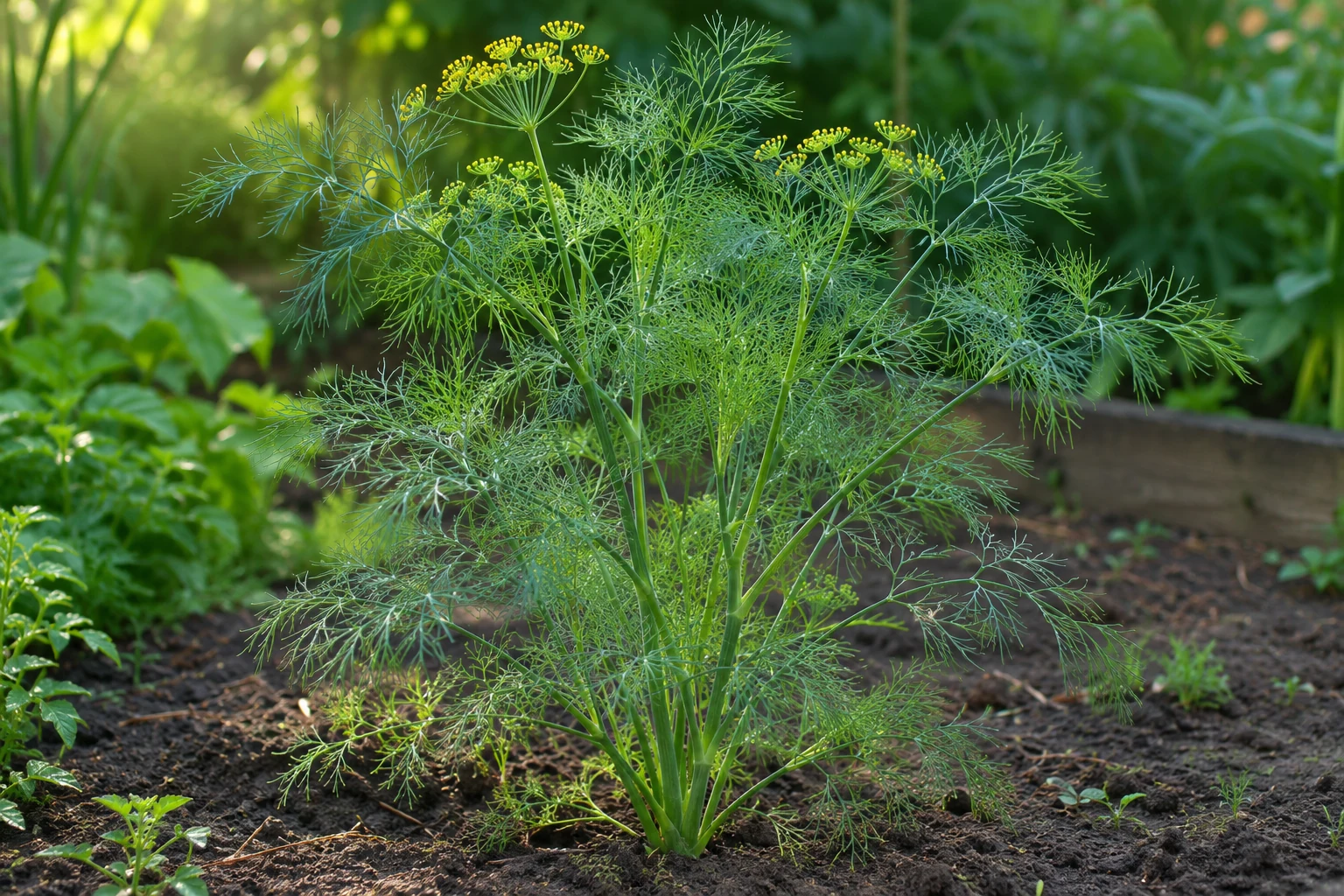
Dill (Anethum graveolens) is a quick-growing annual herb with feathery leaves and upright, hollow stems. It needs enough light to make compact leafy growth, but its life cycle is also pushed along by heat and age. The aim is not to hide it from summer; it is to give it abundant light without letting a small container overheat and dry out every afternoon.
Dill light needs at a glance
Grow dill outdoors in full sun whenever local heat allows. A practical target is about six hours or more of direct sun, with eight hours often suitable in a mild climate. Partial shade can keep a plant alive, and light afternoon shade can help in very hot regions, but deep shade usually means weaker, more open growth. Utah State University Extension recommends full sun and notes that warmer temperatures can reduce dill seed production (USU Extension).
Indoors, place the pot beside the brightest unobstructed window available. A bright-looking room is not necessarily bright enough at plant level, especially behind tinted glass or several feet from a window. If the plant repeatedly stretches toward the glass or makes thin stems, add a grow light or move it outside gradually rather than feeding it to compensate.
Why light changes dill’s shape and harvest
Light drives the energy dill uses to form leaves and sturdy stems. With insufficient light, the plant may become lanky and less productive; its stems can lean toward the brighter side. Dill also grows tall by nature, so not every upright stem is a light problem. Look for a pattern: long gaps between leaves, a plant tipping toward the window, and weak new growth together are more suggestive than height alone.
The Penn State Extension profile describes dill as a full-sun herb and notes that it declines after flowering, while succession sowings can provide fresh leaves over a longer stretch (Penn State Extension). This matters because light is only one part of harvest timing: a well-lit mature plant still flowers as it ages, and more sun does not make an annual remain vegetative indefinitely.
How many hours of sun dill needs
Aim for at least six hours of direct sun as a useful baseline. Epic Gardening recommends six to eight hours for dill to reach its potential and notes that indoor plants need sufficient light or supplemental lighting (Epic Gardening). The exact result depends on intensity, heat, pot size, and whether nearby walls reflect additional warmth. Count actual sun on the leaves, not the number of daylight hours outside.
If a spot receives only three or four hours, test it with a small sowing rather than committing the whole herb supply. Give it the brightest part of the day, keep the pot from drying out, and compare stem strength and new foliage with a sunnier batch. A little less direct sun may still produce harvestable leaves in warm climates, but weak growth and early flowering become harder to correct once the plant is established.
Place outdoor dill for sun and shelter
A sunny bed, open terrace, or east-facing balcony is a strong starting point. Avoid a location beneath dense tree cover or behind a wall that blocks most direct light. At the same time, choose a position with some shelter from wind: tall dill has hollow stems and can bend or lodge under gusts, rain, or hail. Wisconsin Horticulture notes both dill’s full-sun preference and the need to stake tall plants in exposed conditions (Wisconsin Horticulture).
On a balcony, put the container near the outer edge if a railing or parapet is creating deep shade, but watch for wind and fast drying. If the only sunny position is beside hot glass or a heat-reflecting wall, shift the pot a short distance back or provide shade during the hottest hours. The Dill overview covers how the growing position fits into sowing, pot choice, and harvest planning.
Growing dill indoors near a window
Dill can be grown indoors, but it is not a low-light windowsill herb. Put it directly beside a bright south- or east-facing window in the Northern Hemisphere, with leaves close enough to receive unobstructed light. Rotate the pot periodically if growth leans strongly to one side. In short winter days, a sunny window may still provide less light than dill needs for dense growth.
UMN Extension’s guidance for dill says indoor growing is possible when enough light is provided, and Epic Gardening similarly warns that indoor plants need at least six hours of light or supplemental lighting (UMN Extension; Epic Gardening). In an enclosed room, also provide airflow and avoid placing foliage against cold glass. If the plant grows weakly despite a bright window, use an LED grow light rather than moving it repeatedly between rooms.
Use grow lights when a window falls short
A grow light is useful when winter daylight is short, the window is shaded, or the plant is too far inside the room. Keep the lamp close enough to light the whole plant but follow its manufacturer’s distance guidance to prevent heat damage. Use a timer for a consistent day length and raise the light as stems grow. A basic white full-spectrum LED is usually more useful than a colored decorative bulb that does not illuminate the foliage evenly.
Start with a moderate daily schedule and assess growth over two weeks. If new stems stay compact and leaves develop normally, the light is adequate. If the plant stretches, increase intensity or bring the lamp closer within safe limits. Supplemental light can help a young plant grow; it cannot make an old, flowering dill plant revert to a long-term leafy stage.
Balance afternoon heat and light
Dill is a cool-season crop, so the brightest position is not always the most comfortable one during a heat wave. NC State Extension describes early flowering as a response associated with hot conditions (NC State Extension). A grower in a hot region can use morning sun plus bright afternoon shade to slow stress, especially for a container whose roots heat rapidly. This is a heat-management adjustment, not a reason to keep dill in permanent shade.
Get Busy Gardening also recommends full sun to partial shade and notes that some afternoon protection in very warm regions may extend the leafy period (Get Busy Gardening). That practical advice fits container growing, but regional results vary. Watch the plant and soil: if it wilts only in the hottest hours and recovers by evening, reduce heat exposure; if it stays stretched and weak all day, it likely needs more light.
Acclimate dill before changing exposure
A seedling raised indoors or under shade cloth can scorch if placed suddenly into intense outdoor sun. Move it into brighter conditions over several days: begin with gentle morning sun, lengthen exposure, and keep the root ball evenly moist while it adjusts. If leaves bleach or develop dry, pale patches on the sun-facing side, return it to gentler light and let new growth establish before trying again.
The Royal Horticultural Society recommends a sunny, sheltered position and hardening off indoor-grown seedlings before planting them outside (RHS: How to grow dill). For established plants, make a smaller change when possible. A sudden move from a cool east window to a hot afternoon balcony changes both light and temperature at once, making it harder to diagnose stress.
Match placement to leaf or seed goals
For a leafy harvest, provide strong light while the weather is mild and sow new batches before old plants flower. In hot climates, bright morning exposure with afternoon relief may be a workable compromise. For seed production, full sun supports strong growth, though high temperatures can reduce seed set; Utah State Extension specifically cautions that temperatures above about 95°F reduce seed production (USU Extension).
If the goal is seed, let selected plants flower and keep their flower heads in a bright position. Do not pinch every growing tip. If the goal is foliage, harvest leaves before flowering and use successions rather than relying on heavy shade to delay maturity. Use the Dill pruning guide for harvest cuts and the Dill propagation guide to plan another sowing.
Diagnose weak growth without guessing
If dill is thin or leaning, check light first, but also look at spacing, water, and age. Crowded seedlings shade one another; a dry container can wilt even in full sun; flowering plants naturally redirect growth. Turn the pot only after confirming that light is uneven, then check the newest stems over the next week or two. Do not cut healthy stems merely because they look tall.
If the plant receives adequate sun but keeps flowering early, heat or normal maturity may be the cause. A slower-bolting cultivar, cooler sowing window, and succession sowing are more useful solutions than moving an otherwise healthy plant into darkness. Keep the Dill watering guide in mind because stronger light usually dries containers faster.
Separate light stress from water stress
Light and watering affect one another. A brighter position increases how quickly the pot dries, while low light can leave the soil wet for longer. After moving dill into stronger sun or adding a lamp, check the soil more frequently for the first week, but water only when the mix begins to dry. A wilting plant in a hot afternoon can be temporarily heat-stressed, so inspect the soil before adding water.
Yellowing is not a reliable light meter. It may accompany poor light, but it can also follow soggy roots, overfeeding, or normal aging. Compare new growth with older leaves, inspect drainage, and change one condition at a time. The Dill soil guide helps identify a root-zone problem before you move the pot again.
Adjust light through the growing season
In spring and mild weather, give dill the sunniest suitable position and sow batches at intervals. As days grow hotter, protect containers from the most punishing afternoon heat and check their moisture more often. During the monsoon, a bright open-shelter position can protect both light access and airflow while preventing prolonged saturation. In cooler months, do not assume the same window will provide the same daily light; the sun angle and day length change.
Use new growth as your signal after each seasonal adjustment. If stems remain firm and leaf production continues, the placement is working. If a plant is already flowering and aging, replacing it with a fresh sowing is often more effective than repeatedly moving it around.
Light, flowering, and the end of the leafy crop
Dill’s flowers are part of its annual cycle, not proof that the light is wrong. Heat, long days, dryness, and plant age can combine to bring flowering forward. A sunny site is still appropriate; the aim is to avoid added stress and choose sowing timing that matches the local season. If you want both leaves and seeds, keep one batch for foliage and allow another to mature.
Do not expect a grow lamp or shade cloth to stop a mature plant from flowering permanently. Once the central flowering stem develops, sow a new batch for tender foliage and let the older plant finish its seed cycle. For practical seasonal adjustments, see the Dill watering guide and Dill overview.
When to use this page vs other Dill guides
Use this page when choosing or changing the plant’s light exposure. Go to Dill watering if the pot dries quickly or the plant wilts, and to Dill soil when the root zone stays wet. The Dill overview explains the whole growing cycle; Dill fertilizer covers nutrient decisions, and Dill pruning covers harvest cuts and flower stalks.
Related Dill guides
- Dill overview puts light in the context of sowing and harvest.
- Dill watering explains how brighter sun changes dry-down.
- Dill soil covers drainage and container mix.
- Dill fertilizer helps avoid feeding a light-stressed plant.
- Dill propagation covers direct sowing and new batches.
- Dill pruning explains leafy harvest and pinching.
Conclusion
Dill needs strong light to grow well, but it benefits from a position chosen for both sun and climate. Start with a bright, sheltered site; use morning sun and some afternoon relief when containers face extreme heat; and add a grow light when an indoor window is plainly too dim. Judge the change by fresh stems, not old leaves, and remember that flowering is part of dill’s life cycle. For a longer leafy harvest, sow new plants as the season allows instead of forcing an aging plant to stay green.