Best Soil for Dill: Drainage, pH and Potting Mix
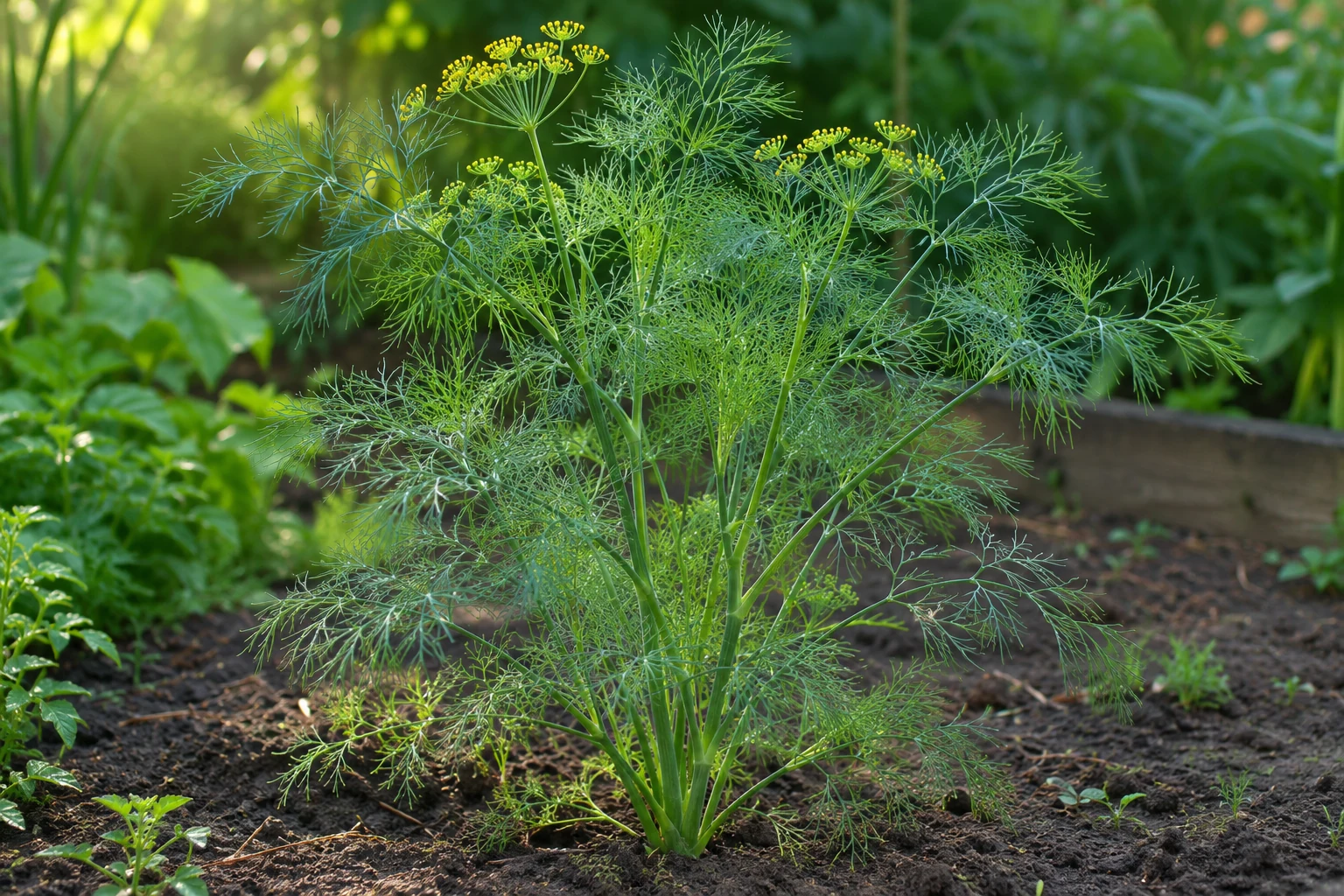
Best Soil for Dill: Drainage, pH and Potting Mix
Best Soil for Dill: Drainage, pH and Potting Mix
First, water a small patch or pot and watch how quickly the excess leaves. Dill needs soil that stays lightly moist around its roots but does not remain waterlogged. If water pools on top, runs down the sides, or sits in a saucer, correct the structure or drainage before sowing. A soil problem rarely improves when fertilizer is added to it.
Dill (Anethum graveolens) grows a long taproot and is usually sown directly where it will mature. It is not especially demanding about a particular commercial mix, but it does need air and moisture in the root zone. Penn State Extension describes suitable dill soil as rich, moist, well-drained, and not constantly wet, with a pH near 6.5 (Penn State Extension). That is a practical target rather than a reason to chase a decimal point.
The first soil check for dill
After watering, the surface should absorb water rather than hold a puddle. In a pot, excess water should flow through several drainage holes and the mix should remain evenly damp instead of separating from the container wall. In a bed, water should soak into the root zone without leaving it cold and saturated for days. If you are unsure, repeat the check after a moderate watering rather than during a cloudburst.
Dill is vulnerable to both extremes. Dense, wet soil limits oxygen around roots; very sandy or compacted potting media can dry unevenly and leave the root ball thirsty. The goal is not a perfect recipe but a stable balance. The Dill watering guide explains when to irrigate once that structure is in place.
What dill needs from its root zone
Use soil that drains freely while holding enough moisture for steady growth. The NC State Extension profile identifies dill as a taprooted annual and lists root rot among potential problems, making a consistently saturated planting site a poor choice (NC State Extension). Avoid low spots in a garden bed and containers that have no drainage holes.
The Royal Horticultural Society recommends a warm, sunny, sheltered position with fertile, free-draining soil and notes that dill dislikes cold, soggy conditions (RHS: How to grow dill). A site that receives sun and drains after rain is especially useful in humid or monsoon-prone climates, when a pot can remain wet longer than expected.
Soil texture, fertility, and organic matter
Dill grows well in ordinary garden soil if it is reasonably fertile and drains. Work mature compost into poor soil to improve structure, but do not turn a rich bed into a dense, water-holding layer. Utah State University Extension describes dill as suited to well-drained, low-fertility soil and cautions against overwatering (USU Extension). In a fertile vegetable bed, extra compost may not be needed before every sowing.
Wisconsin Horticulture recommends average to fertile, well-drained soil for dill (Wisconsin Horticulture). These descriptions are compatible: a moderately fertile soil is enough, while excess nutrients and poor drainage do not improve the crop. If you regularly add compost or manure, assess growth and, for a garden bed, use a soil test before adding more amendments.
A useful pH range for dill
Dill tolerates typical garden soil, with slightly acidic conditions commonly recommended. Penn State Extension gives pH 6.5, while UMN Extension describes dill as preferring slightly acidic soil rich in organic matter (UMN Extension). If the soil test is already near that range, do not add lime or sulfur just to reach an exact number.
For containers, use fresh potting compost labelled for herbs or vegetables; household potting mixes are usually suitable if they drain well. Avoid using pure garden soil in a pot, where it can compact and hold water. Correct pH only when a test identifies a meaningful imbalance and follow the test recommendation rather than adding amendments by guesswork.
Improve heavy clay before sowing
If a bed stays sticky and wet after rain, loosen a broad planting area and incorporate mature organic matter before sowing. Avoid filling only a narrow hole with potting mix; that can create a pocket where water collects against dense surrounding soil. If drainage remains poor, use a raised bed or a different site rather than repeatedly digging around established dill.
Do not work wet clay when it smears and sticks to tools. That damages its structure and can make compaction worse. Wait until it is friable, then prepare the bed several days before sowing. The Dill overview covers direct sowing and site selection; the Dill propagation guide explains why mature taproots should not be disturbed during a later move.
Help sandy soil hold moisture
Sandy soil drains quickly and may need more frequent checks during hot weather. Mix in mature compost over a broad area before planting to improve its ability to hold moisture and nutrients. A thin mulch can reduce surface evaporation, but do not pile it against the stems or cover the shallow seed row before seedlings emerge.
A sandy bed can still grow dill well if irrigation reaches the root zone before it dries completely. Use smaller, deeper waterings rather than frequent light sprinkling that wets only the surface. If a container mix dries immediately and pulls away from the sides, rewet it gradually and consider replacing old, shrunken compost before starting the next crop.
Choose a potting mix for dill
Use a peat-free or standard multipurpose potting compost that drains evenly and does not collapse into a dense paste after watering. A little mature compost can help if the base mix is very lean, but avoid a heavy handful of raw manure or concentrated fertilizer in the sowing row. Seeds and young roots need a stable, airy medium more than a high nutrient dose.
A useful test is to wet the mix before filling the pot. If water beads on top or escapes down the sides without soaking in, moisten it in stages and break up clumps. If it stays saturated and cold, add a more open potting component or choose a better-draining mix. Epic Gardening’s dill guide similarly emphasizes moist soil that still drains well (Epic Gardening).
Match container depth and drainage
Dill’s taproot needs more vertical room than a shallow herb bowl provides. Use a deep pot with drainage holes; the RHS recommends containers at least 30 cm deep and wide for dill (RHS: How to grow dill). Put the pot on feet or a surface that lets water escape instead of blocking the base. A deep pot also holds moisture more evenly and is less likely to tip as tall stems develop.
Do not put gravel or broken pottery over the drainage holes as a substitute for an open outlet. A mesh screen can keep mix from washing out while allowing water to drain. The Epic Gardening container guide discusses pot depth and drainage for dill’s long taproot (Epic Gardening: Dill in pots); the Dill repotting guide explains why a mature plant is difficult to move safely.
Prepare soil before direct sowing
Loosen the top layer without turning the entire bed into fine powder, remove large stones, and rake a level surface. If the ground is poor, incorporate a modest layer of mature compost before planting. Sow dill shallowly and keep the seed row moist until germination. Direct sowing avoids the root disturbance that can follow transplanting a taprooted seedling.
For containers, fill to a level that leaves room for watering, moisten the compost, and sow directly in the final pot. Thin seedlings once they are established so air can move around the foliage. GrowVeg’s dill growing guide also recommends well-drained soil and notes that older seedlings are harder to transplant successfully (GrowVeg).
Manage soil through hot weather and monsoon rain
In hot weather, pots and light soils dry faster. Check moisture more frequently, mulch garden beds lightly, and keep container drainage clear. A pot on hot concrete may need shade during the fiercest afternoon heat; see Dill light for placement decisions. Do not automatically add more fertilizer during a heat wave.
In wet monsoon conditions, move pots under open shelter if the mix stays saturated, empty saucers, and clear blocked holes. A sheltered position should remain bright and ventilated. If an in-ground bed remains waterlogged after rainfall, pause irrigation and improve the bed for the next sowing rather than digging around the roots of an established annual.
Diagnose soil-related growth problems
Soil is a likely contributor when the root zone stays wet for days, water bypasses a dry centre, or young plants wilt despite damp surface soil. Check the full depth of the container, not only the top layer. A plant with leggy growth in evenly moist soil may need more light; yellowing can reflect natural aging or nutrient issues as well as drainage trouble.
One symptom rarely proves a soil problem by itself. Compare moisture, drainage, light, and plant age before changing the mix. If the plant is already flowering and declining, sowing a new batch in improved soil can be easier than trying to rehabilitate an old root system.
Amend soil without overfeeding
Use mature compost to improve structure and modestly enrich poor soil. Avoid repeated applications of high-nitrogen fertilizer when the soil is already fertile; soft top growth does not correct compaction or waterlogging. Utah State Extension recommends basing fertilizer decisions on a soil test and notes that dill may need no additional nutrients when the soil was amended at planting (USU Extension). The Dill fertilizer guide explains restrained feeding for beds and containers.
Do not mix lime, sulfur, or a large quantity of manure into the seed row without evidence that the soil needs it. Make one measured change, then observe new growth. This preserves the structure that seedlings need and makes it easier to tell whether drainage or fertility was the original constraint.
When to use this page vs other Dill guides
Use this page when water pools, soil compacts, or a container dries unevenly. Read Dill watering for the moisture check, Dill repotting for pot depth and root disturbance, and Dill fertilizer before adding nutrients. The Dill overview gives the full growing plan.
Related Dill guides
- Dill overview covers sowing, harvest, and seasonal care.
- Dill watering shows how to water the mix you choose.
- Dill light explains exposure and heat management.
- Dill fertilizer covers feeding and soil tests.
- Dill repotting covers containers and root disturbance.
- Dill propagation covers direct sowing and succession crops.
Conclusion
Choose a dill root zone that is moist but drains promptly. Use ordinary fertile garden soil if it does not stay saturated, improve broad areas of heavy or sandy soil with mature compost, and choose a deep, freely draining pot for containers. Aim for slightly acidic conditions without chasing an exact pH, and avoid extra fertilizer until drainage and light are right. A well-prepared final growing place is especially valuable because dill’s taproot makes late transplanting difficult.