Holes in Leaves on Black Pepper: Causes, Checks & Fixes
Quick answer
Holes in Black Pepper usually mean caterpillar chew, thrips rasping, leaf miners, or a one-time trellis snag on soft tip growth—not underwatering alone. First step: backlight the highest damaged glossy leaf to separate open chew from internal tunnels, then inspect tip nodes and clasping node axils on the support at dusk.

Holes in Leaves on Black Pepper: Causes, Checks & Fixes
This guide covers holes in leaves on Black Pepper. See also the general Holes in Leaves guide, watering, and light pages for this plant.
Holes in Leaves on Black Pepper: Causes, Checks & Fixes
Quick answer
Holes in Black Pepper (Piper nigrum, pepper vine or kali mirch) almost always mean something removed tissue—caterpillars chewing glossy leaves, thrips rasping soft blades, leaf miners tunneling inside tissue, or mechanical tears where leaves snag on a trellis—not a mystery nutrient deficiency. For how chewing pests and mechanical tears work in general, see our holes in leaves guide. On this shade-loving Piperaceae climber, the decisive clue is usually on the softest tip leaf and at node axils clasping the support, not on old lower foliage alone.
First step: backlight the highest damaged glossy leaf and decide whether you see open chew, internal tunnels, or silvery rasping that tore open—then inspect tip nodes and clasping node axils on the support at dusk.
Indoor pepper vines more often show scale, mealybugs, thrips, and mites on warm humid growth than chronic hole damage, so new holes usually trace to recent outdoor time, nursery stock, open windows, or training the vine on a support—not months of silent indoor feeding.
When to use this page vs other Black Pepper guides
| Pattern | Read next |
|---|---|
| Ragged chew + pellet frass + larvae | Caterpillars |
| Blackened hollow terminal shoot with boring larva | Caterpillars (top shoot borer pattern) |
| Serpentine tunnels inside blade, no through-holes | Leaf miners |
| Silvery streaks, black specks, stippling without full holes | Thrips |
| Sticky honeydew on new growth | Aphids |
| Round black spots with yellow halos, not chew | Black spots |
| One clean tear after moving pot or training vine | This page (mechanical section) |
| Soft collar, sour soil, wilt without frass | Overwatering or root rot |
What holes look like on Black Pepper
Healthy pepper vines carry thick, glossy, alternately arranged leaves on firm climbing stems that root at nodes on a stake, pole, or trellis. Hole problems break that look in predictable ways—if you know which tissue was removed.
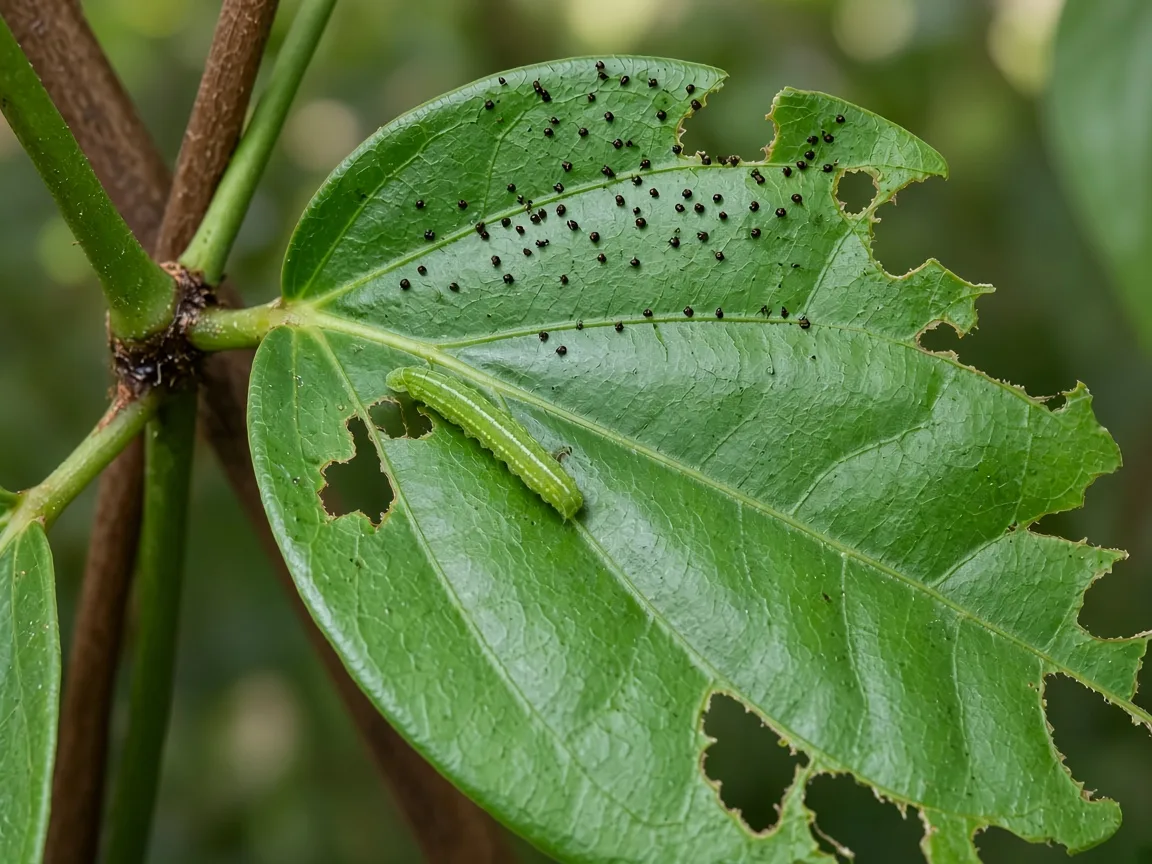
Irregular ragged holes through a glossy pepper vine leaf with torn margins—compare with an intact neighbor blade on the same stem before you spray.
| Cause | Hole pattern on pepper leaves | Extra signs | First fix on Black Pepper |
|---|---|---|---|
| Caterpillars | Large irregular holes and notched margins | Pellet frass at nodes; larvae at dusk | Classify pattern—see caterpillars for hand-pick |
| Top shoot borer | Chew on tips; shoot may blacken before many leaf holes | Larva bores tender terminal shoots | Inspect blackened tip; route to caterpillars |
| Thrips | Pale rasped patches that tear into small holes | Silvery scars, black specks; no frass pellets | Rinse undersides; thrips |
| Leaf miners | No open holes—tunnels inside when backlit | Serpentine trails between leaf surfaces | Leaf miners |
| Mechanical snag | One-time clean tear on one blade | No spread, no frass; edge caught on wire or tag | Relieve pressure on trellis; no pesticide |
| Slugs/snails (outdoor pots) | Irregular edge tears | Slime on pot rim at night | Handpick after dark on balcony vines |
Backlight test on glossy Piper nigrum blades (Black Pepper only)
Piper nigrum leaves are thick and leathery—light passes through them enough to separate chewers from miners in one minute:
- Open holes with torn edges visible from both surfaces mean caterpillars, thrips, or mechanical damage—stay on this page or open caterpillars.
- Pale winding trails with intact outer skin and no full-thickness bite mean leaf miners—surface sprays will not reach larvae inside tissue.
- Silvery stippling that later tears without pellet frass points to thrips, not a watering rhythm problem.
This backlight step is faster on pepper vine than on narrow grass-like herbs because kali mirch blades are wide enough to hold up to a window or phone flashlight.
Terminal shoot blackening vs open leaf holes (Black Pepper only)
On cultivated pepper, the top shoot borer (Laspeyresia hemidoxa) bores into tender terminal shoots and blackens affected tips, with higher pressure when succulent shoots flush in warm months. On a home container vine:
- You may see a collapsed black tip with limited leaf holes at first, then ragged chew on the next soft leaves as the larva works outward
- Damage clusters on the climbing tip, not evenly across woody lower stems
- Risk rises after outdoor monsoon season or when the vine pushes fast growth on a humid support
Do not mistake this for overwatering wilt until you split or peel back a blackened tip looking for a grey-green larva—full salvage steps live on caterpillars on Black Pepper.
Trellis snags at clasping node axils (Black Pepper only)
Black Pepper is an evergreen Piperaceae climber that roots at nodes on a moist support—not a freestanding rosette. Mechanical holes appear where:
- A fresh glossy blade catches on trellis wire, zip ties, or a dry pole edge while you wind new growth
- Overlapping leaves tear when you rotate the pot without slack on the climbing stem
- Pruning stubs or torn petioles leave a single clean hole on one mature leaf while every other blade stays intact
Mechanical damage does not spread to the next node over a week. If new holes keep opening on the highest soft leaf without you touching the vine, return to pest inspection—not trellis adjustment alone.
Collar sap feeders vs tip chew (Black Pepper only)
Warm humid indoor vines often carry mealybugs or scale at the stem collar with wax or armored bumps—sticky residue without ragged chew through blades. Foliage holes from chewers concentrate higher on the climbing stem where soft leaves unfurl:
- Chew and notched margins on mid-stem or tip leaves → this page or caterpillars
- Honeydew and distorted new growth without through-holes → aphids or thrips first
- Whole-vine limp droop without frass or new holes → underwatering, overwatering, or collar rot—not a foliage chewer
Match height on the vine before you spray the base for a tip problem.
Why Black Pepper gets holes in leaves
Soft tip flushes in humid filtered light. Pepper vine pushes new glossy leaves whenever light and warmth are good. Chewers and thrips both target that soft tissue—one warm week can hole every tip blade while lower leaves look fine.
Outdoor and nursery hitchhikers. Pests arrive on nursery stock and outdoor plants and keep feeding indoors where predators are absent—common after balcony season or open windows at night.
Caterpillars prefer expanding blades. Leaf-feeding caterpillars chew through tissue and leave frass—on pepper vine they are less common than sap feeders indoors, but when they appear they shred unfurling tips; see caterpillars on Black Pepper for hand-picking and Bt detail.
Training and support handling. Glossy leaves tear easily when crowded on a pole. That cause is instant and local—no frass line at the node.
How to confirm the cause
Work through these checks in order:
- Backlight one damaged leaf — Open hole vs internal tunnel (leaf miners) vs silvery thrips rasping.
- Tip nodes first — Inspect the highest soft growth and clasping node axils on the trellis where larvae hide.
- Frass vs slime vs specks — Pellets suggest caterpillars; slime at night suggests slugs on outdoor pots; silvery scars suggest thrips.
- Night pass — Inspect at night with a flashlight when chew marks are fresh but no larva showed in daylight.
- History — Note outdoor time, new purchases, open windows, and whether you recently trained or rotated the vine.
- Collar cross-check — Wax, scale, or honeydew at the base without tip chew points to collar pests, not foliage holes.
- Spread test — Mark one holed tip leaf with a string; if new holes appear on higher growth within five days, active feeding continues.
First fix for Black Pepper
Classify the hole pattern on the highest damaged glossy leaf before any spray or fertilizer. Write down one label: caterpillar chew, internal tunnels, thrips rasping, mechanical tear, or unclear.
If you labeled caterpillar chew (ragged holes plus frass), your next action is hand-pick larvae at dusk—full steps live on caterpillars on Black Pepper. If you labeled internal tunnels, switch to leaf miners. If you labeled mechanical tear on a single leaf with no spread, relieve trellis tension and watch the next node only.
Do not fertilize, repot, and spray on the same day while the cause is still unknown.
Step-by-step recovery by cause
Caterpillar chew (ragged holes + frass)
Follow caterpillars on Black Pepper: isolate, hand-pick at node axils, then Bt only if new holes continue. Keep the vine out of pet reach when leaves are chewed—culinary pepper tissue may irritate pets that chew plants.
Top shoot borer on a blackened tip
Prune back to firm green tissue only after you confirm a boring larva in the collapsed shoot (TNAU pepper pest note). Side branches often resprout when watering and support stay steady.
Thrips rasping that opens small holes
Rinse leaf undersides with plain water and route to thrips on Black Pepper if silvery scars and black specks accompany tears. Thrips rarely leave pellet frass like caterpillars.
Mechanical trellis tears
Rotate the pot so the stem has slack, pad sharp wire, and remove only the torn blade if it blocks new training. No pesticide is needed when spread stops.
Slugs on outdoor balcony pots
Handpick after dark, dry the pot rim, and reduce debris under the support. Strictly indoor vines rarely need this path unless pots sat on damp patios.
Recovery timeline
Judge progress by clean new nodes and frass-free tip leaves, not by old holey blades lower on the stem.
- Within one week: Correct identification should stop new holes on the marked tip leaf if you removed larvae or relieved a snag
- Two to four weeks: Expect glossy replacement leaves along the support when watering and light stay steady in well-draining, evenly moist mix
- Chewed mature blades: Permanent cosmetic holes—trim only after the vine pushes enough clean tissue above the damage
Whole-vine wilt with soft collar and sour mix is not a holes-in-leaves recovery path—inspect root rot first.
Lookalike symptoms
| What you see | Likely cause | Page |
|---|---|---|
| Internal tunnels when backlit | Leaf miners | Leaf miners |
| Pellet frass + larvae | Caterpillars | Caterpillars |
| Round black spots with halos | Fungal leaf spots | Black spots |
| Crispy brown tips, no holes | Dry air | Brown tips or low humidity |
| Rolled leaves without chew | Humidity curl | Curling leaves |
Mistakes to avoid
- Spraying the collar for tip holes — Collar mealybugs and scale need stem inspection; tip chew needs foliage and node axil checks
- Treating leaf miners like chewers — Open-hole sprays do not reach larvae inside tunnels
- Fertilizing first — Nutrients do not close holes; confirm pests or mechanical cause—see fertilizer only after new growth stays clean
- Ignoring one mechanical tear — A single snag is harmless; spreading tip damage is not
- Assuming underwatering — Underwatering wilts and browns tips; it rarely punches clean chew holes through firm glossy blades without pests or snags
How to prevent holes next time
- Quarantine new vines two to three weeks before mixing them with established pepper plants
- Scout tip nodes weekly during fast humid growth—kali mirch can push soft tips quickly under filtered light culture
- Screen open windows at night in warm months when moths are active (caterpillars are uncommon but possible on houseplants)
- Train with slack on supports so glossy blades do not catch on dry fiber or wire
- Rinse clasping node axils after outdoor monsoon season before bringing vines indoors
- Keep even moisture in well-draining mix — stressed vines replace chewed tips slowly; follow soil and watering guides
Related Black Pepper guides
Use this page when you see open holes or notches through glossy pepper vine leaves and need to separate chew, miners, thrips rasping, and snags before treatment. Open caterpillars when frass and larvae confirm chewers; leaf miners for internal tunnels; thrips for silvery rasping; black spots for round necrotic lesions. For culture that keeps vines resilient, start with the Black Pepper overview and problems hub.
Related tool
Use the Plant Problem Diagnosis Tool to narrow causes for holes in leaves on this plant before changing multiple variables at once.