Curling Leaves on Black Pepper: Causes, Checks & Fixes
Quick answer
Curling on Black Pepper usually means the vine lost turgor from dry soil past the top 2–4 cm, dry indoor air, sap-sucking pests on new nodes, or failing roots in wet mix. First step: press your finger into the top 2–4 cm of mix and inspect the underside of the newest cordate leaf at the growing tip.
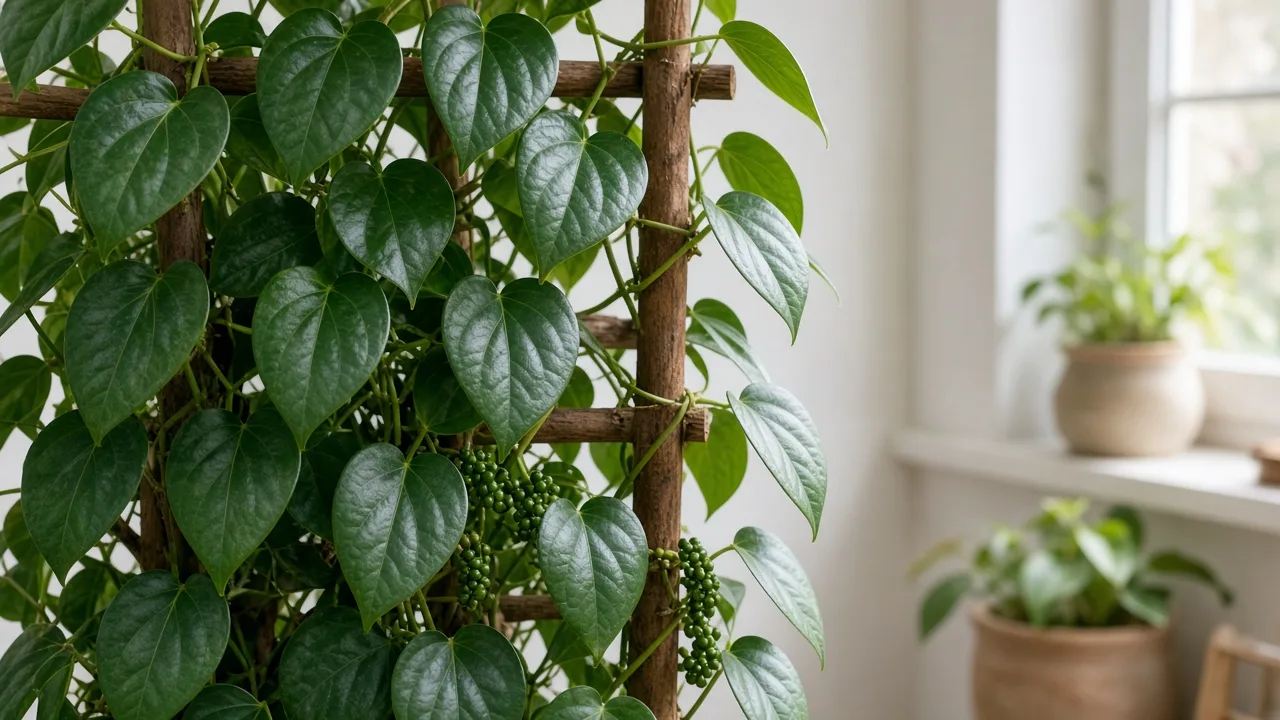
Curling Leaves on Black Pepper: Causes, Checks & Fixes
This guide covers curling leaves on Black Pepper. See also the general Curling Leaves guide, watering, and light pages for this plant.
Curling Leaves on Black Pepper: Causes, Checks & Fixes
Quick answer
Curling on Black Pepper (Piper nigrum), the true pepper vine behind black peppercorns, usually means the plant lost leaf turgor from dry soil past the top 2–4 cm, dry indoor air, sap-sucking pests on new nodes, or failing roots in wet mix. Healthy pepper leaves are glossy, cordate, and palmately veined, lying flat along the climbing stem. When they cup inward, twist at the tip, or roll along the margin, something in the root zone, humidity, light, or pest load changed recently.
First step: press your finger into the top 2–4 cm of mix and inspect the underside of the newest cordate leaf at the growing tip. Dry soil with clean undersides points to underwatering. Sticky residue, stippling, or tiny moving dots mean pests — not a watering fix. For general curling-leaf mechanics, see our curling leaves hub. On black pepper, the pattern almost always ties back to this vine’s need for steady moisture, high humidity, filtered light, and a secure support.
When to use this page vs other Black Pepper guides
- Underwatering — light pot, dry 2–4 cm layer, dull limp leaves before curl sets
- Overwatering — heavy wet pot, yellowing, soft stems with curl
- Low humidity — crispy curled margins in dry AC air
- Spider mites — stippling and tight curl on new nodes in dry rooms
- Aphids or mealybugs — twisted young leaves and sticky or cottony residue at nodes
- Thrips — silvery scarring and tight roll on tender shoots
- Wilting or drooping leaves — whole vine collapse, not just edge cup
- Distorted leaves — puckered growth from chronic pest damage
- Watering guide — long-term rhythm after you identify the cause
What curling looks like on Black Pepper
Healthy black pepper leaves are thick, glossy, and heart-shaped (cordate), often 12–18 cm long on a vigorous vine, with a firm petiole emerging from the node. Adventitious roots may clasp a trellis or moss pole at those same nodes. Curling breaks the flat plane in predictable ways:
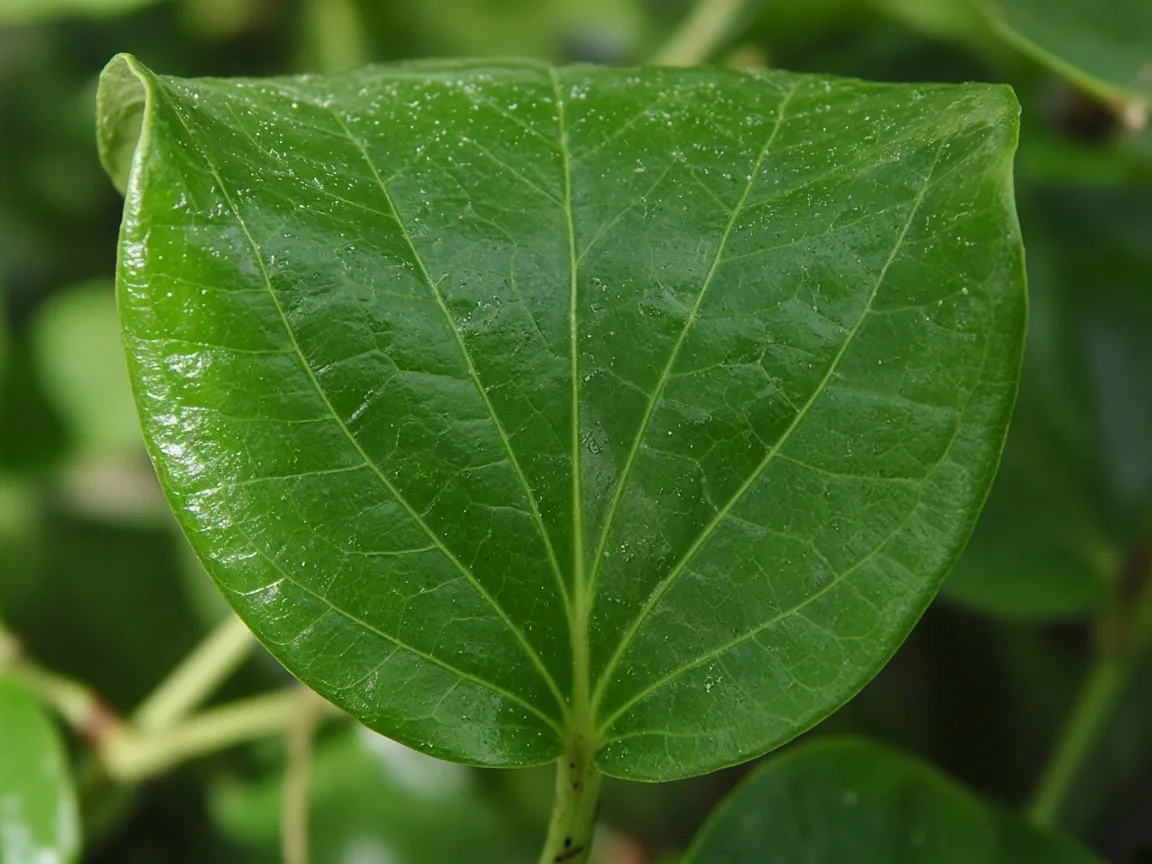
Inward-cupped pepper vine tissue — compare curled margins with flat healthy cordate leaves on the same stem.
Drought / moisture-stress curl:
- Older leaves cup inward along the midrib or fold lengthwise
- Leaf surface turns dull; petiole may droop slightly
- Pot feels light; soil dry at 2–4 cm depth
- Nodes and climbing stem stay green unless drought is severe
Low-humidity curl:
- Margins curl and brown while the center stays greener
- Often hits leaves facing AC vents or dry winter heat
- Soil moisture can be normal — the air, not the roots, is the problem
Pest curl (mites, aphids, mealybugs):
- Newest leaves twist, pucker, or curl tight at the shoot tip and leaf axils
- Silver stippling, sticky honeydew, cottony tufts, or fine webbing on undersides
- Damage clusters where tender growth and future pepper spikes form
Wet-root / foot-rot curl:
- Leaves curl then limp downward despite wet soil
- Collar may darken or soften at the soil line; mix smells sour or stays heavy for days
- Matches overwatering or early root rot stress
Sun / cold curl:
- Crispy curled patches on leaves exposed to harsh midday sun or cold drafts
- Missouri Botanical Garden notes houseplant pepper vines are intolerant of winter temperatures below 50°F
- Common after moving a shade-grown vine into direct balcony sun
Reading curl on cordate leaves at the pepper nodes
Black pepper is a moist tropical understory climber. University of Arkansas Extension describes it as a woody vine with heart-shaped evergreen leaves in the forest floor layer, and PFAF lists semi-shade with consistently moist soil in humid lowland tropics. That biology explains why curl shows up early here: large glossy leaves transpire fast when the 2–4 cm check reads dry or when humidity drops below roughly 60%.
Unlike succulents, pepper leaves do not store much water in the blade. The vine depends on roots pulling steady moisture from organic-rich mix while adventitious roots grip the support. When you miss a watering cycle in heat, the oldest leaves cup first because they carry the highest transpiration load. New growth at the tip may still look okay for a day — which is why owners often water too late.
Missouri Botanical Garden recommends misting foliage frequently on indoor pepper vines and growing them in bright indirect or sun-dappled light — not harsh full sun. If you recently moved the pot closer to a west window to “help” curled leaves, scorch can mimic drought cupping on the sun-facing side only.
Foot rot at the collar vs drought cup on a pepper vine
Field black pepper is vulnerable to foot rot caused by Phytophthora when soil stays wet and poorly drained. PlantVillage describes black water-soaked lesions, rapid leaf wilt, and vine death within days to weeks in severe cases. Container growers see a milder indoor version: the soil line and lowest nodes fail first while upper leaves still look slightly cupped.
Signs this is foot rot, not simple underwatering:
- Pot is heavy and mix smells sour or stays dark and wet for many days
- Collar tissue darkens or feels soft where the stem meets the mix
- Curl spreads down the vine quickly with yellowing, not slowly from older leaves upward
- Fungus gnats hover near the surface; see also mold on soil
Signs this is drought cup:
- Pot is light; 2–4 cm layer is dusty dry
- Collar is firm and green
- Curl starts on older leaves while nodes at the tip still push new growth
- One thorough watering and humidity bump flattens margins within days
First response for a wet heavy pot with a soft collar: stop watering, improve airflow, confirm drainage holes are open, and read root rot before soaking again. First response for a light dry pot: one deep watering until excess drains, empty the saucer, then follow the watering guide rhythm.
Dry-room margin curl when the 2–4 cm layer still reads moist
Black pepper performs best with high humidity and filtered light — the same conditions that produce glossy cordate foliage on a support. In humid monsoon balconies, drought cupping is rare; problems shift toward foot rot and fungus gnats when cool weather keeps mix wet too long. In dry air-conditioned rooms, the opposite pattern dominates: soil at 2–4 cm can read moist while margins curl and brown from transpiration faster than roots can supply water.
That is not classic underwatering — it is low humidity stressing the leaf edges while the root zone still holds water. Grouping the vine with other plants, using a pebble tray, or running a humidifier near the trellis often flattens margins within a week without changing the watering calendar. MBG’s misting guidance targets this leaf surface moisture need; mist lightly in the morning so foliage dries before night.
How to confirm the cause
| Sign | Underwatering | Low humidity | Pests | Wet roots |
|---|---|---|---|---|
| Soil at 2–4 cm | Dry | Often moist | Variable | Wet / heavy |
| Pot weight | Light | Normal | Normal | Heavy |
| Leaf location | Older leaves first | Leaf margins | New shoots at nodes | Whole vine |
| Underside | Clean | Clean | Stippling, insects, stickiness | Sometimes gnats |
| Stem at collar | Firm | Firm | Firm | Soft or discolored |
Work top to bottom: newest leaf underside → finger test at 2–4 cm → pot weight → collar firmness. That order prevents soaking a pest-infested vine or misting a rotting root zone because edges look dry.
First fix for Black Pepper
If soil is dry at 2–4 cm and leaf undersides are clean: water thoroughly until excess drains, empty the saucer, and boost humidity for 48 hours. Follow the watering rhythm afterward — pepper vine wants even moisture, not bone-dry cycles.
If undersides show stippling, aphids, mealybugs, or webbing: isolate the vine and rinse new growth under lukewarm water. Confirm active pests, then follow spider mites, aphids, or mealybugs guidance before reaching for spray. Epic Gardening notes spider mite colonies congregate on leaf undersides — the first place to check on a pepper vine.
If the pot is heavy, soil wet, and the collar softens: stop watering. Improve airflow and read root rot if wilt spreads.
Do not fertilize curled vines. Do not repot and prune heavily on the same day.
Lookalikes to rule out on Black Pepper
| What you see | Likely page |
|---|---|
| Flat yellowing before any cup | Yellow leaves |
| Brown tips without full cup | Brown tips |
| Whole vine limp, not just curled edges | Drooping leaves or wilting |
| Puckered, bumpy new growth | Distorted leaves |
| Leggy stretch with small pale leaves | Not enough light |
Curl vs droop: drooping means the petiole loses strength and the leaf hangs; curling means the blade folds while the petiole may still feel firm. Advanced drought shows both — start with the finger test before assuming total collapse.
Step-by-step recovery
- Inspect the newest cordate leaf underside at the growing tip and the node below it for mites, aphids, or mealybugs. MBG lists aphids and mealybugs as common on indoor pepper plants.
- Press finger into mix at 2–4 cm. Dry and pest-free → thorough soak; wet and sour → dry-down protocol.
- Check humidity if margins are crispy but soil is moist → humidifier or pebble tray; see low humidity.
- Review light — move off harsh midday sun to bright filtered light per the light guide.
- Confirm support — vines with slack trellis ties may cup new leaves at awkward angles; retie without cutting healthy runners.
- Watch the next two nodes — flat glossy new leaves mean your fix worked.
What not to do
- Do not water every curled leaf without checking soil depth — wet-root curl gets worse with more water (Missouri Botanical Garden notes chronic wet soil damages roots and causes wilt).
- Do not mist as a humidity substitute on pest-suspect vines — wet foliage in stagnant air invites leaf spot.
- Do not place a shade-grown vine into full afternoon sun to “uncurl” it — that scorches cordate pepper leaves quickly.
- Do not ignore scale insects at nodes — PlantVillage lists scale among common black pepper pests that weaken new growth upstream.
Recovery timeline
Single dry spell: cupped leaves often relax within 3–7 days after one proper soak and a humidity bump. Low-humidity margin curl: improvement over 1–2 weeks once air moisture stays above roughly 60%. Pest curl: new growth should emerge flat within 2–3 weeks after control; old twisted leaves may not fully flatten. Root-stress curl: weeks to months depending on collar damage — judge by firm new nodes, not old blades.
Winning signs: the next two cordate leaves open flat and glossy; curl stops spreading down the vine; pot weight cycles predictably with your watering checks.
How to prevent curling
Match the vine’s tropical rhythm: even moisture using the 2–4 cm finger test, 60–80% humidity, bright filtered light on a support, and fertile well-draining soil near pH 5.5–6.5. Inspect new nodes weekly — dry indoor air plus neglected undersides is how spider mites curl tender pepper shoots. Reduce watering frequency in cool months while keeping humidity up, and never let the pot sit in stagnant tray water after a soak.
Related Black Pepper guides
- Overview — Piper nigrum biology and placement
- Problems hub — full symptom index
- Watering — 2–4 cm check and seasonal rhythm
- Light — filtered sun vs scorch
- Soil — organic mix that holds moisture without waterlogging
Related tool
Use the Plant Problem Diagnosis Tool to narrow causes for curling leaves on this plant before changing multiple variables at once.