Best Zone 7 Plants for Regional Gardens
Find zone 7 plants for sunny, shady, dry, and moist sites, with regional examples and practical notes on winter limits, summer heat, and native choices.
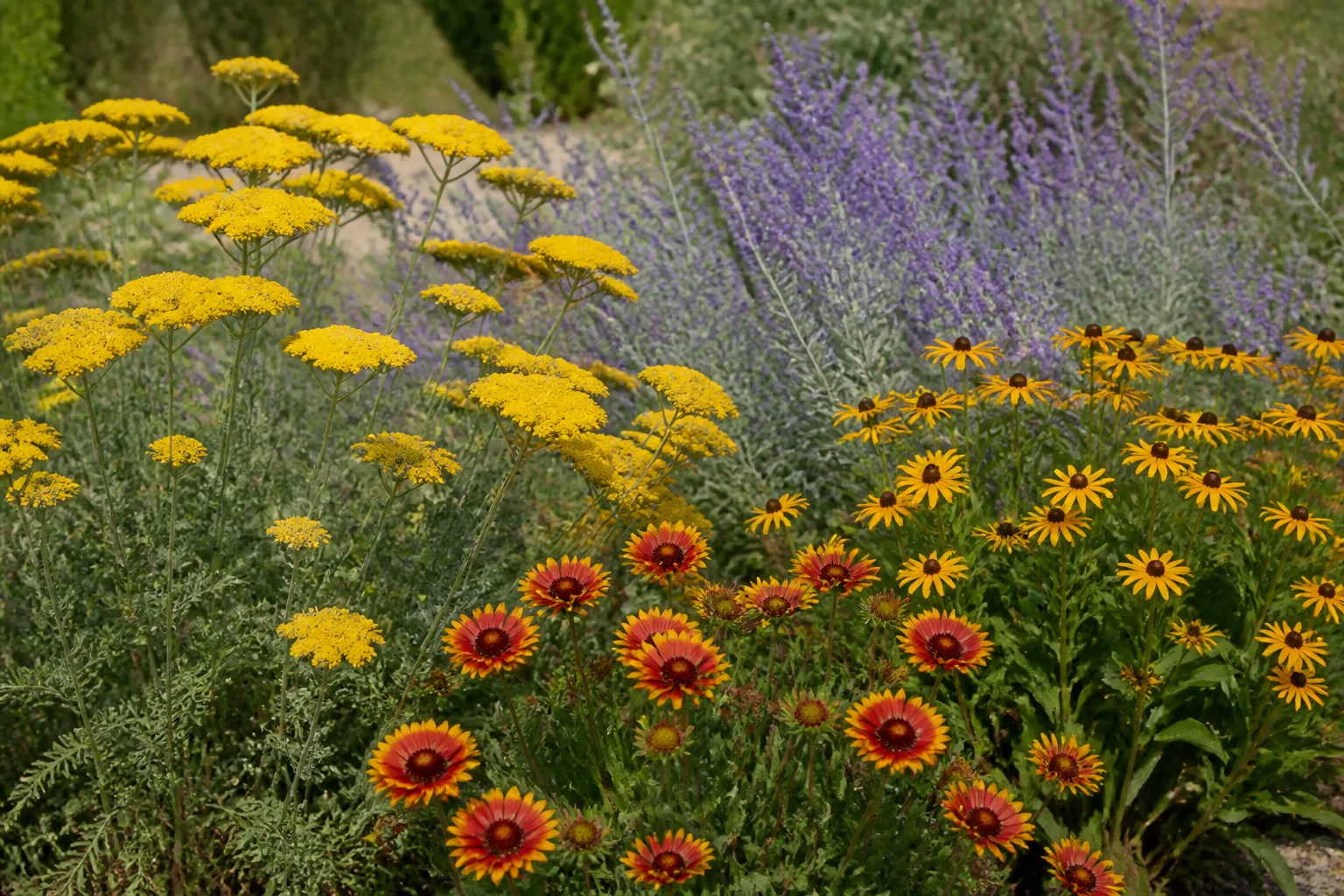
The best plants for a Zone 7 garden depend on more than whether their roots can survive winter. Zone 7 appears in regions with different summer heat, humidity, rainfall, elevation, soils, and native plant communities, so a plant that thrives in a dry western bed may struggle in a humid eastern border. Use the list below as a set of region-aware starting points, then match each plant to the conditions in your own yard.
Zone 7 is a winter filter, not a full climate map
The USDA Plant Hardiness Zone Map groups places by the average annual extreme minimum winter temperature. Zone 7 spans average values from 0°F to 10°F, with Zone 7a covering 0°F to 5°F and Zone 7b covering 5°F to 10°F; the current map uses 1991–2020 weather data.USDA map guidance The half-zone is useful when comparing borderline perennials and woody plants, but it is not a promise that an unusually cold night will never fall below the listed range.
A hardiness label describes a plant’s chance of surviving winter in the ground. It does not tell you when to sow seeds, when your last spring frost will occur, how much summer heat a plant tolerates, or whether your soil stays wet after rain.Gardening Know How If you need your exact half-zone, check the current USDA zone map by ZIP code rather than using a state-level average or a plant tag printed years ago.
That distinction separates “survives” from “performs well.” A perennial may return after winter but produce fewer flowers in a site that is too hot, humid, dry, shaded, or poorly drained for its preferred growing conditions.
Why the same Zone 7 label describes different gardens
Zone 7 is not a single horizontal climate belt. The map includes pockets across parts of the Mid-Atlantic and Southeast, the lower Midwest and interior states, and sections of the Pacific Northwest and mountain West; these locations do not share one summer or soil profile.Garden Design A winter rating therefore cannot tell you whether you garden in a humid Piedmont suburb, a rain-shadowed inland valley, a cool maritime pocket, or a high-elevation site with strong sun and wind.
NC State Extension recommends checking whether plants can handle both the winter and the summer in the geographic region, then considering drainage, soil structure, sunlight duration, and reflected heat.NC State Extension Heat that bounces off a west-facing wall or pavement can stress a plant even when the garden’s official zone is suitable. The same spot may also dry much faster than a bed at the edge of a lawn.
Rainfall and drainage matter just as much as the number on the map. In a humid eastern garden, powdery mildew and prolonged wet soil may be the limiting factors; in a dry interior garden, drought between irrigation cycles and alkaline or rocky soil may matter more. Colorado State Extension notes that even Colorado native plant communities vary with elevation, exposure, rainfall, soils, and temperature extremes, so a “native” label by itself does not finish the site-matching job.Colorado State Extension
Native status is regional too. A plant native to Pennsylvania or the Carolinas is not automatically native to Colorado or Oregon, even if both places contain Zone 7 areas. When ecological value is a priority, use your state extension, local native plant society, or ecoregion-specific plant list to confirm that a species belongs in your part of the country.
A quick way to narrow your shortlist
Before buying, write down four facts about the planting bed: direct sun hours in summer, how quickly water drains after a heavy rain, whether the soil dries out between rains, and the plant’s eventual size. Then select from the closest row below instead of trying to make one generic “Zone 7 mix” suit every bed.
| Your site | Plants to consider | Main condition to check |
|---|---|---|
| Hot, sunny, and dry between rains | Butterfly weed, little bluestem, Rocky Mountain penstemon, blanket flower | Choose locally appropriate species; water new plants while roots establish |
| Sunny with even moisture and good drainage | Garden phlox ‘Jeana’, black-eyed Susan | Allow airflow and avoid a persistently wet crown |
| Moist soil or a rain-garden edge | Joe-Pye weed, switchgrass | Check mature height and whether the site stays wet or merely damp |
| Part shade or a woodland edge | Hosta, fringed bleeding heart, native foamflower or sedge | Separate cool moist shade from dry shade under tree roots |
| A low border or slope | Eastern: green-and-gold or dwarf crested iris; Colorado: sulphur flower | Match native status, drainage, and spread to the region |
| Tropical-looking summer color | Canna | Plan to lift and store rhizomes or treat the plant as seasonal color |
The “plants to consider” column is a shortlist, not a guarantee. It is more useful to choose two or three plants with similar light and moisture needs than to collect a dozen species that all demand different care.
Eastern and humid Zone 7: separate dry and moist sites
In much of the eastern and southeastern Zone 7 range, native perennials can add color while supporting local insects and other wildlife. Penn State Extension’s species list shows how to organize choices by sun and moisture: butterfly weed fits dry, sunny spots, while taller Joe-Pye weed and several other natives suit wetter ground.Penn State Extension That is a more reliable starting point than treating all flowers marked “Zone 7” as interchangeable.
For a mixed sunny border, pair a lower clump with a mid-height flower and a late-season plant rather than spacing everything as isolated specimens. Leave room for mature width, and remember that plants native to the eastern U.S. should be used as regional examples, not as a default planting prescription for western Zone 7.
Butterfly weed (Asclepias tuberosa)
Butterfly weed is a strong choice for an eastern full-sun bed that dries between rains. Its orange flowers bring a bold midseason color, and it is a host plant for monarch caterpillars; once established, the plant handles dry soil better than a moisture-loving perennial.Penn State Extension
Give it a permanent spot with sharp drainage. The deep taproot makes an established plant difficult to move, so do not treat it like a shallow-rooted bedding annual that can be relocated each spring. Water a new transplant while it establishes, then avoid keeping the root zone soggy; in a damp, shaded border, choose a different species instead.

Black-eyed Susan (Rudbeckia fulgida)
For a sunny eastern border, black-eyed Susan offers a long summer-to-fall display and tolerates a broader range of soil moisture than butterfly weed. Penn State Extension lists the native Rudbeckia fulgida for moist-to-dry soil in sun, and its 2023 perennial profile describes ‘American Gold Rush’ as a compact, disease-resistant selection for beds and borders.Penn State Extension[4]
The species can spread or reseed, so set it where a wider clump is welcome and remove spent stems if you want fewer seedlings. A cultivar is a useful choice when you need a predictable, compact shape, while a straight species can be a better fit for a naturalistic planting if it is native to your region.
Garden phlox (Phlox paniculata) ‘Jeana’
Tall garden phlox can stretch the flower season into midsummer, especially in the eastern portions of Zone 7 where the soil does not dry out completely. NC State Extension lists Phlox paniculata as hardy in 7a and 7b, suited to full sun or partial shade and moist, well-drained soil; it also warns that powdery mildew and root rot can be serious problems.NC State Extension Plant Toolbox
‘Jeana’ is a cultivar selected for long bloom and pollinator value, and Penn State Extension notes its relative resistance to powdery mildew.Penn State Extension Give it space for airflow, water at the soil rather than over the foliage, and do not crowd it into a damp corner. If your summers are especially humid, choosing a resistant cultivar and spacing plants well is more useful than expecting the zone rating to prevent disease.
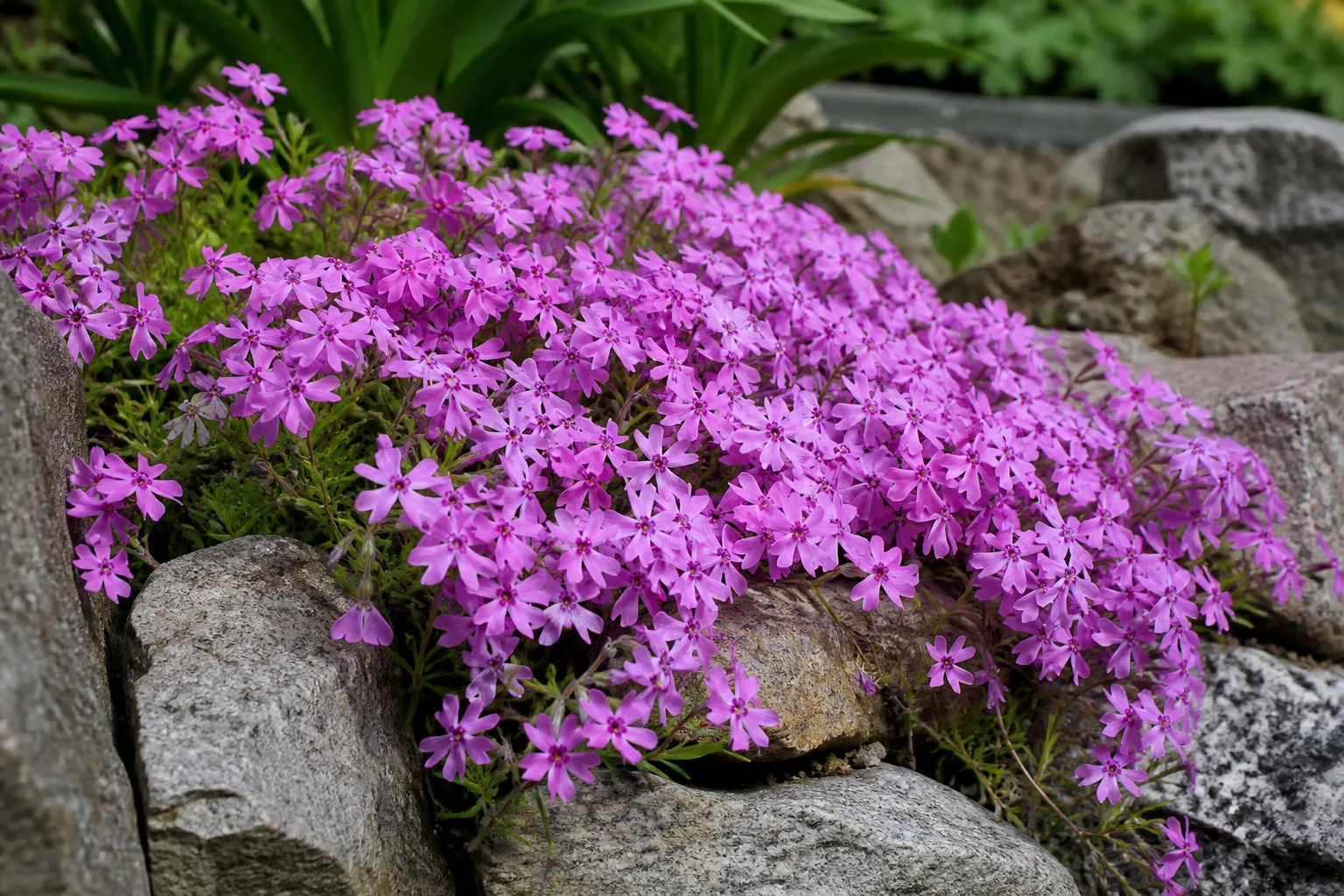
Colorado and interior-west Zone 7: prioritize water fit
Dry western gardens benefit from plants selected for local elevation, exposure, and water needs—not simply from a national list of cold-hardy flowers. CSU Extension’s native-perennial guide says to match plants to the site’s life zone, light, moisture, and soil, and to avoid collecting plants from the wild.Colorado State Extension It also notes that many natives establish gradually and may need supplemental water for months or longer before irrigation can be reduced.
For a high-plains or foothills garden, a modestly watered perennial bed can use Colorado-adapted plants among locally suitable shrubs and grasses. At lower elevations, on a south-facing wall, or next to paving, intense reflected heat can change the amount of water a new planting needs, so even drought-tolerant species need establishment care.
Little bluestem (Schizachyrium scoparium)
Little bluestem supplies structure after flowers fade, with upright blades, colorful late-season foliage, and seed heads that persist into winter. Penn State Extension describes it as a warm-season grass for full sun and poor soil, hardy across Zones 3–9, with drought tolerance and winter interest.Penn State Extension
It is a good fit for sunny, well-drained beds and prairie-style plantings, but not for a shaded, constantly wet corner. Its height and late-season form can help anchor a border; use a local ecotype or nursery-grown plants when the goal is ecological restoration, because a species that is broadly hardy is not automatically the right local seed source.

Rocky Mountain penstemon and blanket flower
For Colorado and nearby interior-west sites, Rocky Mountain penstemon (Penstemon strictus) is an example of a regional plant with a specific job: blue-purple flower spikes in sun to part shade, moderate-to-low water, and well-drained soil. Colorado State Extension warns that crowded plants can develop powdery mildew, so give the clumps air instead of packing them into a tight mass.Colorado State Extension
Blanket flower (Gaillardia aristata) offers another western example for a sunny, relatively dry bed. CSU lists it for full sun, low moisture, and well-drained soils, but the right elevation and exposure still matter; a native plant from a high, dry site can need supplemental water when first planted or when the garden’s conditions differ from its natural habitat.Colorado State Extension
These are not universal Zone 7 picks for the eastern U.S. Their value here is regional: they show why a gardener in Colorado should consult a Colorado list rather than assume that a Pennsylvania perennial palette will be equally durable.
Lavender belongs only in dry, sharply drained conditions
Lavender is worth considering in a sunny western bed where water drains freely, but it is not a substitute for checking drainage. CSU’s water-wise guidance includes lavender among plants used in xeriscape settings and emphasizes that plants need to be placed in an appropriate garden microclimate.PlantTalk Colorado
In a wet-winter or humid-summer garden, lavender can be a poor choice if its crown and roots remain damp. A raised or sloped bed may help where soil is heavy, but adding gravel to a planting hole does not fix a site with a high water table or poor drainage; choose a plant adapted to that moisture instead. For cultivar-specific advice, check a local nursery or extension source for the species and variety you are buying.
Moist sites: choose plants that can use the water
A low spot that stays consistently damp is not a failed garden bed; it is a different planting environment. Instead of trying to make it behave like a dry rock garden, select species that tolerate moist soil, then make sure the ground is not stagnant or flooded unless the plant specifically handles those conditions.
A rain-garden edge that drains within a day or two is different from a permanently soggy depression. Observe it after heavy rain and again during a dry spell, then choose the plant for the actual pattern rather than guessing from a spring visit.
Joe-Pye weed for a tall, late-season layer
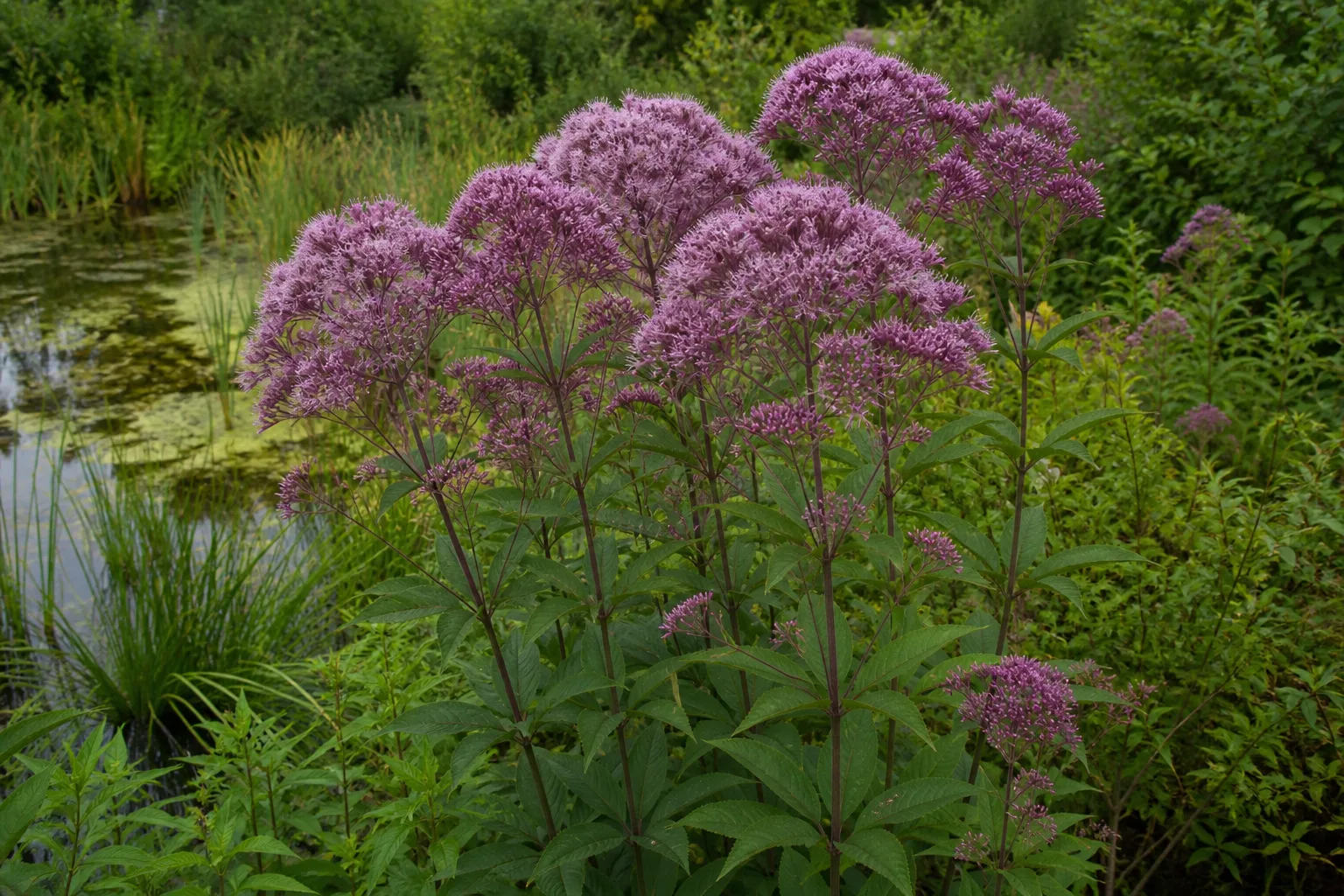
Joe-Pye weed is useful at the back of a sunny or partly shaded bed where soil stays moist. Penn State Extension’s native garden list places Joe-Pye weed in wet-to-moist soil and notes that some types can reach several feet tall; it is a better choice for the back of a border or a rain-garden edge than for a narrow foundation strip.Penn State Extension
Plan for height and spread before planting, and do not expect a tall species to remain a compact mound. If the site dries hard in summer, provide establishment water and reassess before adding more plants; if it is genuinely dry most of the year, choose a drought-adapted perennial instead.
Switchgrass for structure and adaptable moisture
Switchgrass (Panicum virgatum) is a useful native warm-season grass for sunny areas where the moisture pattern varies. Penn State Extension lists it for wet-to-dry soils in sun, while its upright stems add a late-season framework that can remain attractive after flowering perennials have gone dormant.Penn State Extension
Its mature size depends on the selection, so check the plant label and leave room before planting. In an eastern garden, use a locally suitable native source; in a dry western garden, compare it with grasses from your own ecoregion instead of assuming the eastern native palette will fit every site.
Part shade and woodland edges need their own shortlist
A bed under open deciduous trees often receives spring sun, summer shade, and competition from tree roots. That combination can be harder than a simple “shade” label suggests: the site may be dry even though the canopy blocks direct sun, and the roots of mature trees can intercept rain before it reaches young perennials.
For eastern woodland edges, hosta can provide broad foliage and a tidy outline where deer pressure is manageable. Fringed bleeding heart, foamflower, wild ginger, or a locally native sedge can supply a more natural woodland ground layer; Penn State Extension lists several native shade plants across different moisture ranges, including wild ginger for moist shade and foamflower for moist shade.Penn State Extension
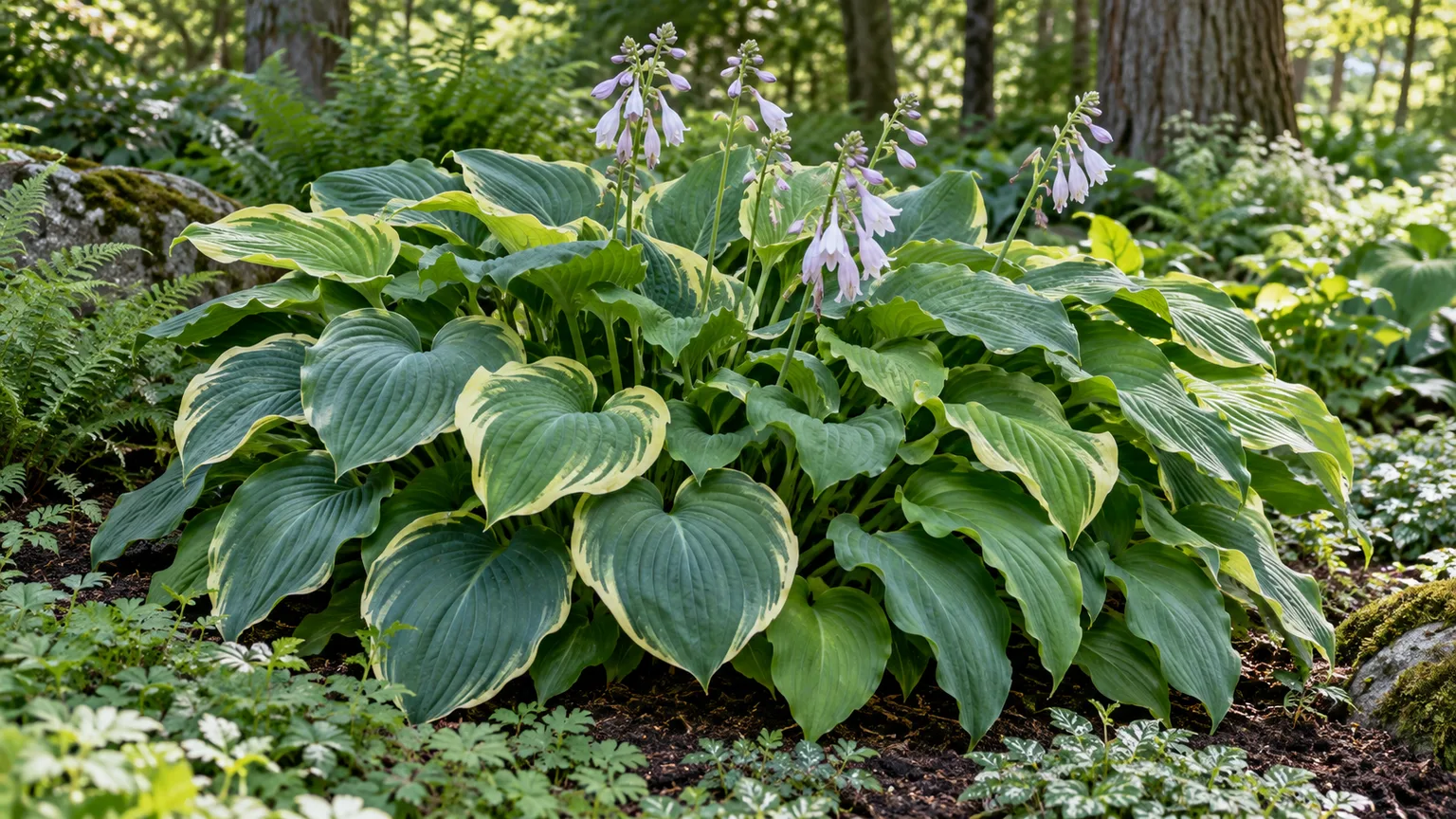
Do not plant a dry-shade species beside a moisture-loving fern and assume the shared shade will make them compatible. Check soil near the root zone, water newly planted clumps during establishment, and use leaf mulch only if it does not smother crowns or pile against woody stems. In regions outside the species’ native range, treat hosta and other nonnative choices as ornamental plants rather than local habitat replacements.
Small beds and slopes: choose groundcovers by spread and drainage
Groundcovers are useful when they cover bare soil, soften a retaining wall, or occupy a gap that is awkward to mow. The trade-off is that a plant that fills space quickly can also move beyond the bed, so check whether its spread comes from a compact clump, self-seeding, or underground runners before placing it near a lawn or neighboring natural area.
For an eastern garden, Penn State Extension includes green-and-gold and dwarf crested iris among low-growing native choices; both tolerate a range of moisture conditions, with the iris suited to partial shade.Penn State Extension In Colorado, sulphur flower (Eriogonum umbellatum) is a low, mat-forming option for sunny, well-drained sites.Colorado State Extension These are regional examples, not interchangeable choices for every Zone 7 yard; a shady eastern slope and a sunny western rock garden call for different plants.
Avoid choosing a groundcover only because it is labeled evergreen or hardy to Zone 7. Match moisture, light, and spread to the site, and check regional invasive-plant guidance before installing a vigorous spreader.
A simple test is to decide how much editing you are willing to do. If you want a crisp border, choose a clumping species; if you want a naturalized drift and have room to maintain the edge, a self-seeding or spreading plant may be appropriate.
Zone 7 plants that need a conditional plan
Several familiar garden choices work in Zone 7 only when you accept their limits. Cannas provide tropical-looking summer foliage and flowers, but their rhizomes are vulnerable to freezing soil; Epic Gardening recommends lifting them in Zones 3–7 and storing them for replanting, rather than assuming they will return outdoors.Epic Gardening A warm wall or mulch may help in a sheltered microclimate, but it does not turn a borderline plant into a guaranteed perennial.
Spring bulbs can add an early layer, but their own hardiness and drainage needs should be checked by species and cultivar; they do not replace summer and fall plants in a border. Tall cottage-garden flowers also need enough space and support for the site, so compare mature height and staking needs before placing them beside a fence or walkway.
The plant labels in broad lists can also conceal different species or cultivars. “Salvia,” “hosta,” “lavender,” and “canna” each cover multiple garden forms with different hardiness and habits, so check the botanical name, mature size, and the exact cultivar’s growing notes before you buy. For ornamental grasses, consider regionally native choices such as little bluestem or switchgrass where they suit the site, and check local guidance before using a fast-spreading grass or groundcover.
Build a sensible first-year planting plan
Start with a small bed and group plants that have similar needs. For example, a sunny, fairly dry eastern border could combine butterfly weed, black-eyed Susan, and a native grass; a consistently moist back border could use Joe-Pye weed with switchgrass; and a Colorado dry-sun bed might use locally appropriate penstemon, blanket flower, and a grass selected for the site’s elevation.
Before digging, observe the bed through the day, check drainage after rain, and estimate the mature plant sizes from reliable local references. A soil test can help identify pH or nutrient issues, but avoid adding fertilizer or amendments automatically; Penn State Extension notes that many native perennials do not need added fertilizer and can perform poorly in overly fertile soil.Penn State Extension
Plant nursery-grown stock at the depth it grew in its container and water it thoroughly after planting. During the first season, monitor moisture at the root ball rather than watering by a fixed calendar: a new plant in heat or wind may need more frequent attention than an established clump, even if both are labeled drought-tolerant.
Mulch can reduce evaporation and weeds, but keep it away from stems and crowns. Leave some sturdy seed heads or grass stems standing through winter when they remain healthy and do not conflict with disease cleanup or your site’s maintenance needs; cut back damaged foliage when it creates a real problem rather than stripping every bed bare by habit.
Conclusion
Zone 7 gives gardeners a useful first filter for winter survival, but the best plants are the ones that also fit the region, the bed, and the way you want to maintain it. Begin with light, drainage, summer moisture, heat exposure, and mature size, then use local extension and native-plant resources to refine the shortlist.
For an eastern sunny border, butterfly weed, black-eyed Susan, and garden phlox can each earn a place when their soil and airflow needs are met. In a dry interior-west garden, little bluestem, penstemon, or blanket flower may be better starting points, while a moist site can support Joe-Pye weed or switchgrass. Match the plant to the conditions you can actually provide, and Zone 7’s broad palette becomes far easier to use well.



