Woodland Phlox Care: What Makes It Thrive in Shade?
A practical woodland phlox guide to planting, watering, propagation, spring bloom, cultivars, and solving common problems such as powdery mildew and spider mites.
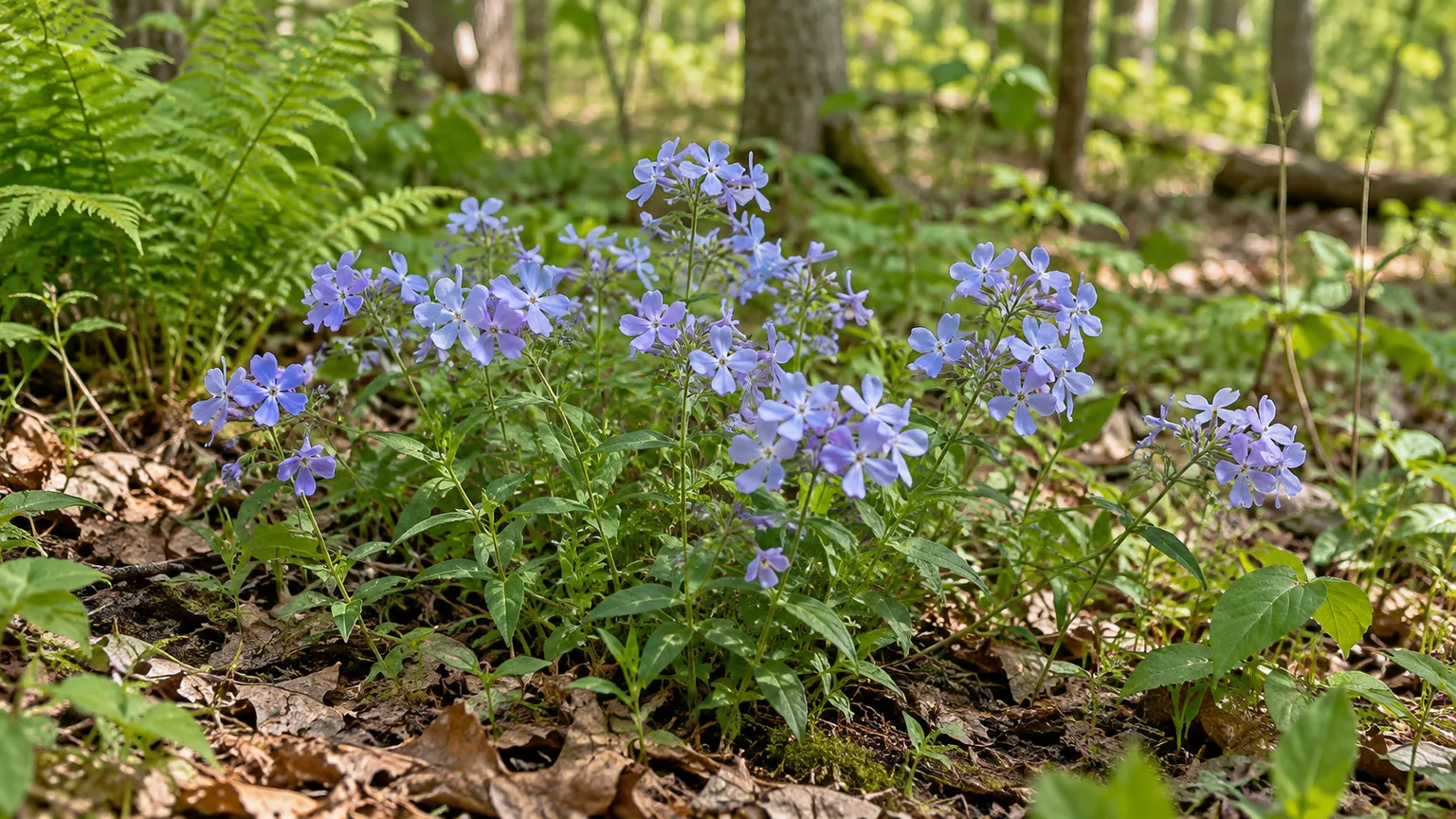
Woodland phlox performs best where spring light reaches the ground, summer shade keeps the soil from baking, and moisture drains away instead of pooling around its shallow roots. Get those three conditions right and this native perennial can return for years, opening clusters of fragrant blue, lavender, pink, or white flowers before many woodland plants reach full size.
The most common disappointment is planting it in a spot that is either too dry under a large tree or too dark and stagnant beneath dense shrubs. The guide below helps you choose the better site, set plants at the right depth, propagate without losing small divisions, and tell a seasonal slump from a problem that needs action.
Woodland phlox at a glance
| Growing detail | What to expect |
|---|---|
| Botanical name | Phlox divaricata |
| Habit | Herbaceous perennial with shallow roots and slowly spreading, rooting shoots |
| Typical size | About 6 to 12 inches tall, with a loose mat that expands over time |
| Light | Partial shade to shade; cooler sites can support more sun |
| Soil | Moist, humus-rich, and well drained |
| Bloom | Usually spring into early summer; timing shifts with region and weather |
| Propagation | Division, layering, softwood or basal cuttings, and seed |
| Hardiness | Commonly listed for USDA zones 3–8; local exposure matters |
Woodland phlox is not an indoor plant or an instant weed-proof carpet. Think of it as a low, spring-flowering layer for a woodland edge, shaded path, or the front of a naturalistic border. The foliage can persist after flowering, but the plant’s strongest visual moment is its spring bloom.
Confirm the plant before you buy
Phlox divaricata is also sold as wild blue phlox, blue phlox, or wild sweet William. It is a North American native with opposite, somewhat hairy leaves and loose flower clusters on stems that often rise above the low foliage. Wisconsin Extension describes five flat, petal-like lobes and a spreading habit; NC State notes that the species is often confused with dame’s rocket and other phlox. Where flowers are present, count the lobes: woodland phlox has five, while dame’s rocket has four. Flower color overlaps, so use petal count and the opposite leaf arrangement as field clues, then confirm the botanical name when buying. (Wisconsin Extension; NC State Extension; Birds & Blooms)
Compared with moss phlox (P. subulata), which has a dense, needle-leaved mat suited to sunnier, drier sites, woodland phlox has broader leaves and prefers shade with more consistent moisture. It also spreads more slowly than a vigorous creeping ground cover. The original clump can persist for many seasons when happy, while stolons gradually root at the nodes and extend the colony; avoid promising a fixed lifespan because site conditions and competition control how long an individual planting stays vigorous.
Choose dappled light based on your climate
Partial shade is the dependable starting point: filtered light beneath deciduous trees, morning sun followed by afternoon shade, or a bright woodland edge. In cool regions with moist soil, plants can tolerate more sun. In hot-summer areas, protect them from strong afternoon rays, which dry the shallow root zone and can shorten the display. Deep shade is not automatically better; very little air movement and light can leave foliage weak and increase mildew pressure. NC State and Wisconsin Extension both describe woodland phlox as a shade-adapted plant that can tolerate more sun in cooler conditions. (NC State Extension; Wisconsin Extension)
Look at the site in both seasons. Before nearby trees leaf out, the bed may seem sunny; by summer it may be shaded for most of the day. This is often a useful pattern for spring-flowering woodland plants, but newly planted phlox still needs moisture through its first summer. A position under a dense evergreen canopy can be harder than one under deciduous trees because it may be both dry and dark year-round.

Prepare soil that stays moist but drains
Aim for soil that feels cool and lightly moist after rain but does not hold standing water. Woodland phlox appreciates organic matter and adapts to a range of garden soils, including some clay and drier conditions once established. “Adaptable,” however, does not mean it will thrive in compacted soil that stays saturated. In a wet bed, correct drainage or choose a naturally better-drained site rather than planting into a pocket of compost that can collect water. (Wisconsin Extension; RHS)
If the soil is thin, loosen the planting area gently and blend a modest amount of finished compost or leaf mold into the surface layer. Woodland phlox has shallow roots, so avoid deep rototilling close to established tree roots. A light organic topdressing is usually more useful than trying to create a rich, sharply amended hole inside poor soil; an isolated pocket can hold water differently from the surrounding ground and make roots less likely to spread outward.
Plant nursery starts at the original crown depth
Plant container-grown woodland phlox in spring or early fall, when temperatures are mild and rain is more likely. Water the pot before planting, slide out the root ball, and tease apart circling roots only if they are tightly bound. Set the crown—the point where stems meet roots—level with the surrounding soil. Planting too deep can bury the crown; planting high can expose the shallow roots to drying.
Backfill with the loosened native soil, firm it lightly, and water until the root ball and nearby soil are evenly moist. Follow the nursery’s spacing advice where available; otherwise leave room for the loose clump to widen, then close gaps with compatible shade plants rather than packing young plants shoulder to shoulder. Keep the area weeded while plants establish, since phlox’s spreading shoots are not dense enough to smother every weed.
Water by root-zone moisture, not a calendar
During the first growing season, check moisture every few days during dry weather. If the soil just below the surface is dry, water slowly at the base so moisture reaches the root ball and surrounding soil. The goal is consistent moisture while new roots form, not a permanently wet bed. Rain, soil texture, shade, and heat all change how quickly a site dries, so a fixed daily schedule can overwater one garden and underwater another.
After establishment, woodland phlox can tolerate some dry spells, but drought tolerance is not the same as a preference for drought. If leaves wilt during a hot afternoon, check the soil before watering; some midday droop can reflect heat, while dry soil that stays dry the next morning calls for a deep drink. A thin mulch layer can slow evaporation. Avoid frequent shallow sprinkling, which wets the surface without replenishing the root zone. Wisconsin Extension and Gardening Know How both describe the plant as preferring medium moisture while tolerating drier conditions once established. (Wisconsin Extension; Gardening Know How)
Feed with leaf-rich organic matter, not heavy fertilizer
Woodland phlox usually needs little supplemental fertilizer in garden soil. A thin spring layer of finished compost or leaf mold can replenish organic matter and support soil structure, especially where leaves are routinely removed. If growth is healthy and flowering is normal, do not add a concentrated fertilizer simply because the bed looks quiet after bloom; the seasonal decline of the flowering stems is part of the plant’s cycle.
Keep mulch shallow and pull it back from the crown. A dense, wet layer piled directly against stems can keep foliage humid and hide emerging weeds or slugs. In natural woodland beds, shredded leaves make a useful mulch because they resemble the plant’s habitat and break down gradually. If you suspect a nutrient issue, assess drainage, light, root competition, and moisture first; fertilizer cannot solve a site mismatch.
Expect one spring flush and protect pollinators
Woodland phlox flowers from spring into early summer, often in April or May in warmer parts of its range and later farther north. The actual window shifts with latitude, elevation, and spring temperatures. Individual plants generally make one main flowering display rather than repeating all summer. Fragrant, tubular flowers are typically blue to violet, with occasional white or pink forms. Wisconsin Extension notes that seed production requires cross-pollination and that long-tongued insects, including bumblebees, swallowtails, skippers, and sphinx moths, can reach nectar in the flower tubes. (Wisconsin Extension; NC State Extension)
Let some flowers remain if you want seed capsules or gentle self-sowing. A mixed planting of native spring flowers can give pollinators more than one brief food source and makes the short bloom period feel intentional. If the flowers fail to open well, review the site’s light and moisture during bud development before adding fertilizer. Plants grown in too much shade, recently divided plants, and drought-stressed clumps may flower less even when their foliage survives.
Prune after bloom, but do not shear too early
During flowering, remove only damaged stems or spent flower clusters you want to tidy. Deadheading may prevent some seed from forming and keep a border neat, but it should not be treated as a reliable way to force a second flush. After the main display, you can cut back flowering stems if they look ragged or if mildew is developing. Leave healthy foliage in place so the plant can continue photosynthesizing and maintaining its low mat.
In late winter or early spring, remove foliage that has collapsed or browned over winter. In mild climates, woodland phlox may hold some semi-evergreen leaves, so a close autumn haircut is unnecessary. If you want seedlings, leave a portion of the seed capsules to mature; if you want a tidy edge or need to limit self-sowing, trim the spent stems after the capsules begin to dry. The right cleanup depends on whether you value a naturalized patch or a sharper border.
Divide and transplant the shallow-rooted mat
Division is the quickest way to make a plant identical to its parent. Choose spring before flowering or early fall, and work on a cool day when the soil is moist but not soggy. Use a spade to lift only part of the colony, then separate a rooted section with several shoots and a healthy amount of roots. Because the root system is shallow and spreading, you usually do not need to excavate the entire plant. Wisconsin Extension recommends detaching rooted stems in spring or early fall. (Wisconsin Extension)
Replant each division promptly at its original depth and water it in. Keep the soil evenly moist during establishment and mark the location if you divide in fall, when top growth may be fading. Avoid taking tiny, root-poor scraps from the edge; they dry out quickly and are slower to recover. If you are moving a whole clump, keep as much of the shallow root mat intact as practical and reduce disturbance to nearby tree roots.
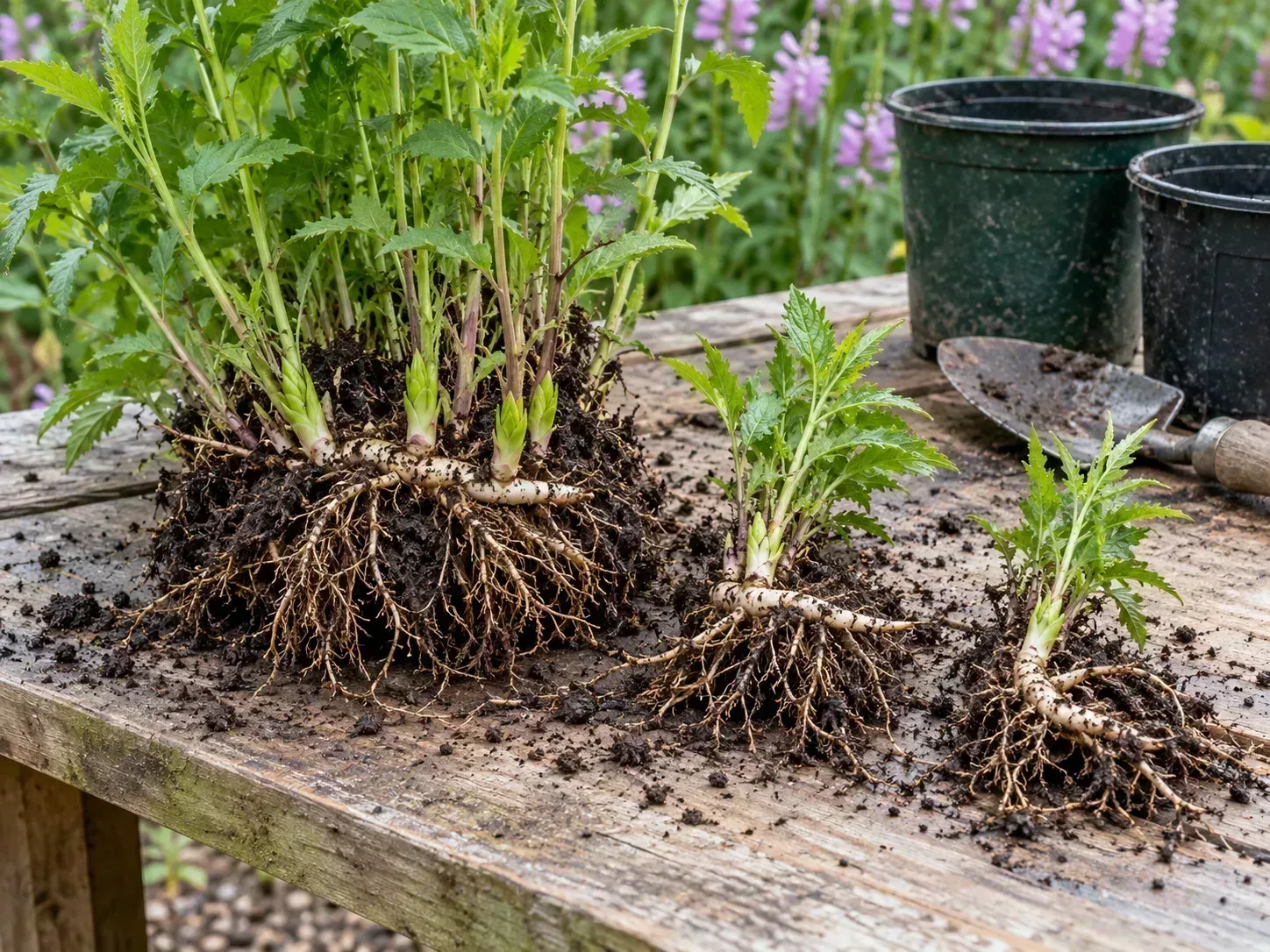
This image illustrates the division process; woodland phlox has a shallower, looser root mat.
Use cuttings or natural layering to make a clone
In spring, take a softwood or basal cutting from a healthy nonflowering shoot. Cut a short piece with several nodes, remove the leaves from the portion that will sit below the surface, and insert it into a clean, freely draining propagation mix. Keep the mix lightly moist and the cutting in bright shade while it roots. A clear cover can hold humidity, but vent it so condensation does not keep the leaves wet for long periods. The RHS lists softwood cuttings from nonflowering stems in spring as a propagation option. (RHS)
Check for resistance with a gentle tug after several weeks rather than pulling repeatedly. Once rooted, pot the cutting on or plant it into a prepared bed when conditions are mild, then keep it watered while it establishes. You can also use natural layering: a leafy shoot that rests on moist soil may root at a node. Once it has formed roots, sever it from the parent and transplant it. Layering is low-effort but slower and less predictable than dividing an established colony.
Grow woodland phlox from seed
Collect seed when the small capsules turn brown and begin to split, before they scatter. Sow fresh seed outdoors in fall for natural seasonal exposure, or give it a cold, moist period in the refrigerator using a lightly damp, clean medium. Wisconsin Extension gives a 30–60 day cold-moist stratification range and notes that germination can be extended; a second cold period may prompt additional seedlings. Seed is short-lived after harvest, so sow promptly rather than storing it for years. (Wisconsin Extension)
After stratification, sow the seed in a tray or prepared nursery bed and cover it lightly according to the seed supplier’s instructions. Keep the surface evenly moist without waterlogging it, and protect seedlings from slugs, birds, and drying winds. Germination may be staggered, so do not discard a tray just because the first few weeks are quiet. Transplant seedlings when they are large enough to handle and keep them in a nursery bed until they have a sturdy root system. Seedlings from named cultivars may not keep the parent’s exact flower color or habit; use division or cuttings when you need a true copy.
Pick a cultivar that fits the planting
The species is usually blue or violet-blue, but named selections can change the color, fragrance, or foliage effect. ‘Blue Moon’ is valued for fuller, deep blue-violet flowers; ‘Fuller’s White’ is a white-flowered option. ‘Chattahoochee’ has lavender flowers with a darker center, while ‘May Breeze’ is known for pale blue flowers. ‘Blue Ribbons’ adds creamy-edged foliage, so it contributes interest outside the bloom period. Wisconsin Extension documents these selections, and Epic Gardening’s phlox-variety guide describes ‘Blue Moon’ as a partial-shade woodland selection. (Wisconsin Extension; Epic Gardening)
Choose based on the actual growing conditions and the look you want rather than flower color alone. A variegated selection may need brighter shade to keep its pattern visible, while a blue-flowered form can blend naturally with spring bulbs and ferns. Availability varies, and cultivar names can be used inconsistently in retail listings, so check the full botanical name and purchase from a nursery that labels its plants carefully.
Design it as a loose spring ground layer
Use woodland phlox near a shaded path, beneath deciduous trees, along a north- or east-facing border, or at the front of a woodland garden where the flowers can be seen and smelled. Its open growth lets neighboring plants emerge through the foliage. It pairs well with spring bulbs and woodland perennials such as trilliums, bloodroot, columbine, ferns, and small hostas. The low, shallow-rooted mat can also soften the base of shrubs without demanding the dense coverage of a lawn substitute. (Wisconsin Extension)
Do not expect it to suppress weeds by itself. Wisconsin Extension specifically describes it as a loose cover that is not dense enough to outcompete most weeds. Weed the bed while the colony fills in, then use compatible plants or a light organic mulch to cover bare soil. The species spreads gradually as shoots root at nodes, especially where stems rest on moist ground; it is not as fast or as carpet-like as moss phlox. Give it room to naturalize, but divide or edge the colony if it reaches a path or crowds smaller neighbors.
Diagnose weak growth before adding fertilizer
When woodland phlox looks poor, first compare the site with its needs. Dry soil under a mature tree, heavy foot traffic over shallow roots, standing winter water, and dense shade can all reduce vigor. If the plant looked good in spring and faded after flowering, some decline is expected: the flowering stems die back after seed, while the remaining foliage stores energy for next year. Do not mistake this seasonal change for a nutrient emergency.
If there is no bloom, ask whether the plant is established, receiving spring light, and protected from drought while buds develop. If foliage is sparse or collapsing, check moisture and drainage at root depth and look for browsing or disease. Make one change at a time—adjust water, improve airflow, or move a badly sited division—so you can see which factor was actually limiting growth. A fertilizer application is useful only when the soil needs it; it cannot compensate for roots that are too wet, too dry, or crowded by tree roots.
Reduce powdery mildew pressure
Powdery mildew can coat the leaves with pale, dusty patches, particularly when foliage stays humid and air movement is poor. It is a known disease of woodland phlox, although mild cases may be mostly cosmetic. Plant in bright dappled shade rather than a stagnant, dark corner, avoid crowding, and direct irrigation to the soil instead of wetting leaves late in the day. Wisconsin Extension and RHS both identify powdery mildew as a susceptibility. (Wisconsin Extension; RHS)
After bloom, remove severely affected stems and discard them rather than leaving a thick mass over the crown. Clean pruners between affected plants. Do not cut every healthy leaf as soon as you see one patch; the remaining foliage is still supporting the roots. If mildew returns each year, the lasting fix is usually a better site or more airflow, not more water or fertilizer. Use any fungicide only if necessary and exactly as its label permits for the site and plant.
Check for spider mites and browsing
Spider mites are more likely during hot, dry weather. Look for fine pale stippling, bronzing, or delicate webbing on leaf undersides, then inspect closely before treating; drought stress can also dull or curl foliage. A firm rinse of the undersides can dislodge mites from a small planting. Water the root zone if the soil is dry and repeat inspections over several days, rather than assuming every yellow leaf signals an insect problem. NC State and Wisconsin Extension both flag spider mites in hot or dry conditions. (NC State Extension; Wisconsin Extension)
Rabbits may browse foliage, and deer resistance is moderate rather than guaranteed. If new shoots disappear, inspect for clipped stems and tracks before blaming disease. Protect a small new planting with a physical barrier while it establishes; repellents vary in effectiveness and must be reapplied according to their labels. Healthy established plants may tolerate some browsing, but repeated loss of spring growth can reduce flowering.
Protect plants through winter and regional extremes
Woodland phlox is hardy across much of USDA zones 3–8, but a hardiness-zone label describes winter minimum temperatures, not summer heat, humidity, drainage, or the moisture available under a tree. In cold areas, leave a thin layer of leaf mulch over newly planted divisions after the ground cools, without smothering the crowns. Established plants generally need no elaborate winter covering. In wet-winter gardens, prioritize drainage over adding a thick insulating mulch.
In hot regions, afternoon shade and moisture through the first summer matter more than extra feeding. In dry-summer climates, irrigate deeply during prolonged dry spells and use a restrained mulch layer to protect the shallow roots. Where summer humidity encourages mildew, space plants and neighboring perennials so air can move through the bed. The same plant can behave differently across these settings, so use the zone range as a starting point and adjust care to the actual microclimate.
Conclusion
Woodland phlox is easiest to grow when you treat it as a shallow-rooted woodland perennial rather than a tough, dense ground-cover mat. Give it filtered light, organic soil that drains, and dependable moisture while it establishes; then let the foliage remain after its short spring bloom so the plant can recover for next year.
If you want more plants, divide rooted shoots in spring or early fall, take spring cuttings, or start fresh seed with a cold, moist period. Watch the site before reaching for fertilizer: shade, summer drought, poor drainage, and stagnant air explain many weak plants. With the right placement and modest seasonal care, a small clump can develop into a fragrant, pollinator-friendly layer that fits naturally into a woodland bed.