Why Are My Lemon Tree Leaves Curling? Read the Clues
Lemon tree leaves curling? Compare leaf age, curl pattern, soil moisture, pest clues, and weather history to choose a safer, more targeted fix.
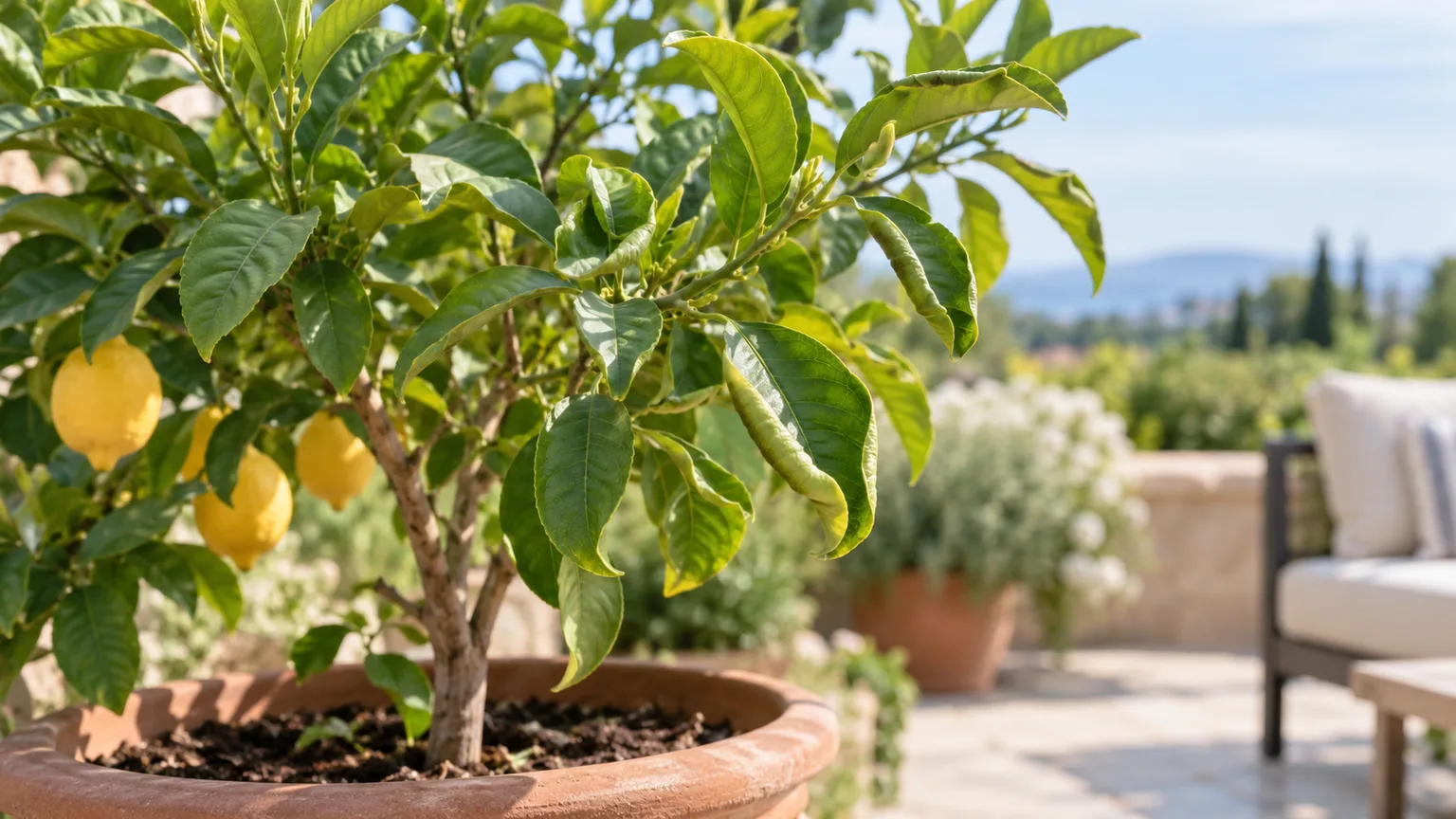
Curling leaves tell you that a lemon tree is under stress, but the curl itself does not identify the cause. A pot that is bone-dry and one that has stayed soggy can both produce curled foliage; so can heat, insects, citrus leafminer, nutrient or chemical injury, and a few diseases. Look at which leaves are affected and check the roots and undersides before you reach for the hose, fertilizer, pruning shears, or spray.
Start with the pattern, not a treatment
Take a minute to note what changed: a hot spell, several days of rain, a move indoors, a fresh fertilizer dose, a new spray, or a sudden flush of soft growth. Then check whether the curl affects just a few leaves or most of the canopy, and whether the leaves are firm, limp, crisp, yellowing, spotted, sticky, or marked with winding trails. These clues work together; no single curl direction is a reliable diagnosis by itself.
A quick symptom map
| What you see | Check next | What it may point to |
|---|---|---|
| Leaves roll lengthwise and feel dry; the pot is light or soil is dry below the surface | Moisture at root depth and recent heat | Drought or uneven watering |
| Leaves curl while the pot stays heavy and mix is wet | Drainage holes, standing water, roots | Waterlogged roots or root decline |
| Only soft new leaves twist, with pale winding tracks inside them | Hold the leaf to the light; inspect both sides | Citrus leafminer |
| New tips cup, pucker, or look misshapen; insects or sticky honeydew are present | Undersides, shoot tips, and branch joints | Aphids, scale, mealybugs, or mites |
| Damage follows a cold snap, hot dry wind, or abrupt move | Compare exposed side with sheltered growth | Temperature or weather stress |
| Leaves show patterned yellowing, black petiole marks, rapid drop, or twig dieback | Check the whole branch and fruit; note rain and spray history | Nutrient, chemical, or disease problem |
The table narrows the next inspection; it cannot replace it. For example, heat may increase water loss, but adding water to already-saturated soil will not help. Treat the visible condition you can verify, then wait for new growth to see whether the pattern changes.
Check whether the damage is on new or mature leaves
Citrus leafminer attacks tender, shiny new flush, not normally hardened older leaves. Winding translucent or silvery tunnels with a thin dark line of frass inside them, followed by a rolled leaf edge, are much stronger evidence than curl alone. UC IPM notes that mature backyard citrus usually tolerates this damage and that even young trees are unlikely to die from leafminer, although growth can slow. (UC IPM: Citrus Leafminer)
If older and newer leaves are all curling in roughly the same way, look first at water, weather, or something applied to the tree or nearby soil. If just the new flush is distorted, inspect it closely for insect feeding and tunnels before pruning it away. Keep a photo of one affected shoot and compare it after a week; a dated image helps you tell whether the damage is spreading or simply remains on tissue that was already injured.
Very young citrus leaves can look folded or cupped while they are still expanding, then flatten as they harden. That is different from a leaf that stays twisted, has a tunnel inside it, or is joined by several distorted shoots. If a single new leaf opens normally and the next flush looks healthy, monitor it instead of treating the whole tree.
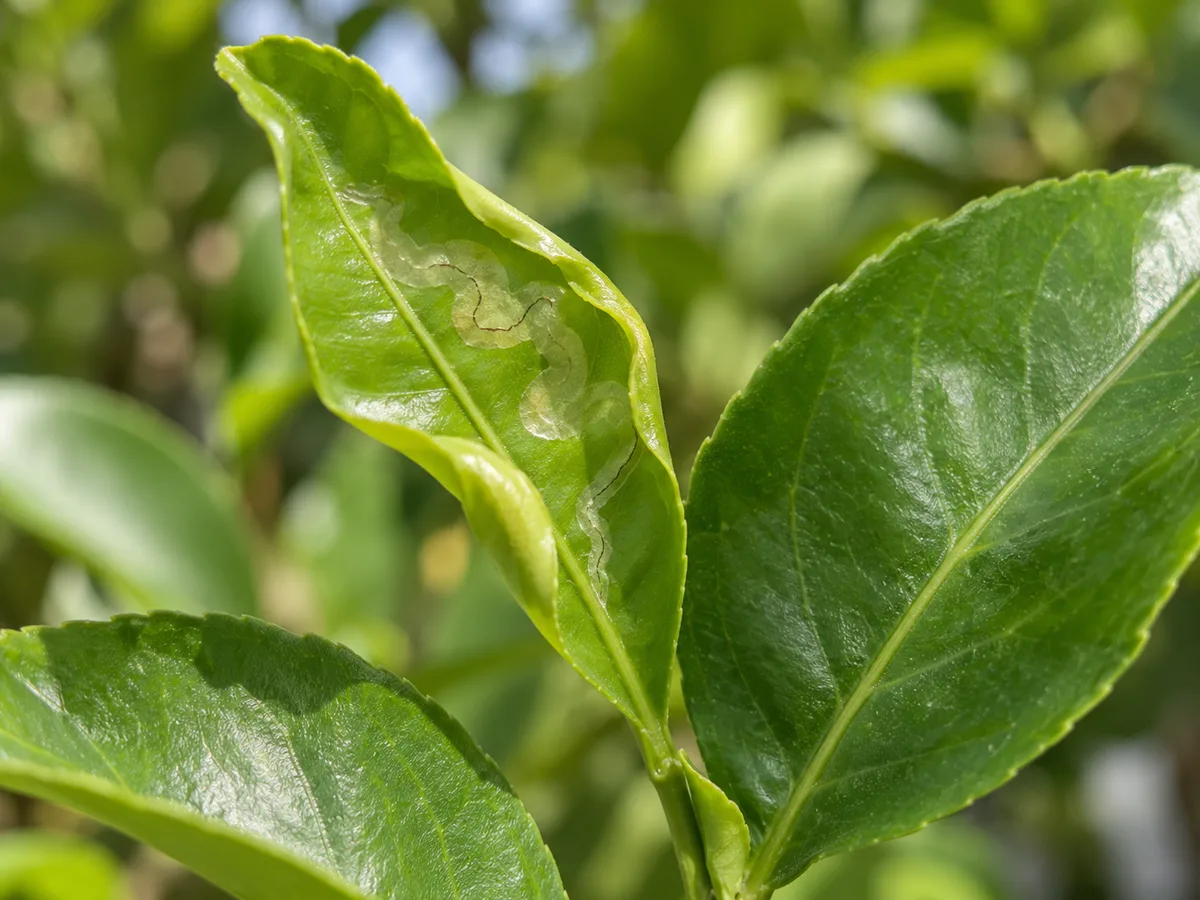
Leafminer tunnels develop inside tender new leaves; the damage pattern is more diagnostic than the curl alone.
Seven reasons lemon tree leaves curl
The same tree can have more than one problem. A container lemon moved into intense summer sun may dry faster and attract pests to tender growth, for instance. Work through these causes in order of how easily you can verify them, and avoid stacking several corrective treatments before you know which condition is present.
1. The root zone is too dry or dries unevenly
A dry lemon tree may roll leaves inward or lengthwise to limit water loss. The soil feels dry below the surface, a container feels unusually light, and leaf edges may become crisp if the stress lasts. In-ground trees can look dry even when the topsoil is dusty but the deeper root zone is moist, so check several inches down near the outer canopy rather than judging by the soil next to the trunk.
If the root zone is genuinely dry, water slowly and deeply so moisture reaches the active roots. In a pot, continue until water runs from the drainage holes, then empty the saucer; if peat-rich mix has become water-repellent, apply water in two or three passes with a short pause between them. For an in-ground tree, soak the soil beneath the canopy rather than giving the trunk a quick splash. Recheck before watering again, because the interval depends on pot size, weather, soil, tree size, and recent rain.
A tree that dries quickly may need a larger container only if roots have filled the current pot, not simply because leaves curled once. Mulch can slow evaporation around an in-ground tree, but keep it several inches away from the trunk. Tui’s citrus guidance also emphasizes adjusting water to weather and using free-draining soil rather than following one fixed schedule. (Tui Garden: Lemon tree leaves curling)
2. Wet soil or poor drainage is stressing the roots
Roots need both moisture and air. When a pot sits in water, its drainage holes are blocked, or garden soil stays saturated, roots can lose function; leaves may curl, yellow, or droop even though the plant has plenty of water around it. That is why “the leaves look thirsty” is not a safe reason to water until you check the mix.
Feel the soil several inches below the surface and inspect whether a saucer or decorative outer pot holds water. If the mix is wet, stop watering until it has begun to dry, remove standing water, and check that drainage holes are open. If a sour smell, blackened soft roots, or a soft stem base accompanies persistent wetness, root damage is more likely. Only unpot a container tree when those signs or poor drainage justify it; unnecessary root disturbance adds stress.
For a tree planted in heavy or low-lying soil, repeated watering pauses may not correct the underlying drainage problem. Redirect runoff, keep irrigation away from the trunk, and seek local advice before major digging or replanting. A lemon tree growing in a suitable, well-drained planting site is easier to keep evenly moist than one whose roots sit in compacted soil or a rain-catching depression. (UC IPM: Citrus disorders and leaf symptoms)
In a container, check that the root ball itself is wetting evenly: water can run down a gap between dry mix and the pot wall while the middle stays dry. In a garden bed, check more than one point beneath the canopy because irrigation may miss part of the root zone. These checks explain why “I watered yesterday” does not settle whether the roots are dry or waterlogged.
3. Heat, cold, wind, or a sudden move is stressing foliage
Hot sun, hot dry wind, cold exposure, and abrupt changes in light can all disrupt a lemon tree’s balance between water loss and root uptake. Leaves may curl on the most exposed side after a heat wave or dry wind, while frost injury often looks scorched, wilted, or dead on outer foliage after cold weather. A recently moved container can react to a sudden change in sun, wind, temperature, or watering rate even if the new location seems better on paper.
Match the pattern to the event. If only the sunny or wind-facing side is affected, protect it temporarily with a breathable shade screen or wind shelter while keeping the tree in bright conditions. Do not move a sun-grown tree straight into deep shade, and do not bring an outdoor tree into a dark room for an extended period merely to avoid one cool night. Container citrus can be moved gradually between indoor and outdoor conditions; make the transition in stages and keep watering tied to how quickly the mix dries.
Cold protection depends on cultivar, rootstock, tree age, duration, and local conditions, so use a regional citrus or frost advisory for temperature thresholds. A single short exposure and several hours of freezing weather are not equivalent. After a weather event, avoid pruning every curled leaf immediately; wait until live and dead wood are easier to distinguish, then remove only confirmed dead or damaged branches with clean tools.

4. Sap-feeding insects are distorting tender growth
Aphids, scale insects, mealybugs, and mites can weaken leaves as they feed. Aphids often cluster on soft shoot tips; scale looks like small fixed bumps on stems or leaf veins; mealybugs resemble cottony flecks; and mites can leave fine stippling or webbing. Sticky honeydew, ants moving up and down the trunk, or black sooty growth on leaves can point toward honeydew-producing insects, but ants alone do not identify the pest.
Inspect the undersides of several leaves and the newest stems with a phone camera or hand lens. If you find a small aphid colony, dislodge it with a firm stream of water and check the same shoot again after a few days. For scale or mealybugs, remove a few confirmed insects manually and recheck the tree; one rinse may miss insects tucked into joints. Tui’s citrus advice likewise recommends inspecting for sap-feeders and matching the response to what is actually present. (Tui Garden)
Do not apply neem oil, insecticidal soap, or a broad-spectrum insecticide just because the leaves curl. These products can injure foliage in hot weather, harm beneficial insects, or be inappropriate for an edible crop if the label does not allow that use. If treatment is warranted, use only a product labeled for the identified pest and citrus, follow all label directions, and avoid spraying open flowers or hot, drought-stressed leaves. UC IPM warns that broad-spectrum sprays can disrupt natural enemies that help suppress citrus leafminer and other pests. (UC IPM: Citrus Leafminer)
5. Citrus leafminer is rolling young leaves
Citrus leafminer larvae feed beneath the surface of tender leaves, leaving a pale, winding tunnel that may contain a dark frass line. As the larva reaches the edge, the leaf can roll around it, so the curl is often concentrated along one margin of fresh growth rather than affecting the whole tree. Older, hardened leaves generally are not the target; a mature canopy can often keep functioning despite unattractive new leaves.
The useful response is usually restraint. Leave mined leaves attached if they still have green tissue, because they continue making food for the tree. Avoid repeated pruning that creates more soft flush, and do not expect a surface spray to reach a larva protected inside the leaf. UC IPM says leafminer management on mature backyard citrus is generally limited to cultural practices that protect natural enemies; young trees may have slower growth, but the pest rarely kills them. (UC IPM: Citrus Leafminer)
A very young tree with repeated heavy damage deserves closer monitoring because it has less mature foliage to support growth. Even then, first identify the pest and consider local guidance before treating. If new leaves have no mines or frass, leafminer is probably not the explanation, and spraying or pruning will not solve a water, heat, or root problem.
6. Fertilizer, nutrient, salt, or herbicide injury is involved
Nutrient problems can change leaf color, size, and growth pattern, but curl alone is weak evidence of a specific deficiency. A citrus tree with nitrogen shortage may look pale overall; iron or zinc problems more often produce patterned yellowing between veins, especially on newer leaves. Potassium shortage can produce yellowing and downward-bent edges, but that still needs to be separated from water, root, and salt stress. UF/IFAS cautions that nutrient symptoms can be confused with herbicide, fungicide, physiological, or stress-related injury, and that an incorrect corrective application can make matters worse. (UF/IFAS Extension: Citrus Nutritional Disorders)
Think about what changed before you add fertilizer: Was there a concentrated feed, lawn treatment, weed spray, or repeated use of salty irrigation water? White crust on soil or a pot rim can suggest accumulated salts; sharply distorted growth limited to one exposed side may fit chemical drift better than a missing nutrient. If a nutrient issue remains plausible, use a soil or leaf test and local extension advice rather than adding several micronutrients at once. Some micronutrients, including boron, can injure a tree when overapplied.
Pause fertilizer while roots or leaves are stressed. Resume a citrus fertilizer only at the labeled rate and timing for the product and region after the root zone is functioning. If herbicide exposure is possible, prevent further contact and record which product was used nearby; do not try to counteract it by washing or feeding without a diagnosis. New leaves can show whether the stress has stopped, but existing curled or chemically marked leaves may stay distorted.
7. Disease or a wider root problem is affecting the tree
Disease becomes more plausible when curling appears with lesions, rapid leaf drop, dead twigs, fruit spots, or a decline that spreads beyond a few leaves. Citrus bacterial blast is associated with cool, wet, windy conditions in some regions. UC IPM describes small black or water-soaked spots beginning on the leaf petiole and moving toward the leaf axil; leaves may curl, brown, and drop, while twigs can die back. That cluster of signs is much more meaningful than curl by itself. (UC IPM: Bacterial Blast of Citrus)
Prolonged wet weather can also favor other diseases, while poor roots or root pathogens can create pale, wilted foliage across a larger part of the canopy. Check whether symptoms follow one branch, one exposed side, or the whole tree, and inspect the petioles, twigs, bark, and fruit. If the pattern resembles a regulated citrus disease—such as blotchy yellowing concentrated on one section of the tree together with twig decline or misshapen fruit—contact your local extension or plant-health authority for identification. A diagnosis based on a photograph or leaf curl alone is not dependable.
Do not spray copper or prune heavily as a precaution. Disease treatments differ, and incorrect pesticide timing or mixing can injure citrus. Remove only clearly dead or diseased material when local guidance supports it, clean tools between cuts, and dispose of suspect material according to local advice rather than moving it to another tree or compost pile. Better Homes and Gardens Australia also notes that citrus leaf curl can arise from pests, water, weather, or disease, reinforcing the need to identify the cause before treating. (Better Homes and Gardens Australia: Citrus leaf curl)
What to do in the first 24 hours
Use this order so one guess does not create a second problem. First, photograph the same affected shoot and note whether the leaves are new or mature, dry or limp, and curled across one side or throughout the canopy. Next, check soil moisture several inches down, confirm that container drainage works, and look for pests, honeydew, mines, petiole lesions, and recent spray or fertilizer exposure.
Then make one correction that matches the evidence: water only if the active root zone is dry; stop adding water if it is saturated; protect the tree from a confirmed weather extreme; or isolate and gently rinse a confirmed sap-feeding pest. If the leaves show leafminer tunnels, preserve functional foliage and avoid unnecessary pruning or broad-spectrum sprays. If the cause remains uncertain, hold off on fertilizer and pesticide until you can compare new evidence or ask a local extension office.
Keep a short log of the intervention and date. A plant may not look better the next morning because leaves damaged before the correction do not instantly recover. The useful measure is whether fresh leaves emerge normally and whether the curl is spreading to unaffected shoots.
For a potted tree, note whether the container is indoors, under an eave, or in full sun; those placements change how quickly rain reaches the mix and how quickly it dries. For an in-ground tree, note where the sprinkler or drip emitter sits and whether recent rain reached the soil beneath the canopy. Recording these details alongside a photo gives you a useful baseline if you need to ask a nursery, extension office, or citrus grower for help.
How to help new leaves recover—and when to ask for help
A leaf that has browned, dried, or been tunneled will not become pristine again. Mildly curled leaves may remain functional, so leave them unless they are dead, diseased, or in the way of an inspection. Removing every imperfect leaf reduces the canopy without correcting the cause. Once conditions improve, new growth is the clearest sign of recovery; expect its shape and color to reflect the conditions during its development.
Ask a local cooperative extension, citrus specialist, or plant diagnostic clinic for help if a young tree is rapidly losing leaves, a branch is dying back, black lesions appear at leaf bases, or a suspected regulated pest or disease is present in your region. Bring clear photos of the full tree, affected leaves from both sides, stems, soil surface, and any fruit; include the tree’s location, container or in-ground setup, recent weather, irrigation, fertilizer, and pesticide history. This context helps an expert distinguish a nutritional pattern from root stress or disease.
If you use a pesticide after identification, treat the product label as the controlling instruction for the edible crop, rate, temperature, protective equipment, re-entry period, and harvest interval. Never mix products or improvise a dose. A targeted, label-compliant response is safer for you, pollinators, the tree, and its fruit than repeating a treatment that has not been shown to fit the problem.
Conclusion
When lemon tree leaves curl, start with the tree’s new growth, root-zone moisture, leaf undersides, and recent weather or chemical exposure. Dry soil supports a careful deep watering; wet soil calls for drainage checks; winding mines point to leafminer; sticky colonies suggest sap-feeding insects; and black petiole lesions or branch dieback deserve a disease diagnosis. Because several causes overlap, use more than one clue before acting.
Correct the condition you can verify, avoid blanket fertilizer or pesticide treatments, and judge progress by the next flush rather than expecting damaged leaves to uncurl. If the whole tree is declining or you see lesions and dieback, local citrus expertise can prevent a guess from becoming a bigger problem.



