When to Water Trees in Fall: Timing and Soil Checks
A practical fall tree-watering plan based on soil moisture, rainfall, soil type, and freeze risk, with extra guidance for young trees and evergreens.
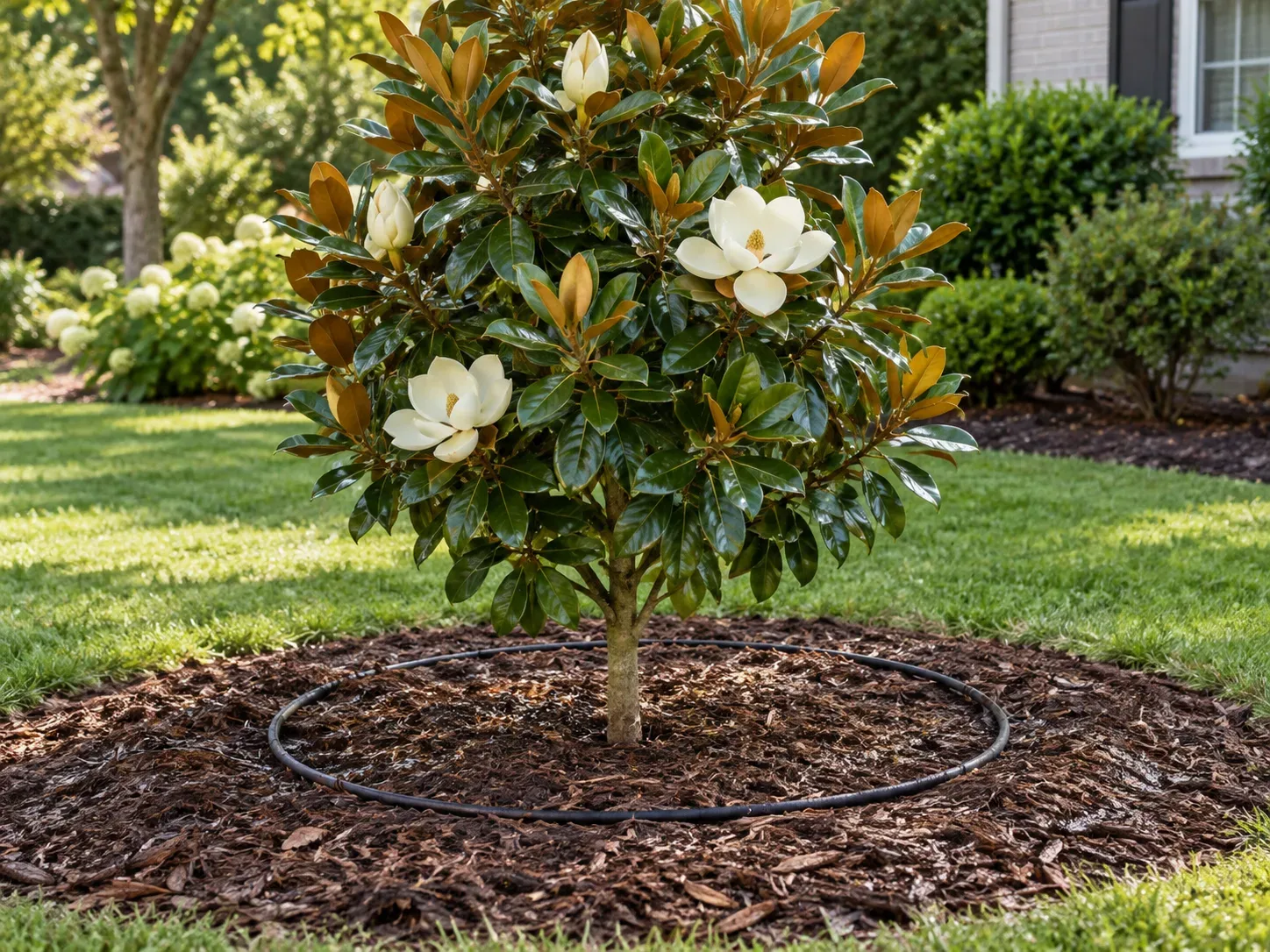
The Short Answer
Water a tree in fall when its root-zone soil is dry and rain has not replaced the moisture it needs. Keep checking through autumn, including after a deciduous tree drops its leaves; stop when the ground freezes, then consider watering during a winter thaw only if the soil has thawed, is dry, and local guidance supports it.
There is no universal date to stop watering. A newly planted tree in sandy soil after a dry September may need water while a mature tree in moist clay needs none. The reliable signal is moisture several inches below the surface, interpreted alongside rainfall, soil drainage, tree age, and the forecast.
Why Trees Can Still Dry Out When Growth Slows
A tree that has stopped making leaves or shoots still has living roots. Fall drought can kill fine feeder roots, weaken stored reserves, and leave damage that appears months later, after the tree has leafed out and spring weather turns hot. Colorado State University Extension notes that drought injury can be hard to spot at first and may show up later as leaf scorch, smaller leaves, early leaf color, dieback, or greater pest pressure (CSU Extension on mature shade trees).
Deciduous leaf drop is a seasonal event, not a moisture gauge. A dry fall can begin before leaves change color, and the absence of leaves does not mean the root zone has enough water; evergreens also continue losing moisture through their foliage during winter. Utah State University Extension describes winter desiccation as a mismatch between water available in the root zone and moisture lost from evergreen leaves, with wind and strong sun increasing the risk (USU Extension on winter desiccation).
Decide by Soil Moisture, Rainfall, and Freeze Conditions
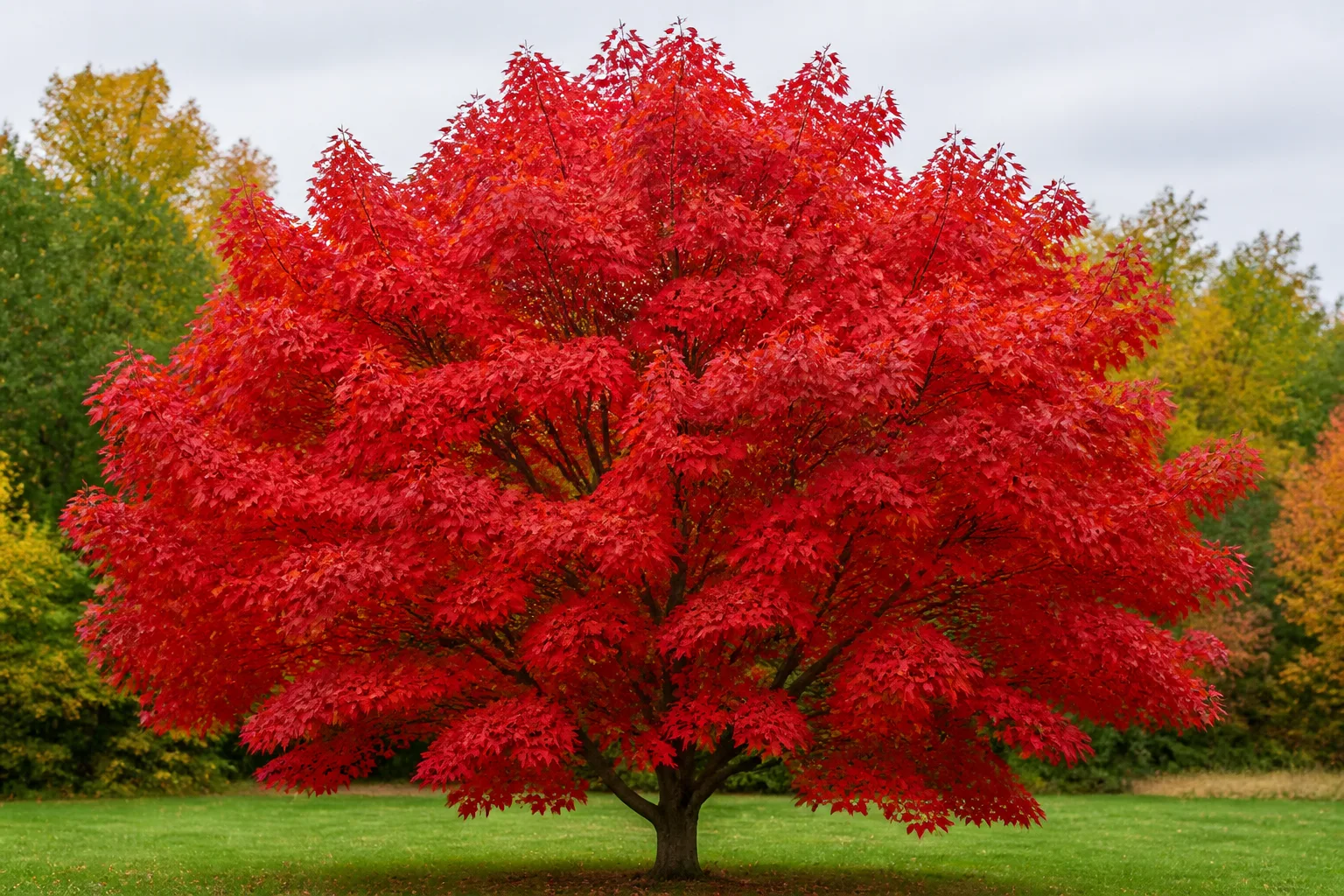
Start by asking whether the soil is dry where the tree can use water—not whether the calendar says October or the canopy looks thirsty. Count meaningful rain and snowmelt, but remember that a brief shower can wet mulch and the soil surface without soaking the broader root zone. Under a lawn, a sprinkler schedule may be helping the tree, but turf can also compete with tree roots for shallow moisture.
Colorado State Extension’s winter guidance is written for dry Colorado conditions: it recommends monitoring extended dry periods without snow cover and watering only when air and soil temperatures are above 40°F. Its more recent mature-tree guidance suggests supplemental winter watering when precipitation from October through April is below about one inch per month. Treat these as regional reference points rather than a national schedule; humid regions, heavy soils, and local water restrictions change the decision (CSU fall and winter watering guidance).
Check Moisture Below the Surface
Move mulch aside and check the soil in more than one place beneath the canopy. A hand trowel gives the clearest read: feel whether the soil several inches down is cool and moist or dry and crumbly. Colorado State advises watering mature trees when the top four to six inches have dried; Minnesota Extension uses dryness in the top six to nine inches of the root zone as its trigger for established trees. The exact depth differs by local guidance and soil, so use those ranges as a moisture-checking reference, not a reason to dig into major roots (CSU and University of Minnesota Extension).
A long screwdriver or soil probe can help compare damp and dry areas, but resistance is not a perfect moisture reading: compacted soil can stop a probe even when it is wet. Test a few locations, and if the probe meets resistance, open a small inspection hole with a trowel rather than forcing the rod. Check before watering and again later; do not keep irrigating just because the surface looks dry.
Which Trees Need Fall Water Most?
Prioritize trees that have limited roots, dry surroundings, or foliage that continues to lose water. That usually means recently planted or transplanted trees first, then evergreens and shallow-rooted species on exposed sites. Established trees in moist soil and climates with regular fall rain may not need extra irrigation at all.
Newly Planted and Recently Moved Trees
A new tree’s roots are still concentrated near the original root ball, so a dry spell can dehydrate that small volume of soil quickly. Water at planting and continue checking through the establishment period, even after temperatures cool. Minnesota Extension’s schedule for newly planted trees is frequent at first—daily during the first one to two weeks, every two to three days through weeks three to twelve, then weekly until roots establish—with adjustments when substantial rain arrives. That schedule is for its regional planting guidance, not a universal fall prescription; use your local extension schedule and keep the root ball moist without leaving it saturated (UMN Extension on newly planted trees).
An Upper Midwest fall-care article in Northern Gardener also recommends checking soil around recently planted trees and continuing supplemental water until the ground freezes. Its weekly and every-second- or third-week examples are regional cues, not universal intervals; adjust them to local rain and soil (Northern Gardener’s autumn watering guidance).
Establishment can take more than one growing season, especially for larger nursery stock. Colorado State uses roughly one year per inch of trunk diameter as a rule of thumb, while Minnesota’s chart estimates longer establishment times for newly planted trees. These are not contradictory guarantees: climate, root-ball size, species, and site conditions matter. Keep monitoring soil around the root ball and the surrounding backfill instead of deciding that a tree is established because it has passed a fixed birthday.
Evergreens and Shallow-Rooted Species
Evergreens can lose water through their needles or leaves during sunny, windy winter weather even though growth is slow. Give them extra attention during a dry autumn, particularly if they were planted recently or sit in an exposed location. A thirsty evergreen may show browning or scorch after the water deficit has already done damage, so a soil check is more useful than waiting for foliage symptoms.
Some deciduous trees also deserve priority because their roots tend to be relatively shallow or they are vulnerable to dry winter conditions. Colorado State Extension lists birches, several maples, lindens, alders, dogwoods, willows, and mountain ashes among trees that may need supplemental water during extended dry periods. Species lists vary by region, so treat them as a prompt to check moisture, not a guarantee that every tree in the group needs irrigation every fall.
Mature Trees, Lawns, and Wet Sites
Mature trees have a larger root system and can draw on more soil, but they are not immune to drought—especially after a hot, dry summer, during a prolonged rainless fall, or where pavement and construction have restricted roots. A mature tree in a lawn may receive some irrigation, but grass uses water too. Check the soil around the tree rather than assuming the lawn’s green color proves the deeper root zone is moist.
On the other hand, a low spot, compacted clay, or poorly drained planting site can remain saturated well after rain. If the ground is soft, puddled, or has a sour smell, do not add more water; poor soil oxygen can injure roots just as drought can. Correct drainage problems or seek local arboricultural advice if water stands for days around a valuable tree.
Where Water Should Go
Do not concentrate every gallon against the trunk. Most of the water-absorbing fine roots are in the upper soil and spread through a wide area; mature roots commonly extend beyond the canopy, although the actual pattern depends on soil, species, and obstructions. Water broadly beneath the canopy and, where practical, near and just beyond the dripline—the canopy’s outer edge—rather than treating the dripline as a narrow ring where all feeder roots live.
For a newly planted tree, keep the original root ball and the adjacent backfill evenly moist so roots can expand outward. As the tree grows, move emitters or the hose farther out; a drip line left in the same small circle can keep watering the old root zone while newer roots remain dry. Utah State Extension likewise recommends placing irrigation near or beyond canopy coverage and checking soil moisture after the system runs (USU Extension tree-care guidance).
How to Water Slowly Without Flooding Roots
A slow application gives water time to infiltrate instead of running over the surface or collecting in a basin. Place a hose on a low trickle at several points under the canopy, or loop a soaker hose through the root zone. If water begins running downhill, pooling, or reaching a walkway, pause and let the soil absorb it before continuing.
The goal is a broadly moist root zone, not mud and not a single wet spot around the trunk. In a mature tree, a lawn sprinkler may work if it covers enough of the tree’s root area; use a rain gauge or several straight-sided containers to see how much water the system actually delivers. Colorado State’s mature-tree guide notes that a soaker hose may need to run for hours to apply a substantial amount because flow and hose length vary. A timer is useful only after you have checked what that timer delivers in your soil.
Davey Tree’s practical fall guide likewise recommends slow, infrequent watering to limit runoff, while its gallon estimates should be treated as regional guidance rather than a universal formula (Davey Tree’s fall watering guidance).
Choose a Delivery Method You Can Monitor
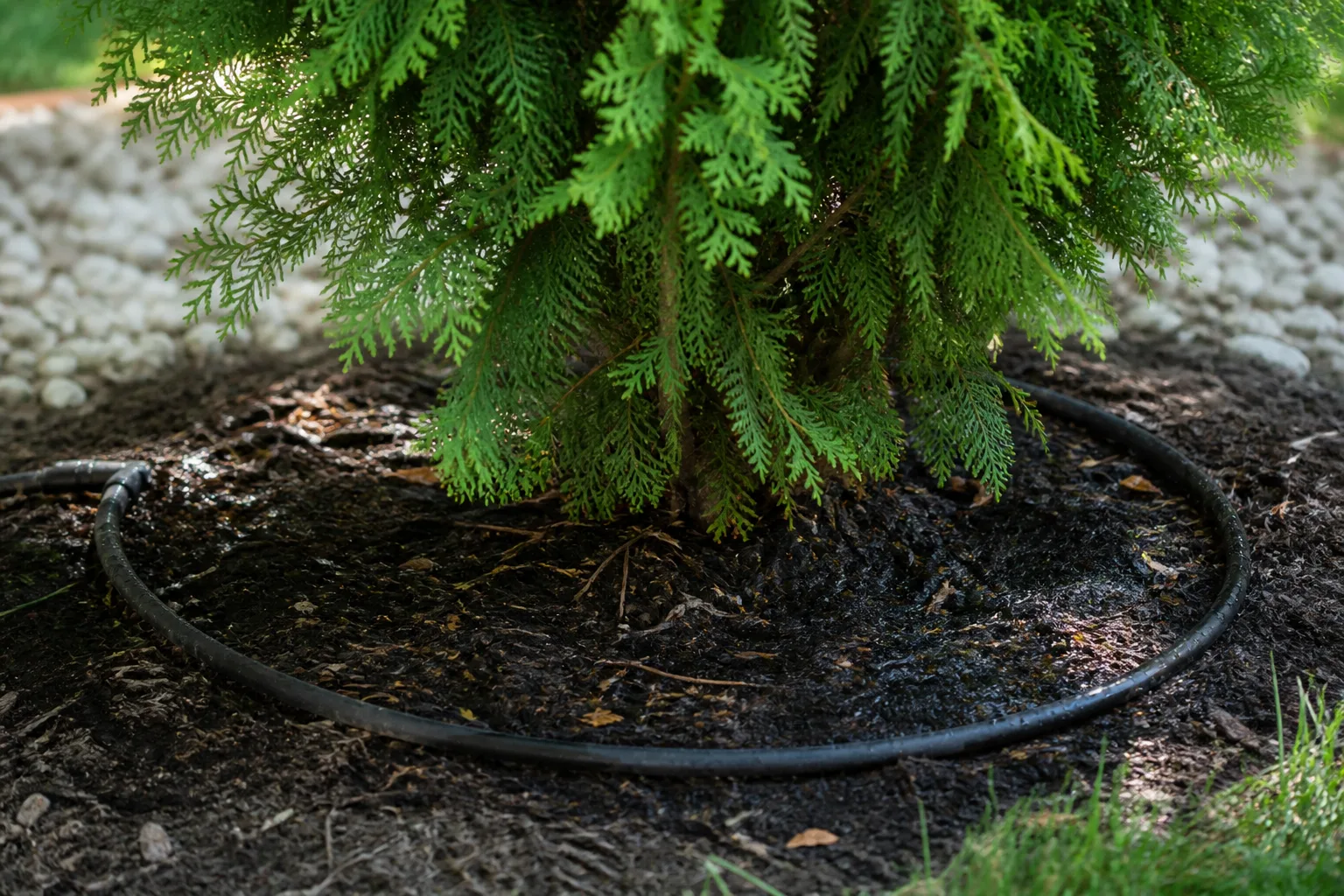
A garden hose set to a gentle flow is easy to reposition and works well for a small or medium tree. A soaker hose or dripline is helpful when it can be arranged over enough of the root area, but check emitters and move them outward as the tree grows. For recently planted trees, a slow-fill reservoir or watering bag can keep the root ball from drying between checks, but do not let a bag hide a saturated trunk or become a permanent substitute for inspecting the soil.
Avoid assuming that a deep-root fork is automatically better because it injects water deeper. Many absorbing roots are close to the surface; Colorado State Extension says a hose, sprinkler, or soaker hose is often more effective for a mature tree than a deep-root watering device. Apply water at the soil surface slowly enough to soak down, then confirm that the root zone is moist.
Use Gallons as a Starting Point, Not a Universal Formula
You may see a rule of ten gallons per inch of trunk diameter in tree-watering advice. Colorado State publishes that as a general survival guideline for its fall and winter conditions, while Minnesota’s establishment chart gives one to one-and-a-half gallons per inch of caliper at each watering for newly planted trees. Those figures describe different settings and watering schedules; do not average them or assume either number fits every tree.
If you use a gallon estimate, measure the trunk as the source specifies, account for rainfall, and then verify the result in the soil. One-inch caliper on a newly planted tree is not the same watering situation as a mature shade tree with roots under an entire lawn. Soil depth, drainage, root spread, hose output, and recent precipitation matter more than a universal gallon count.
Adjust for Soil and Local Climate
Sandy soil drains quickly, so it may need smaller, more frequent applications during dry periods. Clay holds water longer but absorbs it slowly; use a trickle or cycle-and-soak approach, and stop if water ponds. Compacted soil can shed water rather than absorb it, so check whether irrigation is actually entering the root zone instead of assuming a longer hose run will solve the problem.
Climate changes the end point. In a cold-winter area, aim to water during a dry spell before the ground freezes. Colorado State’s advice to water above 40°F and without snow cover is useful for its dry, freeze-prone region, but local extension guidance should take precedence elsewhere. In a mild-winter region where the soil rarely freezes, a dry month can still call for irrigation, particularly for new trees and evergreens.
Wind, reflected heat from south- or west-facing walls, slopes, and nearby pavement can make one part of a yard dry faster than another. Roof overhangs can keep rain off a young tree, while a dense lawn can compete with it for water. Inspect the actual site around each tree rather than applying the same fall schedule to every tree in the yard.
When to Stop and Whether to Water in Winter
In cold climates, stop when the soil is frozen enough that water cannot soak into the root zone. A forecasted frost is not the same as frozen ground: if the soil is still workable and dry, water on a mild day with enough daylight for infiltration. Colorado State recommends watering only when air temperatures are above 40°F and applying water around midday so it has time to soak before night temperatures fall. That is a regional safety guideline, not a universal temperature switch.
A winter thaw can create another short watering window if the soil has thawed, is dry, and there is no snow or meaningful precipitation. This matters most in dry climates and for newly planted or evergreen trees. Never irrigate onto frozen ground, and avoid creating ice on sidewalks, driveways, or roads. If your local extension office advises against winter watering for your climate or soil, follow that regional recommendation.
Better Homes & Gardens similarly treats frozen ground as a boundary and reserves additional winter water for unfrozen, dry periods. Use that as a cross-check against local extension advice, not as a replacement for it (BHG’s winter watering guide).
The practical stopping point is therefore not a date, leaf drop, or the first cold night. It is the point when the root zone becomes frozen or already has enough moisture for the tree’s needs. For a wet fall, that may mean no special deep watering; for a dry fall followed by a snowless winter, checks may still be worthwhile.
Mulch Helps, but It Does Not Replace Water
A layer of organic mulch reduces surface evaporation and buffers soil temperature, which helps preserve moisture between rain or irrigation. Keep mulch in a broad ring over the root zone rather than piling it against the trunk. Utah State Extension recommends roughly two to four inches of organic mulch for tree care, kept away from the trunk; check local guidance for the right depth and material at your site.
Mulch is not a substitute for a moisture check. A thick layer can look damp while soil beneath it is dry, or it can hide a persistently wet planting area. Pull it back in a few spots, feel the soil, water only when needed, then return it without creating a tight mound around the bark.
Fall-Watering Mistakes That Stress Trees
The first mistake is stopping in early fall just because days are shorter or leaves have started to change. If the soil is dry, a tree may still need water; the opposite mistake is giving every tree a large late-season soak when the soil is already wet. A calendar can remind you to inspect, but it cannot replace that inspection.
The second mistake is watering only at the trunk or using short, frequent splashes that wet the surface but not the broader root area. Water slowly across the root zone, then check moisture below the surface. Keep the soil moist, not soggy, and make sure a sprinkler is not watering only turf while the tree’s root area remains dry.
Another common error is treating a gallon-per-inch formula as a guarantee. Guidance varies by region and tree age, and the same volume behaves differently in sand, loam, and clay. Do not water frozen or saturated soil, do not force a probe through major roots, and do not wait for brown needles or scorched leaves before checking for drought.
A Practical Fall-Watering Routine
Use this short routine each time a dry stretch makes you wonder whether to water:
- Check recent precipitation. Include rain and snowmelt that reached the tree’s root area; discount a brief shower that only wet the mulch.
- Inspect soil in several spots. Move mulch aside and test beneath the canopy with a trowel or probe. If the root zone is still moist, wait and check again later.
- Prioritize young and exposed trees. Newly planted trees, evergreens, and trees beside pavement or under roof eaves usually deserve the closest monitoring.
- Choose a safe weather window. Before winter, water when the soil is unfrozen and the day is mild enough for infiltration. Follow local temperature guidance in cold climates.
- Apply water slowly and broadly. Use a low-flow hose, sprinkler, soaker hose, or dripline over the root zone. Pause if water ponds or runs off.
- Recheck the soil. Confirm that moisture reached several inches down, then stop. If the ground later freezes, wait for an unfrozen dry spell before considering another watering.
A gardener who repeats this routine after dry periods can avoid both calendar-based drought and needless irrigation. It also gives you a clear reason to leave the hose put away when rain has already done the work.
Conclusion
Water trees in fall when the root zone is dry, not because a date, leaf-drop stage, or one-size schedule says it is time. Give new trees, evergreens, and exposed or shallow-rooted trees the closest attention; water slowly across the roots, account for soil and rainfall, and stop once the ground freezes or stays adequately moist.
In short: check the soil, choose a mild unfrozen window, and let local conditions set the schedule.



