Best Plants to Grow Under Evergreen Trees for Dry Shade
Find plants for dry shade under evergreen trees, compare options for different moisture levels, and learn how to plant without damaging tree roots.
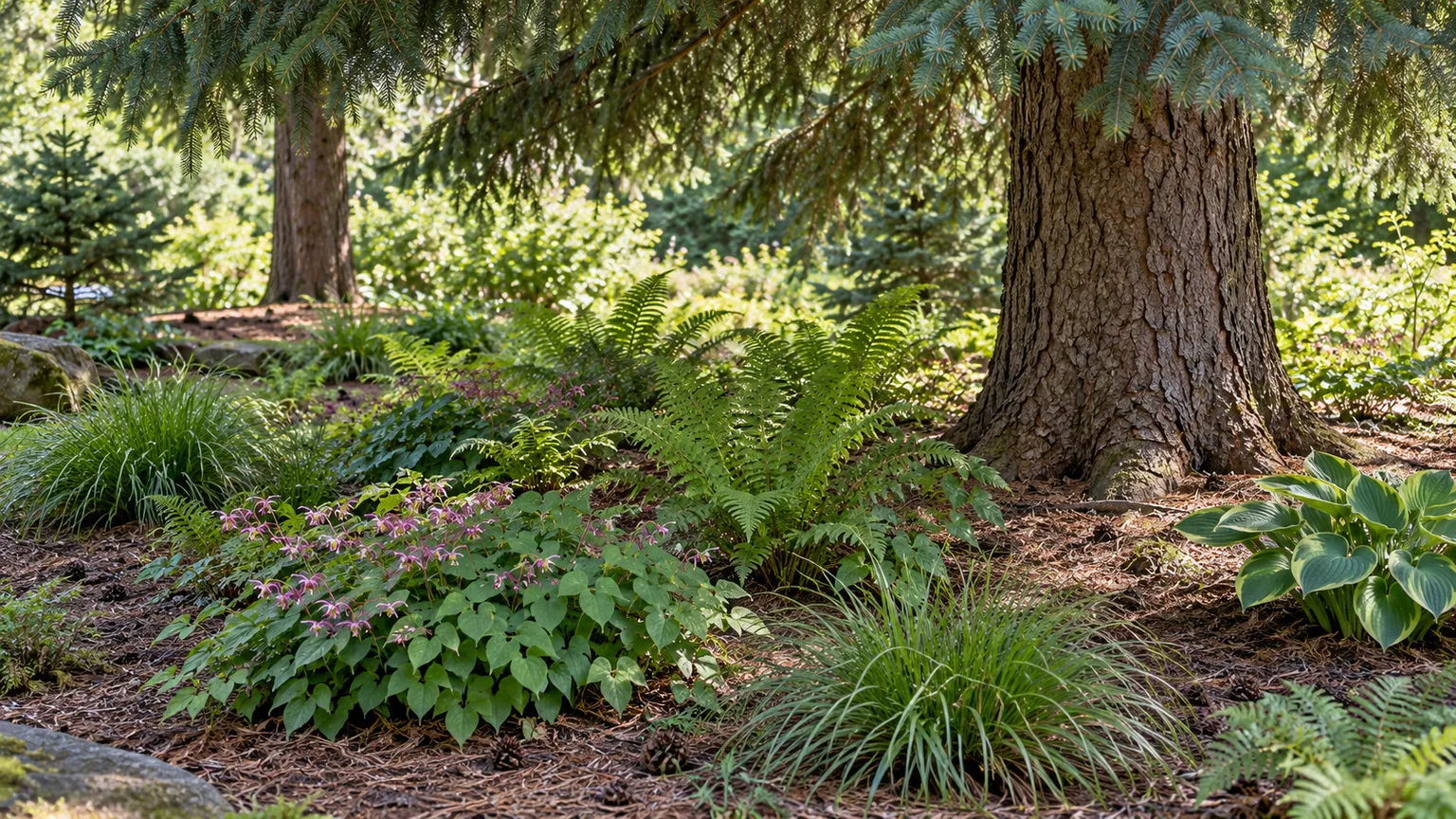
The best plants to grow under evergreen trees are usually shade-tolerant plants that can handle dry soil after establishment, but there is no universal list that works beneath every pine, spruce, fir, or broadleaf evergreen. A sparse pine canopy with a damp, open edge is a different garden from a low-branched spruce over dry, compacted soil. Start by checking light and moisture, then choose modest plants for the easiest pockets rather than trying to turn the entire root zone into a lush bed.
Evergreen shade is only part of the problem. Tree roots compete for water and make digging difficult, while fallen needles and twigs can build a surface layer that blocks small seedlings. Those are separate constraints, and the right response depends on which one is strongest at your site.
Quick answer: match the plant to light and moisture
For a relatively dry, shady site, consider barrenwort (Epimedium spp.), Pennsylvania sedge (Carex pensylvanica), or wild ginger (Asarum canadense) if they are suited to your region. Where the canopy edge is brighter and soil stays moist, a hosta or foamflower can be worth trying. Use small starts, plant only where a hand trowel can make a small opening without striking a substantial root, and water new plants through their first growing season.
| Site condition | Plants to consider | What to check first |
|---|---|---|
| Dry, shaded ground beneath a mature tree | Barrenwort, Pennsylvania sedge, wild ginger, or a locally appropriate dry-shade perennial | Regional hardiness, native status, and whether the site receives any rainfall |
| Dappled or part shade near the canopy edge | Foamflower, hosta, woodland geranium, or other shade perennials | Whether the soil stays evenly moist in summer |
| Very dense shade, exposed roots, or persistently dry soil | Thin organic mulch or pine needle litter with no new plants | Keep the root flare open; avoid deep soil additions or repeated digging |
This table is a starting point, not a promise. A plant described as shade tolerant can still fail if the ground is bone dry, and drought tolerance after establishment does not mean a newly planted division can survive without water.
Why plants struggle beneath evergreens
Royal Horticultural Society guidance describes planting beneath conifers as especially difficult because the ground is often dry, receives year-round shade, and collects needles and debris. The severity varies by tree and site: even among conifers, canopy form, branch height, crown density, and root distribution are not identical. The RHS guide to planting under trees recommends paying attention to these conditions rather than treating every tree base as the same kind of shade bed.
Year-round shade changes the light
Deciduous trees often let more spring light reach the ground before their leaves open; evergreens keep foliage through winter and usually shade the same area through more of the year. Yet “evergreen” does not automatically mean deep darkness. An open pine canopy may admit filtered light, while a dense spruce or low, spreading conifer can shade nearly all the ground below its branches.
The direction and height of the canopy matter too. The soil just outside the drip line may receive more direct or dappled light than the ground near the trunk. In a northern hemisphere garden, a brighter south or west side can also be warmer and may catch more wind-driven rain than the colder, shadier side. Use the canopy edge for plants that need more light, and reserve the darkest interior for foliage plants or a simple surface cover.
If you are unsure how dark the site is, watch it over a full day in spring and again in summer. Note when direct sun reaches the ground, whether light is filtered through open branches, and whether the light changes as the sun moves. A few hours of gentle morning light is not the same as several hours of hot afternoon sun, so compare observations with the plant’s label and local growing guidance.
Root competition limits water and planting space
Established tree roots absorb water and nutrients from a broad area, including ground beyond the visible crown. Some fine roots also lie close to the surface, where they need soil air and can be damaged by deep digging or compaction. Penn State Extension notes that plants beneath trees must tolerate shade and variable moisture, and recommends small planting holes and small starts to limit disturbance. Its underplanting guidance also names several evergreens, including pine and hemlock, among trees that can be sensitive to root disturbance.
Root competition is not just a problem for seedlings after planting. It can leave little loose soil for a new plant’s own roots to enter, especially beneath a mature tree or where surface roots form a close mesh. If your trowel repeatedly meets roots, move the plant, reduce the number of plants, or stop. Do not cut a large root or lever the tool against it to make room for a perennial.
This is why a small plug or division is often more practical than a large container plant. It needs a smaller hole and can be tucked into an open pocket. But a plug still needs water and time to establish; it does not magically bypass a dry root zone.
Needle litter affects the surface, not just soil pH
Pine needles are acidic when they first fall, but that does not mean they quickly turn all the mineral soil below a tree into highly acidic ground. University of New Hampshire Extension addresses this common misconception in its explanation of pine trees, needles, and soil acidity. Do not add lime or sulfur based on the presence of needles alone; test the soil first if pH is relevant to the plant you want to grow.
Needle litter can still affect a planting in practical ways. A thick, interlocked layer can cover tiny seedlings, keep seed from reaching soil, and make it difficult to see or water the ground. Branch debris may accumulate as well. The RHS specifically notes that needles and debris can make it hard for plants, including grass, to grow under conifers. Lightly move litter away from the small area you are planting, then allow a thin, natural layer to remain between plants.
Keep tree type and soil moisture in view
“Evergreen” includes needle-leaved trees such as pine, spruce, fir, and hemlock, as well as broadleaf evergreens such as holly in climates where it grows. These plants differ in crown shape, root behavior, litter, and tolerance of disturbance. The RHS conifer growing guide describes a broad range of conifer forms and foliage, which is a useful reminder that one conifer is not a reliable stand-in for another.
The site itself changes the outcome too. Sandy soil can drain quickly; compacted clay may hold water near the surface but still dry hard between rains; a slope may shed water; and roof runoff can create a wetter pocket. A young, recently planted evergreen has different needs and resilience from a mature tree. If the tree is newly planted, visibly stressed, or valuable, prioritize its establishment and avoid adding thirsty competitors around the base.
Read the site before you choose plants
Spend a week observing the area before shopping. Look at the trunk flare, visible roots, canopy edge, existing ground cover, and any spots where rainwater runs or pools. The goal is not to dig test holes around the tree; it is to use the surface and a few low-impact moisture checks to learn where a plant might have a reasonable chance.
Identify the tree and canopy pattern
If you can, identify the tree species or at least whether it is a pine, spruce, fir, hemlock, yew, or broadleaf evergreen. A local arborist or extension office can help if the tree is unknown and root disturbance is a concern. Some tree species are particularly sensitive to excavation, so the identity can change how conservative you should be.
Look up through the branches. High, open limbs may create a bright perimeter, while low, dense branches can exclude both light and rain close to the trunk. The drip line—the rough edge where rain runs off the canopy—can help you sketch the planting area, but it is not a guarantee of root extent or moisture. Roots often extend beyond the crown, and a drip line can be a transition rather than a hard boundary.
Check soil moisture, drainage, and exposure
Check the soil surface after several dry days, not only after rain. If you can reach an open patch without digging into roots, feel the top few inches with your fingers or a small hand tool. Note whether the soil is crumbly, dusty, hard, damp, or waterlogged, and compare a patch near the trunk with one at the canopy edge.
Do not assume deep shade equals moist soil. Evergreen foliage can intercept rainfall, and tree roots keep using water throughout the growing season. Conversely, some sites have deep, moisture-retentive soil and can support plants that need more regular water. If you want acid-loving plants, use a soil test rather than judging acidity from pine needles, bark, or the name of the tree.
Make a simple site map with three zones: the root-heavy interior, the brighter canopy edge, and any damp or sloped pockets. It is often better to plant only the easiest of these zones than to force a uniform ring of greenery around the entire tree.
Best plants for the conditions beneath evergreens
Choose the plant by matching four things: light, moisture, soil, and mature spread. Then check the plant’s hardiness and status in your region. A ground cover that is a tidy choice in one climate may spread aggressively or be restricted in another, and a “dry shade” label still assumes the plant receives water while it establishes.
Choices for dry shade
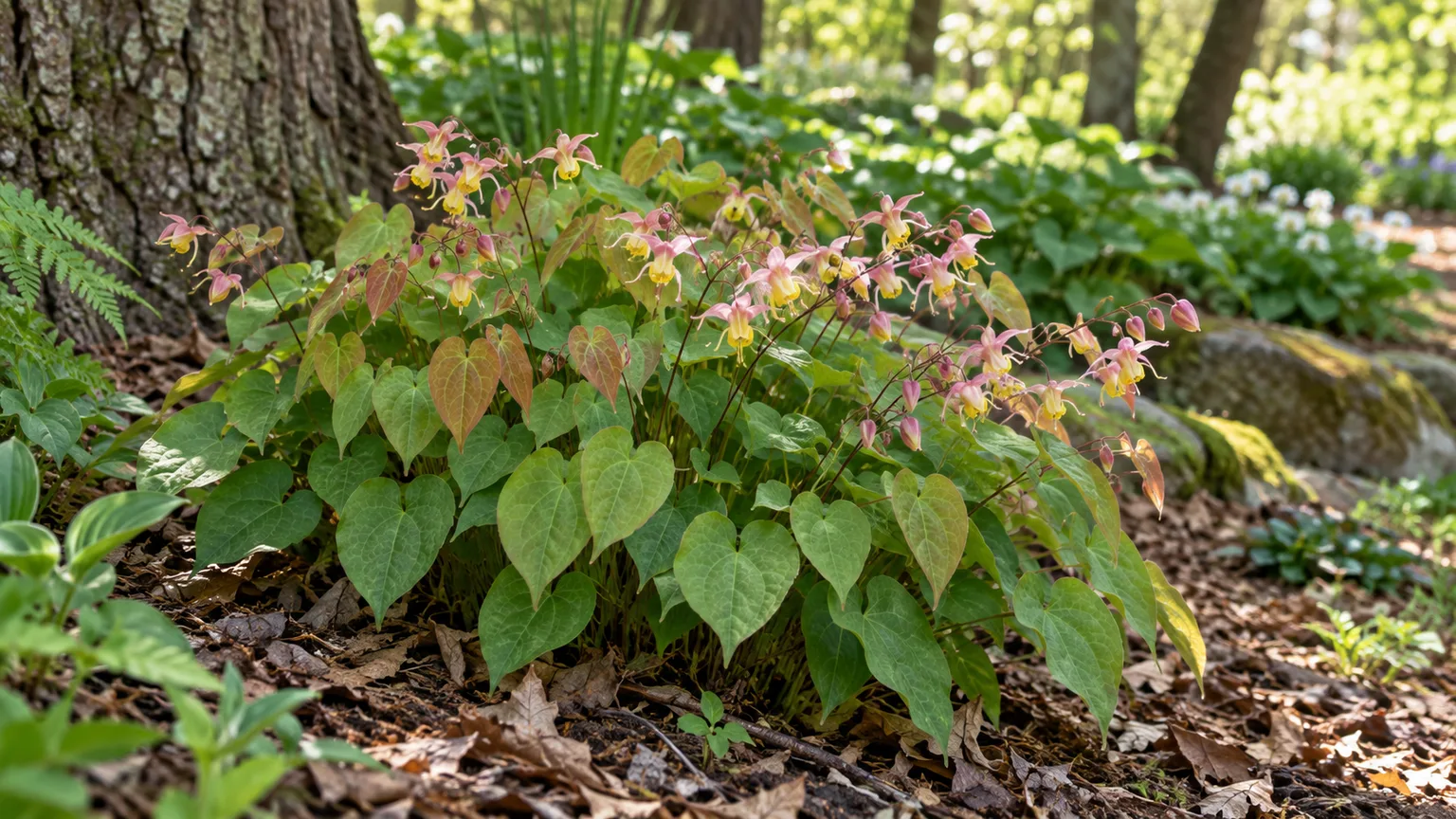
Barrenwort (Epimedium spp.) is a useful starting point for dry shade because it forms low clumps or mats and is grown for spring flowers and foliage. Penn State includes barrenwort in its dry-shade perennial list, and Fine Gardening’s ground-cover recommendations for shade discuss epimediums among options for challenging shade. Cultivars differ in hardiness and spread, so select one suited to your climate and give new plants supplemental water until established.
Pennsylvania sedge (Carex pensylvanica) can work as a soft, grasslike ground layer in suitable parts of eastern North America. It is a regional native option rather than a universal lawn substitute; verify that the species is native and appropriate where you live. It can tolerate shade and relatively dry conditions once settled, but it will not form a dense, instantly finished carpet in every root zone.
Wild ginger (Asarum canadense) is another North American woodland choice where it is native and available. It makes a low leafy cover, but the local soil and climate still matter. Do not confuse a plant that tolerates dry shade with one that welcomes prolonged drought: water new divisions, and be prepared for slower establishment beneath a large evergreen.
Dry-tolerant ferns such as Christmas fern or marginal wood fern may be considered in climates where they are hardy, particularly at a brighter canopy edge. Ferns are not interchangeable, however; many prefer humus-rich soil that stays evenly moist. Read species-specific care information and avoid putting a moisture-loving fern in the driest pocket just because it is labeled for shade.
Choices for brighter shade with steadier moisture
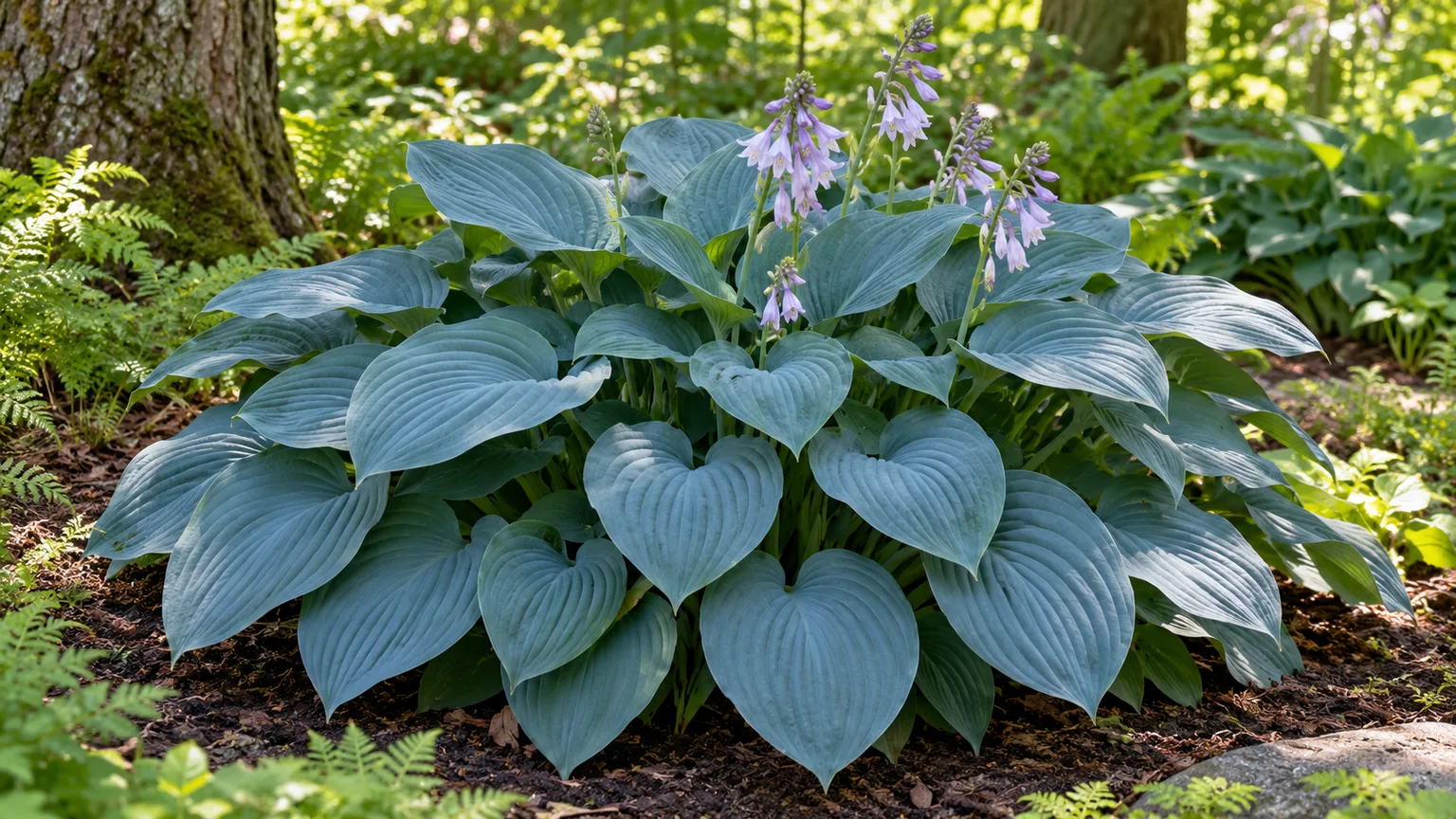
Where the soil remains reasonably moist and the canopy is open enough for dappled light, hostas can provide broad leaves and a strong foliage display. Many hostas need more dependable moisture than the driest under-tree zones provide, especially during hot weather. Deer may browse them, and slugs can mark the leaves, so place them where you can water and monitor them rather than expecting them to thrive against a dry trunk.
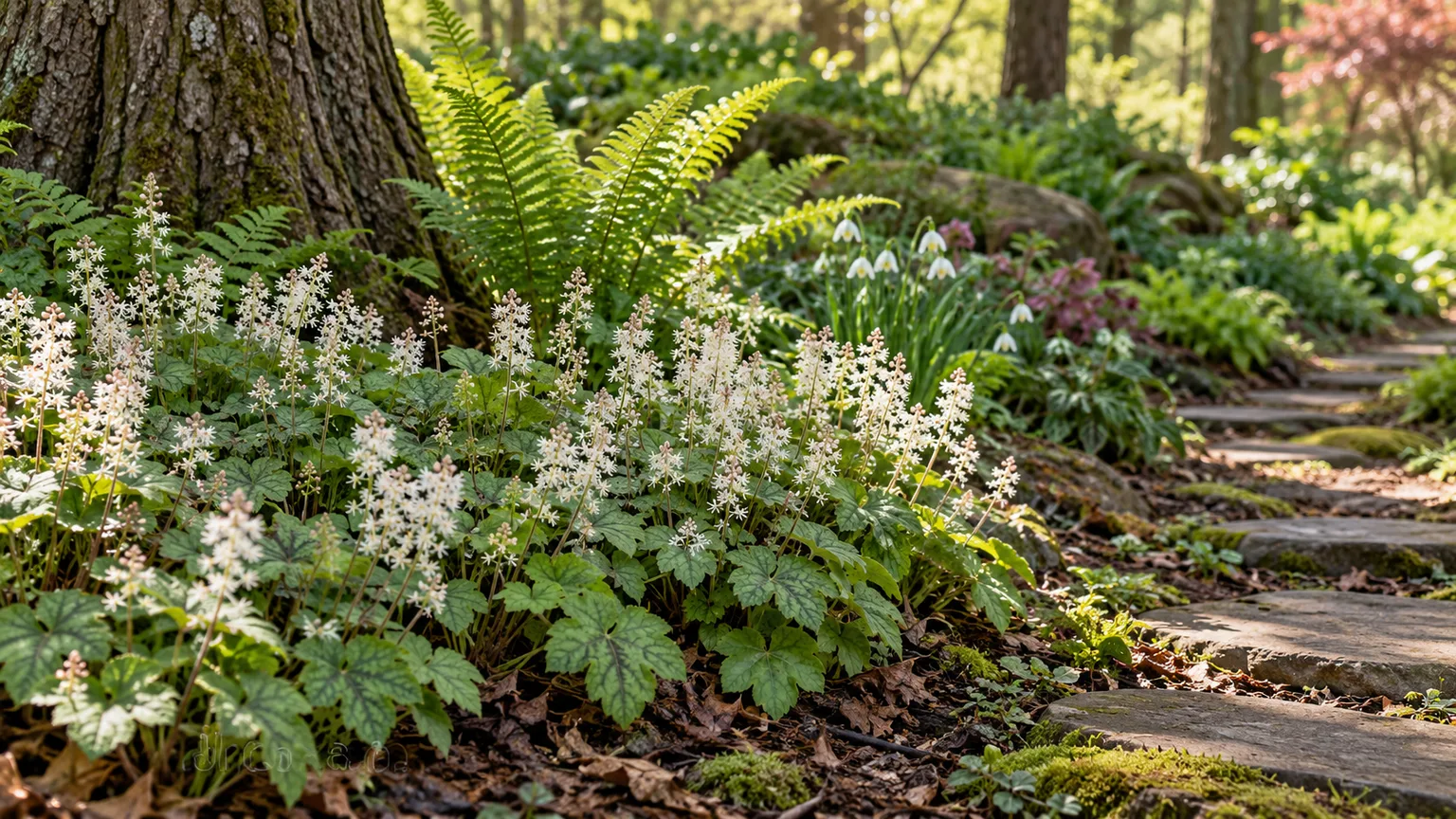
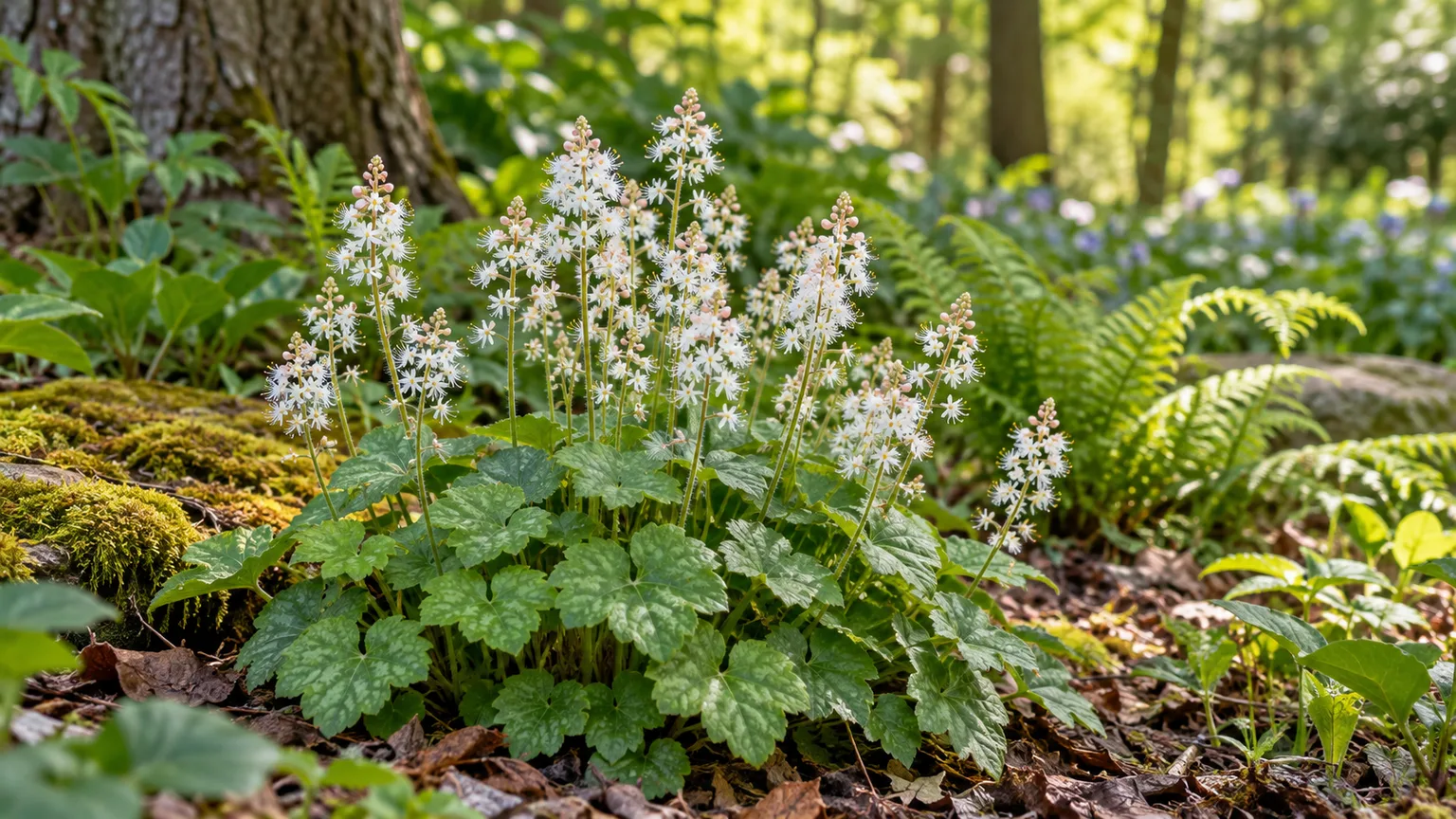
Foamflower (Tiarella spp.) can add spring flowers and low foliage where moisture is more reliable. North American native species are most useful when matched to their natural range and local growing conditions. Plant foamflower near the outer canopy or in a pocket that does not dry completely between rains; it is a poor bet directly below a dense crown if you cannot irrigate.
Sweet woodruff (Galium odoratum) has fragrant foliage and small white flowers, but it generally prefers moist shade and can spread vigorously where conditions suit it. Fine Gardening notes that it can become rampant in fertile, moist soil. Check local invasive-plant guidance before planting it, and do not use it as a “dry shade” fix if the soil is parched.
The most successful planting may combine zones instead of species. Put a moisture-tolerant hosta or foamflower toward the brighter, wetter edge, and use a drought-tolerant ground cover in the drier shade. Leave a clear, unplanted area around the trunk rather than forcing every plant into a tight circle.
Ground covers to use only with local checks
Some familiar ground covers tolerate shade, but their vigor can become a problem. Lesser periwinkle (Vinca minor), English ivy (Hedera helix), lily-of-the-valley (Convallaria majalis), and some species or cultivars of pachysandra can spread beyond the space where they are planted. The exact risk depends on the species, cultivar, climate, and local ecology; check state, provincial, or regional invasive-plant lists before buying.
Dense ground cover is not automatically better than a few repeated clumps. Aggressive plants may escape into woodland, smother other low plants, or become hard to remove without disturbing roots. Choose a restrained native or non-invasive substitute when available, and leave a mulch-only margin if a safe plant cannot be found for the conditions.
Grass is usually disappointing under a dense evergreen because it needs enough light and water to recover from mowing and seasonal stress. Tall fescue may survive in some open sites, but the result can look thin or patchy where shade, litter, and root competition are severe. If you want a low green surface, compare a locally appropriate sedge or ground cover with the cost of maintaining turf before reseeding repeatedly.
How to plant while protecting evergreen roots
Planting gently matters as much as choosing a suitable species. Penn State Extension recommends hand tools, very small holes, and small divisions or plugs under trees. Begin at least about a foot from the trunk, preserve the root flare where the trunk widens into the roots, and increase that distance wherever surface roots are exposed or dense.
- Clear only the planting pocket. Move loose needles and small debris aside by hand. Pull weeds carefully rather than stripping a wide circle of ground.
- Use small starts. Plugs, seedlings, or small divisions need less digging than large nursery pots. Set them out before planting so you can see whether the spacing makes sense.
- Make one small hole at a time. Use a hand trowel and keep the hole only as large as needed for the root ball. Do not rototill, trench, or chop through a root to make a regular border.
- Stop when you find a substantial root. Refill the hole and move the plant a few inches. Penn State advises relocating a plant when a root about two inches across blocks the hole; never use the tool as a lever against a root.
- Keep grade and bark unchanged. Do not build a raised bed or pile soil and compost around the trunk. Penn State advises no more than about two inches of added soil or compost in a planting area, and none over exposed roots or close to the trunk; treat that as a cautious maximum, not a target.
If you cannot install even a small plug without cutting roots, stop planting. A few plants are not worth wounding a mature evergreen, especially where the species is sensitive to disturbance or the tree already shows stress.
Water and mulch while plants establish
Water thoroughly at planting so the root ball and nearby soil make contact, then check moisture regularly. The tree will continue drawing water from the shared root zone, so a new plant may need supplemental irrigation even if it is shade tolerant. Water slowly at the base of the plants when the soil begins to dry; a brief surface sprinkle may not reach the root ball.
Keep this routine through the first growing season, and longer when plants remain small, weather is hot, or rainfall is scarce. The RHS recommends watering under-tree plantings through their first full growing season, while Penn State Extension notes that consistent watering may be needed for one or two years. Adjust to actual soil moisture rather than following a fixed schedule that could water wet soil too often.
Use a light layer of organic mulch or compost between plants to limit evaporation and weeds, but do not bury crowns, exposed roots, or the tree’s root flare. Penn State recommends roughly an inch or two of finely shredded mulch for an underplanting. Tree-ring guidance can call for deeper mulch in other settings, but a planted bed needs room for shoots to emerge; never pile mulch against the trunk.
Pine needles can remain as a light surface layer if they are not smothering young plants. Pull back thick mats around seedlings and water at the soil line. If a soil test shows a pH outside the needs of your selected plants, follow the test’s recommendations; do not add lime or acidifier as a guess.
When a simple mulch bed is the better choice
Some evergreen understories are too dry, dark, or root-filled for a living carpet. That does not mean the space is neglected. A clean, shallow layer of organic mulch or naturally fallen needles can look intentional, protect exposed soil, and reduce the urge to keep digging in search of a plant that will thrive there.
Keep mulch away from the trunk and do not pile it over the root flare. Use enough to cover bare soil without creating a deep mound, and refresh it only as it breaks down rather than stacking new layers year after year. If the ground is already covered by roots, leave them visible instead of adding soil to hide them.
You can also define the edge of the mulch bed with a shallow surface border set outside the most root-filled area. Avoid trenching or installing heavy edging through roots. A bench, stepping stones, or decorative boulders may be possible, but keep foot traffic and weight off exposed roots and avoid excavation for hardscape without professional advice.
Troubleshoot an under-tree planting
When plants decline, use the symptom to identify the likely mismatch before replacing them. Check the soil and light at the plant itself, not merely at the edge of the canopy, and review how long it has been in the ground. The same browning leaves can follow drought, heat, root injury, or winter stress; changing species without correcting the cause often repeats the failure.
| What you notice | Likely issue | What to try |
|---|---|---|
| New plants wilt or crisp during warm weather | The root ball is drying faster than the surrounding shade suggests | Check moisture at root depth and water slowly when the soil begins to dry |
| Seedlings vanish under a blanket of needles | The surface litter is too thick for small plants | Pull litter back around each plant and keep it light near emerging shoots |
| Hosta leaves stay small or scorch at the edges | Moisture may be inadequate, or the site may be hotter or brighter than expected | Move future plants to the moist canopy edge and select a drier-site species for the interior |
| Grass remains thin despite reseeding | Year-round shade and tree-root competition may exceed what the grass can tolerate | Stop reseeding the same patch; try a locally appropriate sedge or use mulch |
| A new hole repeatedly hits woody roots | The surface root network leaves little safe soil for planting | Relocate the plant or leave that section unplanted; do not cut the roots |
| A ground cover spreads beyond its bed | The species may be too vigorous for the site or region | Remove it carefully while small and choose a locally recommended alternative |
Give new plants a full season to establish before judging their final spread, but do not keep a failing plant in a pocket that is plainly too dry or dark. A smaller, successful planting at the edge looks better and causes less disturbance than a full ring of replacement plants every spring.
Conclusion
Plants to grow under evergreen trees should match the site’s actual shade and soil moisture, not just the fact that the tree keeps its leaves. For a dry understory, start with regionally suitable choices such as barrenwort, Pennsylvania sedge, or wild ginger; reserve hostas, foamflower, and other moisture-loving plants for spots that stay more evenly damp. Check local spread and native status before using vigorous ground covers.
Keep the three challenges distinct: year-round shade limits light, tree roots compete for water and safe planting space, and needle litter affects the ground surface without proving that the soil needs a pH change. Make tiny planting holes, water new starts through establishment, preserve the root flare, and leave the area mulched if roots or conditions make planting unsafe. A modest, well-matched understory is a better result than a lush design that puts the evergreen at risk.