27 Ways to Decorate With Plants in Every Room
Decorate with plants using 27 practical ideas for shelves, corners, bathrooms, and more, with placement tips that account for light and room layout.
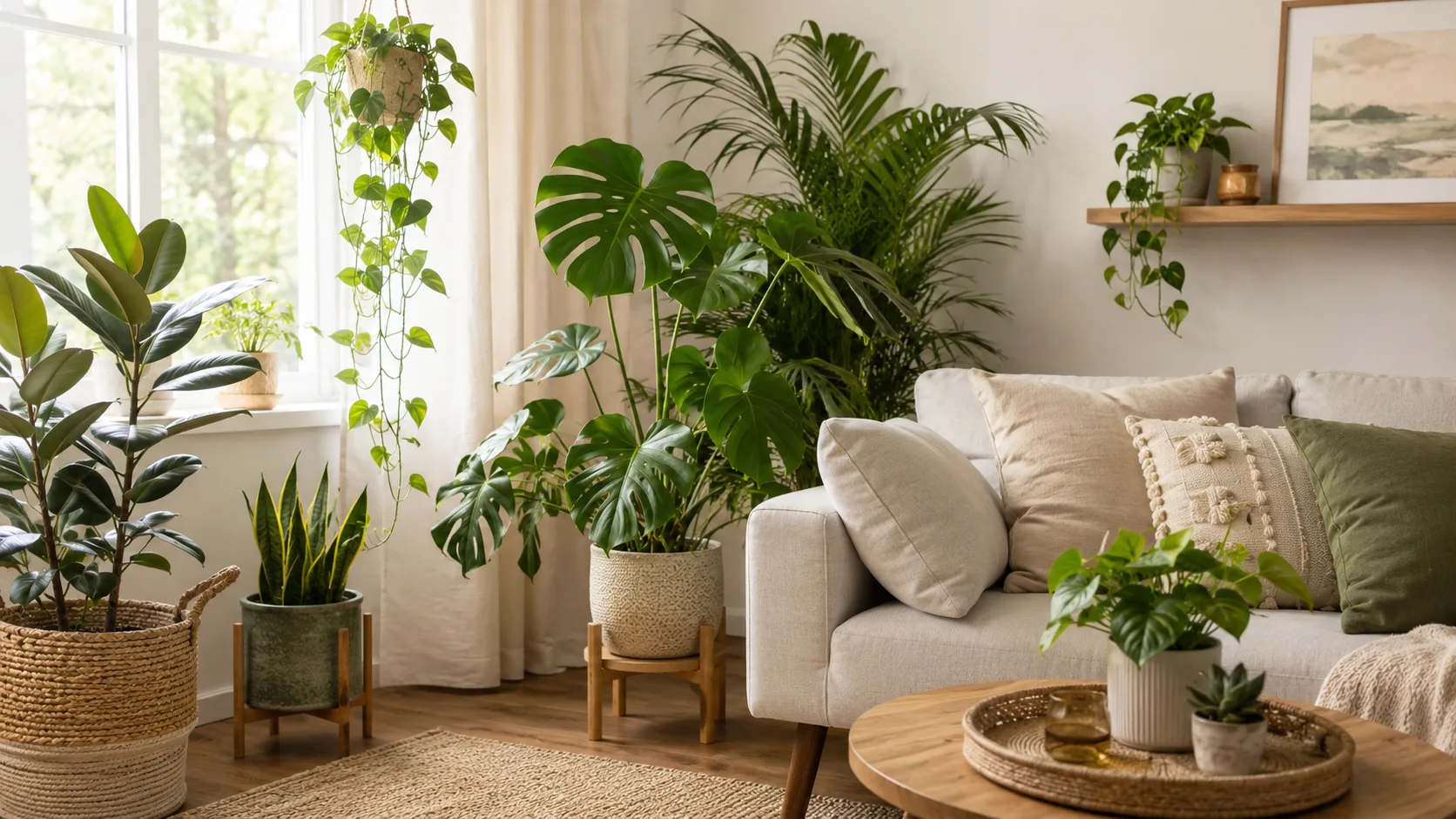
Houseplants can soften a hard-edged room, fill vertical space, repeat a color, or turn an unused shelf into a living display. The best arrangement, though, starts with the plant’s needs. A favorite corner is only a good plant spot if its light, temperature, and access to water suit the plant you put there.
Before you move furniture or buy a new pot, look at the room from the plant’s point of view. Notice the window, how far the proposed spot is from it, whether a vent blows there, and whether you can lift or water the container easily. The Royal Horticultural Society’s houseplant growing guide advises choosing a position for a plant’s light, temperature, water, and humidity needs instead of placing it only for decoration. Purdue Extension also notes that indoor natural light decreases sharply as a plant sits farther from a window (Purdue Extension’s houseplant guide).
Use that site check before choosing among these 27 ideas. Each works best when the display is easy to reach, stable, and matched to the actual conditions. If you want help choosing a plant for a particular level of color and light, see our colorful houseplants guide.
Match the plant to the place before styling
A quick room audit prevents the most common decorating mismatch: putting a plant in the perfect-looking spot and then discovering it cannot grow there. Stand where you plan to place it and check whether daylight reaches the leaves. Direct sun, bright filtered light, and a dim corner are different conditions, even when they are all in the same room. If you cannot tell how much light a plant wants, read its label or look up its exact name before buying.
Then check access and surfaces. Can you reach the plant without climbing on a chair? Can you water it without soaking a bookshelf, rug, or hardwood floor? Does the stand or shelf hold the pot securely, including when the growing mix is wet? Plants are living, growing objects; leave room for leaves to expand and keep drainage water contained. The RHS guidance on houseplant lighting can help when a favorite room has little window light and you are considering an appropriate grow light.
Build interest on walls and above furniture
Going vertical adds greenery without claiming much floor area. It also moves plants into warmer, brighter, or harder-to-water positions, so choose the species and hardware with the intended height in mind. Gardening Know How’s houseplant display guide includes wall shelves, hanging baskets, and other vertical arrangements; the ideas below make those displays easier to adapt to an actual room.
Stagger hanging planters
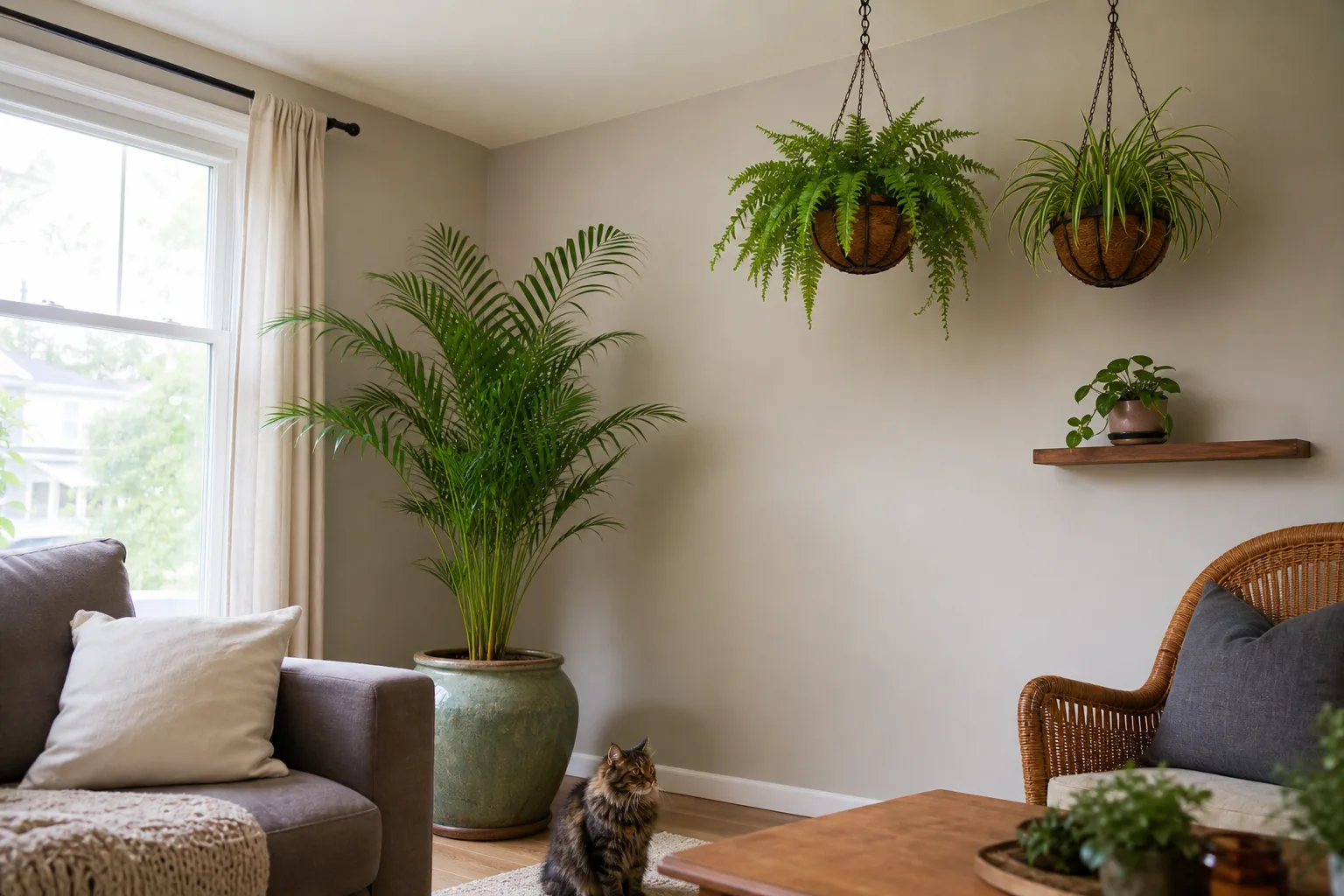
1. Hang a small group at staggered heights. Three baskets at different levels create a loose vertical rhythm near a window or in a tall corner. Keep the pots within the light range their plants need, with enough separation that leaves do not press against glass or each other. Use ceiling anchors or wall hardware suited to the structure and the combined weight of damp potting mix, containers, and mature foliage. Place them clear of door swings and walkways. A lower hook is often more useful than the ceiling if it makes watering and inspection easy.
2. Frame a window with one hanging plant on each side. Matching or complementary pots can outline a window without blocking most of the daylight. Choose plants with a compact, manageable trailing habit, and keep the stems clear of blinds, curtain cords, and window handles. This setup works especially well when the window is high enough to leave the sill free, but it is not automatically suitable for every species: direct rays through glass can be intense, and winter drafts near the pane may bother tender plants. Start with one basket, observe the leaves, and add a second only if both positions work.
Guide trailing growth along a shelf or mirror
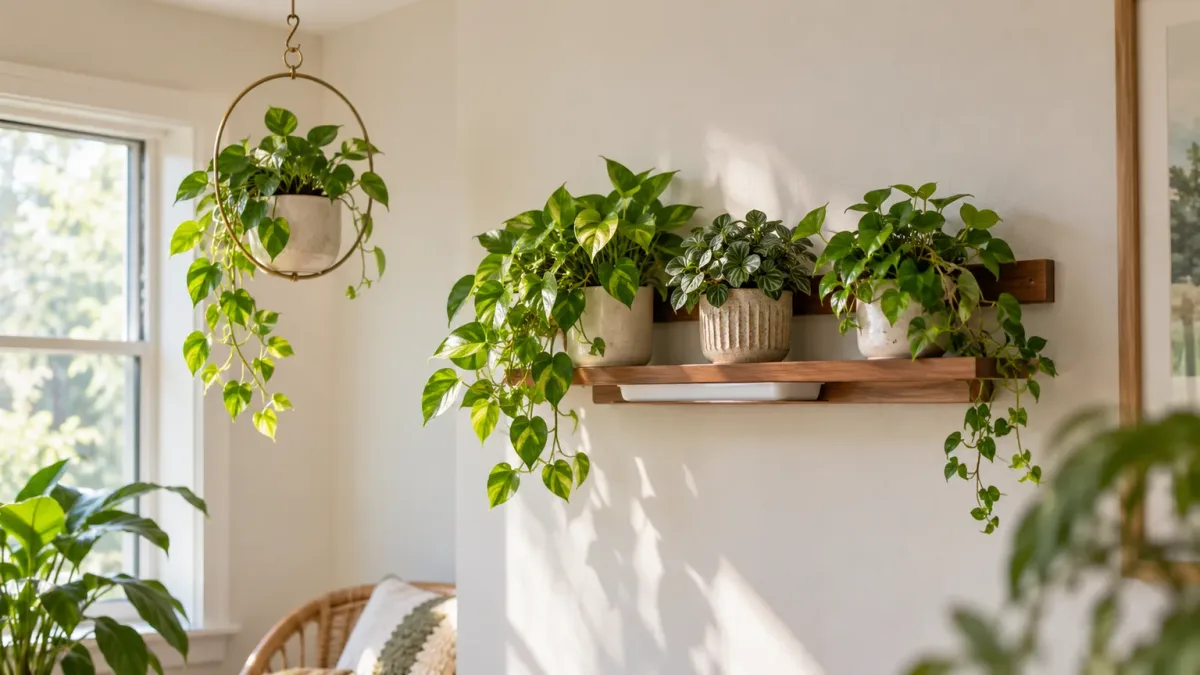
3. Let a trailing vine soften a shelf edge. Place a plant at the end of an open shelf so its stems fall over the side rather than hiding the objects behind it. Keep the pot on a stable saucer or removable cachepot, and avoid letting leaves drag across electronics, books, or a heating vent. A vine that grows unevenly can be rotated toward the light or gently redirected along a small support; avoid forcing stems around furniture where they could be pinched.
4. Outline one side of a mirror or doorway with a trained vine. A single strand can add a soft frame and draw the eye upward. Use small plant clips or a discreet trellis set beside the mirror rather than attaching adhesive directly to the leaves or relying on weak tape. Leave the center and edges of the mirror clear so the display does not make the room feel cramped. This is a good way to decorate a narrow wall where a floor plant would block circulation, provided the plant receives enough light nearby.
Make a small-scale living wall
5. Build a wall display from individual pots, not one heavy planter. A short row or grid of small, removable containers creates the look of living art while keeping watering manageable. Removable pots let you take each plant to a sink, inspect the root zone, and swap a plant if it outgrows its place. Use a waterproof backer or trays designed for the setup, and mount brackets into appropriate structural support. A few well-spaced plants are easier to care for than filling every opening at once.
6. Use a narrow wall shelf as a mini greenhouse for bright-light plants. A shallow shelf near a window can hold small pots that would otherwise crowd the sill. Glass or acrylic shelves allow light to pass through to lower plants, but be mindful that sunlight can heat containers and foliage close to the pane. Keep the shelf out of a hot draft from a radiator and leave room to remove a pot. If the ledge is too dim for the species you want, use a suitable grow light rather than expecting the shelf’s appearance to compensate.
Give shelves and furniture a second life
A plant display can use furniture you already own. Repurposing a cart, bookcase, or low cabinet is a low-cost way to build height and give a collection a home. The useful question is not simply “Can a pot fit here?” but “Can this surface support it, receive enough light, and stay protected from runoff?” Leave room for the plants to grow and for you to remove them when they need attention.
Turn a cart into a movable display
7. Convert a bar cart into a mobile plant station. A wheeled cart can gather a few small to medium pots in one place and move them when a room is cleaned or the season changes. Give each tier a job: one larger plant below, a few compact pots in the middle, and lightweight accents on top. Lock the wheels before watering, avoid filling the cart beyond its rated load, and do not treat frequent rolling as a substitute for a suitable permanent light spot. A cart is most useful when it makes routine care easier.
8. Use a small utility cart for a rotating propagation or herb display. A narrow three-tier cart works in a kitchen or near a bright door when counter space is limited. Put the heaviest pots on the bottom shelf, keep water jars upright in a tray, and reserve the top for cuttings or tools that need regular checking. If you grow edible herbs, keep them away from cleaning sprays and cooking grease, and select a position with enough light. The movable format helps during cleaning, but plants still need a consistent home between routine moves.
Style a bookcase or hutch
9. Turn one bookcase bay into a green vignette. Instead of sprinkling a pot on every shelf, group two or three plants in one open section and let other shelves hold books or objects. Use the plants’ different leaf shapes to create texture, then leave breathing room around the pots so the shelf does not become a solid wall of foliage. Small plants work best where they can be seen and reached; avoid placing a plant behind a tall object that blocks its light.
10. Use a glass-front hutch as a display cabinet only if it can breathe. A cabinet with open doors or generous gaps can frame small plants and repeat the look of a greenhouse cabinet. Before setting it up, confirm that light reaches the plants and air can circulate; enclosed glass can trap heat or moisture. If you add a grow light, position it for the plants rather than for a dramatic glow, and follow the light manufacturer’s safety directions. Keep the growing pots removable so you can water and inspect them outside the cabinet.
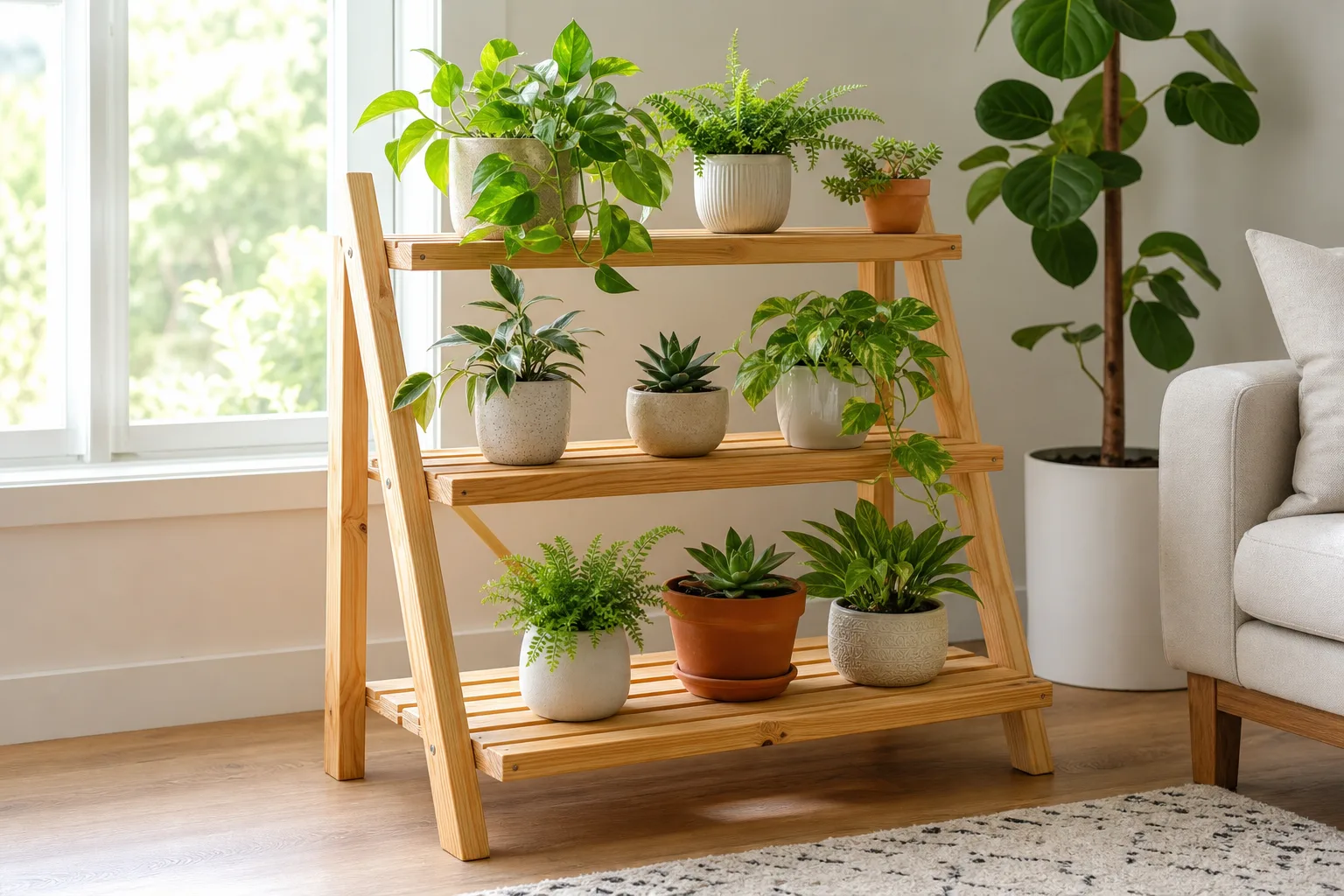
11. Let a ladder shelf create a stepped plant collection. A ladder shelf naturally gives pots several heights without a bulky base. Put plants that need the strongest light on the brightest level, not automatically the highest one, and keep saucers under every pot. Use the lower shelves for larger or heavier containers and the upper shelves for lightweight pots. Leave the shelf anchored if its design calls for it, especially in a home with children or pets. One trailing plant can connect the levels, but keep its growth away from outlets and foot traffic.
Use a tiered stand for a collection
12. Arrange a plant stand as a small composition, not a storage rack. Choose one sculptural or large plant as the visual anchor, then add smaller pots with contrasting leaf shapes at different levels. Leave at least one open space so the stand does not look crowded. Check that each shelf gets adequate light; upper tiers may shade lower leaves, while a stand set too far from the window may leave every plant short of daylight. Garden Therapy’s living-room arrangement guide recommends varying size, height, texture, and pot shape while putting the plants’ needs first.
13. Put a small stand beside a chair or sofa to make a reading corner feel finished. A single plant on a low side table or a compact stand creates a visual connection between the seating and the room’s greenery. Choose a pot that is easy to lift and a plant that will not spread into the seat or walkway. Keep leaves clear of a lamp bulb and avoid watering over upholstery. A narrow stand can give a small plant a more noticeable position without requiring a large floor specimen.
Let plants help shape the room
Plants can define a corner or separate two activities without adding a solid wall. For these arrangements, pay attention to sightlines and walking routes as much as to plant size. A good placement gives the display visual weight but lets people pass through the room comfortably and lets light reach every plant.
Create a partial room divider
14. Use an open plant shelf to divide a room gently. A low, open-backed shelf can separate a dining nook from a lounge area while keeping light and conversation moving between them. Place a few pots at different heights, but leave some shelves empty so the structure does not become a solid barrier. Anchor the shelf if required, distribute weight evenly, and keep the tallest plant from blocking windows or a TV. This works best as a visual boundary, not as a privacy wall.
15. Arrange a row of floor plants to mark a transition. A few sturdy pots can indicate where a living room ends and a work area begins. Vary the heights and spacing instead of lining identical pots shoulder to shoulder. Use heavy, stable containers where people might brush past, and keep one clear path through the room. A row can look formal if it is too straight, so offset one plant slightly or alternate a low and tall silhouette to soften the boundary.
Anchor a bare corner
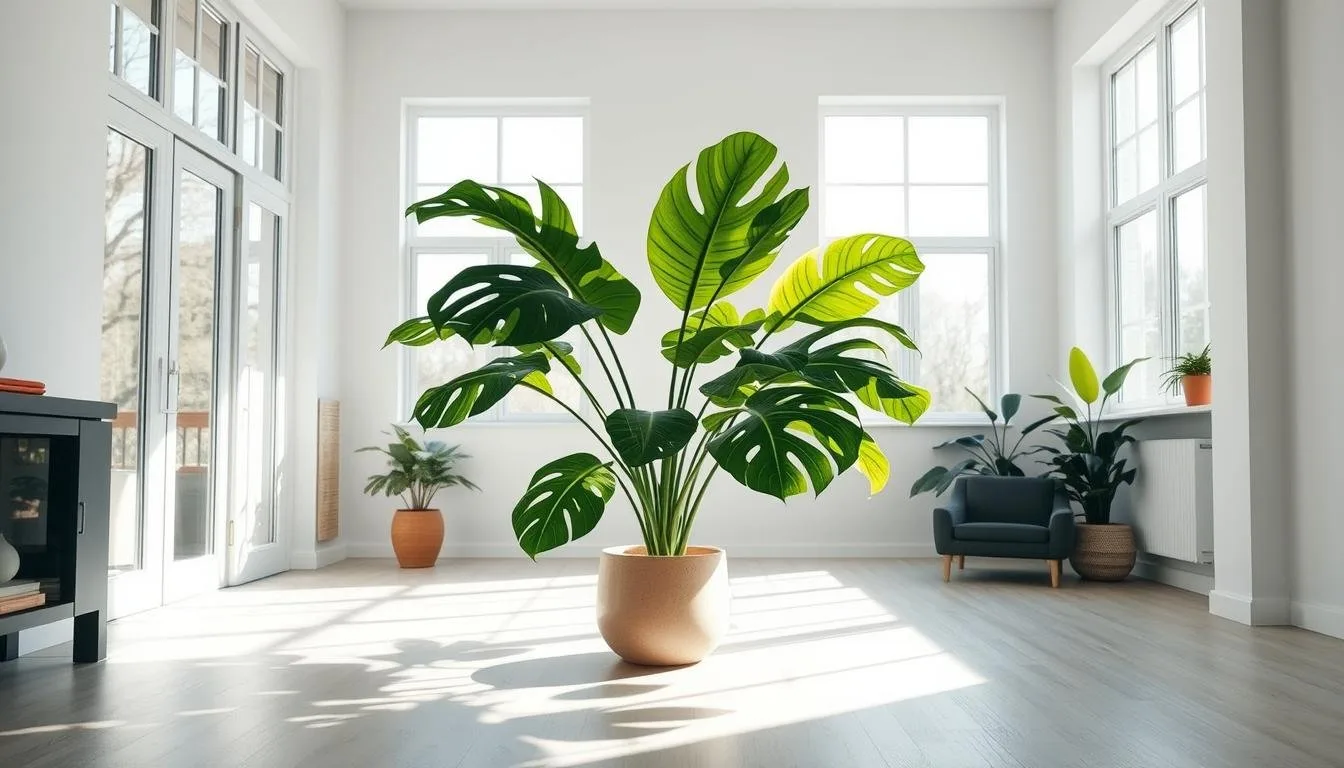
16. Make one large plant the focal point in an empty corner. A tall plant can balance a bookcase, lamp, or large piece of furniture and make a bare corner feel intentional. Give it enough room for its mature canopy, and check that the corner still receives the light that plant needs. A corner far from windows may need a lower-light tolerant plant or a properly chosen grow light; do not choose a sun-loving plant only because its pot looks right beside the sofa.
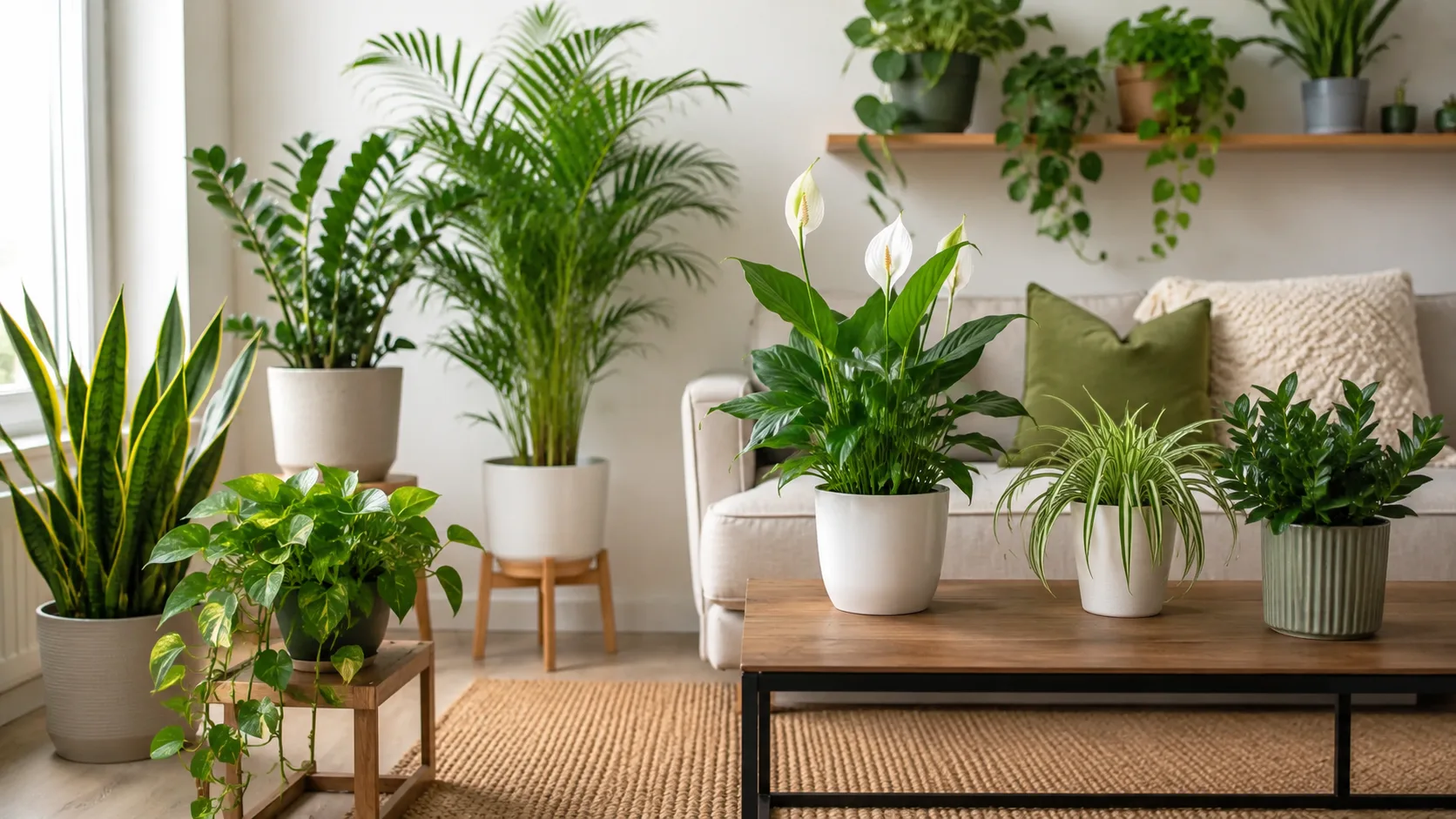
17. Create a three-level plant cluster around one low table. Combine a floor pot, a medium stand, and one small tabletop plant to build a triangle of visual height. Choose plants with compatible light and watering requirements, then leave gaps between leaves so each shape remains visible. A cluster should still allow you to pull out a pot for watering or pest checks. Garden Therapy notes that grouping smaller plants can make a stronger mass, while a larger specimen often reads better on its own; use both approaches in the same room rather than crowding everything together.
Make a welcoming entry vignette
18. Give the entry console a single plant and a practical landing zone. A small leafy plant can soften a key tray or lamp, but keep enough clear surface for mail, keys, and bags. Choose a compact species that tolerates the light at the entry; many hallways receive less daylight than the living room. If the entry is dim, a rotation or grow light may be needed, or the plant may be better placed elsewhere. Keep foliage away from a frequently opened exterior door that brings cold air or heat drafts.
19. Use a plant to soften a stair landing or the end of a hallway. A medium pot can make an otherwise unused patch feel considered, especially beneath a window or beside a landing table. Check the width of the walking path and place the container where it cannot become a trip hazard. Choose a stable pot, protect the floor from drainage, and avoid a plant whose mature leaves will brush people as they pass. The display should make movement through the house easier to read, not harder.
Bring greenery into rooms with specific jobs
A room’s function gives you a useful design constraint. Bathrooms need enough daylight for the chosen plant, kitchens need surfaces that are easy to wipe, and desks need uncluttered work space. Use the plant as an accent that supports the room rather than forcing the room to serve a decorative arrangement.
Set up a kitchen herb display
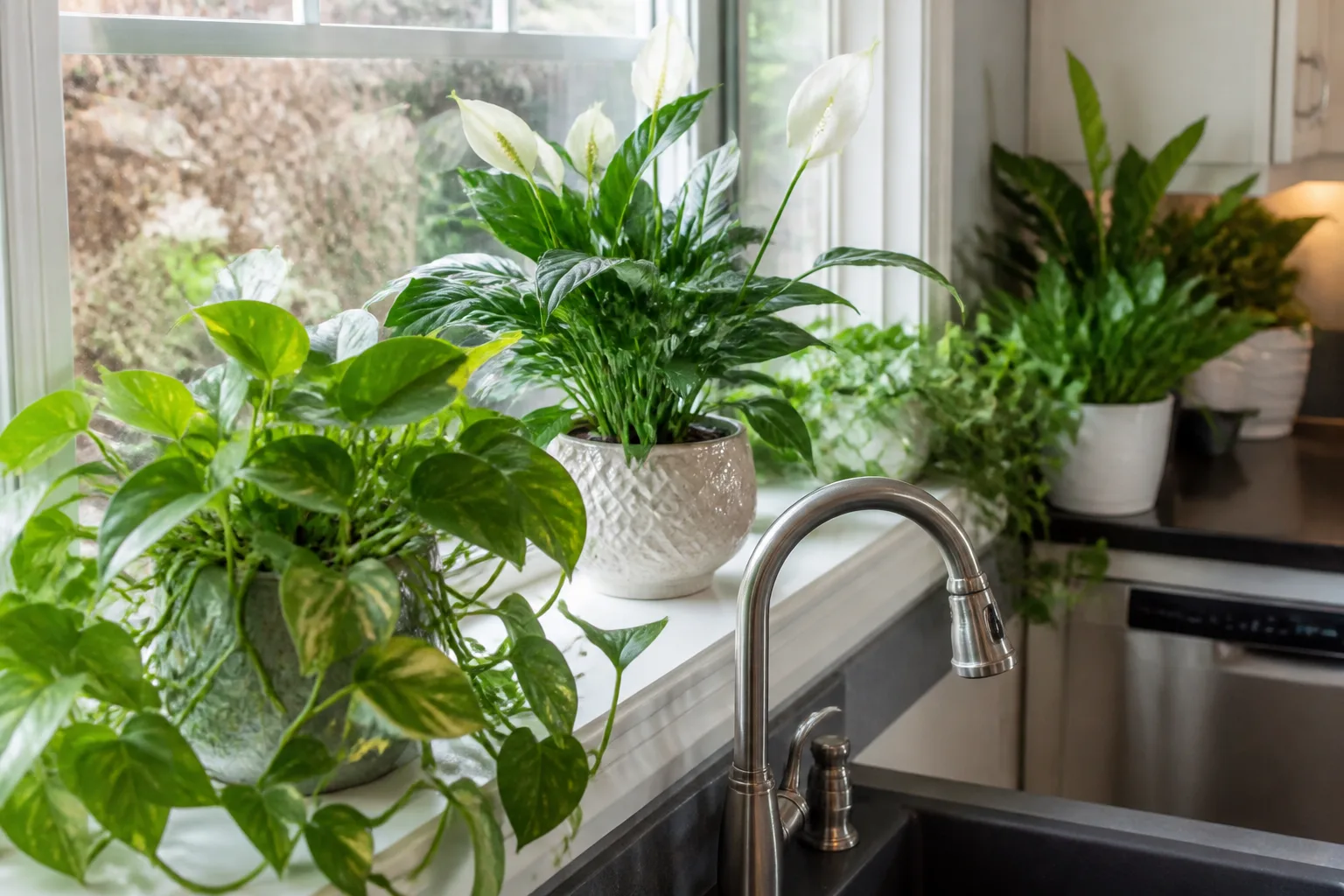
20. Put a small herb collection near the brightest usable kitchen window. A few pots of herbs can bring edible greenery into the room and keep leaves within reach while cooking. Use a tray to protect the sill, give each pot drainage, and place the plants away from the stove’s heat, splashes of oil, and cleaning products. Herbs need sufficient light to keep producing flavorful growth; if the window is dim, a grow light designed for plants may be more practical than adding more pots.
21. Use a single herb pot as a living centerpiece for a kitchen island. One compact pot of basil, thyme, or another useful herb can make a work surface feel lively without filling the whole counter. Keep it clear of chopping areas and hot pans, and move it back to its growing spot after meals if the island does not get enough light. A decorative pot can sit around the functional nursery pot, but empty runoff promptly so water does not collect where food is prepared.
Fit plants into bedrooms and workspaces
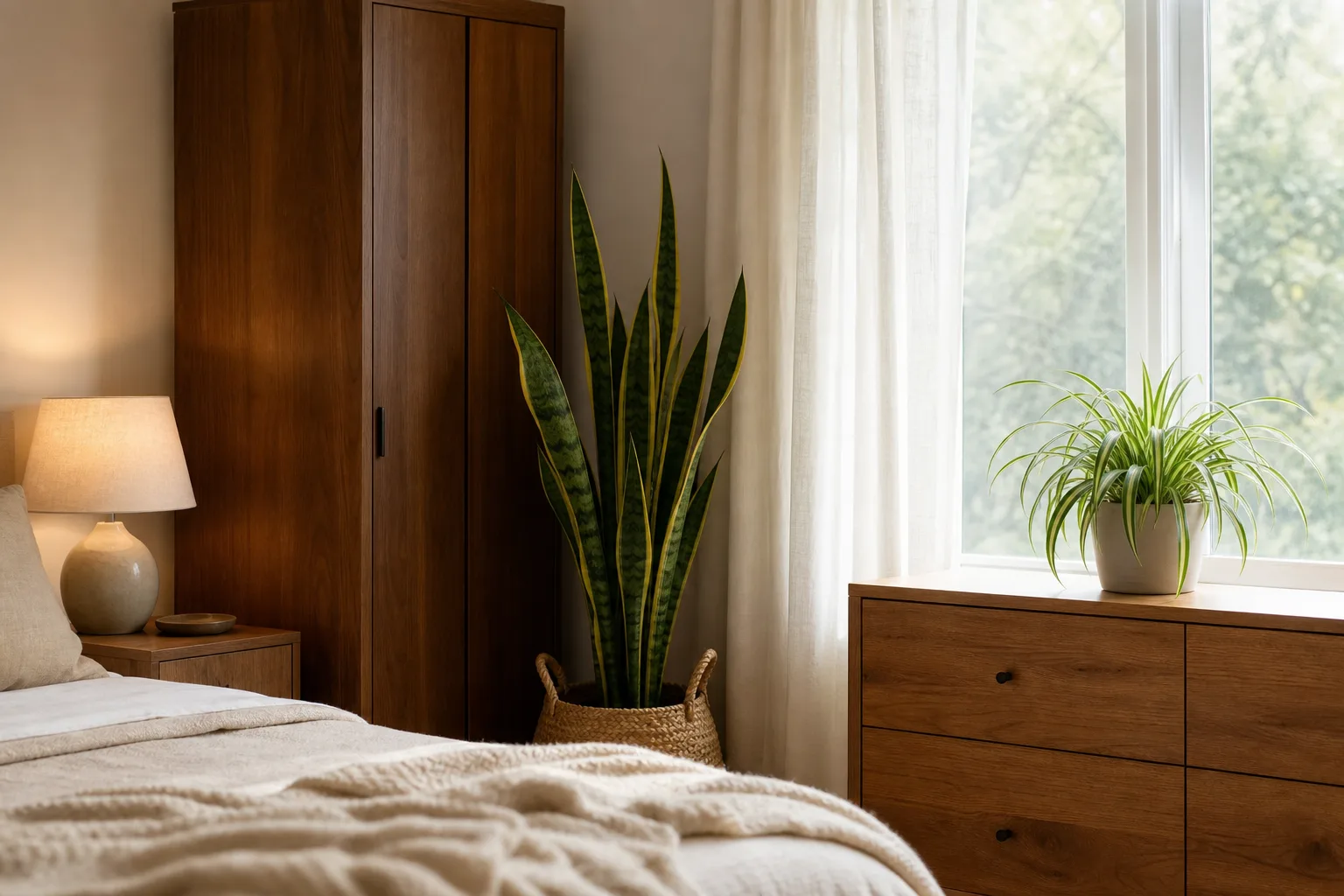
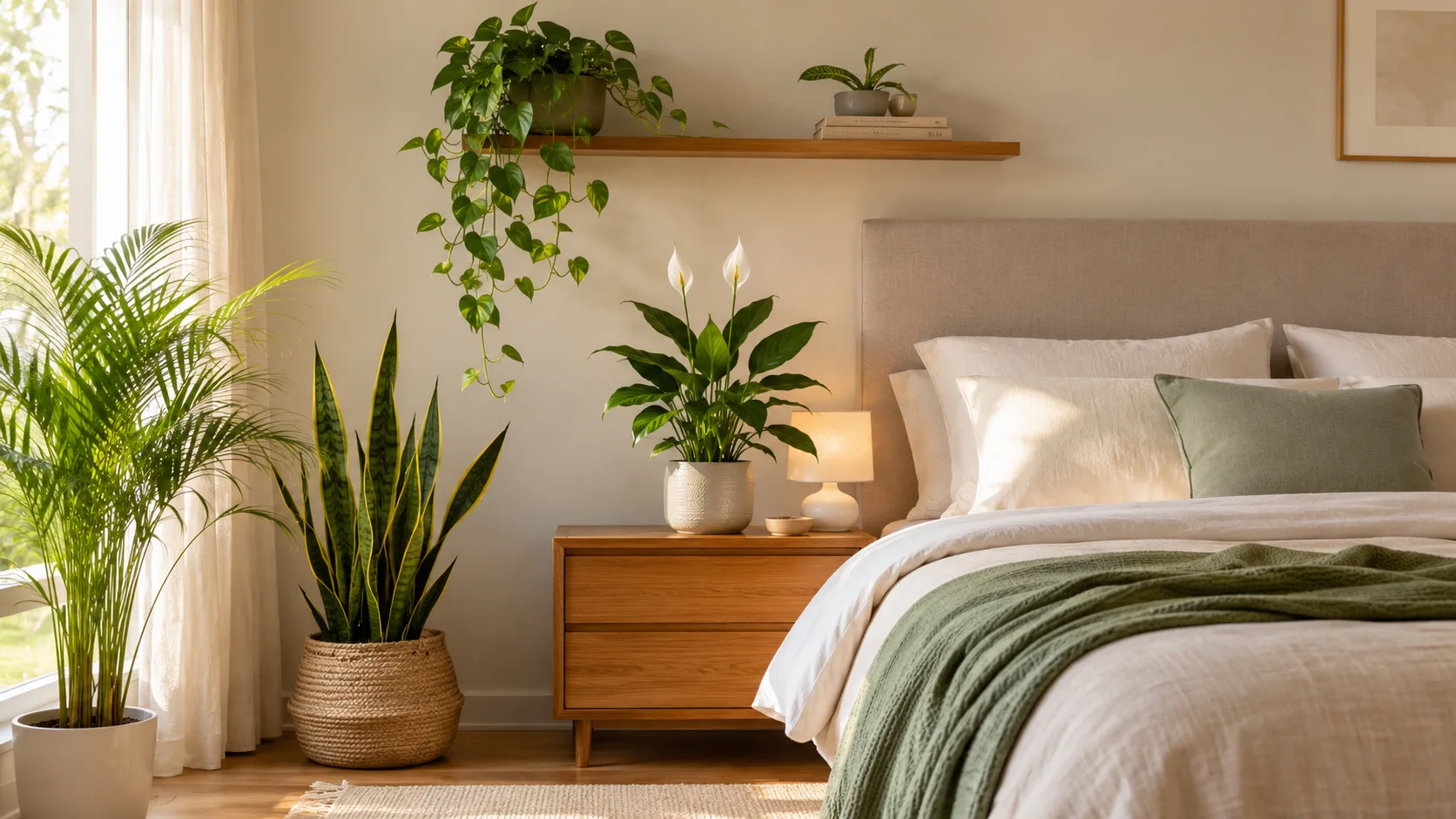
22. Add a plant to a bedroom dresser or bedside table. One small plant can echo the room’s natural colors without competing with bedding, books, or a lamp. Choose a species suited to the actual window and keep it away from cold glass, direct heat, and the edge where it could be knocked over. Do not buy a plant because of claims that it will improve sleep or purify the air; select it for appearance and care fit. If you have pets that may chew leaves, look up the botanical name first.
23. Use a larger floor plant to balance an open bedroom corner. A tall plant near—but not in front of—a bright window can add a calm vertical element and visually balance a wardrobe or bed. Avoid crowding the path around the bed, and leave room for leaves to spread. A plant that needs bright light may not thrive on the far side of a room just because that spot looks restful. Our guide to houseplants that bring color to a room can help you compare foliage options by visual effect and light.
24. Make a desk plant a small, useful accent. A compact plant at the far corner of a desk adds color without blocking a screen or taking over writing space. Use a light, stable pot with a saucer, and choose a species that suits the window or lamp conditions. If your desk sits under strong sun, protect sensitive leaves from hot direct rays; if it is far from a window, do not expect a tiny desk lamp to meet every plant’s needs. Keep the work surface easy to wipe and the pot away from cables.
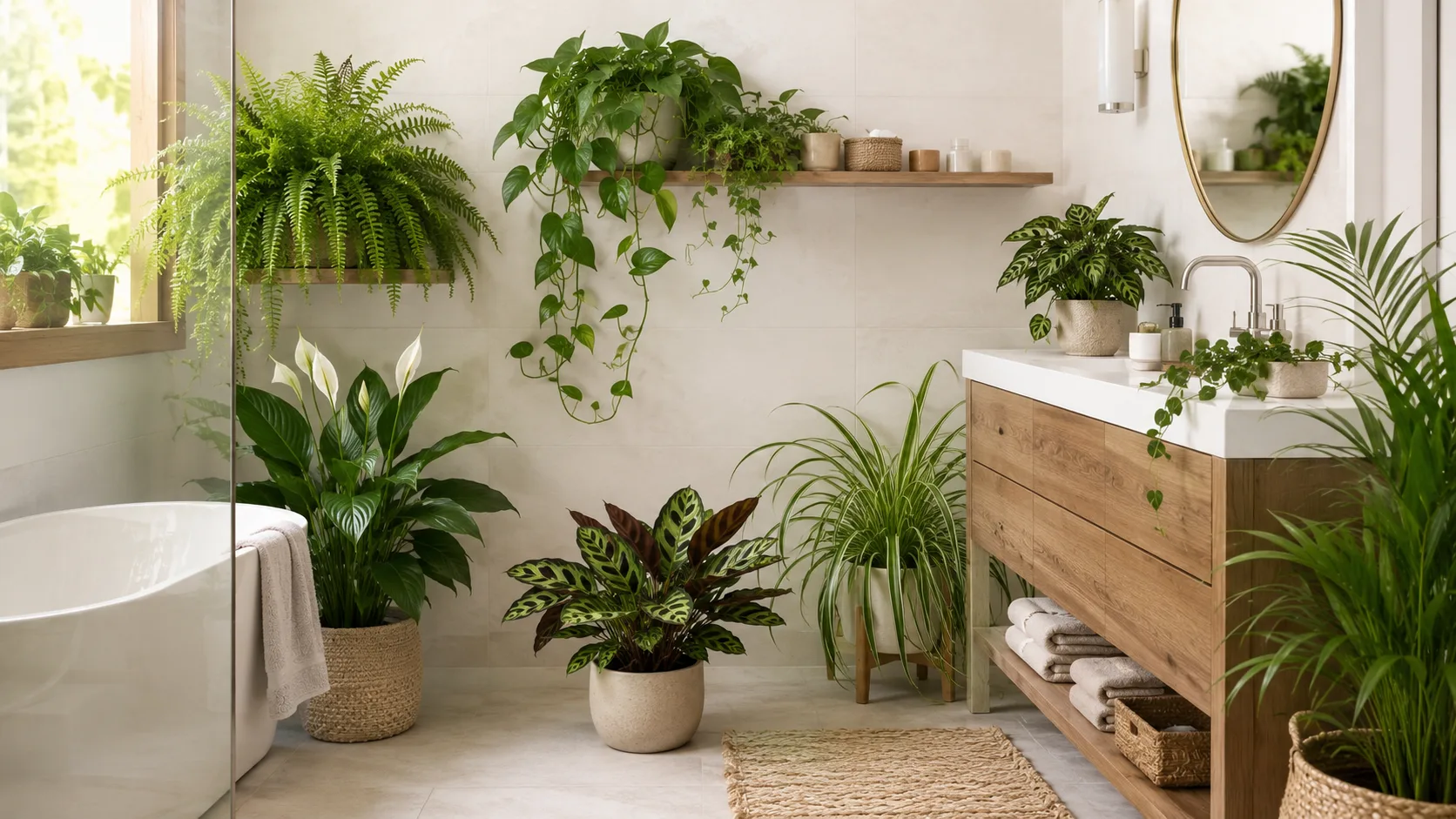
25. Bring one plant into a bright bathroom, not just a steamy one. A bathroom can suit humidity-loving plants, but humidity cannot replace light. A plant beside a frosted or shaded window may need a brighter place than a windowless room, even if the shower is used daily. Put the pot on a shelf or vanity corner where water does not pool, and keep it away from cleaning products and direct hot steam. If the room lacks daylight, use an appropriate grow light or choose another room. The RHS houseplant guide lists bathrooms as useful for some humidity-preferring plants, while still emphasizing their growing requirements.
Finish with color, containers, and collected details
Once the placement works, styling details can connect the plants to the room. Garden Therapy’s display advice recommends mixing leaf texture, plant height, and pot shape; that variety is most effective when the group still has a simple visual thread. Choose one or two repeated materials or colors rather than making every container a match.
Make the display feel intentional
26. Repeat one planter finish to tie different plants together. Use a shared material—such as matte ceramic, terracotta, woven sleeves, or dark metal—in more than one spot in the room. The pots do not need to match exactly; repeating a finish makes a varied collection feel related. Keep grow pots with drainage inside decorative sleeves when convenient, and use saucers or trays to protect wood. Woven baskets should act as removable covers rather than containers that stay wet after watering.
27. Pair plant shapes with one or two nonplant objects. Add a framed print, a low stack of books, or a small sculpture beside the foliage to make a shelf feel collected rather than like a nursery bench. Vary the heights and leave negative space so the leaf shapes stay visible. A cluster of objects should not block light or make it difficult to lift the pot. The Gardening Know How display guide includes combinations of houseplants with furniture and decorative elements; the key is to keep the growing plant accessible.
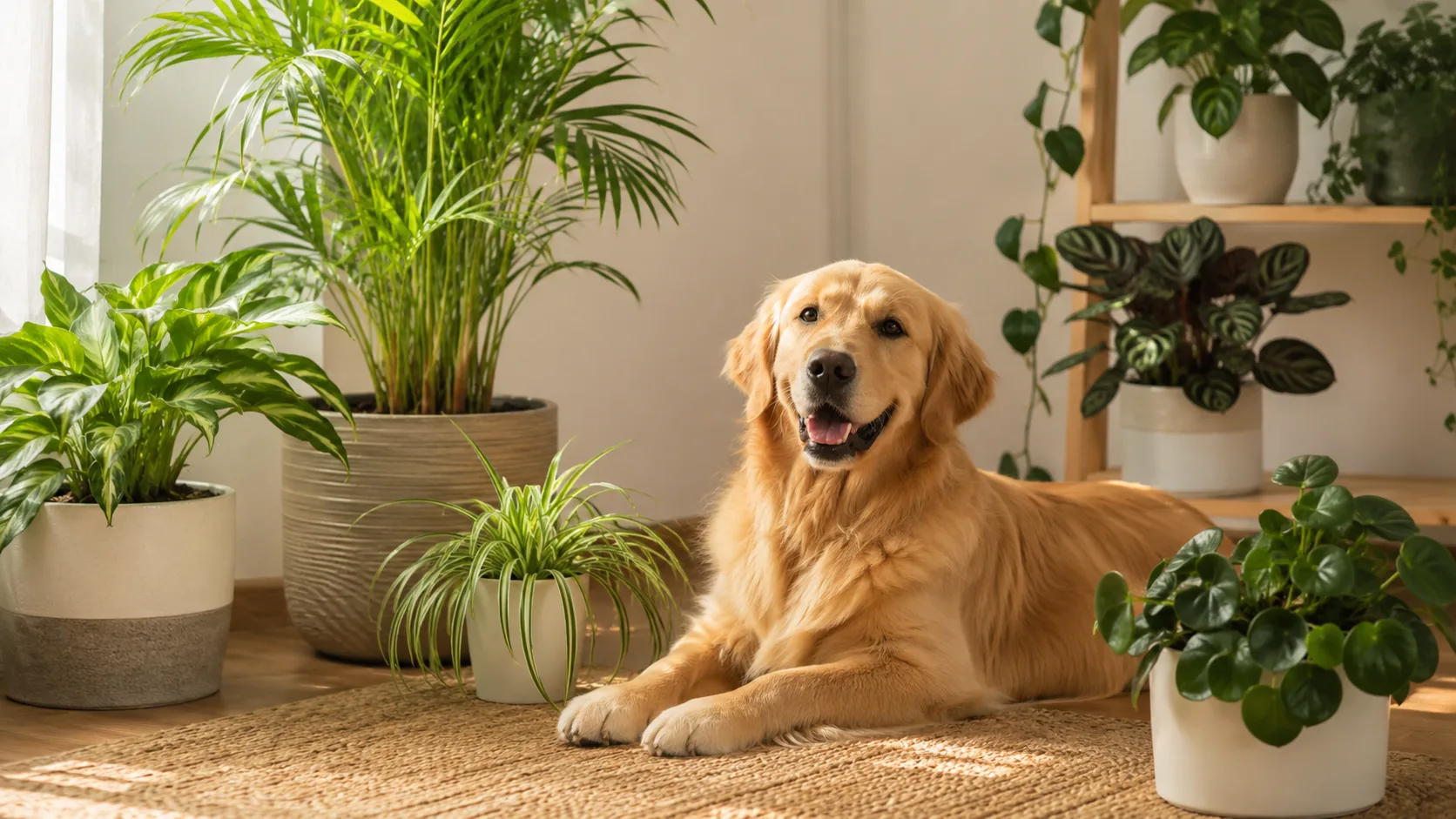
A final safety check is useful in homes with pets. The ASPCA’s toxic and non-toxic plant database is not all-inclusive, and it advises checking a plant by name; keep in mind that any plant material can cause stomach upset if eaten. A high shelf is not automatically inaccessible to a cat, and hanging foliage can still be reached or fall. Select plants and positions with the animals in your home in mind.
Conclusion: style the plant and the room together
The most successful plant display does two jobs: it improves the room and gives the plant conditions it can live with. Start with the light and the room’s use, then choose a display—shelf, stand, hanging pot, room divider, or small tabletop accent—that is stable and easy to water.
You do not need to use all 27 ideas or fill every empty corner. Pick one focal point, add a second height or texture where it helps, and leave enough space for people and leaves to move. A smaller arrangement that receives suitable light and fits your routine will look better for longer than a crowded display built only for a photo.