22 Common Poisonous Plants and How to Identify Them
A practical guide to 22 poisonous plants, including lookalikes, contact risks, pet-specific warnings, safe handling, and steps after a suspected exposure.

A plant can be hazardous in several different ways: its sap may trigger a rash, its juice may burn skin after sunlight exposure, or its leaves, seeds, or berries may be harmful if swallowed. Those are not interchangeable risks. A plant flagged as toxic to dogs does not automatically present the same danger to an adult who brushes past it, and an itchy contact rash is not the same emergency as a suspected ingestion of oleander or poison hemlock.
This North American-oriented list gathers 22 plants that are commonly grown, naturalized, or encountered in yards and along roadsides. “Common” does not mean each plant grows everywhere, and “poisonous” is not a severity ranking. Botanical identity, plant part, amount, route, and the exposed person or animal all matter. The ASPCA’s plant database is specifically about animal exposures; it cautions that its listings are not exhaustive and that a pet classification is not a human risk scale.
| Plant | Main concern | Useful first clue |
|---|---|---|
| Bittersweet nightshade (Solanum dulcamara) | Ingestion; skin irritation is also reported | Purple star-shaped flowers and red berries on a scrambling vine |
| Chinese lantern (Physalis alkekengi) | Verify exact species and fruit before any ingestion | Orange, papery calyx surrounding a berry |
| Foxglove (Digitalis purpurea) | Ingestion can affect heart rhythm | Tall spike of tubular, spotted flowers |
| Mountain laurel (Kalmia latifolia) | Ingestion; all parts should be kept out of mouths | Evergreen shrub with saucer-shaped pink or white flowers |
| Castor bean (Ricinus communis) | Seeds and plant tissues; also a contact hazard | Large hand-shaped leaves and spiny seed capsules |
| Yew (Taxus spp.) | Needles and seeds if swallowed | Flat needles and red fleshy arils containing seeds |
| Poison sumac (Toxicodendron vernix) | Urushiol contact rash | Woody shrub of wet areas with paired leaflets and pale berries |
| Poison ivy (Toxicodendron radicans) | Urushiol contact rash; contaminated objects and smoke | Three leaflets is a useful clue, not a universal rule |
| Easter lily (Lilium longiflorum) | Emergency-level risk for cats if any part is eaten | Trumpet-shaped white flowers and narrow leaves |
| Stinging nettle (Urtica spp.) | Brief but painful contact sting | Opposite, toothed leaves with fine stinging hairs |
| Yellow dock (Rumex crispus) | ASPCA flags dock for dogs; human risk is not equivalent | Wavy-edged leaves and rusty-brown mature seed stalk |
| Lantana (Lantana camara) | Ingestion risk for dogs, cats, and horses | Dense flower clusters that may show several colors |
| Lily-of-the-valley (Convallaria majalis) | Ingestion; contains cardiac glycosides | Paired leaves and hanging white bell-shaped flowers |
| White baneberry (Actaea pachypoda) | Ingestion, especially berries and roots | White berries with a dark “doll’s eye” mark |
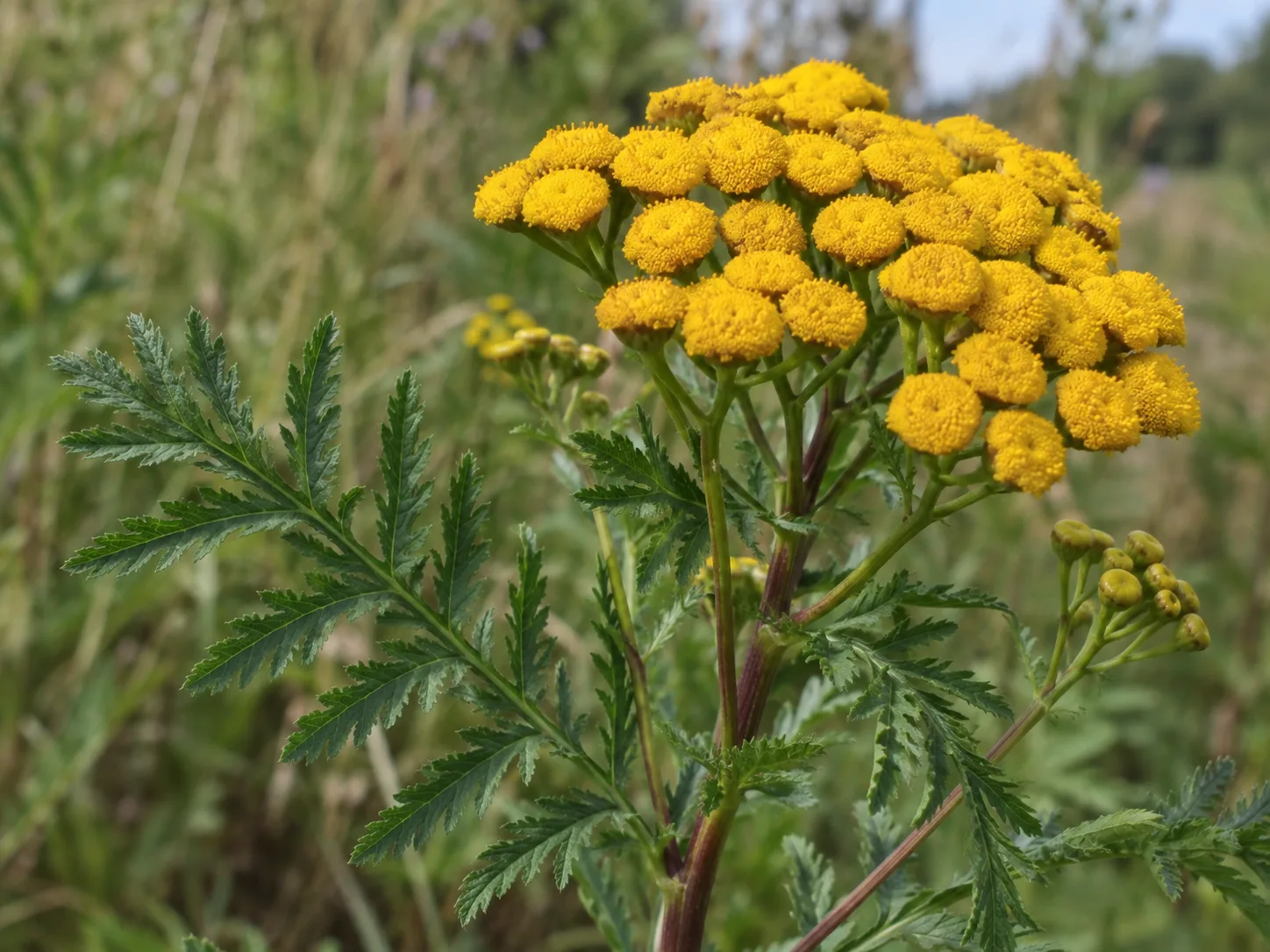
| Common tansy (Tanacetum vulgare) | Keep from being eaten; do not confuse with tansy ragwort | Flat-topped clusters of yellow button flowers |
| Poison oak (Toxicodendron diversilobum) | Urushiol contact rash | Oak-like leaflets, often three, on a shrub or vine |
| Oleander (Nerium oleander) | Ingestion; serious effects are possible | Long narrow leaves and showy clusters of flowers |
| Mistletoe (Phoradendron spp.; Viscum album) | Species-dependent ingestion risk | Evergreen clusters on host trees; berries may fall indoors |
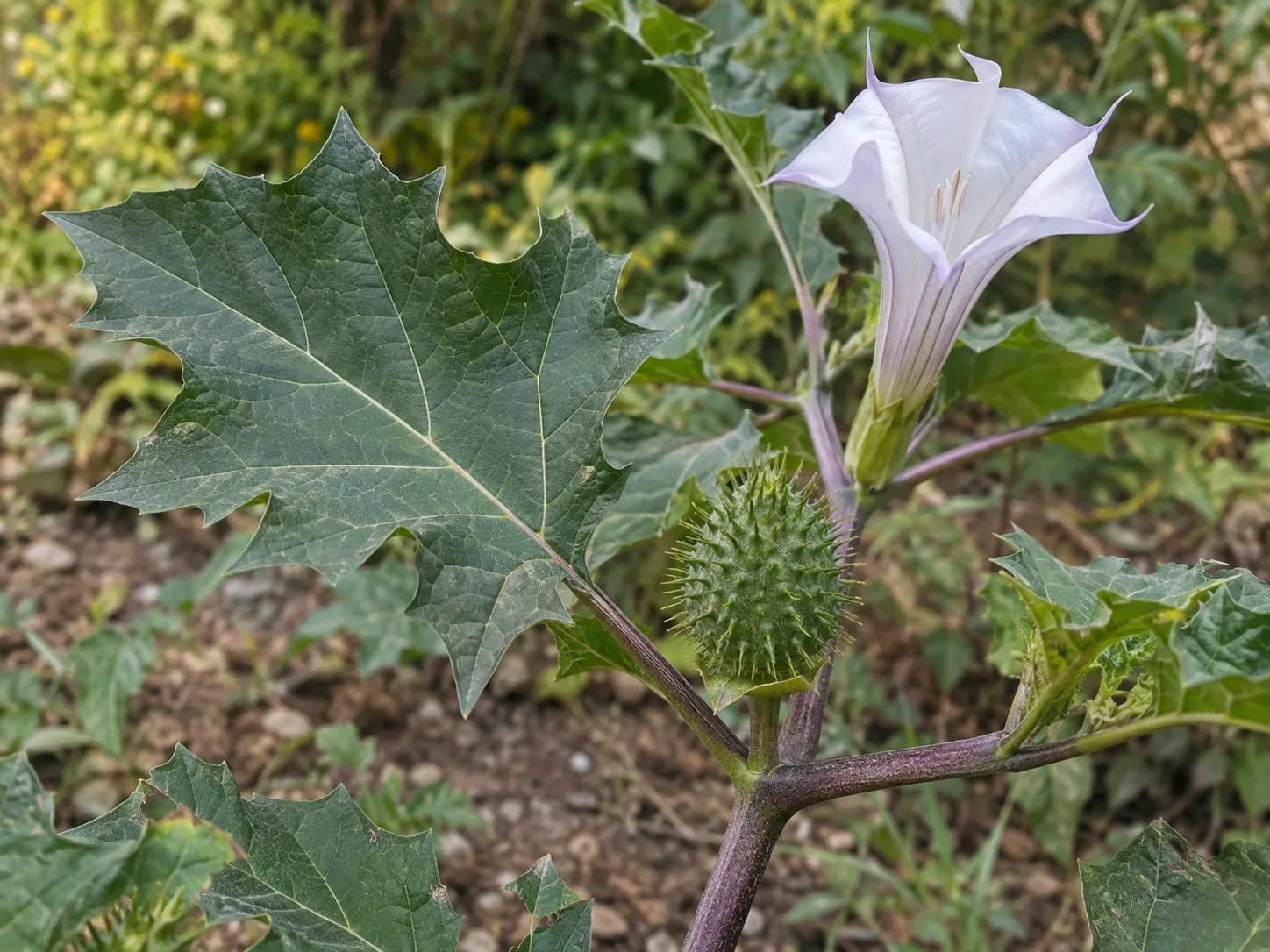
| Jimsonweed (Datura stramonium) | Ingestion can cause severe neurologic and cardiac signs | Large trumpet flowers and spiny seed capsules |
| Poison hemlock (Conium maculatum) | Ingestion can be fatal | Lacy leaves and smooth, hollow stems with purple blotches |
| Wild parsnip (Pastinaca sativa) | Sap plus sunlight can cause severe burns | Yellow umbrella-shaped flowers and compound leaves |
| Giant hogweed (Heracleum mantegazzianum) | Sap plus sunlight can cause severe blistering | Very large, deeply divided leaves and coarse, blotched stems |
Before the List: Three Different Exposure Routes
Contact dermatitis is an inflammation after skin exposure. Poison ivy, poison oak, and poison sumac contain urushiol, an oil that can cause an itchy, sometimes blistering rash. Stinging nettle works differently: tiny hairs deliver an irritating sting when they break against skin. A rash from a plant oil may show up later; a nettle sting is often felt quickly.
A second category is phototoxic sap. Wild parsnip and giant hogweed contain compounds that can make exposed skin unusually sensitive to ultraviolet light. Sap on skin followed by sun exposure can produce a burn-like reaction and blisters; that is not the same process as poison ivy allergy. The NC State Extension profiles for wild parsnip and giant hogweed and giant hogweed describe this sunlight-related injury and warn against casual handling.
The third route is ingestion. Some plants contain compounds that affect the heart, nervous system, kidneys, or digestive tract; others mainly cause mouth and stomach irritation. A small taste can matter for a small child or animal, but a name on a plant list does not tell you how much was swallowed or how severe the outcome will be. If ingestion may have happened, identify the plant as best you can without delaying a call to a poison center or veterinarian.
Plants That Irritate Skin or React with Sunlight
Poison Ivy, Poison Oak, and Poison Sumac
These three plants are related members of the genus Toxicodendron. The oil urushiol can remain on dead stems, tools, clothes, pet fur, and other objects. Directly touching the plant is not the only exposure route: a person can develop a rash after handling contaminated gardening gloves or clothing. Burning these plants is particularly dangerous because smoke may carry the oil and irritate the lungs. The CDC/NIOSH identification guidance covers these transfer routes and warns against burning them.
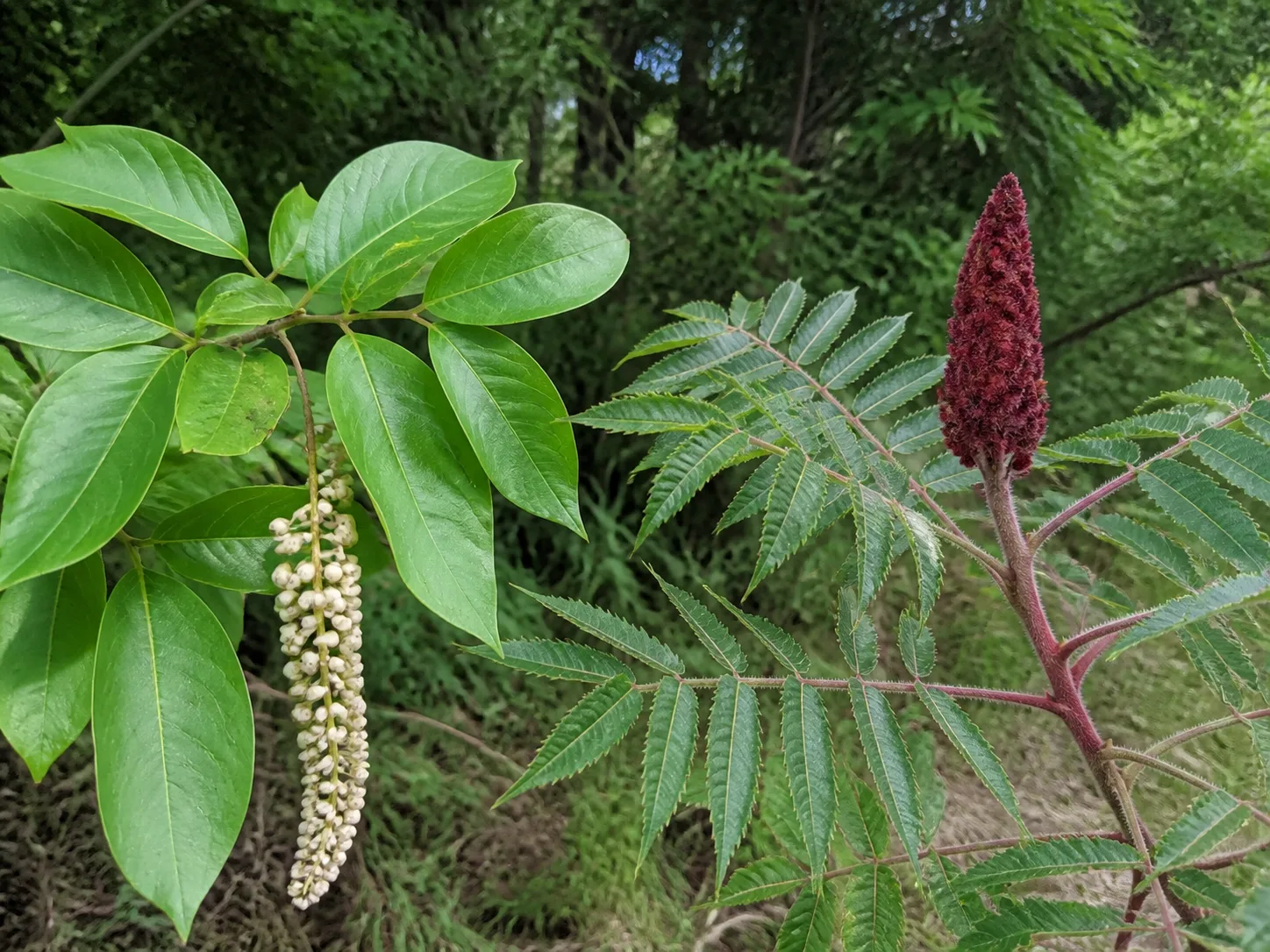
“Leaves of three, let it be” is a useful reminder for poison ivy and poison oak, but it is not a field key for every plant. Poison ivy may grow as a climbing vine or low shrub, while poison oak often has leaflets with rounded lobes that suggest oak leaves. Poison sumac is a woody plant most often found in wet settings; its compound leaves commonly carry seven to 13 leaflets in pairs, rather than the three-leaflet pattern. Poison sumac also should not be confused with harmless ornamental sumacs. The CDC’s plant identification page notes that plant appearance varies with species, season, and local conditions, and that lookalikes occur.
A useful visual cue cannot guarantee a safe identification. If a vine or shrub is unfamiliar, avoid touching it, take clear photos from a distance, and confirm the botanical name with a local extension office or trained plant identifier. The image below shows why leaf arrangement matters: the two sumacs are not interchangeable.
Stinging Nettle
Stinging nettle (Urtica species) is recognized by its opposite, toothed leaves and fine hairs on the stems and leaves. The hairs are easy to miss until a bare forearm brushes the plant; the result is usually an immediate, localized sting or welt. It is a different hazard from urushiol: do not assume that every itchy reaction came from poison ivy, and do not rely on “leaves of three” to detect nettle.
Wear gloves and long sleeves when working near a confirmed patch, and do not rub a suspected sting with bare hands. If the reaction is widespread, involves the eyes or mouth, or causes breathing difficulty or facial swelling, get medical help rather than treating it as an ordinary garden sting.
Wild Parsnip and Giant Hogweed
Wild parsnip is a biennial in the carrot family. In its second year it sends up a tall flowering stem with flat clusters of small yellow flowers; the sap can make skin light-sensitive, and the resulting burn may not appear until after exposure to sunlight. The common name is a trap: a wild plant near a field or roadside is not a safe substitute for a cultivated edible parsnip. Never identify it by casually pulling the root.
Giant hogweed is much larger, with massive, deeply divided leaves and thick, coarse stems that may show purple blotches. It also produces sap that can cause severe blistering after UV exposure. It resembles other large members of the carrot family, including cow parsnip and wild parsnip, so height and one stem mark are not enough for a confident identification. NC State Extension advises reporting suspected plants and warns that manual removal can be dangerous. Keep people and pets away and contact your state or local invasive-plant authority or a qualified removal professional.
Plants That Can Poison When Eaten
Some of the most serious plants in this group are attractive garden ornamentals. Do not use flower shape, berry color, or a nursery label as proof that a plant is edible. In particular, do not let children sample unknown berries, and do not make teas or home remedies from ornamental leaves, roots, or seeds.
Heart-Active Flowers and Shrubs
Foxglove (Digitalis purpurea) contains cardiac glycosides. Its first-year rosette of large leaves can be mistaken for edible foliage, while its second-year flower spike is unmistakable once it develops. NC State Extension describes foxglove as high-severity and lists symptoms that can include digestive upset and abnormal heart rhythms. Every part should be treated as unsafe to eat; wearing gloves for routine pruning is sensible, but the central risk is ingestion.

Mountain laurel (Kalmia latifolia) is an evergreen Appalachian shrub with leathery leaves and clusters of pink or white flowers. It belongs to the heath family, alongside rhododendrons and azaleas, and has high-severity poison characteristics in NC State Extension’s plant profile. The relevant household rule is simple: keep cuttings, leaves, and flowers out of children’s and animals’ mouths, and do not use its leaves in a beverage or recipe.
Lily-of-the-valley (Convallaria majalis) is not a true lily. It is a low groundcover with paired leaves and fragrant white bells, followed by red berries. Its cardiac glycosides can cause digestive and heart-related symptoms if enough is eaten. The National Capital Poison Center’s guidance says exposure should be assessed by an expert; the amount, plant part, and person’s symptoms matter.
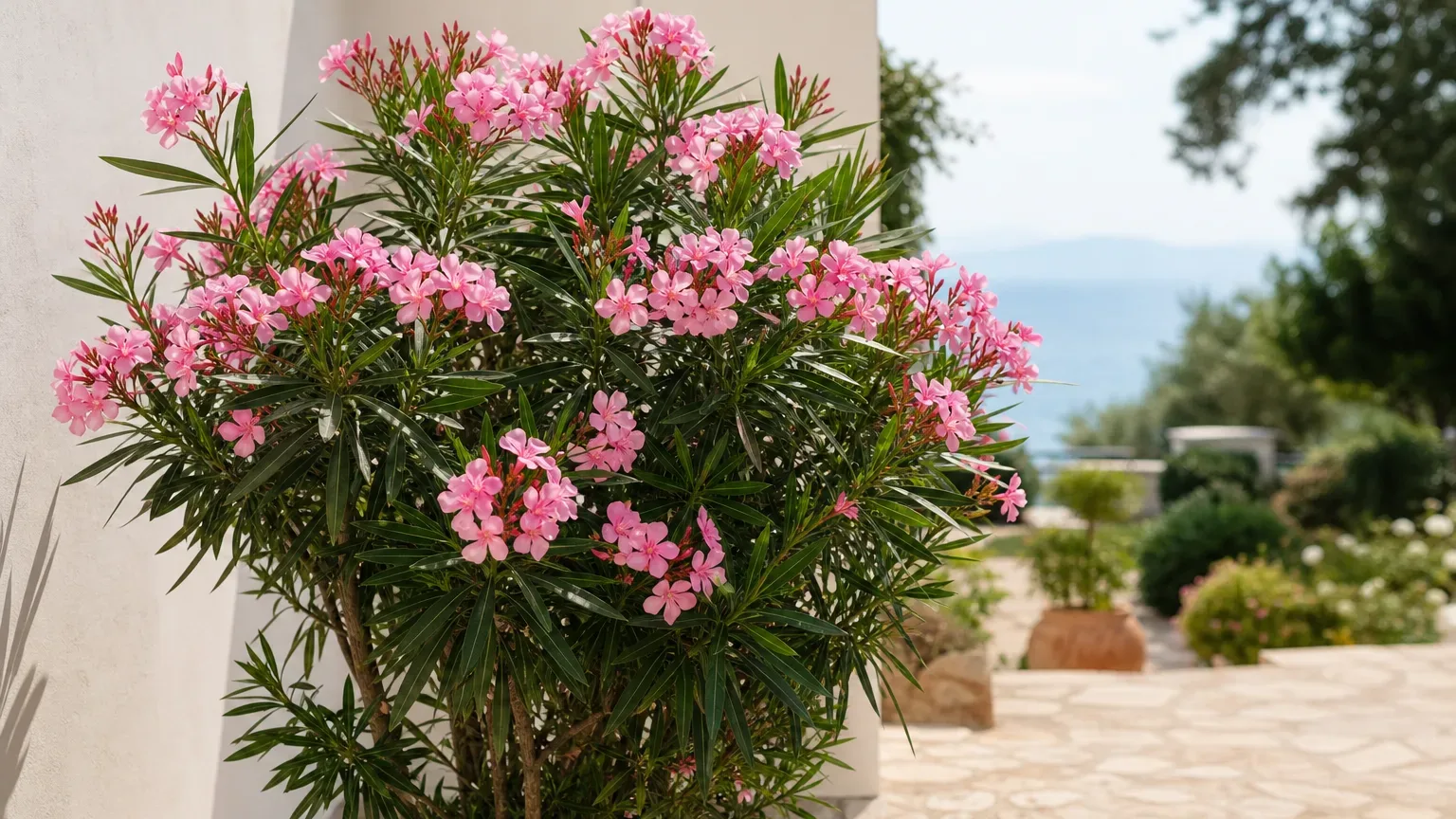
Oleander (Nerium oleander) is a heat-tolerant shrub with long, narrow leaves and clusters of flowers. NC State Extension classifies it as highly poisonous and advises against consuming any part or burning it; the smoke can be injurious. The ASPCA’s species listing separately identifies risks to dogs, cats, and horses. Do not use its branches as skewers, kindling, or informal garden stakes.
Seeds, Berries, and Holiday Greenery
Castor bean (Ricinus communis) has large, palmate leaves and spiny seed capsules. The seeds are a particular ingestion concern because they contain ricin; NC State Extension also warns that handling foliage can cause contact dermatitis. Keep capsules away from children and animals, and do not open or crush seeds as an identification exercise. Commercial castor oil is a processed product and is not evidence that castor seeds are safe to eat.

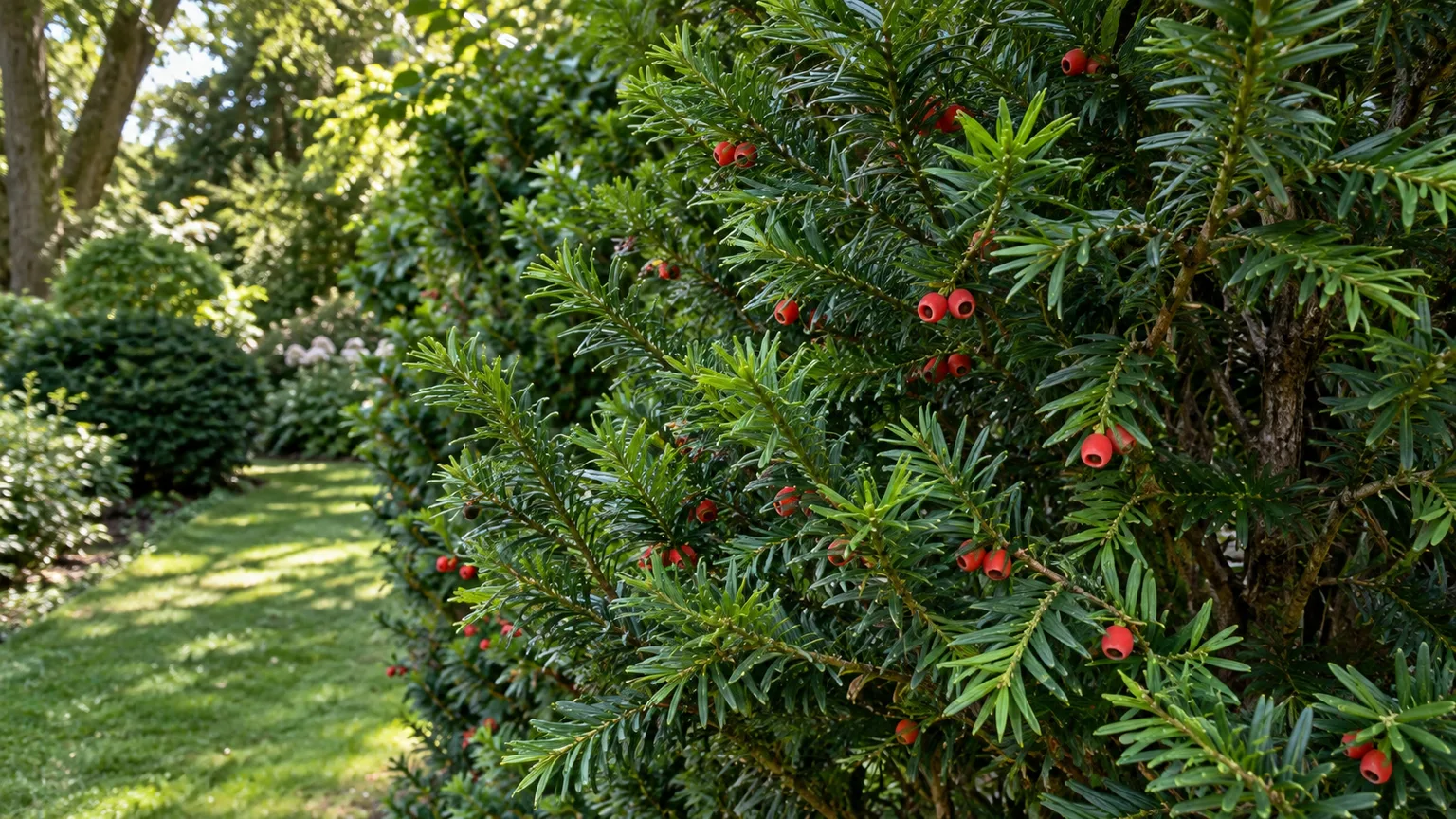
Yew (Taxus species) is a common evergreen hedge with flat needles and bright red, fleshy structures around its seeds. The seed inside the aril and the needles are poisonous if swallowed; the red coating is not a reason to let a child taste it. Poison Control explains the yew seed and needle risk. Because the seed can be swallowed with the aril, do not try to separate an “edible-looking” part for a child or pet.
Bittersweet nightshade (Solanum dulcamara) is a scrambling or climbing vine with purple flowers and red berries. NC State Extension identifies all parts as toxic to people, pets, and livestock and notes that skin irritation can also occur. It may grow in moist edges, ditches, and disturbed ground. Its bright berries invite sampling, so keep children away and ask for a plant identification instead of tasting one to confirm the name.
Chinese lantern (Physalis alkekengi) is often recognized by the orange, papery husk around its fruit. The common name is not a reliable food-safety label: related Physalis species include different plants and uses, and a visual match does not establish the exact species or maturity. Treat this ornamental as non-food unless a qualified botanical or extension source confirms the plant and the intended use. Keep berries and leaves away from curious children and pets rather than assuming that an orange husk means a safe snack.
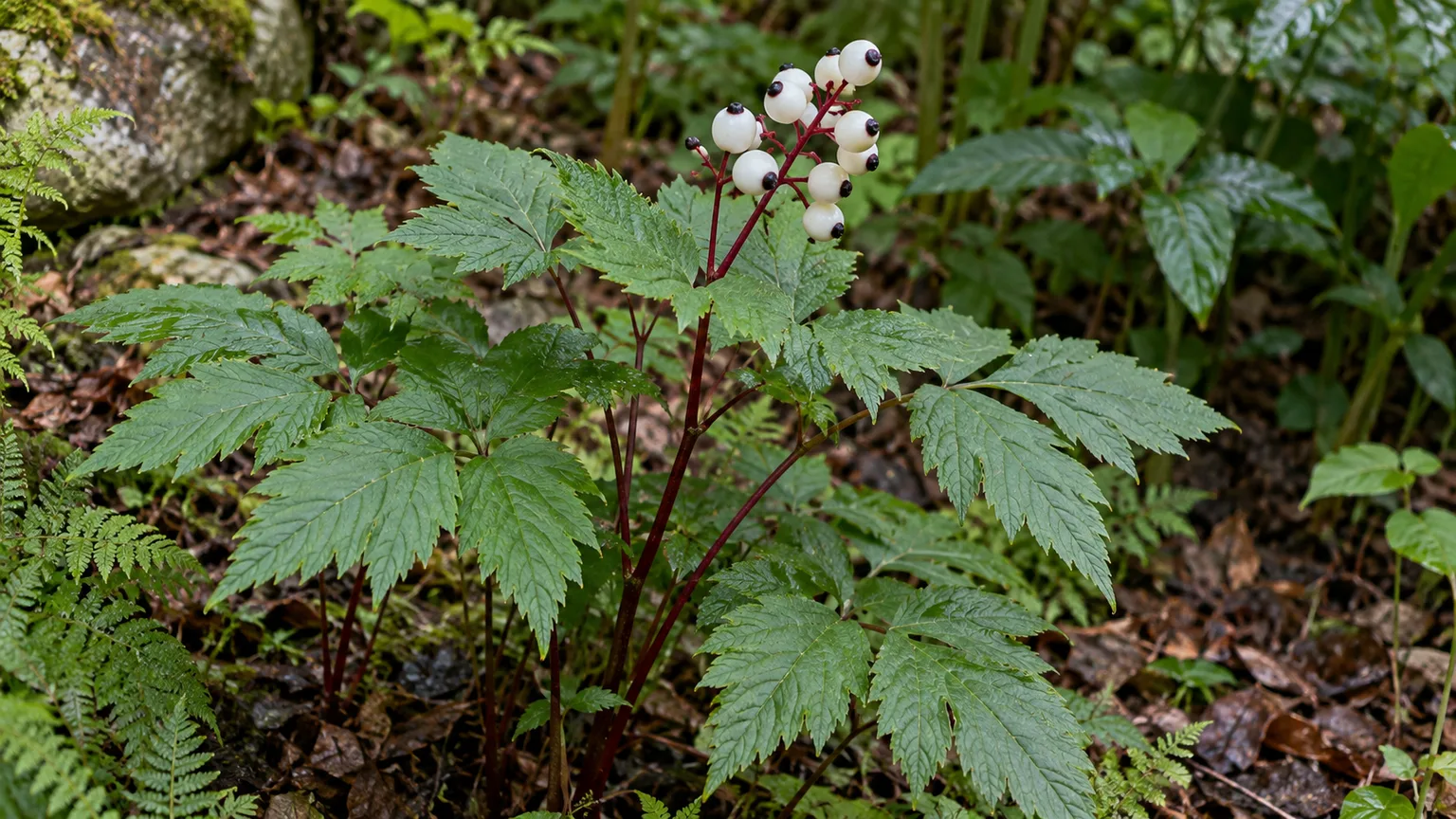
White baneberry (Actaea pachypoda) produces white berries with a dark mark at the blossom end, creating the “doll’s eyes” nickname. The University of Wisconsin Extension says the entire plant is toxic, with roots and berries the most poisonous parts; it also notes that the toxic principle has not been identified. Birds can eat berries that should never be offered to a child. A photograph can help distinguish white from red baneberry, but it does not make the fruit safe.
Mistletoe is a common name for several species, not one uniform plant. In North America, American mistletoe (Phoradendron species) is different from European mistletoe (Viscum album); poison-center data indicate that accidental small American mistletoe exposures are usually less severe than the reputation of the name suggests, while European mistletoe has a record of more serious poisonings. Do not decorate food with it, and pick up fallen leaves or berries. The National Capital Poison Center’s species-specific review is more useful than a blanket “all mistletoe is deadly” claim.
Two Dangerous Lookalikes: Jimsonweed and Poison Hemlock
Jimsonweed (Datura stramonium) has large trumpet-shaped flowers, a strong odor, and spiny capsules filled with dark seeds. West Virginia University Extension says alkaloids occur throughout the plant, especially in the seeds, and poisoning can cause rapid pulse, dilated pupils, restlessness, delirium, and severe illness. Do not taste its nectar, flowers, or seeds, and do not use it in a home remedy. The flowers may attract children precisely because they look ornamental.
Poison hemlock (Conium maculatum) is a different plant from water hemlock, despite the similar common names. It grows as a ferny first-year rosette and later develops white umbrella-shaped flower clusters on smooth, hollow stems with purple blotches. Its leaves and roots can be confused with parsley, wild carrot, or parsnip. USDA Agricultural Research Service and NC State Extension both describe severe ingestion hazards. Do not pull, crush, or forage an uncertain carrot-family plant.
Plants Whose Risk Depends on Species or Animal
Easter lily (Lilium longiflorum) is a true lily and an urgent cat hazard. Pollen, leaves, petals, and even vase water can expose a cat; veterinary sources treat any suspected true-lily ingestion as an emergency because kidney injury can progress before a cat appears very ill. The ASPCA listing for lilies is animal-specific. This warning does not mean every plant with “lily” in its common name has the same toxin or human risk.
Lantana (Lantana camara) is a familiar warm-climate shrub with multicolored flower clusters. The ASPCA lists it as toxic to dogs, cats, and horses, with pentacyclic triterpenoids as the toxic principle. That is a reason to keep pets and grazing animals from chewing it, not proof that every person brushing past the flowers will be poisoned. Identify the plant and the animal before interpreting a toxic-plant listing.
Common tansy (Tanacetum vulgare) has button-like yellow flower heads and finely divided, aromatic leaves. NC State Extension classifies it as high-severity and notes that excess thujone consumption can cause convulsions or death; horses, cattle, and people are vulnerable if it is eaten or used in excess. Do not confuse it with tansy ragwort (Jacobaea vulgaris), a different plant with a similar common name, or use either as food or fodder without qualified, species-specific guidance.
Yellow dock (Rumex crispus) has long leaves with wavy margins and a mature rusty-brown seed stalk. The ASPCA lists dock as toxic to dogs, but that does not establish the same level of risk to humans or to every Rumex species. It is not comparable to a confirmed hemlock ingestion. Do not forage an uncertain dock or feed it to an animal; if a dog eats it, contact a veterinarian with the best identification you can provide.
How to Identify a Suspect Plant Without Touching It
A reliable identification combines several details: leaf arrangement, leaf shape, stem texture and markings, flowers or fruit, growth habit, season, and where the plant is growing. A single clue such as purple stem spots or “three leaves” can lead to a wrong answer. The CDC/NIOSH photo guide notes that hazardous species can vary by region and season and can resemble harmless plants.
If the plant is near a path, play area, or grazing boundary, photograph the entire plant and then take closer pictures of leaves, stems, flowers, and fruit from a safe distance. Record the location and approximate height. Do not break a stem, smell crushed foliage, collect a root, or carry berries in a pocket. For poison hemlock, giant hogweed, or a plant you suspect is a regulated invasive species, ask a local extension office or invasive-species authority to confirm it before removal.
Lookalikes, Season, and Plant Parts
Lookalikes are not a minor detail. Poison hemlock shares its family with parsley, wild carrot, and parsnip; giant hogweed resembles native cow parsnip; and non-poisonous sumacs can be confused with poison sumac. Young plants may lack the flowers or fruit that would help distinguish them. Conversely, a plant with an alarming common name may be a different species from the one in a warning list.
A garden photo gallery can help you decide what to investigate, but it cannot confirm that an unknown plant is safe to eat. The visual roundups from Good Housekeeping are useful as broad recognition aids; confirm a suspected match with a botanical or extension entry and a scientific name. Garden designer Duncan Heather’s plant-safety guidance also treats access by children, pets, and grazing livestock as part of layout planning rather than an afterthought.
What to Do After Contact or Possible Ingestion
The right first step depends on how exposure happened. A skin oil that transfers from a tool needs prompt washing and clothing cleanup; a plant sap that reacts with ultraviolet light calls for protection from additional sun; and a swallowed berry or seed needs case-specific poison-center or veterinary advice. Do not wait for an online identification to become certain if the person or animal is showing serious symptoms.
Skin, Eye, and Sap Exposure
After suspected poison ivy, oak, or sumac contact, remove contaminated clothing and wash exposed skin promptly with plenty of water and soap or a suitable plant-oil cleanser. Clean under fingernails, and wash clothing, shoes, gloves, and tools before reusing them. Urushiol can stay on objects and cause a later exposure; CDC/NIOSH recommends prompt washing and warns against burning these plants. Do not burn suspected poison ivy or oleander. Smoke from either can be dangerous.
If wild parsnip or giant hogweed sap may be on skin, cover the area from sunlight and rinse it gently; seek medical advice for significant blistering, a large exposure, facial or eye contact, or severe pain. Do not wait for redness to appear before protecting the area from sun. If sap reaches an eye, rinse with clean water and contact a medical professional or poison center immediately. Breathing difficulty, facial swelling, fainting, or a severe widespread reaction calls for emergency medical care.
Ingestion by a Child or Pet
For a child in the United States who may have eaten an unknown plant, call Poison Control at 1-800-222-1222 promptly. If there is trouble breathing, collapse, a seizure, severe confusion, or difficulty swallowing, call emergency services. Remove any remaining plant material from the mouth, but do not induce vomiting or give a home remedy unless a poison specialist tells you to. A photo showing the whole plant, leaves, stem, and fruit can speed identification; do not delay the call to gather one.
For a pet, call a veterinarian or emergency veterinary clinic right away; the ASPCA Animal Poison Control Center can be reached at 888-426-4435 in the United States. If a cat may have chewed a true lily, contact a veterinarian immediately even if you see no symptoms. Note the plant’s common and botanical names if known, the estimated time and amount, and the animal’s size. Save a small sample only if you can do so without another exposure; a clear photo is usually safer.
Planting, Removal, and Yard Safety
Start with an inventory: write the botanical name from each plant label, note where it grows, and mark whether children, pets, or grazing animals can reach it. Put high-consequence ingestion hazards away from play areas, and avoid bringing unknown berries or cut foliage indoors where they can fall within reach. The ASPCA’s dog, cat, and horse listings can help with animal planning, but use a human poison center for a person and a veterinarian for an animal.

Do not dig up or mow a plant simply because a photo resembles something toxic. A small, correctly identified poison-ivy patch may be manageable by a person who can use protective clothing, prevent oil transfer, and follow local disposal rules; a large vine, dense infestation, poison hemlock, or suspected giant hogweed is a different job. For giant hogweed and other regulated weeds, contact the local authority or a trained professional before touching it. Do not burn, shred, or compost an unknown hazardous plant; follow local guidance for bagging and disposal.
A safe garden is not necessarily a plant-free garden. Many plants have wildlife or design value, and a species can be manageable when it is identified, placed thoughtfully, and kept out of reach. The decision is practical: know what is growing, understand its exposure route, and remove or relocate plants when access and supervision make the risk unacceptable.
Conclusion
“Poisonous plant” covers several different problems. Poison ivy and poison oak cause a contact rash; wild parsnip and giant hogweed can injure skin after sunlight exposure; foxglove, oleander, castor bean, and poison hemlock are serious ingestion hazards; and Easter lily has a particularly urgent, species-specific danger for cats.
Use botanical names, not a plant’s color or common name, to verify a suspected match. Avoid touching or tasting uncertain plants, wash promptly after contact, and call a poison center or veterinarian for suspected ingestion. Those steps are more dependable than guessing at severity from a list.