10 Ways to Add Nitrogen to Soil Safely for Your Garden
Learn 10 ways to add nitrogen to soil, from compost and legumes to fertilizer. Find out when to test, how to choose a source, and how to prevent overfeeding.
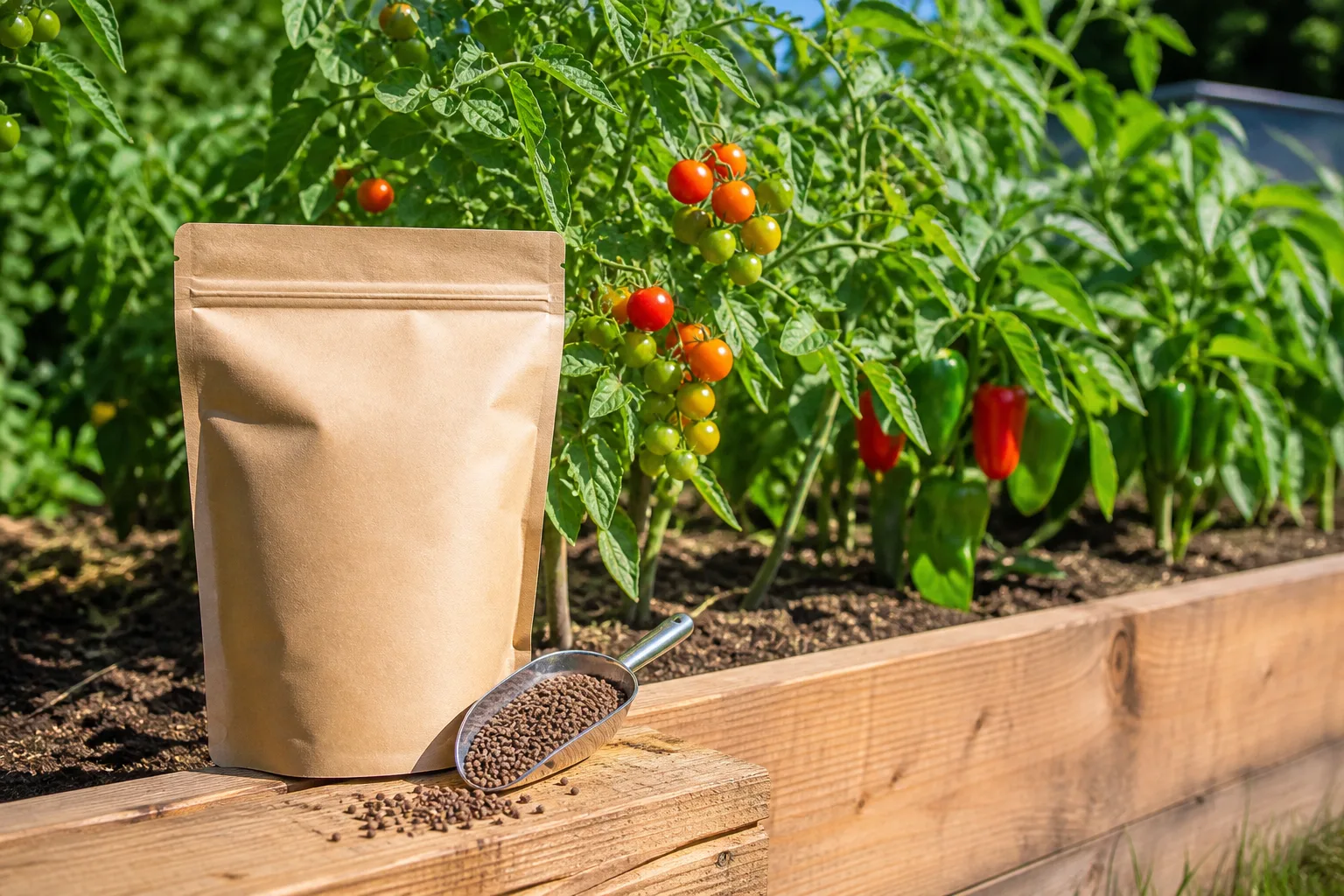
Nitrogen helps plants build chlorophyll and proteins, so a true shortage can slow growth and pale older leaves. But a plant that looks yellow does not automatically need nitrogen: wet roots, drought, poor light, pH problems, pests, and other nutrient imbalances can create similar symptoms. The safest way to add nitrogen is to identify the likely cause, check the soil when appropriate, and pick a source whose release rate suits the crop.
There is also a difference between improving soil with organic matter and delivering a known amount of plant-available nitrogen. Compost, manure, and cover crops support soil fertility over time; a labeled fertilizer can provide a more predictable dose when a crop needs one. These 10 methods cover both jobs, with practical limits so you do not trade pale leaves for excessive leafy growth or nutrients washing away.
Test and diagnose before adding nitrogen
In a vegetable bed, lawn, or repeatedly amended border, start with a representative soil test rather than a home remedy. A test can help interpret pH and nutrient levels and provide recommendations for the particular soil and plants. The University of Georgia Cooperative Extension’s guide to soil testing for home gardens explains how to sample a defined area and use the lab’s recommendations instead of treating a garden by guesswork. For a typical garden zone, UGA recommends a zigzag pattern, eight to 10 soil samples from a consistent depth, and mixing the cores in a clean plastic bucket. Keep separate beds or areas with visibly different soil, drainage, or plant performance as separate samples; a blended sample from unlike places can blur the result.
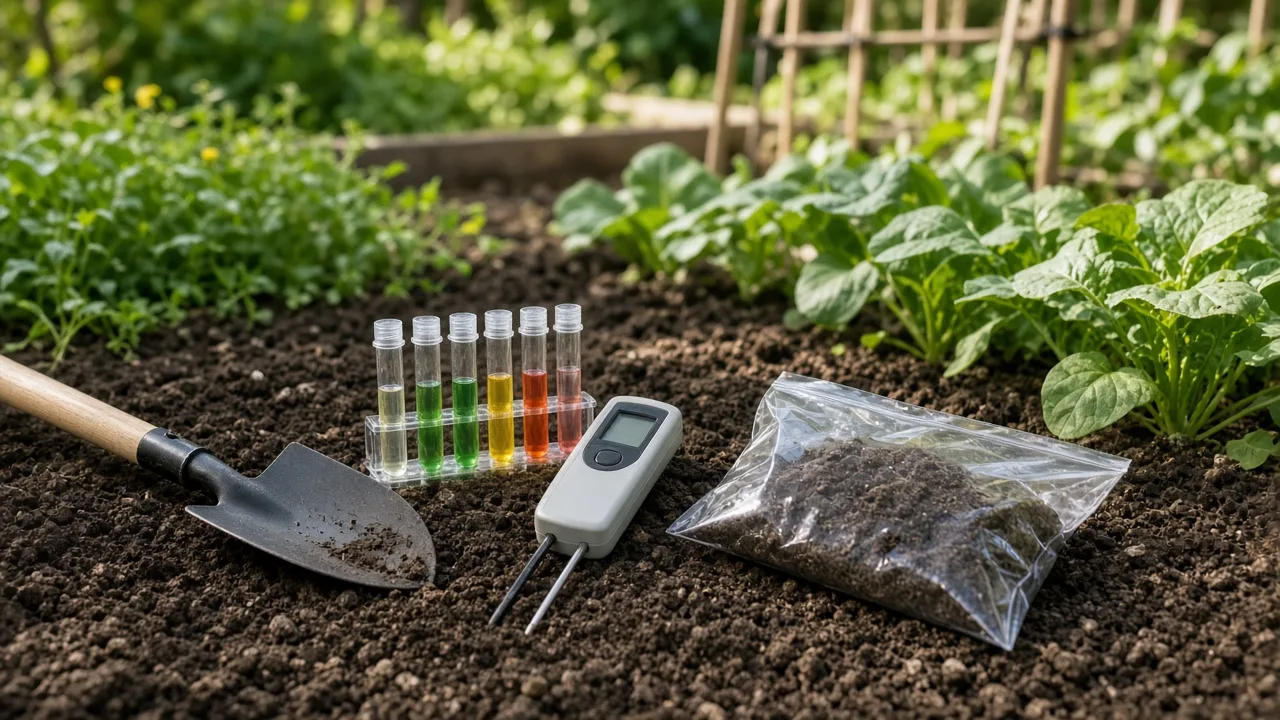
Not every routine garden test reports a useful seasonal nitrogen level. Nitrogen changes form, moves with water, and is taken up or transformed as the season progresses, so some labs emphasize pH, phosphorus, potassium, and organic matter while offering separate nitrate tests for particular crops or situations. Ask the lab what its nitrogen result means and follow its crop-specific recommendation; do not assume a single number predicts exactly how much nitrogen a whole growing season will require.
Yellowing that begins on older, lower leaves, generally slow growth, and small leaves can point toward nitrogen shortage. Yet overwatering, compacted soil, cold roots, poor drainage, pH that limits uptake, or another nutrient issue can look similar. Compare several plants, consider whether symptoms follow a wet or dry patch, and inspect roots and growing conditions before adding fertilizer.
If you are working with containers, use the potting-mix and fertilizer labels rather than a garden-bed soil test rate. A small pot holds little soil, so a garden dose can become a damaging concentration around roots. For one struggling plant, check water, drainage, light, and root health first; nitrogen will not repair those problems.
What nitrogen does—and when it is plant-available
Plants chiefly take up nitrogen as nitrate and ammonium, not as raw organic matter or atmospheric nitrogen gas. Microbes convert some organic nitrogen in compost, residues, and meals into forms roots can use, a process called mineralization. That makes many organic sources gradual and dependent on soil temperature, moisture, and microbial activity; a cold or dry bed may release nutrients slowly. Epic Gardening’s nitrogen guide explains the distinction between nitrogen fixation, mineralization, and fertilizer forms.
This release pattern matters when a plant needs help now. Finished compost is valuable for soil structure and long-term fertility, but it is not a reliably fast rescue dose. A water-soluble fertilizer may act sooner, while a meal or composted material releases its nitrogen over a longer and less predictable period. Organic does not mean instantly available or impossible to overapply, and synthetic does not automatically mean harmful; source, amount, timing, placement, and crop demand determine the outcome.
The first number on a fertilizer label is its nitrogen analysis by weight. A 10-pound bag marked 10-0-0 contains about 1 pound of total nitrogen; a 5-5-5 product contains 5 percent nitrogen plus phosphorus and potassium. That simple label check helps compare products, but the application rate still has to come from the soil-test recommendation, plant label, or crop-specific guidance.
10 ways to add nitrogen to soil
These methods are not interchangeable. Use compost and residues when your goal is to build soil and recycle nutrients; use a measured fertilizer when the crop needs a predictable amount of nitrogen. When uncertain, change one input at a time and observe the response instead of layering several sources together.
1. Add finished compost for steady soil improvement
Finished compost is the easiest starting point when soil also needs more organic matter, improved tilth, or better water handling. Mature compost has a variable nutrient analysis and usually releases nitrogen gradually as it decomposes. It can support the soil food web and recycle garden waste, but it should not be counted as a precise substitute for fertilizer if a soil test or crop recommendation calls for a measured nitrogen dose.
Spread a modest, even layer before planting or use it as a surface dressing around established plants, keeping it off stems and crowns. Avoid compost that still smells sour, heats up, or contains recognizable fresh material; unfinished material can temporarily tie up nutrients or stress sensitive roots. Fine Gardening also describes compost as a broad soil amendment, while emphasizing that specific organic fertilizers supply nutrients differently in its overview of organic fertilizer sources.
2. Use composted manure as a variable, gradual source
Composted manure can add nitrogen and other nutrients while contributing organic matter, but its analysis varies with animal, bedding, storage, moisture, and composting. If you are applying a significant amount, use a tested product or ask the supplier for an analysis. Manure can contribute phosphorus and salts as well as nitrogen, so repeated additions may create an imbalance even if the plants look hungry.
For vegetable gardens, prefer properly composted or packaged manure and follow the label and local food-safety guidance. Fresh manure may contain pathogens and can injure roots; do not put it directly against plants or apply it casually to a bed with harvest-ready produce. Apply before planting when possible, incorporate only as directed, and do not combine it with a full fertilizer rate unless the nutrient plan accounts for both sources.
3. Grow a legume cover crop and return its growth
Peas, clover, beans, and vetch can partner with compatible rhizobia bacteria in root nodules to fix atmospheric nitrogen into biologically useful forms. A cover crop can also shield bare soil and contribute roots and tops that decompose after termination. The nitrogen benefit is not an instant liquid feed: it depends on successful nodulation, the amount of growth, what plant material stays in the bed, and how it breaks down.
Choose a legume suited to your season and climate, and check whether the seed needs a compatible inoculant. Mow or cut the crop before it sets seed if you want a green manure, then give the residue time to start decomposing before sowing a crop that needs immediate nitrogen. Do not expect the same benefit if you remove most of the cover crop as hay or compost it elsewhere; the nutrients leave with the biomass.

4. Rotate peas and beans, then leave roots in place
A crop rotation that includes peas or beans is an accessible way to introduce nitrogen fixation into a home vegetable garden. After harvest, cut the plants at soil level and leave healthy roots and nodules in the bed to decompose, rather than pulling every root out. This recycles some nutrients and preserves root channels and organic material.
The result is a contribution, not a guaranteed fertilizer credit. Harvested pods and seeds carry nitrogen away, and a bean crop may use much of the nitrogen it fixes to grow its own foliage and seed. Rotate legumes with other plant families for pest and disease management too; do not use a heavy nitrogen application simply because beans occupied the bed last season.
5. Recycle clean grass clippings
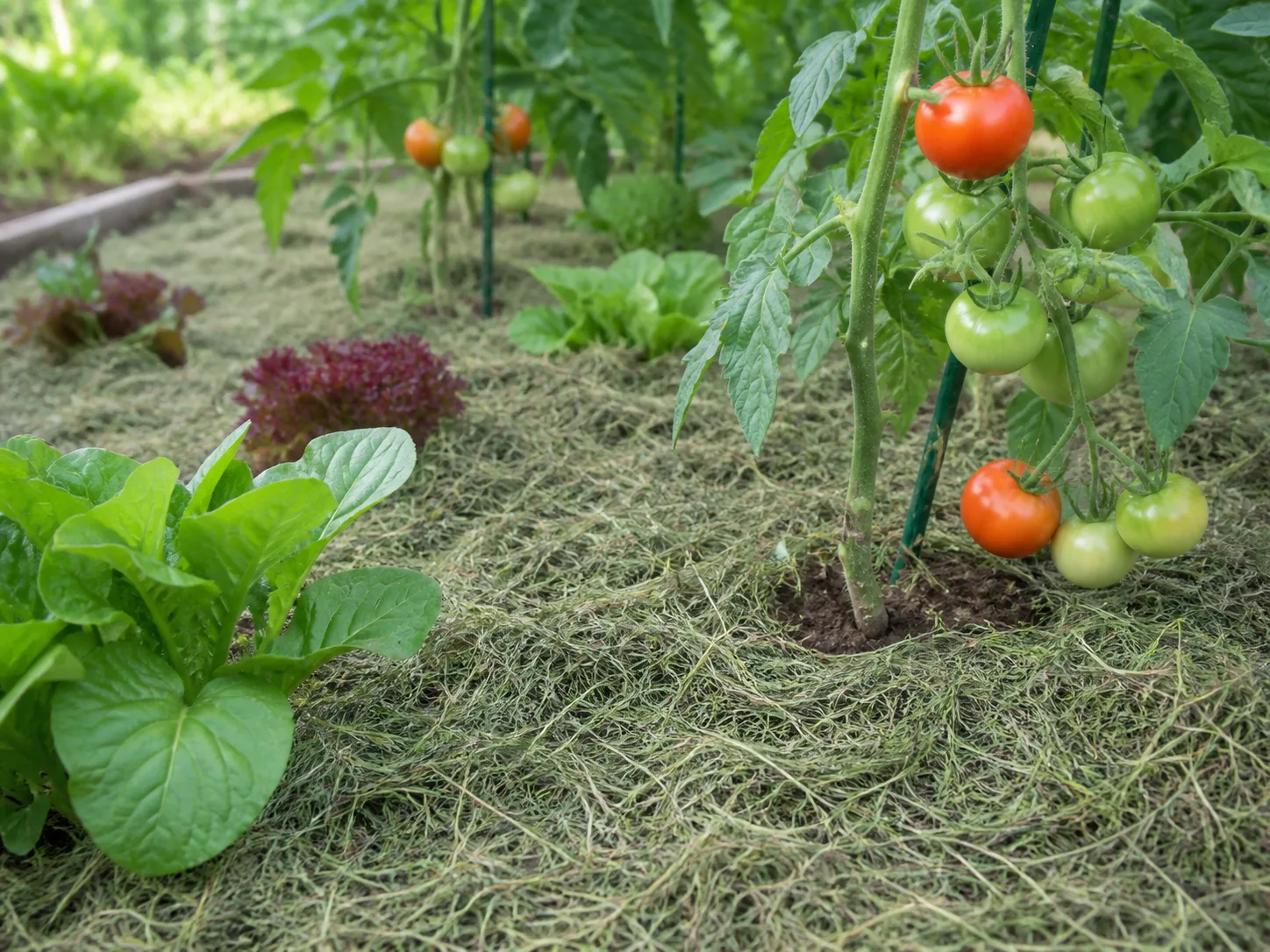
Fresh grass clippings contain nitrogen that can return to the garden as they break down. Use them as a thin, loose mulch around established plants or add them to compost with dry leaves and other carbon-rich material. A dense, wet pile of clippings can mat, heat, smell, and keep air or water from moving freely, so scatter small amounts rather than dumping a thick layer against stems.
Use clippings only if the lawn has not recently been treated with an herbicide or other product whose label restricts composting or use around edible crops. If you are unsure, check the product label or leave the clippings on the lawn. Grass clippings are a recycling method and gradual nutrient source, not a precisely measured replacement for a crop-specific fertilizer.
6. Put coffee grounds into compost
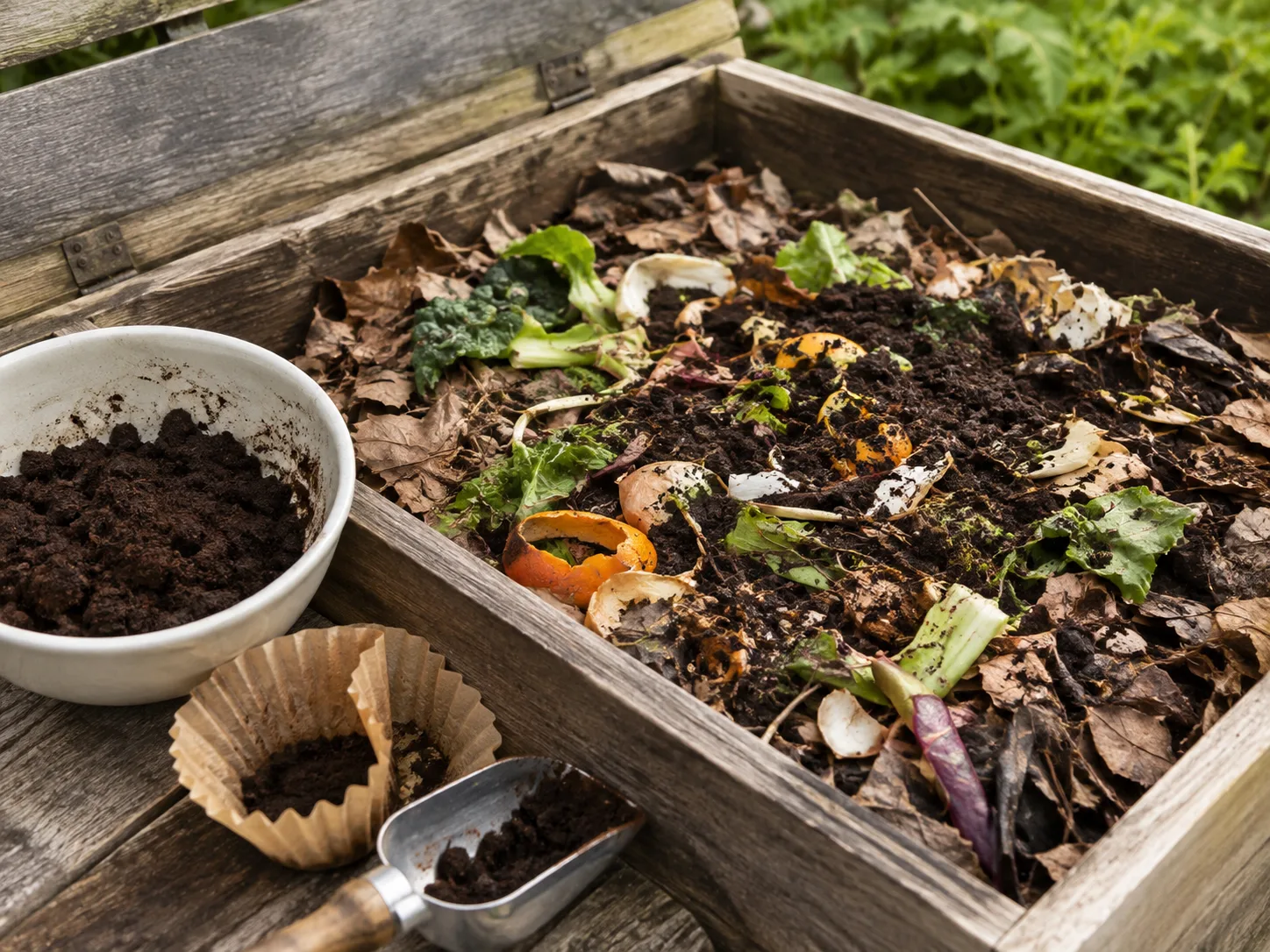
Used coffee grounds are easiest to manage as one ingredient in an active compost pile. Mix them with dry leaves, shredded paper, or other dry “browns” so they do not collect into a wet, compacted layer. As compost matures, microbes transform some organic nitrogen into plant-available forms, but grounds are not a reliable quick feed with a guaranteed analysis.
If you want to add raw grounds to an established bed, keep the amount modest and mix it into the surface rather than leaving a thick, fine-textured blanket. Do not rely on grounds to correct a diagnosed nitrogen deficiency or lower soil pH on schedule. Keep grounds a minor ingredient rather than the main amendment: a heavy, fine layer can compact or crust and interfere with water movement, especially around seedlings or in containers.
7. Apply blood meal for a concentrated organic feed
Blood meal is a dry animal byproduct sold as a concentrated nitrogen fertilizer. It can suit a bed that needs additional nitrogen without much phosphorus, but product analyses vary, so use the guaranteed analysis and label rate rather than a scoop-size rule. Mix it into the soil or water it in only as directed; leaving a concentrated band near a stem or root ball can injure plants.
Blood meal is not slow soil-building compost. Its nitrogen becomes available as microbes process it, and a heavy application can overfeed leafy growth or contribute to fertilizer injury. Store the package securely because dogs and other animals may be attracted to animal-based meals, and keep it away from pets that might dig or eat it.
8. Choose feather meal for a slower organic supply
Feather meal is another concentrated organic nitrogen source, often chosen when a gardener wants a longer release than a liquid feed. Its nitrogen is tied up in organic material and must be processed before roots can use it, so it works best as a planned amendment rather than a response to a plant that is already declining. Read the bag’s nutrient analysis and release instructions; products are not all identical.
Work it into the root-zone soil at the labeled rate before planting or around established plants as directed. Do not add feather meal on top of composted manure and a complete fertilizer without counting the nitrogen already supplied. Fine Gardening includes feather meal among its organic nitrogen sources, and Epic Gardening’s nitrogen guide compares it with other animal-derived meals.
9. Use fish emulsion for a measured liquid feed
Fish emulsion or another labeled fish fertilizer can provide nitrogen in a liquid form that is convenient for containers, raised beds, or a targeted side-dress. It generally acts faster than dry organic meals because the nutrients are already in a liquid product, but the exact analysis and directions depend on the label. Dilute only at the stated rate, apply to moist soil when the label permits, and keep the solution off edible parts unless the label allows that use.
Fish products can smell strongly, and a concentrated mix is not better than the recommended dilution. Do not pour leftover solution into a storm drain, street gutter, or waterway. A liquid feed is useful when you need convenience or a quicker response, but the soil test and crop demand should still determine whether nitrogen is needed.
10. Choose a labeled mineral or synthetic fertilizer
A mineral or manufactured fertilizer is often the most predictable way to supply nitrogen when a soil test or crop recommendation calls for a specific amount. If phosphorus and potassium are already adequate, an N-only product can avoid adding more of those nutrients. If the soil needs more than nitrogen, choose an analysis that matches the test rather than assuming a balanced fertilizer is always the best option.
Fast-release products such as some urea or ammonium formulations can supply nitrogen quickly, while coated or otherwise controlled-release products release it over a longer period. Follow the exact label rate, timing, and incorporation instructions. Concentrated fertilizer can scorch roots or leaves if piled or applied too heavily; never estimate a rate by “handfuls per plant” when the label provides area-based directions.
Choose organic, synthetic, or blended nitrogen
The better source is the one that matches the speed and precision you need. Organic materials such as compost, manure, blood meal, feather meal, and clippings can contribute organic matter or support gradual nutrient cycling, but the available nitrogen and release timing are less predictable. Manufactured fertilizers give a labeled analysis and can be selected for a faster or controlled release, but concentrated products require careful measurement and can be lost if applied at the wrong time.
| Source type | Best fit | Main trade-off |
|---|---|---|
| Finished compost or residues | Long-term soil building and recycling | Variable, gradual nitrogen; not a quick correction |
| Composted manure or organic meals | Nutrient supply when the label or analysis fits | Composition and release vary; may add other nutrients |
| Liquid fish fertilizer | Convenient, targeted feeding | Requires precise dilution and may smell |
| Mineral or synthetic fertilizer | A measured, predictable crop dose | Higher concentration makes misapplication easier |
“Natural” is not a dose, and “synthetic” is not a rate. Either type can cause problems when used in excess, while a properly selected source can be effective when it fits the crop and soil. USDA’s nutrient-management guidance recommends matching nutrient source and amount to test results, crop need, timing, and site conditions; that same framework helps home gardeners avoid piling on inputs by habit.
Apply the right amount at the right time and place
Start with the recommendation for the specific crop and area, then calculate product required from its label. For example, if a recommendation calls for a certain amount of nitrogen per bed, divide by the product’s nitrogen fraction to estimate the fertilizer mass; a 10 percent N product supplies one-tenth of its weight as nitrogen. Confirm the units and area before spreading, and account for nitrogen already supplied by manure, compost, cover-crop residues, or a prior fertilizer application. As a math example only, if a local recommendation called for 1 pound of nitrogen per 1,000 square feet, a 10 percent N product would require 10 pounds of product for that full area. A 4-by-8-foot bed is 32 square feet, so the scaled amount would be about 0.32 pound of product, or roughly 5 ounces; this is not a universal garden rate.
Apply nitrogen when roots and foliage can use it, not far ahead of crop demand. Some long-season crops benefit from split applications if a local recommendation calls for them, while a single preplant dose may suit other crops. Organic sources can be incorporated in advance to allow breakdown; a quick-release product should be timed and watered according to its label.
Keep fertilizer off pavement, paths, and driveways, where rain can carry it into drains. Avoid spreading ahead of heavy rain or onto saturated, frozen, or bare sloping soil. USDA guidance highlights that nutrient losses depend on source, rate, timing, placement, weather, and soil conditions; measuring carefully and keeping nutrients in the root zone reduces waste and runoff risk.
For a home bed, use a clean spreader or measuring cup, distribute the product evenly, and sweep granules off hard surfaces. Water in only as the label directs: enough to move a product into the root zone, not so much that water runs off or drains through the bed before roots can capture it. Keep a simple note of product, amount, date, and weather so you can avoid accidentally repeating an application.
Recognize excess nitrogen and correct the cause
Too much nitrogen can produce dark, lush foliage with fewer flowers or fruits, soft growth that is vulnerable to stress, delayed maturity, and leaf-edge burn when fertilizer salts are concentrated. These signs do not identify nitrogen excess on their own, but if they follow fertilizing, stop adding nitrogen and review the label, area, and total amount applied. Avoid trying to “balance” an overdose by adding phosphorus, potassium, lime, or another amendment without a soil test.
If the amount was small and the product was placed on the surface, remove visible granules and follow the label’s advice for watering. Do not flush a bed aggressively if doing so would send nutrient-rich runoff toward a drain, pond, or stream. For a serious spill, a large overdose, or a product with specific safety instructions, use the manufacturer’s directions and contact a local extension office for crop-specific guidance.
If plants stay pale after a reasonable, measured nitrogen application, pause before repeating it. Check drainage, watering consistency, root damage, pH, light, and signs of pests; some nutrients can be present but unavailable when soil conditions are poor. A soil lab or local Extension office can help interpret a confusing pattern more safely than applying another fertilizer blend.
Conclusion: match the nitrogen source to the need
You can add nitrogen with compost, manure, legumes, clippings, meals, fish fertilizer, or a labeled mineral product, but each method works on a different timetable. Use compost and cover crops to build fertility gradually, and rely on a measured fertilizer when a test or crop recommendation calls for a predictable dose.
Before you spread anything, confirm that nitrogen is the likely problem, account for what is already in the soil, and apply only what the crop can use. That sequence gives plants the support they need while protecting roots, soil balance, and nearby water.



