7 Succulent Ground Covers for Sun, Slopes, and Dry Soil
Find the right succulent ground cover for your climate, from hardy creeping sedum to frost-tender echeveria, with clear siting, drainage, and spread advice.
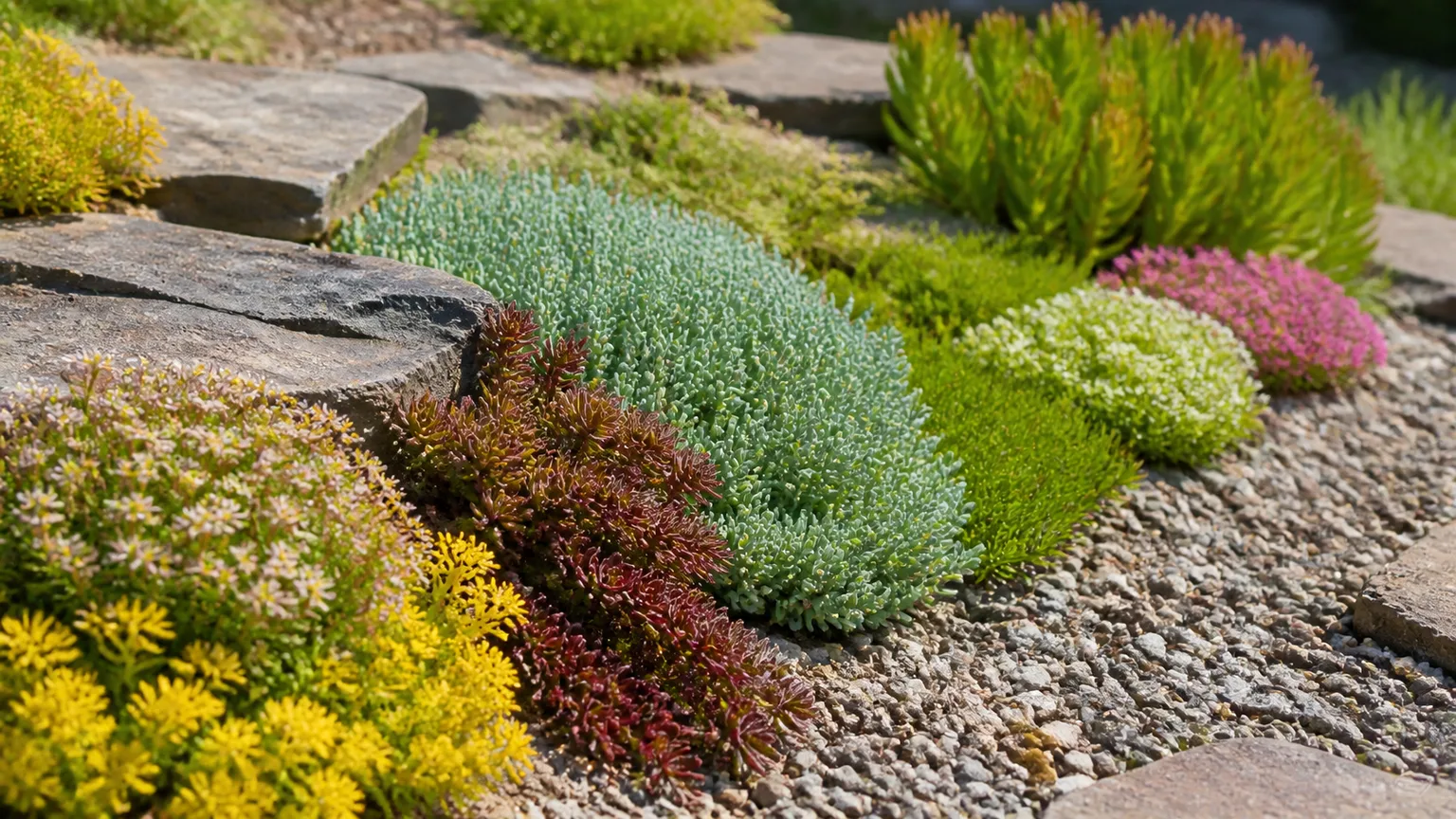
A succulent ground cover can cool the look of a hot gravel bed, soften a stone edge, or hold a sunny slope where turf never takes. But “succulent” does not mean one climate range or one kind of spread: some choices form a carpet, some multiply into rosettes, and one is best treated as a summer annual in much of the country.
The dependable starting point is not the plant name. It is the site: how many hours of sun it gets, whether water leaves the root zone after rain, and how cold or wet winter becomes. Match those conditions first, then choose a plant whose mature spread and maintenance fit the edge you want to cover.
Choose a succulent ground cover by climate and site
Use this quick comparison to narrow the list before you buy. The zones are a starting screen, not a promise: the same USDA zone can have a dry gravel slope or a waterlogged clay bed, and that difference can decide whether a succulent survives winter.
| Plant | Best job | Climate fit | Drainage fit |
|---|---|---|---|
| Moss rose (Portulaca grandiflora) | Fast summer color in a hot bed | Warm-season annual in frost-prone areas; perennial only in frost-free climates | Sandy, gravelly, or otherwise quick-draining soil |
| Creeping sedum (Sedum spurium) | Durable low mat for a temperate rock garden | Common cultivars are often rated USDA Zones 4–9 | Dry to medium soil; no standing water |
| Echeveria (Echeveria spp.) | Tight rosettes in mild-winter gardens | Best outside in frost-free areas, often Zones 9–11 depending on species and hybrid | Gritty, sharply drained soil |
| Ghost plant (Graptopetalum paraguayense) | Silver rosettes on a dry wall or rock edge | UF/IFAS reports tolerance to about 10°F; protect from winter wet | Raised, rocky, or container soil that dries between rain |
| Blue chalksticks (Curio repens) | Blue-green mat in warm regions | USDA Zones 9b–12; not frost tolerant | Coarse, fast-draining soil |
| Parry’s agave (Agave parryi) | Large structural rosettes on a hot, dry slope | NC State lists Zones 6a–10b; colder survival depends on keeping winter soil dry | Sandy or rocky ground with excellent drainage |
| Royal dewflower (Drosanthemum speciosum) | Broad, flowering cover in mild coastal climates | A nursery lists hardiness near 30°F; treat as frost-sensitive | Lean, well-drained soil with occasional water |
“Ground cover” also needs a realistic definition. A tight mat can reduce open soil and make weeding easier once it fills in, but these plants are not a durable lawn: repeated walking breaks stems, and weeds still need attention while the planting establishes.
What a succulent ground cover needs to thrive
Most of these plants handle drought because their leaves or stems store water. That adaptation helps them survive a dry spell; it does not make their roots immune to oxygen-starved soil. If water sits around the crown for days, roots can rot even when the surface looks dry.
Drainage is especially important in places with summer downpours, heavy clay, or cool wet winters. A south-facing slope, raised rock garden, retaining-wall edge, or berm gives excess water somewhere to go. In humid climates, a plant that is listed as “drought tolerant” can still fail if its crown stays damp overnight or rain falls into a dense, shaded pocket.
Sun needs vary. Moss rose, creeping sedum, Parry’s agave, and royal dewflower generally flower or color best in a bright, open position. Echeveria and ghost plant can take some light afternoon shade in very hot sites, while blue chalksticks may appreciate partial shade where reflected heat is intense.
Test drainage before you plant
Look at the spot after a hard rain rather than guessing from the topsoil. If a puddle is still there the next morning, or the ground stays sticky and cold for several days, skip a flat planting of tender succulents. Choose a raised pocket, change the grade so water runs away, or use containers instead.
Adding a little gravel only to the bottom of a planting hole does not fix a clay bed; it can leave the root ball sitting in a basin that drains more slowly than the surrounding soil. Improve the drainage of a broad area, plant on a mound, or select a different ground cover for that location. Colorado State Extension’s rock-garden guidance likewise emphasizes dry, well-drained sites for creeping stonecrop and other rock plants.
Moss rose for a season of heat-loving color
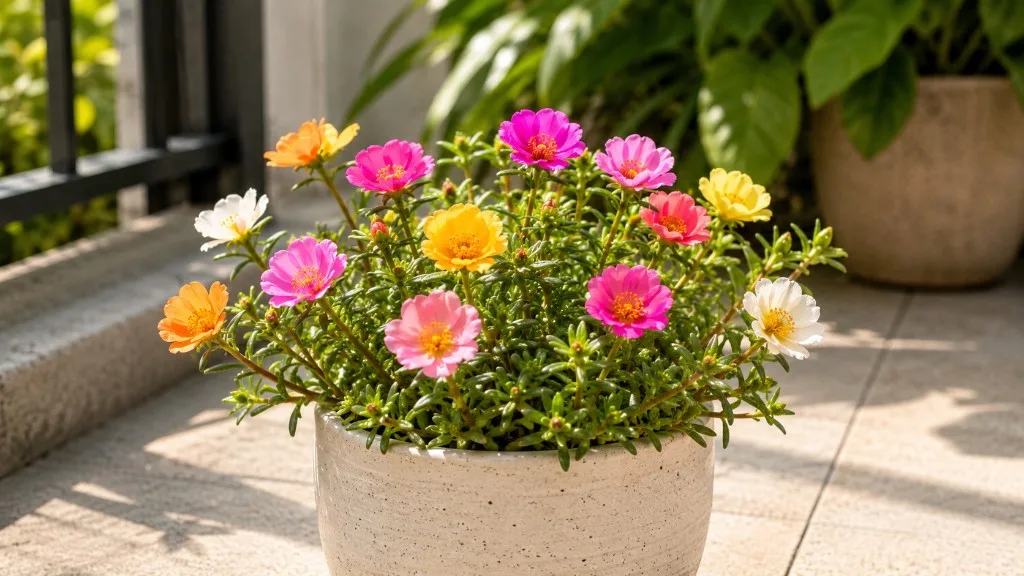
Moss rose (Portulaca grandiflora) is the best pick here when the goal is a low, flowering carpet from late spring into fall, not a permanent evergreen mat. Its prostrate stems spread roughly a foot across and produce vivid, cup-shaped flowers that open in bright sunlight; many close overnight or on cloudy days. Wisconsin Horticulture describes it as a heat- and drought-tolerant annual for hot, dry beds, rock gardens, edges, and spaces between stones.
Treat it as a warm-season annual wherever frost occurs. Sow or plant it after frost danger has passed and soil has warmed; in frost-free parts of USDA Zones 10–11, it may persist longer, but many gardeners still grow it as a seasonal bedding plant. It belongs in full sun and sandy, gravelly, or loose soil that drains quickly. It does not tolerate foot traffic, and a rich, damp bed may produce soft growth and rot rather than a sturdy carpet.
Expect seedlings to appear in cracks or nearby bed edges if seed capsules mature. Wisconsin Horticulture notes that moss rose often reseeds and that deadheading can reduce this; UF/IFAS’s assessment does not list P. grandiflora as a problem species in Florida natural areas, so the useful caution is to monitor where it self-sows rather than label it invasive everywhere. Cut back or pull volunteers where they are unwelcome.
Moss rose has a common-name safety complication: “purslane” may refer to a different Portulaca species or a hybrid. UF/IFAS Extension Charlotte County cautions that ornamental moss rose is not edible and reports toxicity to dogs, cats, and horses. If pets chew plants, keep moss rose out of their reach and confirm the botanical name on the tag before relying on any common-name safety advice.
Creeping sedum for a cold-hardy, low mat
For a perennial carpet in a temperate climate, creeping sedum (Sedum spurium, also called two-row stonecrop) is usually the most broadly useful choice on this list. It grows only a few inches high, spreads through low stems, and cultivars such as ‘Red Carpet’ or ‘Dragon’s Blood’ add red-edged foliage and pink blooms. Fine Gardening’s ‘Fuldaglut’ profile lists Zones 4–9, full sun, dry-to-medium moisture, and ground-cover use; its creeping sedum overview notes that drainage matters more than rich soil for these plants. The Royal Horticultural Society’s profile for S. spurium also describes a vigorous, mat-forming perennial suited to banks, gravel gardens, and ground cover.
Give it full sun to light shade and lean soil that drains after rain. It can handle a cold winter better than echeveria, blue chalksticks, or royal dewflower, but cold hardiness does not equal wet-soil tolerance: a mat in a low puddling bed is at risk of crown and root rot. In hot humid regions, use a slope, a raised bed, or coarse soil pockets that dry between storms.
Sedum fills gaps efficiently once established, which is useful along a path or between stones. It is not the right choice for a tiny rock crevice beside slow-growing alpine plants unless you are prepared to trim it. Select a cultivar with the actual mature spread you can contain; “sedum” includes many different habits, and upright stonecrops are not substitutes for a creeping ground-cover variety.
Echeveria for frost-free rosette cover
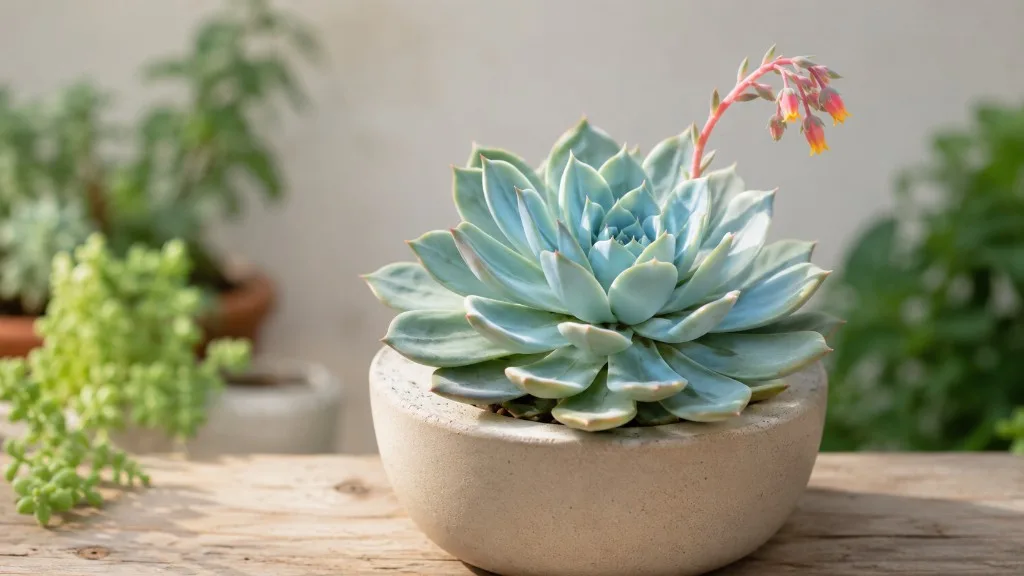
Echeveria offers a different look from a mat-forming stonecrop: repeated rosettes make a patterned mosaic, and many kinds produce offsets around the parent plant. That makes them useful in the mildest gardens as a low border, gravel pocket, or ground-level succulent tapestry. NC State Extension notes that the genus includes many species and hybrids, that offsets can be replanted, and that echeverias are not truly frost hardy.
Use echeveria outdoors only where winters stay frost-free or where your exact cultivar has verified local hardiness. In regions that freeze, grow the rosettes in portable pots or shallow bowls, then move them under cover before cold weather. A generic “Zone 9” tag is not enough to guarantee a mixed hybrid will handle frost, rain, or a sudden freeze.
Plant it in gritty, sharply drained soil and give it strong sun; in a scorching inland site, morning sun with late-afternoon protection can prevent stress while keeping rosettes compact. The leaves bruise easily, and the powdery coating on many varieties marks when handled, so place it away from play routes and garden tools. Use offsets to fill gaps gradually instead of packing plants tightly into a wet bed.
Ghost plant for spreading silver rosettes
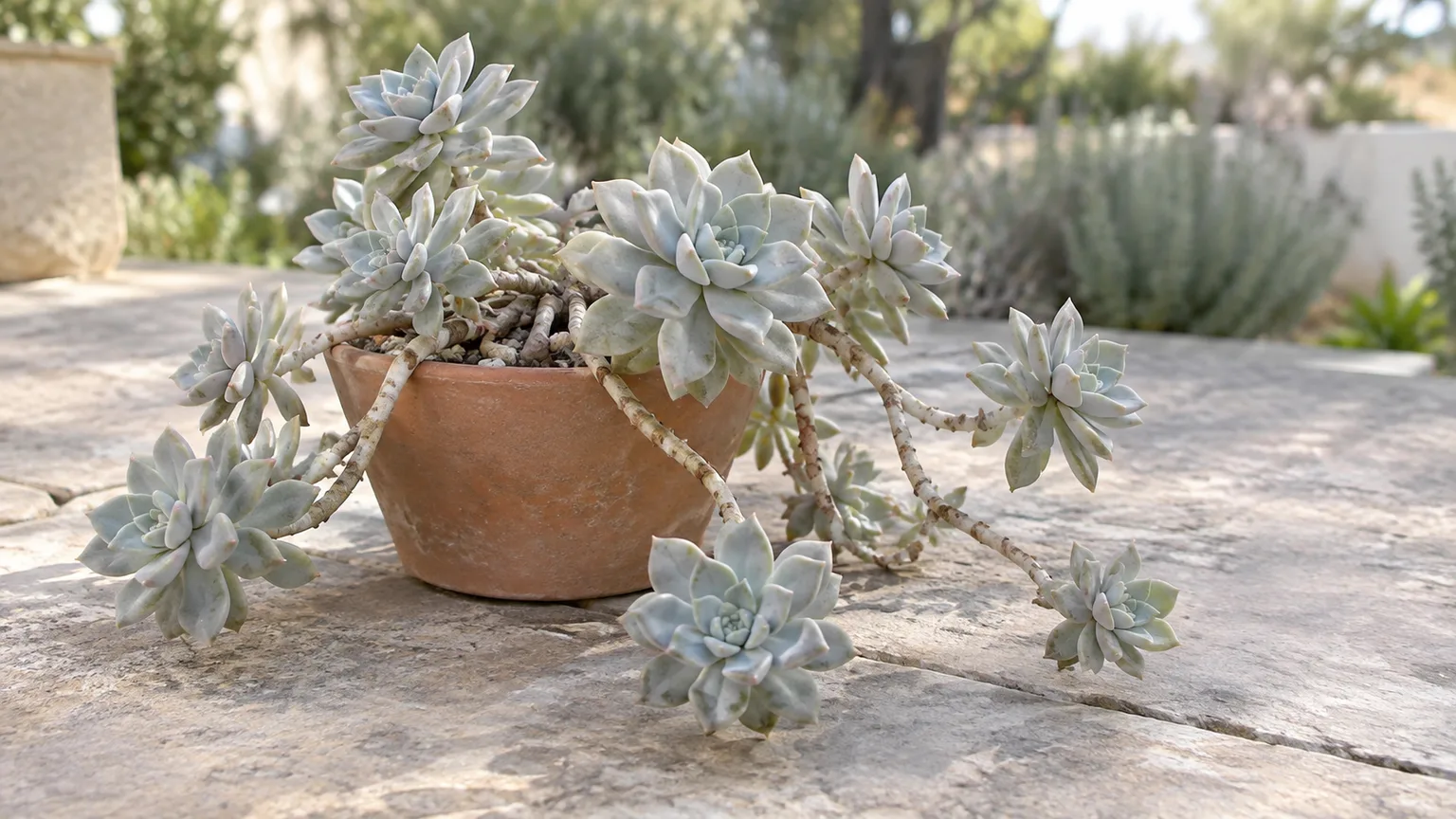
Ghost plant (Graptopetalum paraguayense) spreads on trailing stems that carry pale gray rosettes. It can spill over a low wall or root where stems touch soil, so it is more useful than a single upright rosette when you want silver foliage to bridge a rocky edge. UF/IFAS Gardening Solutions describes it as a ground cover for no-foot-traffic sites and notes that its brittle stems and powdery leaf coating are easily damaged by handling.
UF/IFAS reports that ghost plant can handle temperatures as low as 10°F, but also stresses the need for very good drainage in Florida’s humid, wet climate. Treat that temperature as a useful outer limit, not a promise for every garden: winter rain and slow-draining soil can cause losses above the stated low. In colder, wet-winter regions, use a raised rock pocket, wall crevice, or pot under an eave instead of a flat bed.
Give it full or half-day sun. Strong sun brings warmer pink-yellow tones, while brighter shade can keep the leaves blue-gray; harsh afternoon exposure may be too much in desert heat. It is a poor choice beside a walkway where people brush against it, because broken stems and fallen leaves can leave gaps. Save the trimmings you want to propagate, but keep the rest out of places where it can spread unnoticed.
Blue chalksticks for warm, coastal beds
Blue chalksticks (Curio repens, formerly sold as Senecio serpens) makes a spreading ground cover of short, upright, blue-gray leaves. NC State Extension lists a mature spread of about 2–3 feet, a height of 6–8 inches, and USDA Zones 9b–12. It grows from South Africa’s sandy and rocky habitats, so it suits a warm coastal strip, sunny rock garden, or dry bed better than a damp lawn edge.
The drainage rule is strict: in warm outdoor gardens, NC State recommends coarse sand or perlite to keep the root zone open, and advises letting the medium dry between waterings. The plant is frost-sensitive, so gardeners outside its warm range should treat it as a container plant and bring it under cover before freezing weather. In very hot locations, partial shade can be easier on it than unfiltered afternoon sun.
Use the current botanical name when buying, because tags still use Senecio serpens. It can root from stems and spread across several feet, so place it where that width is welcome and trim the edge before it crosses into delicate plantings. NC State also flags it as toxic if ingested by people, pets, or livestock; keep it away from animals and children who are likely to chew leaves.
Parry’s agave for a sculptural dry slope
Parry’s agave (Agave parryi) is not a fine-textured carpet. It forms large, architectural rosettes that can gradually make a colony through offsets, so think of it as a structural ground cover for a hot, dry slope or boulder garden. Each plant can reach 1–3 feet across, and its leaf margins and terminal spine are sharp enough to make placement a safety decision as well as a design one.
NC State Extension lists Parry’s agave for Zones 6a–10b, full sun, and sandy or shallow rocky soil, while the University of Arkansas Division of Agriculture says the plant can tolerate about 0°F in the East only when it has excellent drainage and stays dry in winter. Those statements are compatible: the zone label is a starting point, while winter moisture and subspecies or cultivar can change the outcome. In rainy or humid regions, use a raised bed, a south-facing exposure, and a rain-sheltered position; if you cannot provide that, choose a less rot-prone plant.
Expect this slow-growing agave to take years to make a group. It produces offsets, but a mature rosette eventually sends up a tall flower stalk and then dies, leaving pups to continue the planting. Keep it back from narrow paths, children’s play areas, and places where dogs run; its spines can cause painful punctures.

Royal dewflower for a flower-covered warm bed
Royal dewflower (Drosanthemum speciosum) is a sun-loving South African succulent with a sprawling, flowering habit. It earns space where a broad mat of vivid spring and summer blooms is more important than a tidy, evergreen edge. Native Sons Wholesale Nursery lists it at 3–4 feet wide, full sun, well-drained soil, occasional watering, and hardiness near 30°F.
That temperature points to a mild-winter site, roughly the edge of USDA Zone 10, rather than a reliably cold-hardy ground cover. If your garden has repeated freezes, grow it in a container or choose creeping sedum instead. Even in a mild climate, give it a sandy or gravelly mound that drains freely; succulent foliage does not make it tolerant of a soggy winter root zone.
Royal dewflower is better for a slope, wide border, or rock garden than for a narrow strip that needs a crisp edge. Its mature width can overrun neighboring low plants, and it dislikes regular foot traffic. Plant it where it can spread into open space, then shear back the edge after flowering if it starts to cover stepping stones or smaller plants.
Prepare and plant the bed for reliable cover
Clear perennial weeds before planting, especially creeping grasses and tap-rooted weeds that will be hard to pull without disturbing a shallow succulent mat later. Loosen compacted soil across the bed, not just inside each hole. If the native ground stays wet, make a raised, sloping bed or use a different plant rather than building an isolated pocket that holds water.
Use existing soil where it drains well, then amend broadly with mineral material such as coarse sand, pumice, or fine gravel if the bed needs more air space. Do not bury the crowns; set each root ball level with, or slightly above, the finished surface so water does not collect around the stem base. A light layer of mineral gravel can keep leaves off damp soil, but do not pile it against the rosette center.
Plant when temperatures are mild and the ground is workable. Spring gives frost-tender species a long warm season to root before winter, while in hot-summer regions early fall can work for hardy sedum if roots have time to settle before freezing. Avoid planting tender succulents just ahead of a wet cold season or during a heat wave.
Space plants for the fill-in speed you want
For the fastest visual cover, set plants so their mature edges will just meet; use the nursery tag’s spread rather than a generic spacing chart. A plant with a 12-inch spread usually needs about 12 inches from the next crown for a slower, lower-cost fill, while a 2–3-foot mat needs more room than a small rosette. Close spacing buys quicker cover but increases plant cost and can trap moisture where summers are humid.
If you can wait, leave more air between plants and weed the open ground during the first season. A useful compromise is to lay out the bed at mature spread, then add a few extra plants only at corners or slopes that visibly erode. Take a photo or place temporary markers before planting so you can see where each mat is expected to end.
Water and maintain succulents through establishment
New plants need help rooting, even if mature plants are drought tolerant. Water after planting to settle soil around the roots, then check below the surface and water again when the root zone begins to dry. Gardening Know How recommends light watering as creeping succulents establish and then waiting until the soil is dry several inches down; adjust that check for your rainfall, bed depth, wind, and heat. A fixed weekly schedule can either starve a new plant in a heat wave or keep roots wet for days after rain.
After a few weeks, extend the interval as roots move into surrounding soil. Water deeply enough to reach the root ball, then allow the soil to drain and dry rather than giving frequent surface sprinkles. Once established, most of these selections need little extra water except during an unusually long dry spell, but moss rose blooms and new transplants may need more attention during hot weather.
Keep fertilizer modest. Rich, nitrogen-heavy feeding tends to favor soft leafy growth over a dense, drought-ready mat, and it will not correct shade or slow drainage. Pull weeds while they are small, clear dead leaves from the center of rosettes, and remove damaged stems before rot spreads through a crowded patch.
Keep spreading plants inside the bed
A ground cover should be contained before it reaches a boundary, not after a thick mat is tangled with neighboring plants. Trim Sedum spurium, ghost plant, blue chalksticks, and royal dewflower where stems cross the planned edge; lift rooted runners and replant them where they are useful or discard them responsibly. A physical edging strip can help mark a border, but it will not stop seed from moving.
Moss rose is more likely to surprise you with volunteers than with a permanent rooted mat. Deadhead or remove seed capsules if seedlings are unwelcome, and pull volunteers while they are small. With any spreading succulent, check state or local invasive-plant guidance before planting near natural areas; climate can change the behavior of a plant from a manageable garden mat to an escape risk.
Sedum itself is a broad genus, so do not assume a warning about one cultivar applies to every stonecrop or that a tame cultivar is safe in every region. Buy a named, locally sold cultivar, keep clippings out of wild land, and avoid dumping rooted stems or seed heads in a greenbelt. The simplest control is to choose a plant whose mature width fits the site.
When succulent ground cover is the wrong tool
Skip succulents if the bed receives frequent irrigation, collects runoff, stays shaded and damp, or has compacted clay that you cannot raise or improve. Those conditions favor plants adapted to moisture and shade; trying to force a desert-style succulent into them can turn into a cycle of rotting roots and replacement purchases. A slope is helpful only if water can actually exit the root zone.
Also skip them where you need a walkable surface. Even a low, dense mat has stems and leaves that crush under regular traffic, and Parry’s agave adds hard spines to the problem. Use stepping stones, gravel paths, or a low perennial specifically bred to tolerate footfall, and plant succulents around the edges rather than between frequently used steps.
Finally, succulents are not instant weed-control fabric. They leave open soil while they establish and may never close gaps in cold climates or heavy shade. If the main goal is to suppress weeds quickly in a damp, shady area, select a locally recommended ground cover for those conditions instead of choosing by drought tolerance alone.
Troubleshoot a thin, rotting, or scorched mat
When a patch fails, look at the pattern before you water or fertilize. A few soft rosettes in a low pocket suggest poor drainage; stretched stems across the bed suggest too little light; crispy exposed leaves can point to sudden heat or sun exposure. Replacing the plant without correcting the site repeats the same failure.
For root rot, remove mushy plants and let the bed dry. Raise the surviving section or redirect runoff before replanting, then reduce supplemental water until the root zone dries between soaks. For a thin mat, check plant identity and mature width, remove weeds, and add the correct creeping form rather than an upright sedum or a slow rosette that cannot bridge gaps.
Read wet roots and sun stress differently
Wet-root damage usually starts at the crown or lower stem: tissue softens, turns translucent or black, and may smell sour. Sun stress is more often on the exposed leaf surface, and a plant recently moved from shade can bleach or scorch before it acclimates. Do not “fix” both by watering more; use dry-down and the position of the damage as clues.
Acclimate nursery plants to stronger sun over several days, especially if they were grown under shade cloth. If a species is frost tender, protect it before the first cold snap rather than after leaves turn glassy. When the same area loses plants each winter, change the grade or switch to a cold-hardy species instead of relying on emergency covers year after year.
Conclusion
The strongest succulent ground cover is the one that fits the bed’s winter and rainfall, not simply the plant that spreads fastest. For most temperate dry gardens, creeping sedum is the practical perennial; moss rose adds summer color, while ghost plant, echeveria, blue chalksticks, royal dewflower, and Parry’s agave each suit narrower climate or site conditions.
Start with drainage, confirm the plant’s local hardiness, and leave room for the mature spread. If rain drains quickly and the plant fits the winter, a succulent mat can soften gravel or stone with far less routine water than a thirsty lawn; if the site stays wet or gets walked on, choose another cover.



