12 Types of Pear Trees: Which One Fits Your Yard?
Compare 12 types of pear trees by flavor, climate, pollination, and harvest use so you can choose a cultivar that suits your yard.
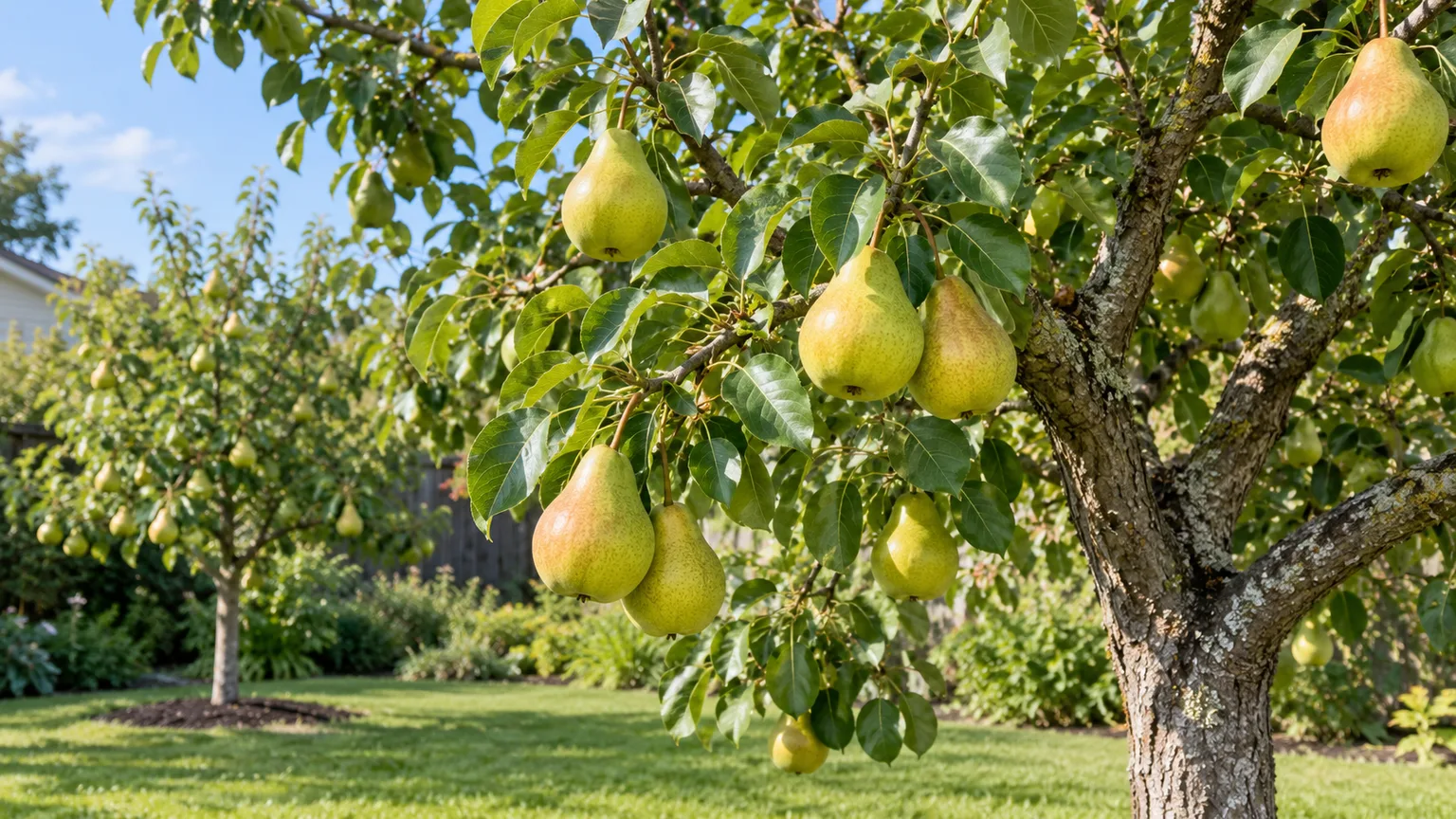
A pear tree can be a long-lived source of fresh fruit, but the right cultivar depends on more than flavor. A tree that thrives in a mild-winter region may fail to flower reliably in a colder climate, while a cold-hardy choice may not receive enough chill in a warm one. Many pears also need a compatible second variety nearby for dependable fruit set, and the rootstock can determine whether the tree becomes a manageable backyard specimen or an oversized shade tree.
Start with four checks: your area’s winter chill, the timing of late spring frosts, whether another pear blooms nearby, and the tree’s eventual size on its rootstock. Then choose the fruit you actually want—crisp Asian pears for eating straight from the tree, soft European pears for fresh eating, or firm types for cooking and preserving. The 12 cultivars below cover a useful range, but regional recommendations should be treated as a starting point rather than a guarantee.
Choose for your site before you choose for the fruit
Pears need full sun, room for good air movement, and soil that drains rather than staying waterlogged. Their spring flowers can be injured by frost, so a sunny, sheltered position that does not sit in a cold-air pocket is often more useful than a spot that simply looks warm on a mild day. The Royal Horticultural Society also notes that pears flower early and can be vulnerable to spring frost, and recommends considering site, garden size, use, disease resistance, pollination group, and rootstock when selecting a cultivar (RHS pear cultivar guide).
Climate zones do not tell the whole story. A winter-hardy tree still may not receive enough chill hours—the cool period that helps a fruit tree break dormancy and flower normally—and “low chill” is a cultivar trait that should be confirmed against local extension advice. The University of Florida IFAS guide, for example, recommends only certain pear cultivars for Florida and cautions that winter chill, disease, region, and flowering time all shape which ones are suitable there (UF/IFAS pear guide). Do not transplant a Florida recommendation to a different climate just because the label lists a low number of chill hours.
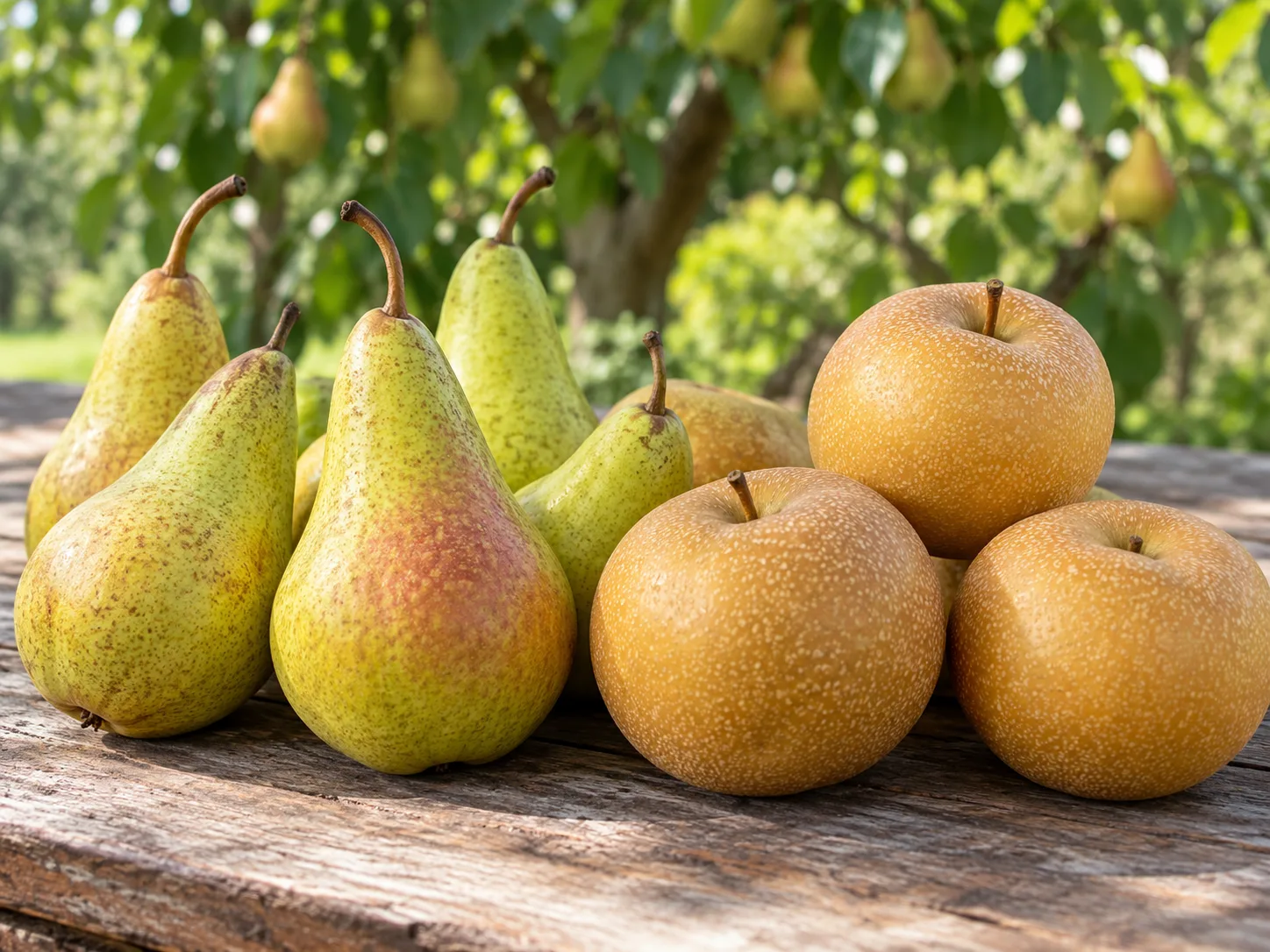
Think about the harvest, too. A household that wants pears for fresh snacks may prefer a soft, aromatic European type or a crisp Asian pear; someone who cans or bakes may value firm flesh and a large, reliable crop. Fruit descriptions can help narrow the list, but ask a local nursery which grafted cultivars perform well in your county and which rootstock they use.
Bartlett: the classic fresh-eating and canning pear
Bartlett, also sold as Williams, is the familiar teardrop-shaped pear with green skin that turns yellow as the fruit ripens. The flesh becomes juicy, tender, and aromatic, so it works for fresh eating as well as canning, baking, sauces, and drying. Its versatility is a real advantage if you want one familiar variety rather than a specialty flavor.
Bartlett is not a universally reliable single-tree solution. Some trees can set fruit without a second variety, but Washington State University’s Tree Fruit guidance says Bartlett benefits from cross-pollination for heavier, more regular crops. Before buying, check whether a nearby pear flowers at the same time and is compatible; do not assume any tree labeled “pear” will pollinate it. Bartlett is worth considering where the season and winter chill fit, but confirm its local performance and likely mature size rather than relying on a national zone range.
Baldwin: a southern pear for fresh use and preserving
Baldwin is a useful cultivar to investigate in parts of the South where many traditional pears receive too little winter chill. UF/IFAS lists it for north and central Florida, with fruit that ripens from late summer into early fall and can be used fresh or canned. That is a regional recommendation based on Florida conditions, not a promise that Baldwin will suit every warm-climate yard.
The same Florida table lists Baldwin as requiring cross-pollination, so plan a compatible partner with overlapping bloom if fruit production matters. That detail is easy to miss when a tree is sold as a low-chill pear: climate adaptation and pollination are separate questions. If you are outside the region covered by UF/IFAS, use your local extension’s cultivar list to check winter chill, bloom timing, and disease behavior before planting.
Kieffer: a firm hybrid for cooking and canning
Kieffer produces firm, crisp fruit that is often chosen for cooking, canning, and preserves rather than for a delicate, buttery fresh-eating texture. Its reputation as a vigorous, adaptable pear makes it tempting for gardeners who want a practical crop, but “tough tree” does not mean it fits every site or is immune to disease.
Kieffer is a case where regional fire-blight ratings deserve a closer look. UF/IFAS lists it as susceptible to fire blight in north Florida, while some general horticulture coverage describes the cultivar as more resistant. Those statements come from different growing contexts, so do not use either as a universal guarantee; fire-blight pressure, local weather, and cultivar behavior vary. Ask your extension service which pears are recommended locally, and treat any claim of resistance as a relative advantage rather than immunity. UF/IFAS also lists Kieffer as requiring a cross-pollinator in its Florida guidance.
Hood: an early pear for warm-winter regions
Hood is a warm-region candidate with relatively modest winter-chill needs and an early summer harvest in north Florida. Its fruit is sweet and can be eaten fresh or preserved, which makes it attractive where a long, hot growing season rules out many standard European pears. The useful takeaway is its regional fit: Hood is more worth investigating in mild-winter areas than as a generic choice for every yard.
Pollination advice can depend on source and location. UF/IFAS lists Hood as not requiring cross-pollination under its Florida recommendations, while a second compatible pear may still improve fruit set for many cultivars. In a small yard, ask whether Hood is self-fruitful in your area and whether another pear nearby blooms at the right time before you decide to rely on a single tree.
Pineapple: a low-chill pear with a distinctive flavor
Pineapple is valued for a sweet flavor often described as having a tropical note. Its fruit is firm enough for cooking and preserving, and it is a familiar selection in southern pear-growing recommendations. UF/IFAS includes it among varieties suited to north and central Florida and reports strong fire-blight resistance in that setting, with partial cross-pollination listed as helpful.
Flavor names can set expectations too high: Pineapple pears are still pears, and the intensity of the flavor can change with weather, harvest timing, and how well the tree is matched to the site. If you want a tree mainly for canning or baking, Pineapple may be a better fit than a cultivar chosen only for soft, juicy dessert fruit. Confirm local bloom partners and ask whether the cultivar’s disease rating applies to your region.
Summercrisp: a cold-region pear for crisp eating
Summercrisp was selected for northern growing conditions and is harvested while the fruit is still crisp. That makes it different from European pears that are picked firm and then allowed to soften indoors: the desired Summercrisp texture is a crisp, fresh bite. The University of Minnesota’s tree database identifies it as a cultivated pear for cold-climate landscapes, and its name signals the early, crisp harvest style (University of Minnesota Landscape Arboretum).
For gardeners in colder regions, the combination of winter adaptation and an early harvest window can be more useful than choosing a familiar supermarket cultivar. Still, verify local pollination needs and rootstock, and protect blossoms from late frost where it is a recurring problem. A cold-hardy trunk cannot protect flowers that open during a freeze, so a site that avoids cold-air pooling remains important.
Moonglow: a smooth-fleshed pear with useful disease tolerance
Moonglow is often considered by growers looking for a dessert pear with a soft, juicy texture and better-than-average fire-blight tolerance. It can be a practical alternative to a more susceptible cultivar in regions where fire blight is a recurring concern, but resistance is not immunity. The Gardener’s Path guide includes Moonglow among pears selected for fire-blight resistance and cautions that resistant trees can still show symptoms (Gardener’s Path fire-blight pear guide).
Use that as a screening clue, not a complete local recommendation. A cultivar’s crop, bloom date, winter chill requirement, and disease response all matter, and the specific rootstock can add another variable. If you already have a pear nearby, bring both cultivar names to a nursery or extension office and confirm they bloom together; a sweet fruit description cannot solve a pollination mismatch.
Flordahome: a Florida-bred choice for mild winters
Flordahome was selected for Florida conditions, where warm winters and disease pressure narrow the range of pears that perform well. UF/IFAS lists it for north and central Florida, with a July-to-August harvest, fruit suited to fresh use and canning, and resistance to fire blight and leaf spot in that regional context. The guide lists partial cross-pollination as beneficial, so adding a compatible partner may help even if a nursery describes the tree as partly self-fruitful.
The cultivar name should not be read as “works anywhere warm.” A site in southern Florida may still fall outside the published recommendation, and a western warm climate has different disease and chill patterns. Use the local extension cultivar list first, then compare the tree’s flowering date and rootstock. For a small yard, also ask whether your selected rootstock is compatible with the scion and local soil.
Seckel: a small, exceptionally sweet dessert pear
Seckel bears small fruit with a notably sweet, concentrated flavor. The size can be a plus for lunchbox portions and preserving whole pears, while the dense sweetness may appeal more to dessert-pear fans than to people who prefer mild, juicy fruit. It is a distinctive choice when fruit character matters more than large pear size.
Do not mistake “small pear” for “small tree.” Mature tree size comes largely from rootstock and training, not from the fruit’s dimensions. Seckel also needs a compatible pollinating cultivar for reliable crops; Washington State University lists Bartlett, Bosc, and Comice among suitable partners in its regional compatibility table. Because pollination charts are built for particular climates and bloom records, check the chart and timing for your own area before pairing two trees.
Comice: a large, buttery pear for fresh eating
Comice is known for large fruit and a soft, creamy, juicy texture. It is best treated as a dessert pear for fresh eating, not as the first choice if you need a firm cooking pear that holds its shape. Gardeners with a sheltered, sunny spot may appreciate it for flavor, but it can be less forgiving of poor site conditions than its rich taste suggests.
The RHS cultivar guide notes that Doyenné du Comice needs a sunny position to fruit well and assigns it to a pollination group that should be matched with compatible flowering partners. Other sources also note that a second variety improves reliability even when a pear can produce some fruit alone. That is a useful example of why “self-fruitful” should mean “may set fruit,” not “guaranteed full crop.” Check pollination compatibility and local disease susceptibility before you plant.
Shinko: a russeted Asian pear with crisp flesh
Shinko is an Asian pear with bronze-brown, russeted skin and crisp, juicy flesh. Asian pears are often rounder and firmer than European pears, so they are eaten while crisp rather than left to soften into a buttery texture. Harvest to Table describes Shinko as a later-season Asian pear; check your local harvest calendar because weather and site can shift the date.
Shinko needs a compatible pollinator unless a local source confirms that your tree will set a useful crop on its own. Asian and European pears can sometimes cross-pollinate if their flowering overlaps, but bloom timing differs across cultivars and regions. Do not choose the nearest-looking partner from a chart—confirm that the two names are listed as compatible and bloom together where you live.
Shinseiki: an early, yellow Asian pear
Shinseiki, also sold as New Century, produces smooth yellow fruit with a sweet, crisp texture. Its rounded shape and crunchy flesh are characteristic of Asian pears, making it a good candidate for fresh eating straight from the tree. UF/IFAS lists Shinseiki as a fresh-eating cultivar for north Florida and notes that it requires cross-pollination there, which is a reminder that self-pollination claims can vary by growing region.
Because Shinseiki is an early Asian pear, compare its bloom date with the actual pollinator available in your neighborhood. Some Asian pears flower earlier than European pears, and not every variety will overlap in every climate. A local pollination chart or a nursery with regional bloom records is a better decision tool than assuming Bartlett or any other popular pear is a universal partner.
Plan pollination before planting
Many pear cultivars produce heavier, more dependable crops when pollen comes from a compatible second cultivar. Washington State University explains that pears generally require cross-pollination and lists European and Asian pear partners by variety; it also notes that some pears described as partially self-fruitful still benefit from a partner. The RHS recommends choosing a cultivar in the same or an overlapping pollination group and points out that some triploid cultivars are poor pollen donors (WSU pear pollination guidance; RHS pear cultivar guide).
Use a three-part check before buying: confirm the two cultivar names are compatible, verify their bloom periods overlap in your local climate, and make sure both trees can fit at mature size. Bees and other insects still need to move pollen between flowers; a second tree on the other side of a large property may not be close enough for reliable transfer. If you only have room for one tree, ask whether a nearby pear of a known cultivar can serve as a pollinator, or whether a multigraft tree suited to your region is available.
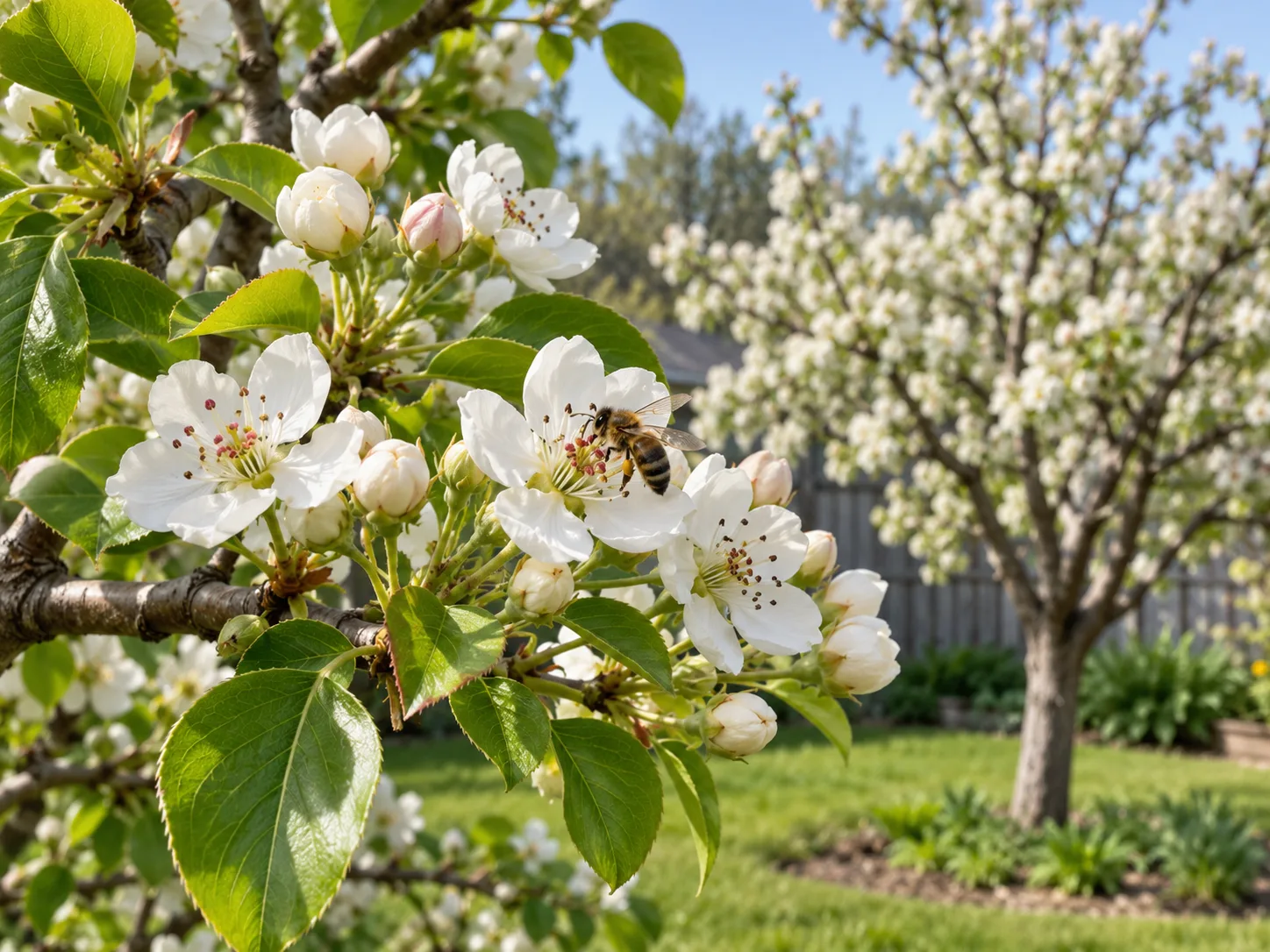
Self-fertility is not a simple yes-or-no guarantee. A cultivar may set some fruit alone yet crop more heavily with a partner; local weather during bloom can also disrupt insect activity. In Florida, UF/IFAS notes that even varieties that do not require cross-pollination still need insects for pollination, and that cultivars listed as requiring a partner should be matched with another variety that blooms at a similar time. Avoid pesticides harmful to bees during bloom, and follow local extension guidance for pest management.
Fit the rootstock and training form to your yard
A cultivar name describes the fruiting variety, not the final dimensions of the tree. The rootstock controls much of the tree’s vigor, and pruning or training shapes its canopy. The RHS explains that rootstock is a major size-control factor and describes forms such as bush, spindle, cordon, espalier, and fan for smaller spaces. Ask for the rootstock name, expected mature height and width, and whether that rootstock is compatible with the cultivar before purchasing.
If the only open spot is beside a driveway or under overhead wires, a standard pear may become a costly fit problem. A semi-dwarf rootstock or a trained espalier can use less space, but “dwarf” does not mean maintenance-free: a compact tree still needs pruning, watering while it establishes, and enough sunlight. Avoid assuming all nurseries use the same size labels; compare their stated mature dimensions and ask how those estimates change with local soil and pruning.
Drainage is another non-negotiable check. Pears tolerate a range of soils, but roots can struggle where water sits after rain. Do not plant in the lowest part of a yard simply because it is convenient, and do not bury the graft union when setting a grafted tree. If the site is heavy clay or remains wet in winter, choose a raised or better-drained location and ask local experts which rootstock handles those conditions.
Harvest and ripen pears according to type
Most European pears are picked when mature but still firm, then ripened off the tree. Leaving them until they are soft can lead to uneven ripening and a grainier center. Harvest to Table distinguishes this from Asian pears, which are usually picked ripe from the tree and valued for their firm, crisp texture (Harvest to Table pear-growing guide). Always verify the recommended harvest stage for your cultivar; Summercrisp, for example, is intentionally eaten while crisp.
If you want a preserving crop, choose a firm-fleshed cultivar and plan for the volume a mature tree may produce. Bartlett is versatile for canning; Kieffer and Pineapple are often selected for cooking or processing; Seckel can be preserved whole. Fresh-eating choices such as Comice, Moonglow, or a crisp Asian pear may be less convenient for a recipe that needs fruit to hold its shape. A useful buying question is not only “Will this tree grow here?” but “Will I enjoy the harvest in the quantity and texture it produces?”
Conclusion: match the tree to your climate and table
The best pear tree for a yard is the one that fits local winter chill, spring frost exposure, pollination timing, and available space—and produces fruit you want to eat. Bartlett, Comice, Seckel, Shinko, and Shinseiki offer distinct textures and uses; Baldwin, Hood, Pineapple, and Flordahome are worth checking in mild-winter regions; Summercrisp is aimed at colder climates; and Kieffer and Moonglow deserve local review for their disease and use traits.
Before you order, write down the cultivar and rootstock, ask for a compatible pollinator with overlapping bloom, and check a local extension recommendation for chill and disease pressure. Those three confirmations can prevent the most expensive mistake: planting a healthy tree that flowers poorly, has no effective pollen partner, or outgrows the space you meant it to fill.



