20 Bulbs for Fall Planting for Weeks of Spring Color
Choose fall-planted bulbs for a longer spring display. Compare bloom times, shade and sun needs, planting depth, soil drainage, and warm-winter exceptions.

Fall planting can give you flowers from the last snowmelt into early summer, but the best choices depend on what “fall bulb” means in your garden. Most familiar spring bulbs go in during autumn so they can establish roots before winter and receive the cold period they need. A few plants sold under the broad label “bulbs” are actually corms, tubers, or rhizomes, and some bloom in autumn or summer instead of spring.
Start with two decisions: how early you want flowers and whether your winter is cold enough for the varieties you choose. Then match each plant to its preferred light and drainage. Purdue Consumer Horticulture emphasizes that bulbs cannot tolerate poorly drained soil and recommends checking species-specific instructions for depth; the National Gardening Association’s spring-bulb guide likewise separates early specialties from the familiar tulips and daffodils. Those distinctions prevent a bed that blooms all at once—or never gets established.
Choose by flowering season, not by the word “bulb”
In ordinary garden language, “bulbs” often includes several underground storage structures. A tulip has a true bulb; crocus and Dutch iris grow from corms; Greek windflower grows from a tuberous structure; winter aconite is a tuber; and lily-of-the-valley spreads through rhizomes and is commonly sold as dormant “pips.” These plants can all be part of a fall planting plan, but their labels and care instructions are not interchangeable.
There is also more than one fall schedule. Snowdrops, daffodils, tulips, and many other hardy spring flowers are planted in autumn for the following spring. Autumn crocus is planted late in summer or early autumn for flowers that same fall, while true lilies planted in fall generally flower the next summer. Tender summer bulbs such as dahlias and cannas are a separate category and are usually planted after frost danger passes in cold-winter regions. Read the plant name and bloom season on the package before you buy, rather than relying on the word “bulb” alone.
20 fall-planted choices, from the first flowers to summer
The selections below are grouped by when they tend to flower, not ranked as if every garden had the same conditions. Exact dates shift with latitude, elevation, weather, cultivar, and the season’s temperature; use the likely sequence as a planning tool and the supplier’s label for plant-specific requirements.
The earliest blooms: snowmelt to early spring
-
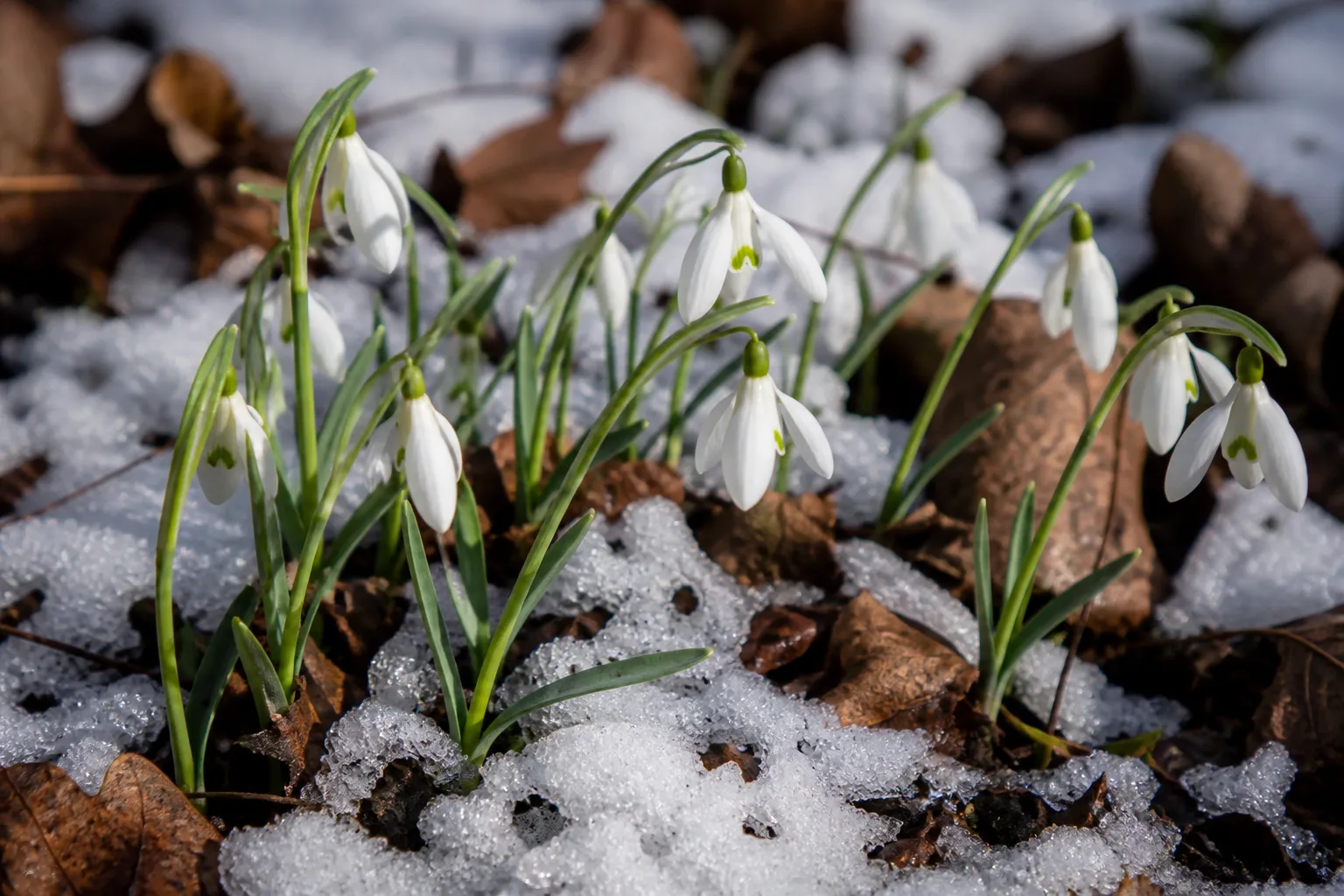
Snowdrops (Galanthus spp.) are among the most rewarding choices for a gardener who wants flowers before the main spring show. Their small white bells suit a deciduous-tree edge or woodland-style bed where winter and early-spring light reaches the ground; plant them in a group so the short stems read as a drift rather than isolated dots. Choose a site that stays evenly moist while they grow but does not hold winter water.
-
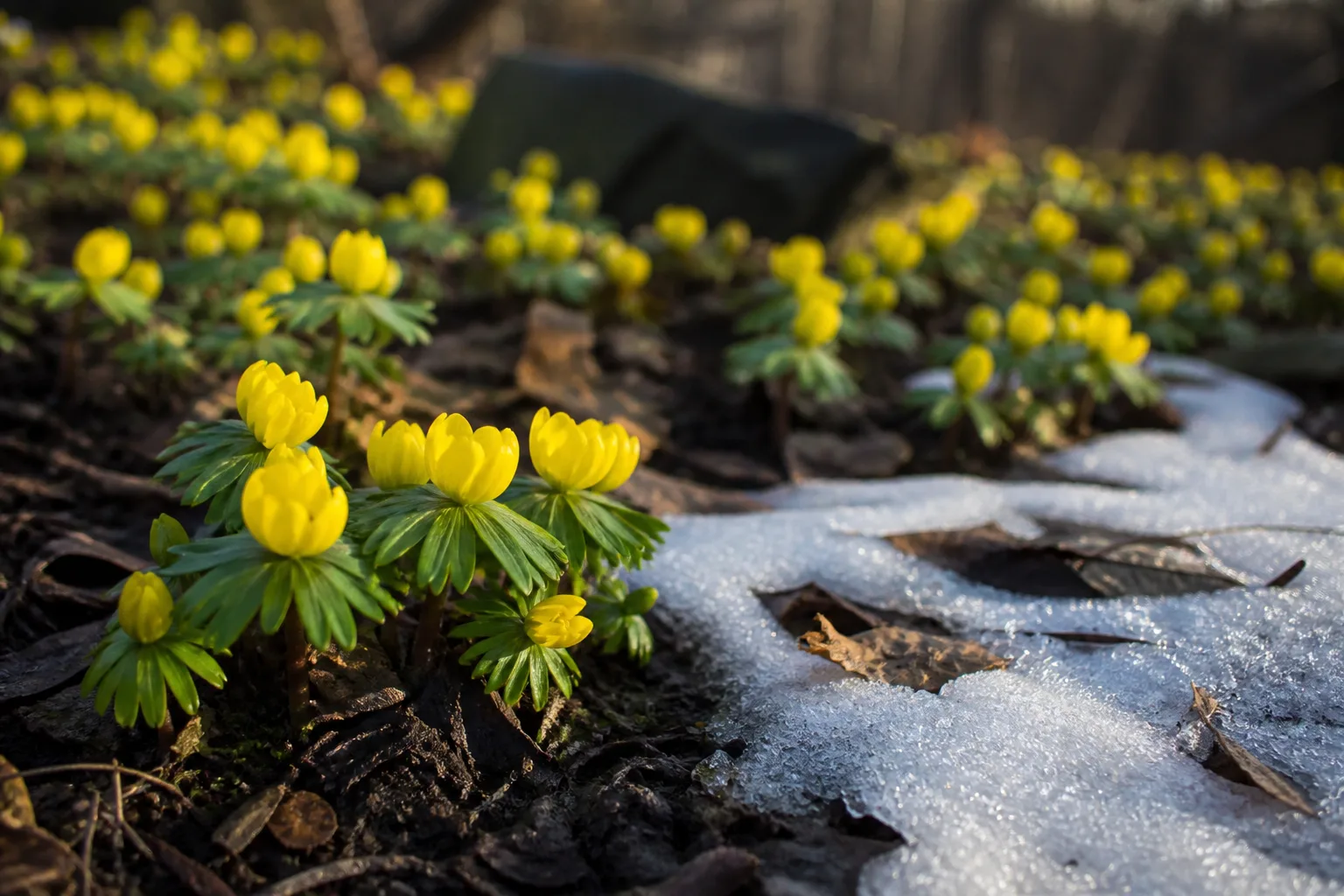
Winter aconite (Eranthis hyemalis) brings low, butter-yellow flowers to a similar early window. The plant is grown from small tubers rather than true bulbs, and it looks most natural in loose colonies beneath deciduous trees or near paths where you can see flowers close to the ground. It is a better fit for a cool-season woodland edge than a hot, dry bed that bakes in summer.
-
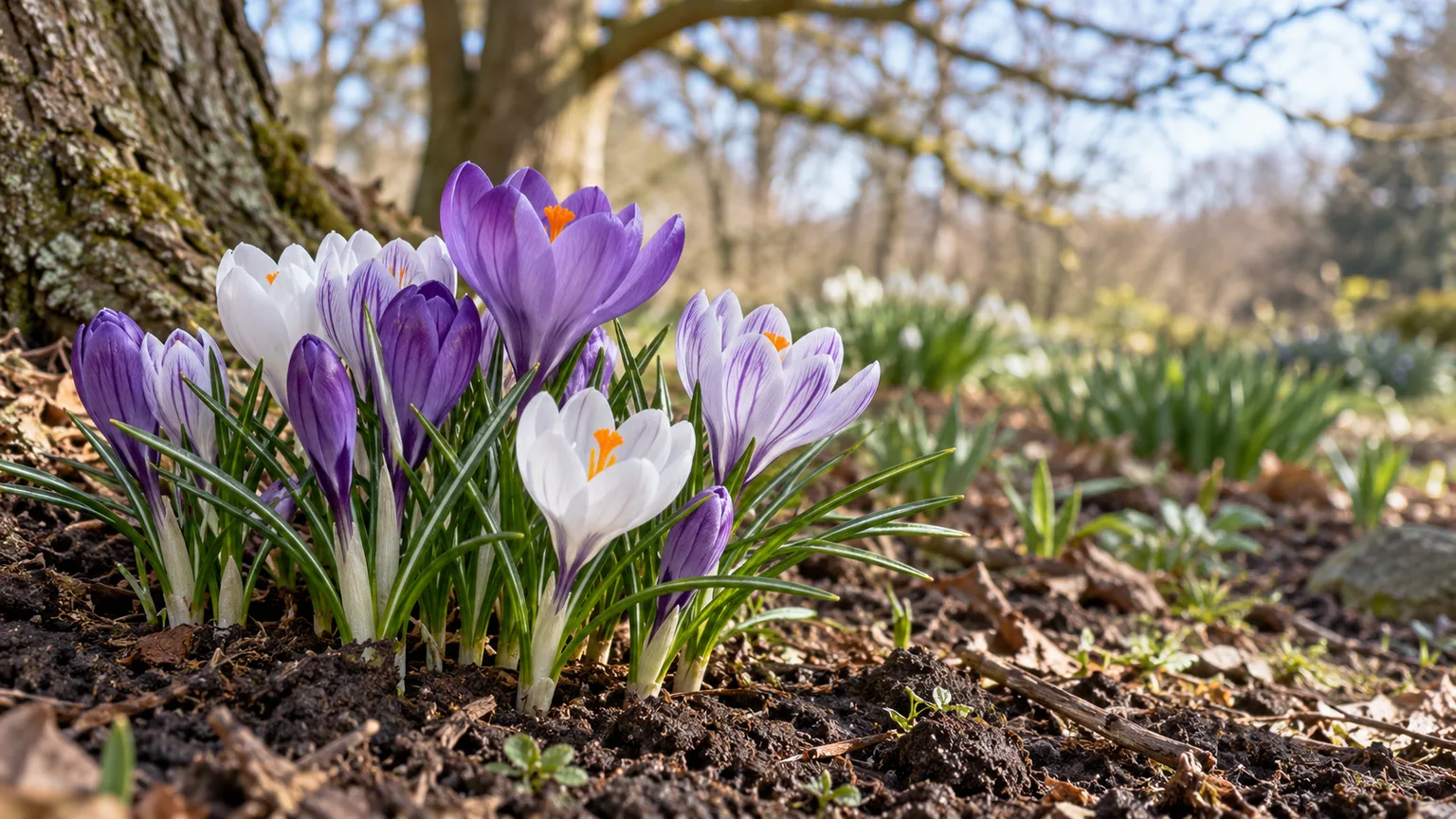
Spring crocus (Crocus spp.) gives a quick wash of color through late winter or early spring, with flowers that open in sunny spells. Technically, crocus grows from corms, and squirrels may dig newly planted corms; use a wire barrier or a bulb basket where digging is persistent instead of assuming a deeper hole will solve the problem. For lawn plantings, allow the leaves to yellow before mowing the area.
-
Glory-of-the-snow (Chionodoxa spp.) has blue, violet, or white star-shaped flowers that brighten the gap before taller bulbs open. It is compact enough to tuck near a path, rock garden, or the sunny edge of a deciduous border, and it can gradually form a wider patch. Plant it where spring sun reaches the foliage, then let its leaves finish naturally after bloom.
-
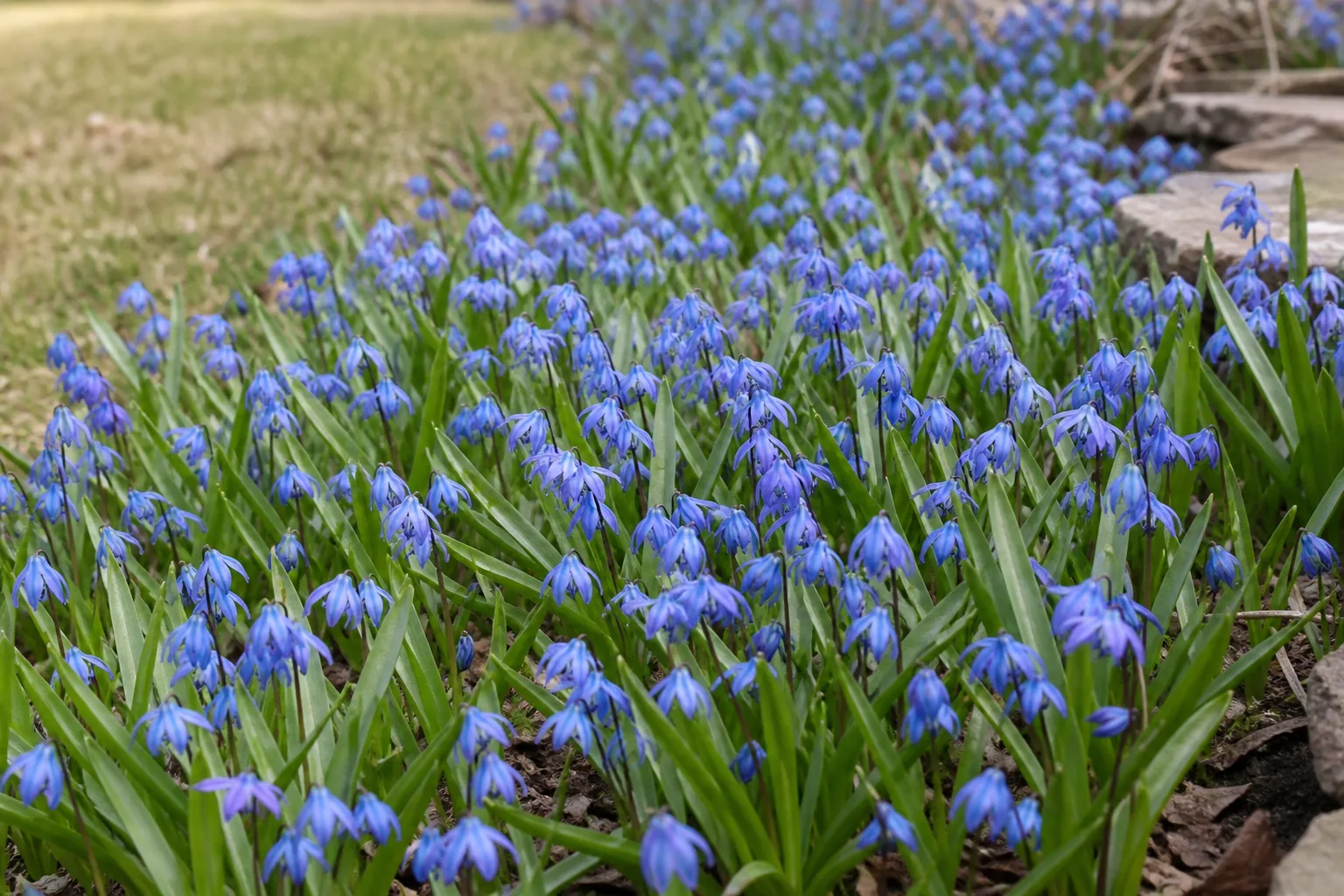
Siberian squill (Scilla siberica) produces vivid blue flowers close to the ground and tolerates more shade than many showier bulbs. That ability to spread is both its strength and its limitation: it can make a pleasing woodland carpet, but it may not stay neatly inside a small formal bed. Check regional invasive-plant guidance before encouraging it to naturalize beyond a contained garden area.
-
Greek windflower (Anemonoides blanda, also sold as Anemone blanda) opens daisy-like flowers in blue, pink, or white. It is useful under deciduous shrubs, at the front of a border, or in a rock garden where its short spring display can be followed by later perennials. The underground storage structure is not a standard bulb, so use the supplier’s planting instructions rather than forcing it into a tulip-depth rule.
The main spring display: early through mid-spring
-
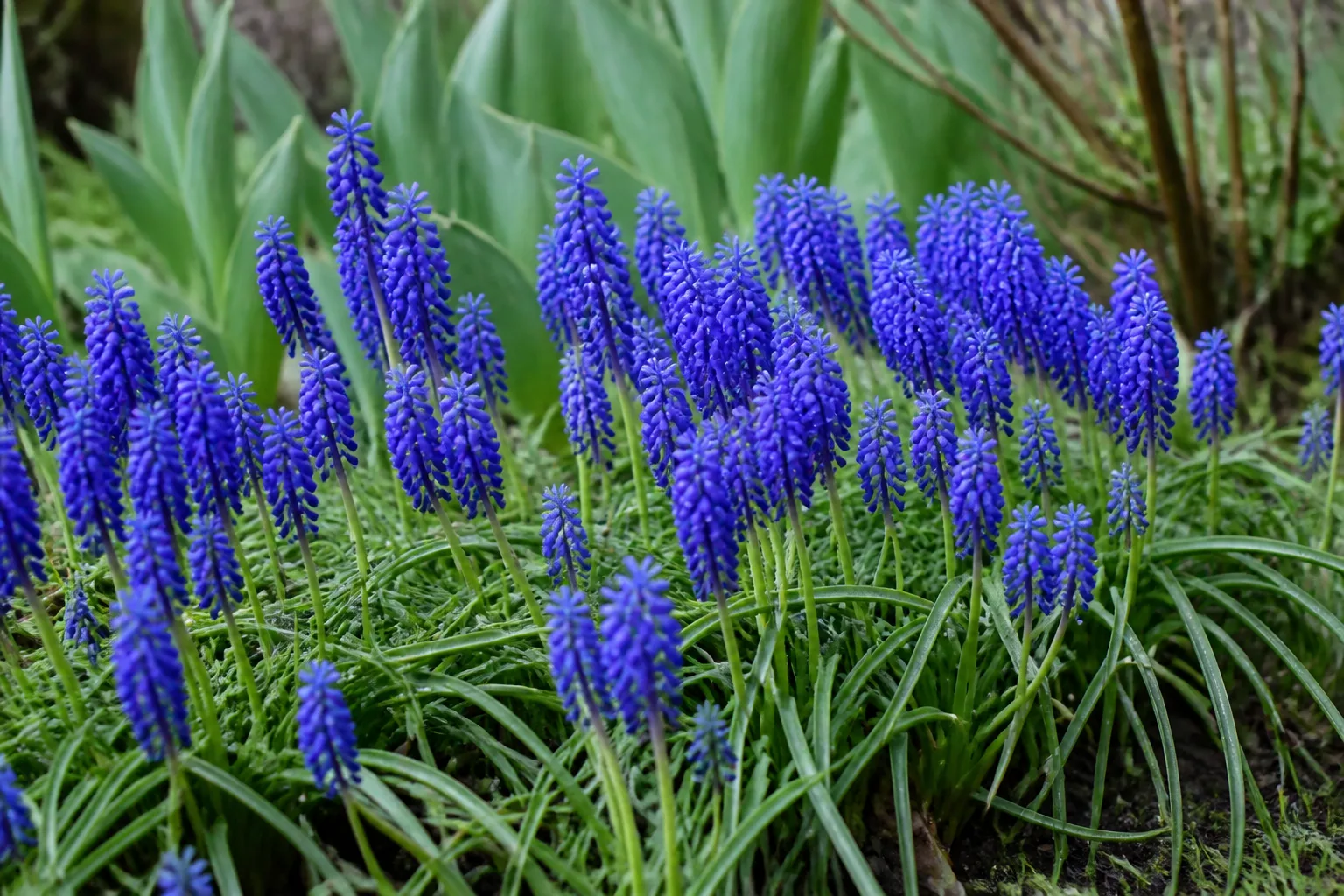
Grape hyacinth (Muscari spp.) makes dense clusters of small, grape-like flower spikes in blue, purple, or white. Its compact size works along a path, at a bed edge, or between taller daffodils, and the bulbs multiply readily over time. Give it room if you want a naturalized look; choose a more contained position if you prefer a tidy border with limited self-spreading.
-
Bluebells (Hyacinthoides spp.) are a strong choice for a dappled woodland effect, with nodding bells held above strap-shaped foliage. English bluebells favor shade and moist, humus-rich soil, while Spanish bluebells are generally more adaptable to sun; check the exact species and local guidance before buying because the names are easily blurred in catalogs. Plant a colony where you can leave the foliage in place after flowering.

-
Spring snowflake (Leucojum vernum) has white, bell-shaped flowers marked with green tips and a more substantial presence than its name suggests. It suits a bed that stays moist in spring, including the edge of a rain garden if water drains rather than pooling around the bulbs. Unlike a dry-summer bulb that needs a sharp dormant period, spring snowflake appreciates moisture while its foliage is active.
-
Starflower (Ipheion uniflorum) produces small, six-pointed flowers in blue, lavender, or white above narrow foliage. Its low habit makes it useful at the front of a sunny or lightly shaded border, and it can spread into a soft groundcover where conditions suit it. The leaves have an onion-like scent when bruised, a clue to its relationship to ornamental alliums, but the plant is grown for its spring flowers.
-
Daffodils (Narcissus spp.) are the best backbone for a low-maintenance spring display because they offer a broad range of sizes and bloom times, and established clumps can return for years in a suitable site. Mix early, midseason, and late cultivars rather than planting a single variety if you want flowers over a longer stretch. Deer and rabbits often leave daffodils alone, but no plant is completely protected from every animal or growing condition.
-
Hyacinths (Hyacinthus orientalis) bring concentrated fragrance and dense flower spikes to sunny beds and containers. Use them near a path, patio, or entrance where their scent can be appreciated, and combine them with lower early bulbs that bloom before or after their shorter main show. In climates with mild winters, choose varieties and pre-chilling instructions carefully; a bulb that lacks the cold period it needs may produce poor stems or flowers.

Late spring into early summer
-
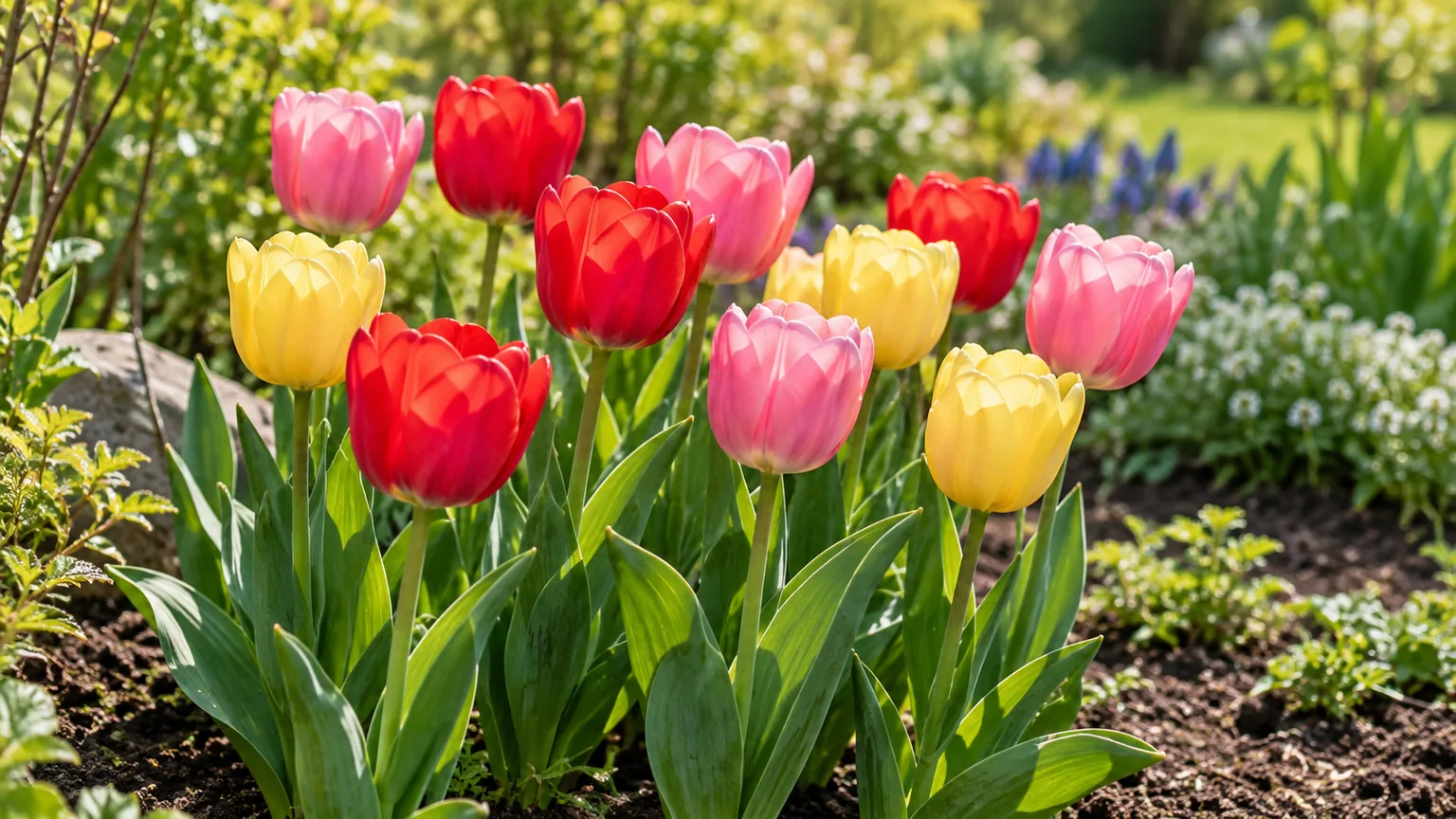
Tulips (Tulipa spp.) give the strongest color range, from compact species types to tall, large-flowered hybrids. Many modern hybrid tulips make their most reliable display in the first year, especially where winters are mild; if repeat bloom matters more than a particular flower shape, look for species or perennializing types rated for your climate. Tulips also need a true winter chill in many regions, so warm-climate gardeners should buy pre-chilled or low-chill bulbs only when the supplier specifically recommends them.
-
Dutch iris (Iris × hollandica) is grown from corms and offers slender stems with elegant, iris-shaped flowers that work well in cut-flower beds. Plant it in a sunny spot with well-drained soil and follow the packet for depth and spacing, since corm size and local practice vary. It is a more vertical, airy choice than a dense clump of daffodils, so use it where those narrow stems will not disappear behind vigorous neighbors.
-
Fritillarias (Fritillaria spp.) include very different garden plants, so identify the species before choosing a site. Snake’s-head fritillary (F. meleagris) has hanging, often checkered flowers and prefers a cooler, moister setting; crown imperial (F. imperialis) is much taller and needs a sunnier, well-drained position. The National Gardening Association describes checkered lily among the small spring bulbs for naturalistic plantings; treat any depth, moisture, or hardiness number as species-specific rather than applying one fritillaria rule to the whole genus.
-
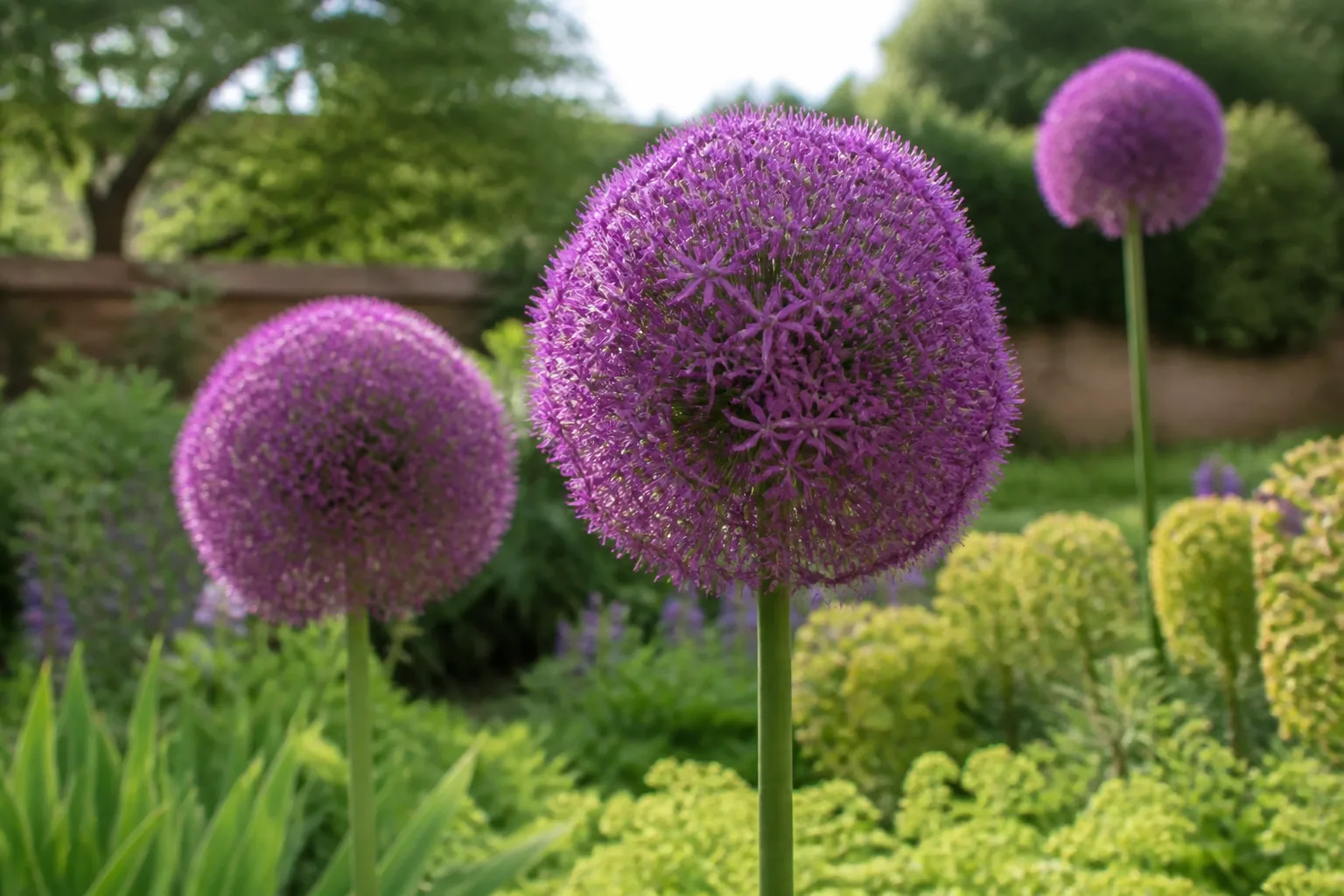
Ornamental alliums (Allium spp.) extend the display toward late spring and early summer with round clusters of flowers on tall stems. Choose small species for the front of a bed or large globe-forming kinds for the middle and back, where neighboring perennials can disguise foliage as it yellows. Their onion-family character makes alliums a useful option where deer pressure is frustrating other flowers, though browsing habits vary by place and season.
-
Wild hyacinth or camassia (Camassia spp.) is an excellent choice for a spring border that stays moist longer than a typical bulb bed. Its starry flowers rise above grassy foliage in late spring or early summer, and some species are native to North American meadow or prairie habitats; choose locally appropriate stock if you want to support a regional planting. Give camassia room to naturalize and avoid burying it in a site that remains waterlogged through the whole year.
-
True lilies (Lilium spp.) are summer flowers, not spring bulbs, but fall-planted lily bulbs can fill the gap after tulips, daffodils, and alliums. The bulbs should not be allowed to dry out before planting, and the site should drain well while still supporting steady growth through the season. Select a cultivar for its mature height and bloom time, and check a veterinary plant-toxicity reference before placing true lilies where cats can reach them.
Specialty choices with a different job or schedule
-
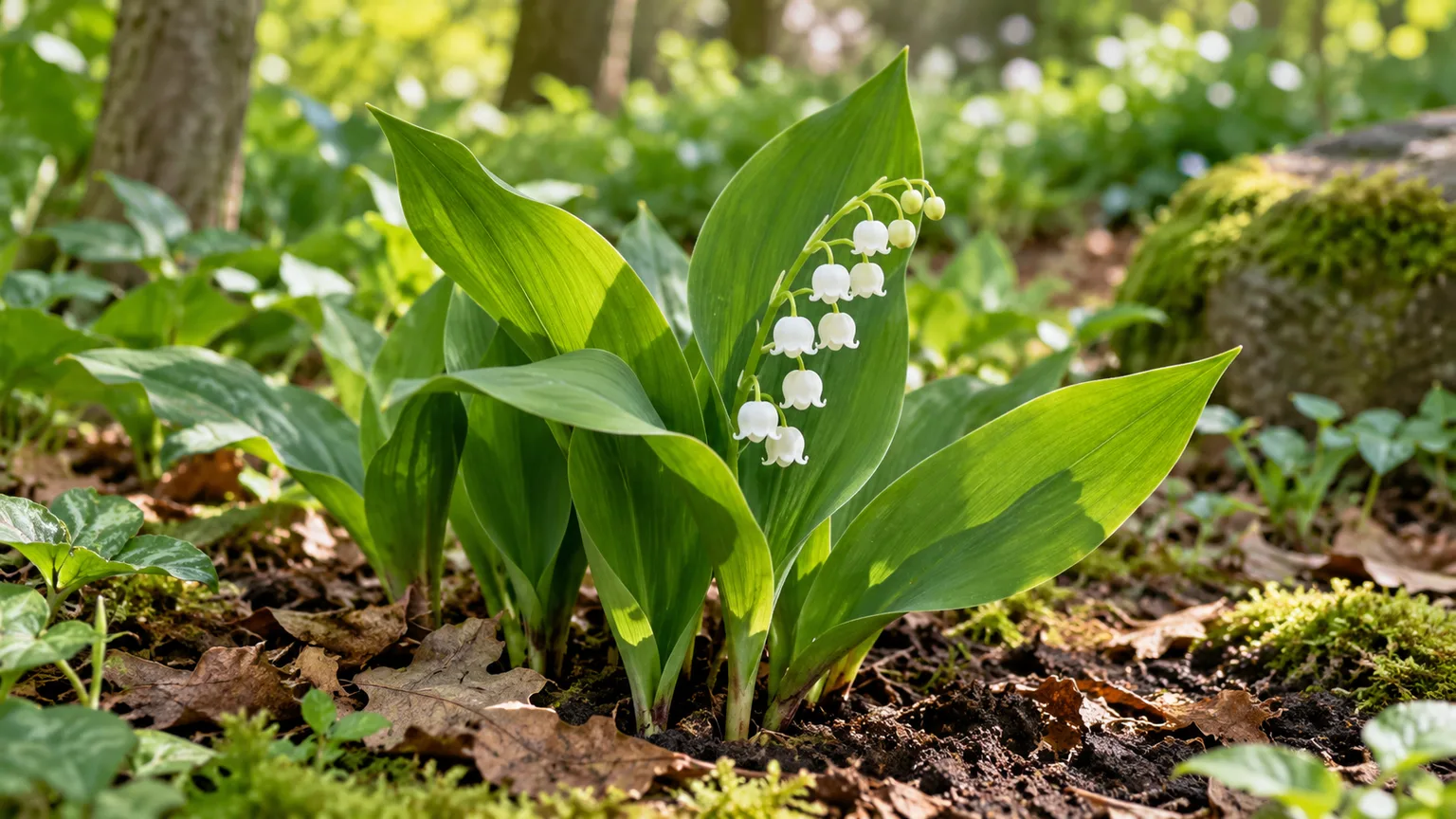
Lily-of-the-valley (Convallaria majalis) is a rhizomatous shade groundcover sold in dormant pips, not a true bulb. It suits a contained, shaded area where fragrant spring bells and dense foliage are welcome, but its underground spread can crowd neighboring plants and make later removal difficult. Plant it only where you are prepared to manage that spread; it is a poor choice for a narrow mixed border.
-
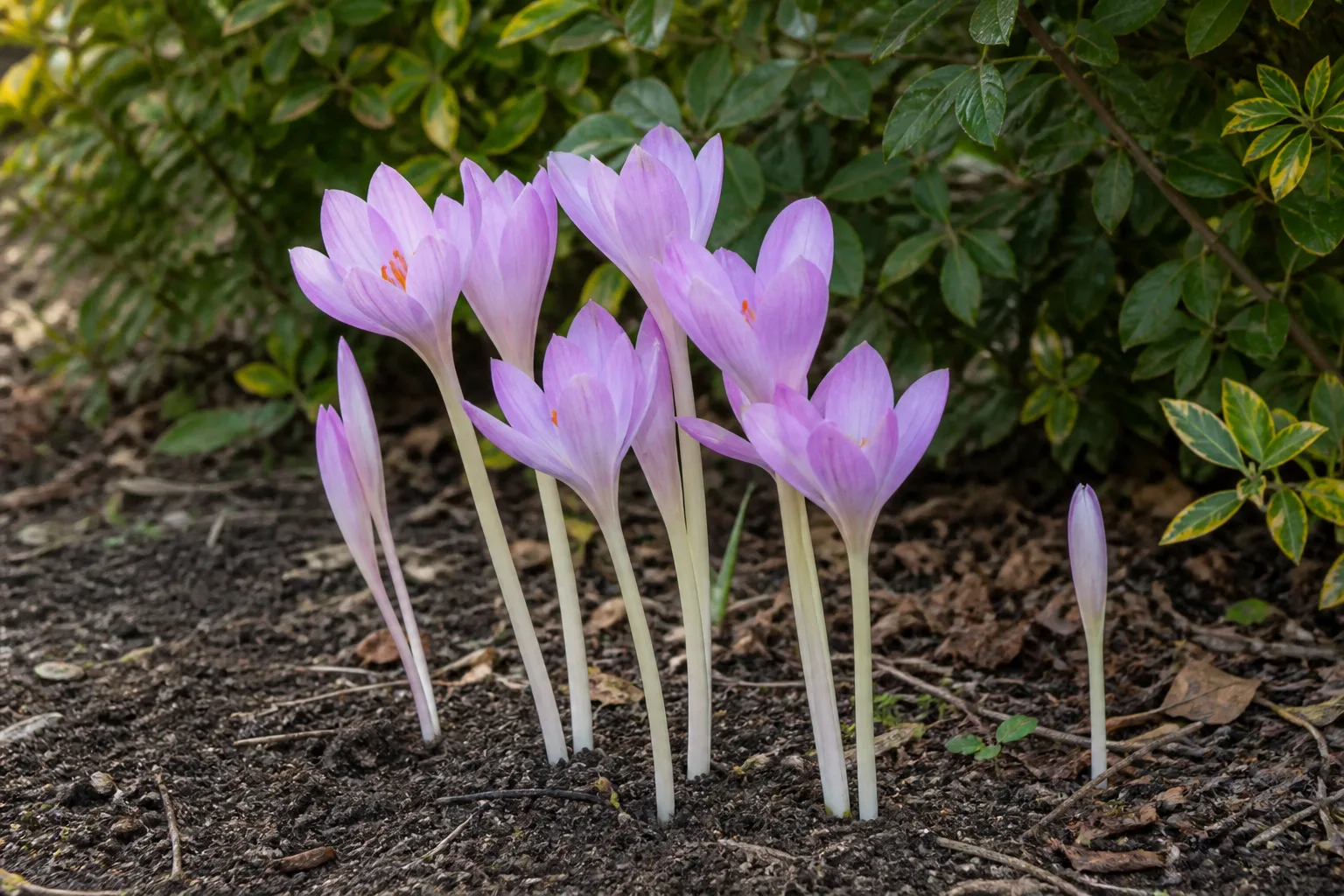
Autumn crocus is a common name used for two different groups, so check the botanical name on the package. Fall-flowering Crocus species and Colchicum are planted late in summer or early autumn for flowers that season; they do not belong on the same schedule as tulips and daffodils planted for spring. Keep the plant label and planting location clear, especially if you also grow saffron crocus, which is a different plant grown for its edible stigmas.
When to plant in your climate
A calendar date travels poorly from one climate to another. The USDA Plant Hardiness Zone Map helps you compare winter lows and decide whether a plant can survive outdoors, but it does not tell you the exact day your soil has cooled enough to plant. In a cold region, the window may open early because the ground freezes sooner; in a mild coastal or southern climate, the same month may still bring warm soil that delays rooting or encourages rot.
A practical signal for hardy spring bulbs is cooling soil with enough unfrozen weeks left for roots to establish before the ground becomes difficult to work. The National Gardening Association’s guide uses soil below about 60°F at roughly six inches as a rule of thumb, while Farmers’ Almanac discusses timing in relation to cool nights and the first hard freeze. These are useful guides, not universal thresholds for every species or soil. If your package names a temperature or planting window, use that advice first.
Cold winters and warm winters call for different decisions
Where winters reliably provide prolonged cold, many spring-flowering bulbs can be planted in fall and left in the ground. Plant early enough for root growth, but avoid warm, wet soil that can promote premature growth or decay. If your region has an early freeze, prioritize hardy bulbs and get them in while the ground is workable rather than waiting for a month recommended for a warmer state.
In warm-winter climates, select cultivars adapted to mild winters or follow the supplier’s pre-chilling directions for plants such as tulips and hyacinths. Guidance on chilling duration varies by type and source, so do not improvise by leaving bulbs in the refrigerator for an arbitrary number of weeks; also keep bulbs away from ripening fruit during storage. Some spring bulbs will perform better than others without a cold winter, and the first-year display may not repeat reliably. Choose for local adaptation over a generic zone range printed beside a species name.
Choose a site that drains before winter
A sunny spring site helps bulbs rebuild energy after flowering. Many early bulbs also work beneath deciduous trees: they receive light before the canopy fills in and can finish much of their growth before the ground becomes deeply shaded. For a woodland look, place small bulbs in drifts; for a border, put taller tulips and alliums behind the short snowdrops and crocus.
Drainage matters more than rich-looking soil. Purdue Consumer Horticulture notes that poorly drained ground is unsuitable for bulbs even when the plants tolerate a range of soil types. If a bed stays wet after rain, improve the whole planting area with organic matter or build a raised bed; do not rely on a small pocket of loose soil surrounded by dense clay. Bulbs sitting in a waterlogged pocket are vulnerable to rot through winter, and extra watering cannot compensate for poor drainage.
Before planting, clear perennial weeds and loosen compacted ground. A layer of compost worked through the bed improves structure over time, but avoid concentrating strong fertilizer against the bulb. For a new border, sketch the mature heights and spring light pattern first: after deciduous trees leaf out, a sunny February patch may become deep summer shade. That shift is useful for spring bulbs but less suitable for plants that need strong light after their bloom ends.
Plant bulbs at the right depth and orientation

Use the bulb label as your first reference. Purdue Consumer Horticulture gives a general starting point of about two to three times the bulb’s size, while Gurney’s planting chart specifies depths from the soil surface to the top of the bulb and adjusts for sandy versus clay soil. Because depth instructions do not always measure from the same point, compare the package diagram before translating a number into a hole. Small bulbs and corms normally sit shallower than large tulips or daffodils, and heavy soil generally calls for a slightly shallower placement than loose sandy ground.
For a typical true bulb, place the pointed shoot end upward and the flatter basal plate, where roots emerge, downward. If a small corm or irregular bulb has no obvious top, set it on its side rather than forcing the wrong orientation. Space plants according to their mature effect: close groups create a strong patch, while wider spacing gives each clump room to naturalize. A bulb planter is convenient for a few scattered specimens; for a drift, opening one broad trench makes consistent depth and spacing easier.
Backfill with the soil you removed and firm it lightly so no large air pockets remain. Water once if the soil is dry to settle it around the bulb, then let rainfall and natural soil moisture do the rest. Fall planting is not a reason to keep a bed constantly wet; saturated soil is precisely the condition bulbs need you to avoid.
Design the bed for weeks of flowers, not one big flush
Build the display as a relay. Start with snowdrops, winter aconite, or early crocus, follow them with glory-of-the-snow and squill, then use daffodils, hyacinths, and tulips for the middle of spring. Finish with late tulips, fritillarias, alliums, camassia, and lilies, choosing cultivars with different bloom windows rather than assuming every kind in a category flowers together.
Plant in groups rather than evenly spaced single dots. The National Gardening Association recommends massing small specialty bulbs for a naturalistic effect, while Spearhead Spade’s practical planting guide emphasizes keeping varieties in visible clumps that are easy to weed and identify. Repeat the same group in several places if you want the bed to feel unified. Under trees, scatter bulbs in irregular drifts; near a path, use a deliberate ribbon of low early flowers with taller stems farther back.
Think about the period after flowering, too. Bulb foliage must remain until it yellows and dies back, so avoid placing rows where you will be tempted to mow or cut the leaves for appearance. Perennials with later-emerging foliage can soften the fading stage, and a border can pair spring bulbs with summer plants that expand after the bulb leaves have finished.
Layer a container carefully
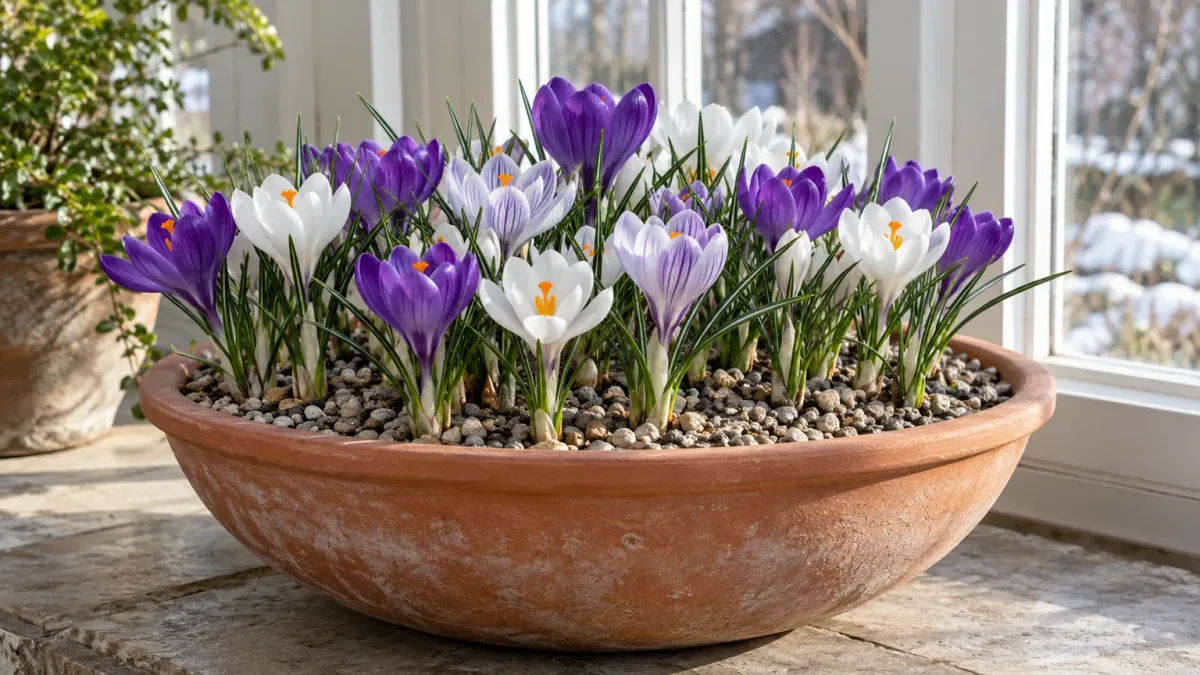
A container can hold an early, middle, and late layer in the same pot, with larger bulbs at the bottom and smaller ones above. Use a deep pot with drainage holes, cover each layer with potting mix, and keep bulbs from touching; use the depth and spacing instructions for each variety rather than stacking them directly over one another. Snowdrops or crocus can occupy the upper layer, with daffodils or tulips lower down, as long as the pot is large enough for root growth.
The main container risk is winter exposure. A pot loses heat and freezes more quickly than a garden bed, so a hardy bulb that survives in the ground may fail in a small container left fully exposed. In cold climates, sink the pot in the ground, insulate it, or place it in a protected unheated space that still provides the cold period the plants need. Check moisture occasionally during a dry winter, but do not leave the container standing in water.
Protect the planting from digging and browsing
Squirrels and chipmunks often dig in newly loosened soil, especially where they find tulip or crocus bulbs. Firm the surface after backfilling and use a secured wire mesh over a new bed if digging is persistent; remove or adjust it once shoots emerge. For a serious vole problem, a surface mesh alone may not protect bulbs below ground, so use a purpose-made bulb basket or a lined planting area. Barriers offer a more reliable defense than expecting every animal to dislike a particular flower.
Daffodils, alliums, and some other bulbs are often less attractive to deer or rodents than tulips, but animal pressure varies and hungry wildlife may still sample them. The National Gardening Association summarizes differences in rodent preference among common spring bulbs; treat those patterns as a useful way to choose a planting mix, not a guarantee. Combining less favored bulbs with a smaller number of vulnerable favorites can reduce losses without sacrificing the flowers you want.
Keep the leaves until the bulb has recharged
After flowers fade, remove the spent flower head if you do not want seed to form, but leave green foliage in place. The leaves are still feeding the underground storage structure for next year’s growth; tying, braiding, mowing, or cutting them while green can weaken future flowering. Let the foliage yellow and collapse naturally, then remove it when it comes away easily.
If a clump produces many leaves but fewer flowers, check the site before buying more bulbs. Shade may have increased as a tree grew, the planting may be crowded, or leaves may have been cut too early in previous years. Divide crowded clumps when they are dormant or follow species-specific guidance, then replant only healthy offsets at the correct depth. If a hybrid tulip fades after its first strong display, replacing it or choosing a better perennializing type may be more practical than trying to force it to return.
Conclusion
The best bulbs for fall planting are the ones that fit your winter, soil, and preferred flowering sequence. Use snowdrops and crocus for the earliest color, daffodils and tulips for the classic spring display, and alliums, camassia, or lilies to carry the garden toward summer. Add woodland species only where their spreading habit suits the site, and treat autumn crocus, lily-of-the-valley, and other bulb-like plants according to their distinct planting needs.
Plant when the soil and local season are right, not just because a calendar says “fall.” Choose a bed that drains, follow the label for depth, protect bulbs where animals dig, and let the foliage finish after bloom. Those decisions do more for a reliable display than adding another dozen varieties to a poorly matched site.



