How to Grow and Care for Stewartstonian Azalea
Learn how to grow Stewartstonian azalea with the right light, acidic soil, planting depth, watering, pruning, winter care, and fixes for yellow leaves.
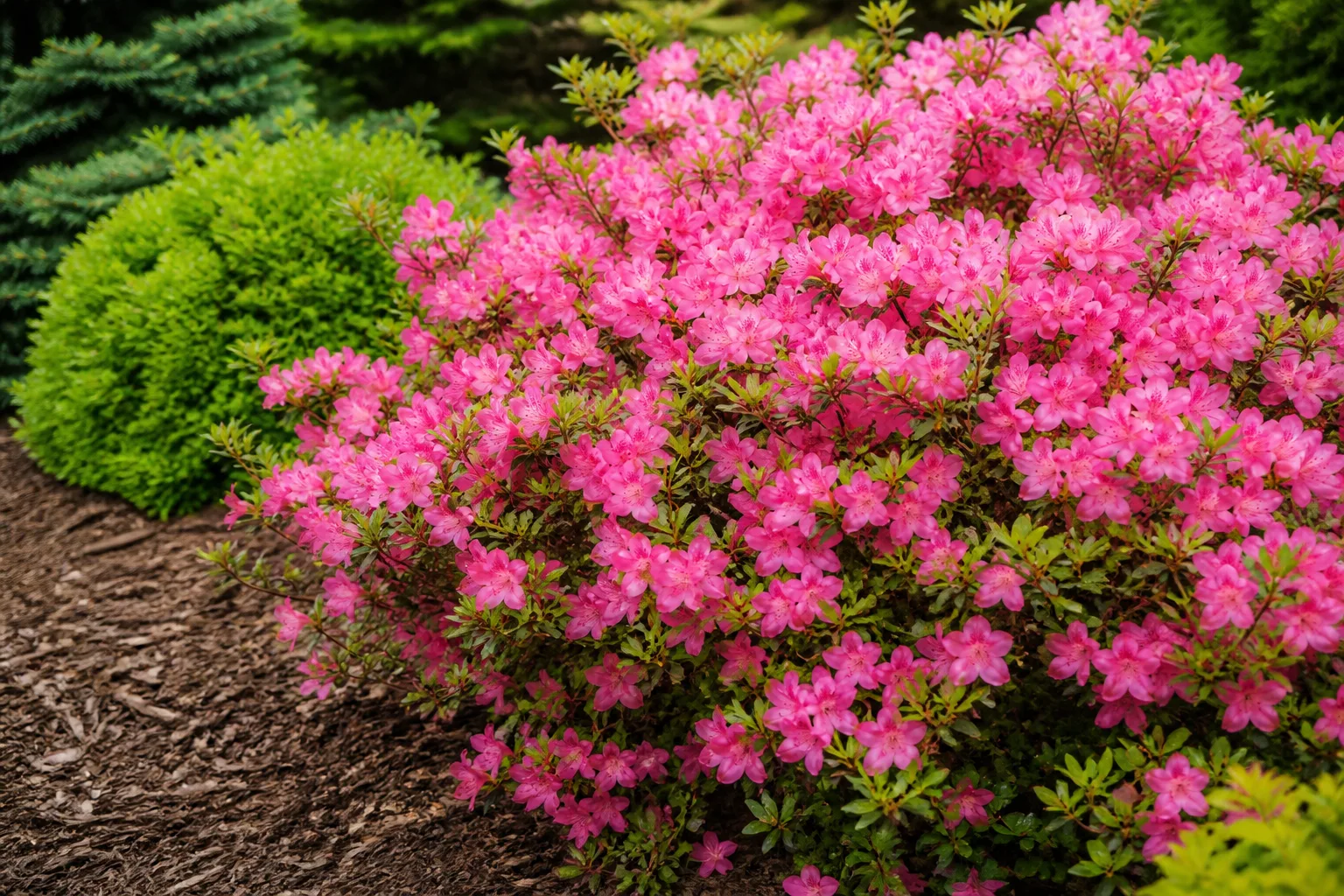
‘Stewartstonian’ is a spring-flowering evergreen azalea valued for red flowers, glossy foliage, and a compact, spreading habit. Give it a site with bright or dappled light, acidic soil that drains freely, and steady moisture around its shallow roots; the shrub is far less forgiving of a wet planting pocket or alkaline ground than of an occasional missed fertilizer application. Its leaves can take on wine or chocolate tones in cold weather, so it brings interest beyond its April-to-May flowers.
The most reliable way to grow this cultivar is to make the site decision before you dig. Check the soil’s drainage and pH, look at how much afternoon sun the bed receives, and leave space for a shrub that may reach several feet in both directions. Those checks prevent the common cycle of planting first, watching the leaves yellow or the flowers disappear, and trying to fix a root-zone mismatch with fertilizer.
What Makes ‘Stewartstonian’ Different
‘Stewartstonian’ is a Gable hybrid azalea selected by Pennsylvania plantsman Joseph Gable. It is botanically listed as Rhododendron ‘Stewartstonian’; azaleas belong within the broader rhododendron genus, even though gardeners commonly use “azalea” for these smaller-flowered shrubs. The Missouri Botanical Garden Plant Finder describes a dense, spreading shrub with glossy dark-green leaves and clusters of orange-red flowers in spring.
The flower color is more nuanced than a generic “bright red” label suggests. The American Rhododendron Society’s cultivar record describes a moderate-red bloom with a slight reddish-orange flush in the flower throat, while Missouri Botanical Garden calls it orange-red. Expect a warm red display; the exact impression changes with light, temperature, and the plant in front of you.
Mature-size figures also differ. Missouri Botanical Garden lists a typical height and spread of 4 to 5 feet, the American Rhododendron Society estimates about 5 feet at 10 years, and The Dawes Arboretum’s record describes specimens that may reach 6 to 8 feet but are often about half that size in colder climates. Use 4 to 6 feet as a practical space-planning range, then confirm the expected dimensions for the plant’s source and your region instead of shearing it into an undersized space.
Check Climate and Site Before You Buy
Published hardiness references place ‘Stewartstonian’ broadly in USDA Zones 5 to 8, and the American Rhododendron Society lists a cold-hardiness temperature near -15°F. Those figures are useful screening tools, not guarantees: winter wind, freeze-thaw cycles, summer heat, drainage, and the plant’s nursery origin all affect survival and flowering. A warm zone 8 garden can still be challenging if the site is exposed to drying sun, while a colder garden may protect a plant with a sheltered woodland-edge position.
Look at the site over a full day and after rain. A north- or east-facing bed, the edge of a tree canopy, or an open woodland border often provides the combination of filtered light and protection from harsh afternoon heat that this evergreen azalea prefers. Avoid low ground where water lingers, roof-eave strips that dry out, and spots where tree roots will compete heavily for water.
The Missouri Botanical Garden also cautions against placing azaleas within or near the dripline of walnut-family trees such as walnuts, butternuts, pecans, and hickories. In addition to the potential soil-chemistry concern, mature trees can create dense shade and take up much of the available moisture. If the site has several of these constraints, choose a different location rather than expecting extra fertilizer or frequent watering to compensate.
Choose Light for Flowers and Healthy Leaves
Aim for dappled shade, high open shade, or morning sun followed by afternoon shade. Missouri Botanical Garden notes that ‘Stewartstonian’ tolerates a fair amount of sun in cool northern summers but may scorch in hot afternoon exposure in the St. Louis area. That distinction matters: a plant can handle more direct sun in a cool, moist climate than in a hot yard with reflected heat from pavement or a west-facing wall.
Deep shade is not automatically safer. A shrub under dense evergreen branches may survive but produce fewer flowers and looser growth because it receives too little usable light; heavy tree competition can also leave its fine roots dry. If flowering is sparse and the shrub is otherwise healthy, assess light through the growing season before moving or pruning it.
Prepare the Root Zone
This azalea needs a root zone that stays moist but not saturated. Its fine, shallow roots need both water and oxygen, so soil that holds water for days can be as damaging as soil that dries rapidly. The Azalea Society of America’s planting guidance describes an ideal soil pH of about 4.5 to 6.0 and recommends dealing with heavy ground through broad improvement, raised beds, or planting high rather than placing an azalea in a small amended hole.
Test the existing soil before choosing amendments. A soil test can tell you whether pH is actually too high and whether nutrient levels need correction; it also helps avoid lowering the pH too far or applying a fertilizer when the real issue is root damage. Work organic matter into a broad planting area when appropriate, but do not create a soft, highly amended pocket surrounded by dense clay that will collect water.
Test Soil Before You Acidify It
A practical target for ‘Stewartstonian’ is pH 5.0 to 5.5, within the wider azalea range used by Missouri Botanical Garden and the Azalea Society. If a test shows alkaline soil, follow the lab’s amendment recommendation for that soil type; sulfur and other acidifying materials take time to change pH, and the amount required depends on texture and starting pH. Do not guess with repeated doses of acidic fertilizer, peat, or pine needles.
Yellow leaves are not proof that soil pH needs lowering. Poor drainage, compacted roots, drought, excess fertilizer, and other nutrient imbalances can create overlapping symptoms. Treat the soil-test result and the root-zone condition, not the color of one leaf.
Plant at the Right Height
Planting depth is one of the most important details for an evergreen azalea. Water the nursery root ball before planting, remove the container without pulling on the stems, and check for roots circling tightly around its outside. If the roots form a dense mat, loosen or make a few shallow vertical cuts so new roots can grow outward; avoid tearing the whole root ball apart.
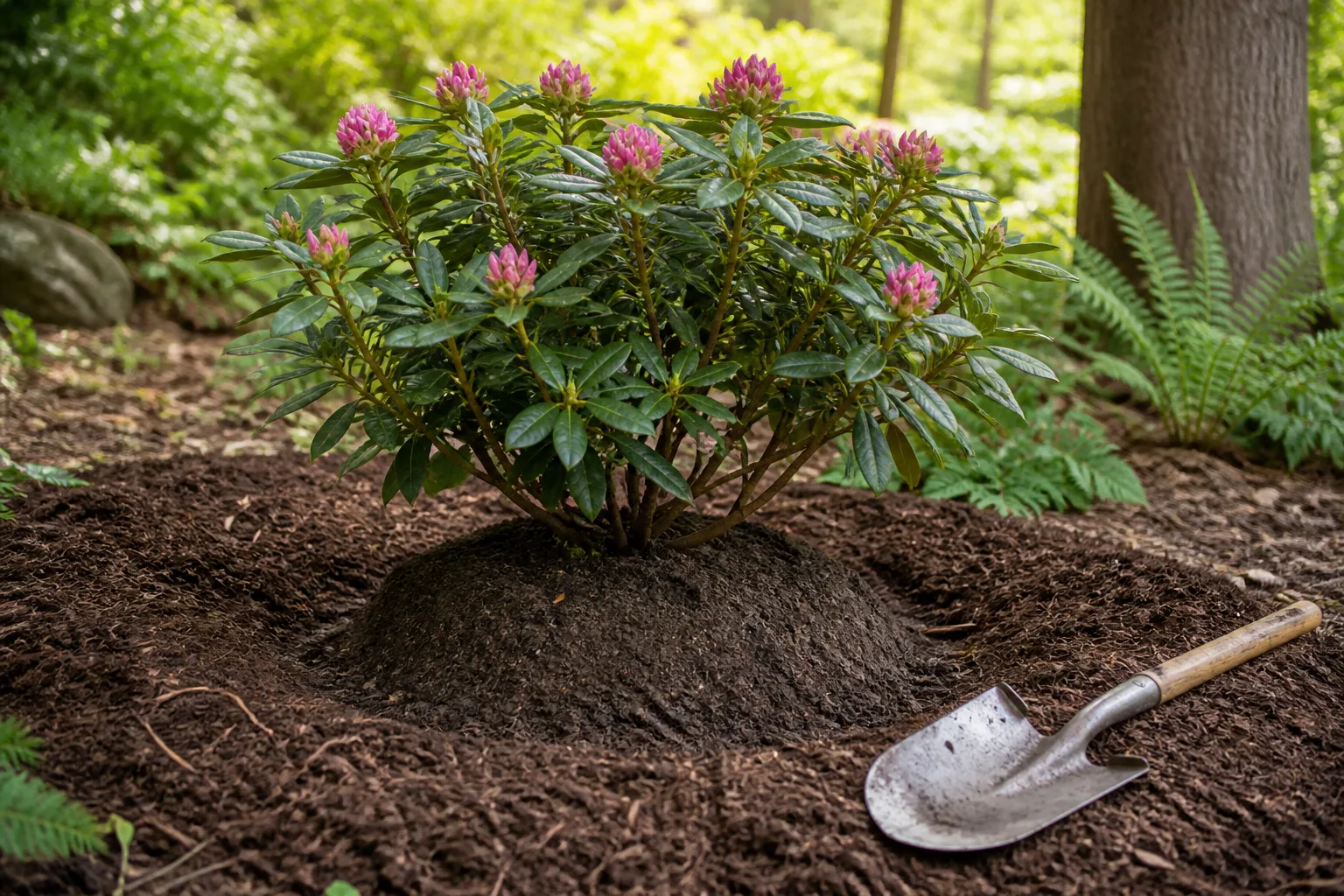
Dig a hole wider than the root ball but no deeper than its height in well-drained soil. Set the top of the root ball even with the surrounding soil line; in heavy or slow-draining soil, set it slightly above grade and mound well-draining soil around the sides. The Azalea Society specifically warns that a small amended hole in heavy soil can hold water around the roots, so use a raised bed or improve a wider area when drainage is poor.
Spring and early fall are usually the easiest planting windows because moderate temperatures reduce stress while roots begin to establish. Avoid planting during a heat wave, into frozen ground, or just before the soil is likely to freeze; if the shrub must go in during warm weather, shade the root ball while working and keep checking its moisture afterward. A dry, tightly packed nursery root ball can repel water even when nearby soil looks wet, so soak it thoroughly before setting the plant.
Backfill with the native soil or a broad-area mix suited to the test results, firm it gently to eliminate large air gaps, then water slowly until the root ball and surrounding soil are both moist. Spread organic mulch over the root zone, leaving a small mulch-free gap around stems. This keeps the shallow roots cool and reduces moisture swings without burying the crown.
Water for Establishment, Not by the Calendar
For the first growing season, check the root ball and surrounding soil regularly rather than relying on a fixed weekly schedule. Rain may wet the surrounding bed but miss the dense nursery root ball, while a sprinkler can leave the surface damp even when the roots below are dry. Water slowly at the base when the root zone begins to dry, then check again before repeating.
The Azalea Society uses roughly an inch of rain per week as a useful benchmark, but actual need changes with soil, heat, wind, plant size, and whether the shrub was planted high. Newly planted azaleas, sunny sites, and exposed beds may need closer monitoring. Reduce unnecessary overhead watering when possible; keeping foliage wet for long periods can favor some fungal problems.
To check moisture, move mulch aside and feel the soil a few inches down near the outer edge of the root ball. If it is cool and slightly damp, wait; if it feels dry and crumbly, water slowly enough that the root ball can absorb the water rather than letting it run down the slope. This small check is more useful than watering every Tuesday regardless of rain, because an azalea in sandy soil and one in a raised clay bed will not dry at the same rate.
Once established, ‘Stewartstonian’ still benefits from moisture during extended dry spells, especially while flower buds are developing and during hot weather. If leaves droop in a dry bed, give the root zone a deep drink and reassess drainage before increasing frequency. If the soil is already wet and leaves wilt, stop watering and investigate drainage or root rot rather than adding more water.
Mulch and Fertilize with Restraint
Use a loose layer of shredded leaves, bark, pine bark, or another clean organic mulch to protect the shallow root system and slow evaporation. A layer around 2 to 4 inches is commonly recommended; keep it away from the stems and do not pile fresh material into a volcano around the plant. Replenish it as it breaks down instead of repeatedly adding layers until the crown is buried.
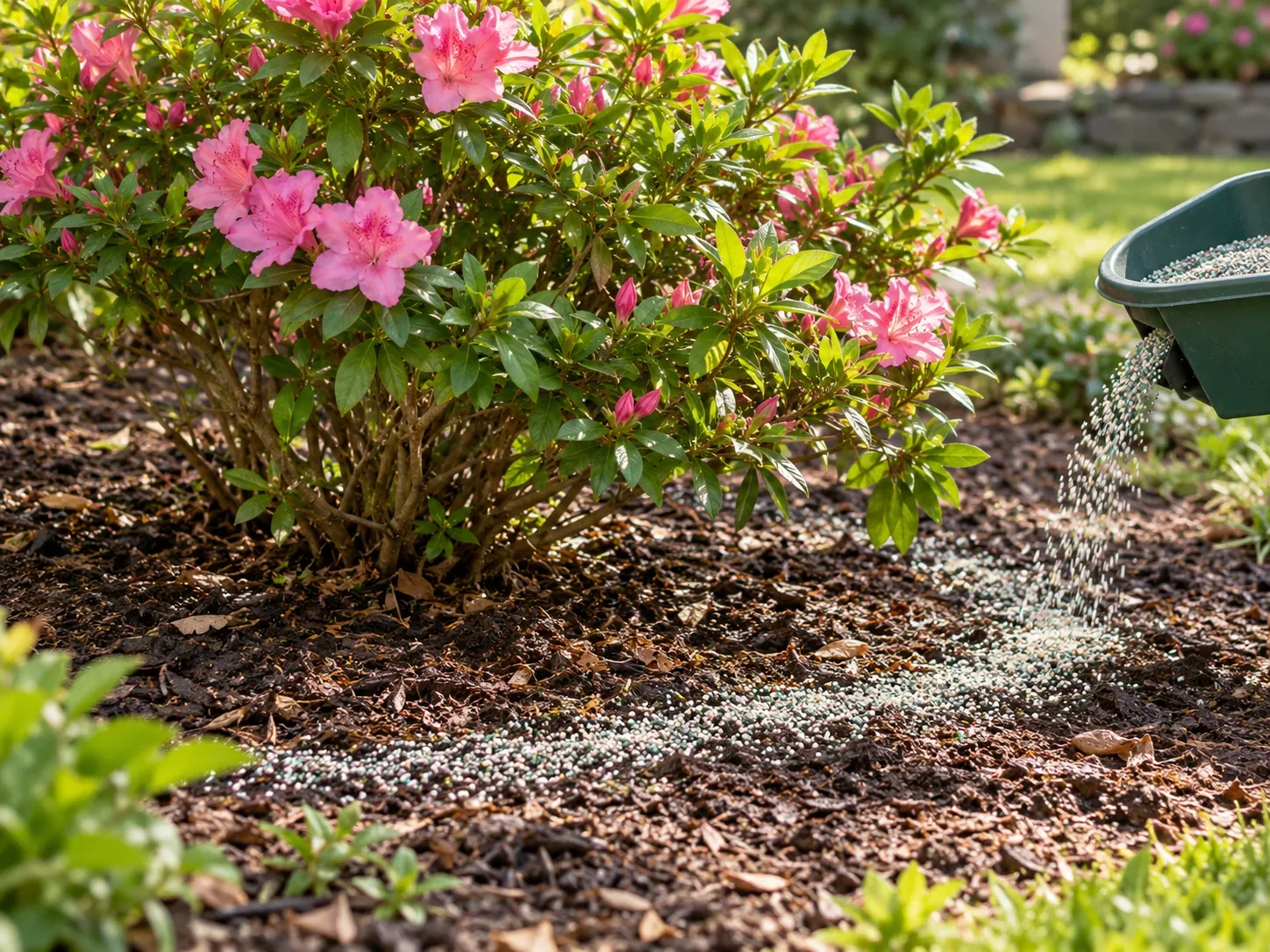
Mulch is a buffer, not a substitute for a suitable site. It cannot correct a planting hole that holds standing water, and it should not be spread in a thick mat that sheds rain before it reaches the root zone. After heavy rain, check whether water is moving away from the shrub; during dry weather, make sure the surface mulch is not hiding a dry root ball below.
Routine fertilizer is not always necessary. The Azalea Society notes that established plants with organic mulch often receive adequate nutrition as that mulch decomposes; if growth is weak, first check sunlight, pH, drainage, and root health. When a soil test supports feeding, choose a product labeled for acid-loving shrubs and follow its directions rather than applying a guessed dose.
Avoid high-nitrogen feeding late in the growing season, which can encourage tender growth before cold weather. Also avoid trying to force flowers with extra fertilizer: ‘Stewartstonian’ needs mature, healthy growth and flower buds that survive winter. Too much fertilizer can injure the roots or worsen an existing soil imbalance instead of correcting it.
Prune After Flowers to Protect Next Year’s Buds
For routine shaping, prune soon after the spring flowers fade. Most traditional spring azaleas form the next season’s flower buds on the new growth that develops after bloom, so late summer, fall, and winter pruning can remove the display before it opens. The Gardener’s Path azalea guide and Gardenia’s pruning guidance both emphasize this post-flowering window for spring-blooming types.
Use clean pruners to remove dead, broken, or crossing branches and shorten only the shoots that disrupt the plant’s shape. Cut back to a healthy side branch rather than leaving a long stub, and step back between cuts so you preserve the natural spreading habit. Deadheading is optional; if you remove faded flower clusters, pinch or snip them carefully so you do not damage new shoots beneath them.
A large, overgrown shrub may need more than a light trim. Major renovation can cost that season’s flowers, and recovery depends on the plant’s health and how far back you cut; gradually removing a few older branches over several seasons is a lower-risk option. If the mature plant is simply too large for its site, relocating or replacing it with a naturally smaller cultivar may be more successful than repeatedly shearing it.
Handle Winter Color and Cold-Weather Stress
‘Stewartstonian’ is broadleaf evergreen, but “evergreen” does not mean that every leaf stays green all winter. Missouri Botanical Garden notes that the foliage can turn reddish-chocolate during cold winters, and the American Rhododendron Society describes wine-red winter coloration. Older leaves may also drop as new growth replaces them, so judge the whole plant rather than treating every seasonal color change as disease.
Evergreen azalea foliage and flower buds can be injured by unusually harsh cold, drying wind, or abrupt winter temperature changes. Plant in a sheltered site, maintain mulch over the root zone, and water during dry periods before the ground freezes if the soil is not waterlogged. Do not wrap the shrub tightly or apply fertilizer in late fall to “prepare” it; stable roots and a suitable microclimate matter more.
If leaves look dull or bronze after winter, wait for the spring flush before deciding that the shrub is dying. Dead or brittle twigs can be pruned after you can see which parts failed, while healthy live wood should be left intact. A late frost may also damage flower buds without killing the plant, producing a healthy-looking shrub with a disappointing spring display.
Troubleshoot Yellowing, Scorch, and Poor Bloom
Start with the pattern and timing of the damage. New leaves, old leaves, leaf undersides, flower buds, and the wetness of the root zone each provide different clues; inspect the whole shrub and the soil before buying a treatment. A single yellow leaf low in the canopy may be normal turnover, while widespread symptoms deserve a closer look.
Yellow Leaves: Check the Pattern and the Soil
Yellow tissue between green veins on newer leaves can indicate iron chlorosis, often because high soil pH makes iron less available to roots. It can also accompany compacted, waterlogged, or damaged roots. Test soil pH and drainage before applying iron or acidifier; a foliar spray may temporarily green foliage without correcting the underlying root-zone problem.
If leaves turn uniformly pale and the shrub is growing poorly, consider broader root stress, nutrient shortage, or too little light rather than assuming iron deficiency. Check whether water drains from the planting area, whether mulch is covering stems, and whether the plant has been fertilized recently. Correct one likely cause at a time and watch new growth, since already damaged leaves may not recover fully.
Brown Edges or Leaf Drop: Separate Drought from Winter Injury
Brown, dry margins on leaves after a hot spell often point to moisture stress or sun scorch, especially on the afternoon-facing side of the shrub. Brown patches after a cold, windy period may be winter burn; exposed leaves lose moisture when frozen or when roots cannot replace water. Compare the damaged side and the timing with recent weather before pruning.
Feel the soil below the mulch. If it is dry, water deeply; if it is wet for days, improve drainage and avoid more irrigation. Remove only dead tissue or branches, not every leaf with a brown edge, and wait for new growth to show the extent of the injury.
Few Flowers: Review Light, Timing, and Bud Survival
A shrub with healthy foliage but few blooms may be growing in too much shade or may have been pruned after it set buds. Drought during the period after flowering can also reduce next year’s bud development, and unusually cold weather can kill buds while leaving branches alive. These causes require different fixes, so check recent pruning, seasonal moisture, and the site’s light before feeding the shrub.
If the azalea is healthy but consistently shaded, consider whether selective removal of a competing branch or a move to a brighter site is practical. Do not increase fertilizer as a first response; nitrogen can encourage leaves without fixing shade, drought, or bud loss. Give any change a full flowering cycle before judging it.
Newly moved or newly planted shrubs may need more than one growing season to settle into a regular bloom rhythm, particularly if roots were disturbed or the plant lost moisture during establishment. Keep notes on when it flowers, how much sun reaches it, and whether it experiences drought after bloom; that record can distinguish a repeating site problem from a single cold or dry season. If buds form but turn brown before opening, consider late frost or winter exposure rather than assuming the shrub needs a stronger feed.
Watch for Pests and Diseases
A well-sited shrub is less likely to struggle, but azaleas can still attract lace bugs, mites, scale, caterpillars, and other pests, and may develop leaf spots, leaf gall, cankers, or root rots. Look under leaves for insects and stippling, inspect distorted new growth, and note whether a problem is limited to one branch or spread through the plant. Photographing symptoms and noting when they began can help a local extension office or nursery identify the cause.
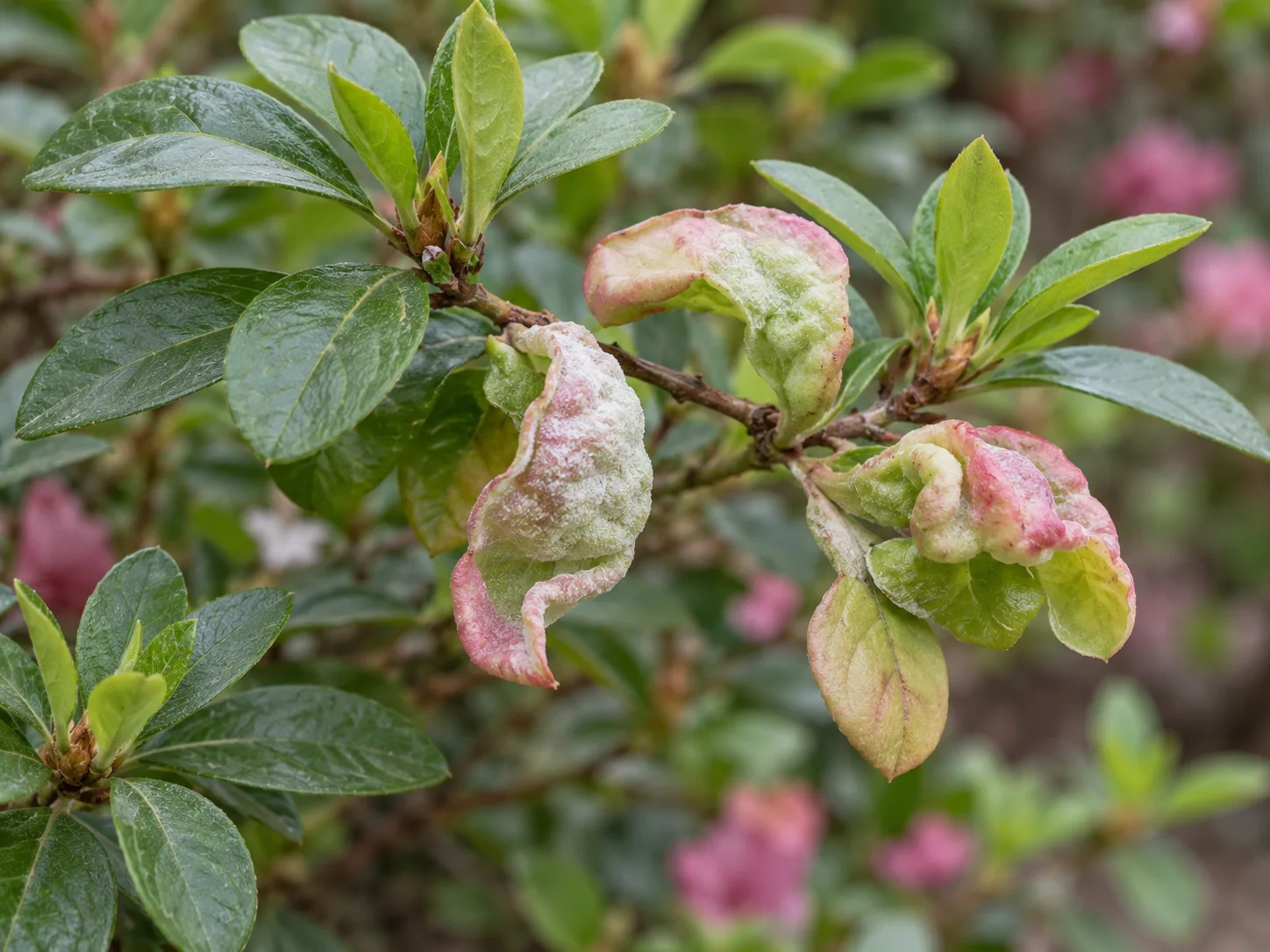
Leaf gall can create thickened, distorted leaves and is often more alarming than damaging; remove affected material when practical and avoid keeping foliage wet. Root rot is more serious and commonly appears alongside persistent wilting, decline, or roots in waterlogged soil. If symptoms continue or spread, get a diagnosis before applying pesticides or fungicides; product choice, timing, and label directions depend on the pest or pathogen.
Do not spray a broad-spectrum insecticide just because leaves look unhealthy. First confirm that insects are present and identify whether the damage is active; for a small infestation, removing affected parts or using a directed water spray may be enough. Follow local extension guidance and the product label for any treatment, and protect pollinators by avoiding applications to open flowers.
Use Its Shape in a Garden Plan
With its evergreen foliage and spring color, ‘Stewartstonian’ can serve as a specimen, low hedge, woodland-border shrub, or foundation planting where it has room to spread. Plant it where you can see the flowers in spring, but leave enough distance from paths, walls, and neighboring shrubs for its mature width. A loose group looks more natural than a row clipped into tight cubes.
Combine it with plants that tolerate similar acidic, moisture-retentive but well-drained soil and filtered light. Ferns, woodland perennials, and other compatible acid-loving shrubs can share the setting, but check each plant’s mature size and sun needs before planting; a vigorous tree or dry-soil perennial can create competition even if the pairing looks attractive. The Missouri Botanical Garden lists shrub borders, woodland gardens, foundation plantings, and hedges among its uses.
Keep children and pets from chewing the leaves or flowers. The ASPCA lists azalea (Rhododendron species) as toxic to dogs, cats, and horses, with ingestion associated with signs including vomiting, diarrhea, weakness, and cardiac effects. If an animal may have eaten any part of the plant, contact a veterinarian or animal poison-control service promptly rather than waiting for symptoms.
Conclusion
‘Stewartstonian’ rewards a gardener who gets the root zone and light right before reaching for fertilizer. Give it acidic, well-drained soil, moisture that stays even without stagnating, and protection from severe afternoon heat and drying winter wind; then prune soon after bloom to preserve the next set of flowers.
Allow several feet for its mature spread, and expect size, bloom timing, and winter color to vary with climate and growing conditions. If the shrub struggles, diagnose drainage, pH, light, and water patterns in that order. Those checks solve more problems than a routine dose of fertilizer or an untimely haircut.