Should You Water Plants at Night? A Clear Guide
Should you water plants at night? Learn when evening watering is safe, why morning is better for wet leaves, and how to water roots without overdoing it.

If you can choose, water outdoor plants in the morning, especially when you use a sprinkler or hose that wets the leaves. But watering after sunset is not automatically harmful: if the soil is dry and you can direct water to the root zone, an evening drink is usually better than leaving a stressed plant thirsty until morning.
The useful question is not only “What time is it?” It is also “Is the root zone dry, will the foliage stay wet, and can excess water drain?” Those checks explain why early morning is a reliable default, when nighttime watering is fine, and when to change the method.
The short answer: yes, when the soil needs water
You can water plants at night when they need water, particularly with drip irrigation, a soaker hose, or a watering can aimed at the soil. These methods deliver moisture where roots can use it while keeping most foliage dry, so they avoid the main drawback of a late sprinkler cycle.
Morning remains the safest general choice for outdoor watering because any splashed or sprayed leaves have daylight and air movement to dry. If the only available time is evening, water slowly at the base, skip plants whose soil is still moist, and avoid leaving pots or garden beds saturated overnight. A single late watering will not doom a healthy plant; repeated wet foliage or persistently waterlogged roots are the patterns to prevent.
Timing matters less than where the water lands
Watering advice often treats time of day as the whole issue, but two very different jobs can happen at the same hour. A sprinkler can soak foliage and leave water on stems, flowers, and soil; a drip line can moisten the root zone without wetting leaves at all.
That difference changes the risk. Foliar disease concerns depend partly on how long susceptible leaves remain wet and whether the pathogen and favorable conditions are present, while root problems depend more on how long the growing medium stays saturated and short of air. A clock cannot tell you whether a bed is dry, a pot drains well, or leaves will dry quickly.
Soil-level watering and wet foliage are different situations
Think of “watering at night” as a method question as much as a schedule question. If a hose is running at the soil line, a plant’s leaves may stay dry; if a sprinkler mists the canopy at dusk, foliage can remain wet for hours, especially on a calm, humid night.
Roots do not stop taking up water just because the sun has set. The claim that plants cannot use water at night confuses photosynthesis—which requires light—with water movement through functioning roots and stems. A plant can still benefit from soil moisture after dark; the reason to prefer morning is mainly to manage leaf wetness, water loss, and observation.
Why morning is the best default for garden watering
Early morning gives you a useful balance: air is often cooler than it will be later, plants have water available before the day’s heat, and leaves wetted during irrigation can dry as the day progresses. NDSU Extension recommends morning irrigation, keeping leaves as dry as possible, and directing water to roots; its guidance also emphasizes soaking deeply rather than repeatedly wetting only the surface. NDSU Extension
Morning also makes the system easier to inspect. You can see whether a sprinkler missed an edge, a hose connection is leaking, water is running down a slope, or a container is draining into a saucer. If a plant is still wilting several hours after a thorough watering, that observation can prompt you to check its roots or soil rather than turning on the hose again automatically.
There is no magic minute when every garden should be watered. In a dry, breezy climate, foliage may dry quickly; in a humid, shaded bed with little air movement, wet leaves may remain damp much longer. Treat early morning as the default, then adjust for local weather, the irrigation method, and the moisture at the roots.
When evening or nighttime watering is reasonable
Evening watering is reasonable when the root zone is genuinely dry and waiting would stress the plant. That can happen during a heat wave, in a small container that has dried rapidly, after a missed irrigation, or in a garden with sandy soil that drains quickly. In those cases, water the soil slowly and thoroughly enough to reach the roots instead of giving the leaves a quick spray.
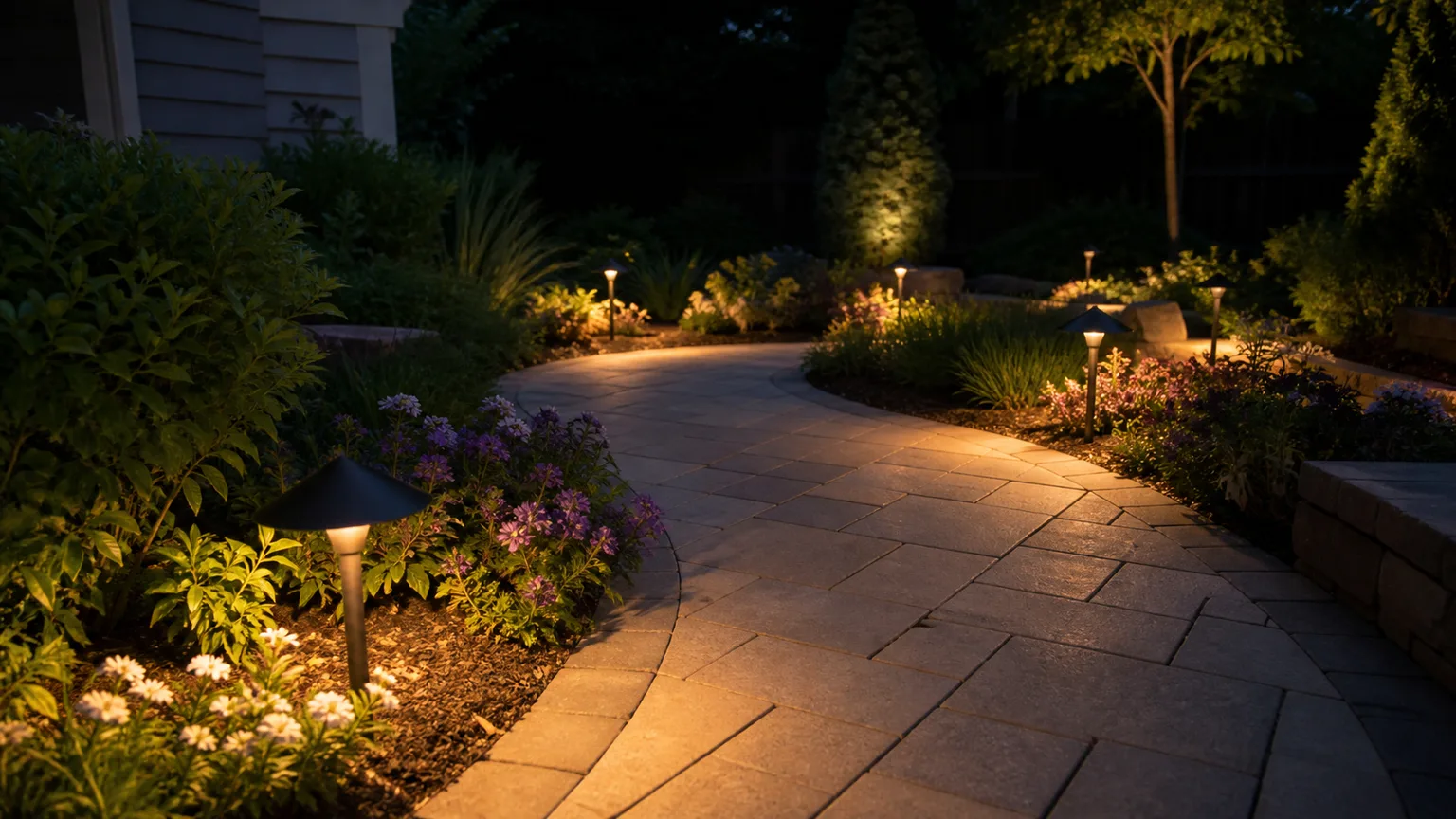
Drip lines and soaker hoses are particularly useful if your schedule only allows watering after work. They can deliver water at soil level with less wind exposure than a sprinkler; check that emitters are positioned near the active roots and that the run time does not leave the bed puddled or waterlogged. A hand-held watering can or wand can do the same job for a few plants.
Late afternoon can also be a practical compromise if plants have time to dry before the cooler, more humid part of the night. The exact window varies with season and climate, so judge by conditions rather than a fixed “6 p.m.” rule. If leaves are already wet from rain, skip additional overhead watering and check the soil before adding more.
Set timers by delivery method, not convenience alone
An irrigation timer can make a regular routine easier, but it does not know whether last night’s rain soaked the root zone or whether an emitter is flooding one plant. Check the area after a cycle and adjust the duration, spacing, or run frequency; a timer is a switch, not a soil-moisture sensor.
For drip or soaker systems, an overnight schedule can be practical if the soil drains and the system is not leaking. For sprinklers, schedule the cycle for early morning when you can inspect coverage and foliage can dry afterward, rather than leaving the canopy wet from a late-night run.
When to avoid nighttime overhead watering
Avoid starting a long sprinkler or overhead hose cycle late in the evening when it will leave foliage wet through a humid night. This matters most in dense plantings, cool weather, sheltered beds with little air movement, or gardens where leaf spots and blights have been recurring.
Do not confuse wet leaves with wet roots. If your sprinkler wets both the canopy and soil, changing to a root-level method can solve the leaf-wetness problem without delaying needed water. If the soil is already moist below the surface, the better choice is usually to wait, regardless of whether it is morning, afternoon, or night.
Does watering at night cause plant disease?
Night watering does not create a disease on its own. A plant disease generally needs a susceptible host, a pathogen, and conditions that allow infection; prolonged leaf wetness can help some fungi and bacteria infect or spread, but risk differs among diseases, plants, and weather. Water splashing soil onto leaves can also move pathogens from the ground onto foliage.
The practical rule is to keep leaves dry when you can, particularly on plants that are already vulnerable or in a bed with a disease history. Tom Kalb, an NDSU Extension horticulturist, describes using root-directed irrigation and avoiding soil splash as ways to limit disease spread; a soaker hose or watering wand can help with that. NDSU Extension
The rule is not “never get a leaf wet.” Rain, dew, and overhead irrigation happen in gardens, and a brief wetting is not a diagnosis. Also, powdery mildew often responds to humidity and other environmental conditions rather than free water on the leaf surface, so changing the watering hour alone will not solve every mildew problem.
Dr. Manjot Sidhu, an ornamental horticulture specialist with the University of Maine Cooperative Extension, told Hunker that evening watering can keep foliage wet longer when there is little sun or air movement. That is a useful caution for overhead irrigation, not proof that water delivered to the soil at night causes disease in every garden. Hunker’s interview with Dr. Sidhu
Can nighttime watering cause root rot?
The hour by itself does not cause root rot. Roots are more likely to suffer when potting mix or soil stays saturated, drainage is poor, or watering is too frequent for the plant’s needs; those conditions reduce the air available around roots. A well-drained bed that receives a needed, measured soak at night is different from a pot left standing in water or a clay hollow that stays soggy.
Before watering, check below the surface rather than relying on a dry crust. If the root zone is already damp, wait and improve drainage or airflow instead of adding water. For containers, make sure drainage holes are clear and empty excess water from the saucer or decorative outer pot after the mix has drained.
If a plant wilts even though the soil is wet, do not keep adding water to “perk it up.” Heat, root damage, compacted media, disease, or a blocked stem can also cause drooping. Let the soil condition guide your next step: dry soil calls for water; wet soil calls for diagnosis.
Will evening watering attract slugs and snails?
Slugs and snails are active in many gardens after dark and prefer moist, sheltered conditions, so a bed that stays wet at the surface may be easier for them to cross. But nighttime watering does not create a slug infestation by itself, and changing the hour will not eliminate pests already living under boards, dense groundcovers, pots, or debris.
If mollusks are damaging seedlings, reduce unnecessary surface wetness, water at the base in the morning when practical, and inspect plants after dark to learn where feeding occurs. Remove hiding places and protect vulnerable seedlings with an appropriate barrier. Consider irrigation timing as one small part of the habitat, not as a standalone pest treatment.
How to tell whether plants actually need water
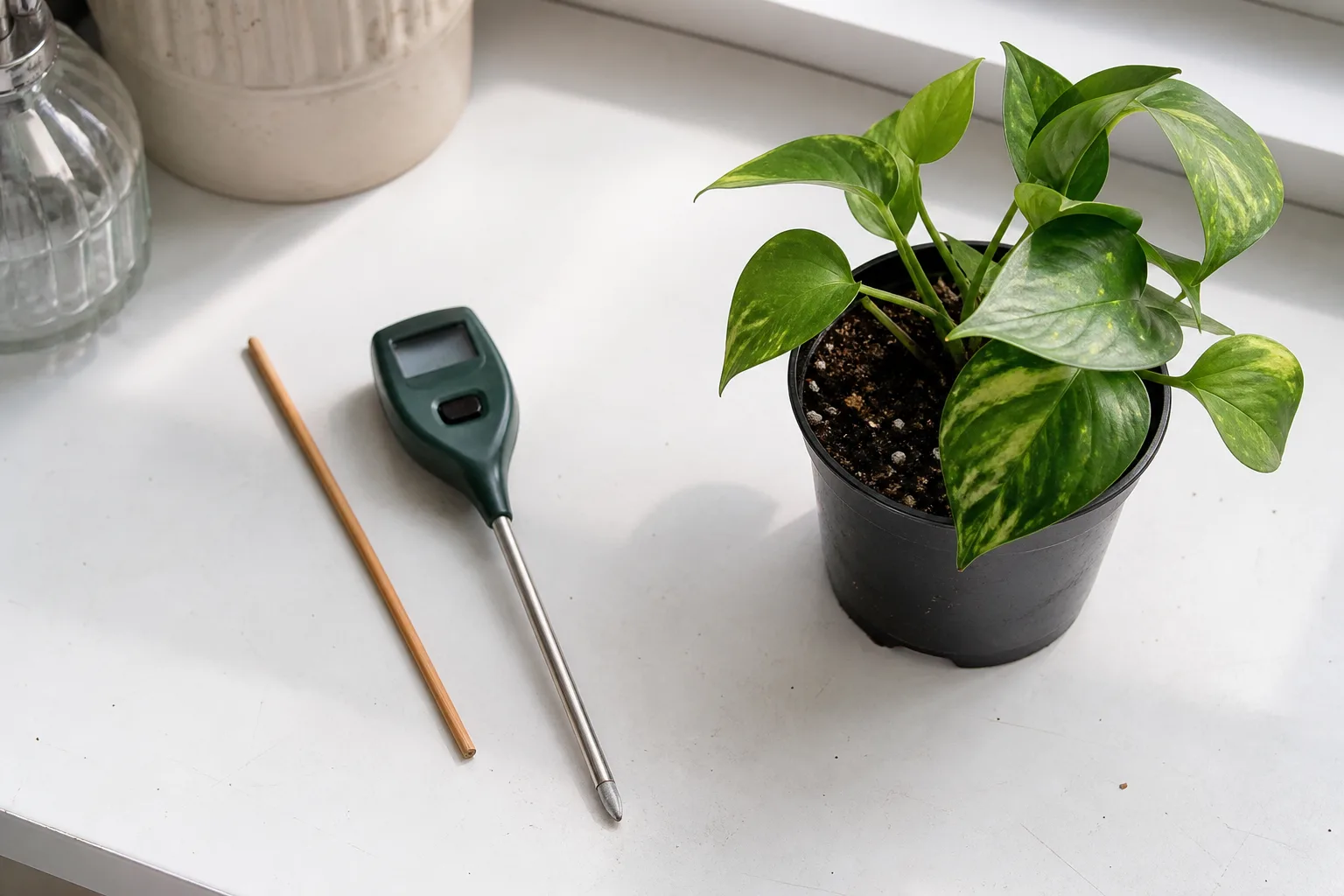
Wilt alone is not a reliable watering schedule. Leaves may droop temporarily in the hottest part of the day as a plant loses water faster than roots can replace it, then recover in cooler evening air; conversely, roots damaged by saturated soil may also fail to supply water and produce wilt.
Use soil moisture and the plant’s context together. Sandy beds, raised beds, hanging baskets, small pots, and recently planted root balls can dry faster than deep, mulched garden soil, while shade, heavy soil, cool weather, and recent rain can extend the interval between waterings.
A three-step check before you irrigate
- Check the root zone. Push a finger, trowel, or probe into the soil several inches down, near the plant’s active roots. A dry surface with damp soil below does not automatically call for more water; a dry root zone is a clearer signal.
- Read the setting. Consider recent rain, heat, wind, sun exposure, plant age, and soil type. Newly planted plants and containers often need closer checks than established in-ground plants, but still should not be watered by calendar alone.
- Test the result. After watering, check again to see whether moisture reached the intended depth and whether water drained away. Gardener’s Supply recommends checking soil rather than following a rigid rule and directs gardeners to water the root zone; a rain gauge can also help you account for rainfall before adding irrigation. Gardener’s Supply watering guide
For a simple decision, use this comparison:
| Situation | Better choice |
|---|---|
| Dry garden bed; sprinkler wets foliage | Water in the morning if possible |
| Dry bed; drip line or soaker hose | Evening or night can work if water drains |
| Wilting plant; soil dry at root depth | Water now, slowly at the base |
| Wilting plant; soil still wet | Pause and check drainage, roots, and heat |
| Rain expected or soil already moist | Wait and recheck |
The safest watering methods for beds and lawns

For garden beds, put water on the soil around the root zone rather than spraying the whole plant. A slow stream lets water soak in instead of running off, and mulch can reduce surface evaporation and soil splash; keep mulch from pressing against stems or crowns.
There are exceptions to keeping foliage dry. Seeds near the surface and small seedlings have shallow roots, so the seed row may need gentle overhead watering to stay evenly moist while it establishes. Once roots extend farther into the soil, shift to deeper, less frequent irrigation that wets the growing zone instead of repeatedly dampening only the surface.
Lawns are a separate case because sprinklers are standard and the leaves are the target. If you irrigate turf overnight, avoid running long cycles that create puddles or keep the ground saturated; follow local watering restrictions and use a rain gauge or catch cups to check how evenly the system applies water. For broader lawn guidance, see how to water a lawn without wasting water.
Davey Tree’s practical watering guidance favors morning, particularly for trees and plants on hot days, because it gives foliage time to dry and water time to soak into roots before heat increases evaporation. If a tree or shrub needs a deep soak, aim water across the root area rather than pouring only against the trunk, and avoid keeping the soil saturated. Davey Tree’s watering advice
Match the tool to the plants and soil
A watering can gives good control over a few containers or seedlings. A hose wand reaches established plants without blasting soil onto leaves, while drip irrigation and soaker hoses suit rows and beds where regular root-zone watering is needed. Sprinklers are useful for broad areas but are more likely to wet foliage and lose water to wind.
Clay soil, slopes, and compacted areas may take water slowly. Use short cycles with pauses so water can enter instead of running away; very sandy soil may need more frequent checks because it drains quickly. Adjust irrigation duration after checking the soil, not because a timer has reached a familiar number of minutes.
For a broad bed, place a rain gauge or several straight-sided containers across the sprinkler zone and compare the collected water. Uneven coverage can leave one end dry while another stays soggy, so adding more minutes to the whole system may worsen the difference rather than fix it. Move or adjust the sprinkler, or water the dry pocket separately.
Houseplants and containers need a different clock
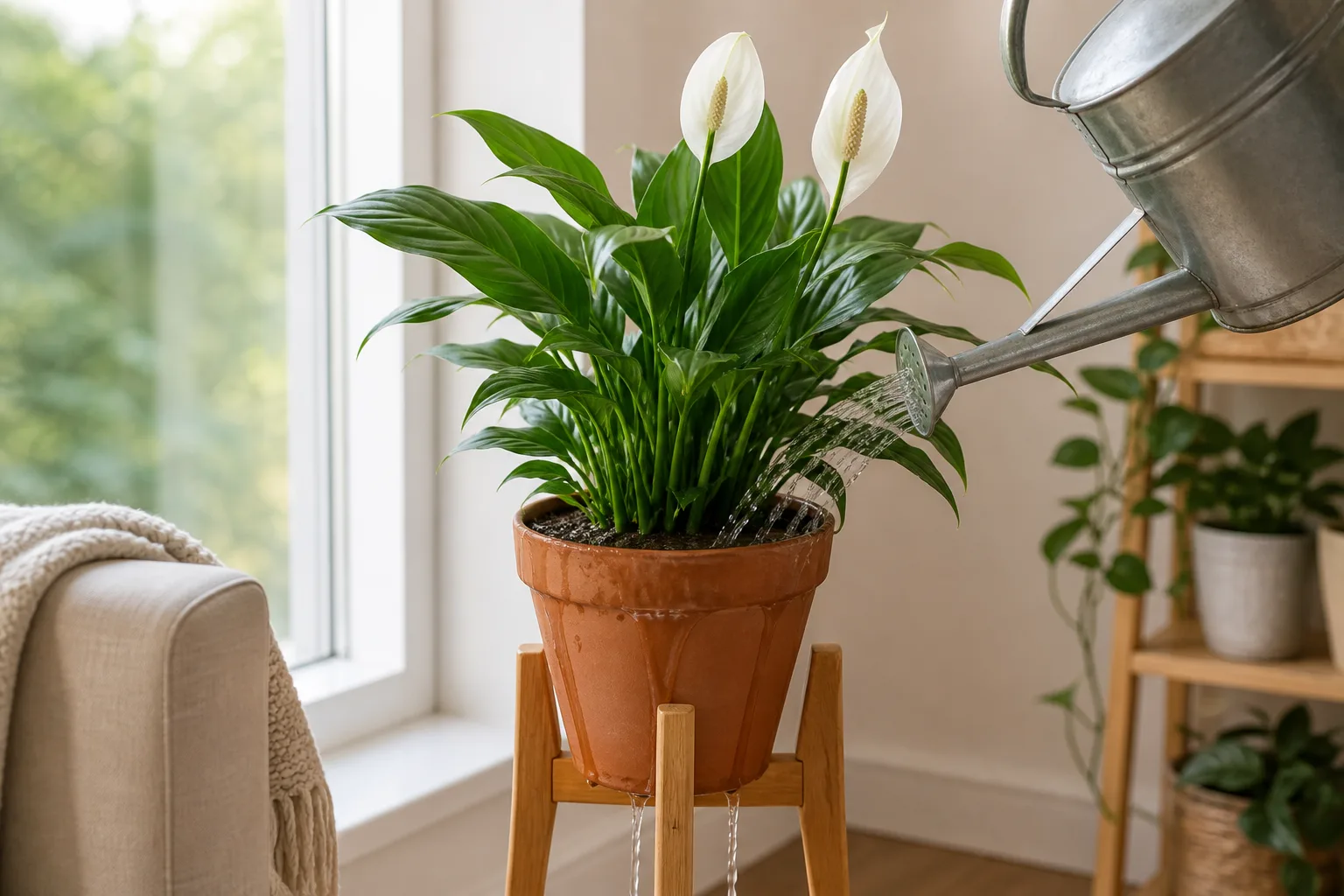
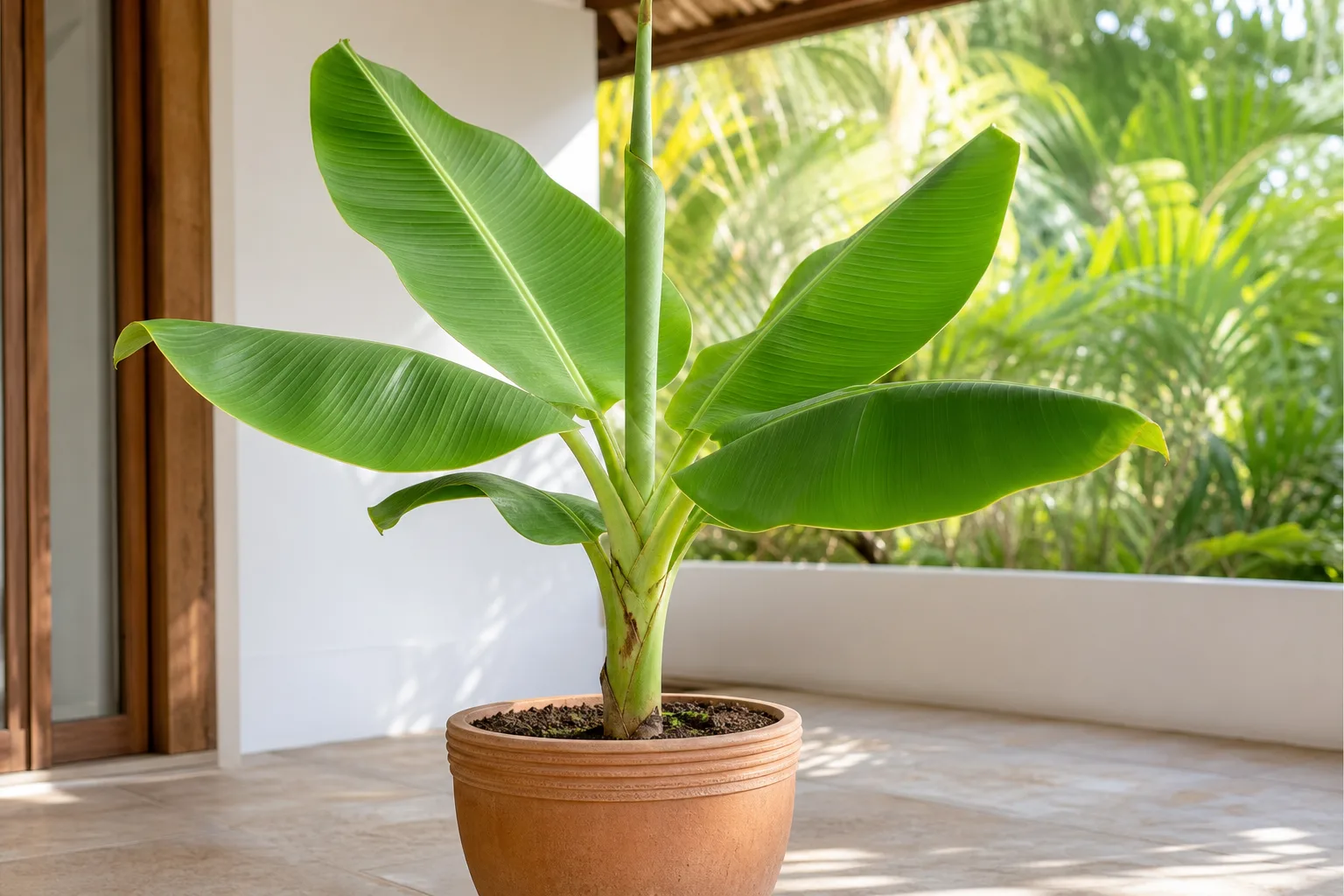
For most houseplants, the time of day matters less than whether the potting mix has reached the plant’s preferred dry-down and whether the pot drains. Check the mix at the depth appropriate for that species, then water thoroughly enough to moisten the root ball and let excess drain. A little water left in a cachepot or saucer can keep roots too wet even if you watered in the morning.
Evening watering is usually acceptable when an indoor plant is genuinely dry. The room’s light, temperature, airflow, pot size, and growing medium matter more than the clock; a succulent that prefers a dry interval should not be watered just because its leaves look slightly soft, while a thirsty plant in a small pot may need water before morning.
For outdoor containers, check more often during hot, windy weather because small pots can dry quickly. Do not use a universal “top inch” test for every plant: a shallow-rooted seedling, moisture-loving fern, cactus, and large woody houseplant have different needs. The guide to watering indoor plants explains how to check a pot and water without leaving roots in runoff.
What to do during heat waves, drought, or urgent wilt
If a plant is wilting and the root zone is dry, water it when you can rather than withholding moisture solely because it is dark. Apply water slowly at the base; if the soil is very dry and water beads or runs off, pause and water in a few passes so it can absorb. A newly planted shrub, thirsty annual, vegetable in a small container, or plant in sandy soil may not safely wait through a long hot spell.
If the root zone is moist, more water may make the problem worse. Move a container temporarily out of the harshest afternoon sun if the plant’s needs allow, check drainage, and look for signs of root or stem damage. NDSU Extension notes that garden plants need more water in hot, dry weather and recommends deep rather than shallow irrigation; treat weekly volume estimates as a starting point because rainfall, soil, and crop needs vary.
When you can plan ahead, water before the heat builds and mulch the soil to slow moisture loss. When you cannot, save the plant first with a root-level soak, then return to a measured schedule after conditions improve. The best time to water is the time that prevents avoidable drought stress without keeping roots or leaves wet for longer than necessary.
Do not treat a brief midday wilt as a diagnosis. If leaves recover in the evening and soil is moist below the surface, extra water may not help; if the whole plant is still limp and the root zone is dry, water thoroughly and reassess after the plant has had time to take it up. This short check helps distinguish temporary heat response from a real dry-root problem.
Common myths about watering after dark
“Plants cannot absorb water after sunset.” Water uptake does not switch off when photosynthesis stops. A healthy plant can take up soil moisture at night; the reason to avoid late overhead watering is that leaves may stay wet longer, not that roots are unable to use water.
“Night watering always causes root rot.” Root rot is associated with roots sitting too long in saturated, poorly aerated conditions. A needed irrigation on well-drained soil is not the same as waterlogged potting mix, and the time of day cannot replace a drainage check.
“A few drops in daylight burn leaves.” Ordinary water droplets are not a reason to leave a thirsty plant dry through intense heat. Midday irrigation can lose more water to evaporation or wind, especially with sprinklers, but if plants need water and morning is past, direct it to the soil and water efficiently.
“A fixed hour works everywhere.” Climate, wind, humidity, plant density, water source, and soil type change how quickly leaves dry and roots receive water. NDSU Extension, Davey Tree, and Gardener’s Supply all support morning and root-zone watering as practical defaults, but a dry container at dusk or an efficient drip system is a different situation from spraying foliage before a humid night. NDSU Extension · Davey Tree · Gardener’s Supply
“You need to water every plant on the same schedule.” A shallow tray of seedlings, a mature shrub, a hanging basket, and a succulent do not share the same root depth or water reserve. Let the plant, container, soil, and weather set the interval, then use timing to reduce leaf wetness and water loss.
Conclusion
Watering at night is usually fine when plants need moisture and you keep water at the soil line. Morning is a better default for sprinklers and overhead watering because it gives foliage time to dry, but the clock alone does not cause disease or root rot.
Before watering, check below the soil surface, consider recent rain, and choose a method that reaches the roots without leaving the bed or pot saturated. If a plant is truly dry or heat-stressed, water it now; if soil is already wet, pause and find out why it is wilting.