How to Use Rice Water for Plants: Three Safe Methods
Use plain rice rinse or cooking water sparingly, avoid salt and mold risks, and learn why rice water cannot replace balanced plant fertilizer by itself.
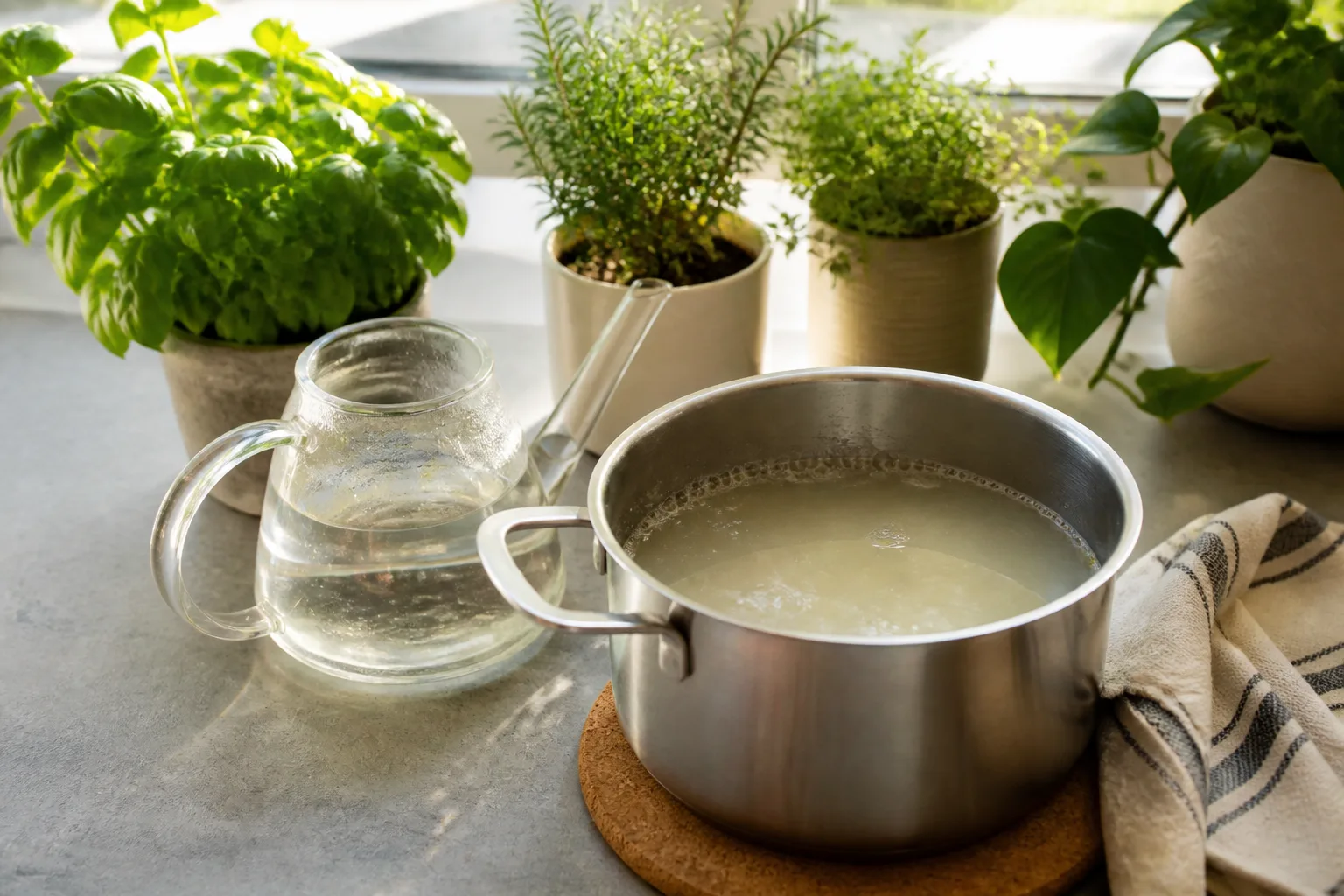
You can use plain, unsalted rice rinse water on soil when a plant is already due for watering, but treat it as a way to reuse a small amount of water—not as a proven fertilizer. Rice water has no standard nutrient analysis, and its starch content changes with the rice, water volume, and preparation method. It cannot be dosed like a labeled plant food.
The useful choices are simple: use a fresh rinse on soil, save a little plain rice-cooking water after it cools, or pour a small amount into a moist compost pile. Skip salty, oily, seasoned, spoiled, or fermented batches. In small houseplant pots, use rice water infrequently and stop if the soil surface develops slime, mold, or persistent wetness.
The quick answer: use it as occasional water, not fertilizer
Rice water can be a reasonable one-off reuse of clean water if the batch contains nothing but rice and water. The cloudy look comes from suspended starch and fine rice particles; it does not prove that the liquid contains a balanced supply of nutrients or that a plant will grow faster after receiving it.
Use it only when the plant needs water anyway. If the potting mix is still damp, save the liquid for a compost pile or discard it rather than watering on a schedule created by leftover rice. For a houseplant, start with a small, lightly cloudy batch, pour it onto the mix, and wait to see how the soil behaves before repeating it.
What rice water contains—and what it cannot promise
“Rice water” can mean several different liquids: the water used to rinse uncooked grains, the water used to boil rice, or a jar of rice water that has been left to ferment. They differ in concentration and cleanliness, so advice for one cannot automatically be applied to another. None has a guaranteed nutrient ratio unless it has been analyzed.
Rinse water is mostly water with a little suspended starch and rice dust. Cooking water may be more concentrated because starch leaves the grains as they boil, but the exact amount depends on how much water the rice absorbs and whether the cook added salt, oil, or seasoning. A thick, cloudy liquid is not necessarily more useful than a lightly cloudy one; it may simply leave more residue in a small pot.
That residue is not the same thing as a complete plant diet. Plants need mineral nutrients such as nitrogen, phosphorus, and potassium in amounts that vary by species and growth stage. BBC Gardeners’ World Magazine describes these as basic plant nutrients and recommends feeding plants with suitable products at the rate on the packaging; a homemade rice rinse has no comparable label or dependable analysis (plant-feeding guidance).
Starch can be used by microorganisms as organic material, but a microbe response is not proof of a measurable improvement in plant growth. The Royal Horticultural Society explains that finished compost contains decomposed organic matter and supports soil life; a jar of fresh rice water has not gone through that controlled decomposition process (RHS composting advice). Expect, at most, a modest reuse of water and a small organic input. Do not expect a rescue for yellow leaves, poor flowering, or a diagnosed deficiency.
Pick one of three practical uses
The first two options are direct soil applications. The third is the better destination for a batch you do not want to pour into a small container. In every case, the plant’s normal watering need comes first; rice water should replace part of an ordinary watering, not add an extra one.

1. Use fresh rice-rinse water on garden soil
This is the simplest method because it creates only a small amount and does not require a recipe. Put uncooked plain rice in a clean bowl, add enough potable water to cover it, swirl gently for about 20 to 30 seconds, then pour the cloudy rinse water through a strainer. The rice is ready to cook; the collected liquid is ready to use once it is cool and free of solids.
For a first trial, use a small amount around the soil of an established outdoor plant or a robust houseplant with a freely draining pot. If the rinse is very cloudy, dilute it with plain water or choose a compost pile instead. There is no research-backed universal dilution ratio for every rice type and every pot, so a ratio found in an online recipe should not be mistaken for a tested fertilizer dose.
Do not rinse rice over a pot and let the water sit in the saucer. Apply it to the soil, let excess drain, and empty the saucer as you would after ordinary watering. This keeps the roots from standing in a pool of starch-containing liquid.
2. Save plain, unsalted rice-cooking water
Water used to boil rice can be reused only if it contains no salt, broth, oil, butter, or seasoning. If you season rice in the usual way, let that batch go down the drain. Adding clean water later may dilute the salt, but it does not remove the salt or make the original water a dependable plant treatment.
Before using a plain batch, strain out grains and let the liquid cool completely to room temperature. Hot water can injure roots, and large pieces of cooked rice can sour on the soil surface. If the cooking water is thick or gluey, dilute it with fresh water or use a small amount to moisten compost rather than pouring it into a small indoor pot.
The same rule applies to rice cooked with other ingredients. Water from rice boiled with salt, bouillon, coconut milk, oil, garlic, or sauce is not a clean plant-water source. Use only a pot prepared for plain rice, and keep the leftover liquid separate from seasoned kitchen scraps.
3. Add surplus rice water to an active compost pile
If you have more plain rice water than your plants need, add a small amount to an active compost pile as moisture. Compost microbes need a balanced, aerated mixture rather than a concentrated liquid “starter.” The RHS notes that composting depends on suitable moisture and air, and that slimy or wet material breaks down more slowly when oxygen is limited (RHS composting guidance).
Pour the water over dry leaves, shredded cardboard, or another dry brown material and mix it in. Do not soak the pile until water runs out of the bottom. A compost pile should feel like a wrung-out sponge; if it is already wet or smells sour, leave the rice water out and add dry material while turning the pile to restore air.
Compost is a better buffer than a tiny pot because it contains a larger, mixed mass of decomposing material. It still does not need a weekly dose of rice water, and the liquid does not replace a balanced compost recipe. If the compost is already moist, you gain nothing by adding more.
Should you ferment rice water?
For routine plant care, skip home-fermented rice water. Leaving a jar of water and rice at room temperature creates an uncontrolled mixture: its acidity, organisms, smell, and concentration depend on the time, temperature, container cleanliness, and what entered the jar. A tangy smell, bubbles, or a pale film does not identify the microbes or prove that the liquid benefits roots.
Fermentation is not the same as making a measured fertilizer. It does not provide a reliable nitrogen, phosphorus, or potassium analysis, and no universal dilution rate can be calculated from how cloudy the jar looks. Using a stronger or older batch because it seems more “active” increases uncertainty without showing that the plant needs it.
This distinction matters indoors, where a small amount of organic residue stays close to roots and the pot surface. If you want to experiment, do not spray a fermented mixture on leaves, seedlings, edible foliage, or a hydroponic reservoir. For a lower-risk reuse, make a fresh rinse batch, use it sparingly on soil, or add a small amount to active compost instead.
Apply rice water without stressing roots
Use the liquid as you would ordinary water: check the soil first, pour slowly onto the potting mix, and stop when the root ball is evenly moist. For a container with drainage holes, allow water to run out and empty the saucer. For a garden bed, direct the pour toward the root zone instead of splashing leaves or flowers.
The Royal Horticultural Society advises checking container compost below the surface rather than relying on a weekly routine, and its watering guidance recommends applying water at the base of plants (RHS watering advice). That principle is especially useful with rice water: only use it when the soil check says the plant is ready for water. A plant sitting in wet mix does not need a second watering because a bowl of rice water is available.
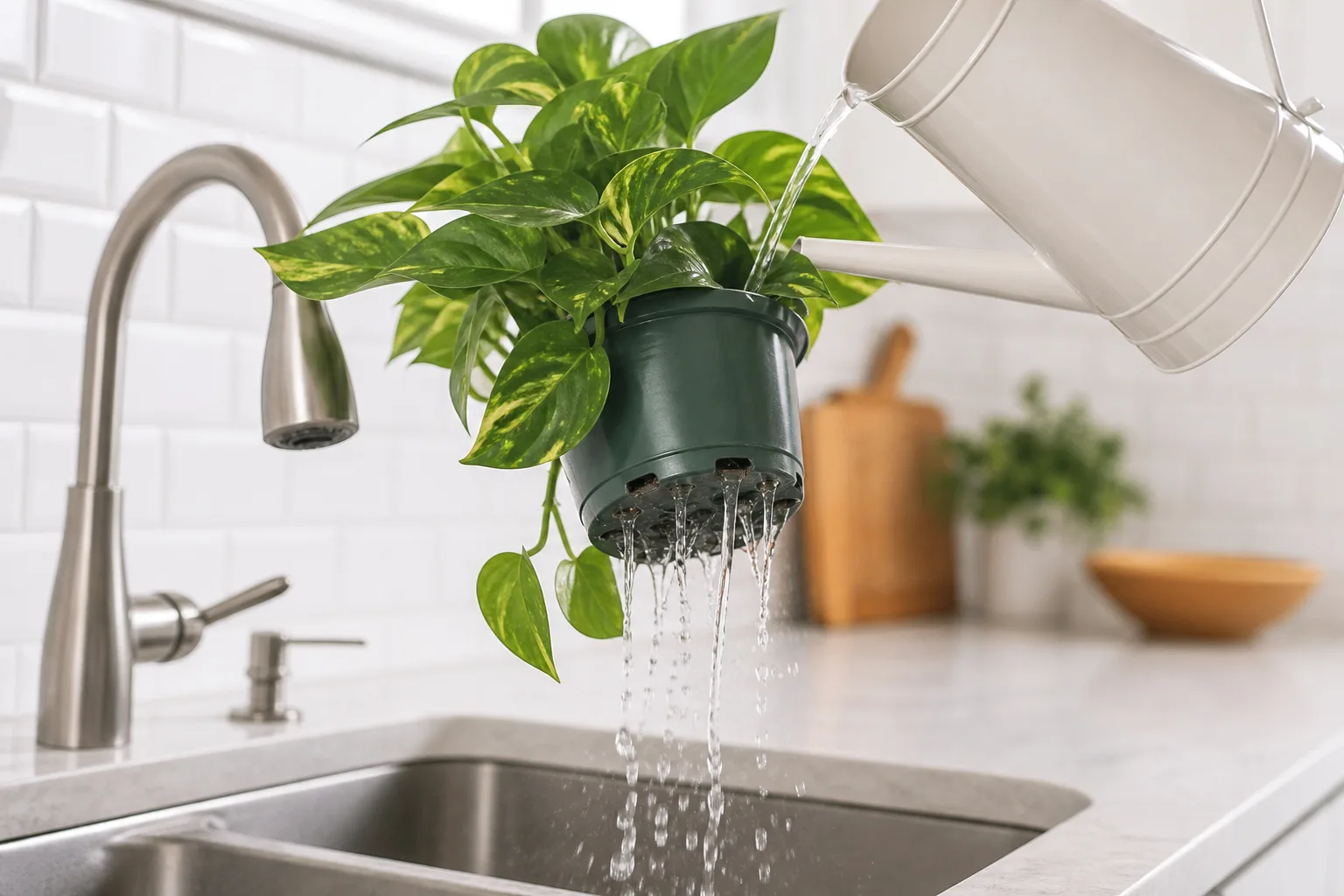
For a small pot, start with less than a full watering and observe how quickly the surface dries. If the mix stays wet longer than normal, do not repeat the application. In a garden bed with healthy soil and good drainage, a small amount is less concentrated across the root zone, but it still offers no reason to water more often than the crop needs.
Is rice water suitable for houseplants, vegetables, or succulents?
Rice water is not tailored to a particular plant species. A soil-grown pothos, tomato, or flower bed can receive a small amount of plain rice rinse if it already needs water, but that does not mean the species has a special preference for it. Growth habit, soil, drainage, temperature, and moisture needs matter more than the fact that the liquid came from rice.
Houseplants deserve a lighter hand because a container has limited soil volume and no surrounding garden bed to dilute repeated additions. Use a fresh, barely cloudy rinse occasionally, not at every watering. If the plant is in a dense mix, a self-watering pot, or a cachepot without drainage, plain water is easier to manage and less likely to leave residue.
Succulents are not harmed simply because water contains rice starch, but they should not be watered until their mix has dried to the level appropriate for that plant. Do not water a succulent early just to use leftover rinse water. For orchids grown in bark, seedlings in starter mix, newly repotted plants, or cuttings in water, plain water is the clearer choice because there is little benefit to adding dissolved organics around a small or specialized root zone.
Skip rice water in hydroponic reservoirs and propagation jars. Those systems depend on a predictable water or nutrient solution, and cloudy kitchen water adds variable organic material without a measured nutrient benefit. Use the system’s labeled nutrient product and cleaning routine instead.
When rice water is a bad idea
Never use salted rice water. Salt does not disappear when rice cooks, and repeated applications can add sodium and chloride to soil. The USDA Agricultural Research Service explains that salts in irrigation water can interfere with plant function, while New Orleans’ saltwater garden guidance describes how salt can injure roots and affect soil and plant growth (USDA ARS on salt and crops; New Orleans saltwater garden guidance). These sources discuss larger-scale salt exposure; a single kitchen mistake is not identical, but the direction of risk is why salted cooking water should stay out of plant soil.
Do not use rice water that contains oil, butter, sauce, broth, or other cooking ingredients. These additions change the liquid and make it harder to judge what is reaching the roots. A clean-water rinse is easy to replace; there is no reason to risk a plant or garden bed for a leftover batch whose contents are uncertain.
Avoid applying it to already wet soil, waterlogged pots, or plants with root-rot symptoms. In these cases the main problem is excess moisture and poor root aeration, not a lack of rice nutrients. Adding any more liquid delays drying, and adding starch creates residue without solving the cause.
Do not use rice water as a pest spray, leaf polish, or foliar fertilizer. Starchy residue on foliage is not a proven way to feed plants, and it can leave sticky deposits that collect dust. Keep the liquid on soil or compost, and use a purpose-made labeled product if the plant has a nutrient deficiency or pest problem.
Read the warning signs before repeating it
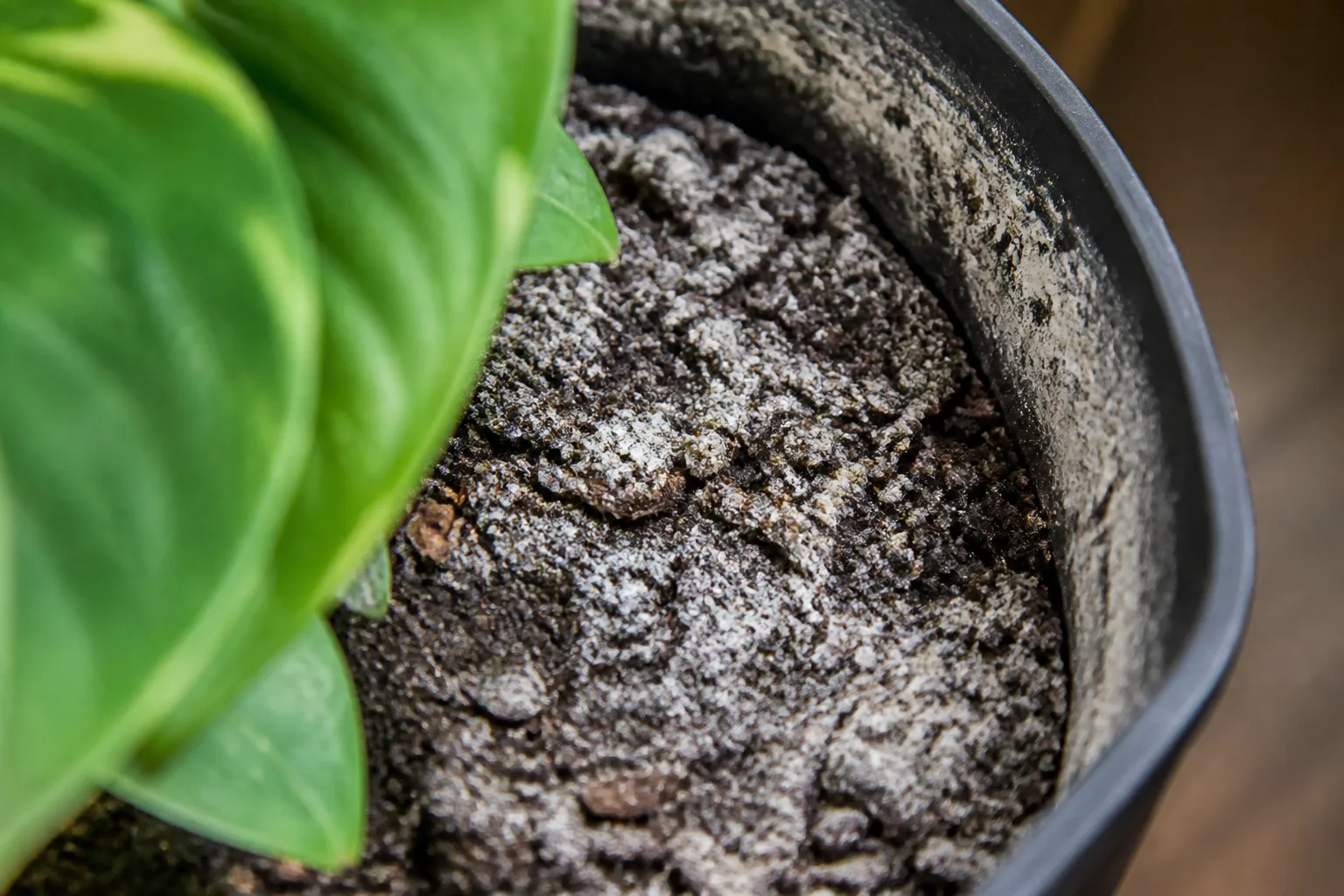
A single light application should not transform healthy potting mix into a problem. The clues that matter are changes after repeated use: white or gray growth on the surface, a slick film, an unpleasant sour smell, fungus gnats, or a pot that stays wet longer than usual. These signs are not a laboratory diagnosis, but they are good reasons to pause the rice water and reassess moisture and drainage.
Surface fungi can grow where damp organic material is available. The presence of a little pale growth does not automatically mean the roots are diseased, but a thick, recurring layer suggests the surface is staying moist or receiving more organic input than it can break down. Remove a dense crust, let the top layer dry according to the plant’s normal care needs, and resume only with plain water until the mix behaves normally.
Fungus gnats are more closely tied to persistently damp, organic-rich potting mix than to one specific kitchen ingredient. If adults appear, stop adding rice water, let the surface dry as the plant tolerates, and use a yellow sticky card to monitor adults while you correct watering. Do not add more organic liquids in an attempt to “feed” a plant that is already sitting wet.
Store rice water briefly and discard sour leftovers
Fresh is simplest. Make only the amount you can use at the next appropriate watering and use it after it cools. Do not leave rice water uncovered on a warm counter for days; a room-temperature jar can change unpredictably, and visible clarity cannot tell you what microorganisms are present.
If you need to save a batch for a short time, put it in a clean, covered container in the refrigerator and use it promptly, preferably within a day. Do not keep a portion that smells sour, feels slimy, has visible mold, or has been mixed with unknown kitchen ingredients. Do not pour spoiled liquid into a small pot just because it is waste; discard it or use the appropriate household waste route.
Keep the container separate from food storage, label it clearly, and do not let it touch edible produce or clean dishes. When in doubt, make a fresh rinse next time instead of trying to rescue an old batch with extra water, sugar, or fertilizer.
Correct a mistake without making it worse
If you accidentally poured a small amount of unsalted rice water into a pot, do not panic. Stop adding it, empty the saucer, and let the mix return to its normal moisture cycle. A single application is unlikely to require repotting or a chemical treatment.
If the mix is sticky or moldy after repeated use, scrape away loose residue from the surface without disturbing roots, then pause rice water until the soil dries as appropriate. If the pot drains freely and the mix is not already saturated, one careful flush with plain water can move soluble residues through the root zone; empty the saucer afterward. Do not repeatedly flush a plant that is already waterlogged.
If the water was salted, stop the source immediately. For a container with drainage, rinse the mix with clean water only if the potting mix drains well; allow complete drainage and keep the plant out of standing runoff. Salt injury can resemble other stresses, so if leaf edges continue to brown or growth declines, check drainage, fertilizer accumulation, and watering before assuming one symptom has one cause.
Use a real fertilizer when the plant needs nutrients
If a plant has pale new growth, weak growth, or poor flowering, do not assume rice water is the missing nutrient. Check the plant’s light, watering pattern, root condition, pot drainage, and growing season first; low light, soggy roots, pests, or a root-bound plant can look like a fertilizer problem. A soil test is useful for outdoor beds when nutrient availability is uncertain.
When feeding is appropriate, choose a fertilizer labeled for the plant type and follow its rate. The BBC Gardeners’ World guide explains the roles of nitrogen, phosphorus, and potassium and illustrates the difference between organic matter such as compost and quick-acting dissolved fertilizer. Rice water has no measured N-P-K ratio or dependable feed schedule, so it cannot substitute for either a soil amendment or a labeled fertilizer.
For broader guidance on saving unsalted pasta, potato, and vegetable cooking water, see our guide to reusing cooking water in the garden. Rice water follows the same first screen—plain, cool, and free of salt or grease—but a small houseplant pot needs more restraint than an established bed.
A quick decision table before you pour
| What you have | Best destination | Why |
|---|---|---|
| Fresh, plain rice-rinse water | Soil, only when the plant needs watering | A low-effort way to reuse a small amount of water |
| Plain, unsalted rice-cooking water | Soil after cooling; dilute if very cloudy | Cooking can make it more concentrated, but it is still not a measured fertilizer |
| More rice water than plants need | A moist, aerated compost pile | Compost is a larger, mixed system that can process organic material |
| Salted, oily, seasoned, sour, or moldy liquid | Do not use on plants | Contents or microbial growth are uncertain, and salt can injure plants |
Conclusion
The safest way to use rice water for plants is also the least complicated: collect a fresh, plain rinse, wait until it is cool, and use a small amount on soil only when the plant is ready for water. Plain unsalted cooking water can work the same way, while surplus liquid is better added in small amounts to an active compost pile.
Do not ferment rice water as a routine plant tonic, put salted water on roots, spray starch onto leaves, or treat the liquid as fertilizer. Rice water’s value is modest reuse, not a promised burst of growth. If a plant needs nutrients, use a measured fertilizer or finished compost; if it needs water, follow the soil rather than the kitchen calendar.