Fall Garden Cleanup: What to Remove and What to Leave
Learn why fall garden cleanup helps, what to remove for disease and weed control, what to leave for pollinators, and how to handle leaves, compost, and containers.
Yes, you should do some end-of-season cleanup—but that does not mean pulling every plant, raking every leaf, and leaving bare soil. The useful version of fall garden cleanup is selective: remove diseased or heavily infested plants, clear weeds before they drop mature seed, and tidy spent annuals or vegetable crops when their growing cycle is over. Keep healthy perennial stems, seedheads, and some leaf litter when they provide winter structure or shelter.
Think of the work as sorting plant material into four destinations: remove from the garden, compost if the pile can handle it, move to a more suitable spot, or leave in place. That simple decision prevents a common mistake: treating all dead-looking material as a problem when some is useful habitat, while ignoring the few disease or seed sources that deserve attention first.
What “Clean Out” Should—and Should Not—Mean
A garden is not healthier just because it looks empty in November. “Clean out” should mean reducing specific risks and preparing areas that need protection, not erasing every trace of the growing season. Oklahoma State University Extension recommends removing annuals and tropical plants, but also advises leaving many perennials for beneficial insects unless they are diseased, dead, or damaged by insects. (Oklahoma State Extension: fall garden cleanup)
There are practical reasons for both tidiness and restraint. Diseased crop debris can hold plant pathogens; weeds can set seed; leftover produce may attract pests or decay. Meanwhile, healthy seedheads feed birds, hollow stems and leaf litter can shelter insects, and standing grasses add movement and winter interest.
So the right question is not “Should everything go?” Ask instead, “What does this piece of debris do here?” If it is a confirmed disease source, an unwanted seed producer, or a frost-killed annual with no winter value, remove it. If it is a healthy native perennial or a thin layer of leaves under a shrub, leaving it may be the more helpful choice.
Use this quick sort before you start cutting. It keeps disposal choices tied to the material’s condition and where it landed, rather than relying on a single “clean” or “leave” rule.
| Garden material | First move | Reason to choose it |
|---|---|---|
| Diseased crop residue | Contain and follow local disposal guidance | It may carry disease into next season; compost only in a suitable managed system |
| Healthy spent annuals | Compost if the pile can process them | They have finished their lifecycle and can return organic matter |
| Weeds with mature seeds | Remove seedheads and keep them out of a cool compost heap | Prevent seed from being redistributed with finished compost |
| Healthy perennial stems | Leave selected plants standing | Stems, seeds, and structure can shelter wildlife and improve winter interest |
| Lawn leaves | Mulch thin, chopped layers; move dense mats | Turf still needs light and airflow |
| Bed leaves | Leave a light layer or move it under shrubs | Leaf litter can protect soil without smothering crowns |
| Branches on woody plants | Identify the plant before pruning | Timing varies with species, bloom habit, and purpose |
Start With the Risks That Should Not Wait
Deal first with problems that can spread or become harder to control after winter. You do not have to finish every chore before the first frost, but disease and seed-bearing weeds are not good candidates for indefinite postponement.
Remove diseased or pest-ridden plants
If a vegetable or ornamental plant had a serious disease or insect problem, remove affected stems, leaves, and fallen fruit rather than leaving them in the bed. Plant pathogens can persist in plant debris, and weeds can host pathogens or help them remain present around the garden. Oklahoma State’s disease-management guidance identifies sanitation—removing infected plant parts and seasonal debris—as one component of nonchemical disease control. (Oklahoma State Extension: disease sanitation)
Do not diagnose every brown spot as an infectious disease. Drought stress, frost, sunscald, and natural aging also discolor leaves. If a plant had a well-established fungal or bacterial disease, remove the infected material and avoid scattering it while working; if you are unsure whether a problem is infectious, identify it before deciding to compost or keep the residue.
For diseased material, use the disposal method recommended by your local extension office or municipal waste program. A backyard pile that stays cool and slowly decomposes is not the same as a well-managed compost system.
Oklahoma State notes that composting dead plants is reasonable when the gardener has a good system, while an inadequate heap can preserve disease inoculum. Keep suspect debris out of the pile if you cannot control its conditions. (Oklahoma State Extension: disease sanitation)
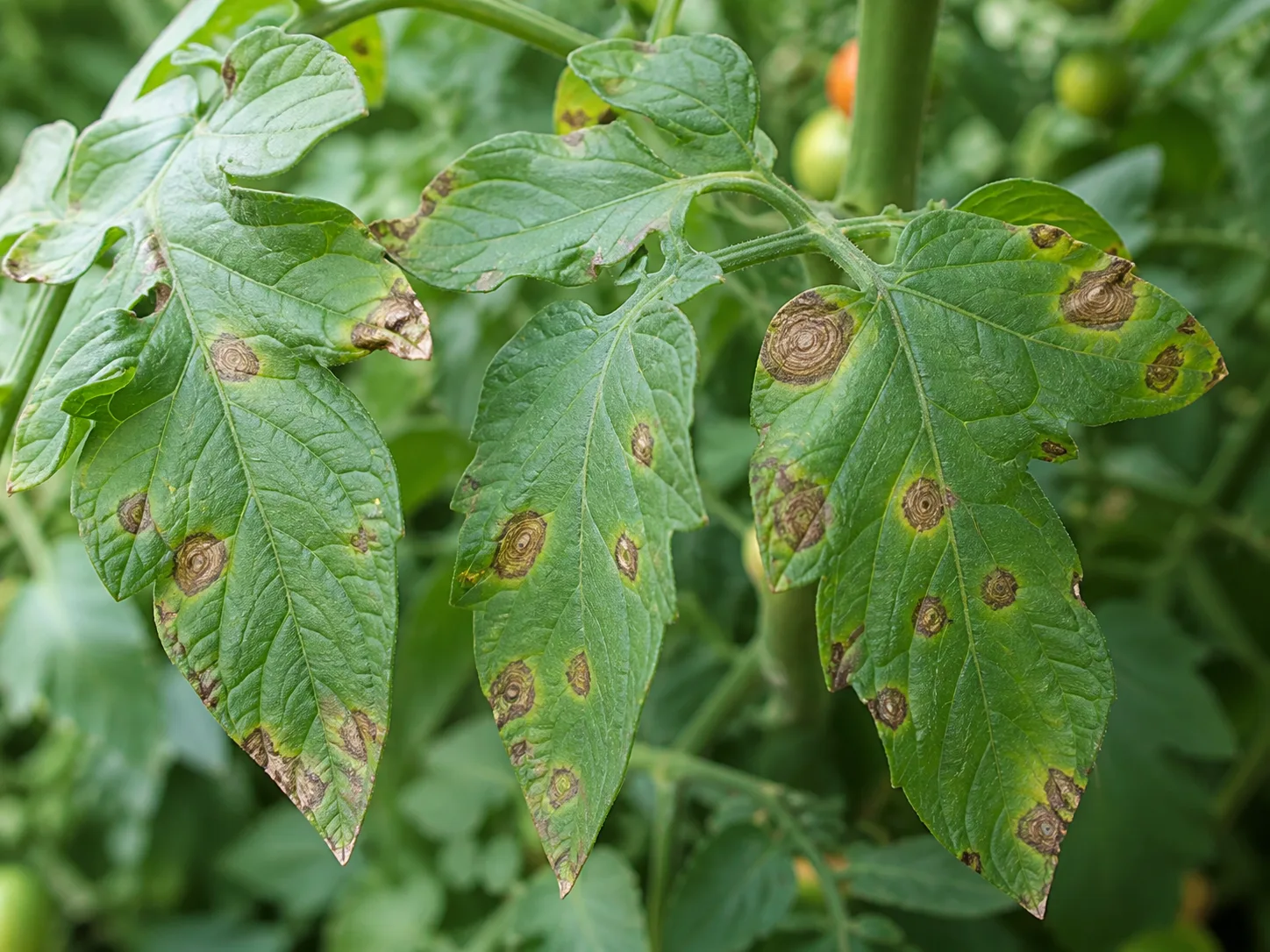
When handling infected plants, avoid shaking dried leaves over healthy beds. Bag or contain the material as you remove it, and clean soil from tools before disinfecting them with an appropriate method. Do not burn garden debris unless local rules allow it and conditions are safe; routine fire is not a default disease-control step for a home garden.
Pull weeds before seeds spread
If a weed is about to shed seeds—or has already formed mature seedheads—remove it before wind, animals, or your cleanup work distribute the seed. This is especially worthwhile for aggressive or invasive plants and for weeds whose seed is difficult to separate from compost. Pulling at this stage does not guarantee eradication, but it reduces the number of seeds you add to next year’s problem.
Bag mature seedheads or invasive weeds when local guidance recommends disposal instead of composting. A weed that is still small and has not set seed may be compostable if the pile gets hot enough to kill viable seeds, but home piles vary widely. If you are uncertain about the plant or the compost process, remove seedheads separately and avoid using questionable material where you grow seedlings.
Not every self-seeding flower is a nuisance. If you want cosmos, poppies, or another annual to return, leave selected healthy seedheads where you want seedlings next year.
Keep the seedheads you have chosen and remove the rest before they scatter. That small bit of planning prevents “letting nature reseed” from turning into an unplanned bed full of volunteers.
Clear Spent Annuals and Vegetable Beds
Frost-killed annuals and finished warm-season vegetable crops usually do not need to occupy beds all winter. Harvest usable fruit, collect stakes and cages, then pull plants by the root crown or cut them at soil level if the roots are difficult to remove. Remove loose fallen fruit that might rot or attract pests, and keep labels or planting notes for next year’s crop rotation.
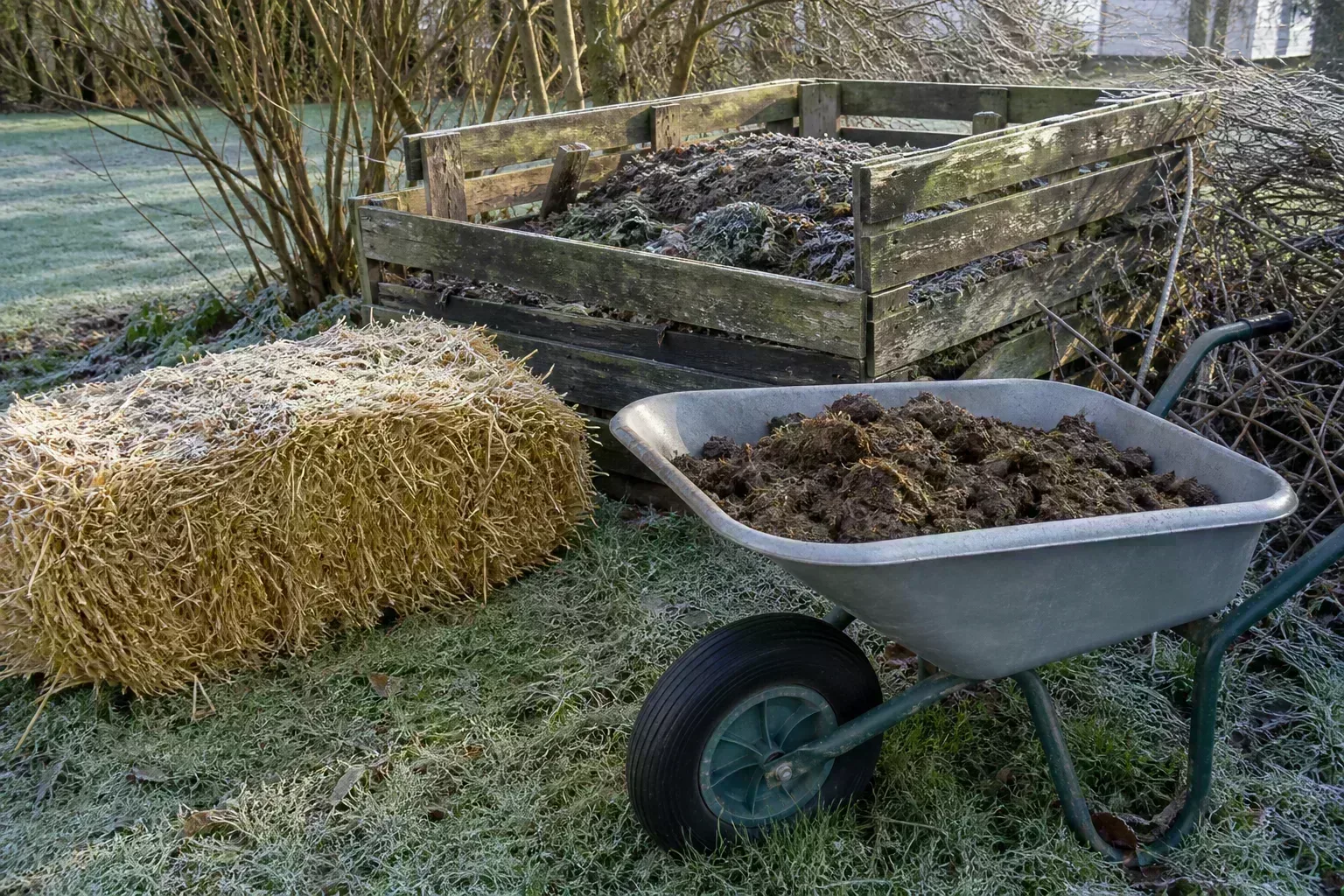
Healthy annual and vegetable material can go into a compost pile that is actively managed and appropriate for the material. If a crop had disease or a substantial pest infestation, keep that residue out of a cool home compost heap.
The distinction is not “green material always composts” versus “brown material never composts”; the plant’s health and the compost system both matter. Oklahoma State Extension similarly advises that healthy tomato and pepper residues may be composted, while material from plants with pest or disease problems should be discarded. (Oklahoma State Extension: fall garden cleanup)
Once a vegetable bed is clear, do not automatically till it. If soil structure is good and weeds are manageable, a surface layer of finished compost or leaf mulch may be enough.
In climates with a long enough fall season, a suitable cover crop can protect bare soil and add organic matter, but its planting date and species depend on local frost timing and the crop plan. If you are not sowing a cover crop, avoid leaving the bed bare and eroding through winter; use a suitable mulch or compost layer without burying perennial crowns.
Clear only the part of the bed that is truly finished. Cool-season crops such as kale, carrots, or fall-sown greens may keep producing after the first light frost, depending on variety and climate. Leaving a healthy crop in place until harvest is not poor cleanup; it is simply the right way to use a still-productive bed.
Leave Healthy Perennials for Habitat and Winter Interest
A perennial that has gone brown is not automatically dead, nor is its top growth automatically waste. Many herbaceous perennials can remain upright through winter, where stems, seedheads, and attached leaves provide shelter or food for wildlife.
Garden Gate’s round-up makes the difference concrete: University of Missouri horticulturist David Trinklein prioritizes thorough disease and pest sanitation, while Xerces Society pollinator specialist Sarah Foltz Jordan emphasizes retaining stems and leaves for habitat. Those approaches address different risks, so a gardener can remove infected material while leaving healthy habitat intact. (Garden Gate: fall cleanup perspectives)

Leave healthy seedheads on plants you want to reseed or that provide structure and food. Hollow or pithy stems may also offer overwintering sites for insects, so avoiding a ground-level cut on every perennial can preserve more habitat. Blue Thumb recommends retaining stems, seedheads, and leaf litter in pollinator plantings while still keeping leaves away from drains and surfaces where they cause problems. (Blue Thumb: fall yard care for pollinators)
This does not mean every plant must stand until spring. Remove foliage that carried a serious disease, trim broken stems that pose a hazard, and cut back plants that collapse onto paths or smother nearby crowns.
Some species are routinely cut back for practical or health reasons, and a small formal garden may need a tidier edge than a naturalized bed. Preserve a few less-visible areas for stems and leaves if you want wildlife shelter but prefer a neat entry or patio.
When a fall cutback makes sense
Cut back in fall when there is a concrete reason: diseased foliage that could carry infection, badly damaged stems, a plant that becomes a slippery or sharp obstruction, or a species-specific practice that calls for autumn trimming. Use clean, sharp shears, and do not cut into the crown or basal buds. If disease is present, avoid working when leaves are wet, since moisture and handling can spread some pathogens.
For healthy perennials, waiting until late winter or spring often has advantages. You retain winter form, shelter, and seed for wildlife, and standing growth can help mark where slow-emerging plants are located.
If you cut stems in spring for native bees, some specialists recommend leaving them at varied heights rather than cutting every stem flush to the ground; local extension or native-plant guidance can help you choose timing for your region. Garden Gate’s interviewed pollinator specialist describes retaining hollow stems and making spring cuts once plants are beginning to grow around them. (Garden Gate)
Handle Fallen Leaves by Surface
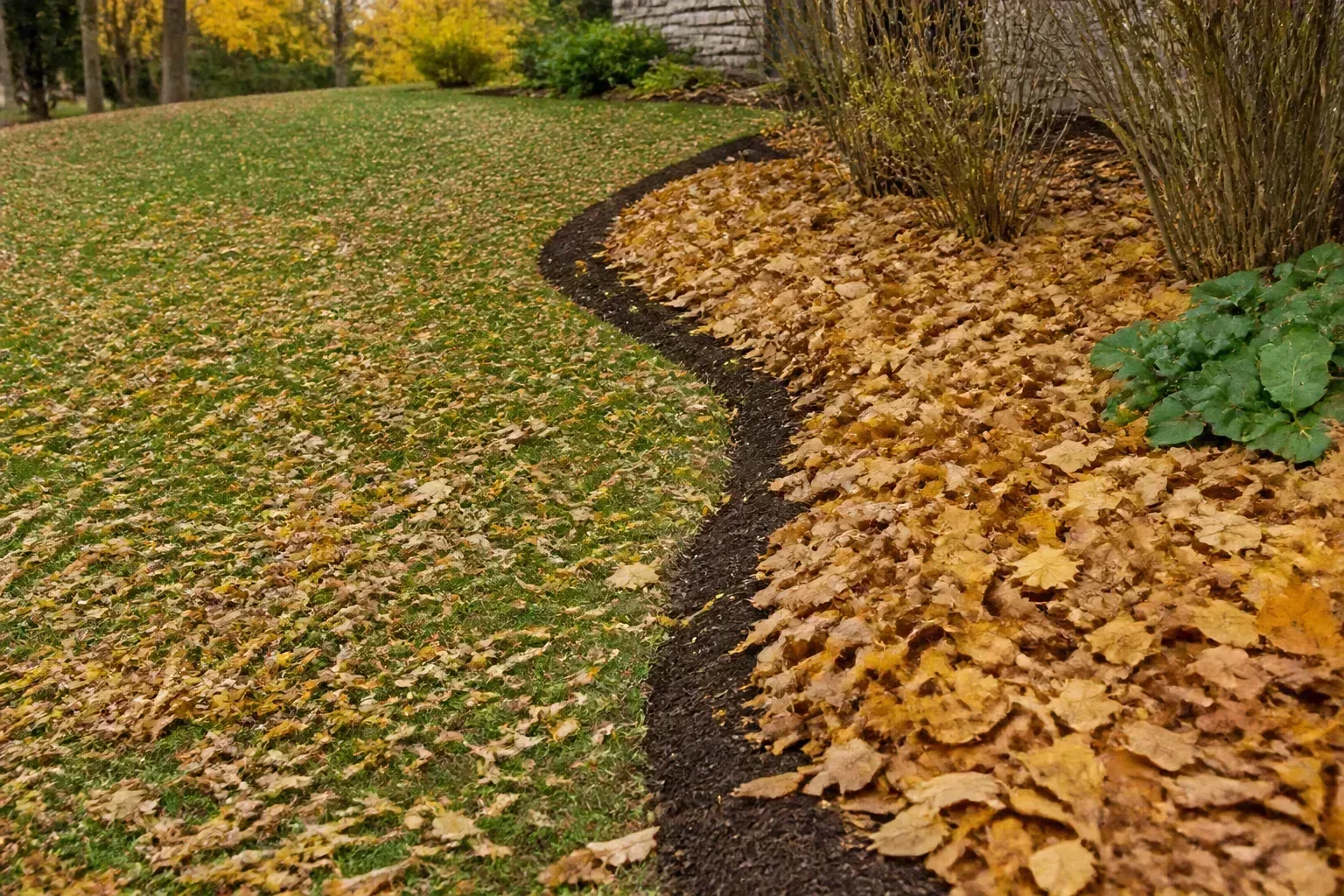
Leaves are not a single cleanup problem. Their effect depends on where they fall, how thick the layer is, whether it mats when wet, and what grows underneath. A leaf layer can protect soil and provide habitat in a bed, but a dense wet blanket can block light and air from turf or low groundcovers.
Lawns, paths, and storm drains
A thin scattering of small leaves may be mulched into the lawn if a mower chops them finely enough that grass blades remain visible. If leaves pile up into a wet mat, rake or blow them off turf before it stays covered; dense leaves can smother grass and leave bare patches. Oklahoma State Extension specifically notes that cool-season lawns such as fescue still grow in fall and benefit when leaves are removed so the grass receives light. (Oklahoma State Extension: fall garden cleanup)
Move collected leaves to a compost area, use them as mulch under shrubs, or spread them lightly in beds. Keep leaves out of gutters, sidewalks, and storm drains. Leaves washed into drains can carry nutrients into waterways; Blue Thumb recommends clearing them from these hard surfaces and relocating them to garden beds or compost when appropriate. (Blue Thumb)
Beds, mulch, and compost
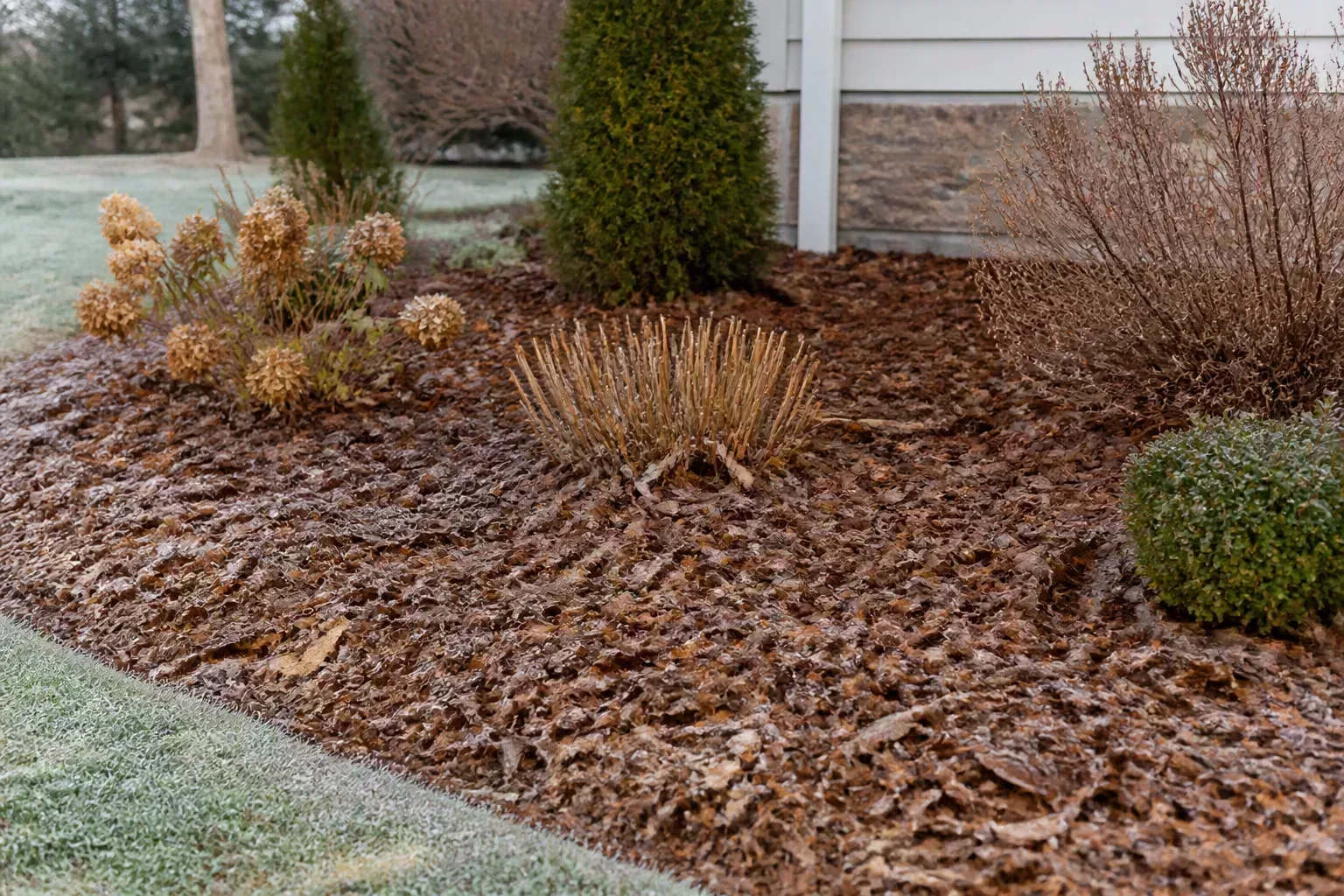
In perennial and shrub beds, leave some dry leaves in place or rake them into a thin, even cover where they will not bury crowns or smother evergreen groundcovers. Leaf litter gradually breaks down and can shelter small wildlife. If a thick pile collects against a plant’s base or on top of a low evergreen, redistribute it rather than removing every leaf from the garden.
You can also shred dry leaves and use them as a carbon-rich compost ingredient or surface mulch. Shredding can help leaves settle into a thinner layer, but there is no need to pulverize every leaf or vacuum the whole property. Keep diseased leaves from plants that had a serious leaf-spot or blight issue out of areas where they could spread the problem, and check local guidance for the specific disease.
Compost only what your system can break down safely. A managed pile with enough volume, moisture, air, and active decomposition behaves differently from a small, cold heap that sits unchanged through winter. When you cannot tell whether seeds or pathogens will be destroyed, put suspect material in the appropriate municipal yard-waste stream instead of assuming the compost will neutralize it.
Do Not Prune Trees and Shrubs on Cleanup Autopilot
Autumn is a convenient time to notice broken branches, crossing growth, and shrubs that have outgrown a path, but “garden cleanup” is not a reason to shear every tree and shrub. Pruning timing depends on the species and the purpose. A spring-flowering shrub may carry next year’s flower buds on old wood, while a cut made at the wrong time can remove them; some trees also respond poorly to certain seasons or cuts.
Remove a branch that is clearly broken or hazardous only if it is small enough to handle safely. Leave large limbs near power lines, roofs, or structures to a qualified arborist. For routine shaping, identify the plant first and use a species-specific pruning calendar; Oklahoma State Extension notes that the least-damaging time varies by plant and often falls in late winter or early spring before growth starts. (Oklahoma State Extension: fall garden cleanup)
Avoid heavy pruning that stimulates tender new growth just before cold weather. If you have a diseased branch, identify the disease and follow guidance for cut location and tool sanitation rather than making a random cosmetic cut. The best fall action may be to mark a branch for the appropriate pruning window instead of cutting it now.
Protect Containers, Hoses, and Tools
Move tender container plants indoors or to a protected space before cold threatens them, following each plant’s needs. For empty outdoor planters, remove saturated soil or store the pot under cover if freeze-thaw conditions could crack it. Oklahoma State Extension also recommends removing soil from planters in wet winter climates and insulating hardy plants that remain outdoors. (Oklahoma State Extension: fall garden cleanup)
Drain garden hoses and disconnect them from the spigot before freezing weather. Store them out of sun and ice, and close or winterize irrigation components according to the manufacturer’s instructions. Newly planted trees and evergreen shrubs may still need water during a dry fall before the ground freezes; do not assume the end of summer ends all watering needs, but avoid saturating soil that is already wet.
Clean soil and plant residue from tools, dry metal surfaces, and sharpen blades before storage. If a tool touched diseased plant tissue, clean and disinfect it before using it elsewhere.
Proper sanitation prevents you from carrying contaminated sap or soil between plants, and a sharp blade makes cleaner cuts when pruning season arrives. Oklahoma State’s plant-disease guidance emphasizes tool sanitation as part of reducing disease spread. (Oklahoma State Extension: disease sanitation)
A Practical Order for End-of-Season Cleanup
A useful cleanup order keeps high-risk tasks from getting buried under cosmetic chores. Start with anything that can spread, then remove completed annual crops and weeds, then decide what can remain as habitat. Finish with leaves, winter protection, and tool storage.
Do the highest-priority work first
Walk the garden once before carrying out bags or pruners. Note plants with known disease or heavy pest damage, mature weed seedheads, spent annual vegetables, fallen fruit, and leaves matted over lawn.
Mark healthy perennials and seedheads you want to retain. This quick survey helps you make fewer rushed decisions while you are already cutting and hauling.
Work on the diseased or infested area first, and clean tools before moving to healthy beds. Pull seed-bearing weeds while they are dry if possible, contain mature seeds, and remove finished annual crops after harvesting. Put healthy compostable material in a managed pile; keep disease or invasive seed material separate for disposal that follows local rules.
Finish with winter protection
Once the risk-related jobs are done, move leaves to suitable beds, mulch turf leaves if the layer is light, and clear drains and walking surfaces. Leave chosen perennials and ornamental grasses standing, but cut back plants that are diseased, damaged, or blocking access. Add a modest protective mulch layer around young or vulnerable plants when appropriate, keeping mulch away from crowns and trunks.
Then drain hoses, protect containers, clean tools, and make a note of any pruning that should wait until the plant’s correct season. You can spread this work over several weekends; there is no horticultural prize for finishing it all in one day. The best timing varies with the first hard freeze, the species you grow, and how long your garden remains active.
Common Fall Cleanup Mistakes to Avoid
The biggest mistake is assuming that every dead or brown stem is either harmless or dangerous. Look for what happened during the growing season: a disease pattern, a serious pest outbreak, mature unwanted seeds, or simply a healthy plant finishing its normal cycle. If you do not know which applies, identify the plant and problem before hauling it to the compost pile.
Another mistake is removing all stems and leaves to make the garden look finished. This can eliminate habitat and winter interest without meaningfully reducing pest or disease risk.
The opposite error is leaving every scrap in place, including infected foliage, rotten fruit, or mature seeds from an aggressive weed. Selective cleanup avoids both extremes.
Do not add diseased material to a cold compost heap, but do not assume every healthy leaf or vegetable stem belongs in the trash. Do not leave a dense blanket of leaves on a lawn just because leaves benefit soil elsewhere. And do not prune shrubs simply because your shears are already out; verify timing first.
Conclusion
End-of-season cleanup is worth doing because removing infected plants, spent annuals, fallen produce, and seed-bearing weeds can reduce avoidable problems and make spring work easier. But a healthy garden is not a bare garden: selected perennial stems, seedheads, and thin leaf layers can remain for winter structure, soil cover, and wildlife habitat.
Sort the material by health, seed maturity, location, and your goal for the bed. Once those decisions are made, clear only what needs clearing, protect containers and tools, and leave the rest of the garden to finish its own seasonal cycle.