How to Grow and Care for Red Hot Poker Plants
Learn how to grow red hot poker plants with the right sun, drainage, watering, division, bloom care, and winter protection for your cultivar and climate.
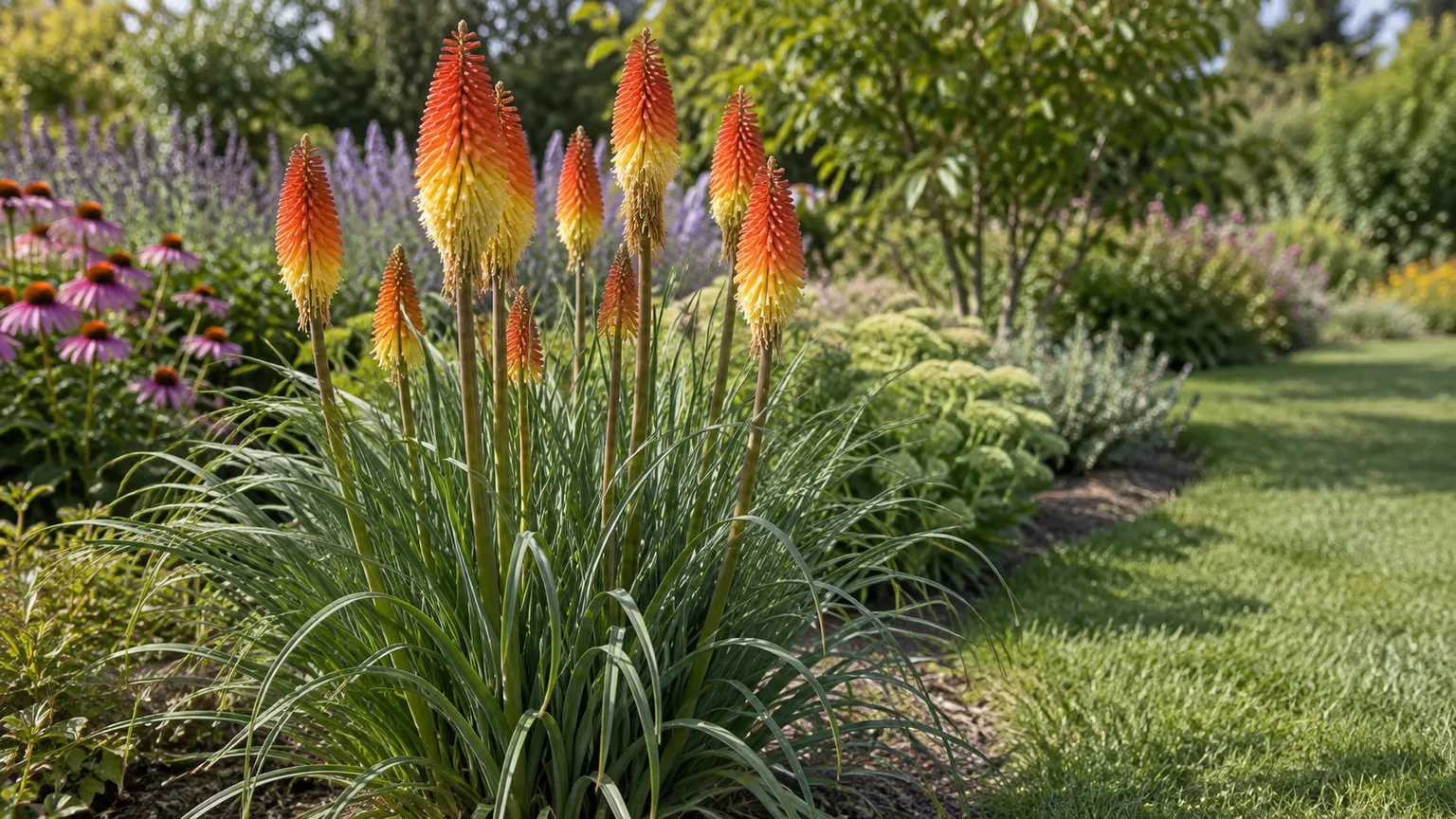
Red hot poker is the common name for Kniphofia, a group of African perennials with grassy leaves and upright clusters of tubular flowers. The plants are often sold as though every label describes the same dependable orange torch, but the genus includes dozens of species and many hybrids. A compact yellow selection for a patio pot has different needs and limits from a tall, vigorous plant intended for the back of a sunny border.
Most gardeners can grow Kniphofia successfully by getting three things right: choose a cultivar suited to the local winter, give it direct sun, and keep its crown out of waterlogged soil. Water new plants while they establish, remove spent flower stalks, and leave healthy foliage in place until spring where winter protection matters. The details below help you adapt those basics to your site instead of following one rigid calendar.
Start With the Right Kniphofia
Kniphofia is a genus of roughly 70 species, not a single species with one standard height or hardiness range. The common name also overlaps with related plants, so check the botanical name on a nursery label. Most garden red hot pokers are species or hybrids with clumping, rhizomatous roots; many keep some foliage through mild winters, while others lose more leaves in cold weather. NC State Extension describes the genus as ranging from dwarf forms to plants over 6 feet tall, and notes that flower colors and foliage habits vary.
The flower spike is a dense cluster of individual tubular blooms, often opening progressively from the lower part upward. Some begin red or orange and age yellow, while cultivars can also be coral, cream, chartreuse, or nearly all yellow. Bloom timing ranges from late spring or early summer to fall, depending on species, cultivar, and climate. The species K. uvaria is commonly listed for Zones 5–9 by the Missouri Botanical Garden, while NC State’s broader genus profile lists hardiness through Zone 8. That difference is a useful reminder: a broad zone claim is not a promise for every plant sold under the common name. Use the specific cultivar tag and local garden experience when cold tolerance is close to the margin.
| Cultivar | What to expect | Useful fit |
|---|---|---|
| ‘Backdraft’ | Compact habit; orange-red buds age toward peach-yellow | Smaller borders or a container |
| ‘Mango Popsicle’ | Dwarf selection with orange flowers | Front of a bed or patio pot |
| ‘Pineapple Popsicle’ | Yellow-flowered member of the Popsicle series | A lower, warm-color accent |
| ‘Orange Blaze’ | Medium-sized, bright orange hybrid | Mixed borders and grouped plantings |
| ‘Lady Luck’ | Tall selection with pale yellow to creamy flowers | Back of a border where height is welcome |
These are examples, not a complete catalog; plants sold under one cultivar name may also vary with age and growing conditions. Confirm mature height, width, and zone rating before buying, then leave enough room for the actual plant rather than the label’s young pot size. The NC State Extension plant profile and Garden Design’s Kniphofia guide describe cultivar and habit differences; Proven Winners’ growing guide gives current examples from its own compact and mid-sized selections.
Choose a Sunny, Sheltered Site
Give red hot poker at least six hours of direct sun for dependable flowering. A plant that survives in bright shade may produce leaves but few or no flower stalks. In very hot climates, light afternoon shade can reduce heat stress without turning the spot into a low-light bed; start by preserving morning and midday sun rather than shading the plant all day.
Tall flower stalks can lean or break in exposed wind, so place a large cultivar where a fence, shrub, or other planting softens gusts without blocking its light. Allow enough room for the foliage to fan outward and for air to move around the crown. Kniphofia can tolerate some salt and is used in coastal gardens, but that does not make every exposed, wind-scoured site suitable. A sunny slope or raised border often provides a practical mix of light, shelter, and runoff.
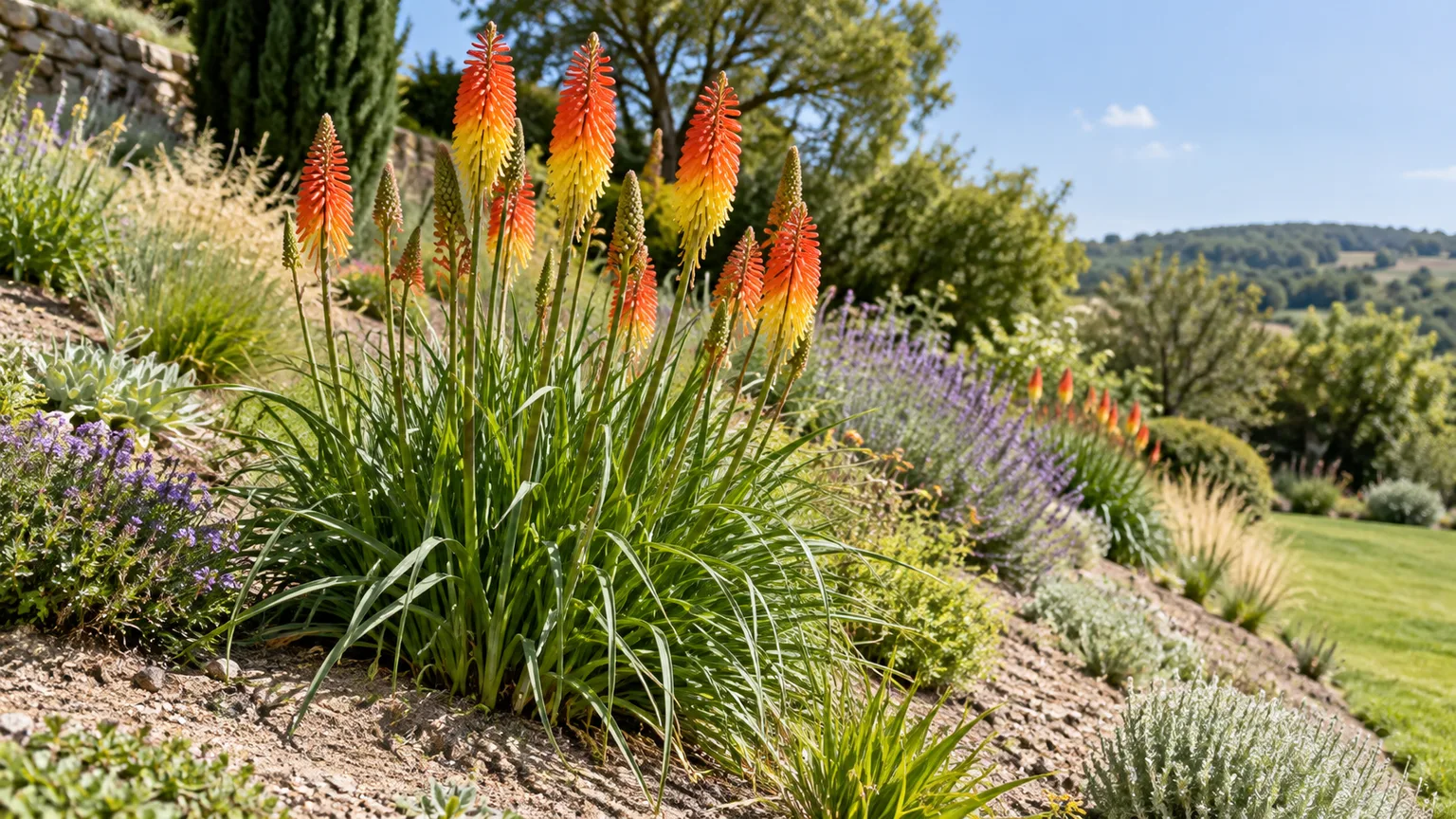
Before planting, observe the bed after a heavy rain. If water stands for hours where the crown would sit, pick another location or improve the grade first. Sun encourages blooms; dry feet protect the plant through seasons when cold, wet soil is more dangerous than a brief summer dry spell.
Build Drainage Before Planting
Kniphofia tolerates different soil textures, but it does not tolerate a crown that stays saturated, especially during winter. The Missouri Botanical Garden describes K. uvaria as intolerant of wet, heavy soils and recommends well-drained soil; NC State likewise warns that poor drainage can lead to root rot, particularly in winter. This is the main reason a plant that looked healthy in summer can collapse after a wet freeze-thaw season.
If garden soil drains reasonably well, loosen the planting area and mix a modest amount of compost into a broad area rather than creating a rich, soft pocket just around the roots. In dense clay, a small hole filled with a lighter potting mix can act like a sump and collect water. Instead, plant on a slope, use a raised bed, or choose a different plant if you cannot keep the crown above standing winter water. Do not pile coarse gravel beneath the root ball and assume that alone fixes a poorly drained bed.
The target is evenly moist soil during active growth, followed by soil that drains freely after rain. Red hot poker is not a cactus: drought tolerance after establishment does not mean it should bake dry in every climate. But a little summer dryness is easier to manage than permanently wet soil around the crown.
Plant the Crown at the Correct Depth
Plant nursery starts in spring after severe frost risk has passed, or early enough in the local growing season for roots to settle before winter. In mild regions, fall planting can work if the cultivar is hardy and there is time for establishment, but spring gives new plants a full warm season before their first cold, wet months. Space plants according to the mature spread on the label; many need roughly 18 to 36 inches, but dwarf and giant selections differ.
Water the plant in its pot, slide it out, and tease apart roots that circle tightly around the root ball. Set the crown level with the surrounding soil, fill around it, and firm gently to remove large air pockets. Do not bury the base of the leaves under several inches of soil or mulch. The crown is where new leaves emerge, and burying it in wet material can invite rot. Finish with a thorough watering so soil contacts the roots, then let excess water drain away.
If planting a bare rhizome, follow its supplier’s depth instructions and orient visible shoots upward. NC State gives a deeper rhizome-covering instruction for transplanting, while other horticultural guides caution against setting rhizomes too deep. For a potted plant, keeping the crown at the nursery soil level is the safest practical reference; if a bare rhizome label is specific, prioritize that plant’s instructions and the local climate.
Water for Establishment, Then Read the Soil
During the first growing season, water deeply when the upper few inches of soil begin to dry. Check near the plant rather than watering automatically on a weekly timer: rainfall, soil texture, wind, and heat can change how quickly the root zone loses moisture. Water at soil level so the whole root ball is moistened, then allow the bed to drain.
Once established, a red hot poker can handle short dry spells, but it usually flowers and holds foliage better when it receives occasional deep water during prolonged drought. If leaves are limp in hot weather, check the soil before reacting. Dry soil and recent heat call for a slow soak; wet soil and yellowing or collapse call for better drainage and less irrigation. Adding more water to a plant already sitting in saturated earth can make root damage worse.
Container plants dry faster than in-ground clumps, so check them more often in hot, windy weather. Use a pot with open drainage holes and empty any saucer after watering. The aim is not to keep a container constantly wet, but to prevent repeated severe drying while avoiding water pooled around the crown.
Feed Lightly and Keep Mulch Off the Crown
A moderately fertile bed usually needs little extra fertilizer. If the plant is producing healthy leaves and normal flower stalks, leave it alone; additional feeding is not automatically a route to more blooms. Too much nitrogen can favor a lush, floppy leaf clump at the expense of sturdy flowering. If the soil is genuinely poor, work in a thin layer of compost in spring or use a balanced slow-release fertilizer at the label rate.
Mulch helps buffer soil temperature and suppress weeds, but it should not bury the center of the plant. Keep organic mulch a few inches back from the crown and avoid piling wet leaves into the leaf bases. In a cold region, use a light, loose winter cover only when the plant needs it, then remove or pull it back as growth resumes. Moisture management matters more than making a deep, damp blanket around the plant.
Understand the Bloom Cycle
Flowering usually begins in late spring or summer, but a cultivar may start earlier or continue into fall. Each stalk carries many small, tubular flowers, and they do not all open at once. A two-tone spike can shift from bright buds at the top to mature flowers lower down, so its color changes as it ages. The flower stalks rise above strap-shaped foliage and are visited by hummingbirds, butterflies, and bees; the NC State profile specifically notes nectar and bee activity.
Do not judge a newly planted clump by a mature plant’s display. A small transplant may spend its first season establishing roots, and a cultivar’s normal bloom window may not match a neighbor’s plant. Keep a note of when the first stalk appears and when the last one fades; next year’s care decisions will be more useful if you compare the plant with its own seasonal pattern instead of a generic calendar.
If a mature, healthy plant has never bloomed well, check its site before adding fertilizer. Insufficient sun, a crowded clump, a crown buried too deep, or a cultivar that is still settling can all explain sparse flowering. Fix one likely cause at a time and give the plant a growing season to respond.
Deadhead for a Neater, Longer Display
When most flowers on a stalk have faded, follow that stalk down to its base and cut it off with clean pruners. Removing spent spikes keeps the clump tidy and prevents seed from developing where volunteers are not wanted. Some cultivars produce additional stalks over a long season, so prompt deadheading can keep the display going; it cannot force a reblooming trait that a particular plant does not have.
If you want to save seed, leave one or two stalks instead of cutting every bloom. Allow the seed heads to dry on the plant, then collect them before they scatter. A plant grown from seed may differ from its parent, especially when the parent is a named hybrid, so seed saving is better for experimentation than for preserving a specific flower color.
Prune Foliage in Spring, Not Automatically in Fall
Red hot poker foliage may be evergreen, semi-evergreen, or deciduous depending on the plant and climate. Where leaves remain healthy, leave them over winter; they can shield the crown from cold and help divert water. In early spring, cut damaged foliage back to about 3 inches above the ground, taking care not to slice through new shoots emerging in the center. If a leaf is partly brown but still green at its base, remove only the damaged portion when practical.
Use sharp, clean pruners for flower stalks and dead leaves, and avoid cutting into the crown. A full fall haircut is usually unnecessary and can remove useful protection in cold areas. If a plant is evergreen in a mild climate, tidy individual damaged leaves rather than shearing the whole clump just for uniformity.
Protect the Crown Through Winter
Hardiness depends on species and cultivar, and zone maps cannot account for every wet pocket or wind tunnel in a yard. The Missouri Botanical Garden rates K. uvaria for Zones 5–9 but specifically recommends crown protection in Zones 5 and 6. NC State’s genus guidance lists a slightly narrower range and also recommends winter mulching in cold areas. Those recommendations are not contradictory so much as a reminder to read the cultivar label and consider winter drainage alongside the number on a map.
In a cold-winter garden, wait until cold weather has arrived, then loosely gather the leaves over the center or tie them above the crown so rain runs away from it. Add a light, airy mulch around the base where freezing is a concern, keeping the material loose and not packed into the crown. Avoid covering the plant early in a warm, wet autumn or wrapping it in impermeable plastic. In milder climates, the best winter protection may simply be a sunny, well-drained site and no autumn pruning.
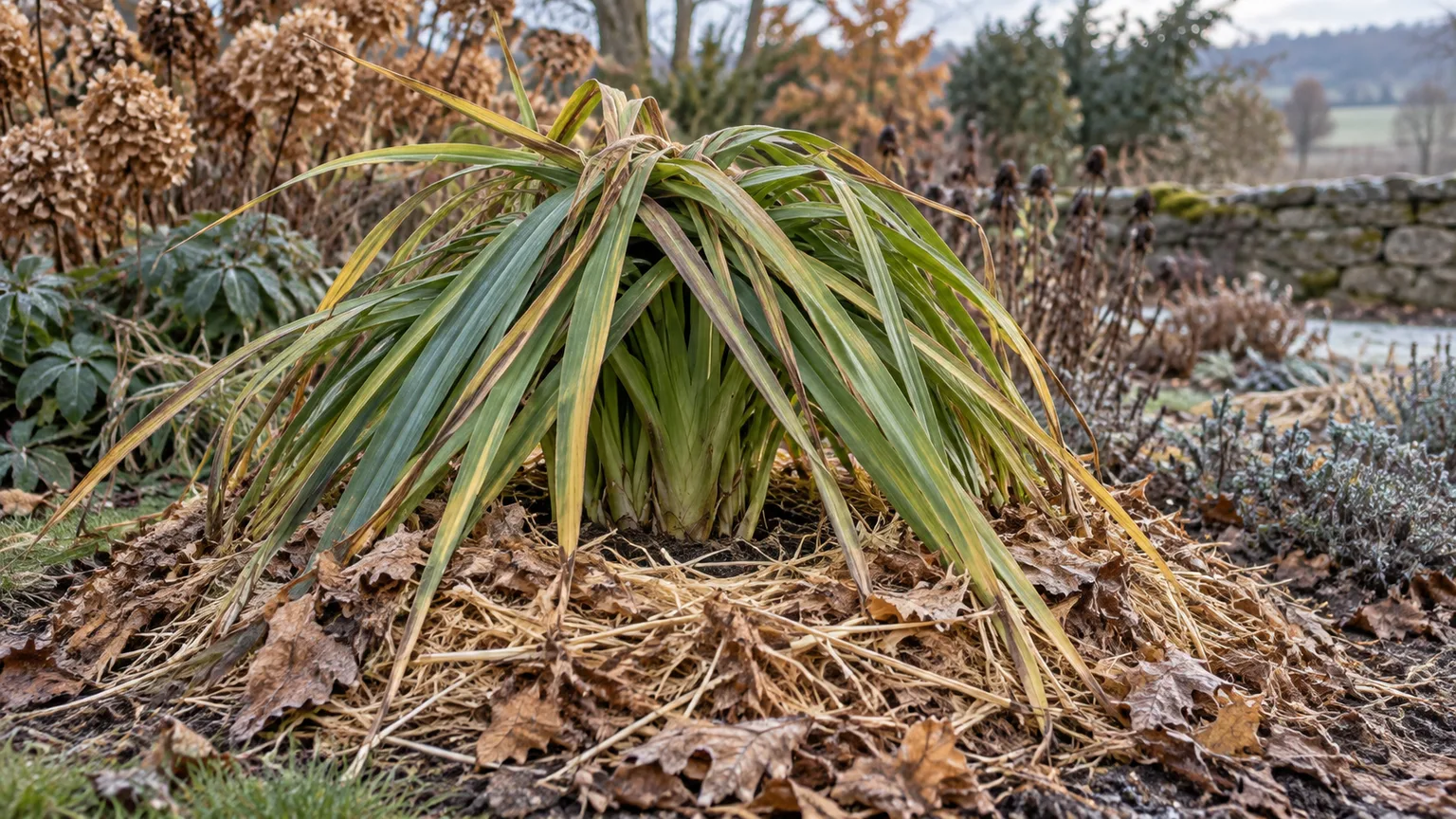
For a container in a Zone 5 or 6 winter, the root ball is more exposed to freezing than it would be in the ground. A compact, hardy cultivar is the most reliable starting point; use a generous pot with drainage, move it to a sheltered unheated spot, or insulate the container if the plant must stay outdoors. Do not move a dormant perennial into a heated room and treat it like a houseplant.
Divide Mature Clumps Only When Needed
Kniphofia is rhizomatous, but that does not mean every plant needs to be dug up on a fixed three-year schedule. Established clumps can remain productive for years, and NC State advises avoiding disturbance unless division is needed. Consider it when the center is thinning, flowering has declined despite good sun and drainage, or the clump has outgrown its allocated space. If it is healthy and the size is right, leaving it alone is often the better choice.
Divide in early spring as new growth begins, when you can see which offsets are actively growing. Water the plant the day before if the soil is dry, then lift it carefully with a spade. Rather than chopping straight through the entire center, separate vigorous outer offsets with roots attached and leave the main clump in place if it is still sound. Each division needs a firm crown and visible growth; small scraps of root without a shoot are less reliable.
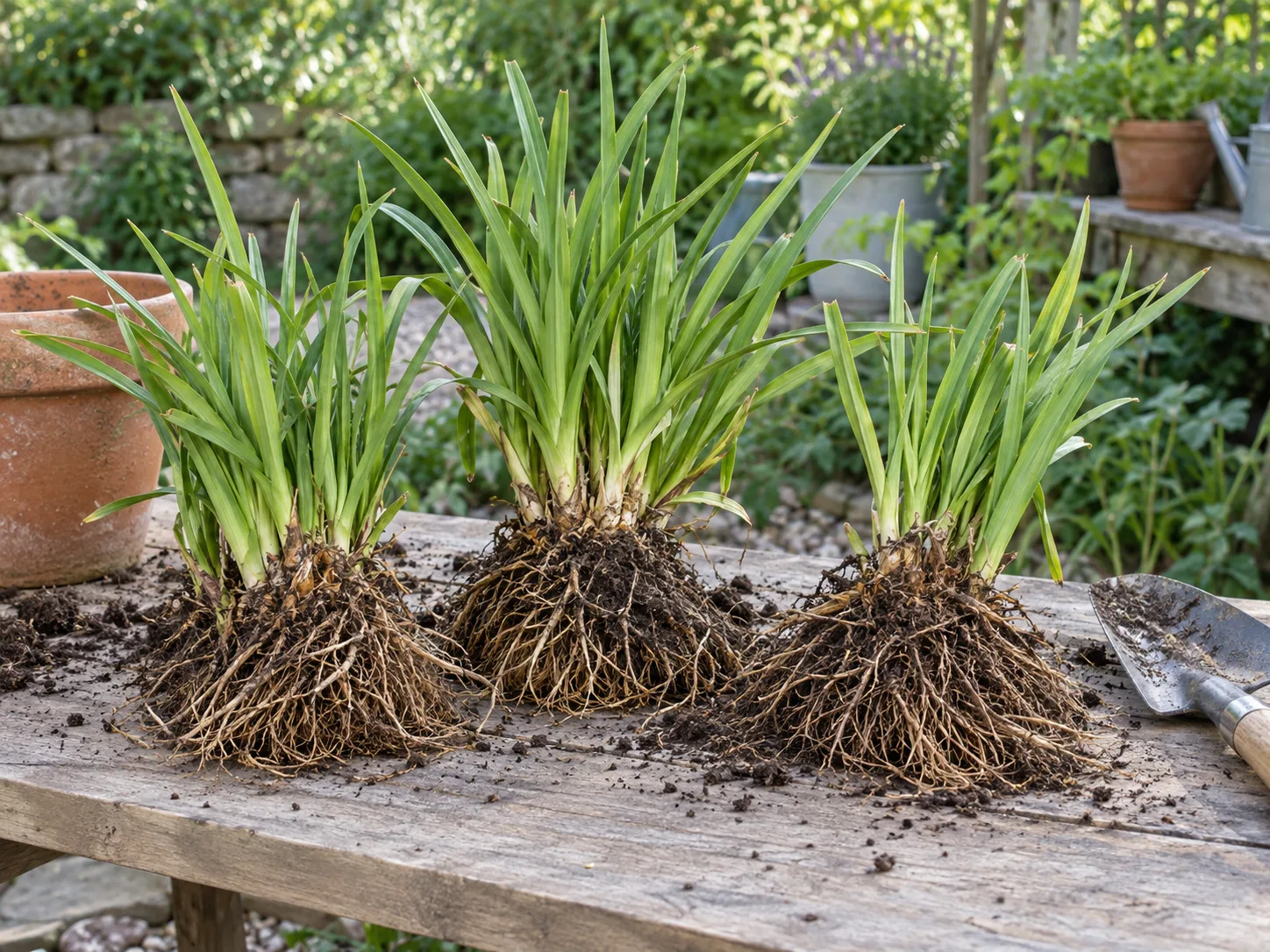
Replant divisions promptly at the original crown depth and water them in. Keep them evenly moist as they establish, but do not let the bed stay soggy. A divided plant may flower less that season while it rebuilds roots, so avoid dividing simply because a few leaves look untidy. Use a clean, sharp tool and discard rotted portions rather than planting them into fresh soil.
Grow From Seed When Variation Is Welcome
Seed propagation is possible, but division is more dependable when you want a plant identical to a named cultivar. NC State notes that species plants can be grown from seed, while named cultivars should be divided to keep their flower color true. Hybrid seedlings can inherit a mix of traits, so the plant may be taller, shorter, or a different color than its parent. That variation is a feature if you enjoy raising surprises, not a problem to solve.
Let selected flower stalks develop dry seed heads, collect the seed, and store it cool and dry until sowing. Follow the seed supplier’s directions for sowing depth and any cold treatment, since germination instructions can differ among species and seed lots. Use a clean seed-starting mix, keep it lightly moist rather than waterlogged, and give seedlings bright light after they emerge. They need time to form substantial crowns before they are ready for a permanent border, and flowering may take more than one season.
If a cultivar’s color and mature size matter more than the experiment, buy a labeled plant or divide a known parent. Do not rely on saved seed to recreate the exact ‘Mango Popsicle’ or ‘Backdraft’ you started with.
Use Compact Cultivars in Containers
Dwarf cultivars can work in containers, especially where a sunny patio needs a vertical accent. Choose a pot wide and deep enough for a spreading crown and leaves, with several drainage holes. Fill it with a quality, free-draining potting mix rather than dense garden soil, set the crown at the surface, and leave room around the foliage for air movement. ‘Mango Popsicle’ and other selections in the Popsicle series are smaller than many species forms, but confirm the mature measurements on the label before buying.
Container soil warms and dries faster than a garden bed, so check moisture in hot weather and water thoroughly when the mix is drying below the surface. Do not leave the pot standing in water. A container also exposes roots to greater temperature swings in winter; in cold regions, choose a cultivar rated for your zone, protect the pot, and remember that moving it under cover will not improve a plant whose soil stays wet.
Troubleshoot Sparse Blooms and Declining Clumps
When red hot poker does not bloom, start with the site and the crown, not with a bottle of fertilizer. A useful check is to ask whether the plant gets six or more hours of direct sun, whether the crown sits at soil level, and whether the clump is crowded or recently divided. If one answer is clearly no, fix that condition first and wait through a full season before making several more changes.
| What you see | Check first | Practical response |
|---|---|---|
| Lots of leaves, few stalks | Shade, deep planting, excess nitrogen | Improve direct sun, uncover the crown, pause routine feeding |
| Yellow or collapsing leaves in wet weather | Saturated crown or poor drainage | Stop supplemental watering; improve drainage or move the plant during suitable weather |
| Brown foliage after winter | Cold damage versus soft, rotting tissue | Wait for spring growth; remove dead leaves, but inspect drainage if the crown is mushy |
| Flowers or leaves with silvery scarring | Thrips or other feeding damage | Check flowers and leaf folds; confirm the pest before choosing a control |
| Fewer blooms in a crowded clump | Competition and poor airflow | Separate outer offsets in spring if the plant truly needs room |
Root or crown rot is a cultural problem as much as a disease label: persistently wet soil is the first condition to correct. Missouri Botanical Garden lists root rot in poorly drained soil and notes that thrips may occur; NC State similarly reports few major pest or disease issues under suitable conditions. If you find insects, identify them before applying a product, and follow its label and local rules. The plant is generally low-maintenance when its soil drains properly, so broad pesticide treatment is rarely a sensible first step.
Manage Rhizomes and Check Regional Invasive Lists
In a garden bed, red hot poker usually expands as a clump through rhizomes, and a mature plant can need occasional space management. That habit is different from saying every Kniphofia cultivar is invasive everywhere. The Invasive Plant Atlas of the United States record is specifically for K. uvaria: it classifies the species as exotic and links invasive listings from the California Invasive Plant Council and the Native Plant Society of Oregon. The record does not establish that every species or named hybrid carries the same status.
If you garden in California, Oregon, or another region where local rules may apply, check the current state and county list for the exact botanical name before buying or sharing the plant. In a permitted garden, remove unwanted offsets and deadhead before seed matures if seedlings are appearing. Keep divisions and seed out of natural areas, and use local green-waste guidance for disposal. If your region lists the species or you cannot control its spread, choose a non-invasive alternative with a similar upright flower form.
Use Red Hot Poker Where Its Shape Helps the Garden
The flower stalks are strongest as a repeated vertical accent rather than a wall of uninterrupted color. Place a tall selection behind lower perennials, or use one compact cultivar near a path or in a large pot where its bloom can be seen close up. Blue, purple, and silver foliage can balance the warm flowers, while ornamental grasses echo the plant’s narrow leaves. Leave a clear route for access because the outer leaves arch farther than the flower stalk’s narrow footprint suggests.
Kniphofia can contribute nectar while in flower, and its long, tubular blooms are visited by hummingbirds and insect pollinators. It is not a native plant in North America, however, so pair it with regionally native flowers if your goal is habitat support across the whole growing season. A mixed border with native perennials and one carefully sited red hot poker clump gives the dramatic bloom without treating a single ornamental as a complete pollinator garden.
Conclusion
For reliable red hot poker care, match the cultivar to your climate and garden scale, give it a sunny site, and solve drainage before planting. Keep the crown level with the soil, water while the plant establishes, and cut spent flower stalks as they fade. In colder regions, protect the crown lightly and wait until spring to trim damaged foliage; divide only when the clump has a real reason to be disturbed.
The plant’s reputation for toughness is deserved when its basic needs are met, but “tough” does not mean indifferent to winter water or deep shade. If your site offers sun and fast drainage, a well-chosen Kniphofia can return for years; if it does not, changing the location or selecting another perennial is a better fix than trying to correct the plant with more fertilizer or more frequent watering.