How to Remove Tree Sap Stains From Clothes
Learn how to remove tree sap stains from clothes: harden and lift the sap, spot-test a solvent, pretreat washable fabric, and keep it out of the dryer until clean.
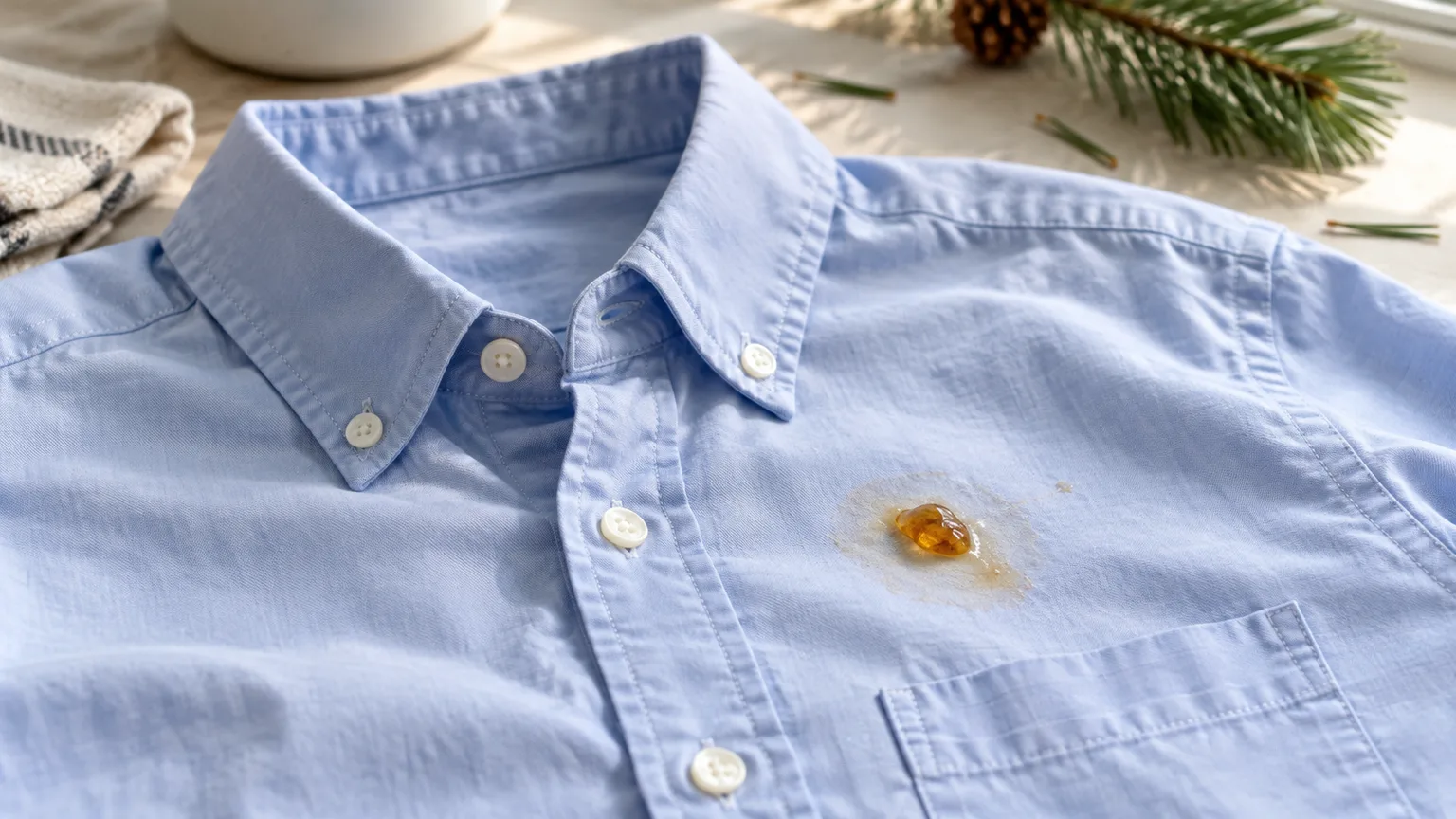
Tree sap is easiest to handle when you remove the raised, sticky part before it gets rubbed into fabric. Start by lifting off what you can with a dull edge, then use ice to harden any tacky blob. For a washable garment, patch-test rubbing alcohol or a fabric-safe spot remover on a hidden seam, blot the sap from the back onto an absorbent cloth, pretreat the mark, and wash according to the care label. Keep the garment out of the dryer until the sap and any stain shadow are gone.
The key is to avoid treating every fabric as if it were a sturdy cotton T-shirt. A solvent may loosen resin but also affect dye or finish, and a solvent that works on clothing can damage carpet backing or upholstery foam. Use the care label and the cleaner’s own instructions as stop signs, not suggestions.
Before you treat the mark, check the fabric and care label
Look at the garment’s care tag before reaching for a cleaner. If the tag says dry clean only, the item is valuable, or the fabric has a special coating, stop after gently lifting loose sap and take it to a professional. Tell the cleaner what the stain is and whether you applied anything; a product can change the best next step.
For a machine-washable garment, identify where the sticky patch sits and whether it is still raised. Tree sap or pitch can form a translucent or amber blob that collects lint and dirt, so a stain may have both a gummy deposit and a darker mark underneath. Removing the deposit is only the first part; the residue in the fibers needs its own treatment.
Do not rub the mark with a dry towel or brush. Pressure can push the resin deeper, widen the affected area, and transfer it to the clean side of the garment. If the sap is fresh and very tacky, lift a little at a time with the edge of a plastic card or a spoon. Keep the tool nearly flat against the fabric so it does not snag threads.
Remove fresh sap without spreading it
Set the garment on a protected work surface and put a clean, white absorbent cloth or paper towel beneath the stained area if you can reach the back. A white pad lets you see whether sap is transferring and avoids dye from a colored rag. Work from the outside edge toward the center so the stain does not spread into a wider ring.
For a garment you cannot put in a freezer, seal a few ice cubes in a small bag and press it gently against the sap until the raised material becomes firm. Keep the ice bag dry; water can create a second ring or spread soluble grime. When the sap hardens, lift the brittle flakes with a dull plastic edge. Do not use a razor, scissors, or a sharp knife on fabric.
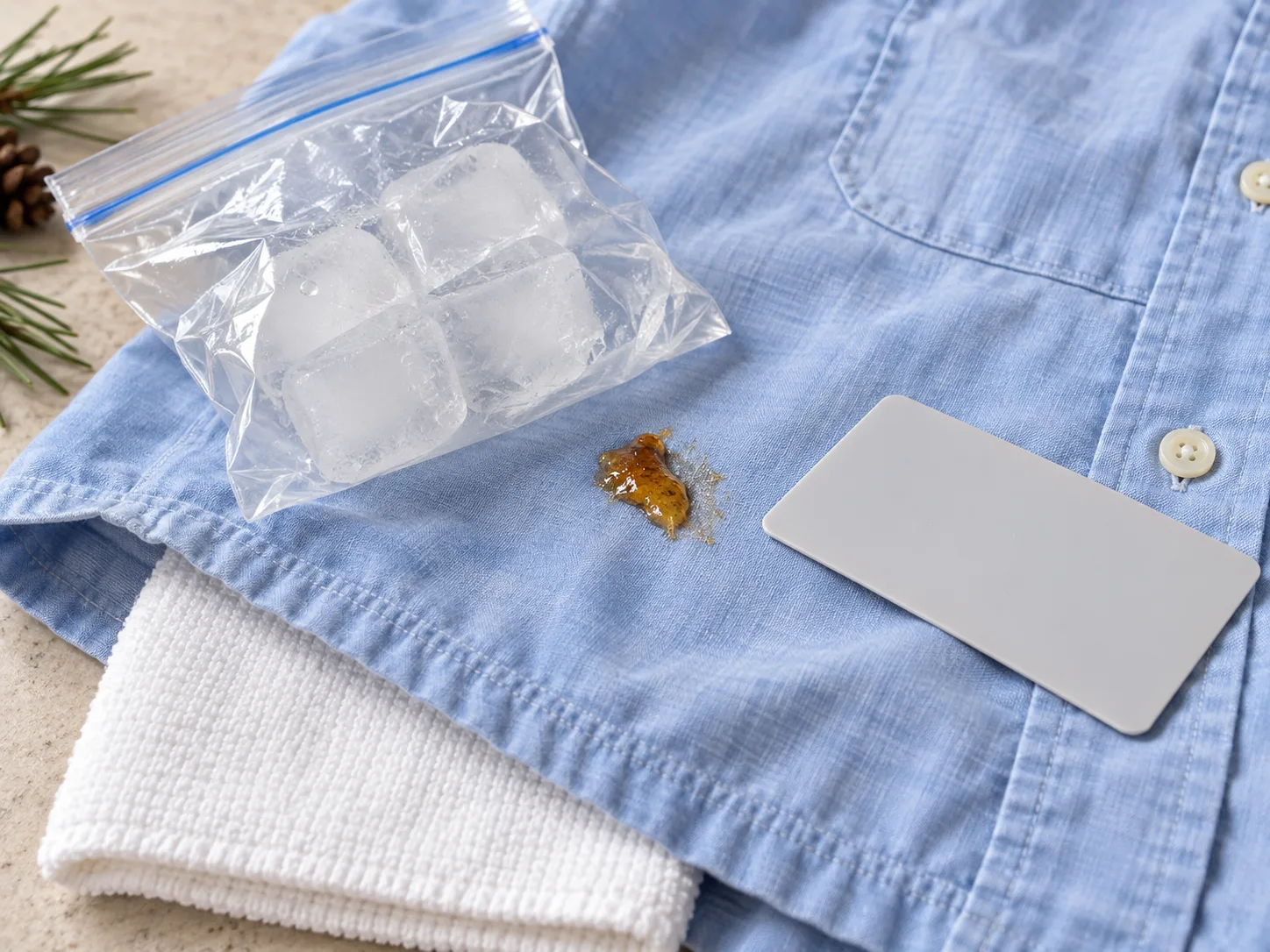
Freezing is a low-friction first step, not a complete cleaning method. Iowa State University Extension’s AnswerLine recommends treating tree sap promptly, then using a spot-treatment sequence and keeping the garment out of the dryer until the mark is removed (Iowa State University Extension AnswerLine: summer stains). University of Georgia Extension’s adhesive-stain guidance likewise uses ice to harden a gummy deposit before gently scraping and transferring residue to absorbent material (UGA Extension Textiles: glue and adhesive stains).
Food52’s clothing-care overview also recommends removing the excess and checking colorfastness before settling on a treatment; it describes freezing as a first option and notes that oils can leave a second stain (Food52: how to remove tree sap from clothes). That supports using a small, tested step at a time instead of adding an untested kitchen product.
How to remove tree sap from washable clothes
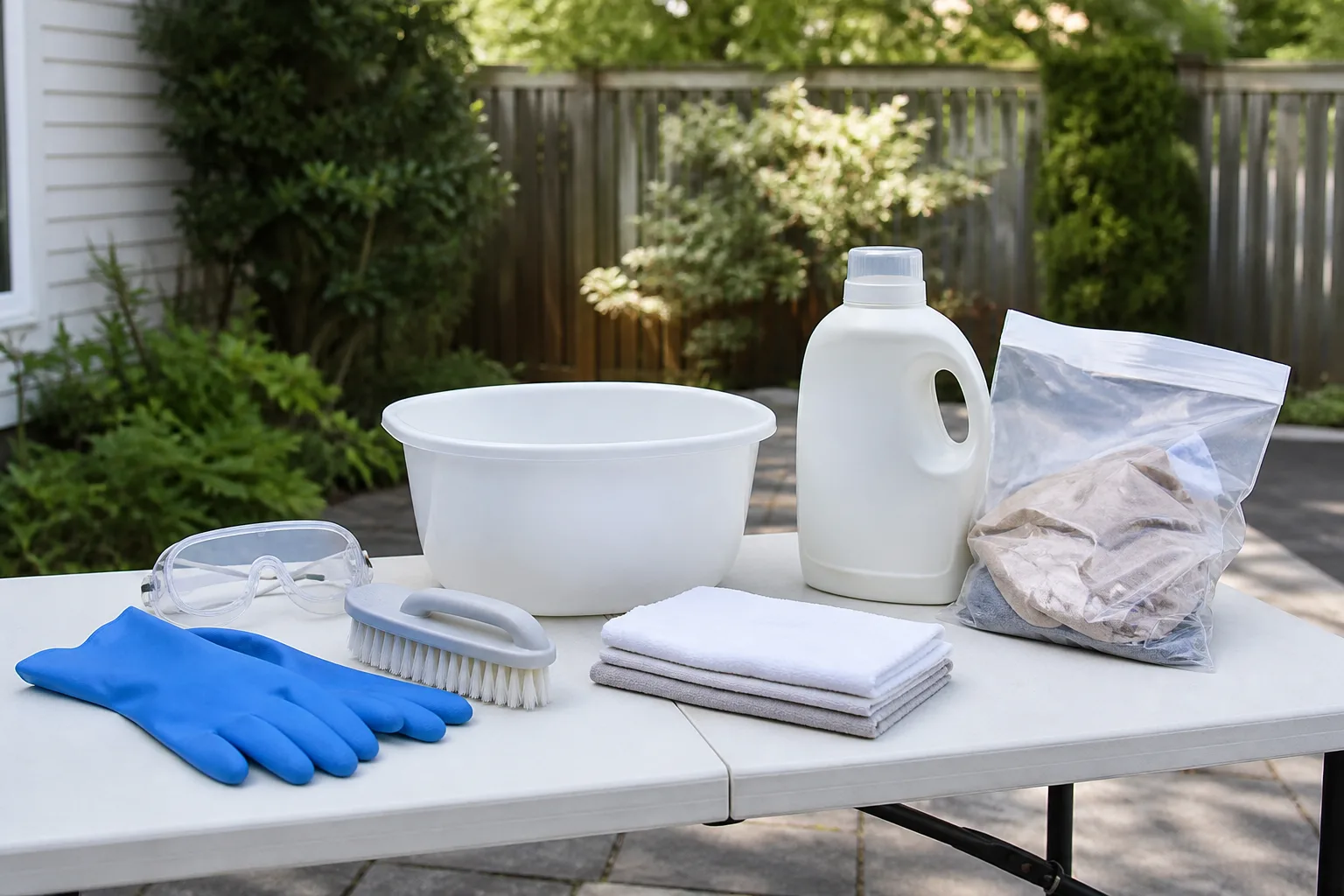
Use a sequence that moves the sticky material out of the cloth in small steps. Do not pour solvent directly onto a large area or combine several home remedies at once. A measured treatment is easier to rinse and easier to stop if the color begins to move.
Harden and lift the sticky deposit
If sap is still raised, use the ice-bag method above. If the whole garment fits and its care instructions allow normal cold handling, a short time in the freezer can harden a small blob, but this is optional; an ice bag gives you better control and avoids freezing a damp garment. Flex the fabric gently around the firm sap, then lift loosened pieces with a dull plastic card or spoon.
Keep a white cloth below the stain as you work. If the sap softens again, pause and chill it rather than scraping harder. The goal is to remove the thick material without abrading the weave. Do not pick at the fabric with your fingernails, which can pull loops or snag technical knits.
Test a solvent on a hidden area
Rubbing alcohol can loosen some sticky sap, but it is not a universal fabric cleaner. It may change dye, surface finish, print, or water-repellent coating. Before applying it to the stain, place one small drop on an inconspicuous area made from the same fabric, such as an inside seam allowance. Wait briefly, press a clean white cloth against the test spot, and check for color transfer, dulling, or a change in texture. Let the area dry before judging it; a wet fabric can temporarily look darker.
If the garment bleeds, fades, turns stiff, or changes sheen, stop. Do not keep trying alcohol at a lower concentration or cover the change with another product. University of Georgia Extension advises pretesting cleaning agents on an inconspicuous area for colorfastness and cautions against overwetting textiles and upholstered surfaces. Tide’s tree-sap instructions also warn readers to test rubbing alcohol on a less visible part of clothing first (Tide: tree sap stains).
Blot from the back and absorb the residue
If the test area is unchanged and the care label permits spot treatment, put a fresh absorbent pad beneath the sap stain with the garment face-down. Dampen a white cotton cloth or swab with a small amount of plain rubbing alcohol; do not pour it on. Pat from the back of the fabric so loosened sap moves into the clean pad instead of deeper into the weave. Work around the edge toward the center, and move to a clean part of the pad whenever it becomes tacky or discolored.
Use short, gentle presses rather than scrubbing. If the cloth is picking up resin, continue with a fresh pad and a small amount of solvent. If nothing transfers after several passes, stop. More liquid can spread the stain, damage a finish, or leave a larger wet halo. Rinse the spot only if the garment label and solvent instructions allow it; otherwise follow the cleaner’s directions or use a professional.
Pretreat, wash, and inspect before drying
After the sticky residue has lifted, apply a liquid laundry detergent or a prewash stain product that is labeled for the garment. Work it in gently with your fingertip or a soft cloth, following the product’s dwell time. Iowa State Extension suggests following sap spot treatment with liquid detergent and then laundering at a temperature safe for the fabric; Tide’s stain sequence also uses a detergent pretreatment and the warmest care-label-approved wash setting (Iowa State Extension AnswerLine; Tide tree-sap stain guide).
Wash the garment by itself or with similar items so any residue cannot transfer. Use the warmest water allowed by the care label, not automatically the hottest setting on the machine. When the cycle ends, inspect both sides while the fabric is still damp. If the mark remains tacky, repeat the spot test and treatment only if the first round did not affect the fabric. If a colored shadow remains, treat it as a separate stain rather than rubbing harder at the sticky spot.
Air-dry the item until you can confirm the mark is gone. Do not use a tumble dryer or iron between rounds. Iowa State Extension and Tide both warn that dryer heat can make residual stains harder to remove. Once the fabric is fully clean and dry, launder or dry it as directed on its label.
If rubbing alcohol is not a good fit
If a hidden test changes color or finish, do not apply alcohol to the visible stain. Look for a commercial spot remover or dry-cleaning solvent whose label specifically permits use on that type of washable fabric. Follow its ventilation, application, and rinse instructions exactly, and run a new patch test before treating the stain. Iowa State Extension’s tree-sap guidance discusses solvent-based pretreatment, while UGA Extension’s textile guidance makes clear that cleaners must be selected and tested for the material rather than used indiscriminately.
If you do not have a tested, fabric-compatible solvent, use the low-risk steps only: harden the sap, lift the raised residue, and take the item to a cleaner if the remaining mark matters. A plain detergent pretreatment may help with dirt and loose residue but might not dissolve sticky resin by itself. Do not substitute gasoline, paint thinner, nail-polish remover, or a general-purpose adhesive remover. Those products can be flammable, toxic, or damaging to dyes and fibers, and many are not designed for clothing.
Clear hand sanitizer is sometimes suggested when rubbing alcohol is not available. It is not my first choice for a garment: a gel can contain thickeners, fragrance, or colorants that leave another mark, and its alcohol content varies. If you use any hand product, read both labels and patch-test it; for a valuable or delicate item, skip it and ask a cleaner.
Get dried or old tree sap out of clothing
Dried sap is less likely to smear, but it can cling to individual fibers. Start by placing a bag of ice over the patch until the deposit feels hard. Lift the brittle top layer with a dull plastic edge, stopping whenever the fabric begins to fuzz or distort. Brush loose flakes into a waste bin rather than rubbing them across the garment.
Once the raised deposit is gone, treat the remaining tacky spot as you would fresh residue: put an absorbent pad below it, patch-test a product on a hidden seam, and blot from the back. The less sap left in the fibers, the less solvent you need. If the dried mark has already been through a dryer, it may take more than one treatment. Do not try to compensate with stronger chemicals or longer soaking; repeated, controlled rounds are safer than a single aggressive one.
For an old stain with no raised sap but a brown or gray shadow, identify whether it is still sticky. If the fibers feel clean and smooth, the remaining mark may be dirt or discoloration rather than resin. A detergent pretreatment and care-label-safe wash may improve it, but bleach or stain remover can change color. Test first, use only products approved for the fiber and dye, and stop if the fabric changes.
Treat dark, delicate, and technical fabrics carefully
Dark jeans, black jackets, bright prints, and garment-dyed fabrics can show color transfer even when the fibers themselves are not damaged. Use a hidden area from the same panel, not a white care tag or a lining made from different fabric. Press with a clean white cloth during the test. If the cloth picks up dye, switch methods or take the item to a professional.
Silk, wool, vintage clothing, sequins, leather trim, insulated coats, and water-resistant outdoor gear deserve extra caution. Their fibers, coatings, adhesives, and interlinings respond differently to solvents, water, agitation, and heat. If the tag says dry clean only—or if you cannot tell what the material is—do not use alcohol as an experiment. Remove only loose surface sap, keep the item away from heat, and consult a cleaner familiar with that textile.
For washable technical clothing, read the manufacturer’s instructions for both stain treatment and washing. A detergent that is safe for ordinary cotton may strip or impair a durable water-repellent finish. Avoid fabric softener or additional products unless the garment maker recommends them. If the sap is on a coated area, test the cleaner where the finish will not be visible or go directly to the manufacturer’s care advice.
When to take sap-stained clothes to a cleaner
Professional cleaning is the sensible first step for dry-clean-only clothes, silk, wool suits, lined coats, vintage pieces, and anything with a high replacement or sentimental value. A cleaner can choose a solvent and spot technique suited to the garment’s dye and construction. Tell the staff whether the sap is fresh or dried, whether the garment has been washed, and what products have touched it.
Do not apply household solvent immediately before dropping off the item unless the cleaner tells you to. A new chemical can move the stain, change its behavior, or make the mark harder to diagnose. If you have already used a product, name it; “I tried rubbing alcohol” is more useful than simply saying the stain was pretreated.
Remove tree sap from carpet and upholstery
Treat a carpet or sofa as a different material from a washable shirt. Carpet has a backing and cushion; upholstered furniture may have a finish, foam, or water-sensitive filling behind the visible cloth. A small spot of solvent or water can travel farther than the mark you see.
First check the carpet or furniture manufacturer’s care instructions. If you cannot identify the fabric or cleaning code, or if the item is expensive, antique, silk, leather, or has a large stain, call a professional cleaner before using a household solvent. University of Georgia Extension warns that solvent-based cleaners can damage carpet backing and upholstery foam and that excess moisture can cause upholstery finish to migrate (UGA Extension Textiles: adhesive-stain guidance).
Freeze and lift without soaking the backing
For a small, fresh blob, put ice cubes in a sealed plastic bag and hold it against the sap until the deposit firms. Use a dull plastic card or spoon to lift the hardened material with short, gentle strokes. Do not press the scraper down into carpet pile or upholstery weave. Tide’s tree-sap guide also recommends hardening excess sap with ice before scraping it from carpet and upholstery (Tide tree-sap cleaning instructions).
Once the raised sap is gone, test an approved spot cleaner on an inconspicuous area and let that test dry before deciding whether it is safe. Apply the cleaner to a white cloth rather than pouring it onto the surface. Dab from the outside of the mark toward its center, using a clean part of the cloth each time. Keep the area only as damp as the product directions require; do not scrub, flood the cushion, or push liquid into the carpet backing.
Blot with a second clean cloth to remove cleaner residue, then allow the area to dry fully. If the stain expands, the color transfers, the fabric’s nap changes, or the sticky feel remains after a few gentle passes, stop and call a professional. Do not place furniture back on a damp carpet or apply heat to speed drying.
Mistakes that can make the stain harder to remove
- Rubbing while the sap is tacky: This spreads the resin and presses it into more fibers. Lift first, then blot.
- Scraping with a sharp blade: A blade can cut yarns, pull a knit, or damage a carpet pile. Use a dull plastic edge or spoon.
- Pouring alcohol over the spot: Excess solvent can create a halo, move dye, or reach layers that should not get wet. Use a little on a white cloth after testing.
- Trying several products at once: Alcohol, detergent, adhesive remover, and bleach can interact or leave conflicting residues. Rinse or launder between compatible treatments, and never mix cleaning products.
- Using oil or sunscreen as the first fix: Greasy household products may loosen a gummy patch but can leave an oil stain that needs another treatment.
- Using heat too soon: A dryer, iron, or hair dryer can make residual stain harder to remove. Never put solvent-wet fabric near heat or flame; let it dry and follow the solvent label.
- Assuming a wash proves success: Sticky material can remain under the surface or along the reverse side. Inspect and feel the fabric before drying.
How to tell when the sap is gone
Look for both a clean appearance and a clean feel. Run a fingertip lightly over the spot: it should not feel tacky, stiff, or gritty. Check the front and back under good light for a translucent ring or brown shadow. A wet garment can hide or exaggerate discoloration, so let it air-dry before deciding whether to repeat treatment.
If the mark is still sticky, return to the solvent test and use a fresh absorbent pad. If it feels clean but remains discolored, a color-safe stain product may help if the label allows it; test before applying and do not bleach a colored item unless both garment and product labels say it is safe. A persistent stain after two careful cycles is a good point to stop experimenting, especially on an important piece.
Prevent the stain from transferring to another surface
Before you sit in a car or on furniture, check the area where sap touched your clothing. Fold the stained portion inward, keep it away from clean fabric, and put a washable towel or a disposable absorbent pad underneath until you can treat it. Do not leave a sticky jacket draped over a chair, where it can collect lint and transfer resin to upholstery.
After lifting the sap, wash or discard the absorbent pads and wipe the plastic tool clean before using it again. Keep clothing separate from other laundry until the sticky part has been treated. This small pause prevents one outdoor stain from becoming a stain on a seat cushion, a second shirt, or the inside of a laundry basket.
Conclusion
To remove tree sap stains from clothes, lift the excess first, harden stubborn blobs with ice, and test any solvent where it will not show. Blot washable fabric from the back onto an absorbent pad, pretreat and wash by the care label, then air-dry and inspect before using heat. For delicate clothes, carpet, or upholstery, stop when the material or care instructions are uncertain and let a professional choose the next step.