Raven ZZ Plant Care: Light, Water, Soil, and Growth
Learn Raven ZZ plant care with practical light, watering, soil, repotting, pest, and propagation advice, plus clear ways to tell normal green growth from trouble.
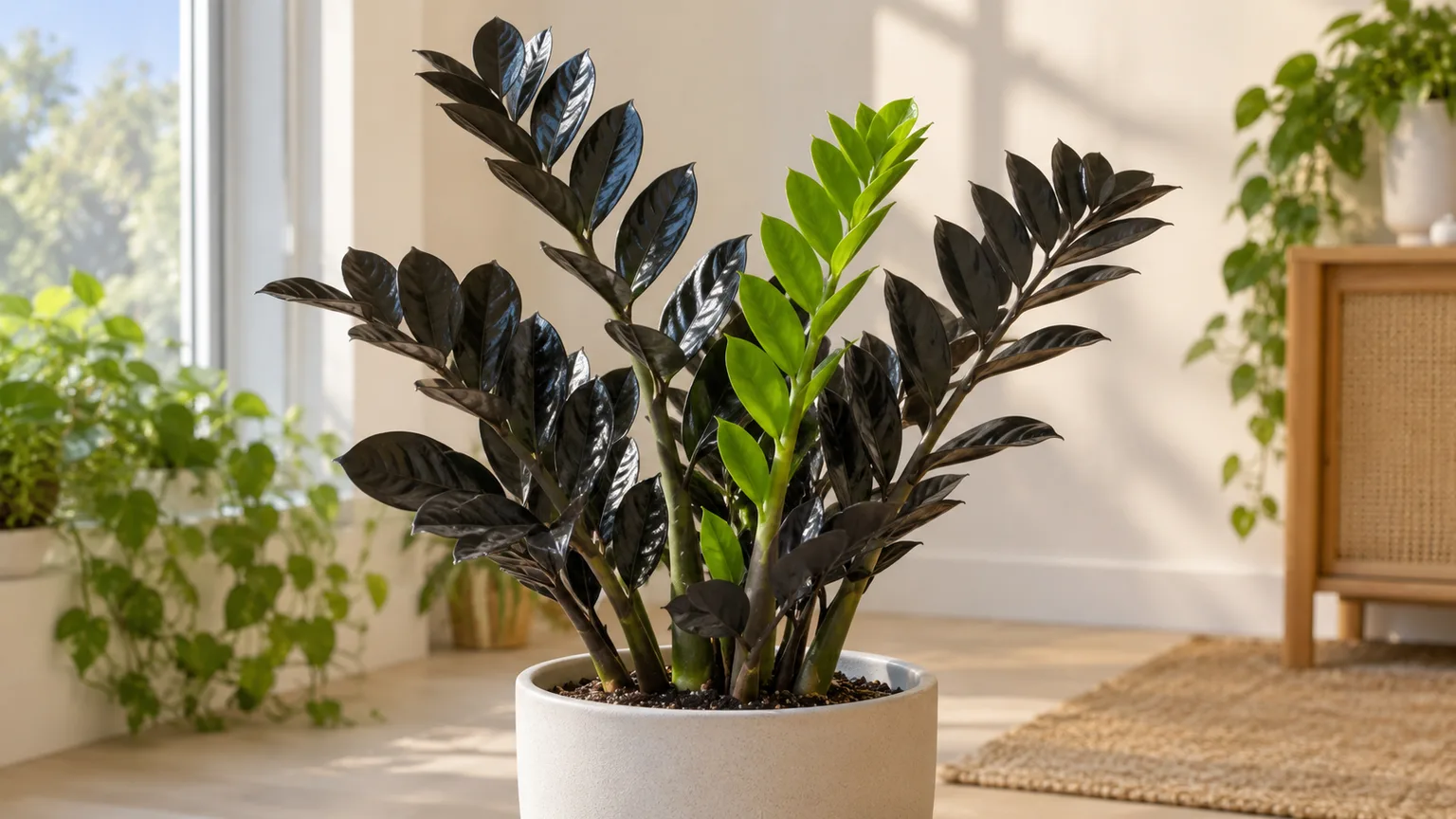
The Raven ZZ plant is grown much like a green ZZ: give it bright, indirect light, let its potting mix dry well between waterings, and use a container with an open drainage hole. Its striking near-black foliage comes from the cultivar itself, while new shoots naturally emerge lime green and darken as they mature.
That combination of slow growth and water-storing rhizomes makes Raven forgiving, but it does not make it immune to persistently wet soil or very dim conditions. A few simple checks will keep the plant steady without turning its care into a calendar chore.
What Makes Raven ZZ Different?
Raven is a dark-leaved cultivar of Zamioculcas zamiifolia, also sold as Raven® ZZ or under the cultivar name ‘Dowon.’ Like the familiar green ZZ, it grows from a thick underground rhizome and sends up upright, fleshy leaf stalks lined with glossy leaflets. The main distinction is the foliage color as it develops, not a need for an entirely different care system.
Expect Lime Growth Before Dark Foliage
The newest Raven shoots are bright lime green, then gradually turn deep green, purple, and nearly black as the leaflets mature. That color shift is normal; a green shoot is not a sign that the plant has reverted or needs fertilizer. The North Carolina Extension Gardener Plant Toolbox describes this cultivar’s lime growth and darkening foliage, while the grower Costa Farms notes that low light slows growth.
Mature plants are still slow growers, so a new shoot may take time to appear and an immature leaflet may remain green for a while. Judge the plant by the condition of its stems and leaves, whether it is producing growth over time, and whether the newest foliage is gradually deepening in color. Don’t repeatedly move it or feed it heavily to force a faster color change.
Choose Bright, Indirect Light
Bright, indirect light is the best everyday setting for a Raven ZZ indoors. A spot near an east-facing window or set back from a brighter south- or west-facing window usually provides useful light without subjecting the foliage to hours of hot direct sun. The cultivar tolerates lower light, but growth slows and stems may become sparse or lean toward the nearest window.
Low light is a survival tolerance, not a growth target. If the room is dim, move the plant closer to a window while keeping it out of intense afternoon rays, or use a white or full-spectrum LED grow light on a regular timer. Increase light gradually over a week or two so leaves adapted to shade are not suddenly scorched.
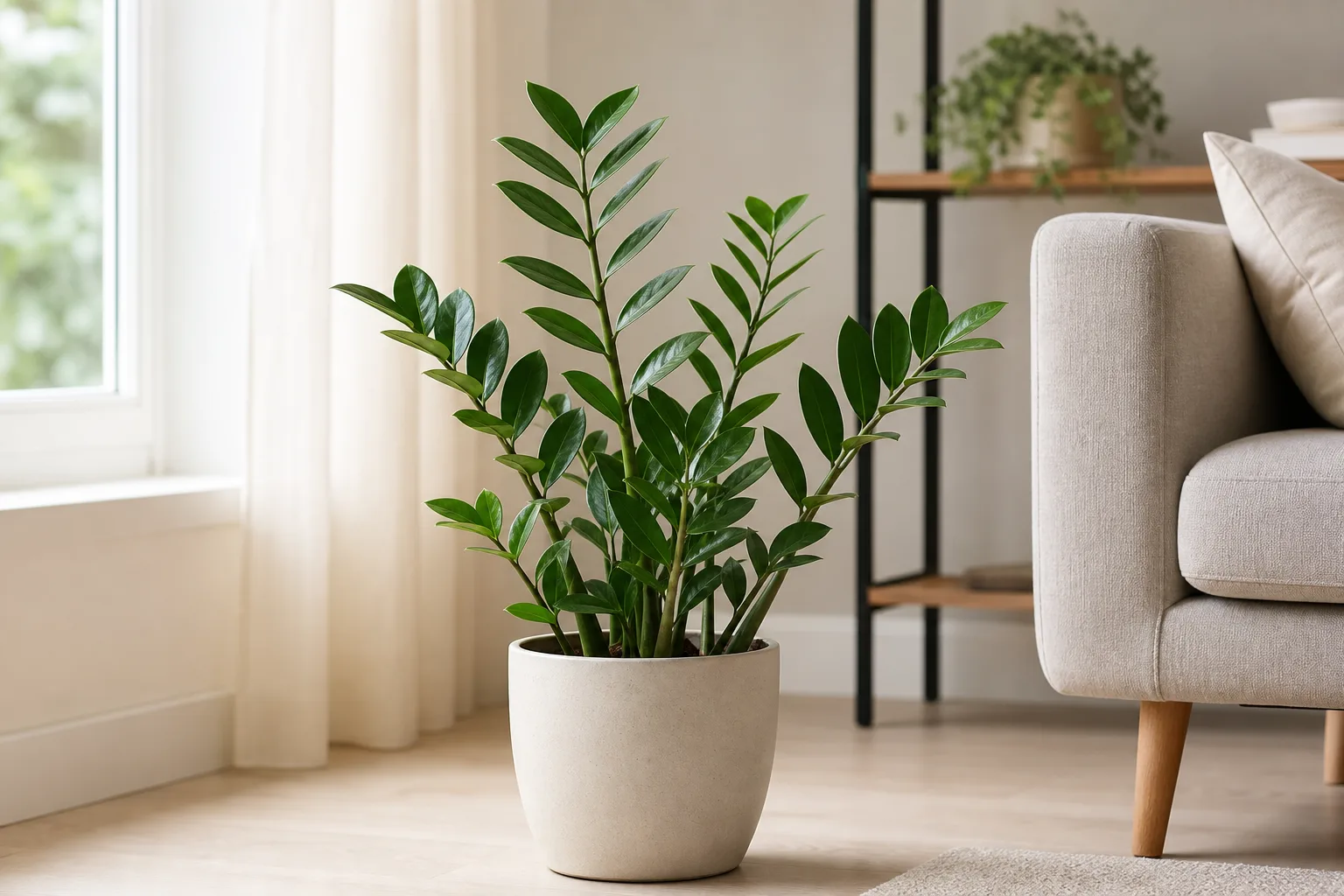
A bright window position can support steady ZZ growth; keep Raven foliage out of harsh, hot afternoon sun.
If the leaves develop bleached, tan, or crisp patches on the window-facing side, reduce direct exposure or add a sheer curtain. If the plant stays healthy but makes no new shoots for months, first consider the season and the plant’s naturally slow pace; then check whether the available light is very low before changing fertilizer or water.
Water Only After the Mix Dries
Raven ZZ stores water in its rhizomes and fleshy leaf stalks, so its roots need air between waterings. Watering too often is more likely to cause lasting harm than waiting a little longer, especially during cool, low-light months. NCSU Extension and the New York Botanical Garden both recommend letting the growing medium dry between waterings and avoiding a pot that remains wet.
Water by Root-Zone Dryness, Not Calendar
Check below the surface rather than judging by a dry-looking top layer alone. Insert a finger or wooden skewer several inches into the mix, or lift the pot to notice how much lighter it feels after drying; water when the root zone is dry and the pot has become noticeably lighter. A large Raven in a small terracotta pot near a warm window will dry faster than a young plant in a cool room and a dense nursery pot, so a fixed weekly schedule cannot fit every home.
When it is time, pour water evenly over the mix until it runs from the drainage hole. This wets the full root ball and flushes accumulated fertilizer salts better than frequent small sips, which can leave part of the root zone dry while keeping another part constantly damp.
Drain the Pot Completely
Let the pot finish draining, then empty the saucer or cachepot. Do not leave the rhizomes standing in runoff, and do not add a layer of gravel at the bottom as a substitute for drainage; the container itself needs a clear hole and the mix needs air spaces. In winter, or whenever growth and drying slow, check less often and wait longer between waterings.
The leaves can droop after a long dry spell, but that cue is not proof that thirst is the only problem. Feel the mix first: a very dry root ball calls for a thorough drink, while a wet mix paired with yellowing or soft stalks calls for inspection rather than more water.
Build an Airy, Well-Drained Potting Mix
Choose a quality indoor potting mix that drains freely and does not pack into a dense, slow-drying block. A peat- or coir-based houseplant mix can work when amended with coarse perlite, pumice, or fine orchid bark to create air spaces. The University of Florida IFAS ZZ guidance accepts well-drained peat- or bark-based mixes and warns that poorly aerated soil combined with excess water can contribute to root rot.
You do not need a complicated recipe or a cactus mix that dries almost instantly. The useful test is practical: after watering, excess water should run from the bottom, and the mix should gradually dry rather than staying saturated for days. If the existing soil is still airy and the plant is thriving, do not repot just to replace it with a fashionable blend.
Avoid garden soil and heavy mixes that stay wet indoors. If a newly purchased plant is planted in a dense nursery medium, watch how slowly its pot dries; repot into a more open mix if it remains wet for an unusually long time and the plant shows signs of stress, rather than disturbing a healthy plant immediately after bringing it home.
Keep It Warm Without Chasing Humidity
Normal comfortable indoor temperatures suit Raven ZZ. Keep it away from cold windows in winter, frequent blasts from an air conditioner, and hot air directly from a heater. The University of Florida lists a warm tropical preference around 65–90°F for the species and notes that chill can slow growth or injure it; avoid placing a pot where temperatures swing sharply.
Average household humidity is generally adequate. You do not need to mist the leaflets or buy a humidifier just for this plant, and misting does not correct dry potting mix or low light. If indoor air is especially dry, the Raven can still grow; focus on avoiding drafts and keeping the root zone in good condition.
Fertilize Lightly During Active Growth
Raven ZZ is slow-growing and does not need frequent feeding. If the plant is established and actively growing in spring or summer, use a balanced houseplant fertilizer at the diluted rate on its label once or twice during that period. UF/IFAS recommends low-dose feeding twice a year for ZZ, while NCSU Extension lists one or two applications annually, so a restrained approach is well supported.
Skip fertilizer when the plant is not growing, when it is stressed by rot or recent repotting, or when the potting mix is bone dry. Pouring concentrated fertilizer into dry soil can damage roots, and repeated heavy feeding can leave salts behind. If you see a crust on the mix or brown tips after frequent feeding, stop feeding and water thoroughly through the pot a few times, allowing it to drain fully.
More fertilizer will not turn a new shoot black faster. The cultivar’s foliage darkens with maturity; fertilizer can support growth only when the plant also has suitable light, healthy roots, and reasonable warmth.
Choose a Pot That Drains and Fits the Rhizomes
Use a pot with at least one open drainage hole. Raven’s thickening rhizomes and fleshy stems are easier to manage in a stable container, but the pot should not be dramatically wider than the root-and-rhizome cluster. Excess unused soil can retain moisture longer than the plant can use, increasing the risk of rot.
Plastic or glazed ceramic holds moisture longer than terracotta, so account for the material when judging how quickly the pot dries. A heavier decorative cover pot is fine if the growing pot can be lifted out for watering and drainage. Never let runoff collect unseen at the bottom of a cachepot.
Repot Only When the Plant Needs More Room
Raven ZZ tolerates a snug pot and usually does not need annual repotting. Consider moving it when rhizomes press tightly against the pot wall, roots emerge through drainage holes, the pot dries unusually fast because it is densely packed with roots, or the plant becomes unstable. Calendar age alone is not a reason to disturb a healthy, slow-growing plant.
Choose a container only one size larger, keeping the new soil volume proportional to the root ball. Slide out the plant, loosen only mix that releases easily, and check the rhizomes and roots. Firm pale or tan tissue is generally healthy; remove dark, mushy material with a clean blade. Set the plant at roughly the same depth in fresh airy mix, water enough to settle the soil, and let it drain before returning to the usual dry-down routine.
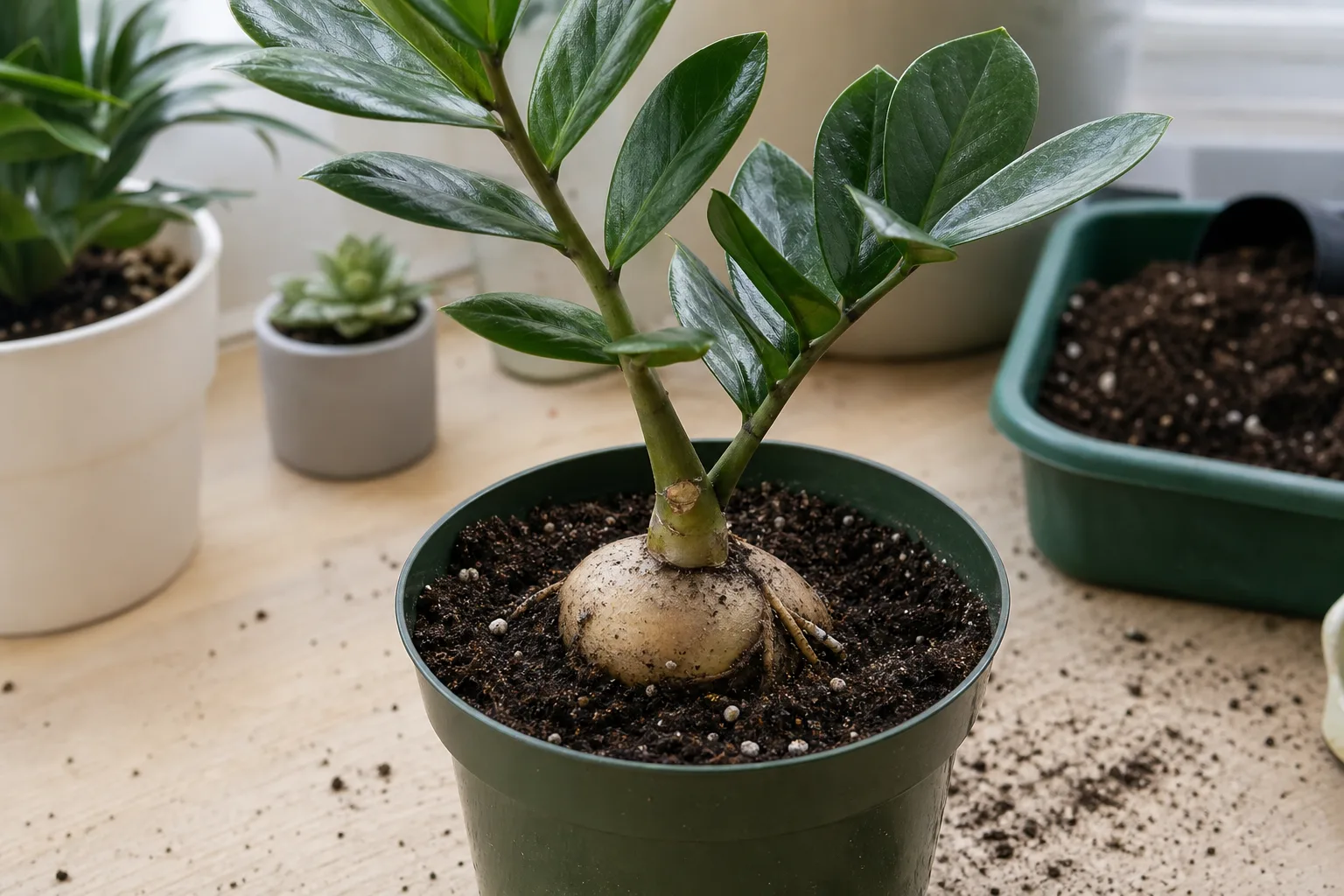
The thick, rhizome-based root system helps explain why ZZ plants prefer a draining mix and a close-fitting pot.
Propagate Through Division or Leaf Cuttings
Division is the quickest way to make another plant that already has a rhizome and growing point. During a repot, look for a natural section with its own rhizome, roots, and at least one healthy stem; separate it gently by hand or use a clean, sharp knife if the cluster is firmly joined. Pot the division into a snug container with fresh, well-drained mix and place it in bright, indirect light while it reestablishes.
Leaf cuttings are possible, but they test patience. Cut a healthy leaflet with its short petiole attached, let the cut end dry briefly, then place the petiole end in lightly moist, sterile mix or clean water. A small rhizome and roots must form before the cutting becomes a separate plant, and this can take months; it may take considerably longer to grow a full, attractive Raven than to divide an existing clump. The University of Illinois Extension propagation notes describe division as the faster method and leaf cuttings as slower.
For either method, warmth and bright indirect light help, but the medium should stay lightly moist rather than soggy. A rooted leaf is still only a small start; give it time to form a rhizome and more shoots before expecting a full-size plant.
Diagnose Yellow Leaves, Pale Growth, and Slow Stems
One old leaflet yellowing at the base while the rest of the plant stays firm can be ordinary aging. Several yellowing stalks in quick succession deserve a closer look at moisture, drainage, and light. If the mix is wet, let it dry and check for rot; if it is bone dry, water thoroughly and see whether the plant regains firmness over the next several days.
New lime-green shoots are expected, but mature foliage should deepen as it ages. If leaflets stay pale, look for a recent change in light, weak growth, fertilizer excess, or pests before assuming that the cultivar is mislabeled. Very dim rooms can sustain the plant yet fail to support much new growth, so move it to brighter indirect light gradually if the stems are stretched or leaning.
Slow growth by itself is not a diagnosis. Raven may pause in winter or after a move, and it may take a long time to produce a new stalk even when healthy. Compare the plant to its own past condition rather than expecting weekly growth; investigate when slow growth appears together with yellowing, mushiness, shriveling, or visible pests.
Inspect and Treat Common Houseplant Pests
ZZ plants are not pest-proof. Check both sides of leaflets, the central stalk, and the points where leaflets join for scale bumps, cottony mealybugs, fine webbing or stippling from spider mites, and distorted or silvered areas that can accompany thrips. Scale is specifically listed among potential problems for Raven in the NCSU Plant Toolbox; other houseplant pests may arrive on a neighboring plant.
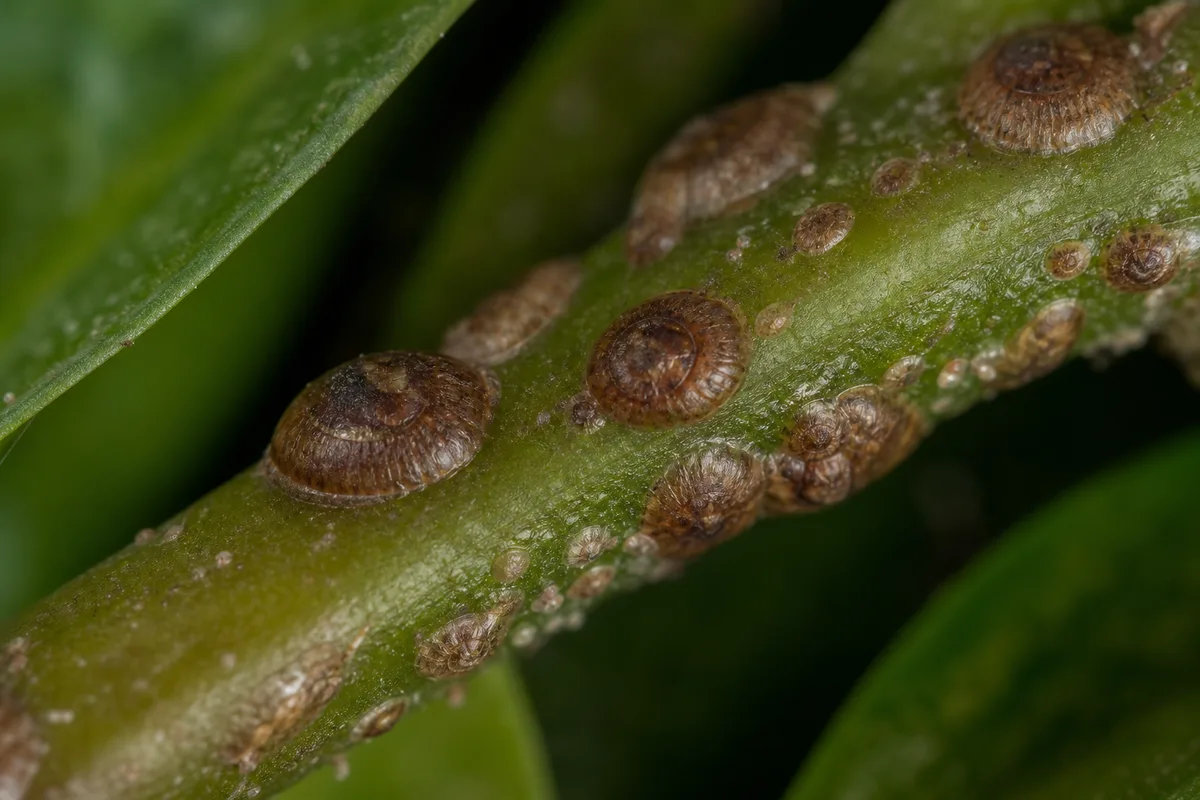
Inspect stems and leaflet joints closely; the small brown discs in this related ZZ example are scale insects.
Isolate an infested plant before treating it, then identify the pest rather than spraying by guesswork. Wipe or rinse off what you can reach, remove heavily infested parts, and repeat inspections because eggs or hidden insects may survive the first cleanup. The UC Statewide IPM houseplant guidance likewise emphasizes isolation, correct identification, and choosing controls suited to the pest.
If you use insecticidal soap or horticultural oil, choose a product labeled for the pest and indoor plant, follow its directions, and test a small area first. Do not apply a pesticide in a way that can expose pets or children.
Respond to Soft Stems and Root Rot
Soft, collapsing stalks, a sour smell, and dark mushy roots or rhizomes are warning signs of rot, often after soil has stayed wet too long. A wilted plant can also be thirsty, so check the mix before watering: roots affected by rot cannot take up water normally, and another drink can make the problem worse. Iowa State Extension explains that rotted roots are soft and brown or reddish, unlike firm, pale healthy roots.
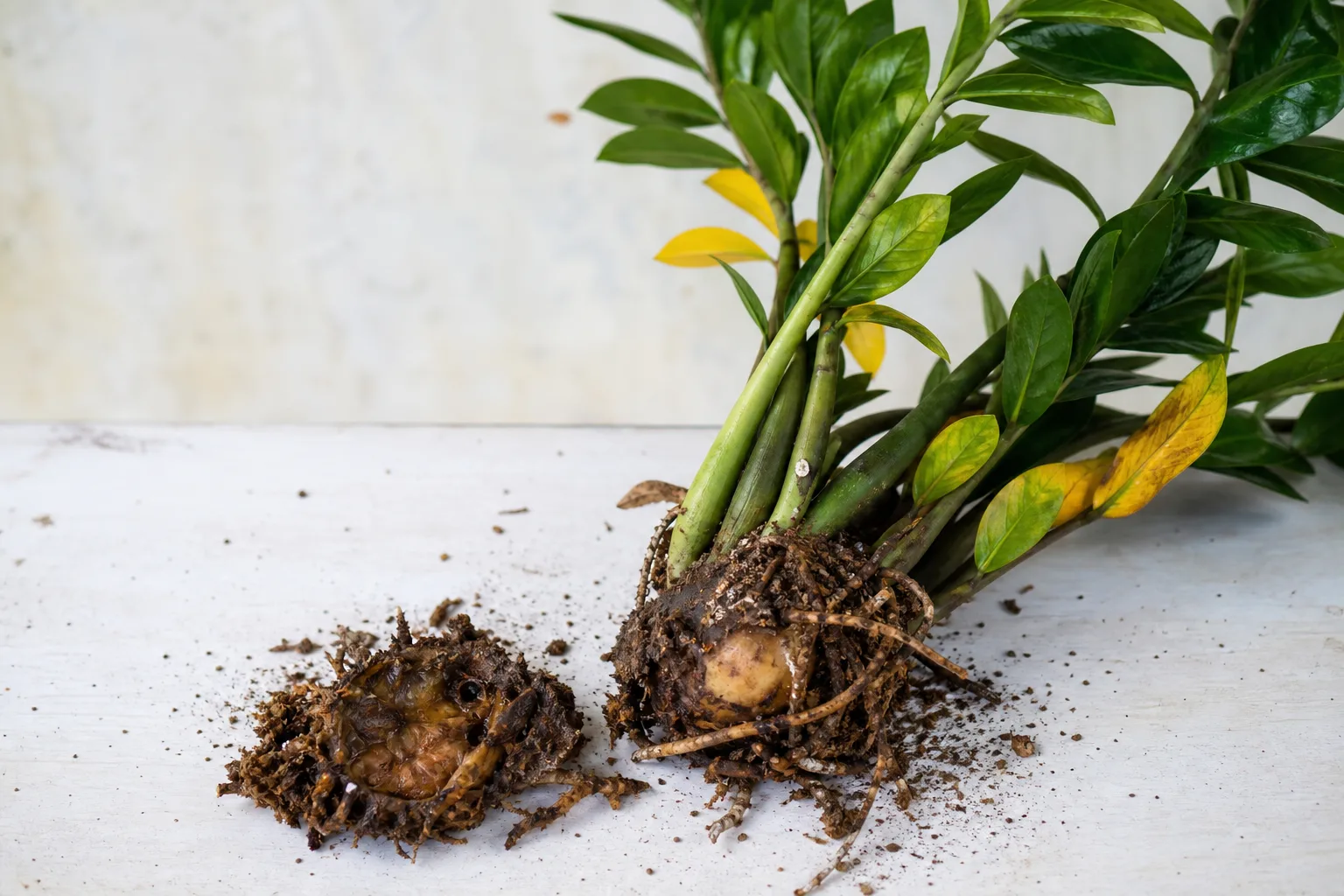
This related ZZ example shows why yellow leaves should be assessed alongside the roots and moisture level.
If rot is likely, remove the plant from its pot and discard soggy mix. With a clean tool, cut away soft roots, rhizome tissue, or stalk bases until the remaining tissue is firm; disinfect the tool between cuts. Replant only sound sections in a clean pot with open drainage and fresh airy mix, then water modestly and let the top part of the mix dry before watering again. Severely rotted plants may not recover, but firm remaining rhizome sections can sometimes regrow.
Prevent a repeat by reducing the pot size if the old one held far more soil than the roots, replacing compacted mix, and checking root-zone dryness before watering. Do not add extra gravel under the soil or rely on a weekly reminder: drainage holes and a porous medium matter more than a layer at the bottom.
Place Raven ZZ Safely Around Pets and Children
Keep Raven out of reach of pets and young children who may chew leaves or dig in the pot. ZZ plants contain insoluble calcium oxalate crystals; chewing can cause painful irritation in the mouth and throat, and the ASPCA includes ZZ among plants that can irritate pets when chewed. The Queensland Poisons Information Centre also lists the species as potentially toxic and irritating to skin or eyes.
Wear gloves if you are sensitive to plant sap, wash your hands after pruning or dividing, and keep fallen leaflets away from curious animals. If a person or pet chews the plant, contact a local poison center, veterinarian, or other appropriate medical service for advice; seek urgent help for trouble breathing or swallowing. Do not rely on a plant’s low-maintenance reputation as a safety signal.
Follow a Simple Seasonal Care Routine
In spring and summer, check the root zone when the pot feels lighter, rotate the plant occasionally for even growth, wipe dust from the glossy leaflets with a damp cloth, and consider one or two light feedings if it is actively growing. A new lime shoot is a cue to keep conditions steady, not to increase fertilizer or water beyond what the mix needs.
In fall and winter, expect slower drying and fewer new stalks as indoor light and growth decrease. Check moisture less often, stop feeding if the plant is resting, and keep it away from cold glass and heating vents. Throughout the year, remove fully yellowed or damaged stalks with clean pruners at the soil line, and use the plant’s actual condition—not the month—to decide when a change is needed.
Conclusion
Raven ZZ care comes down to bright indirect light, a well-drained pot and mix, and patient watering after the root zone dries. Its lime-green new shoots are part of the cultivar’s normal color progression, while mature leaflets deepen naturally over time.
Check the soil before you water, keep the pot appropriately sized, and treat yellowing or softness as clues to investigate rather than automatic calls for fertilizer. With that steady routine and sensible placement around pets and children, this slow-growing ZZ can maintain its distinctive foliage with little fuss.



