How to Grow Pumpkin on a Stick Eggplant
Learn how to grow pumpkin on a stick from seed, support its fruit-heavy stems, harvest orange branches for fall décor, and assess edible-use claims carefully.
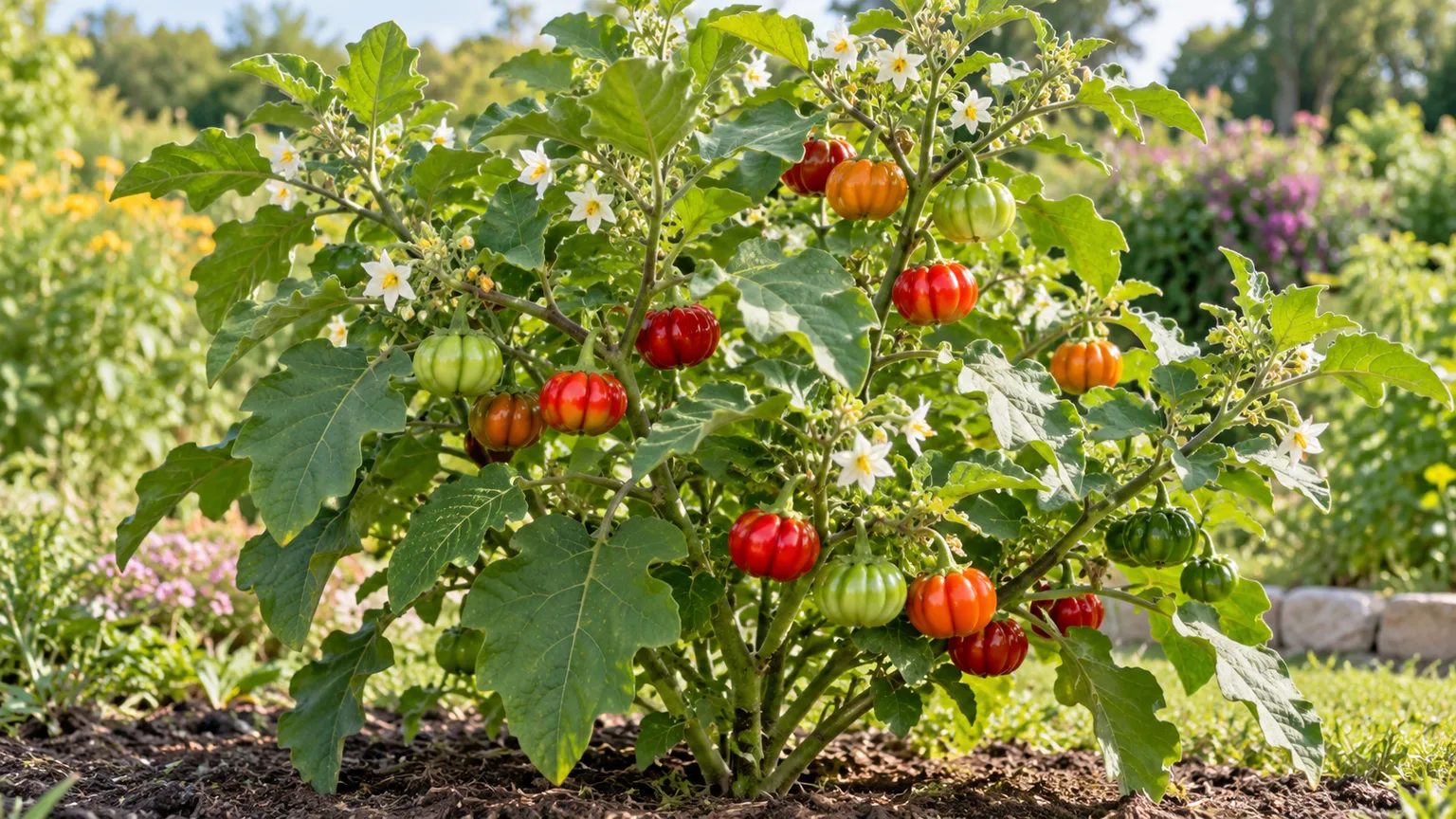
Pumpkin on a stick makes its name look literal: small, ribbed fruits sit along upright stems and turn orange to scarlet near the end of summer. The plant is an eggplant, though, and it grows as a branching warm-season shrub rather than as a pumpkin vine. Start it early enough to get a full summer of heat, give it sun and steady moisture, and support the branches before the fruit load pulls them over.
The name can also create confusion when you are buying seeds or deciding whether to eat a fruit. Plant labels may use Solanum integrifolium or Solanum aethiopicum; Kew treats the former as a synonym of the latter. More important for a gardener, ornamental varieties are grown for their colorful stems, while related Ethiopian and scarlet eggplants are food crops. That overlap calls for a little more care around identification and food use than the common name suggests. Kew’s Plants of the World Online recognizes S. integrifolium as a synonym of S. aethiopicum.
What Pumpkin on a Stick Actually Is
Pumpkin on a stick is a cultivated eggplant in the nightshade family, not a miniature pumpkin or squash. Its fruit is botanically an eggplant fruit, even though its broad ribs and green-to-orange color make it look like a tiny ornamental gourd. A mature plant usually forms an upright, branching bush, often around 3 to 4 feet tall and 2 to 3 feet wide in a garden, with large leaves, small star-shaped flowers, and fruit carried on sturdy stems. The stems and leaf midribs can have sharp prickles, so this is a plant to handle with gloves rather than brush past in a narrow path.
The modern botanical name and what “ornamental” means
You may find both Solanum integrifolium and Solanum aethiopicum on seed packets, nursery labels, and older garden references. The Kew taxonomic database lists S. integrifolium as a synonym of S. aethiopicum, so the two names are not necessarily evidence that a seller is offering two different plants. Common names such as pumpkin tree, mock tomato, pumpkin bush, scarlet eggplant, and ornamental eggplant can overlap too. When buying seeds, use the botanical name and a cultivar description when available, and save the packet so you know what you planted.
“Ornamental” describes the selection and the way it is commonly used in North American gardens and floral work. It does not turn the plant into a true pumpkin, and it does not by itself establish that a nursery-grown fruit is meant for the kitchen. The broader S. aethiopicum species includes edible eggplants, but edible selections and decorative cut-flower types are not interchangeable in every practical respect. Plan your growing and harvesting around the use you actually want: a food crop needs a known edible cultivar and food-safe growing history; a floral crop needs ripe, colorful stems and room to dry them.
Pumpkin on a Stick Growing Conditions at a Glance
| Growing factor | Practical target |
|---|---|
| Plant type | Warm-season annual in most temperate gardens; tender perennial only in reliably warm, frost-free climates |
| Light | Full sun; aim for at least 6 hours of direct light |
| Soil | Fertile, loose, and well-drained |
| Outdoor planting | After frost danger, when nights stay above about 55°F and soil is warm |
| Seed depth | About ¼ inch in a fine seed-starting mix |
| Spacing | Roughly 2 to 3 feet between plants |
| Water | Consistent moisture; water deeply when the top inch or two dries |
| Support | Stake or cage before heavy fruit bends branches |
| Main harvest | Glossy green fruit for food only when the cultivar and treatment history are confirmed; colored fruit for décor |
These are working targets, not guarantees that a plant will reach a particular height or fruit on a fixed date. Season length, variety, container size, and summer temperatures all influence the result. In short-summer regions, start indoors and select a sunny, warm location; in hot regions, keep roots evenly moist and give the plant good airflow.
When and Where to Plant
Choose the warmest sunny spot you can water reliably. A south-facing bed near a wall can hold more warmth, but avoid a pocket where water pools after rain. Because pumpkin on a stick is related to tomatoes, peppers, and other eggplants, rotating it to a bed that did not recently carry those crops can reduce repeated exposure to shared soilborne pests and diseases. Leave enough room to reach the plant without leaning through its prickles, and keep the mature canopy from shading shorter vegetables.
For the earliest and most reliable crop, sow indoors six to eight weeks before your average last frost date. Direct sowing is reasonable only where the warm season is long enough to get the plant established and carry fruit to the desired color before cold weather. A fall decorative harvest takes longer than an early green fruit harvest, so gardeners growing it mainly for orange stems should favor an early indoor start.
Start seeds indoors for an early, reliable crop
Fill clean cells or small pots with moist seed-starting mix, then sow each seed about ¼ inch deep. Keep the mix evenly damp, not waterlogged, and maintain warmth; eggplant seed germinates best in warm conditions, with horticulture guidance placing the range around 70 to 90°F. A heat mat can help if the room is cool, but remove it or lower the heat after seedlings emerge so the roots do not stay overly warm. Germination can take roughly one to two weeks, and uneven warmth or a dried-out surface can stretch that window. Epic Gardening’s pumpkin-on-a-stick guide gives a similar warm-germination range and shallow sowing depth.
Once sprouts appear, move them under bright grow lights or to a very bright window. A sunny window can work, but seedlings tend to stretch toward light if the day is short or the glass is cold; a grow light positioned close above the leaves usually gives more compact growth. Keep seedlings growing steadily rather than trying to force them with heavy fertilizer. Pot them up if roots fill the starter cell before outdoor conditions are ready, and label the seedling tray—the leaves resemble other young eggplants and are not distinctive enough to identify later.
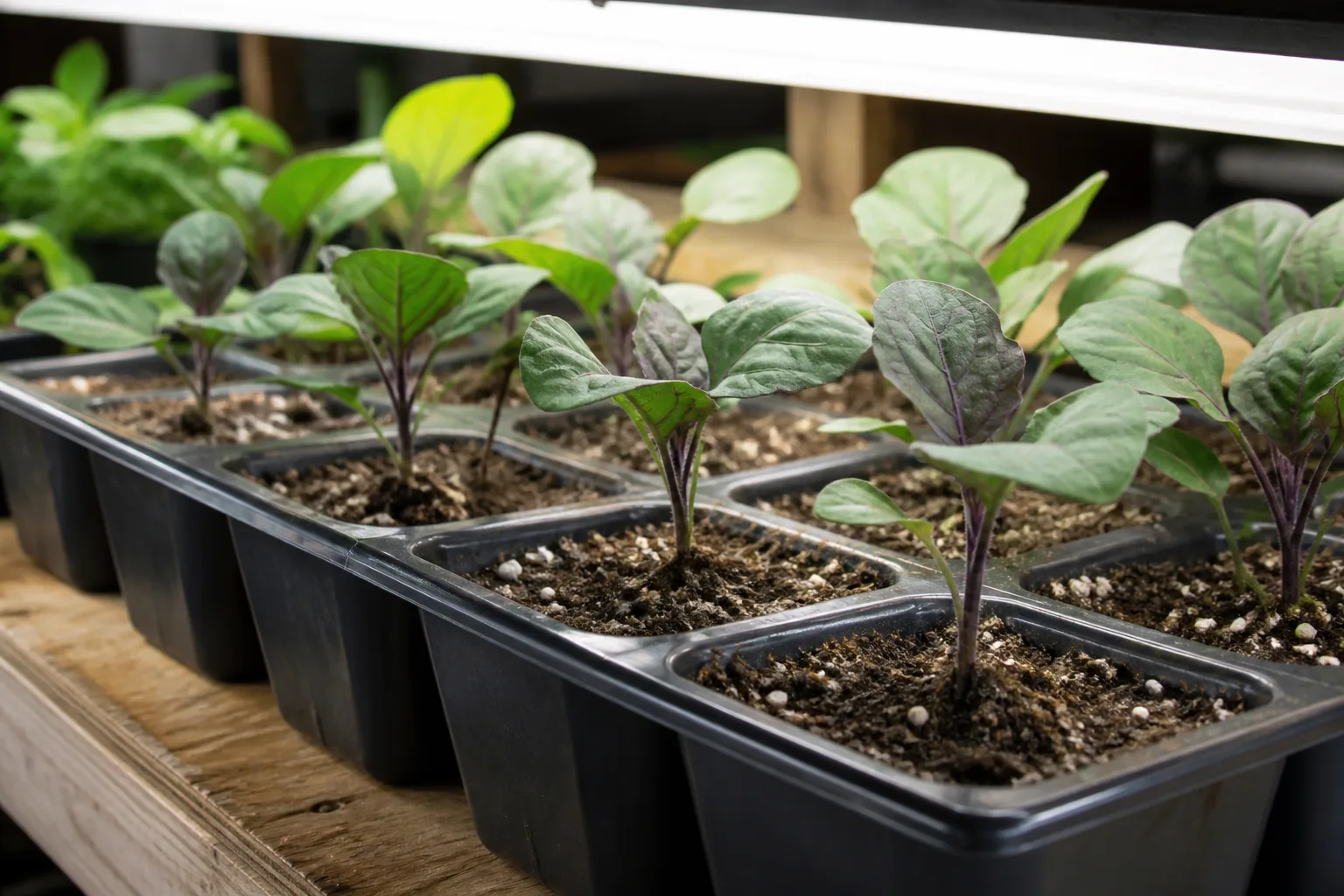
Start seedlings in individual cells so they are easy to harden off and transplant.
Direct-sow only in warm soil and long summers
Wait until the soil is at least about 60°F and frost danger has passed before sowing outdoors. Nebraska Extension notes that direct-sown seed can take around two weeks to germinate at that temperature, which means cool soil can delay establishment and shorten the time left for fall color. Sow a few seeds in each final position, then thin to the strongest seedling once they are established rather than crowding several plants together. A row cover can warm the bed early, but remove it once temperatures rise and flowers need access to air movement and insects.
Direct sowing also gives you less control over the early stages. If nights remain cool, seeds can sit in the soil instead of making a strong start, while indoor seedlings let you use the early spring weeks productively. If you choose direct sowing, track soil temperature at planting depth and check the forecast rather than relying only on the calendar. Nebraska Extension’s pumpkin-on-a-stick guidance uses 60°F soil as the direct-seeding threshold and recommends transplanting after frost danger when nights stay above 55°F.
Transplant seedlings after frost danger passes
Transplant when the forecast is reliably frost-free, nights are consistently above roughly 55°F, and seedlings have several true leaves. Before planting, harden them off for seven to ten days: set them outside in a protected bright-shade spot for a short period, then lengthen the exposure each day and gradually introduce morning sun. Bring them in during cold nights or strong wind. This transition reduces sunscald and wind damage, which can set a warm-season plant back just as it should be growing quickly.
Set each plant at the same depth it grew in its pot, firm the soil gently around the root ball, and water it in. Space plants 2 to 3 feet apart; wider spacing is useful where humidity is high because leaves dry faster after rain. Add a light mulch once the soil has warmed to conserve moisture and reduce weeds, keeping the mulch a few inches away from the stem. Install a stake or tomato cage at planting time if you expect a windy site or a long season. A support placed later can damage the root zone when you drive it through an established plant.
Sun, soil, water, and fertilizer that support fruit
Aim for six or more hours of direct sun each day. Good light supports both flowers and the late-season fruit you want for display, while deep shade tends to produce a leafy plant with fewer fruits. In very hot climates, morning sun with light afternoon protection can prevent scorched foliage and sunburned fruit, but shade all day is not a substitute for a sunny growing site. The Royal Horticultural Society also recommends full sun for S. aethiopicum.
Give it fertile soil that drains freely. A generous layer of finished compost incorporated into a garden bed can improve structure and moisture retention without making the root zone soggy. If the soil is dense clay, grow on a raised bed or amend a broad area to improve drainage rather than creating a tiny pocket of loose soil surrounded by compacted ground. A slightly acidic to neutral soil is suitable; testing is more useful than adding lime, calcium, or phosphorus based on a guess.
Water deeply at the base when the top inch or two of soil begins to dry. During a hot, dry stretch that may mean one or two thorough waterings a week, but adjust for rainfall, soil type, wind, and whether the plant is in a pot. The aim is an even moisture level, not daily shallow splashes that wet leaves and leave the deeper roots dry. Irregular drought followed by heavy watering can stress fruit development, while constantly saturated soil favors root and fungal problems. A soaker hose or drip line is helpful because it delivers water to the root zone and keeps leaves drier.
Feed moderately. Mix compost into the bed before planting, then use a balanced vegetable fertilizer only if your soil test or plant growth calls for it. Avoid repeated high-nitrogen feeding: oversized dark foliage with few flowers is a sign that the plant may be receiving more nitrogen than it needs. A tomato or fruiting-vegetable fertilizer can be appropriate if its label matches the soil needs, but follow the package rate rather than applying extra because the plant looks hungry. The RHS suggests a high-potassium feed after fruit set; that is a useful general direction, not a reason to ignore soil-test results or overfertilize.
Stake the branches; prune only when needed
A full plant can carry many heavy fruits, and branches may bow or split after rain or wind. Tie the main stems loosely to a sturdy stake, or place a tomato cage around the plant while it is still small. Soft plant ties should be snug enough to support the branch but loose enough to let it thicken. Check ties as the season advances, especially after the fruit turns color and the canopy becomes top-heavy. A cage also makes it easier to keep the prickly branches from sprawling into a path.
Routine pruning is not needed to make the plant flower or fruit. Remove a broken, diseased, or ground-touching branch with clean pruners, and thin a crowded interior only if poor airflow is contributing to repeated disease. Avoid aggressive late-season pruning: every healthy leaf helps the plant make energy, and removing too much foliage can reduce fruit color or leave fruit exposed to sunscald. Wear gloves, long sleeves, and eye protection if you are reaching into dense growth; the stems and leaf midribs can have sharp spines that are easy to miss.
Flowering, pollination, and why fruit may not set
Small white or purplish star-shaped flowers appear once the plant is warm and established, often in summer. The flower clusters develop into ribbed green fruit, which later changes color as it matures. Eggplant flowers are bisexual, so you do not need a separate male and female plant the way you do with a pumpkin. A single healthy plant can set fruit; air movement and buzzing insects can help release and move pollen, but planting a second plant or a nearby pollinator plant is not a strict requirement. The University of Saskatchewan’s eggplant guide describes eggplants as self-fertile and notes that wind or buzz-pollinating insects can help move pollen.
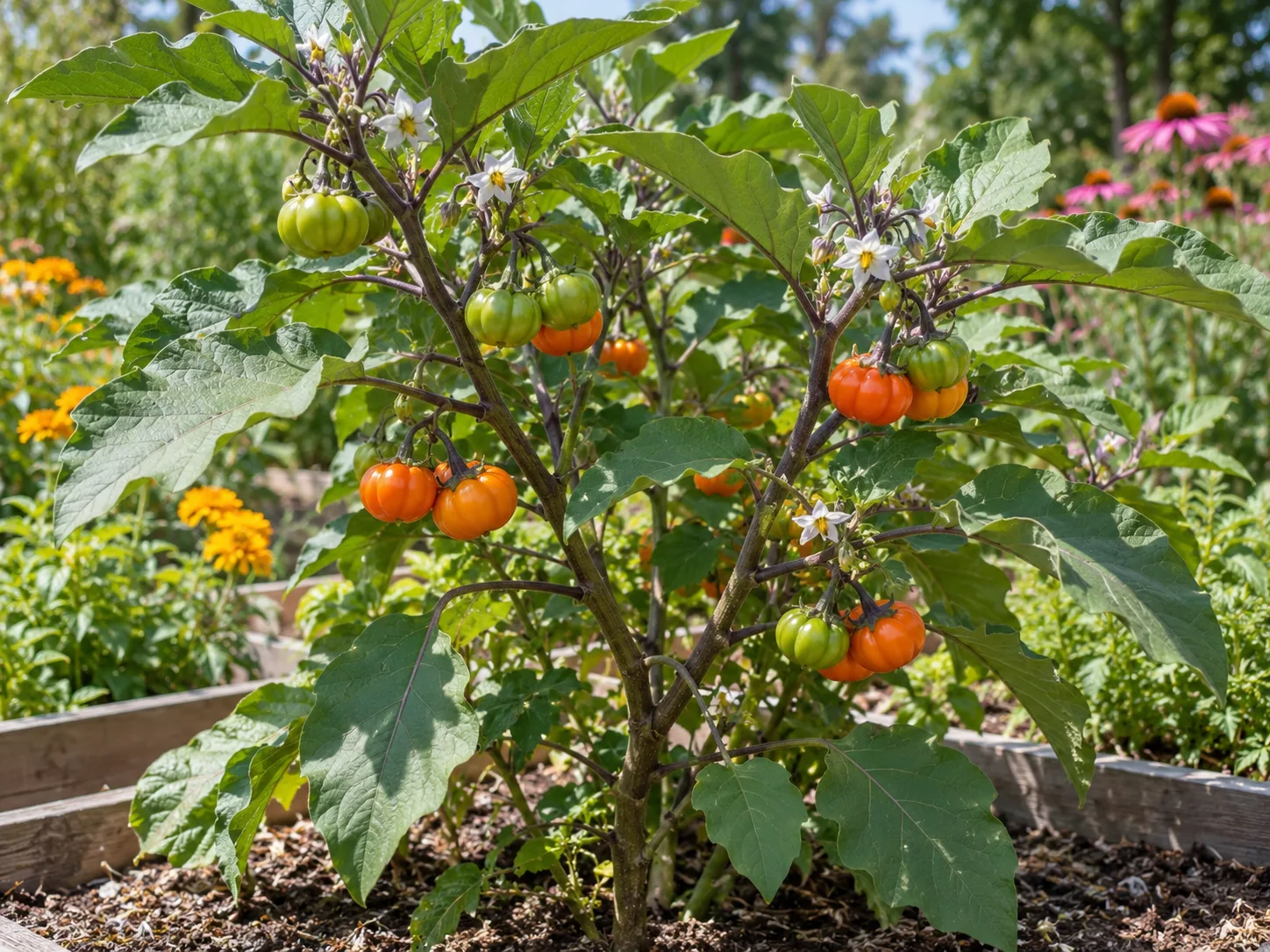
Flowers and fruit can share the same branching plant through summer.
If flowers open but fruit does not swell, check temperature, water, and light before hand-pollinating. Cool nights, very high heat, dry soil, waterlogged roots, or excessive nitrogen can interfere with flower and fruit development. In an enclosed greenhouse or indoor setting, gently shaking a flowering branch every few days can move pollen, but it will not correct a plant that is too cold or stressed. If the flowers are dropping during a heat wave, keep soil moisture even, improve ventilation, and give the plant time to resume growth when conditions moderate.
Pests and diseases to watch for
Inspect the plant every few days, including the undersides of leaves and the new growth. Flea beetles leave small round holes and can slow young seedlings; row covers are most useful before flowering, and plants usually tolerate some leaf damage once established. Aphids cluster on tender stems and buds, while spider mites thrive in hot, dry conditions and can cause fine stippling or webbing. Hornworms and other chewing caterpillars leave ragged leaves and dark droppings; hand-pick them when you find them. The plant’s prickles may discourage some browsing, but they do not make it pest-proof.
For a small aphid or mite outbreak, first knock pests off with a directed stream of water and remove badly infested leaves. Improve spacing and avoid wetting foliage late in the day to lower disease pressure. Powdery mildew can appear as a white coating in humid, crowded growth; remove badly affected leaves and improve airflow. If a plant wilts despite damp soil, check the root zone and consider whether drainage or a wilt disease is involved. Do not compost a plant with suspected soilborne wilt; discard it according to local guidance and rotate away from nightshades.
Use pesticides only when damage warrants intervention, and choose a product labeled for the crop and pest. Follow the full label, including protective equipment, re-entry, preharvest intervals if fruit will be eaten, and restrictions for pollinators. “Organic” on a product label does not mean harmless to bees or safe to spray without precautions. If the crop is strictly ornamental, still protect beneficial insects and pets by following label directions and keeping them away until the product permits access.
Can pumpkin on a stick grow in a pot or indoors?
A sunny patio container is a good option if your garden soil drains poorly or you want to keep the plant near a fall display. Use one plant in a container of at least 5 gallons with several unobstructed drainage holes; a larger, heavier pot is more stable when the fruiting branches load up. Fill it with a quality container mix rather than garden soil, which can compact in a pot, and place it where it will receive at least six hours of direct sun. University of Maryland Extension lists 5 gallons as a minimum for eggplant; in practice, extra volume gives this tall, fruiting plant more room and makes moisture easier to manage.
Containers dry more quickly than garden beds, so check them daily in hot or windy weather. Water until excess drains from the bottom, and do not let the pot sit in a full saucer. Use a cage or stake secured into the pot before the branches become heavy. Indoors, the challenge is not just warmth: you need strong supplemental lighting, moving air, room for a bushy plant, and a way for pollen to move between flowers. A sunny windowsill alone rarely gives enough light for a productive, well-shaped plant. Treat indoor fruiting as an experiment rather than the reliable way to produce fall stems.
Harvest green eggplants or orange stems at the right time
Harvesting stage depends on the job. For culinary use, edible S. aethiopicum types are commonly harvested before full color when the skin is glossy and the fruit is still firm. Nebraska Extension describes the green fruit as milder and the red-ripe fruit as more bitter; it also reports that eating-stage fruit may take about 65 to 75 days from transplanting. These are not fixed deadlines for every seed strain, so judge by appearance and the packet’s maturity information.
For fall arrangements, leave fruit on the plant until it has developed its full orange to scarlet color. The first cool fall weather can encourage a final color change, but do not wait so long that a hard frost or prolonged rain damages the branches. If frost is forecast while the fruit is mostly colored, cut the stems before the freeze and let them finish drying indoors. Use clean pruners to make a cut on a sturdy branch, then support the branch with your other hand so its fruit does not crack or tear off. The fruit should be firm and free of soft spots or mold if you plan to preserve the stem.
Drying stems for fall arrangements
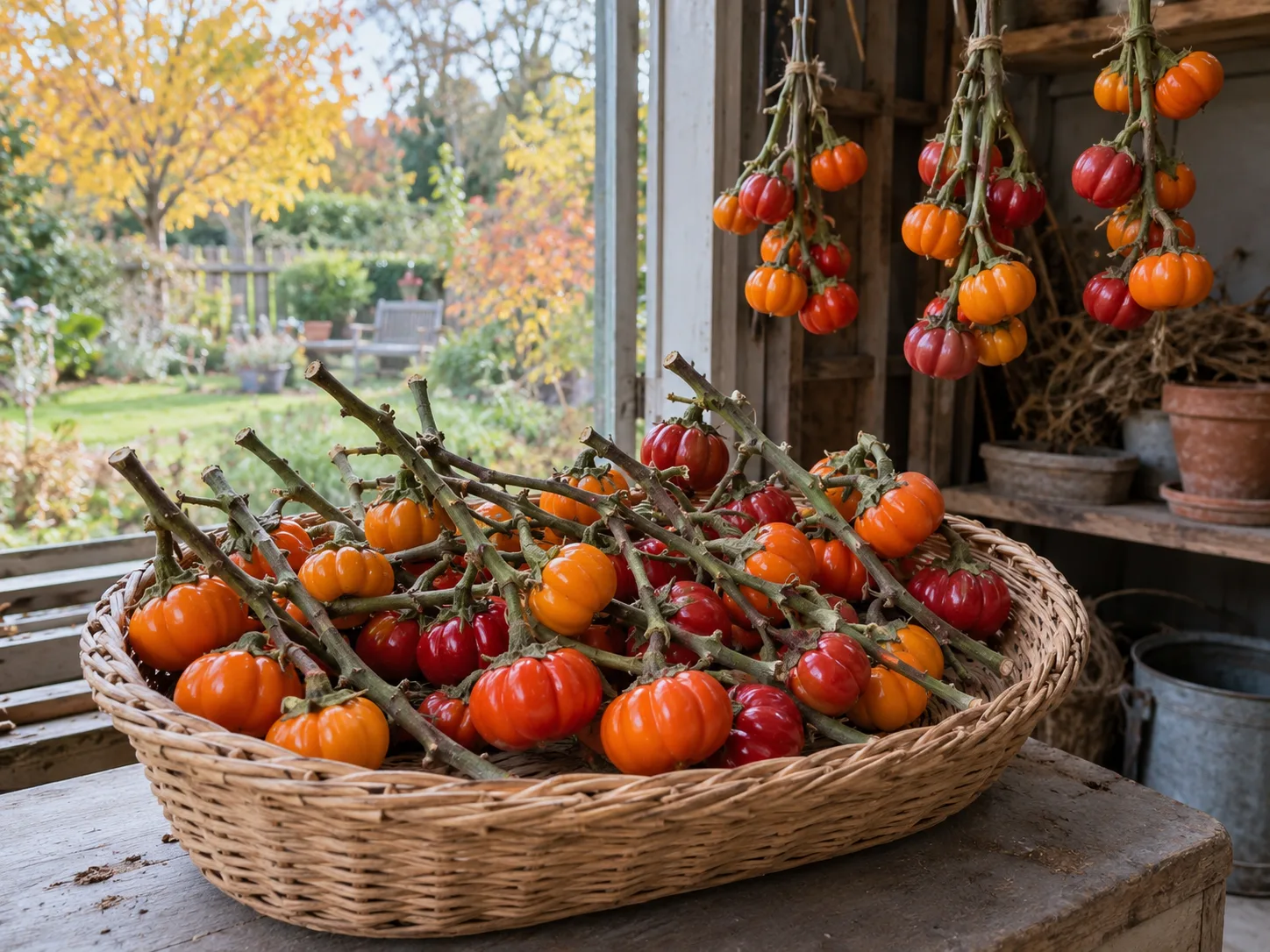
Cut colorful branches before frost and dry them where air can circulate.
Shake off loose debris and remove damaged leaves, then hang branches in small bunches in a dry, shaded, well-ventilated place. Leave enough space between bunches for air to circulate, and avoid a humid basement, direct sun, or a sealed box while the stems are still damp. Drying out of direct sun helps retain the fruit’s color; in a warm, arid climate, some fruit may dry on the plant, but damp autumn weather makes indoor drying more dependable. Cornell Cooperative Extension reports that fully colored stems are harvested for arrangements and that dried fruits can retain their shape and color for months.
Check the stems after several days and remove any fruit that softens or shows mold before it affects the rest of the bunch. Once the leaves and stems are dry and papery, store or display them in a dry room away from condensation and direct sunlight. Do not seal fresh-cut branches in plastic; trapped moisture is a common reason decorative fruit rots before it dries. If you want only the fruits, cut them individually with a short piece of stem still attached rather than pulling them from the branch.
Is pumpkin on a stick edible—and is it safe?
The short answer is qualified: some Solanum aethiopicum eggplants are food crops, but an ornamental label is not proof that a particular plant was grown or sold for eating. The species includes edible scarlet eggplants, and the Royal Horticultural Society notes that its fruit is cooked and used like tomato or aubergine. A USDA Agricultural Research Service summary of a peer-reviewed analysis found the tested scarlet eggplant fruit to have glycoalkaloid levels similar to common eggplant. That result supports the edibility of the tested S. aethiopicum material; it does not certify every ornamental cultivar, an unidentified plant, or any fruit sprayed with a non-food ornamental pesticide.
Eat only fruit from a correctly identified, food-intended seed or plant source, and only if you know it has not been treated with products prohibited for edible crops. Never eat a decorative stem bought from a florist or cut-flower supplier unless the grower confirms its cultivar and pesticide history. Do not eat leaves or stems, and do not assume that cooking makes an unknown plant safe. If you cannot verify both identity and treatment history, enjoy the fruit as decoration instead. USDA ARS’s summary of the scarlet eggplant study is about measured S. aethiopicum fruit, not every plant sold under a common name.
Keep children and pets from sampling the colorful fruit or chewing the prickly foliage. The Pet Poison Helpline’s nightshade guidance groups eggplant with nightshade food crops and notes that a few bites of foliage or fruit can cause mild signs such as nausea in pets; the exact response depends on the animal and amount eaten. That guidance is not a species-specific test of every pumpkin-on-a-stick cultivar, so treat an ingestion as a reason to call a veterinarian or animal poison service rather than trying to estimate risk yourself. Wear gloves when pruning and wash your hands after handling plant material.
Save seed and handle the end of the season
If you want seed for next year, reserve one fully mature fruit from a healthy plant and let it finish coloring before removing it. Save seed only when the plant’s cultivar is known and, if you plan to eat future crops, food-intended. Cut-flower seed strains may be selected for shape and stem color rather than kitchen quality. Separate the seeds from the mature fruit, rinse away pulp, and dry them thoroughly on a labeled screen or plate before storing them in a cool, dry place. If you grew more than one eggplant variety nearby, do not assume saved seed will produce an identical plant; cross-pollination can change what appears in the next generation.
In most temperate gardens, treat pumpkin on a stick as an annual: frost damages or kills the plant, and a pot does not make it winter-hardy. Before a freeze, harvest colored branches for drying and remove diseased debris from the bed. In a reliably frost-free climate, the plant may persist longer, but it still needs warmth, light, drainage, and room; protect it from cold snaps. If you are not saving seed or keeping a plant in a warm greenhouse, remove the spent plant rather than leaving diseased foliage in the bed.
Conclusion
Pumpkin on a stick is easiest to grow when you treat it as a heat-loving eggplant with an ornamental harvest: start seeds early, wait for warm soil and frost-free nights, give the bush full sun and steady water, and support its loaded branches before they bend. The late-season fruits are the reward for getting the timing right; leave them to color on the plant, then dry the stems in moving air for fall displays.
The name also deserves care. Solanum integrifolium is treated by Kew as a synonym of S. aethiopicum, an eggplant species that includes edible crops, but a decorative plant’s cultivar and spray history may be unknown. Grow it for its striking stems by default, and consider eating fruit only when its identity and food-safe growing history are certain.



