Poinsettia Care: Indoor Growing and Reblooming
Keep a poinsettia healthy after the holidays with practical light, watering, and temperature advice, plus a realistic month-by-month rebloom plan.

If your poinsettia looked perfect at the store and starts shedding leaves a week later, check its trip home and the pot before reaching for fertilizer. These tropical shrubs react quickly to cold air, sudden temperature changes, and roots left standing in water.
The red, pink, or cream parts are bracts—colored leaves around the tiny yellow true flowers—so some color fading is a normal end to the display, not proof that the whole plant is dying. University of Minnesota Extension explains the bracts and the small flowers, called cyathia, at their center.
A healthy plant can stay attractive for weeks with bright daylight, moderate warmth, and watering based on the potting mix rather than a weekly reminder. Keeping it for another year is possible, but reblooming takes a consistent fall light routine; it is an optional project, not a test of whether you can care for houseplants.
Choose a healthy plant that can handle the trip home
Before buying, look at the leaves under the colored canopy, not just the bracts facing the aisle. Choose a plant with firm stems, dense green foliage, and no widespread yellowing, wilting, or leaf drop; turn it gently to check the back and undersides for whiteflies or cottony mealybugs.
At the center of the bracts, small fresh yellow cyathia are a better sign than flowers already shedding pollen, since the latter are farther into their display cycle. RHS advises choosing a healthy, non-drooping plant and notes that cold display conditions can cause leaves and bracts to fall.
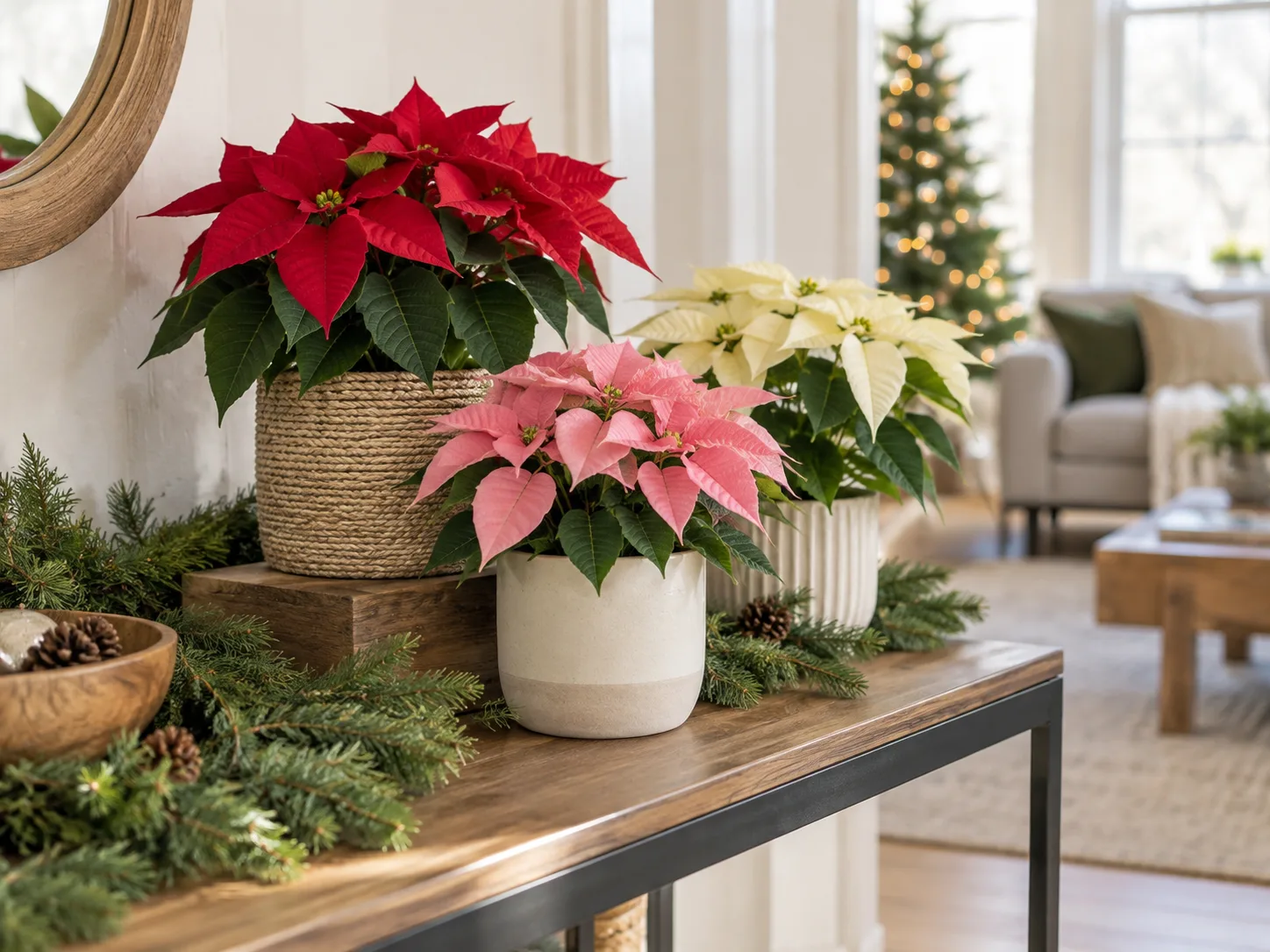
Color and size are mostly preference. Red is traditional, but cultivars also come in pink, white, cream, and patterned bracts; glittered or spray-painted blue and gold plants are treated decorations, and new growth will not necessarily retain the artificial color. If you want to keep a plant beyond the holidays, prioritize healthy foliage, manageable size, and a pot with a way for excess water to escape over a particular cultivar name.
Protect it during transport and its first night
A short walk through cold air can undo the care you plan to give it indoors. Ask the seller to sleeve or wrap the foliage, carry the plant directly to a warm car, and do not leave it in an unheated trunk while running errands.
RHS recommends wrapping poinsettias for the journey and getting them inside promptly; it lists 55–60°F (13–16°C) as a minimum range and warns that cooler exposure can trigger leaf and bract drop. RHS growing guidance
At home, let the plant settle in one bright room instead of moving it around to decorate different spots. Avoid cold window glass at night, an exterior door that opens often, a fireplace, a radiator, and a heating vent. If a plant has already been chilled, stabilize its location and check the soil before watering; adding water to damaged, cool roots can compound stress, and lost bracts will not turn green again.
Give poinsettias bright, steady daylight
Put the pot close to a bright east, south, or west window where leaves receive several hours of daylight. A sheer curtain helps if direct midday sun through glass is intense, but do not interpret “indirect” as a dim corner: weak winter light encourages lanky growth and can shorten the colorful display.
University of Minnesota Extension recommends a bright window, while the RHS advises bright light out of direct sun for a typical indoor display. University of Minnesota Extension · RHS
Keep the plant where it can see the window rather than behind a heavy curtain or several feet into a shaded room. Rotate the pot a quarter turn every week or two if growth leans toward the glass. Do not put it on a windowsill that becomes cold overnight just because the daytime light looks ideal; a nearby table can provide similar brightness with a steadier temperature.
Keep the plant warm without placing it near heat
A normal, comfortable room is usually suitable. University of Minnesota Extension gives 65–70°F (18–21°C) as an ideal indoor range and warns that poinsettias can be damaged below 50°F (10°C); the practical lesson is to avoid both chilly drafts and hot, drying blasts rather than chase an exact thermostat setting. University of Minnesota Extension
Do not park a poinsettia over a radiator, above a fireplace, beside a space heater, or in the direct path of a forced-air vent. Those spots can dry one side of the root ball and leaves while the rest of the pot remains wet, making “water more” the wrong response.
Typical indoor humidity is often adequate; if the foliage repeatedly crisps near a heat source, first move the plant away and assess the mix before adding a humidifier. Misting is not a substitute for correcting the location or watering.
Water by checking the mix, not the calendar
Check the top of the potting mix with a finger. When the surface has begun to dry and the pot feels lighter, take the nursery pot to a sink and water evenly until excess drains from the bottom; let it finish draining before returning it to its sleeve or decorative cachepot. University of Minnesota Extension recommends watering when the surface feels dry or the pot is light, then allowing it to drain completely.
There is no dependable once-a-week schedule because a small pot in a sunny room dries faster than a large pot in a cool corner. Check more often during the first week while you learn how quickly this particular plant dries, then check less often as light and growth change. If the pot is still heavy or the mix feels damp below the surface, wait; if the surface is dry but the root ball has pulled from the sides, water thoroughly rather than adding frequent small sips.
A poinsettia should not sit in a puddle. Empty saucer water after watering, and do not leave the pot standing in a cachepot full of runoff.
Wet soil for days reduces air around the roots, while repeated severe drying makes foliage wilt and shed. Both extremes can produce similar symptoms, which is why soil feel and drainage matter more than the appearance of one leaf.
Fix the pot and drainage before changing the soil
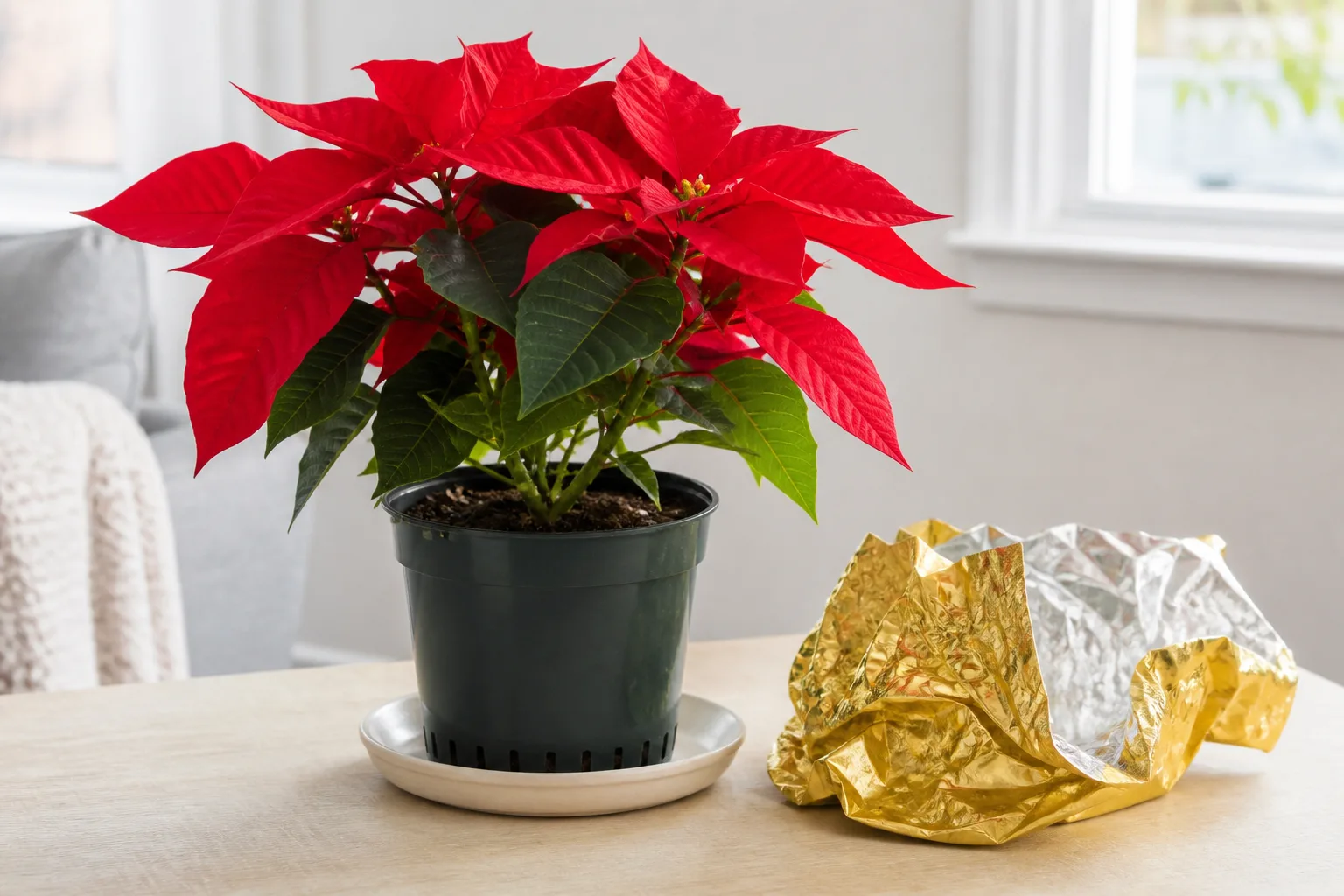
Many holiday plants come in a plastic grow pot hidden inside foil or a ceramic cover. That arrangement is fine for display only if the inner pot has drainage holes and you remove it to water; otherwise, trapped runoff can soak the bottom of the root ball without being visible from above.
Remove foil or lift the nursery pot out, water it over a sink, and let it drain before putting it back. If the decorative vessel has no drainage, use it as a cachepot, not as the container in which the roots sit.
You usually do not need to repot a poinsettia while its bracts are colorful. Repot in spring if roots circle tightly, the mix collapses and stays wet, or water runs through without moistening the root ball.
Choose a pot only modestly wider than the old one, with drainage holes, and a fresh, free-draining indoor potting mix; a much larger pot holds extra wet soil around a small root system and makes overwatering easier. After repotting, water once and let the excess drain.
Wait to fertilize or prune until growth resumes
A poinsettia in its winter display is not asking for a bloom booster. Do not fertilize just because the bracts are fading; extra salts can stress a plant that is growing slowly in short days.
Wait until green shoots or new leaves appear in spring, then use a balanced houseplant fertilizer at the diluted rate on its label. University of Minnesota Extension recommends starting when new growth is visible and using half-strength feed every three to four weeks; Illinois Extension similarly says to avoid feeding while the plant is in bloom. University of Minnesota Extension · Illinois Extension
Prune for shape after the colorful display has passed and the plant is actively growing again, not during the holiday period. Shorten leggy stems to encourage branching, make each cut just above a leaf node, and leave enough healthy stems for new shoots.
Wear gloves because cut stems release white latex sap, and wash the pruners afterward. For a compact plant, pinch soft growing tips during late spring and summer, but stop pinching by late summer so new shoots have time to mature before fall color formation.
Diagnose leaf drop and yellowing by looking at the pattern
One dropped lower leaf is not a diagnosis. Ask when the change started, whether the plant recently moved, and whether the soil is wet, dry, or merely damp; then inspect the stems, leaf undersides, and root-zone drainage. A pattern across several leaves is more useful than a single symptom, and changing light, water, fertilizer, and temperature all at once makes it harder to tell what helped.
Yellow leaves or fading bracts
If only the colored bracts are losing brightness after weeks on display while green leaves and stems remain firm, the seasonal show may simply be ending. If lower green leaves yellow gradually, check whether the pot stays wet, whether the room is dim, or whether the plant has been repeatedly allowed to wilt. Do not assume a nutrient deficiency and add fertilizer to a soggy or cold plant; correct the root conditions first.
If many leaves yellow quickly, slide the root ball partly out of the pot. Healthy roots are generally firm; dark, mushy roots and a sour smell point toward prolonged wetness and root damage, though visual inspection cannot confirm a specific pathogen. Trim only clearly dead material, improve drainage, and avoid applying a fungicide without a confirmed problem and a product labeled for that use.
Sudden leaf drop
Leaves dropping soon after purchase or relocation often signal cold exposure, a draft, or a sharp change in conditions. Check whether the pot was carried uncovered in cold weather, sat near a door, or touched cold glass overnight; if so, move it to a stable, bright place and keep watering decisions tied to the mix. A chilled plant may lose some foliage even after the cause is removed, so give it time before deciding it is beyond saving.
A plant losing leaves while the soil is constantly wet needs a drainage check before more water. One that is bone-dry and limp needs a thorough drink and full drainage.
Extension sources list both water extremes and temperature changes among common reasons for leaf loss, which is why falling leaves means overwatering is too simple. Illinois Extension · RHS
Wilting, soft stems, or brown edges
Wilting in dry mix usually means the plant needs water; wilting in wet mix can mean roots are not functioning because they lack air or have been damaged. Water a dry root ball slowly and thoroughly, then drain it. If the mix is wet, do not keep topping it up: check for standing water, ensure the holes are open, and let the medium begin to dry before watering again.
Brown, crisp margins often follow heat or dry-air exposure, while dark, soft tissue at the soil line is more concerning for rot. Remove only dead tissue with clean pruners, isolate the plant if there are spots or insects, and watch new growth for a week or two. If the central stems are black and collapsing or most roots are mushy, recovery may be unlikely; replacing a seasonal plant can be more realistic than repeated repotting and pesticide treatment.
Inspect for pests before treating
Check leaf undersides and stem joints for whiteflies, mealybugs, aphids, or fine spider-mite webbing. Whiteflies flutter when a disturbed plant is moved; mealybugs look like small cottony clusters; mite feeding can leave pale stippling.
Texas A&M AgriLife recommends regular inspection of leaf undersides for early detection and emphasizes following the product label if pesticide treatment is needed. Texas A&M AgriLife Extension
Isolate a newly infested plant from other houseplants. For a small infestation, remove visible insects and rinse foliage where practical, then recheck every few days; repeat any treatment only as directed on a label that specifically permits indoor ornamental use.
Avoid spraying just in case, especially while colorful bracts are present, because some products can injure foliage and a misidentified pest will not respond to the wrong treatment. If a plant has a severe infestation and is otherwise near the end of its seasonal display, discarding it sealed in household waste may protect the rest of the collection.
Handle sap carefully and use a balanced pet-safety plan
Broken or pruned stems exude sticky white latex. It can irritate skin and, less commonly, eyes, so wear gloves for pruning, avoid rubbing your face, and wash exposed skin and tools after handling. Keep the plant and trimmings away from children and pets who may chew them.
Poinsettia ingestion is commonly overstated as a severe poisoning risk, but it is not a reason to invite chewing. Pet Poison Helpline describes the plant as mildly toxic to cats and dogs; ingestion may cause drooling, vomiting, or occasional diarrhea, while sap on skin may irritate it.
If a pet eats part of the plant and develops symptoms, contact a veterinarian or animal poison-control service for case-specific advice rather than inducing vomiting or waiting for an online diagnosis. Pet Poison Helpline
Decide whether to keep, compost, or propagate the plant
Keep a poinsettia if its main stems are firm, it retains healthy green foliage, and you can give it a bright, warm place after winter. The plant does not have to rebloom to be worth keeping; a healthy green poinsettia can remain a foliage plant. If stems are black and soft, roots are extensively damaged, or pests keep spreading, composting or discarding it is a reasonable choice.
Propagation is possible from young, flexible stem cuttings in spring or early summer, but it takes more attention than keeping the parent plant. Use clean pruners and gloves, take a short cutting from healthy new growth, and root it in a clean, lightly moist propagation medium under warm, bright-but-not-direct light.
Keep humidity around the cutting without leaving the medium waterlogged, and expect some failures; professional propagation relies on controlled warmth, cleanliness, and humidity. The RHS gives spring to early summer as the softwood-cutting window, and Purdue Extension describes poinsettia cutting propagation for growers. RHS · Purdue Extension
Follow the year-round cycle for a second display
Poinsettias set colorful bracts in response to long, uninterrupted nights. The difficult part is not simply putting the plant in a dark place: it also needs a healthy period of leafy growth before autumn, and it must receive the dark treatment consistently. Rebloom is more likely with a vigorous plant and a predictable routine, but no schedule guarantees the same size or timing of color as a greenhouse-grown holiday plant.
After the display: winter through early spring
Keep a green poinsettia in bright light, avoid cold drafts, and continue checking the mix before watering. Growth may slow, and the pot can take longer to dry, so reduce watering only in response to slower drying rather than letting the plant wilt or storing it bone-dry.
Some care schedules recommend a cool, drier rest after substantial leaf and bract drop; others keep the plant growing under bright conditions. For a plant indoors with healthy green leaves, the safer practical rule is to protect it from extremes and let actual growth and soil moisture guide care.
When most bracts have faded, remove fallen leaves from the soil and trim dead stems. If the plant becomes leggy, you can cut it back once active spring growth is beginning, leaving several inches of healthy stem. Do not panic if it looks sparse for a short time after pruning; new growth may take several weeks to appear, and no fertilizer can force a plant to grow while conditions remain cool and dim.
Spring and summer: rebuild a compact plant
When new shoots appear, increase light and begin diluted feeding. Repot only if roots crowd the container or the medium has broken down; use a container with drainage and a free-draining potting mix.
These steps restore active growth, which supplies the energy for fall bract production. University of Minnesota Extension
You can move the plant outdoors after frost danger has passed and nights remain reliably above about 55°F (13°C). Acclimate it over a week: begin in bright shade, then allow morning sun if leaves show no scorch.
Protect it from heavy rain that keeps the pot saturated, check more often because wind and sun dry containers faster, and pinch the growing tips every few weeks if you want a bushier shape. Stop pinching by late summer; late cuts remove the developing shoot tips that would otherwise form fall bracts. Illinois Extension · Gardening Know How
Bring the plant indoors before temperatures fall near 50°F (10°C). Inspect leaf undersides and rinse away dust or insects before placing it beside other houseplants.
A plant can remain outdoors through warm months, but it is not frost-hardy; freezing temperatures can kill it. In frost-free landscapes, outdoor culture is a different growing situation from a small holiday pot and benefits from local climate guidance.
Fall: provide the long night that triggers color
Around late September or early October, begin a nightly period of complete darkness. University Extension schedules vary: Illinois uses roughly 15 hours of darkness, while Minnesota describes 16 hours dark and 8 hours bright; a practical target is 14–16 uninterrupted dark hours each night for about 8–10 weeks.
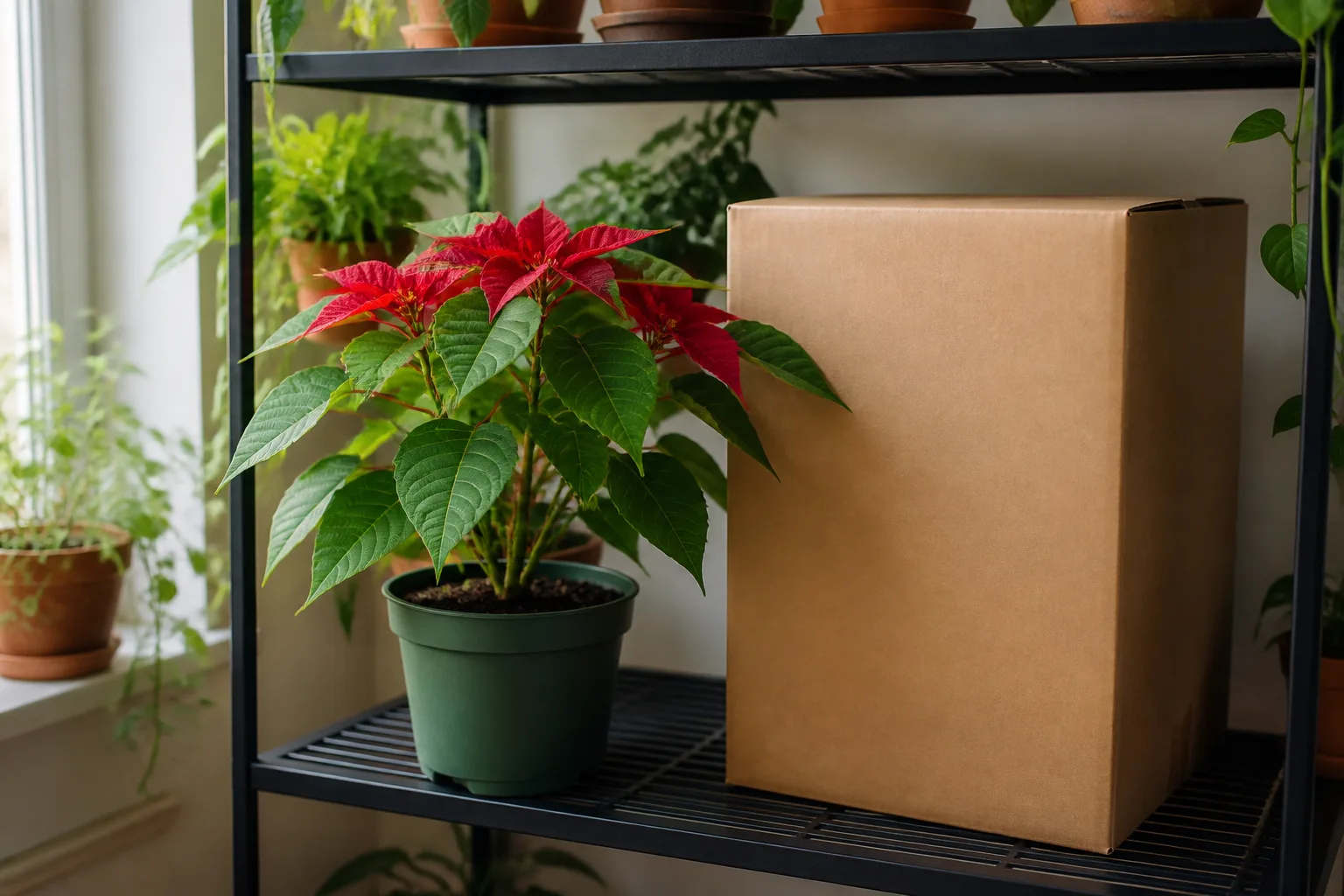
Keep the plant in bright light during the day, then put it in a truly dark closet or cover it with an opaque box at the same time every evening. Illinois Extension · University of Minnesota Extension · Gardening Know How
A lamp, hallway light, or brief interruption can disrupt the long night, so choose a method your household can repeat. Do not put the covered plant in a hot, airless place or leave it in darkness during the daytime; the routine alternates a long night with bright daylight.
Keep watering by checking the mix, avoid drastic temperature swings, and stop the treatment when bracts show good color or the planned period ends. If bracts stay green, first review missed nights, late pruning, plant vigor, and light exposure rather than adding a special fertilizer.
Conclusion
Good poinsettia care starts with a warm trip home, bright daylight, free drainage, and watering only when the mix begins to dry. When leaves fall, use the timing and root-zone conditions to identify a likely cause before changing several parts of the care routine.
If you want another colorful display, keep the plant growing through spring and summer, then give it a consistent long night in fall. If the plant declines or the rebloom schedule does not fit your home, it is fine to enjoy it for one season; poinsettia care should make the holidays easier, not turn a decorative gift into an obligation.



