How to Grow and Care for Osiria Roses
Learn how to choose, plant, water, prune, and troubleshoot a rose sold as Osiria, with careful guidance on cultivar claims and look-alike plants.

If a rose is sold as Osiria, treat the name as a starting point for asking questions—not as proof that the plant will match every dramatic photograph online. The name is commonly attached to a bicolor, hybrid-tea-style rose with dark red inner petals and a pale reverse, but exact cultivar history, parentage, and the reliability of plants sold under the name are not consistently documented across easily checked horticultural references. That uncertainty matters: good rose care can help a correctly labeled plant thrive, but no pruning or fertilizer can make a different rose become a true-to-name Osiria.
The practical approach is to buy a healthy, vegetatively propagated rose from a seller that identifies its source and offers a clear replacement policy, then grow it according to its verified rose class and your local climate. If the seller cannot verify the class, use the conservative hybrid-tea guidance below as a working model while watching how the plant actually grows.
What the Osiria name does—and does not—confirm
“Osiria” is used in online nursery listings and gardening articles for a striking red-and-white rose. Secondary sources repeat precise claims about a German origin, a release year, breeder, parentage, height, hardiness, and flower size, but these details are not all independently documented in the same way. The name alone therefore does not tell you whether the plant in a listing is a correctly propagated cultivar, a similar bicolor rose, or a seedling marketed with a memorable name.
Botanical naming helps make the distinction clear. Rosa is the genus; a cultivar name identifies a selected plant that is maintained through propagation. “Hybrid tea” describes a garden class and growth habit, not a complete identity or guarantee of a particular color pattern. The Royal Horticultural Society explains the difference between cultivar and botanical variety in its rose growing guide. For Osiria specifically, use the name cautiously unless the supplier can tie the stock to a named, traceable source.
Be especially wary of packets of “Osiria rose seeds” promising identical red-and-white blooms. Roses grown from seed are genetically variable, and hybrids do not reliably reproduce the parent’s selected traits from saved seed. A seed-grown plant can be a rose without being the same cultivar as the parent. This is not a technicality: flower color, petal reverse, fragrance, plant habit, and disease response can all differ.
How to evaluate a plant before you buy
Start with the seller, not the most saturated flower photo. Ask whether the rose is sold as a named cultivar, whether it is grafted or grown on its own roots, what rose class the supplier assigns it, and whether the plant is a rooted cutting or a seedling. A reputable seller should be willing to explain how it labels its stock. A photograph by itself cannot establish identity; heavily edited, digitally recolored, or repeatedly reposted images are particularly poor evidence.
Inspect the label and the plant together. Look for firm canes and plump buds; roots should not smell sour or appear black and mushy. A container root ball should be moist but not sitting in stagnant water. On a dormant bare-root rose, roots should be flexible, not brittle, and canes should not be desiccated.
Keep the order confirmation, plant tag, seller’s description, and a dated photograph of the plant on arrival. If the flowers later differ from the advertised pattern, that record lets you contact the nursery with specifics. Do not assume a poor first bloom proves mislabeling: heat, immature plants, and normal variation can affect color intensity. Repeated, stable differences across later blooms are more useful evidence than one flower opening during a heat wave.
Choose a site with sun, airflow, and room
Most repeat-flowering hybrid tea roses need a sunny, open position to produce strong shoots and flowers. A practical target is at least six hours of direct sun, preferably with morning light that dries dew from foliage. The RHS notes that many roses tolerate some light shade but perform best in sun; its guidance also recommends spacing that avoids competition. In very hot inland or desert climates, afternoon shade may reduce flower scorch, but a shaded, damp corner usually trades heat relief for weaker growth and more disease pressure.
Give the plant enough room for air to move through and around the mature shrub. Do not wedge it against a wall where rain splash and still air keep leaves wet, or beneath a tree whose roots compete for water. If you are replacing an old rose, avoid replanting in exactly the same pocket of soil without addressing the cause of the previous plant’s failure. Old roots, compacted earth, poor drainage, and disease history can make the new plant struggle even when the label is correct.
Think about microclimate before using a hardiness-zone claim from a listing. A rose may survive winter in a sheltered courtyard but fail on an exposed ridge at the same nominal zone. Wind, freeze-thaw cycles, summer heat, humidity, and rootstock all affect performance. Use local extension guidance for the timing of planting and winter protection; the RHS and the University of Nevada, Reno Extension’s desert rose guide, for instance, differ in seasonal schedules because they serve different climates.
Prepare soil that drains without drying out
Roses need soil that holds enough moisture for roots while allowing excess water to drain away. Loam or amended garden soil with organic matter is a useful starting point, but do not turn the planting hole into a pot of rich compost surrounded by dense native clay. A sharply different backfill can hold water like a basin or discourage roots from moving outward. Improve the broader bed when possible, and correct compaction or drainage before planting.
Check drainage after rain or with a test hole. If water remains pooled for hours, locate a better site, raise the bed, or improve the soil structure across a wider area; adding a handful of sand to one hole is not a dependable repair for heavy clay. Conversely, very sandy soil drains quickly and may need organic matter and more frequent irrigation while the plant establishes. A soil test is more useful than guessing at pH or applying sulfur, phosphorus, or iron because a rose looks pale.
Leave a broad, open root zone rather than piling mulch or compost against canes. A few inches of organic mulch can moderate soil temperature and reduce evaporation, but keep it pulled back from the crown and graft union. The point is to improve the conditions roots experience over time, not to bury the base in a wet collar that stays humid after every irrigation.
Planting a bare-root or container rose
Plant when the soil is workable and the weather is mild enough for roots to establish. Bare-root roses are normally planted while dormant in the locally recommended dormant season; container roses are more flexible, but planting during extreme heat or drought adds avoidable stress. The RHS advises against planting into frozen or waterlogged ground and recommends planting bare-root stock promptly after arrival. In hot-summer regions, fall or early spring may be more forgiving for container plants than the hottest part of summer.
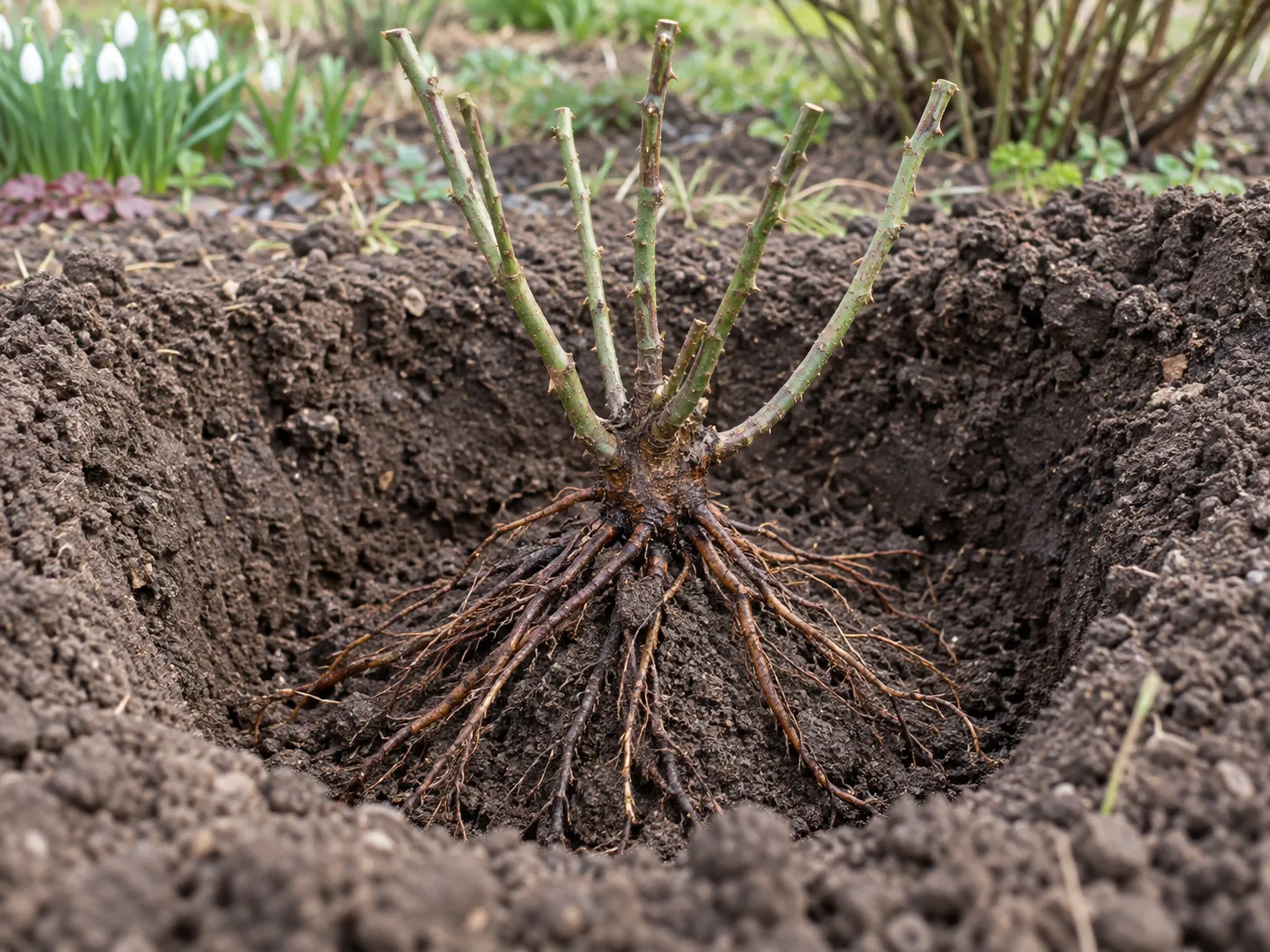
Before planting bare-root stock, hydrate the roots as directed by the supplier, trim only clearly broken or dead pieces, and protect them from drying while you prepare the bed. Set the roots so they can spread naturally rather than folding into a tight J shape. For container plants, ease the rose out and loosen only roots that circle densely; do not shred a healthy root ball just to make it look different. Planting depth depends on whether the rose is grafted and on local winter conditions, so follow the nursery tag or regional extension recommendation for the graft union rather than applying one universal depth rule.
Backfill with the soil removed from the bed, firm lightly to eliminate large air pockets, and water thoroughly to settle the soil around roots. If the plant leans or rocks, correct its position and firm the root zone; staking is mainly for exposed or top-heavy plants, not a substitute for a sound planting hole. Add mulch after watering, leaving a clear ring around the canes. Keep the plant evenly moist as new roots form, but do not keep an already wet root ball saturated.
Water by root-zone moisture, not a fixed calendar
There is no dependable “twice a week” rule for every Osiria-labeled rose. Frequency changes with soil texture, rain, wind, temperature, container size, and whether the plant is newly planted or established. Check soil moisture several inches below the surface near the root zone. If it is still cool and moist, wait; if it is dry and crumbly and the plant is actively growing, water slowly and deeply enough to wet the root area.
A new rose needs closer monitoring while roots spread beyond the original root ball. In hot or windy weather, check daily, but water only when the soil condition calls for it. An established in-ground rose can often use deeper, less frequent irrigation than a newly planted one. The RHS advises directing water to the soil and giving established border roses a thorough soak in dry spells; David Austin’s watering guidance also emphasizes adapting the amount to conditions rather than treating every rose bed alike.
Water at the base in the morning when practical. Drip lines or a soaker hose help deliver water to roots without routinely wetting foliage, which is useful where black spot and mildew are common. If you use overhead irrigation, allow leaves to dry promptly and avoid a schedule that leaves the plant wet overnight. In containers, check more often because the smaller soil volume can dry quickly; a pot must have drainage holes and should not stand in a full saucer.
Feed and mulch without pushing soft growth
A newly planted rose does not need a strong dose of fertilizer before it has begun to establish. Wait until it is growing and use a rose or balanced garden fertilizer according to its label and your soil-test results. Too much nitrogen can produce tender leafy growth that is more vulnerable to pests and may not translate into better flowers. If the rose grows steadily and flowers well, adding more fertilizer is not automatically an improvement.
For established roses, gardeners commonly feed as growth begins and again after the first flush if the plant is healthy and still actively growing. Timing varies with climate: a schedule made for a mild British spring will not map cleanly onto a hot desert summer or a cold northern winter. Follow local extension advice, the fertilizer label, and the plant’s response. Avoid fertilizing a drought-stressed, heat-stressed, or diseased rose until you have corrected the underlying stress.
Spread finished compost or well-rotted organic mulch over the root zone, keeping it away from the canes. Mulch helps reduce moisture swings and weeds, and it protects surface roots from heat. Renew it as it breaks down, but do not turn the bed into a permanently wet mound. Water the soil before applying granular feed if the label calls for it, keep granules off leaves and stems, and irrigate as directed so nutrients move into the root zone without concentrating at the crown.
Prune for the rose’s class and climate
Do not make a hard pruning cut merely because a calendar says it is spring. First confirm whether the plant behaves like a hybrid tea, shrub rose, climber, or another class, then time the main pruning for local dormancy and frost risk. A plant sold as Osiria is often described as a hybrid tea, but if your supplier cannot substantiate that identification, observe its growth and prune conservatively until the pattern is clear.
Use clean, sharp bypass pruners. Remove dead, broken, diseased, weak, or rubbing stems first, then step back and decide whether the center needs opening. The University of Nevada, Reno Extension’s pruning guidance emphasizes identifying rose type before pruning and describes an outward-facing bud cut; a rose grower’s pruning guide likewise adapts cuts to rose class. For a general cut, make it just above a healthy outward-facing bud, angled slightly away from it, without leaving a long stub or cutting into the bud.
Shape the plant during dormant-season pruning
For a confirmed, established hybrid tea, remove the weakest and oldest unproductive canes at the base and shorten the remaining framework to a balanced shape suited to the climate and plant vigor. The goal is not to reduce every bush to the same number of inches. A newly planted or weak rose needs less severe pruning than a vigorous established plant; a mild winter may permit a different schedule than a region with late hard freezes. Preserve strong healthy canes and remove stems that cross through the center or point inward.
After every cut, look for healthy tissue. If a cane is brown or black through its center, continue downward in small steps until the cut shows firm, pale interior tissue, then disinfect tools before moving to another plant. Collect diseased leaves and prunings rather than leaving them under the shrub. Do not routinely paint cuts with household glue or sealant; use clean tools and appropriate pruning technique instead.

Deadhead selectively through the bloom cycle
Removing spent flowers can keep a repeat-flowering rose tidy and prevent it from directing resources into hips. For a hybrid tea grown for long stems, cut the faded flower stem back to a strong leaf or outward-facing bud while retaining enough healthy foliage to support regrowth. A recently planted rose should not be repeatedly cut back hard; let it retain leaves and build roots. David Austin’s deadheading guide shows why the cut point should match the rose’s growth habit rather than follow a single rule for all roses.
You do not have to deadhead every rose. If you want hips for wildlife or winter interest, allow some later flowers to form fruit. Stop deadheading early enough in regions with cold winters that the plant can slow down and harden off naturally. Avoid heavy late-season fertilizing or pruning that stimulates soft shoots just before frost.
What to expect from the flowers
The classic Osiria look is described as a pale, often white outer petal surface contrasting with red, burgundy, or crimson inner petals. But photographs can shift that contrast through lighting, editing, flower age, heat, and the angle of the bloom. A bud in cool morning light may look different once fully open under strong afternoon sun. If exact color is the reason you bought the rose, compare several blooms over more than one flush and document the plant before deciding whether its identity is doubtful.
Do not count on a fixed calendar for flowering. Bud production follows the plant’s maturity, local growing season, pruning, water, heat, and disease pressure. A rose that has just been planted may spend its first season establishing roots and canes; extreme heat can shorten flower life, and black spot can reduce healthy leaf area needed to support repeat bloom. The best way to improve flowering is to solve the limiting condition—insufficient light, repeated drought, waterlogged roots, excessive shade, or loss of foliage—rather than applying bloom booster fertilizer by reflex.
Large, double flowers may bend on young or slender stems, especially after rain or when a bloom opens fully. That does not automatically indicate an unhealthy root system. If the plant is otherwise growing well, selective pruning and a sheltered site can improve presentation. If several new shoots wilt at once, inspect soil moisture and cane health before adding water or cutting back healthy growth.
Troubleshoot drooping, weak growth, and yellowing
Before treating, note when the problem started, how much of the plant it affects, the age of affected leaves, and soil moisture below the surface. A scattered old leaf and whole-plant collapse in damp soil call for different responses.
Correct the simplest environmental issue first: restore an even watering pattern, clear competing weeds, move a container to a brighter site, or open airflow with modest pruning. Do not stack fertilizer, pesticide, fungicide, and iron treatment on top of one another. A stressed rose can react poorly to multiple interventions, and overlapping products make it harder to see what actually helped.
Drooping flowers and weak canes
If one large bloom droops while the foliage remains firm, the stem may simply be too weak to hold it upright, or a gust or heavy rain may have bent it. Cut the bloom for a vase or remove it back to a sturdy lateral shoot, then assess whether the plant is making stronger canes over time.
If leaves and flowers wilt together, check soil several inches down. Dry soil calls for a slow root-zone soak; saturated soil calls for better drainage and a pause in irrigation. A cane that stays wilted despite moist soil may be damaged or diseased. Scratch a tiny patch of bark on the affected cane: green tissue suggests it is alive, while brown, dry tissue below the surface may indicate dieback. Prune back to healthy wood with clean shears, and investigate root or crown problems if the decline continues.
Yellow leaves and black spots
Yellowing can result from normal aging of lower leaves, drought, waterlogged roots, shade, nutrient imbalance, or disease. Look at the pattern. Older leaves yellowing evenly while new growth stays green may be ordinary turnover; young leaves with green veins and yellow tissue can point toward a nutrient availability problem, especially where soil is alkaline. Check drainage and irrigation first, then obtain a soil test before applying iron or other supplements.
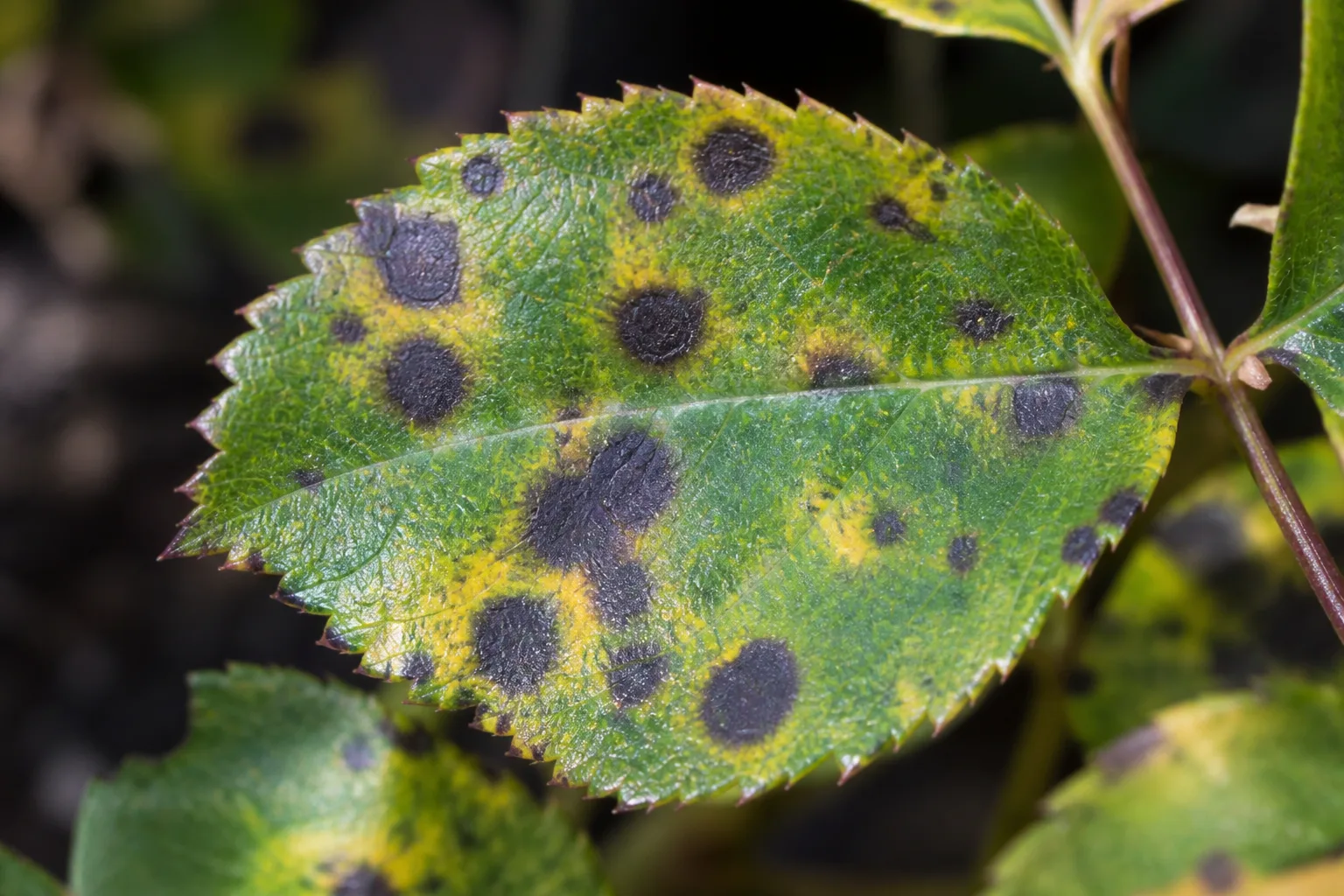
Black spot is more likely when dark, often fringed lesions appear on leaves and yellowing follows, with affected leaves dropping prematurely. Remove fallen infected foliage, water the root zone rather than routinely wetting leaves, and prune enough to improve airflow. The RHS rose black spot advice describes the disease and sanitation steps. If you consider a fungicide, use only a product labeled for roses and the specific disease in your location, and follow every label direction; a fungicide will not restore leaves already damaged.
Prevent pests and disease before reaching for a spray
Inspect buds, leaf undersides, and new shoot tips once a week during active growth. Aphids often cluster on tender tips and buds; a small population may be tolerable, while a heavy cluster can deform new growth. A firm stream of water can dislodge aphids if the plant can dry promptly. Avoid indiscriminate spraying that kills beneficial insects along with pests, and use insecticidal soap or any other treatment only when the label covers the pest, plant, and use site.
Sawfly larvae can skeletonize or roll leaves; spider mites may cause fine stippling and webbing in hot, dry conditions; thrips can scar petals or leave buds distorted. Confirm the insect before treating because water stress, heat, and disease can create look-alike symptoms. A hand lens and examination of both leaf surfaces are more useful than a generic “rose pest” spray. If the damage is small and the plant is vigorous, monitoring and removal of the worst affected leaves may be sufficient.
Black spot and powdery mildew are more likely where foliage stays crowded or wet, though cultivar susceptibility and weather also matter. Start with sunlight, spacing, soil-level watering, cleanup of fallen leaves, and removal of infected material. Do not expect a disease-resistant label or the name Osiria to override local conditions; no care routine can guarantee a disease-free rose in every climate.
Propagate a rose without relying on seed labels
If you want another plant with the same flowers, vegetative propagation is more reliable than saving seed, but it does not resolve whether the parent was correctly named. Rose cuttings can root, yet success varies with cultivar, stem maturity, season, and conditions. If taking cuttings is permitted for that plant in your jurisdiction and under any applicable plant rights, use healthy, non-flowering new growth, a clean cutting tool, a free-draining rooting medium, and a humid but ventilated setup. Label the cutting with the parent plant’s full source details so uncertainty does not disappear from the record.
Grafted roses add another complication: a cutting from the flowering top will grow on its own roots and may not match the size, hardiness, or vigor of the grafted nursery plant. A shoot emerging below a graft union may belong to the rootstock rather than the named rose. The RHS explains that roses can be propagated by cuttings but cautions that propagation method and rootstock can change how a plant performs. For a specific cultivar, buy another verified plant rather than expecting seed-grown offspring to repeat the flower.
Protect roots and canes through winter
Prepare for winter according to the coldest conditions your garden actually experiences and the rose’s confirmed class. In mild climates, good drainage and a healthy root system may be enough. In colder regions, protect the root zone with mulch after the plant has slowed down, and avoid pruning so late that new shoots are encouraged before winter. In windy sites, temporary protection can reduce cane damage, but do not wrap a rose in airtight plastic that traps moisture.
Container roses face colder root temperatures than plants in the ground. Use a large pot with drainage, insulate the container or move it to a sheltered unheated space where the rose remains dormant, and check occasionally so the root ball does not dry to dust. Waterlogged winter compost can be as damaging as desiccation. Remove protection gradually in spring once the harshest freezes have passed and new growth begins.
Do not apply a hardiness zone from a vendor page as a guarantee. Local temperature extremes, winter wetness, wind exposure, snow cover, graft height, and whether a plant is own-root all affect survival. If identity is uncertain, prioritize regional rose advice and the observed behavior of the plant over an unverified zone range.
When a different rose is the better choice
If the goal is a reliably red-and-white flower, ask a local rose society or extension office for cultivars that are documented by a known breeder and sold by a traceable nursery. The important criteria are not just petal color: look for disease performance in your region, mature width, repeat-bloom habit, fragrance, cold tolerance, and whether the rose is intended for garden display or cut flowers. A less unusual flower on a healthier plant may give a better season-long result than a dramatic but weak rose.
If you want to experiment with a rose marketed as Osiria, buy one plant from a source that stands behind its label and keep expectations realistic. Treat the label as a claim to verify, not a botanical certificate. A healthy look-alike can still be a worthwhile garden plant, but it should not be represented as authenticated Osiria without evidence.
Conclusion
Grow a rose sold as Osiria with the fundamentals that help most hybrid tea roses: a sunny but climate-appropriate site, open airflow, well-drained soil, deep watering when the root zone dries, restrained feeding, and pruning based on the plant’s class and local frost timing. Inspect leaves and canes regularly, distinguish one drooping bloom from whole-plant wilt, and correct drainage or moisture before reaching for fertilizer or pesticide.
Be just as careful about identity as you are about care. The red-and-white Osiria image is widely marketed, but the name and precise origin claims are not enough to authenticate an individual plant. Avoid seed packets promising identical blooms, buy traceable vegetatively propagated stock, and document what arrives. That combination gives you the best chance of a healthy rose—and a fair way to judge whether it is truly what the seller claimed.