How to Grow and Care for Osakazuki Japanese Maple
Plan an Osakazuki Japanese maple planting with practical guidance on mature size, afternoon shade, establishment watering, pruning, and leaf problems.
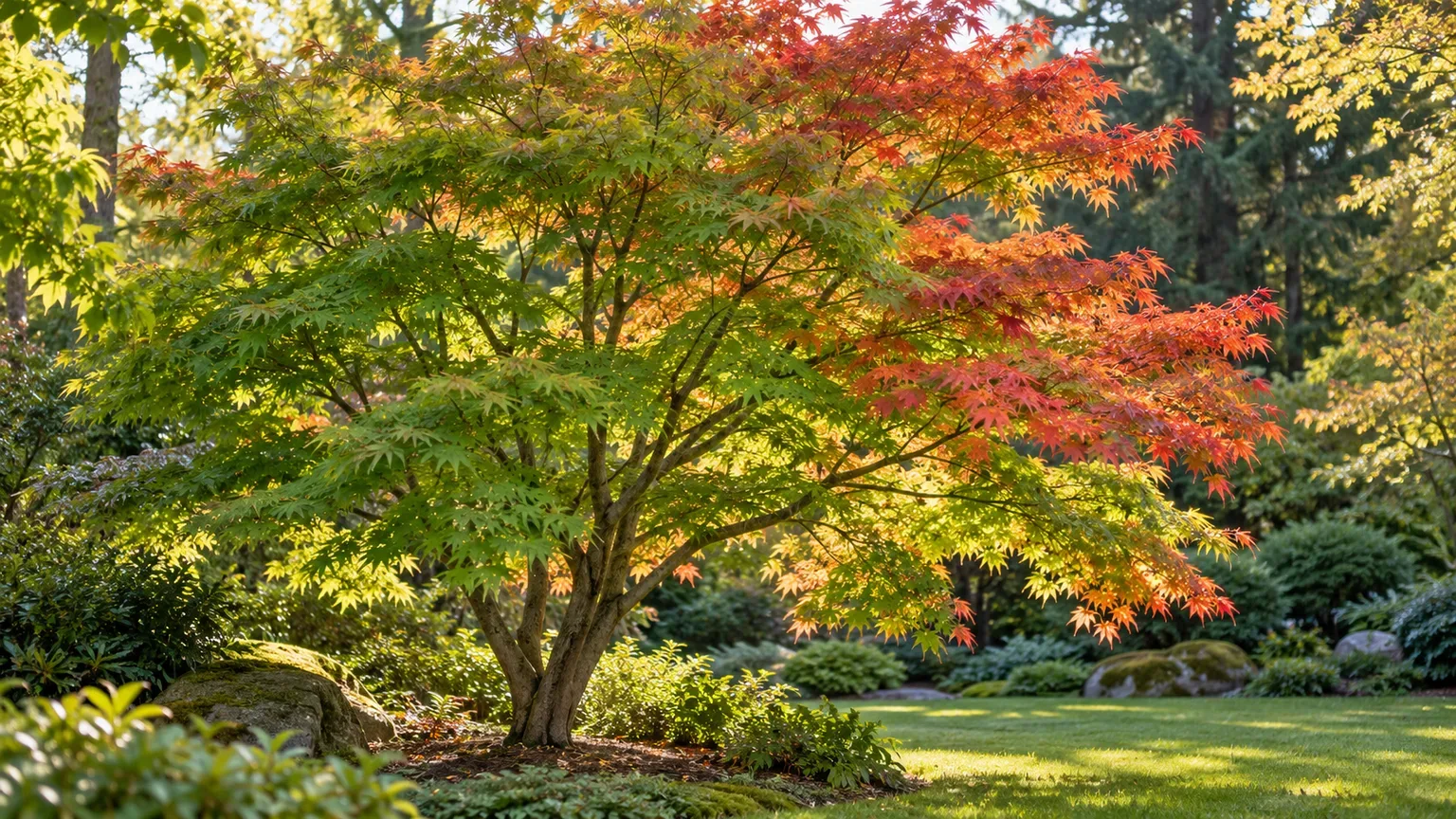
Osakazuki is a deciduous Japanese maple valued for its bright green summer leaves and vivid red-to-orange fall display. It is a small landscape tree rather than a compact shrub: NC State Extension lists a mature height of about 15 to 24 feet and a spread of 10 to 15 feet. That size, plus the way afternoon heat and soil moisture affect the foliage, should guide your planting decision before you bring one home. (NC State Extension’s Osakazuki profile)
A successful planting is less about feeding the tree often and more about matching its canopy to the site, keeping new roots evenly moist, and avoiding drastic pruning. Use the following care plan to decide whether your yard suits the cultivar and what to monitor through its first seasons.
Is Osakazuki a Fit for Your Yard?
Choose Osakazuki when you want a rounded ornamental tree with seasonal interest and have room for a canopy that can eventually reach 10 to 15 feet across. Its green, deeply lobed leaves look composed through summer, then change color in fall; the display is the feature, while its small spring flowers are not a major show. NC State Extension places it in USDA Zones 5a through 8b and describes a rounded habit. Hardiness zones help you assess winter lows, but they do not tell you whether a hot, exposed site will suit the tree in summer.
Before buying, check the label for the cultivar name ‘Osakazuki’ rather than relying on a generic Japanese maple tag. Many Acer palmatum cultivars differ in mature size, leaf color, and growth habit. A site that works for a smaller dwarf maple may crowd Osakazuki after several years; conversely, this cultivar can be a good scale for a lawn edge, courtyard, or mixed border where a large shade tree would overwhelm the space. (NC State Extension’s plant profile)
Choose a Site That Balances Light and Climate
Aim for bright morning light followed by dappled shade or protection from the strongest afternoon sun. The cultivar profile says Osakazuki can tolerate sun and is relatively resistant to leaf scorch, yet it notes that partial shade brings out the best leaf color. These points are compatible: a mature tree may tolerate a sunny site, but a hot western wall, reflected heat from paving, and dry wind can still stress foliage, especially on a newly planted tree. NC State’s broader Japanese maple guidance also emphasizes evenly moist, well-drained soil and protection from drying winds. (NC State’s species profile)
Adjust Afternoon Exposure to Your Region
In a cool-summer climate, a site with several hours of morning sun can support strong growth and a good seasonal display. In a hotter inland or southern garden, prioritize afternoon shade, moving air, and distance from heat-reflecting walls. A spot under a high-canopy tree can work if the maple still receives filtered light; deep, dense shade may reduce growth and make the tree less visually distinct. Japanese maple varieties are not interchangeable, so use Osakazuki’s cultivar description rather than assuming every sun rule for a red-leaf maple applies to it.
Avoid a low pocket where water sits after rain and a wind tunnel that dries the canopy. If the only available space is exposed and hot, you may spend the summer reacting to scorched edges rather than enjoying the tree. It is usually easier to choose a better microclimate at planting than to correct a poor one by increasing watering indefinitely.
Give the Mature Canopy Room to Develop
Plan around a potential 10- to 15-foot spread, not the small nursery plant you see today. Leave room for branches to extend without scraping a wall, blocking a path, or pressing into a neighboring tree. For a simple first check, sketch a circle using the expected canopy width and consider whether you can still walk around the tree, mow nearby, and reach the trunk for inspection. The root system and canopy also compete with nearby plants for water, so avoid placing a thirsty lawn or closely packed shrubs directly against the trunk.
Osakazuki can serve as a focal tree in a lawn or a lightly shaded understory. Keep the lower canopy visible if you want to appreciate its branching shape, and use lower groundcovers or shallow-rooted companions beyond the immediate trunk zone. Do not crowd the trunk with a dense ring of perennials that makes watering and inspection difficult. A mulch circle with open space around the bark is often a more practical first-year arrangement than a heavily planted bed.
Plant for a Wide, Shallow Root Zone
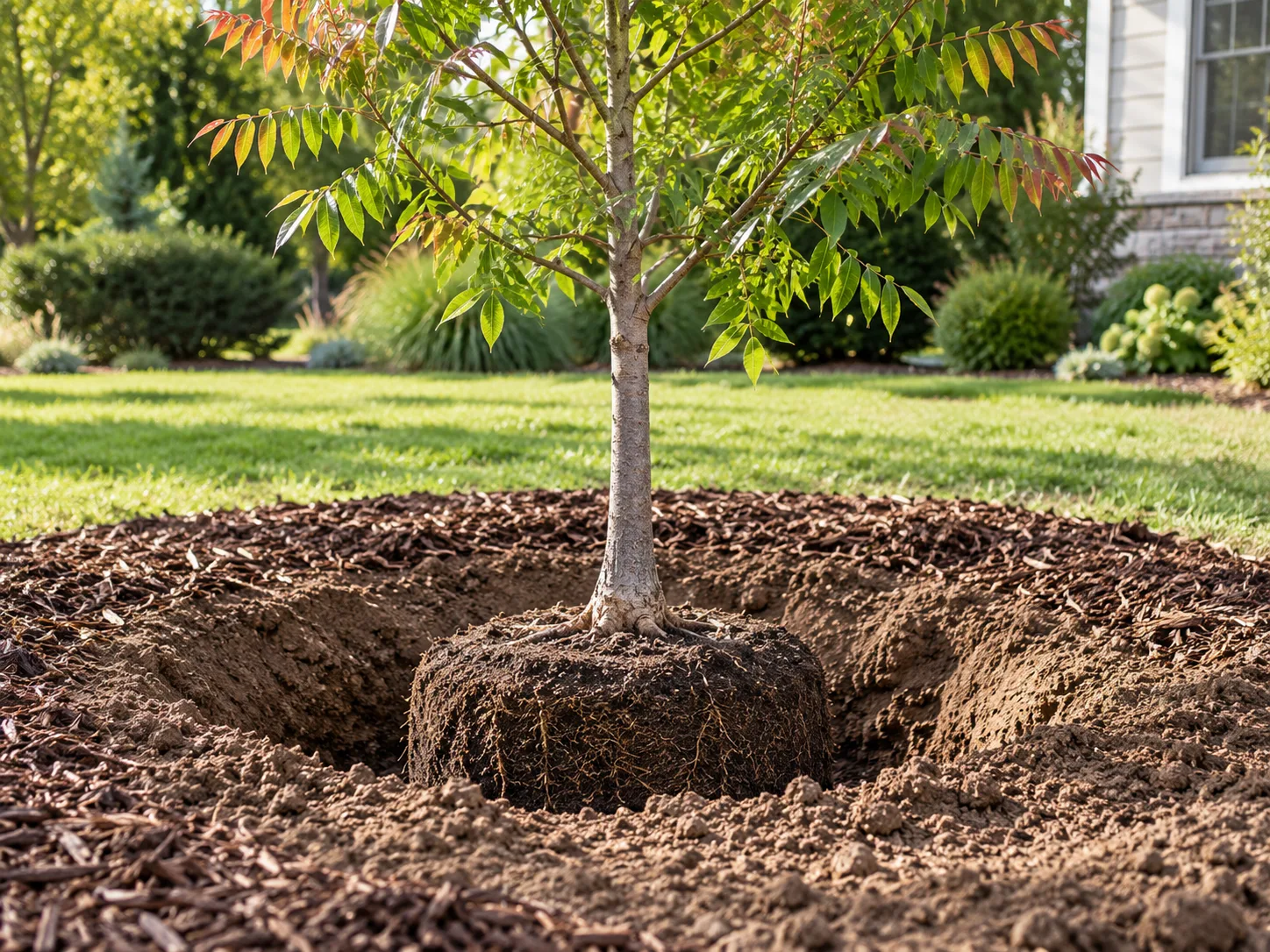
Plant in spring after the soil is workable or in early fall while there is enough mild weather for roots to begin settling in. Avoid planting during a heat wave, when soil is frozen, or when the planting area is saturated. Water the nursery root ball before planting so it is evenly moist, then dig a hole two to three times as wide as the root ball but no deeper than its height. A broad hole loosens the surrounding soil for lateral roots; an overly deep hole can leave the tree settling below grade.
Set the Root Flare at the Right Height
Find the first structural roots where the trunk widens into the root system. If the nursery has buried them under potting mix, gently brush away excess soil until the flare is visible. Set that flare level with, or slightly above, the surrounding soil after settling. Remove ties, synthetic burlap, and the top of a wire basket where safe and practical; straighten gently circling roots instead of planting them in a tight spiral. Backfill with the soil you removed, firming lightly by hand so large air pockets close without compacting the root zone.
Water slowly after backfilling to settle soil around the roots. Check the tree from several steps away: the trunk should stand upright, the flare should remain visible, and the grade should slope away without forming a water-holding bowl against the trunk. Staking is usually a temporary response to a loose root ball or a windy, exposed site, not a way to hold an otherwise poorly planted tree upright. If staking is needed, use flexible ties and remove them once the root ball is stable.
Build Soil That Stays Moist Without Staying Wet
Osakazuki prefers rich, moist, acidic soil, but NC State Extension notes that it can adapt to clay and sandy textures. Adaptability is not the same as thriving in every condition: dense soil that remains saturated deprives roots of air, while coarse, fast-draining soil can dry before new roots reach beyond the original root ball. Before planting, observe the site after a heavy rain and during a dry spell. If puddles remain for a long time, improve drainage or choose another spot instead of trying to solve chronic saturation with a small amount of amendment in the hole.
A soil test is more useful than guessing at pH or adding acidifying products automatically. If the soil is compacted or low in organic matter, improve a broad planting area with finished compost rather than filling a narrow hole with a very different mix; a sharply amended pocket can hold water differently from the surrounding ground. After planting, a layer of organic mulch helps buffer temperature and slow evaporation. Keep it off the trunk and root flare, where constant dampness can contribute to bark problems.
Water by Checking the Root Zone
Newly planted trees need consistent moisture while roots are establishing, but a weekly schedule cannot account for rainfall, heat, soil texture, and root-ball size. Check the soil a few inches down near the outer edge of the original root ball. If it is dry there, water slowly over the root zone until the soil is moist several inches deep; if it still feels cool and damp, wait and check again. The goal is a deep soak followed by a period of drainage, not frequent light sprinkles that wet only the surface.
During the first growing season, inspect more often during hot or windy stretches and after long periods without rain. Water at the base, extending the wetted area as roots spread, rather than relying on brief overhead spraying. A hose left at a low flow or a soaker line can make a slow soak easier, but watch the soil so water does not run off or pool around the trunk. Adjust frequency to the ground beneath the mulch, not to how dry the mulch surface looks.
Once established, Osakazuki can tolerate some dry spells, but it still performs best when the root zone does not repeatedly dry out during summer heat. An established tree with crisp margins after a dry, windy week may need a deep watering, while a tree in wet soil can show decline for the opposite reason. NC State Extension recommends keeping this cultivar watered during dry periods; that is a cue to respond to drought, not to keep the soil permanently wet. (NC State Extension)
Mulch First and Fertilize Only When Needed
Apply about 2 to 3 inches of organic mulch over the root area, widening the ring as the canopy grows. Keep a hand-width gap around the trunk and do not build a cone of mulch over the root flare. A broad, shallow mulch layer cools the soil and reduces moisture swings, which helps a recently planted tree use water more efficiently. Inspect the ring after storms: if water is channeling away, reshape it gently; if the soil beneath stays soggy, pull mulch back and address drainage rather than adding more.
Do not fertilize on autopilot. If the tree is putting on healthy growth and the soil test does not show a deficiency, extra fertilizer can create lush shoots without solving the actual issue. If a test or clear growth problem points to a nutrient need, follow the lab or local extension recommendation and apply the product at the labeled rate, usually during active spring growth rather than late in the season. Epic Gardening likewise describes Japanese maples as light feeders and recommends restraint with nitrogen. (Epic Gardening’s Japanese maple guide)
Prune to Preserve the Tree’s Natural Structure
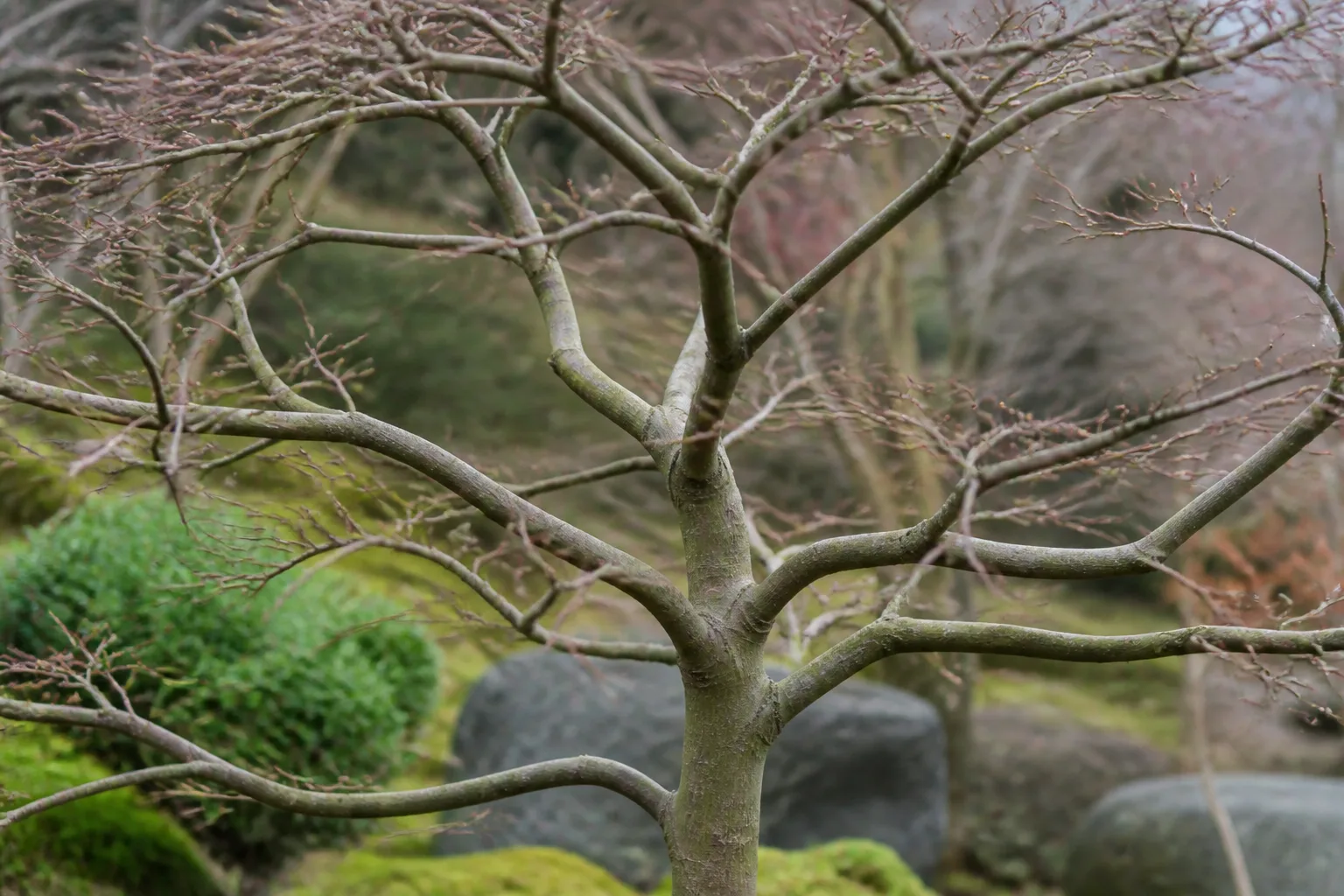
Osakazuki does not need annual shaping simply because it is a tree. Start by learning its natural rounded outline and the way its main branches are arranged. Remove dead, broken, rubbing, or diseased branches, and make selective cuts where two limbs crowd one another. A young tree may need only one or two small corrections each year. Avoid topping the canopy or shearing it into a tight ball; those shortcuts remove the tree’s graceful branching and can trigger crowded regrowth.
Choose Timing Carefully and Keep Cuts Small
Published advice differs on routine timing. Fine Gardening recommends pruning Japanese maples in summer as growth slows, while Epic Gardening suggests late winter for necessary maintenance. (Fine Gardening; Epic Gardening) Rather than turn either calendar into a universal rule, separate small corrective work from major structural work. Remove a broken limb when it poses a safety or further-tearing risk; save planned shape adjustments for a mild, dry period appropriate to your local climate, and avoid pruning during extreme heat, active spring leaf expansion, or wet conditions that make disease spread more likely.
Use clean, sharp bypass pruners for small branches and a proper saw for larger limbs. Cut just outside the branch collar without leaving a long stub or cutting flush against the trunk. Do not remove a large share of the canopy in one session. If the tree needs substantial height reduction, has a large split limb, or is near a building or overhead wires, ask a certified arborist to assess it; large cuts can permanently change the form and create hazards.
Use a Seasonal Care Calendar
Spring: Check for winter breakage before buds open, refresh mulch without burying the flare, and begin monitoring moisture as leaves emerge. Tender new leaves can be injured by a late frost even when the tree is otherwise hardy in your zone. If a cold snap is forecast, a young tree in an exposed site may benefit from temporary frost protection; avoid handling or covering it in a way that snaps new growth.
Summer: Check soil during hot, dry, or windy periods and water deeply when the root zone dries. Look for leaf-edge crisping, sticky honeydew, or clusters of insects while the canopy is accessible. Make only light pruning corrections if conditions are mild and dry; postpone substantial work during a heat wave.
Fall and winter: Enjoy the color, collect fallen leaves if disease symptoms were present, and inspect the branch structure after leaf drop. Keep the root area mulched, but do not pile material against bark. A young tree in a cold, windy location may need more protection than an established specimen, especially if planted late in the season.
Understand What Shapes the Fall Color
Osakazuki’s foliage is green through the growing season and typically shifts to bright red or orange in fall. NC State Extension describes a brilliant red fall color, while the observed shade and timing will still respond to local weather, light, moisture, and the tree’s condition. A tree that turns later than a neighbor is not automatically unhealthy; cultivar, exposure, and the pace of autumn cooling all matter. (NC State Extension; Fine Gardening)
If color disappoints, review the site and recent stress before adding fertilizer. Deep shade can make a tree grow more slowly; repeated drought or scorch can shorten the display; heavy late-season feeding may push soft growth at the wrong time. Do not expect a newly planted maple to look identical to a mature specimen in its first autumn. Give it several seasons to establish, keep moisture steadier, and judge the tree by healthy growth as well as color intensity.
Troubleshoot Brown, Wilting, or Spotted Leaves
Start with the pattern and timing. Brown, crisp margins across exposed parts of the canopy after heat, wind, or dry weather point toward water stress or scorch. Leaves that wilt while the soil is wet suggest that roots may be struggling to take up oxygen or that drainage is poor; adding more water in that situation can make matters worse. Brown patches that appear after a late frost often affect the newest leaves first. Take a photo and note whether the damage is on one side, on new growth, or spread evenly through the canopy before choosing a response.
Separate Scorch from a Possible Disease
Physiological leaf scorch is not automatically a contagious infection. Clemson Extension describes scorch as a response to inadequate water or other root-zone stress and recommends cultural corrections such as proper watering and site conditions. Anthracnose, by contrast, can affect leaves, twigs, and buds during wet spring weather, often causing irregular necrotic areas. Persistent spots, progressive branch dieback, or symptoms that continue despite corrected watering deserve a closer diagnosis; a local extension diagnostic service can assess samples more reliably than a broad-spectrum spray. (Clemson Cooperative Extension’s maple disease guide)
Do not strip every scorched leaf or prune healthy branches in an attempt to reset the canopy. Damaged leaves may remain unattractive, but the useful first step is to remove the cause: water deeply if soil is dry, reduce future heat exposure if possible, or improve drainage if soil stays saturated. Rake and discard diseased fallen leaves when an extension diagnosis supports that step, and avoid wetting foliage late in the day during prolonged humid weather.
Watch for Pests Without Treating Every Insect
NC State lists aphids, scale, leafrollers, leafhoppers, and maple worms among occasional pests on Osakazuki. Inspect the underside of leaves and small twigs before assuming an insect is responsible for browning. Aphids may leave sticky honeydew; scale can appear as fixed bumps on stems or leaves; chewing pests leave holes or missing leaf tissue. A few insects on a vigorous tree rarely justify a broad pesticide response, and treatment that is not matched to the pest can harm beneficial insects without correcting the underlying stress. (NC State Extension; Clemson Extension)
If the damage is increasing, identify the pest and its life stage before selecting a control. On a large tree, severe infestations, or any situation requiring pesticide use, consult a local extension office or qualified arborist and follow the product label exactly. Keep the tree vigorous with appropriate water and site conditions; this does not make it immune to pests, but it avoids adding drought or root stress while you diagnose the problem.
Propagate the Cultivar Without Losing Its Identity
A seedling from Osakazuki may be a Japanese maple, but it is not guaranteed to be Osakazuki. Seedlings inherit a mix of traits and can differ from the parent in leaf shape, habit, hardiness, and fall color. NC State notes that this cultivar can self-seed, so remove unwanted seedlings while they are small if you do not want extra maples in nearby beds.
Named cultivars are generally reproduced vegetatively, commonly by grafting, so the new growth retains the selected plant’s characteristics. Grafting requires compatible plant material and careful technique; for most gardeners, buying a correctly labeled, healthy nursery tree is more reliable than trying to reproduce the cultivar at home. If you do grow a seedling as an experiment, label it as a Japanese maple seedling rather than promising the parent’s autumn display.
Conclusion
Osakazuki is a strong choice when you can give a medium-sized Japanese maple room to mature, morning light with some protection from harsh afternoon exposure, and soil that holds moisture without staying wet. Its cultivar profile gives a useful planning range—roughly 15 to 24 feet tall and 10 to 15 feet wide—but the microclimate and establishment care determine how comfortably it grows in your yard.
Plant it with the root flare visible, water according to the moisture several inches below the mulch, and keep pruning light. If leaves brown, check the soil and exposure before reaching for fertilizer or pesticide. A good site and a calm, observant first year will do more for this tree than a complicated maintenance schedule.



