Neoregelia Bromeliad Care: Light, Water, and New Pups
Learn how to grow Neoregelia bromeliads indoors, from filtered light and fresh cup water to airy mix, pup separation, and fixes for rot or fading color.
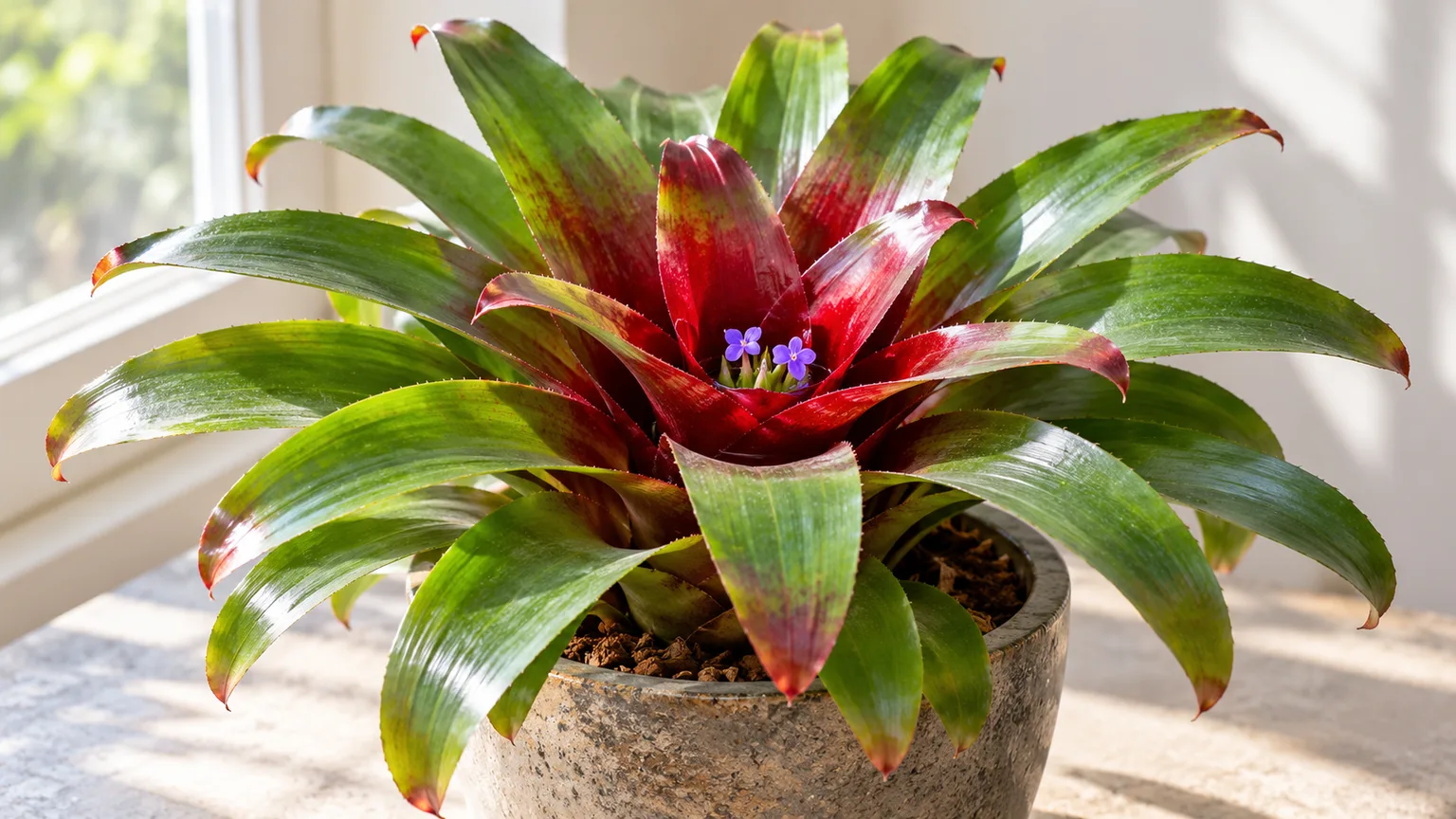
Neoregelia is a bromeliad grown chiefly for the way its leaves make color: a compact rosette can develop a red or pink center, silver bands, marbling, or spotted foliage without relying on a tall flower spike. The care is straightforward once you treat the plant as a tank-forming bromeliad: give it bright filtered light, keep its leaf cup fresh, and use a potting mix that lets air reach the roots.
The common mistakes come from applying ordinary houseplant rules too literally. Keeping the potting mix wet, leaving old water in the cup indefinitely, or moving a nursery plant into harsh sun can all damage a plant that otherwise tolerates occasional missed waterings. Use the signs on the leaves and at the crown to adjust the routine instead of following a fixed calendar blindly.
Neoregelia Quick Care Snapshot
| Need | Practical starting point | What to watch |
|---|---|---|
| Light | Bright, filtered light; gentle morning sun may suit some cultivars | Fading in deep shade; bleached or dry patches in harsh sun |
| Cup water | Keep the central cup partly filled with clean, room-temperature water | Refresh and flush it regularly; do not let fertilizer salts build up |
| Potting mix | Airy bark-based bromeliad or orchid mix with drainage | The mix should not stay soggy or packed around the crown |
| Temperature | A warm, stable room away from cold glass and vents | Bring outdoor plants in before chilly nights |
| Feeding | Dilute fertilizer lightly during active growth, or skip it if growth is healthy | Too much nitrogen can produce lanky, greener foliage |
| Propagation | Wait for basal pups to reach about one-third to one-half the mother’s size | Larger pups with roots establish more reliably |
Think of the cup and pot as two different moisture zones. The cup is a small reservoir formed by the leaves; the roots still need a loose medium that gets watered, drains, and then begins to dry. The New York Botanical Garden’s bromeliad guide describes this tank-forming habit and recommends keeping the cup supplied with water while allowing the medium to dry between waterings.
How Neoregelia Grows and Where Its Color Comes From
Neoregelia is a genus in the bromeliad family, with many species and cultivated hybrids. The leaves grow in a low, circular rosette. Their overlapping bases create a cup, sometimes called a tank or vase, that collects rainwater and organic debris in the plant’s native habitat. Many Neoregelias grow as epiphytes on trees or shrubs, so their roots mainly anchor the plant rather than exploring deep, rich soil. The Bromeliad Society/Houston’s genus profile describes the rosette, water-holding cup, and wide range of leaf colors and patterns.
The showiest color often appears in the inner leaves as a rosette approaches flowering. Neoregelia’s flowers are usually small and tucked into the center cup, while the surrounding leaves provide the long-lasting display. That is why a faded outer leaf is not automatically a sign of failure, and why a plant can still be attractive even when there is no obvious flower to admire.
You may see “blushing bromeliad,” “crimson cup,” or “marbled fingernail” on a tag, but those names can refer to different Neoregelia species or cultivars. Cultivar names matter because size, sun tolerance, and color pattern vary. A general care routine is a starting point; the plant’s leaf response tells you when to adjust it.
Give It Bright, Filtered Light
Place Neoregelia near a bright east window, or a little back from a south- or west-facing window where direct midday or afternoon sun is filtered by a sheer curtain. A bright room with no direct beam can work, but a dim shelf usually produces a greener, looser rosette and may delay flowering. The RHS profile for Neoregelia spectabilis lists partial shade, while the Bromeliad Society/Houston notes that many Neoregelias color more strongly in brighter conditions. Epic Gardening’s indoor bromeliad guidance also favors filtered light. Together, those recommendations point to bright light with gradual adjustment, not a universal number of sun hours.
New purchases deserve a slower transition. A plant raised under greenhouse shade may scorch if placed immediately against hot window glass, even if a mature specimen of the same cultivar tolerates more light. Move it closer to the window over a week or two, checking the newest leaves and the side facing the sun.
Read the pattern rather than diagnosing from color alone. A plant that is steadily greener and stretched may need more light; a pale, bleached area or dry patch on the window-facing side points toward excess intensity. If you are unsure, move the pot a short distance back and watch new growth for several weeks; old leaf marks will not heal.
Water the Center Cup and the Potting Mix
Water the cup and the root zone separately. Keep a modest amount of clean water in the central cup, then water the potting mix when its surface and upper portion begin to dry. Do not soak the plant’s base in a cachepot or saucer. A full cup cannot compensate for bone-dry roots, and frequent root watering cannot compensate for a dry tank during warm, active growth.

Rainwater or distilled water is a useful choice if your tap water is hard or leaves white deposits around the leaf edges. Otherwise, use clean room-temperature water and look for salt crusts or mineral rings as a reason to switch. Neoregelia can be more sensitive to mineral buildup than many ordinary foliage plants because water evaporates from the cup while dissolved minerals remain behind.
For the potting mix, avoid a calendar such as “every Sunday.” Check it with a finger or a wooden skewer: if the mix still feels cool and damp a short way below the surface, wait; if it is nearly dry and the pot feels light, water thoroughly and let the excess drain. Frequency changes with pot size, airflow, temperature, and the chunkiness of the mix. In a cool room or low light, the medium dries more slowly, so watering on the old summer schedule raises rot risk.
Refresh the Cup Before Water Goes Stale
Empty and refill the cup every one to two weeks, and more often if it contains debris, fertilizer residue, or has an unpleasant smell. Tip the plant gently over a sink, rinse the cup with fresh water, and let it drain before refilling. This small flush replaces stagnant water and helps wash out concentrated salts. The Bromeliad Society/Houston recommends regularly emptying or flushing Neoregelia cups; the New York Botanical Garden gives similar advice for tank bromeliads. Epic Gardening’s watering guide also explains why refreshing the cup matters.
In a very dry home, a little cup water evaporates quickly; top it up when needed rather than keeping the cup brim-full. In a cool, poorly ventilated room, a full stagnant reservoir can be a liability. If you use diluted fertilizer, do not leave that solution sitting in the center for weeks: feed lightly, then flush the cup with plain water at the next refresh.
Choose a Light, Anchoring Potting Mix
Neoregelia needs support and airflow around its roots, not a deep bed of heavy garden soil. A small pot with drainage holes and a loose orchid or bromeliad mix is a reliable choice. Coarse bark with perlite or another airy component creates large pores so water can pass through and the roots do not stay oxygen-starved. The RHS recommends epiphytic or terrestrial bromeliad compost for Neoregelia spectabilis, and the New York Botanical Garden lists orchid and other soilless mixes among suitable bromeliad media. Epic Gardening likewise recommends a bark-based, free-draining mix for potted bromeliads.
Do not pack the mix tightly around the plant or bury the center of the rosette. The base should be secure while the crown stays above the medium. If the plant rocks, add a little more mix around the roots or use a small stake until new roots hold it; burying the crown to make a loose plant stand upright trades wobble for rot.
Choose pot size for stability, not for rapid growth. Neoregelia’s root system is relatively modest, so a small container is often enough. A pot that is much too large holds a larger volume of wet mix around a small root system. Plastic retains moisture longer, while unglazed terracotta dries faster; use the material that suits your room and watering habits, but keep drainage holes either way.
Keep the Plant Warm With Air Moving Around It
A comfortably warm room is usually easier than trying to reproduce tropical greenhouse humidity precisely. Keep Neoregelia away from cold drafts, an icy winter window, a heating vent, and direct blasts from an air conditioner. The RHS classifies N. spectabilis as a greenhouse plant in its UK guidance; the New York Botanical Garden notes that bromeliads generally prefer warm daytime conditions and benefit from humidity plus good air circulation.
If leaf tips dry indoors, check the whole pattern before buying a humidifier. Low humidity can contribute, but hard water, direct sun, a dry potting mix, and excess fertilizer can leave similar marks. A small hygrometer can show whether the room is persistently dry; if it is, group plants or run a humidifier nearby. Misting gives only a brief change in air moisture and can leave water trapped in the center without improving the room’s humidity for long.
Humidity and airflow work together. A crowded plant shelf with damp air and still leaves can encourage problems more than a slightly drier room with gentle air movement. Leave enough space around the rosette for leaves to dry after flushing, but do not aim a fan directly at the plant all day.
Fertilize Sparingly to Protect Leaf Color
A healthy Neoregelia can grow for a long time with very little fertilizer. If you feed during active spring and summer growth, use a balanced water-soluble fertilizer at about one-quarter of the label strength every four to six weeks. Apply it to a damp mix or as a carefully diluted foliar feed according to the product label; do not pour concentrated fertilizer into the cup.
Skip feeding in winter, after repotting, or when the plant is stressed from rot, cold, or a sudden move. A heavy dose does not make the rosette mature faster. Excess fertilizer can leave salt deposits, burn leaf tips, and push oversized green growth at the expense of compact color. The Bromeliad Society/Houston cautions that overfeeding can weaken the plant’s form and reduce its color, so less is a sensible default.
If growth is already compact and colorful, there is no need to add fertilizer just because a schedule says to. Flush the mix occasionally with plain water so unused salts do not accumulate, and never treat fertilizer as a fix for insufficient light or damaged roots.
Read the Bloom and Life Cycle Correctly
Neoregelia is generally monocarpic: an individual rosette flowers once, then gradually declines while producing offsets. This is the normal growth cycle, not a signal that the entire pot must be thrown away. The mother can remain green for a while after its bloom, and the pups are the next generation. Keep caring for the clump while those offsets grow; remove only leaves that have fully dried and come away easily.
The colorful center is part of the floral display, but Neoregelia’s tiny flowers are not always easy to notice. Flowering time varies by plant maturity, cultivar, and growing conditions. A plant that has not bloomed after a year may simply be young or receiving too little light; there is no reliable household trick that forces every plant to flower on a fixed date.
Once the mother begins a steady decline, focus on the pups. They can remain attached and form a fuller clump, or be separated when large enough to establish independently. The New York Botanical Garden describes bromeliads as prolific offset producers, and the Bromeliad Society/Houston notes that Neoregelia pups commonly develop after blooming and can be left in place if you want a colony.
Choose a Neoregelia Variety for Your Space
Neoregelia is a genus, not one uniform-looking plant. Neoregelia spectabilis, sometimes called painted fingernail, has green leaves with red tips and colorful inner leaves; the RHS profile records its compact rosette and small flowers in the center. N. carolinae cultivars can develop a red inner cup when they approach bloom, while ‘Fireball’ is a smaller cultivar known for burgundy coloring in bright conditions. The Bromeliad Society/Houston and Gardening Know How describe these and other forms, but nursery labels and hybrids vary.
For a narrow shelf, look for a compact cultivar and ask the seller for its mature width, not just the nursery pot size. For a centerpiece, a broader rosette may be more effective, but it needs enough surrounding space that leaves do not press against a wall or window. A clump of pups may eventually spread wider than the original rosette, so leave room if you plan to keep the offsets attached.
Choose based on the light you can provide. A bright room supports stronger color, while a lower-light room may keep the plant alive but mute its pattern. Avoid buying a cultivar solely by a photograph: color intensity changes with light and maturity, and the center may blush only near flowering.
Propagate Pups Without Rushing Them
Wait until a pup is about one-third to one-half the size of the mother plant before separating it. A larger pup with a few roots has more stored energy and a better chance of settling in than a tiny shoot cut as soon as it appears. If you prefer a fuller display, leave the offsets attached; the original rosette can be removed after it is fully spent, leaving the pups to fill the pot.
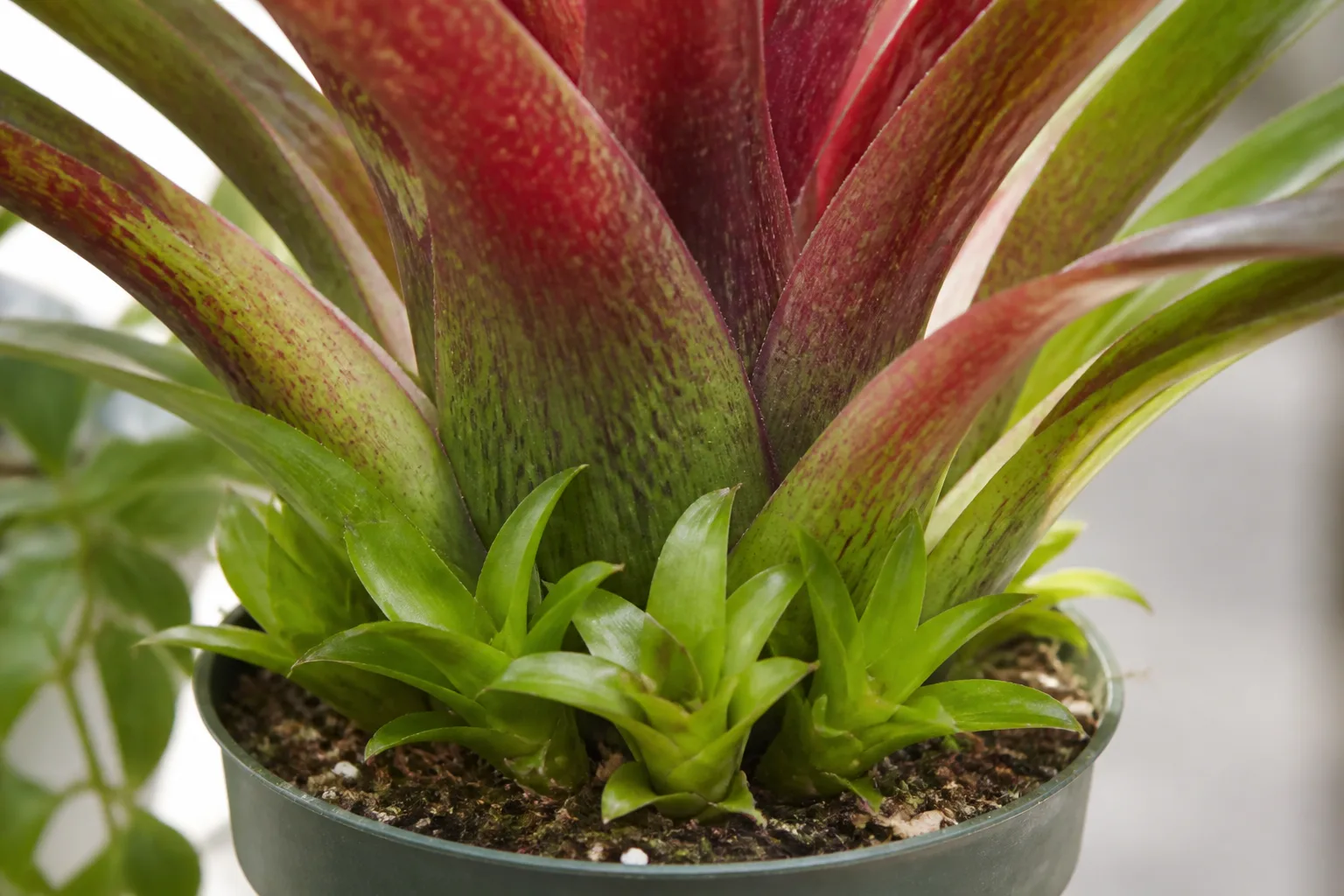
Use a clean sharp knife or pruners, and work over a stable surface. Gently move leaves aside to see where the pup joins the mother. Cut as close to the connection as you can without slicing through the pup’s base, and include roots if they have formed. If the pup has no roots yet, it can still establish, but it may need a stake or small support so it does not wobble in the mix.
Separate and Pot a Pup Step by Step
- Prepare a small pot with drainage holes and fresh, airy bromeliad or orchid mix before cutting.
- Hold the pup at its base and separate it with a clean blade. Remove only the dead outer leaves that prevent it from sitting upright.
- Set the roots into the mix and keep the base just above the surface. Do not bury the central cup or pack the medium around the crown.
- Water the mix lightly to settle it, then let excess drain. Keep the pot warm in bright filtered light while the pup anchors.
- If it rocks, use a small stake or a pebble against the pot edge rather than pushing it deeper. Once the roots grip, remove the support.
The potting mix should stay lightly moist during establishment but never waterlogged. If the new plant has formed its own cup, keep that cup clean and partly filled; if it is too small to hold water, concentrate on gentle root-zone moisture and humidity. New growth is a better sign of establishment than a fixed number of days. Bromeliad Society/Houston reports that Neoregelia pups often root readily in spring, but warmth, light, and the pup’s size all affect how quickly that happens; Gardening Know How also advises taking roots with the offset where possible.
Repot Only When the Plant Needs It
Neoregelia does not need a large pot simply because leaves have spread beyond the rim. Repot when the plant is unstable, the mix has broken down and stays wet, the pot has cracked, or a growing clump has outgrown its container. Choose a container only slightly wider than the root area and use fresh airy mix. A snug pot dries more predictably and helps keep the rosette upright.
To move it, support the base of the plant, loosen the old mix, and check for soft or dark roots. Trim only tissue that is clearly dead or mushy with clean pruners. Set the plant at the same depth as before, keeping the crown above the mix, then water lightly and let the pot drain. Avoid fertilizing immediately after repotting; give the plant time to settle and resume growth.
If you are separating pups, repot those offsets in their own small containers and leave the parent clump undisturbed if it is still healthy. Repotting and division are separate tasks: doing both at once can add stress without solving any problem.
Troubleshoot Fading Color, Bleaching, and Brown Tips
When a Neoregelia loses color, start with light and fertilizer, not a dramatic rescue. A gradual shift to greener, looser growth suggests the spot may be too dim, especially if the plant has not bloomed. Move it closer to a bright window a little at a time, or add a grow light; sudden exposure to full sun can replace green leaves with bleached patches.
Dry tan or dark patches on the window-facing side, especially after a move, point toward sun scorch. Pull the plant back or filter the beam and wait for new leaves to show whether the adjustment worked. Damaged areas stay damaged, so judge the next growth rather than expecting the old leaf to turn green again.
Brown tips can have more than one cause. Check whether the mix is drying completely, whether the cup or leaf edges have mineral crust, whether fertilizer was added at full strength, and whether the plant sits in a hot draft. Change one likely cause at a time and note the new growth; making several changes at once makes it harder to identify what helped.
Tell Normal Decline From Crown Rot
A mother rosette fading slowly after flowering is expected if it has firm pups at the base. Crown rot looks different: the central leaves may loosen or collapse, tissue becomes soft or dark, and a wet, sour smell may develop. A potting mix that stays saturated or stagnant cup water increases the risk. The New York Botanical Garden’s guidance to let potting media dry between waterings and refresh tank water regularly is a practical prevention routine.
If you suspect rot, empty the cup and stop watering the mix until it begins to dry. Check the drainage holes and remove any water sitting in the outer cachepot. Take the plant out only if the base or roots need inspection; if the mother is already collapsing, save firm pups with healthy bases and pot them separately in fresh, airy mix.
Do not assume every brown outer leaf is rot. Old leaves naturally dry as the plant grows, and a flowering mother can decline while its pups remain healthy. Focus on the crown’s firmness and the condition of the new growth before deciding whether the plant is in trouble.
Check the Rosette for Pests
Inspect the undersides of leaves and the tight spaces where their bases overlap. Scale can look like small fixed bumps, while mealybugs may appear as white cottony flecks; both can hide in the protected center of a dense rosette. Isolate an affected plant so pests do not spread to nearby houseplants, then wipe visible insects away with a damp cloth or cotton swab.
If the infestation continues, use an insecticidal soap labeled for indoor plants and follow its directions, testing a small area first. Keep sprays out of the cup unless the label specifically allows that application, and rinse residue from the center afterward. Good spacing and airflow help you spot pests early; the RHS lists scale as a possible pest for N. spectabilis, and the Bromeliad Society/Houston also notes scale in crowded, poorly ventilated plantings.
ASPCA lists Neoregelia as non-toxic to cats and dogs. That is reassuring for household placement, but it is not a reason to invite chewing: any plant material can still upset an animal’s stomach, and sharp leaf edges may irritate a curious pet.
Move Neoregelia Outdoors Only in Warm Weather
In a frost-free climate, Neoregelia can grow outdoors in a sheltered, bright-shade position or under filtered light. A covered patio or tree canopy is safer than a spot with intense afternoon sun. Acclimate an indoor plant gradually over a week or more, and check for pests before bringing it back inside.
For most homes outside tropical regions, treat it as a seasonal patio plant rather than a garden perennial. Bring the pot indoors before nights turn chilly; do not wait for frost damage to appear. Outdoor heat and airflow can make the cup and mix dry more quickly, so check moisture more often, while rain can overfill the cup or keep the medium wet during a cool spell.
When the plant returns indoors, inspect its base and leaf joints, rinse debris from the cup, and put it in bright filtered light. Give it several days to adjust before watering or feeding more heavily. Consistent warmth and a gentle transition usually matter more than trying to force a strict seasonal calendar.
Conclusion
Neoregelia stays colorful when its needs are balanced: bright filtered light for a compact rosette, fresh water in the central cup, and an airy mix that does not remain soggy. A small pot, light feeding, and a warm position reduce the most common causes of fading, brown tips, and crown problems.
Expect the mother rosette to flower once and gradually make room for pups. Leave the offsets attached for a fuller clump or separate them when they are large enough to support themselves. With that life cycle in mind, a declining old rosette is not necessarily a failed plant—it may be the start of your next generation.



