Most Expensive Houseplants: Six Plants and Their Prices
Compare six expensive houseplants, from variegated aroids to old bonsai, with context on one-off sales, plant identity, buyer checks, and care demands.
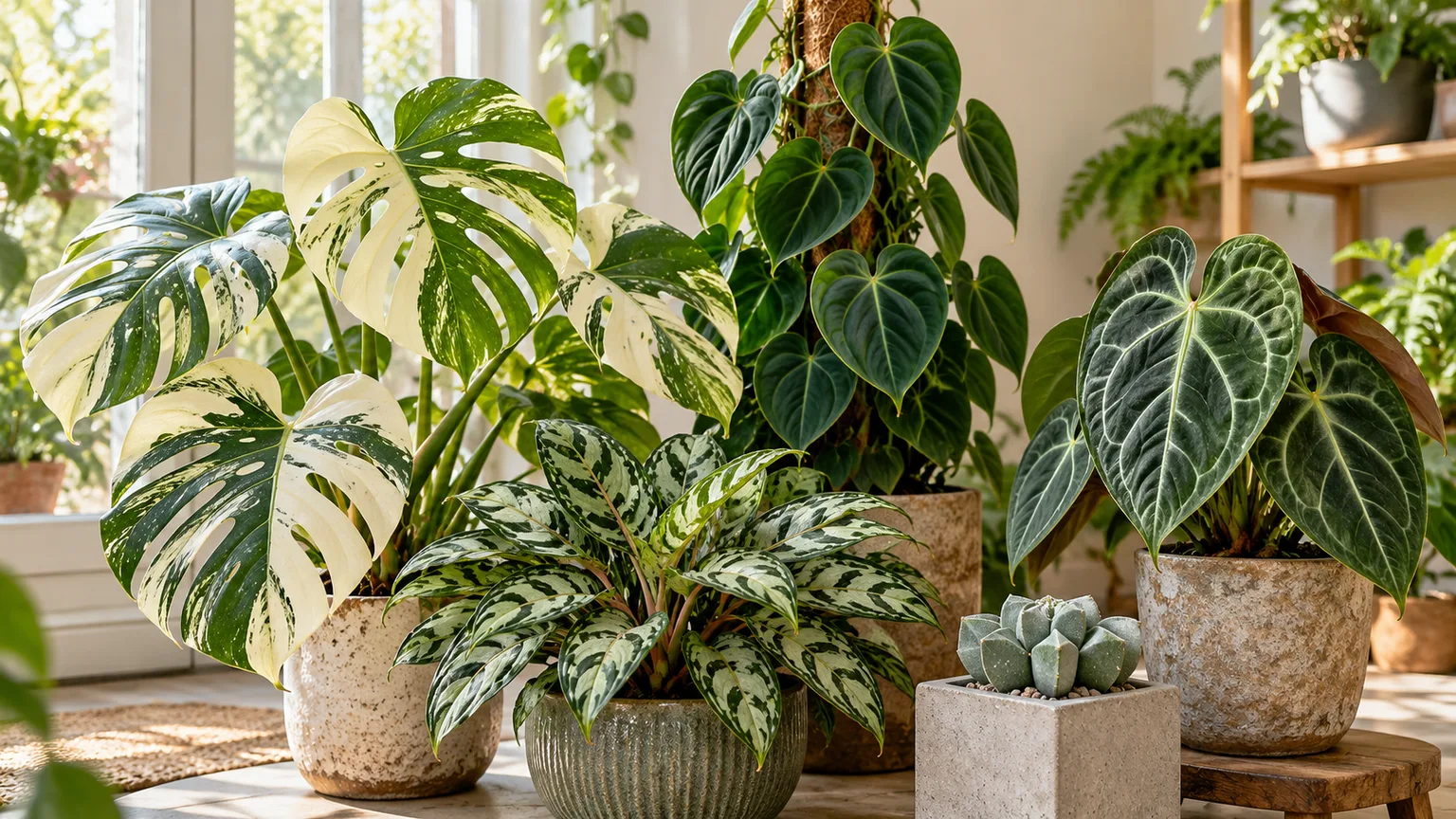
Some plants become expensive because they take years to grow to a large, saleable size. Others attract collectors because their leaf patterns are unusual, their propagation is slow, or their history gives one specimen a value that cannot be reproduced. Those are very different reasons for a high price, and they do not make every plant with the same name equally valuable.
The most dramatic figures are usually one-off auction reports, not what a typical shopper should expect to pay today. This guide puts six familiar examples in context, explains what makes each one costly, and shows how to judge a listing before spending more than you planned.
Price tags need a date, currency, and sale type
“Most expensive” can mean the highest public auction bid, a seller’s asking price, a nursery’s retail price, or the amount paid for a mature, established specimen. A headline may compare all four as if they were the same. They are not. A record from 2005 cannot tell you the 2026 retail value of a propagated plant, and a rare seller’s asking price does not prove that anyone bought it.
The six examples below span those different categories. The table is a map of the evidence, not a current price list: every quoted figure needs its year, currency, seller context, and source before it can be compared with a plant at a local nursery.
| Plant | Reported price context | What the figure represents |
|---|---|---|
| Fiddle-leaf fig | Mature plants may cost several hundred dollars, depending on size and market | Growing time, specimen size, pot, and delivery rather than rare genetics |
| Variegated Monstera | A floral-industry article reported a $38,000 sale for M. adansonii variegata | One reported collector sale; it is not a quote for every variegated M. deliciosa |
| Hoya carnosa ‘Compacta’ | A 2020 New Zealand auction was reported at $6,500 | One unusually variegated specimen and a single bidding event |
| Rhaphidophora tetrasperma | Industry reporting in 2025 cited a $27,100 white-variegated specimen | A reported high-water mark with no guarantee of a comparable listing today |
| Shenzhen Nongke orchid | A 2005 auction is commonly reported at about $200,000; dollar conversions vary | A rare cultivated orchid sold at auction, not a standard nursery plant |
| White pine bonsai | Bonsai references report a 2011 sale of about $1.3 million | A singular, old, trained tree and its history—not the price of an ordinary bonsai |
The Bonsai Empire price guide describes how bonsai prices vary by country, species, development, and quality, while the Thursd rare-plant report discusses exceptional collector sales. Both are useful market context, but neither turns a historic headline into a dependable retail estimate. For the orchid, secondary reports also vary between roughly $200,000 and $224,000, which is another reason to preserve the original year and treat the converted dollar amount as approximate.
What makes a plant expensive
Price usually reflects a combination of supply, demand, production time, plant quality, and the buyer’s willingness to pay. A rare leaf pattern can start the bidding, but size, health, rooting, provenance, and shipping can change what a particular specimen is worth. The most expensive plant in a news story is not automatically the most expensive plant to grow, nor is it necessarily the best choice for a home.
Rarity, propagation, and variegation
Many coveted houseplants are expensive because a desirable trait is hard to reproduce consistently. Variegation means that parts of a leaf have less green chlorophyll-bearing tissue. The pattern can be visually striking, but a cutting only reproduces the trait if it comes from a growth point that carries the relevant variegation; a detached leaf without a viable node cannot grow into a new vine.
A plant with a beautiful leaf may also produce its next leaf mostly green, mostly cream, or with a different pattern. That uncertainty is part of the appeal for some collectors and a real risk for a buyer who is paying a premium for a particular look. The NC State Extension profile for Monstera deliciosa notes that variegated cultivars need more light than darker green forms, but more light does not guarantee a stable or evenly distributed pattern.
Propagation affects supply, too. A grower can sell many divisions from a fast-growing plant, but a slow vine with few suitable nodes yields fewer viable starts. As propagation methods become more accessible, supply can rise and prices can fall quickly. A plant can remain attractive even after its scarcity premium disappears.
Size, history, and years of skilled care
A mature floor plant is expensive for a different reason than a rare cutting. A nursery has spent time, space, labor, and transport to produce a large specimen that can anchor a room. A small starter may be the same species and cultivar but take years to reach that size; the price gap can reflect production and freight rather than genetics.
Bonsai makes the time component especially visible. The Bonsai Empire guide points to maturity, trunk design, years of training, and rarity as factors that affect value. A beautifully tapered trunk, balanced structure, healthy roots, and credible history are not created by putting a young tree in a shallow pot. Age alone is not enough, but the years of horticultural decisions embodied in a finished specimen can be substantial.
Six plants behind the headline prices
These six examples show how different routes lead to high prices. The first is usually a large interior specimen, several are rare or unusually patterned vines, one is a specially cultivated orchid, and the last is a trained tree that belongs outdoors in many climates. Comparing their price tags without those distinctions hides the real story.
Fiddle-leaf fig: size is the premium
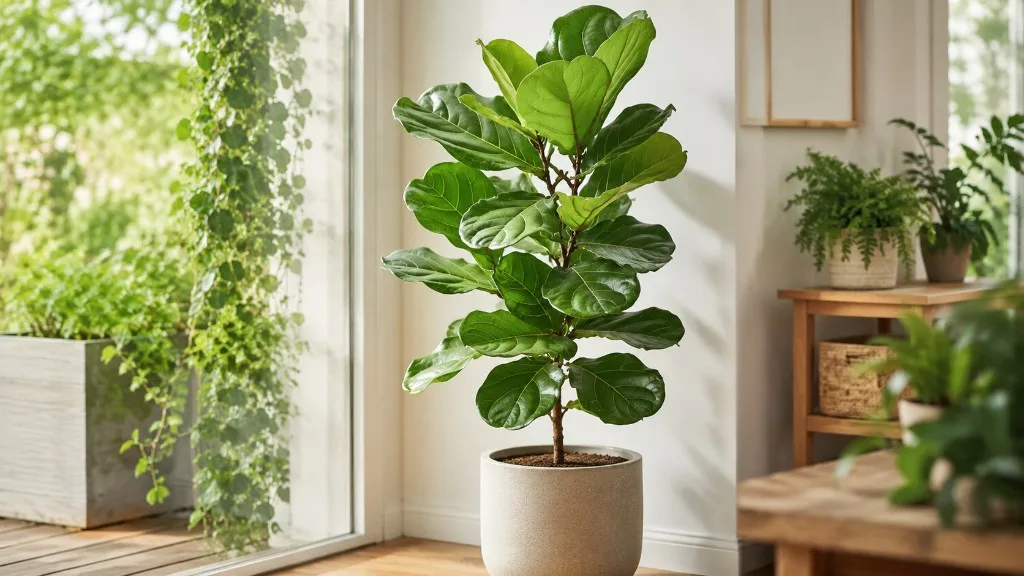
The fiddle-leaf fig (Ficus lyrata) is the least mysterious entry on the list. A young, widely available plant is not rare; a tall, well-branched specimen in a decorative container costs more because a grower has maintained it for longer, and shipping a heavy, delicate plant takes extra care. The NC State Extension Plant Toolbox describes it as a tropical tree that commonly grows 2 to 10 feet indoors, which helps explain why a floor-size plant can command more than a starter.
When comparing prices, look at height, number of stems, canopy fullness, container quality, and the condition of the newest leaves. A tall plant with a bare, weak trunk is not automatically a better value than a shorter, balanced one. Ask whether the quoted amount includes the pot and local delivery; moving a large fig through a narrow stairwell or shipping it in cold weather can be a larger practical problem than the purchase price.
This is a plant to buy for the room and the care you can provide, not because the word “fig” signals rarity. A large specimen needs bright conditions and steady placement. If your light is dim or you are likely to move often, a smaller plant is a lower-cost way to find out whether the species suits your home.
Variegated Monstera: the pattern and species matter
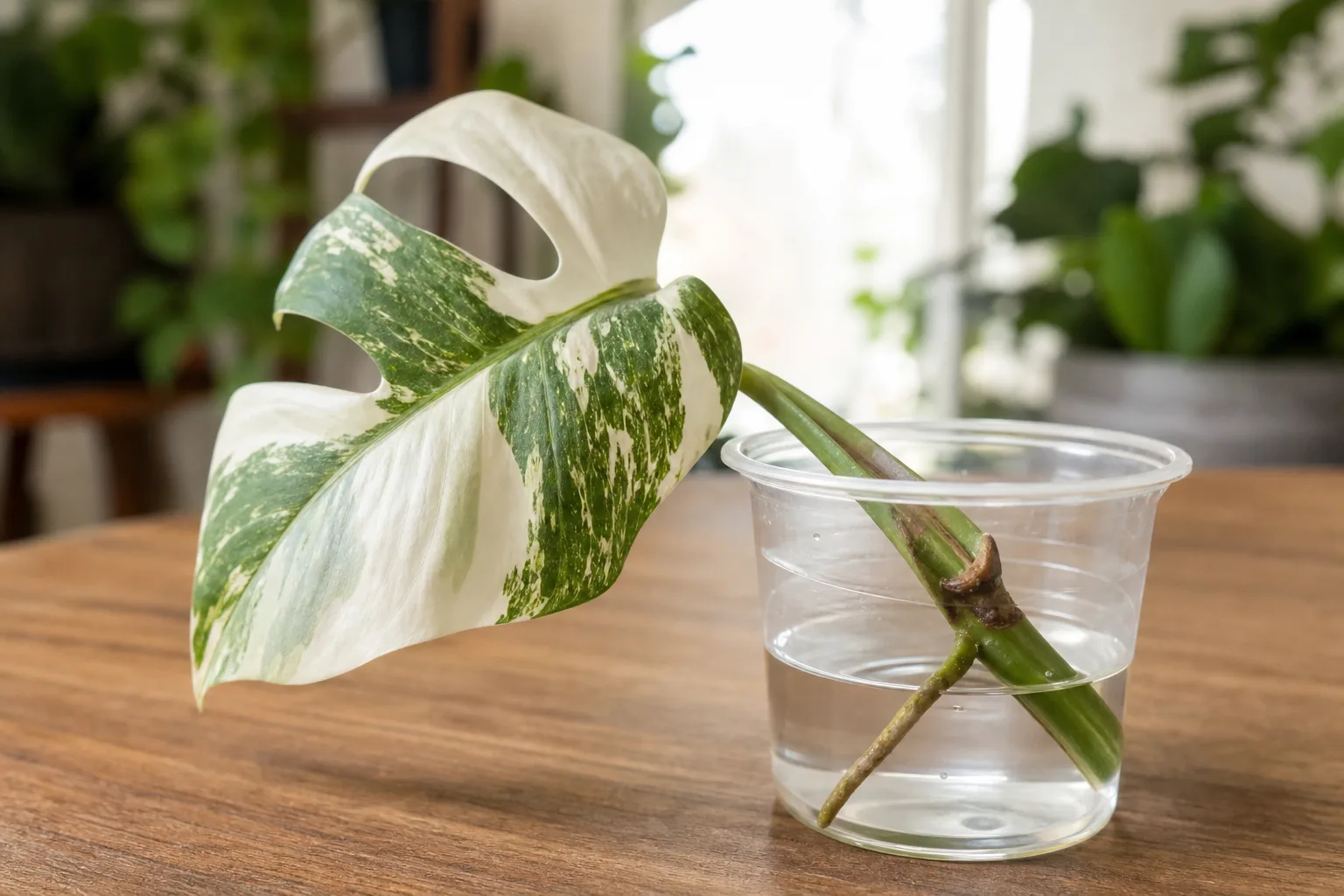
“Variegated Monstera” is not one exact product. A listing may refer to a variegated Monstera deliciosa, a Thai Constellation cultivar, an albo form, or another species such as M. adansonii. A 2025 Thursd report cites a $38,000 sale for Monstera adansonii variegata. That is an exceptional reported transaction for a different species, not a fair benchmark for every variegated Monstera cutting.
The actual plant matters more than the headline name. A seller should identify the species or cultivar, show the whole plant and the current growth point, and make clear whether the offer is for a rooted plant or an unrooted cutting. A leaf that is mostly white may look dramatic in a photo but can have less green tissue to support growth; a buyer should value a healthy stem and viable node over a single photogenic leaf.
Variegation can also change as the plant grows. Ask for recent photos of multiple leaves and, if possible, the newest unfurled leaf. Do not pay a premium based only on a promise that future leaves will repeat the pattern. The price is paying for a plant with uncertain future growth, not purchasing control over its genetics.
Hoya carnosa ‘Compacta’: one unusual auction result
The twisted, rope-like cultivar Hoya carnosa ‘Compacta’ is sometimes called Hindu Rope. A report on Balcony Garden Web described one unusually variegated specimen selling for $6,500 on New Zealand’s Trade Me in 2020. Treat that as a dated auction result, not the usual price of a Hoya, a standard green ‘Compacta’, or even another variegated plant.
The cultivar’s curled leaves make it slow to produce a full, dense display, and the cream or yellow pattern described in the sale made that particular plant more distinctive. But the sales context matters: bidding on one established plant can climb far beyond the retail value of a small rooted specimen. The NC State profile for Hoya carnosa helps confirm the underlying species; the ‘Compacta’ name refers to a cultivar, not a separate species.
If you are shopping, ask whether the plant is actually ‘Compacta’ and whether the variegation appears on several living leaves, not just in a seller’s older photograph. Compare like with like: plant size, root establishment, number of growing points, and shipping all affect the price. If what you want is the rope-like foliage, a modest, healthy plant can deliver the look without chasing a record.
Rhaphidophora tetrasperma: a costly name mix-up
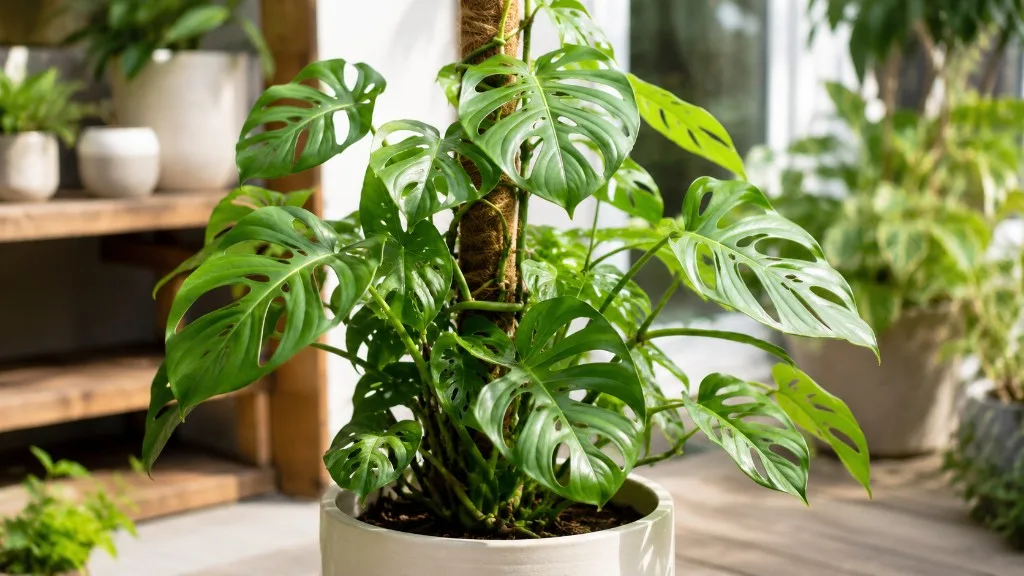
Rhaphidophora tetrasperma is often sold as “mini Monstera” or “Philodendron minima,” but neither common name is a reliable botanical identification. The NC State Extension Plant Toolbox lists Rhaphidophora tetrasperma as its own species, separate from Monstera deliciosa and from philodendrons. This is not a minor distinction when someone is selling a rare specimen for a collector’s price.
The standard green plant is widely propagated and usually costs far less than a specimen with white or cream variegation. A 2025 floral-trade article reported a $27,100 sale for a white-variegated example with nine leaves. The report does not link to a public auction archive, so treat that figure as a secondary account of an exceptional transaction, not an audited price record or a current asking-price guide.
For a variegated tetrasperma, verify the stem and node: a picture of one pale leaf is not enough to show that the growth point can continue producing the desired pattern. Check that the seller’s plant is truly Rhaphidophora tetrasperma rather than a mislabeled Monstera or unrelated aroid. If the listing relies on “mini Monstera” alone, ask for the Latin name and a clear view of the stem before paying a rarity premium.
Shenzhen Nongke orchid: a cultivated auction rarity
The Shenzhen Nongke orchid is famous for a reported 2005 auction at 1.68 million yuan. Secondary coverage commonly converts that to around $200,000, while another 2025 industry article gives $224,000; exchange rates and the date of conversion likely explain some of that spread. I could not verify a public auction catalogue for the sale, so the responsible way to repeat it is “widely reported at about $200,000,” not to present an exact modern dollar value as settled fact.
The story attached to the plant is unusual: reports describe an orchid developed through years of cultivation and research rather than a readily available wild species. The buyer was paying for an exceptional cultivated specimen and its story, not for a typical potted orchid. The American Orchid Society explains that orchids encompass many different growing types; the care of an ordinary grocery-store Phalaenopsis should not be assumed to match every specialized orchid.
This example is best understood as a historical collector transaction. A normal orchid from a reputable grower is a much more useful comparison for someone who wants flowers at home. Before buying a rare orchid, ask for the exact hybrid or cultivar name, evidence that it is legally propagated, and the conditions it needs to grow and bloom; an impressive auction story alone says little about whether it will suit your windowsill.
White pine bonsai: time, design, and provenance
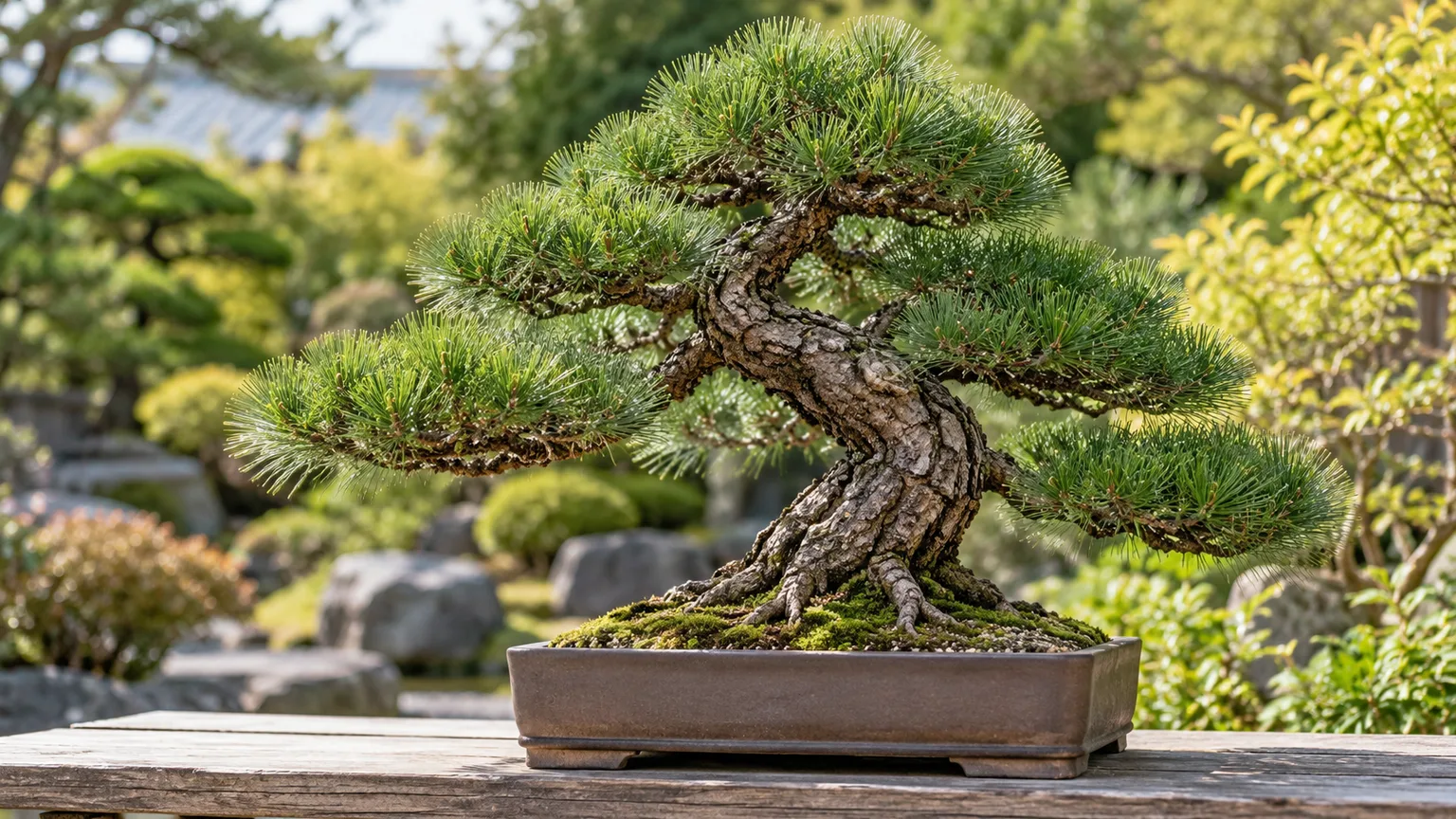
A centuries-old Japanese white pine bonsai is reported to have sold for about $1.3 million at an International Bonsai Convention in Takamatsu in 2011. The Bonsai Empire price guide reports that sale and explains why quality bonsai can span everything from inexpensive starter trees to extremely rare, highly developed specimens. The price belongs to a single living artwork, shaped over generations, not to pine bonsai as a category.
Collectors may assess trunk taper, bark, branch placement, root base, canopy balance, health, pot, display history, and the credibility of the tree’s age and ownership. A tree may be old but poorly developed, while a younger specimen with good structure can be more attractive and workable. Provenance and the artist’s reputation can add value, but an unverified age claim should not substitute for visible quality.
The name “bonsai” also does not mean “houseplant.” The Royal Horticultural Society’s bonsai guidance distinguishes temperate outdoor trees from tropical or subtropical bonsai that can tolerate indoor growing. Pines need outdoor conditions and seasonal change in most climates. If you want an indoor tree, identify the species first rather than bringing home a pine because a record sale made bonsai seem glamorous.
Which expensive plant makes sense to buy?
Most readers do not need a record-breaking specimen. Start with the feature you actually want: a large architectural plant, a variegated leaf, a twisted Hoya, a trained miniature tree, or a special orchid bloom. Then choose the healthiest, best-documented specimen that fits your space and budget. A less expensive plant that grows well in your home is a better purchase than a rare one that declines after shipping.
Match the plant to your space and experience
For a mature fiddle-leaf fig, measure doorways, stairwells, and the light at its final location before arranging delivery. For variegated vines, decide whether you would still enjoy the plant if its next leaf carried less variegation. For a Hoya, ask whether you want the distinctive foliage or an established plant that may flower; do not assume a rare cultivar will bloom on demand.
Bonsai deserves a separate decision because the tree species determines placement and seasonal care. Many conifers, including pines, are outdoor trees, so an indoor desk is not a suitable permanent location. A tropical ficus bonsai is a different proposition. For an orchid, ask about temperature, light, and the conditions required to flower again, not just the bloom in the listing photo.
Buying is also a question of tolerance for uncertainty. A rare cutting can fail to root, arrive damaged, or grow out with a less striking pattern. Set a maximum spend you can afford to lose, especially on an auction platform where excitement can push bids beyond the value you assigned before bidding began.
How to evaluate a rare plant listing
A strong listing makes the plant easier to evaluate, not more mysterious. It identifies the species and cultivar, describes exactly what is included, shows recent photographs, and explains the seller’s shipping and replacement terms. A high price should increase the amount of evidence you request; it should not make you feel you need to decide before asking basic questions.
Confirm the species, cultivar, and item for sale
Check the Latin name against a botanical garden, university extension, or horticultural society profile. Common names such as “mini Monstera” can refer to different plants in casual listings. Ask whether you are buying a rooted plant, a node-bearing cutting, a division, a seedling, or a mature specimen, because those are not interchangeable products.
For variegated plants, request a photograph of the actual plant and the current growth point, not a stock image or a parent plant that is not included. Confirm which leaves belong to the plant and whether the listed pattern is present on new growth. If the seller cannot show a viable node on a cutting, there may be no way for that cutting to produce a new shoot.
Check the growth point, roots, and seller terms
Look for firm stems, intact leaves, and roots appropriate to the plant’s size. A wet, sour-smelling root ball, soft stem, or extensive pest damage should change the decision even if the leaves have rare markings. Ask how the plant was grown, when the photos were taken, and how it will be packed; winter or heat-wave shipping can be risky for tropical plants.
Read the payment, delivery, and arrival-condition terms before bidding. Find out who pays for overnight shipping, whether a heat pack or insulation is available, and how quickly you must report damage. When a transaction crosses a national border, check the plant-health and import requirements for your destination before paying; seller assurances do not replace the rules that apply to you.
Use the same standard for an inexpensive listing and an expensive one: the plant’s identity, health, and terms should be clear. Walk away if the seller pressures you, refuses current photos, or claims a specimen is guaranteed to appreciate. Plant markets can move faster than a plant can grow, and there is no dependable resale value for a living specimen.
Why rare plant prices rise and fall
Prices rise when many people want a plant that is difficult to propagate, when a new pattern or cultivar attracts attention, or when a single auction turns into a bidding contest. They can fall when growers produce more stock, tissue-culture plants reach retail, or interest shifts to another species. A price report describes a particular place and moment; it does not promise that a similar plant will sell for the same amount later.
The specimen itself can also change the comparison. A rooted, established plant with several healthy growth points is not equivalent to an unrooted cutting, and an old bonsai with documented training is not equivalent to a young nursery tree. Currency conversion adds another layer: a New Zealand auction price, a yuan sale, and a US nursery tag should not be placed in one ranking without noting the date and denomination.
There is no reliable way to turn an expensive plant into an investment. It can stop growing, lose leaves, revert toward green, develop root trouble, or become easier to buy as propagation increases. Purchase a rare plant because you value the plant itself, understand its care, and can accept the price even if the market changes.
Conclusion
The most expensive houseplants are expensive for different reasons. A large fiddle-leaf fig carries a size and delivery premium; patterned vines depend on their species, growth point, and variegation; the Shenzhen Nongke orchid and record bonsai are tied to exceptional historical sales. Those stories are interesting, but they are not current price guarantees.
If you are considering a purchase, verify the botanical identity, inspect the actual plant, compare like with like, and choose a specimen that matches your growing conditions. A healthy, clearly identified plant at a price you can comfortably afford is a better find than a headline number.