Monstera Leaves Turning Brown: 6 Causes and Fixes
Brown Monstera leaves usually trace to watering, light, humidity, or aging. Use this pattern-based guide to find the real cause and fix it.
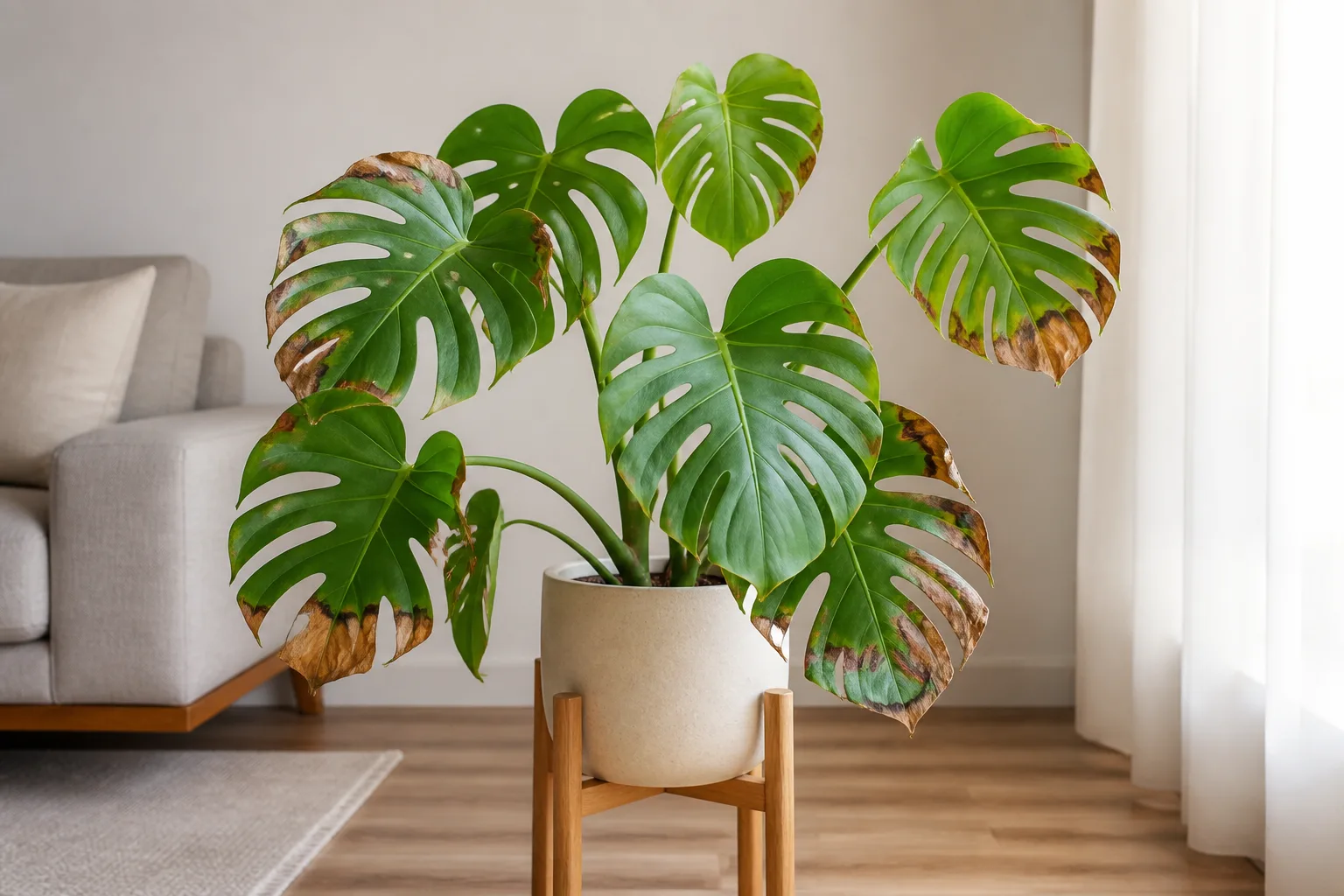
Brown Monstera leaves are a symptom, not a single diagnosis. Crispy brown tips on an otherwise firm leaf usually point to dry soil or dry air, while dark brown patches with yellow halos on wet mix suggest root stress. A single lower leaf fading to tan over several weeks may be nothing more than normal aging on a mature vine. The fastest fix is to read the pattern first, gather a little evidence, then change one major variable at a time.
Do not reach for fertilizer, a bigger pot, or a sunnier window until you know what kind of browning you are dealing with. Those well-meaning moves can worsen an already stressed Monstera. Work through the checks below in order, link what you see to one of the six common causes, and judge recovery by new leaves—not by hoping damaged tissue will green up again.
Start with the browning pattern, not panic
Location, texture, and speed matter more than the word “brown” alone. Run your finger along the affected tissue. Crisp and papery edges usually mean the leaf lost water faster than the roots could replace it. Soft, dark, or spreading patches on a plant sitting in wet soil point toward overwatering or root damage. Bleached tan patches on the window-facing side of a leaf are classic sun scorch. Uniform browning on one old leaf at the base while the rest of the plant looks vigorous often fits natural turnover.
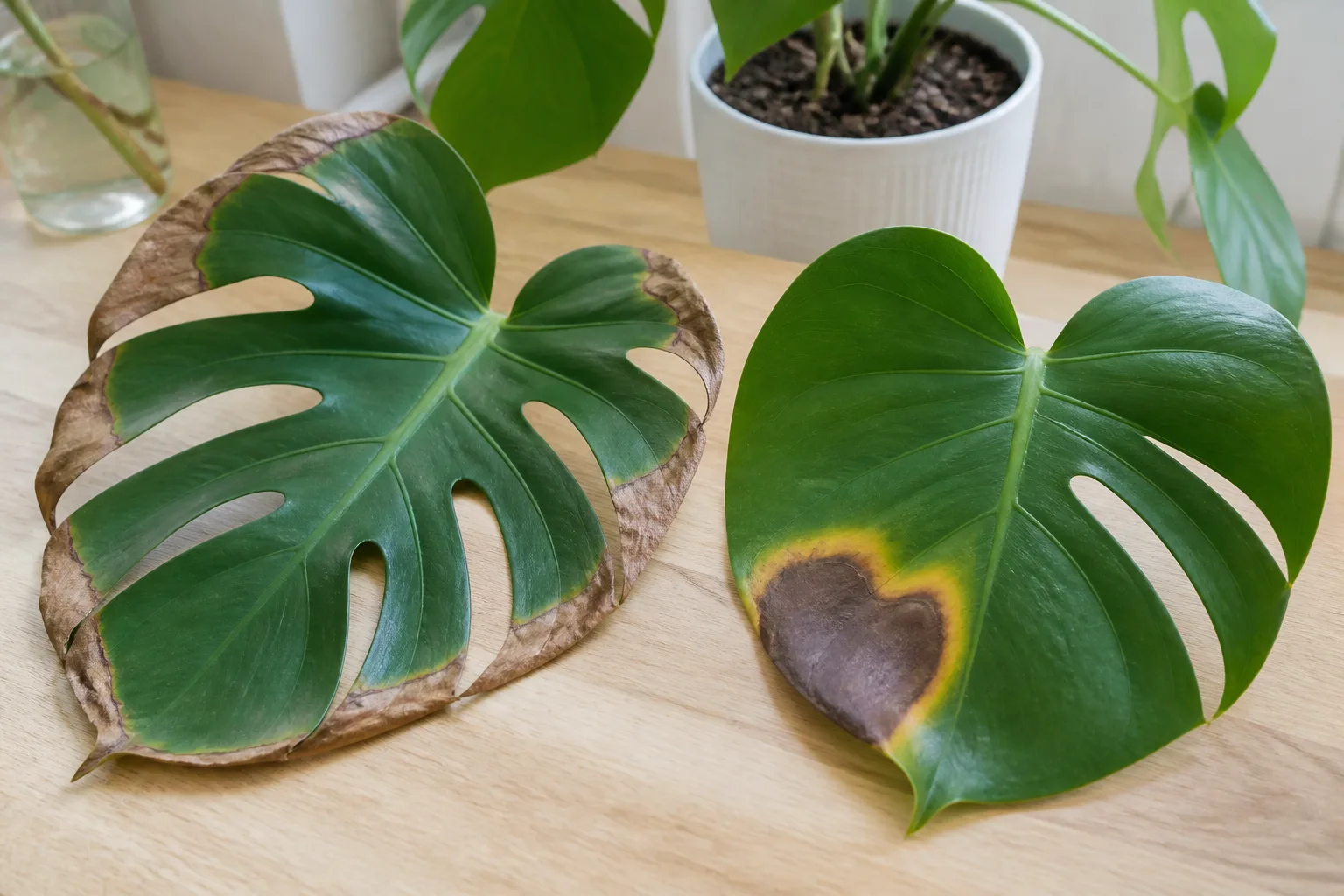
Write down which leaves are affected, whether the soil is wet or dry several inches down, and when you last watered. That two-minute note prevents the common cycle of watering a wet plant because the leaves look dry, then moving it into stronger sun when it droops.
Crisp brown margins usually differ from soft dark patches caused by wet soil—compare texture before you change your watering routine.
What normal aging looks like
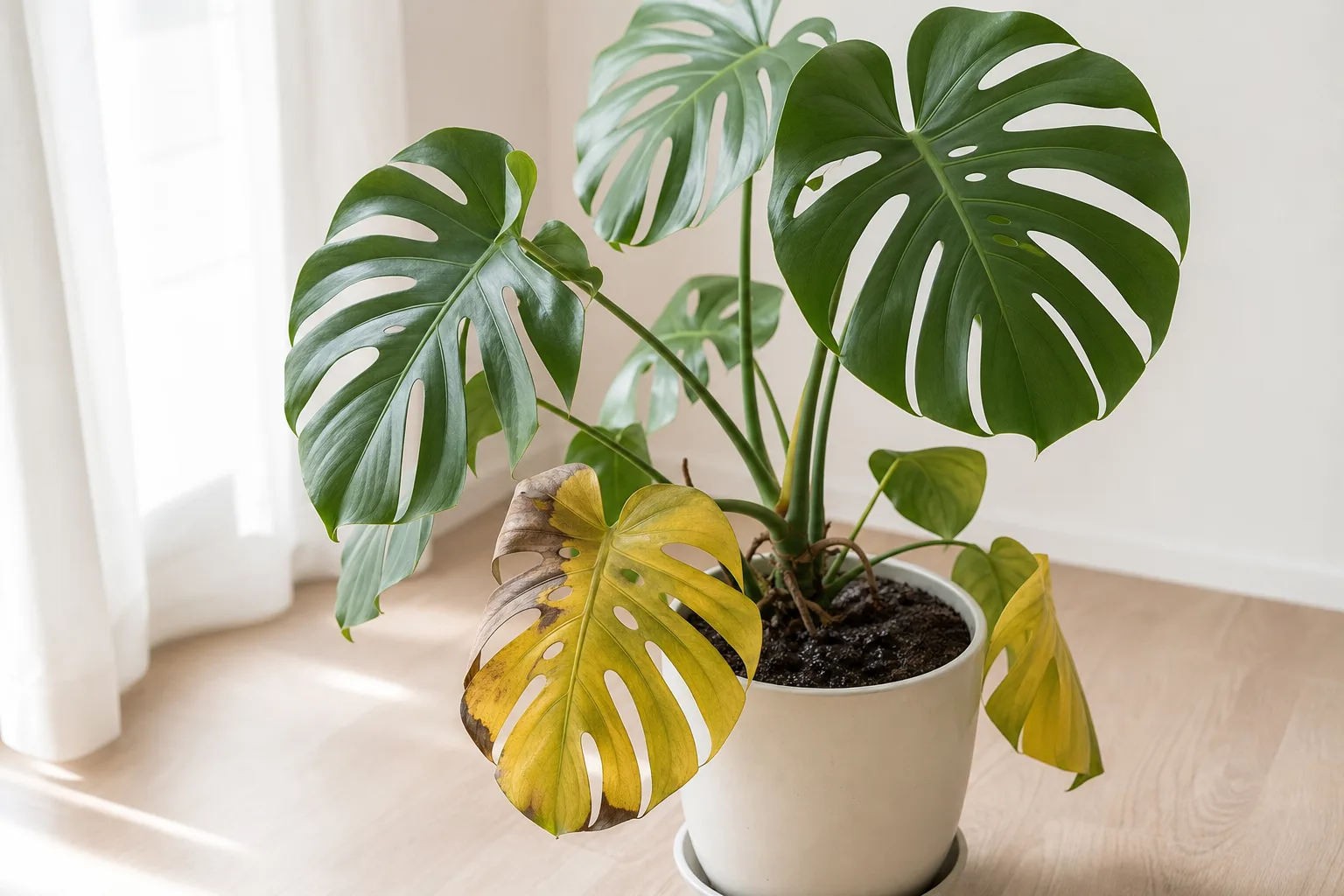
Monstera deliciosa and Monstera adansonii do not keep every leaf forever. As the vine matures, the oldest, lowest leaves gradually yellow, then tan, then dry at the edges before the petiole releases. This usually happens one leaf at a time, slowly, on a plant that is still pushing new growth at the top.
Normal aging does not come with a sour smell from the pot, black mush at the stem base, a sudden wave of brown on young leaves, or soil that stays wet for a week after watering. If only the bottom leaf is changing while upper leaves stay glossy and firm, you may simply remove that leaf when it is mostly brown and keep your current routine.
When brown leaves need action
Treat browning as urgent when multiple leaves change within a short period, when the newest leaf browns before it fully unfurls, or when brown patches spread while the soil stays soggy. Wet mix, a heavy pot, drooping stems, and dark soft areas at the soil line make root trouble the priority.
Act promptly if brown areas appear on the sun-facing side of leaves near a south or west window, especially in summer—the plant may be scorching. Fine webbing, sticky residue, or uniform speckling under leaves moves pests up the list. When in doubt, start with soil moisture and drainage before adjusting light or feed.
A quick diagnosis you can do today
Before you change the plant’s entire routine, spend five minutes gathering evidence. Note when you last watered, whether water drained freely, where the pot sits relative to windows and vents, and whether browning is on old or new growth.
Check soil, drainage, and roots
Push a finger or clean chopstick into the mix several inches down, not just across the surface. A very light pot with dry soil throughout points toward underwatering. A heavy pot with cool, wet mix several days after watering points toward slow drainage or overwatering. Confirm the inner pot has open drainage holes and that the saucer or cover pot is not holding standing water.
North Carolina State Extension describes Monstera deliciosa as a plant that prefers thorough watering followed by partial drying—allow the top quarter to one-third of the soil to dry between drinks (North Carolina State Extension). UF/IFAS notes that Monstera is not tolerant of flooded or excessively wet soil (UF/IFAS Extension). If the top feels dry but the middle stays wet, the mix may be too dense or the pot too large for the root ball.
When several lower leaves show dark brown patches and the soil smells musty, slide the plant out of the pot and inspect roots. Firm, white or tan roots are healthy; black, mushy, or hollow roots need trimming and a drier recovery plan. See our overwatering guide for Monstera deliciosa and root rot troubleshooting if that picture matches.
Read light, humidity, and heat exposure
Stand where the plant sits and look toward the window. Bright indirect light means a well-lit room without sunbeams hitting the leaves. Direct afternoon sun through glass can scorch large Monstera blades within hours, especially on variegated cultivars with less chlorophyll.
Penn State Extension recommends bright light without direct sun for indoor Monstera and notes that the plant may benefit from a humidifier in very dry interiors (Penn State Extension). If a hygrometer reads below 40% near the canopy and tips are crisp while soil moisture is appropriate, low humidity is a likely contributor. Also check for heat registers, radiators, and cold drafty windows—Monstera prefers warm, stable conditions roughly between 60°F and 85°F (North Carolina State Extension).
Cause 1: Overwatering and root stress
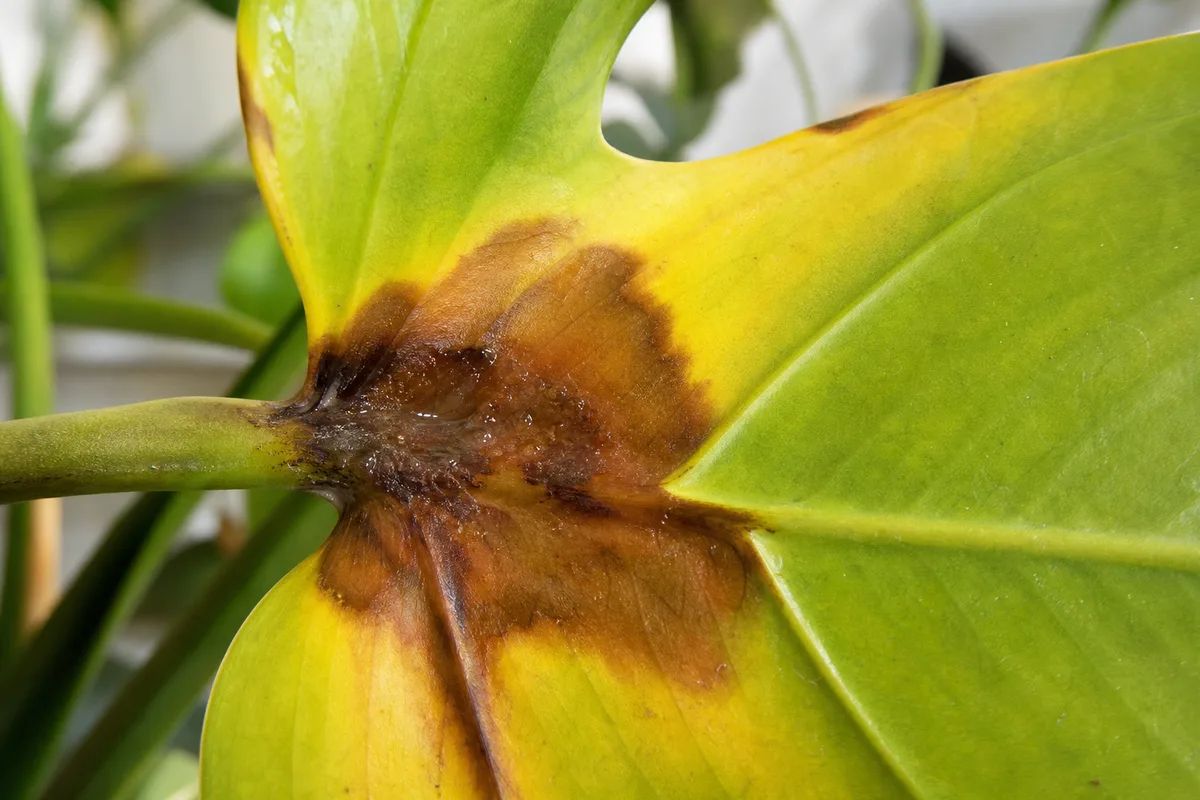
Overwatering is the most common serious cause of dark brown or black patches on Monstera foliage, especially when yellow halos appear around the spots. The problem is not always how much water you pour—it is how long the roots sit in saturated, airless mix. Heavy soil, oversized pots, blocked drainage, and watering on a calendar instead of by feel all keep roots wet too long.
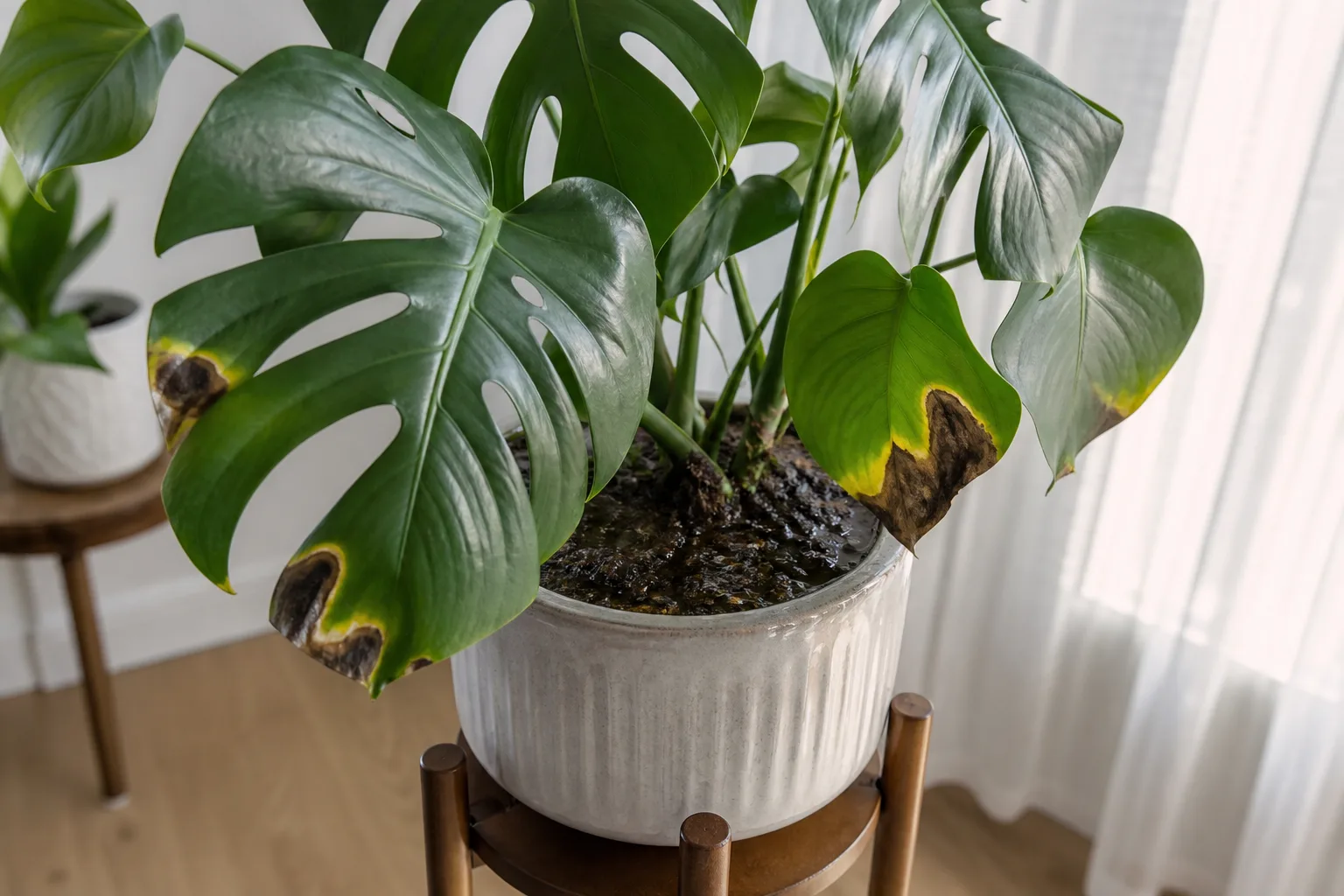
An overwatered Monstera may show yellowing lower leaves, soft petioles, and a sour smell from the soil. Brown areas often start on older leaves but can reach newer growth if rot advances. Epic Gardening describes brown spots as a frequent symptom when roots cannot function because of excess moisture (Epic Gardening).
How to fix an overwatered Monstera
Stop watering immediately and pour out any saucer water. Move the plant to bright indirect light—not direct sun—and let the mix dry until the top third feels dry before the next drink. If roots are mushy, unpot, trim rotten tissue with clean shears, and repot into fresh, chunky, well-draining mix in a pot only slightly larger than the root ball. Do not add a layer of rocks at the bottom; that can create a perched water table that keeps roots wetter, not drier.
Water deeply only when the upper portion of the soil has dried, then discard runoff. Avoid misting as a substitute for fixing drainage. Recovery takes weeks; judge progress by whether new leaves emerge firm and green, not by old spotted blades.
Cause 2: Underwatering and dry air
When Monstera leaves turn brown at the tips and margins first, feel crisp, and the pot is noticeably light, underwatering is a leading suspect. Large fenestrated leaves lose water quickly in bright rooms, and a root-bound plant can dry out within days even if you watered recently.
Underwatering often starts with yellowing, then progresses to brown, dry tips before entire sections crisp. The oldest, largest leaves are usually hit first because they have the longest water delivery path. If you also see yellow leaves on your Monstera, check whether drought stress is part of the picture.
Low humidity produces a similar look—stiff brown edges while the soil is not bone dry. Heated winter air commonly sits around 25–40% relative humidity, well below what tropical aroids prefer. Penn State Extension notes Monstera may need supplemental humidity indoors (Penn State Extension).
Watering rhythm that prevents crisp brown tips
Water when the top 1–2 inches of mix feel dry, then soak until a little water exits the drainage holes. Do not rely on a fixed weekly schedule; a Monstera in bright summer light may need water twice as often as the same plant in winter dormancy. If the root ball has shrunk away from the pot sides, submerge the bottom of the pot in a basin of water for ten to fifteen minutes so the mix rehydrates evenly.
Raise humidity toward 50–60% if edges keep crisping despite correct watering. A humidifier near the plant is more reliable than occasional misting. Our crispy leaves troubleshooting page walks through the same margin-browning pattern in more detail.
Cause 3: Too much direct sun
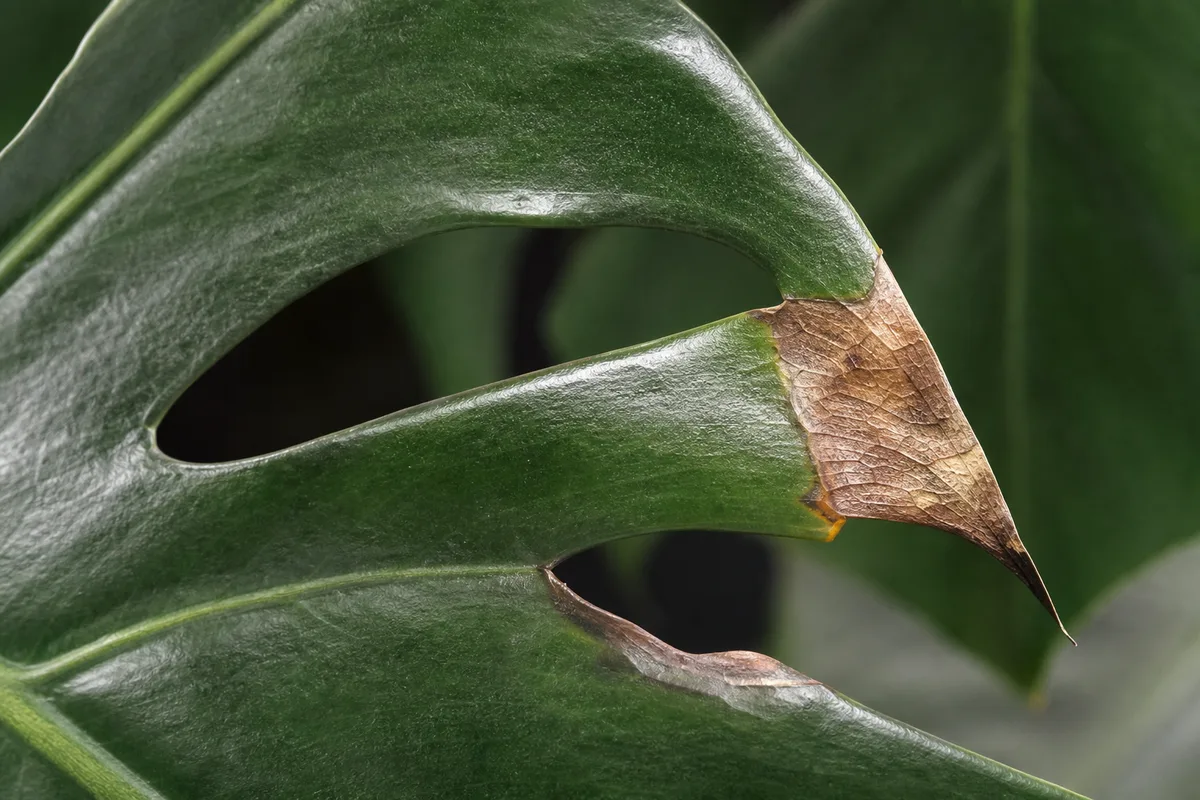
Monstera evolved as an understory climber in tropical forests. It needs bright light to grow well, but direct sunbeams—especially hot afternoon sun through south- or west-facing glass—can bleach and brown patches on the exposed side of the leaf. The damage often looks tan or papery and appears on the leaf section facing the window, not randomly across the plant.
Variegated types such as Thai Constellation or Monstera albo scorch faster because they carry less chlorophyll in white sections. If you recently moved a plant closer to a window or removed a sheer curtain, sunburn is a strong possibility.
Move the Monstera one to two feet back from harsh glass or hang a sheer curtain to filter rays. Remove leaves that are mostly dead tissue so the plant does not waste energy on them, but expect no green return on scorched areas. New growth should emerge without burn marks once light is corrected.
Cause 4: Too little light (and slow soil drying)
Too little light is an underrated browning trigger. When a Monstera sits in a dim corner, photosynthesis slows, growth stalls, and soil stays wet longer after each watering. That slow, chronic moisture stress can produce yellow then brown lower leaves and may invite root problems even if you are not pouring excessive water.
Leggy stems stretching toward a window, small new leaves, and soil that remains damp for more than ten days are clues. Low light alone rarely creates crisp tip burn the way drought does, but it pairs dangerously with overwatering because the plant cannot use water at the rate you supply it.
Move the plant to a brighter indirect location or add a full-spectrum grow light on a 12–14 hour timer. UW–Madison Extension notes that insufficient light contributes to weak growth indoors (UW–Madison Extension). Once light improves, adjust watering to match faster drying—do not keep the old schedule meant for a dark corner.
Cause 5: Overfertilizing and salt burn
Monstera benefits from light feeding during active growth, but too much fertilizer—or feeding on dry soil—can burn roots and show up as brown, dry leaf margins and an overall dull, faded look. Salt buildup from tap water and repeated feeding leaves a white crust on the soil surface and can progressively kill leaf edges.
Feed only during spring and summer at half the label strength, no more than monthly for most indoor plants. Skip fertilizer entirely in fall and winter unless you use strong supplemental lighting. If crust is visible, flush the pot by running water through the mix several times and letting it drain fully, or repot into fresh mix in spring.
Yellowing that precedes brown, dry edges after a recent feed strongly suggests chemical burn rather than disease. When in doubt, withhold fertilizer for six weeks and watch whether new leaves emerge cleaner.
Cause 6: Natural leaf turnover at the base
Not every brown leaf is a crisis. As Monstera vines age, the lowest leaves complete their life cycle: chlorophyll breaks down, the blade yellows, then turns tan and dry before the plant sheds it. This is especially common on tall deliciosa plants with many nodes.
Natural turnover affects one leaf at a time, progresses slowly over weeks, and leaves the rest of the plant firm and actively growing. If young upper leaves are crisping or spotting while only the base looks rough, look for a care problem instead of blaming age.
You may remove a mostly brown leaf at the petiole base for appearance, but do not strip multiple leaves at once unless they are diseased. The plant still needs foliage to photosynthesize while it replaces older growth.
Other causes worth ruling out
The six causes above cover most household Monstera browning, but a few additional problems mimic them. Rule these out before you overhaul your entire setup.
Pests, disease, and brown spots
Spider mites cause fine stippling that later bronzes, often with webbing on leaf undersides and stems. Sap-sucking insects such as scale and mealybugs leave brown spots, sticky residue, and weakened patches. Isolate affected plants and treat with insecticidal soap or horticultural oil, repeating per label directions.
Bacterial leaf spot produces yellow halos with tan or dark centers that may ooze; fungal issues linked to wet foliage can spread on crowded shelves. Epic Gardening recommends avoiding overhead misting and improving airflow when leaf spots appear (Epic Gardening). Prune affected leaves with clean tools and keep water off blades going forward.
Brown spots confined to old leaves with firm stems and dry soil are less likely to be infectious than spots that spread rapidly on new growth during humid, stagnant conditions.
Cold drafts and sudden temperature swings
Monstera is tropical. Exposure to cold drafts, frost-touched window panes, or blasts from air conditioners can brown leaf edges overnight. Heat spikes from radiators scorch the nearest leaves similarly to sunburn. NC State lists a preferred indoor range around 60 to 85°F (North Carolina State Extension); UW–Madison notes growth stops below about 50°F (UW–Madison Extension).
Move the pot away from problem zones and stabilize the room. One damaged leaf may be all you see after a single cold night; repeated exposure needs a permanent location change.
Should you cut brown Monstera leaves?
Remove a leaf when it is mostly brown or clearly diseased, cutting the petiole cleanly near the main stem with sterilized shears. If a leaf is only lightly tipped or edged in brown but still largely green, leave it in place—the plant can still use that tissue for photosynthesis while it recovers.
Do not prune heavily during active root rot recovery; the plant needs every healthy leaf it has. For fungal or bacterial spots, remove affected tissue promptly and dispose of it in the trash, not the compost pile indoors.
Brown tissue does not turn green again. Pruning is about redirecting energy and reducing spread, not cosmetic magic.
Recovery timeline and what success looks like
After you correct the primary cause, expect to judge recovery over two to six weeks, depending on season and severity. A Monstera in bright spring growth may push a clean new leaf within two weeks; a root-damaged plant in winter may sit quietly until temperatures rise.
Success looks like firm new leaves unfurling without fresh brown marks, stable soil moisture cycles, and no new spreading spots on older foliage. Old damaged leaves may remain blemished until you remove them—that is normal.
Keep changes incremental: fix watering first if soil evidence is clear, then light, then humidity, then feeding. Changing everything at once makes it impossible to know what helped.
Monstera contains calcium oxalate crystals and is listed as having poisonous characteristics by NC State (North Carolina State Extension). Wear gloves if sap irritates your skin, keep pruned material away from pets and children, and seek professional advice after ingestion.
Conclusion
Brown Monstera leaves become manageable when you treat them as pattern evidence rather than a mystery curse. Crisp tips on dry mix point to water and humidity; dark soft patches on wet mix point to roots; window-side tan patches point to sun; a lone fading lower leaf may simply be age. Run the five-minute checks, match your plant to the right cause, change one major habit at a time, and trust new growth to tell you whether you fixed it.
If several problems overlap—common on large plants in dry winter rooms—address drainage and watering before fertilizer or repotting. A stable Monstera with bright indirect light, periodic drying between waterings, and adequate humidity rarely needs rescue pruning. When you do intervene, do it deliberately, and let the next unfurling leaf prove you right.