How to Grow and Care for Mexican Orange Blossom Plants
Learn how to grow Mexican orange blossom with the right light, drainage, watering, winter protection, cultivar, and pruning timing for your climate and garden.
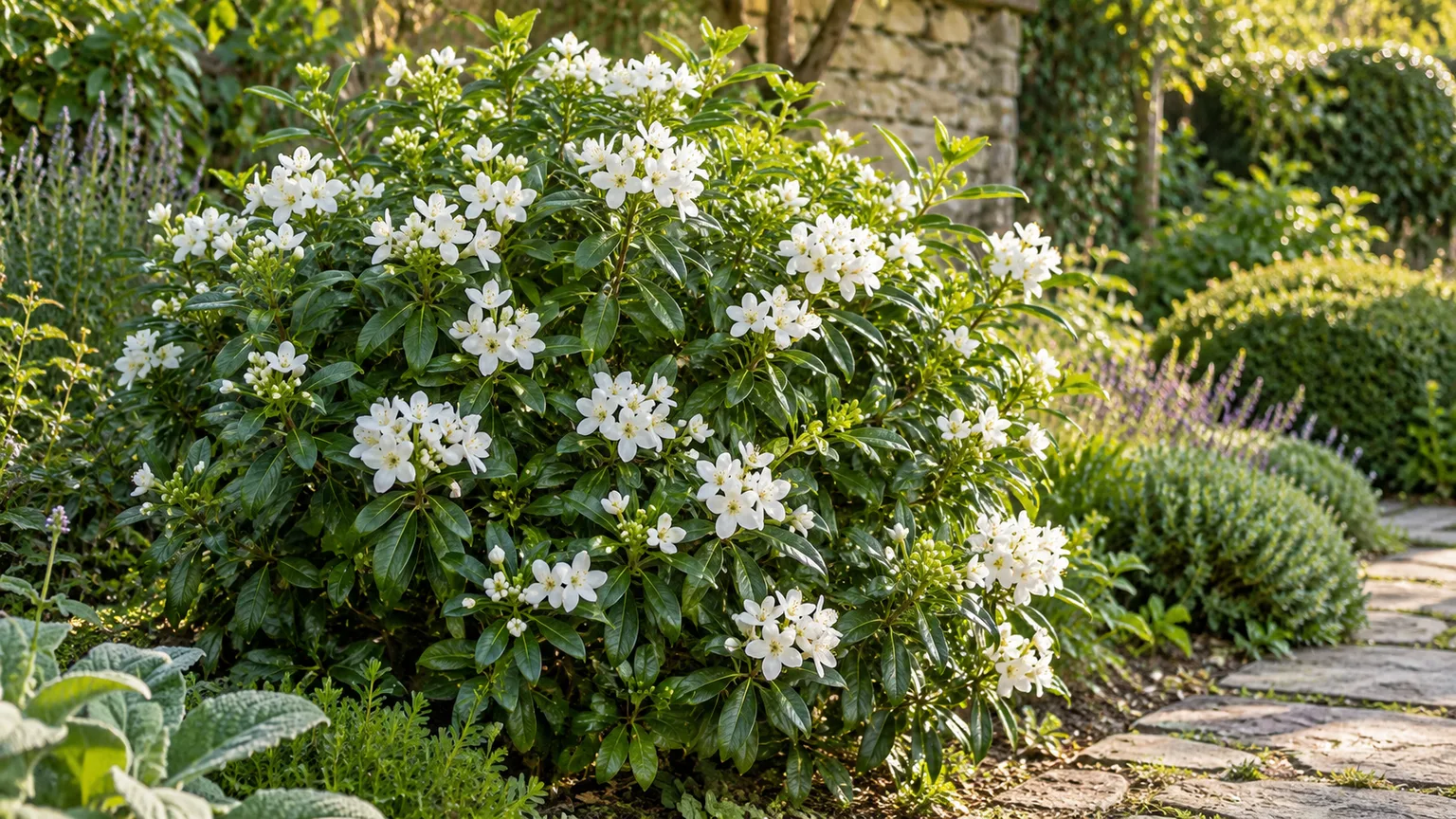
Mexican orange blossom is an evergreen shrub for a bright, sheltered garden, where its rounded foliage and white spring flowers can be enjoyed up close. The name refers to Choisya ternata, a flowering shrub in the rue family, Rutaceae—not to an orange tree. Its leaves and flowers carry a citrus-like fragrance, but the plant does not produce edible oranges.
The basic recipe is simple: give it sun or light shade, soil that drains instead of staying saturated, and protection from the coldest winds. The details that matter most are the size of the cultivar, your winter conditions, and whether the plant is newly planted or established. Those three factors determine whether it belongs in a border, a sheltered courtyard, or a movable container.
Mexican orange care at a glance
| Care question | Practical starting point |
|---|---|
| Botanical identity | Choisya ternata, an evergreen Rutaceae shrub native to Mexico |
| Mature size | Often about 4–8 feet tall and wide for the species; cultivar and climate change the result |
| Light | Full sun to part shade; brighter sites generally flower more heavily |
| Soil | Humus-rich and well drained; do not keep roots waterlogged |
| Water | Keep a new plant evenly moist while it establishes; water established plants during prolonged hot, dry weather |
| U.S. hardiness reference | Often listed around USDA zones 7b–10; zone boundaries do not guarantee survival |
| Flowers | Mainly late spring into early summer, with possible scattered or later flushes |
| Pruning | Usually little or none; shape after flowering or renovate in spring after frost risk |
| Main preventable problem | Root stress from poorly drained or persistently wet soil |
Use the table as a first filter, then compare the nursery label with local conditions. In a marginal winter climate, drainage and wind shelter can matter as much as the zone printed on a plant tag.
Identify the plant behind the common name
The accepted botanical name is Choisya ternata. Kew’s Plants of the World Online recognizes the species and gives Mexico as its native range; the RHS describes an evergreen, rounded shrub with glossy leaves divided into three broad leaflets and scented white flowers (Kew Science; RHS plant profile). The word ternata is a useful identification clue: its leaves are commonly arranged as three leaflets radiating from one point, although occasional leaves can vary.
“Mexican orange,” “Mexican orange blossom,” and “Mexican mock orange” are common names. They describe the flower’s orange-blossom-like scent, not a relationship to edible oranges in the way a citrus tree has one. Common names also overlap with unrelated mock-orange shrubs, particularly Philadelphus. Check the botanical name on the label before using care advice or buying a plant for a tight space.
Choose a site that balances sun and shelter
The best position is bright, sheltered, and not trapped in a low spot where water collects. Choisya tolerates a range of soil textures and light levels, but a sheltered position helps protect evergreen leaves and branches from cold winds, while good drainage lowers the risk of root and crown problems. If your garden is exposed, a spot beside a wall or hedge can reduce stress; leave enough room for air and mature width.
Light: favor sun, moderate harsh afternoon exposure
Full sun to partial shade both work. A plant in brighter light usually flowers more freely, while a shrub in deep shade may stay leafy but become open, leggy, and disappointing in bloom. North Carolina State Extension recommends protection from hot afternoon sun in mild-winter locations, so in a very hot climate, morning sun followed by dappled afternoon shade is a sensible compromise (N.C. State Extension Plant Toolbox).
Let the foliage tell you if the site is too harsh. Scorched leaf edges during a heat wave can point to intense sun combined with dry roots or wind, rather than a simple need for shade. If the shrub is healthy but barely flowers, first count its direct-light hours and check whether a tree canopy has grown over it; feeding it more is unlikely to solve a light shortage.
Hardiness: protect the shrub from cold wind
Many U.S. plant references place C. ternata in roughly zones 7b through 10, but that is a broad planning range, not a promise that every plant will survive a cold snap. North Carolina State notes that plants north of zone 7 are better treated as container plants that can be moved under cover, while the Missouri Botanical Garden lists the species for zones 7b–10 (N.C. State Extension; Missouri Botanical Garden Plant Finder).
In a borderline climate, favor spring planting, a warm wall, and shelter from prevailing winter wind. A container is easier to move but has roots exposed to colder air than roots in the ground; place it against a protected wall and keep the compost from becoming waterlogged. After frost damage, wait until spring growth shows which stems are truly dead before cutting back healthy-looking branches.
Plant into soil that drains well
Planting is easiest in spring or early fall, when mild weather gives roots time to settle without the combined stress of heat or frozen ground. Dig a hole wider than the root ball, loosen compacted soil around it, and set the shrub at the same depth it grew in its nursery pot. Backfill with the excavated soil, water to settle air pockets, and add a thin organic mulch over the root zone, keeping the stem base uncovered.
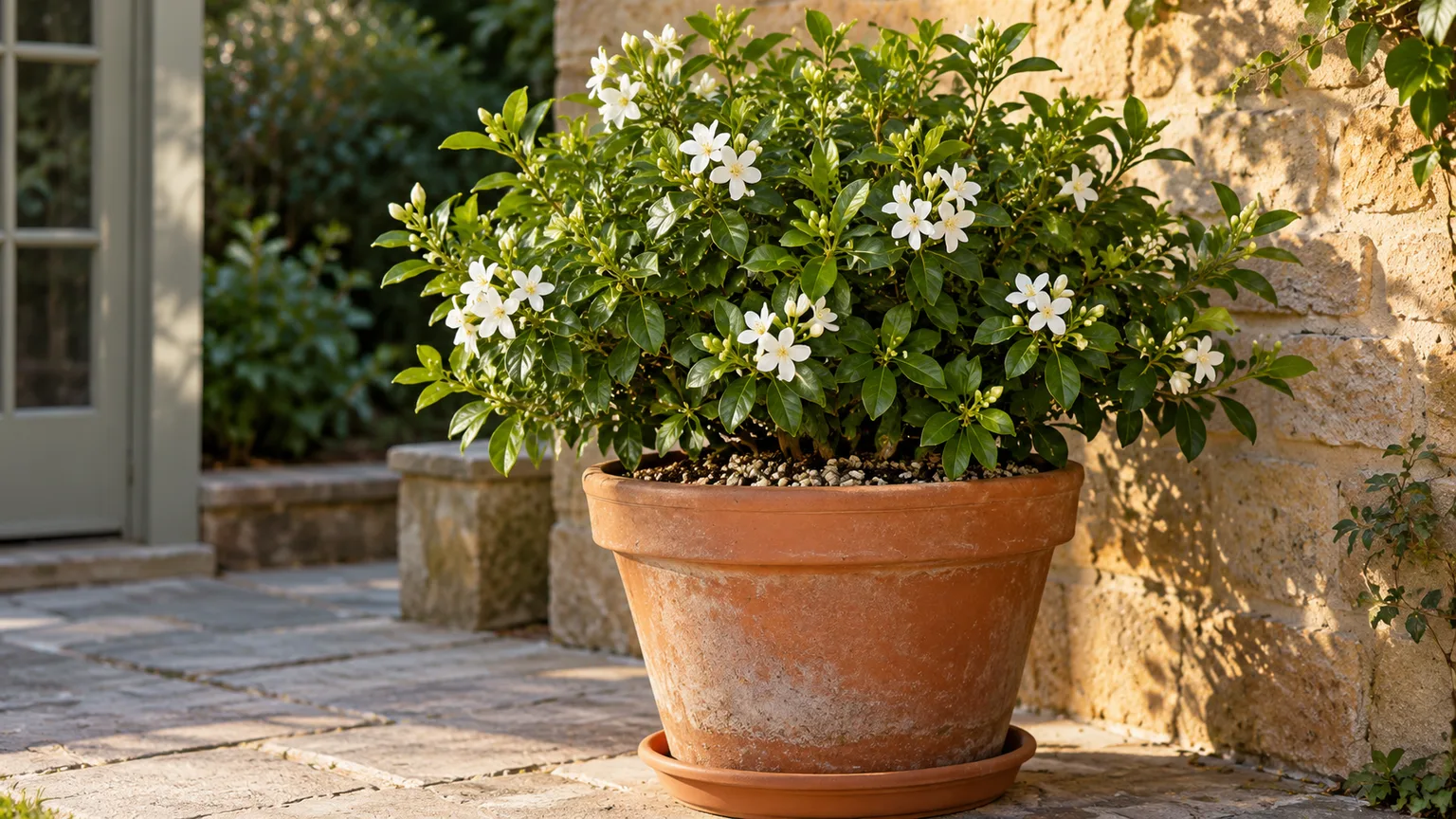
A soil amendment cannot make a persistently wet site safe by itself. If water stands in the planting hole long after rain, choose a raised bed or another location rather than adding gravel to the bottom; a gravel layer does not correct poor drainage through the surrounding soil. RHS guidance recommends well-drained soil and shelter for Choisya, and lists it as tolerant of acid, neutral, or alkaline pH, so routine lime or acidifier is unnecessary (RHS growing guide).
In-ground spacing and planting depth
Plan from the plant’s eventual width rather than the nursery-pot diameter. The species is commonly listed around 4–8 feet tall and wide, while cultivar labels can give a narrower or broader range; allow the chosen plant to approach its stated mature spread if you want a loose, healthy shape. For a hedge, closer spacing fills the gap sooner but increases competition and may mean more frequent trimming, so follow the mature-width guidance for the specific cultivar.
Before planting, tease apart only circling roots that are easy to free; avoid rough handling of the root ball. Once planted, check that the soil line around the stem is level with the bed and that runoff can move away. A shrub planted too deeply or kept in a wet depression may look wilted even when the soil seems moist, because damaged roots cannot take up water efficiently.
Growing Choisya in a container
Choose a heavy pot with several open drainage holes and enough room for the root ball plus fresh mix around it. Use a free-draining, quality container medium; avoid ordinary garden soil, which can compact in a pot. Do not leave the container sitting in a full saucer after watering, especially in cool weather.
Container plants dry faster than shrubs in a border and their roots are more exposed to temperature swings. Check moisture more often in summer, and move the pot to a sheltered position before severe cold or winter storms. RHS suggests refreshing the top layer of container compost in early spring and using a controlled-release feed only as needed; repot when roots densely fill the pot or water runs straight through a root-bound mass (RHS growing guide).
Water by establishment stage, not by the calendar
Water newly planted shrubs deeply enough to moisten the root ball and the surrounding soil, then let the surface begin to dry before watering again. During the first growing season, check at the root zone whenever weather turns hot or rain is scarce; the goal is steady establishment, not permanently wet soil. The RHS advises watering new Choisya through its first year, until roots grow outward into the surrounding ground.
An established shrub in a garden border usually needs supplemental water only during prolonged hot, dry weather. Water slowly at the base so moisture reaches the roots instead of running off the foliage. In a pot, water when the upper mix begins to dry and drain fully; there is no single weekly schedule that works across different pot sizes, materials, weather, and root volumes.
If leaves droop, feel the soil before adding water. Dry soil plus wilt suggests the plant needs a thorough drink; wet, heavy soil plus wilt points toward root stress, and more water can worsen it. A mulch layer helps reduce surface drying, but keep it a few inches away from the stems and do not use mulch to cover saturated ground.
Mulch and feed without forcing soft growth
A spring layer of compost or fine bark helps limit weeds and slows moisture loss. Keep mulch shallow enough that it does not bury the stem base, where trapped moisture can encourage decay. On fertile soil, routine fertilizer is usually unnecessary; RHS recommends an annual compost mulch and reserves general-purpose feed for poor soil or weak growth (RHS growing guide).
If the plant is growing poorly, check drainage, light, and root establishment before reaching for fertilizer. Excess nitrogen can push soft leafy growth that is less useful in a plant already struggling with winter exposure, and it will not make a shaded shrub flower. If a soil test or local extension advice shows a deficiency, follow that recommendation and product label rather than adding fertilizer to the planting hole by habit.
Understand the flowering season and fragrance
The main display usually arrives in late spring or early summer, although timing shifts with local climate, cultivar, and winter damage. White star-shaped flowers gather near the tips of shoots; in favorable conditions, some plants produce scattered flowers later in summer or into fall. North Carolina State Extension and the RHS both describe this potential for flowers beyond the first flush, but a second bloom should be treated as a bonus, not a guaranteed calendar event (N.C. State Extension; RHS profile).
The scent is easiest to notice when the shrub is in flower near a path, patio, or openable window. Leaves also release a fragrance when brushed or crushed, though individual descriptions vary: some gardeners call it citrus-like, others find the foliage sharper than the flowers. Planting where you pass close enough to smell it makes the fragrance more useful than tucking the shrub behind a distant boundary hedge.
Choose a cultivar for the space you have
The species is a medium shrub, not a naturally tiny foundation plant. Compare mature height and width before buying, and do not assume that a compact-looking young specimen will stay that size. A cultivar may change foliage color, flower form, and growth habit, but it still needs drainage, light, and winter shelter suitable for its parent species.
| Selection | What stands out | Planning note |
|---|---|---|
| Choisya ternata | Green, three-part leaves and fragrant white flowers | Often reaches about 4–8 feet in height and spread |
| ‘Sundance’ (‘Lich’) | Golden evergreen foliage with white flowers | RHS lists a broad 5–8-foot range; hot afternoon sun can be harsher on golden foliage |
| ‘Aztec Pearl’ (C. × dewitteana) | Narrower leaflets and pink-tinged buds opening white | Hybrid; check local mature-size and cold-hardiness listing |
| ‘White Dazzler’ (C. × dewitteana) | Compact habit and abundant white flowers | RHS describes it as one of the more compact choices, around 5 feet high |
The RHS lists standard C. ternata at approximately 5–8 feet tall and wide and describes ‘Sundance’ (‘Lich’) as a golden-leaved evergreen; its growing guide identifies ‘White Dazzler’ as a more compact choice. Homes & Gardens also distinguishes the green-leaved flowering forms from golden-leaved selections, including ‘Sundance’ (RHS plant profile; RHS ‘Sundance’ profile; RHS growing guide; Homes & Gardens Choisya guide). Retail names and conditions vary, so use the label for the exact plant in front of you and verify local hardiness when winters are marginal. For a narrow bed, selecting a genuinely smaller cultivar is easier than repeatedly cutting a vigorous shrub down to fit.
Prune after the main bloom when shaping is needed
Most Choisya forms naturally into a rounded shrub and can be left alone. If you want to shorten a few shoots or tidy the outline, use sharp pruners just after the main flowers fade. This timing lets you shape the shrub while avoiding the common disappointment of cutting off buds or flower-bearing tips before the display.
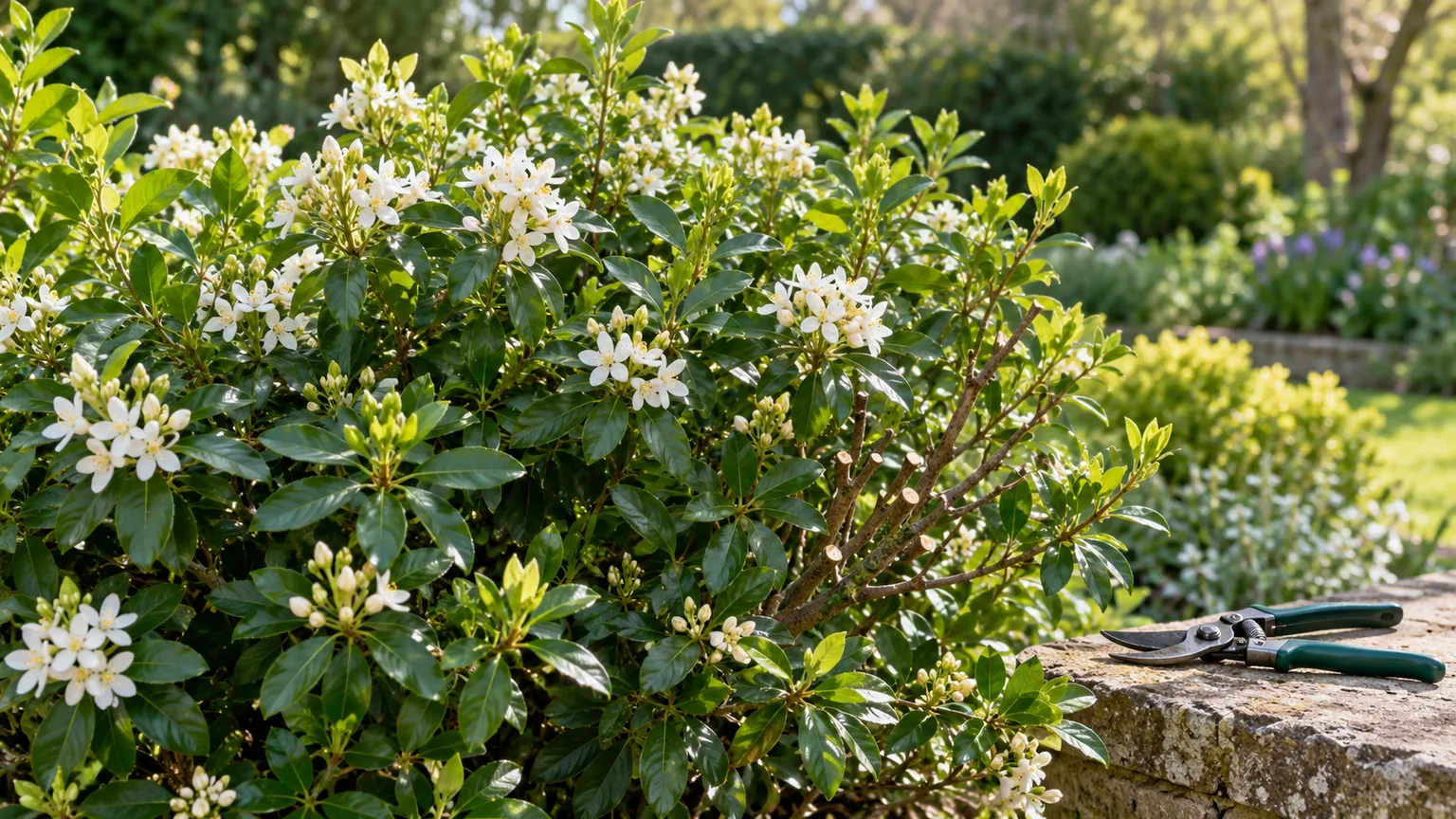
For a light trim, shorten only the stems that disrupt the outline and cut back to a healthy side shoot or leaf node. Avoid shearing every surface into a flat wall; it creates a dense outer shell, shades the inner branches, and makes the plant look less natural. If flowering continues later, repeated trimming may remove those later buds, so choose whether a neat outline or another scattered flush matters more to you.
RHS advises pruning established plants in mid-spring after frost risk has passed, but delaying if the shrub is flowering or about to flower. That is a useful regional guide rather than a universal date: in mild climates, prune after the main flowering flush; in colder areas, wait until frost-damaged tips can be distinguished from living stems (RHS Choisya pruning guidance). Check for active bird nests before cutting, especially in a dense evergreen canopy.
Renovate an overgrown or frost-damaged shrub carefully
For a leggy plant, first remove dead, broken, or crossing stems at their origin, then step back and reassess. If the shrub is still too large, reduce selected branches rather than taking an arbitrary amount off every side. A hard renovation can be tolerated by an established plant, but it may remove that season’s flowers and leave the garden without much evergreen structure while new growth recovers.
After a cold event, do not prune immediately just because leaves look bronzed or limp. Some shoots that appear damaged may still contain living wood; wait until spring buds open, then scratch a small area of bark on a doubtful branch and look for green tissue beneath. Cut dead wood back to healthy growth, and investigate exposure and drainage before assuming the shrub needs more water.
Propagate with semi-ripe cuttings
Semi-ripe cuttings are the practical home method for making another plant. In late summer, take a healthy shoot that is firm at the base but still flexible near the tip, remove the lower leaves, and place it in a clean, freely draining propagation mix. Keep it bright but out of harsh direct sun, with the medium lightly moist rather than saturated; new roots can take weeks, so avoid tugging repeatedly to check progress.
The RHS recommends semi-ripe cuttings from late summer to mid-autumn (RHS growing guide). Once a cutting has rooted and begun new growth, pot it separately and protect it through its first winter if your climate is cold. If the source plant has a named cultivar, check its tag and local plant-propagation rules before making plants for sale; rules can differ from casual home propagation.
Troubleshoot weak growth, leaf damage, and missing flowers
Start with a symptom and the soil, not a spray bottle. The RHS and N.C. State identify occasional problems such as frost dieback, spider mites, snails, and disease associated with poor drainage, while both describe the shrub as generally manageable when well sited (RHS problems guide; N.C. State Extension).
| What you see | Check first | Useful next step |
|---|---|---|
| Few or no flowers | Deep shade, recent hard pruning, young age, or damaged buds | Improve light if practical; wait for the next cycle after pruning |
| Drooping leaves in wet soil | Poor drainage or waterlogged container mix | Stop routine watering and improve drainage; inspect root health |
| Brown or scorched edges | Dry root ball, hot afternoon exposure, or cold wind | Check soil moisture and shelter before changing fertilizer |
| Bare or dead branch tips after winter | Frost exposure or wind damage | Wait for spring growth, then prune only dead tissue |
| Fine pale stippling or webbing | Inspect leaf undersides for spider mites | Rinse foliage and improve plant stress conditions; seek local advice for persistent damage |
| Sudden decline in persistently damp ground | Root or crown damage | Correct the site’s drainage; more fertilizer or water will not repair failed roots |
A shrub with poor flowering but vigorous green growth is more likely to need more light or less pruning than more nitrogen. A shrub with widespread yellowing and wet soil needs a root-zone check before any feeding. If damage keeps spreading despite corrected conditions, take clear photos and a sample to a local extension office or qualified nursery; several unrelated problems can produce similar leaf symptoms.
Use Mexican orange where its scent can be enjoyed
Use Choisya as a specimen shrub, an informal evergreen hedge, or a fragrant anchor in a mixed border. Leave breathing room around its mature spread and pair it with plants that will not demand saturated soil. In a small courtyard, a container can keep the shrub near a seating area, but the pot needs drainage, summer moisture checks, and a protected winter location.
Its evergreen foliage supplies structure between flower seasons, while the flower clusters can attract pollinating insects, a benefit the RHS recognizes in its plant profile (RHS plant profile). Place it along a route people actually use, rather than choosing it only for an isolated corner of the yard. If the scent is the reason you want the plant, proximity improves the experience without requiring a larger or more heavily fed shrub.
Conclusion
Mexican orange blossom is a fragrant evergreen shrub that rewards the right site more than intensive care. Start with the botanical label Choisya ternata, choose sun or light shade with protection from severe wind, and make sure water can drain away. Expect the species to occupy a substantial footprint unless you select a smaller cultivar.
Water new plants through establishment, then shift to deep watering only in extended dry spells; container plants need closer checks. Skip routine fertilizer in fertile soil, and prune lightly after flowering if you want to preserve the main display. In cold or wet climates, use shelter and drainage as your first tools—those choices prevent more trouble than a rigid watering calendar or repeated corrective pruning.



