How to Grow and Care for Lemon Cucumbers Outdoors
Grow lemon cucumbers from seed to harvest with clear soil-temperature, spacing, watering, trellis, pollination, and ripeness advice for a productive garden.
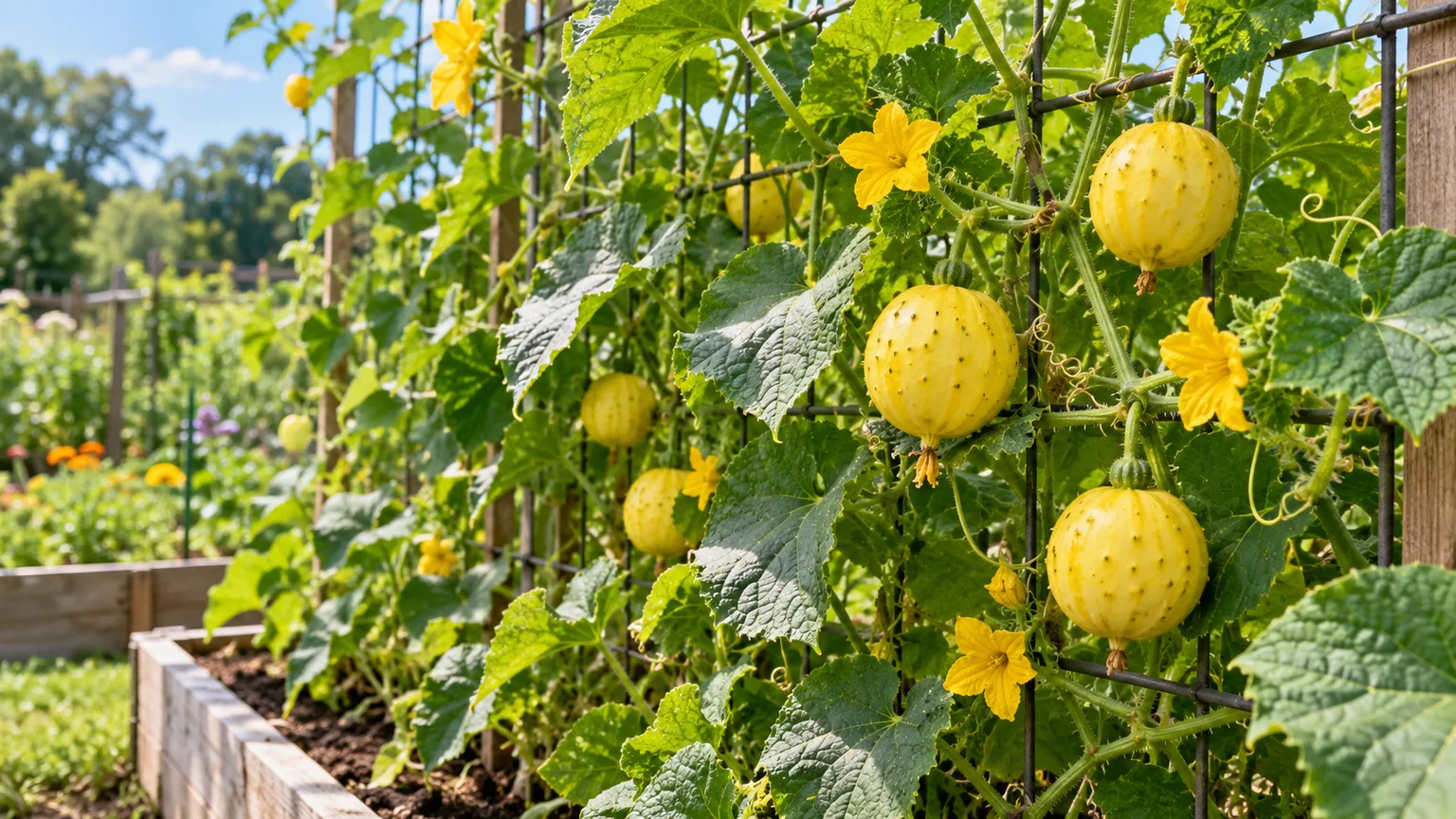
Lemon cucumbers are round, yellow-fruited cucumbers, not citrus. Grow them as you would other warm-season cucumbers: give the vines full sun, wait for warm soil, keep the root zone evenly moist, and harvest the fruit while it is still small and firm. The variety’s unusual color makes ripeness less obvious than it is on a green cucumber, so knowing what a ready fruit looks like is one of the most useful parts of growing it.
The crop is manageable in a home garden, but it is not frost tolerant and does not like cold, wet soil. Plan the planting around soil temperature rather than a fixed calendar date, decide in advance whether vines will climb or sprawl, and keep flowers accessible to pollinators. Those choices prevent many of the problems that later get blamed on fertilizer or watering.
What Lemon Cucumbers Are—and What They Are Not
Lemon cucumber is a cultivar of the familiar cucumber, Cucumis sativus. Its name refers to its round shape and yellow skin, not a citrus flavor; the flesh is mild, crisp, and cucumber-like. As the fruit matures, it changes from green to pale yellow and then a deeper yellow. Do not wait for a large, orange-yellow fruit just because the plant is called “lemon”: older fruit develops larger, tougher seeds and can lose quality.
The plants are annual vines in the cucurbit family. They produce yellow male and female flowers, then fruit on the female flowers after pollination. The named ‘Lemon’ cultivar is commonly described as a productive heirloom with round fruit around tennis-ball size at full maturity, but for eating, pick it younger than that and use the seed packet’s size guidance as the final reference. Epic Gardening’s cucumber guide lists the Lemon type at about 65 days to maturity; treat that as a planning estimate, not a harvest deadline, because weather and the way a seed seller counts days can shift the calendar.
The Quick Care Profile
| Growing factor | Practical starting point |
|---|---|
| Light | Full sun; choose a spot with at least 6–8 hours of direct light |
| Planting window | After frost danger passes and soil has warmed to about 65–70°F |
| Soil | Fertile, loose, and well drained; mix in finished compost if needed |
| Seed depth | About 1 inch, following the packet if it differs |
| Spacing | Around 12–18 inches along a trellis; allow several feet for unsupported vines |
| Water | Keep soil consistently moist; roughly 1 inch weekly is a baseline, not a fixed quota |
| Harvest | Pick firm, small yellow fruit before it becomes deep yellow or orange |
These figures are guideposts, not a substitute for local conditions. Utah State University Extension recommends sowing cucumber seeds when soil is about 65°F, while Epic Gardening recommends waiting for soil near 70°F for dependable germination. The safer choice in a cool or heavy soil is the warmer end of that range; in all cases, plant only after frost risk has passed.
When to Plant Lemon Cucumbers
Wait until the last frost is past and the bed has warmed. Cucumbers are warm-season plants: a sunny afternoon does not make cold soil ready, and early seed can sit too long before it germinates. A soil thermometer inserted about an inch deep gives you a better planting signal than an air-temperature forecast. If nighttime temperatures are still dipping sharply or the soil stays cold after rain, give the bed more time.
In a short-season region, warming the bed with black plastic or using a temporary cover can move planting earlier, but that extra setup is optional. Covers can overheat plants when the weather turns warm, and row covers must come off when flowers open so pollinators can reach them. If you want a more detailed seasonal decision, see our guide to when to plant cucumbers.
Direct Sow or Start Seeds Indoors?
Direct sowing is usually the simplest route because cucumber roots are sensitive to rough handling. Once the soil is warm, sow two or three seeds about an inch deep at each planting spot, then thin to the strongest seedling after the plants have true leaves. Do not pull out extra seedlings if doing so may disturb a nearby root; snip them at soil level instead.
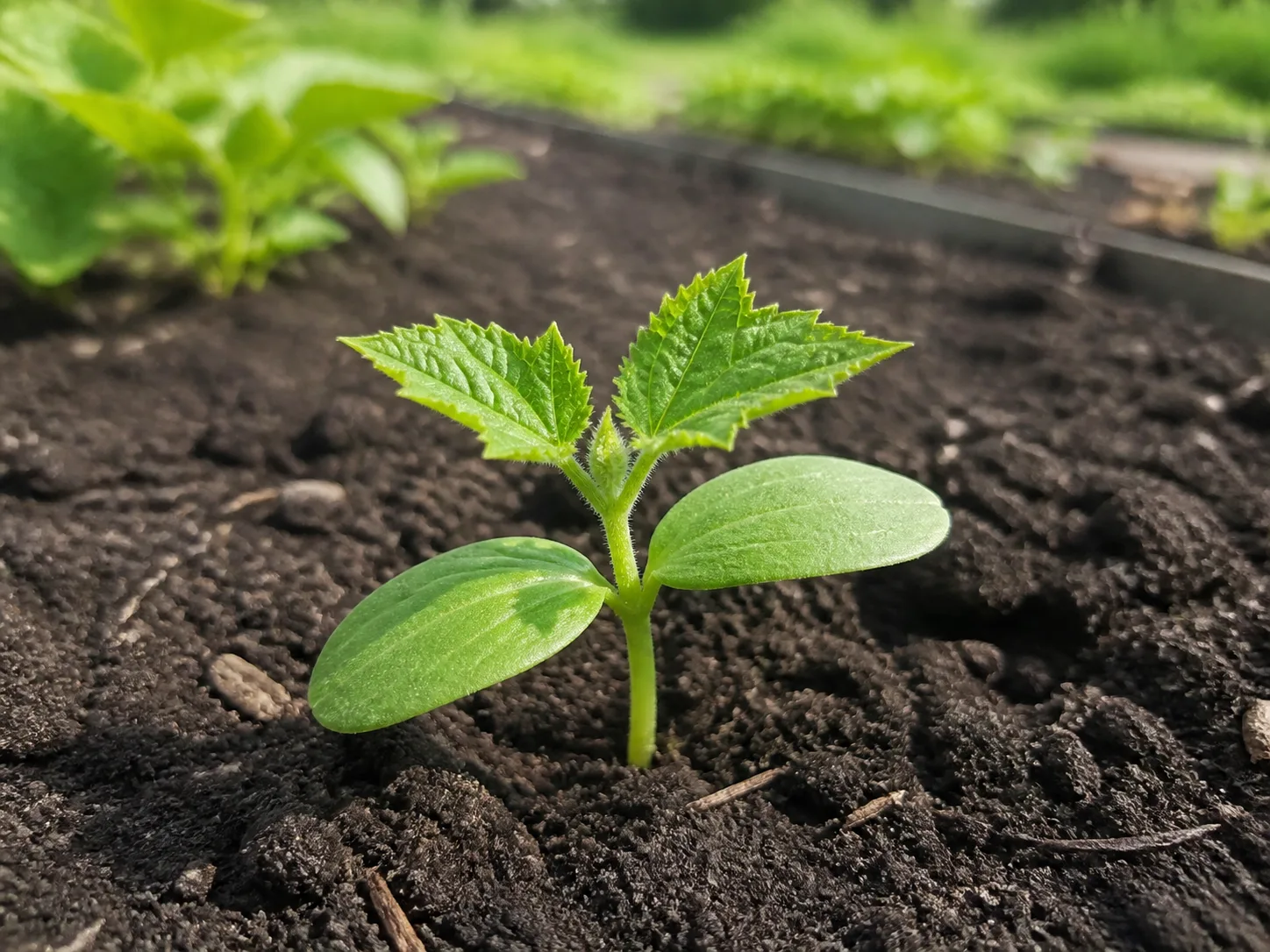
Space depends on how you will grow the vine. A trellised row can hold plants closer together than a row of sprawling vines, while a hill system needs more room for runners to spread. Utah State University Extension’s home-garden guide gives a useful starting range of 12–18 inches between seed locations and 4 feet between rows; adjust that layout to the seed packet and the trellis you actually plan to install. Crowded leaves dry more slowly and make it harder to spot fruit and pests.
Starting Indoors Without Stalling Seedlings
Start seeds indoors only when you need a head start on a short growing season. Sow them in individual pots about three to four weeks before the expected transplant date, then move them outside while they are still compact. University of Minnesota Extension advises starting cucumber seeds no earlier than four weeks before the last frost and handling the taproot carefully.
Harden seedlings off over about a week by gradually adding outdoor sun and wind exposure. Transplant after the soil is warm, keep the root ball intact, and water it in. A cucumber transplant that has become root-bound or oversized often loses its early-start advantage; if conditions remain cold, sowing outside later can be more successful than forcing a stressed transplant into chilly ground.
Choose a Sunny, Well-Drained Site
Choose the sunniest practical part of the vegetable garden. Cucumbers grow leaves and vines quickly, and a shaded spot limits flowering and slows fruit development. The soil should hold moisture without staying waterlogged: a low area where rain collects can leave roots short of air and is a poor fit even if it gets plenty of light.
Work finished compost into the bed before planting if the soil is low in organic matter. A soil test is a better guide to fertilizer needs than a large dose of manure or a routine bagged feed. Utah State University Extension describes cucumbers as a crop for fertile, well-drained soil and recommends determining fertilizer needs with a soil test. That is not a reason to add high-nitrogen fertilizer blindly; test first and follow the results for your bed.
Decide Between a Trellis and a Sprawling Vine
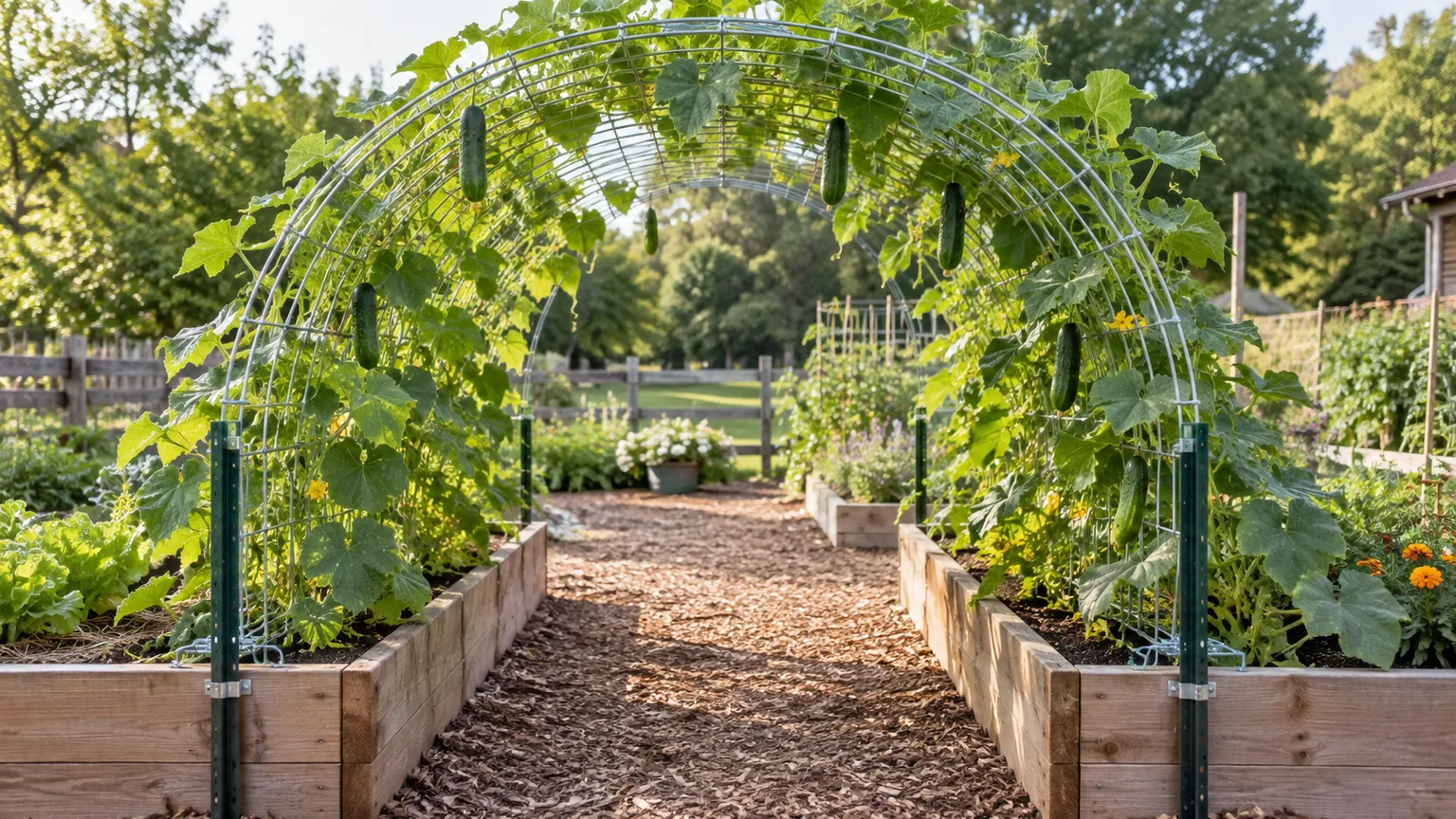
Lemon cucumber vines can spread over a wide patch of ground, so choose a layout before sowing. Let them sprawl if you have generous bed space and do not mind reaching under leaves to find the fruit. Use a sturdy trellis if the garden is compact or you want fruit visible, cleaner, and easier to harvest. Trellising saves ground space, but it does not make the plant small: the vine still needs room to climb and enough airflow around its leaves.
Install the support before planting so you do not drive stakes through established roots later. A strong panel, netting, or garden trellis several feet tall can work if it is firmly anchored. Guide young runners toward the support and loosely secure them with soft ties when needed; tendrils usually take over. The cattle-panel and wood-grid examples in our cucumber trellis guide show two practical layouts.
Growing Lemon Cucumbers in a Container
Container growing is possible, but a standard vining lemon cucumber is not as naturally compact as a bush cucumber. Choose a large pot with drainage holes and a trellis that is anchored to the pot or a stable structure. A small pot dries out fast in summer and leaves little room for the roots, so a large container is more forgiving than a decorative planter.
Use fresh potting mix rather than dense garden soil, and check moisture often during hot weather. A container may need water more than once on a hot, windy day, but do not let it sit in a saucer of stagnant water. If a small balcony is the main constraint, first check whether the seed packet describes this strain as a vining or bush type; the habit determines how much support and floor space you will need.
Water Evenly, Especially as Fruit Swells
Keep the root zone evenly moist from germination through harvest. About an inch of water per week is a useful starting point for garden-grown cucumbers, but rainfall, heat, soil texture, and container size change the amount. Check the soil rather than following a rigid calendar: if the top few inches are drying and no rain is expected, water deeply at the base of the plant.
During flowering and fruit enlargement, a cycle of dry soil followed by a heavy soak can stress vines and contribute to misshapen or bitter fruit. Utah State University Extension links water stress with bitter, pointed, or misshapen fruit, so keeping moisture steady is more useful than watering heavily only after a vine droops. Drip irrigation or a soaker hose makes it easier to wet the root zone without repeatedly splashing foliage. If leaves wilt in midday heat but recover by evening and the soil is moist, do not automatically flood the bed; check again in the morning and inspect the roots and stems if wilt persists.
Feed Lightly and Mulch After the Soil Warms
Cucumbers need fertile soil, but more fertilizer is not always better. Too much nitrogen can push a lush canopy at the expense of flowers and fruit, and fertilizer cannot fix cold soil, poor pollination, or irregular moisture. Begin with compost or a soil-test-based amendment, then use a balanced fertilizer only as directed on its label if the bed needs it.
Mulch helps slow evaporation and suppress weeds once the soil has warmed. Utah State University Extension cautions gardeners to wait until soil is about 75°F before applying organic mulch, because a thick layer can keep spring soil cool. Once summer heat is established, a modest layer of clean straw or shredded leaves can reduce water swings; keep it loose around the plant crown rather than piling it against the stem.
Flowers, Pollination, and Early Fruit Set
Flowering does not mean every bloom will turn into a cucumber. Cucumbers usually produce separate male and female flowers on the same vine; pollen must move from the male flower to the female flower for the tiny fruit behind it to develop. Bees and other pollinators do most of this work outside. A stretch of rain, few pollinators, dense foliage, or a cover left over the flowering vine can interfere with that transfer.
If a plant is flowering but not setting fruit, first check whether you are seeing only the early male flowers. Male blooms often appear before female blooms, so a young vine may look busy for several days without carrying fruit. Do not prune off flowers to “send energy” to the crop. Instead, keep the plant watered, let pollinators reach it, and wait for female flowers to open.
Read Male and Female Flowers Correctly
Look behind the flower. A female bloom has a small cucumber-shaped swelling between the flower and its stem; a male bloom sits on a thin stalk without that swelling. If female blooms open but the tiny fruits yellow and drop, look for pollinator activity and check whether a floating row cover is still in place. Remove covers as soon as flowers begin opening unless you can uncover the plants for pollination each day. An archived BBC Gardening guide distinguishes indoor and outdoor routines: it recommends removing male flowers only from some indoor varieties, not outdoor vines that need them to set fruit.
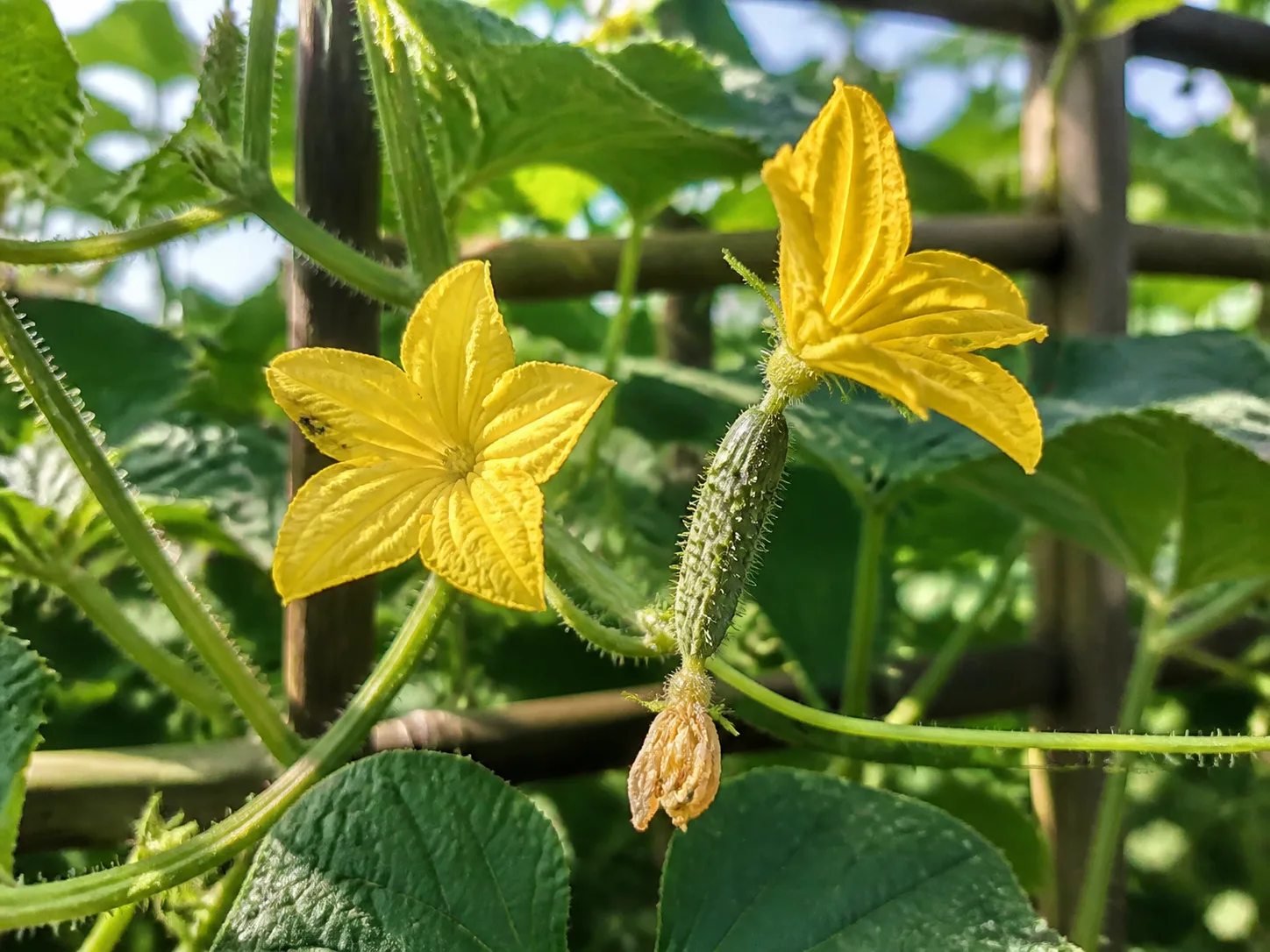
When pollinators are scarce, hand-pollination can help on a small planting. In the morning, touch a clean, soft brush to the pollen inside an open male flower, then lightly brush it inside an open female flower. This is a backup for poor fruit set, not a daily requirement when bees are visiting. Do not use insecticides on open flowers; if pest control becomes necessary, read the product label and protect pollinators.
Harvest Lemon Cucumbers While They Are Still Tender
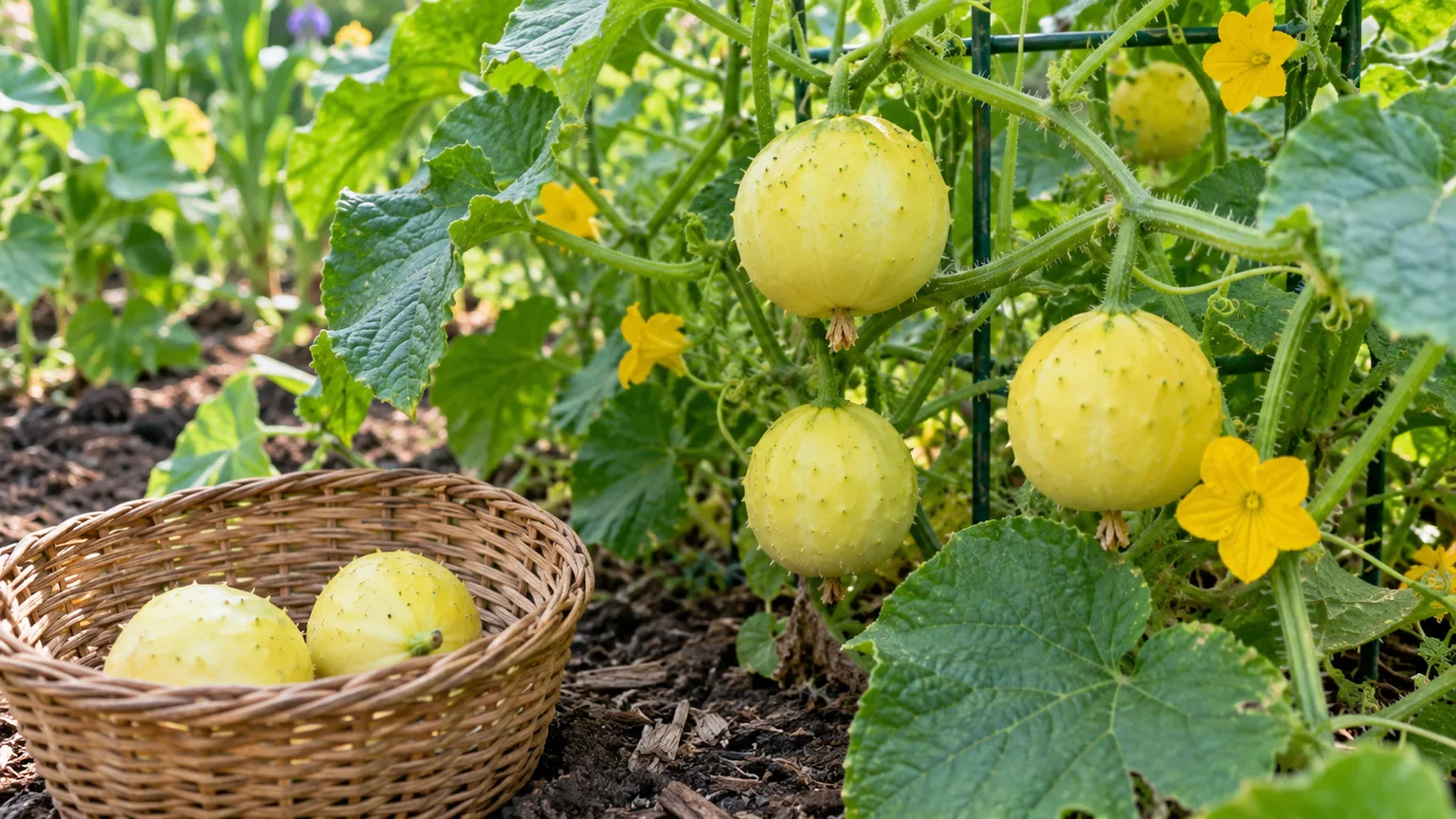
Pick fruit regularly once the vine starts producing. A lemon cucumber becomes round and yellow as it matures, but the best eating stage is usually earlier than the largest possible size. For a tender fresh cucumber, harvest when it is firm and roughly 2–3 inches across, with a light yellow color; pick smaller fruit if you want a crisp, bite-size pickle. The exact size varies by seed strain, so use the packet as the final guide.
Check vines every day or two when fruit is sizing up. Hidden cucumbers can pass the ideal stage quickly under dense leaves, and an overmature fruit left on the vine encourages the plant to put energy into mature seeds rather than new fruit. Use clean pruners or a sharp knife to cut the stem, leaving a short stub. Do not twist or yank the fruit from the vine, which can damage the stem and nearby flowers. Our guide to how and when to harvest cucumbers explains the same cut-and-check routine for other cucumber types.
How to Tell a Lemon Cucumber Is Ready
Color alone is not enough. A ripe-for-eating lemon cucumber is small, firm, and yellow rather than green; a fruit that has grown large, dark yellow, or orange is likely past its best texture. If you are uncertain, cut one open: tender flesh and small, soft seeds indicate a useful eating stage, while a spongy center and hard seeds signal that you waited too long.
The round fruit can hide among leaves, so check both sides of a trellis and lift the edge of a sprawling vine carefully. Harvest even if you have more cucumbers than you can eat that day. Leaving an oversized fruit to “finish” usually does not improve a fresh-eating cucumber; it reduces quality and can slow the next flush.
Store the Crop Without Chilling It
Brush off loose soil and refrigerate fruit promptly if you will eat it within a few days. Cucumbers are sensitive to prolonged cold, so keep them in the crisper rather than the coldest rear shelf and avoid letting them freeze. For best texture, use the harvest while it is fresh; if your refrigerator is very cold, a cooler spot around 50–55°F is better for longer storage when you have one.
Utah State University Extension gives about 55°F as a storage target and notes that cucumbers can last around 10–14 days there, while fruit kept too cold can break down. In an ordinary home, refrigerator conditions vary, so treat that as a guide rather than a guarantee. Keep fruit dry, avoid storing it beside ethylene-producing apples if possible, and use cut cucumbers within a few days.
Troubleshoot Common Growing Problems
Start with the pattern, not the symptom label. Check whether the issue affects older or newer leaves, one vine or the whole bed, and whether soil is dry, soggy, or reasonably moist. Look under leaves for insects and inspect stems near the soil line before adding fertilizer or water. These checks help separate environmental stress from a pest or disease that needs a different response.
For cucumber beetles, look for striped or spotted adults chewing leaves and stems. They can weaken plants and spread bacterial wilt. A lightweight row cover over young seedlings can block beetles before flowering, but remove it for pollination. Hand-pick visible beetles into soapy water and clear plant debris at season’s end; if the problem persists, check local extension guidance and follow any pesticide label exactly rather than spraying on guesswork.
Flowers but No Cucumbers
If there are many flowers but no fruit, check the type of bloom first. An early vine covered only in male flowers may simply need time. If female flowers are present, make sure pollinators can reach them and that the plant is not under drought, cold, or excessive heat stress; those conditions can interrupt fruit set even when the plant looks leafy.
If female flowers repeatedly shrivel, keep the soil consistently moist, remove any cover that blocks bees, and look for signs of insect damage. Hand-pollinate a few flowers as a test. If those fruits begin growing, pollination is likely the limiting factor; if they also yellow and drop, examine moisture and plant health rather than continuing to pollinate every bloom.
Bitter, Misshapen, Yellowing, or Diseased Plants
Bitter or misshapen fruit is a signal to review growing conditions, not proof that the variety is wrong. Check for a recent dry spell, hot weather, irregular watering, incomplete pollination, or fruit that stayed on the vine too long. Restore even moisture and pick future fruit younger; more fertilizer will not correct a pollination problem or an overripe cucumber.
Yellow leaves have several possible causes. Older leaves yellowing evenly can reflect normal aging, low nitrogen, or prolonged wet soil; mottled or distorted young growth points to a different problem. White powdery patches on leaves may be powdery mildew, while rapid wilt despite moist soil can be a warning of bacterial wilt associated with cucumber beetles. Improve spacing and airflow, water at the base when practical, remove severely diseased plants rather than composting them, and use a resistant variety next season if disease repeats. For a photo-led diagnosis, see our guide to why cucumber leaves turn yellow and the practical steps in how to manage cucumber beetles.
Conclusion
Lemon cucumbers grow best when you treat them as warm-season vines, not as novelty fruit that can be planted by the calendar. Wait for frost-free weather and warm soil, choose a sunny bed with good drainage, and decide whether to trellis or give the vine room to sprawl before sowing. Keep moisture steady as flowers and fruit develop, let pollinators reach the blooms, and avoid feeding heavily unless your soil needs it.
Then harvest by size and feel rather than waiting for a giant yellow fruit. Small, firm cucumbers have the best fresh texture, and frequent picking keeps the vine productive. If fruit set or leaf health slips, inspect the soil, flowers, and undersides of leaves first; a careful diagnosis is usually more useful than immediately adding water, fertilizer, or a spray.



