How to Grow and Care for a Katsura Tree in Your Yard
Plan Katsura tree care with realistic mature-size guidance, site and soil choices, establishment watering, cultivar options, pruning, and seasonal fixes.
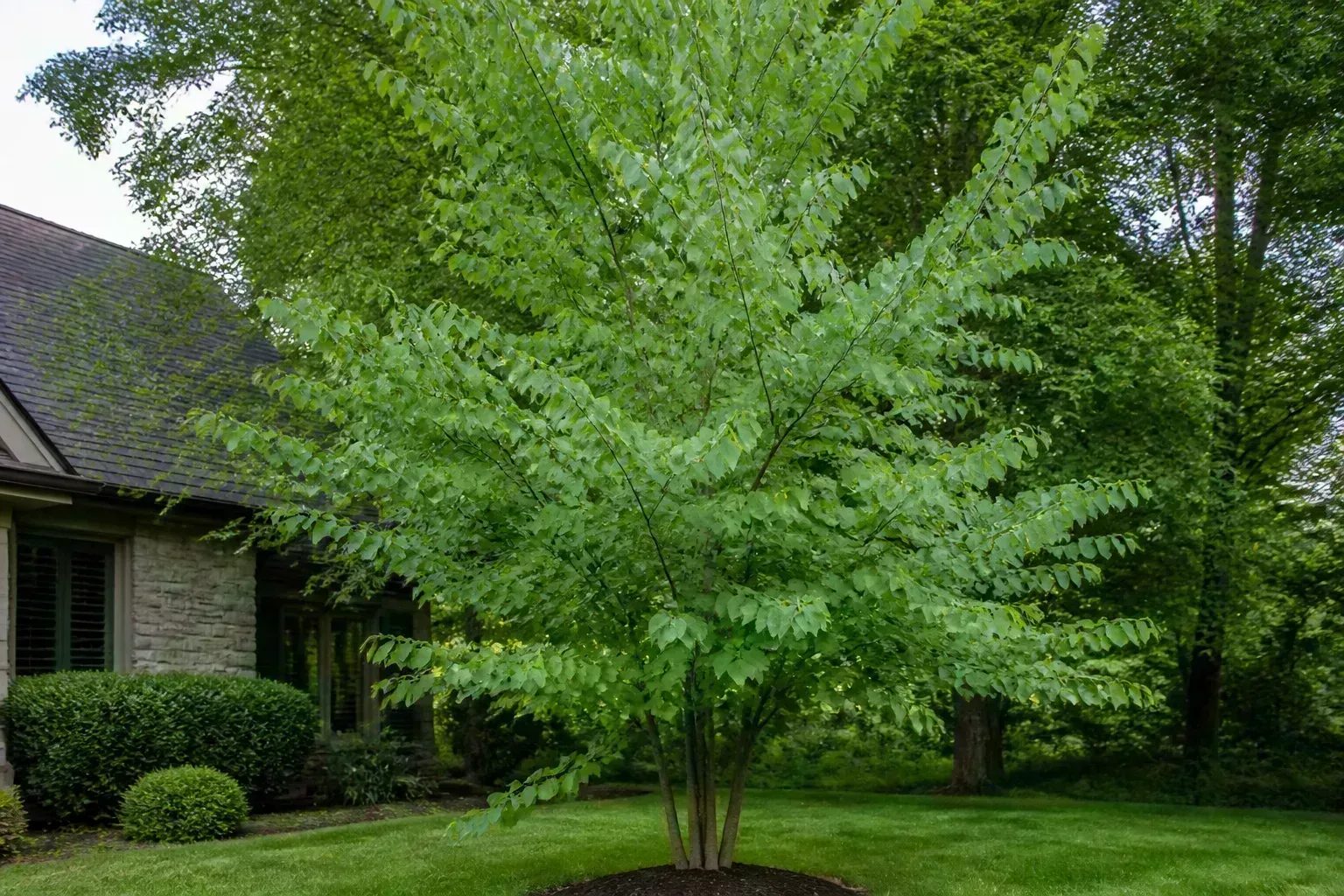
A Katsura tree is a long-lived deciduous shade tree for a garden with room to let it mature. The species, Cercidiphyllum japonicum, is valued for heart-shaped leaves, a graceful crown, and autumn foliage that can give off a sweet, brown-sugar-like scent as it falls. The most important decision comes before planting: choose a site with enough space, moisture-retentive but well-drained soil, and protection from drying wind or punishing afternoon heat.
Its graceful shape may look manageable in a young landscape, but the full species can grow roughly 40 to 60 feet tall and 20 to 30 feet wide, with larger specimens possible. Dwarf and weeping cultivars offer different forms, but “dwarf” does not mean shrub-sized, and a tree that dislikes transplanting should not be planted on speculation. Check the mature dimensions of the exact cultivar and make the final location a permanent one.
| Katsura tree feature | What to plan for |
|---|---|
| Mature size | Commonly about 40–60 feet tall; crown width varies by form |
| Light | Full sun to light shade; afternoon protection can help in hot regions |
| Soil | Moist, fertile, and well drained; pH is adaptable |
| Hardiness | Often listed for zones 4–8; verify local cultivar ratings |
| Establishment | Consistent root-zone moisture, especially through dry spells |
| Main site risks | Too little room, drying wind, hot exposure, and waterlogged soil |
University plant records differ slightly on eventual size and hardiness, so treat them as planning ranges rather than guarantees. The University of Connecticut Plant Database lists a mature tree around 40 to 60 feet high and 20 to 30 feet wide and rates it to zone 4; NC State Extension notes that cultivated trees may reach 60 feet and wild trees can grow taller. Gardening Know How lists zones 4b to 8, illustrating why local cultivar guidance matters.
What a Katsura Tree Looks Like—and What Fall Fragrance Means
Katsura leaves are rounded and heart-shaped, with a finely toothed edge and veins that stand out when you look closely. New foliage may emerge with bronze, purple, or reddish tones before maturing to blue-green; fall color can range through yellow, gold, apricot, orange, and sometimes red depending on the cultivar and growing conditions. The leaves are usually arranged in opposite pairs along the twig, although botanists note that they can occasionally appear alternately.
That leaf shape can make a Katsura look a little like a redbud, but the trees are not close relatives. The resemblance is visual: redbud leaves alternate along the stem, while Katsura leaves are generally opposite. A Katsura also develops a much larger tree form than most redbuds, so leaf similarity is not a reason to treat the species as interchangeable in a planting plan. (Oregon State University Landscape Plants)
The “caramel tree” nickname refers to the scent associated with its autumn leaves, often described as brown sugar, cinnamon, or burnt sugar. That fragrance is most noticeable as fallen foliage begins to dry or break down, and not every tree or autumn produces the same effect. Oregon State’s landscape record notes that fall color and its intensity are not spectacular in every location, which is a useful reminder not to buy the tree for a guaranteed color show or scent alone.
Katsuras are dioecious, meaning male and female flowers occur on separate trees. The small spring flowers are not the main ornamental feature; most gardeners choose this tree for its foliage and overall shape rather than a conspicuous bloom display. Female trees can form small pods, but one tree’s sex may not be obvious when buying a young nursery specimen.
How Large a Katsura Tree Gets
For site planning, assume a typical Katsura may eventually be about 40 to 60 feet tall and 20 to 30 feet across. Some references give a wider possible spread, and a mature tree’s outline can shift from a narrow pyramid when young to a broader, more irregular crown over time. The mature form depends on cultivar, growing conditions, and whether the tree is single- or multi-stemmed.
Do not judge the final size from a young tree’s height at the nursery. A six-foot sapling can become a canopy tree that shades a large part of the yard, and it may take many years to do so. This is a slow decision, not an excuse to plant too close to a house, roof, driveway, underground utilities, or neighboring trees.
If the yard cannot accommodate the species, look specifically for a genuinely compact cultivar and confirm its likely height and width with the nursery. Even named dwarf forms can become 8 to 15 feet tall or more, while some compact-looking cultivars eventually broaden. A smaller tree with well-understood mature dimensions is a better fit for a tight garden than a full-size Katsura that will later need repeated crown reduction.
Choose a Site With Sun, Shelter, and Room
Katsura grows in full sun or light shade. In cooler regions, an open sunny site can encourage steady growth and fall color; in hotter parts of its range, light shade during the harshest afternoon hours can lower leaf scorch risk. Avoid deep shade that leaves the canopy weak or limits the foliage display.
Shelter matters because wind and dry heat can stress the leaves and branches. A spot protected by a building or larger trees can help, but leave enough air circulation and do not crowd the Katsura beneath a mature canopy where roots compete intensely for water. If strong prevailing winds sweep across the property, choose a more protected location rather than expecting a newly planted sapling to tolerate exposure.
Map the future crown before you dig. Keep the trunk far enough from structures, pavement, and overhead wires to accommodate the selected cultivar’s mature spread, and contact your local utility-locating service before digging. If the tree’s eventual size would force constant pruning around a walkway or roof, choose a smaller tree species instead.
Prepare Soil That Stays Moist Without Waterlogging
The ideal soil holds moisture between rains but drains excess water instead of staying saturated around the roots. Katsura tolerates a range of soil pH, and university sources describe it as adaptable, but the consistent theme is moisture plus drainage. Heavy clay is not automatically a deal-breaker if water moves through it, while a low spot that remains soggy after storms is a poor planting site.
If water pools for a day or more after rainfall, do not try to solve the problem by making a deeper planting hole; that can turn the root area into a basin. Choose a better-drained location or address drainage across a wider area before planting. A quick hole filled with gravel is not a substitute for sound drainage through the surrounding soil.
Some plant references report stronger fall color in more acidic soil, but the claim is not consistent enough to justify changing soil pH just to chase color. Oregon State describes the tree as pH-adaptable and notes that local fall color can be modest, even where Katsuras grow well. Test soil if there is a diagnosed nutrient or pH problem; do not add acidifiers or fertilizer as a cosmetic shortcut.
Decide When to Plant in Your Climate
Planting in early spring or fall can both work when soil conditions are suitable and the young tree can receive follow-up water. In colder climates, spring planting gives roots a longer establishment period before winter; in regions with a mild fall and unfrozen soil, fall can provide a useful root-growing window after the hottest weather has passed. The best season depends on local freeze dates, nursery stock, soil moisture, and the availability of reliable irrigation.
Avoid planting when the ground is frozen, saturated, or baked hard, and do not put a recently shipped tree into a heat wave without a plan to keep its root ball moist. If the tree is container-grown, inspect for roots circling tightly around the root ball before buying; planting a healthy young specimen with a sound root system is easier than trying to correct a neglected one later.
The species is not easy to transplant once established, so waiting for the right site is more important than forcing a calendar date. If you are choosing between planting this year in a poor spot or waiting for a better one, wait. A brief delay is far less costly than moving a large tree with an extensive root system.
Plant It Once and Protect the Root Flare
Before digging, locate underground utilities and uncover the root flare at the base of the trunk. The flare is where the trunk widens into the structural roots; it should sit at or slightly above the finished soil level, not buried beneath a cone of soil or mulch. Trees planted too deeply can struggle because the roots receive less oxygen.
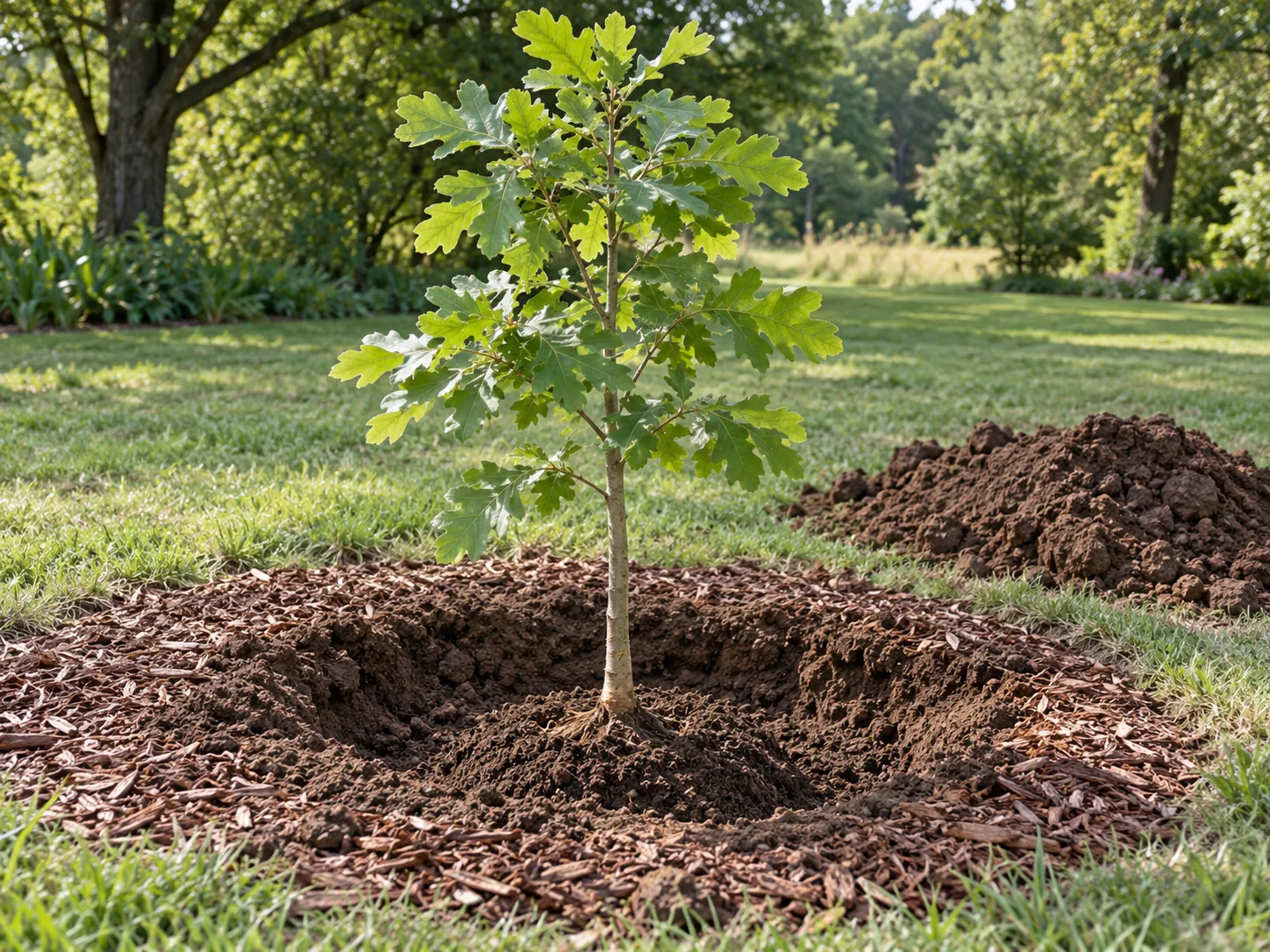
Dig a broad, shallow planting hole rather than a narrow pit. The Colorado State Forest Service recommends a hole two to three times wider than the root ball and no deeper than the distance from the root-ball bottom to the trunk flare; use loosened native soil for backfill rather than creating a pocket with a different soil texture. Remove or correct obvious circling roots according to the root ball’s condition, but avoid rough handling that tears apart a healthy root system. (Colorado State Forest Service tree-planting guidance)
Set the tree upright, check the root flare from several sides, then backfill and water gradually so soil settles around the roots. Do not bury the trunk, pack the soil tightly, or add strong fertilizer to the hole; the goal is stable contact between roots and surrounding soil, not a concentrated nutrient pocket. Stake only if the root ball cannot stay steady in wind, and remove supports once the tree is anchored.
Water Deeply While Roots Establish
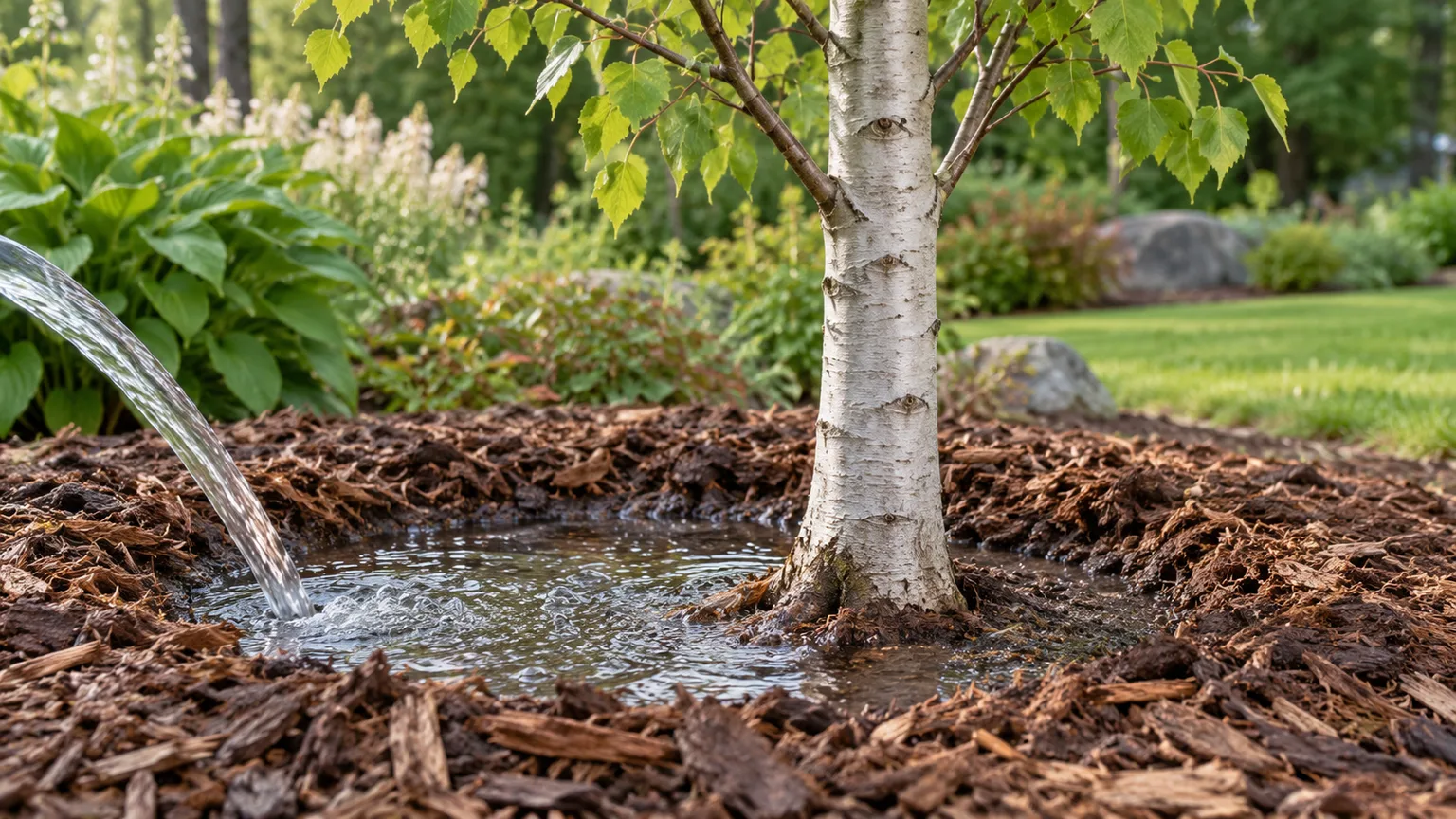
A newly planted Katsura needs regular moisture while roots grow out of the nursery root ball and into the surrounding soil. Water deeply enough to moisten both the original root ball and nearby soil, then let excess drain before watering again. A fixed “one inch per week” rule cannot account for differences in tree size, soil texture, rainfall, wind, heat, or drainage.
Check the soil instead of watering automatically. Probe the root ball and the soil just beyond it; if both are drying, water slowly at the root zone, and if they remain wet or sticky, pause and reassess drainage. The tree should not be left to wilt repeatedly, but constant saturation deprives roots of air and can create more serious problems than a short dry interval.
During the first growing seasons, check moisture more often during hot, windy weather and after long dry spells. Once established, Katsura is more tolerant of brief drought than a new transplant, but university plant references still recommend supplemental water during dry periods. Deep watering during a prolonged dry spell is more useful than frequent surface sprinkling that wets only the top inch of soil. (UConn Plant Database; Oregon State University)
Mulch, Feed, and Maintain the Root Zone
A wide mulch ring reduces competition from turf and slows moisture loss, which is especially useful while the tree establishes. Spread a few inches of organic mulch over the root zone, extending it outward as the canopy grows, but leave an open gap around the trunk and keep the root flare visible. A mulch “volcano” holds damp material against the bark and can hide a too-deep planting.
Grass growing right up to a young trunk competes for the same water and makes it easier to nick the bark with a mower or trimmer. Keep a generous, gradually expanding mulch circle instead of piling compost against the trunk. Refresh mulch as it decomposes rather than laying a thick new blanket over the old layers every year.
Katsura usually does not need routine fertilizer in a healthy landscape soil. If growth is unusually weak, leaves are consistently pale, or soil history suggests a deficiency, test the soil before feeding; poor drainage, drought, root damage, and deep planting can mimic nutrient problems. Avoid fertilizer that encourages a flush of tender late-season growth, and follow a soil-test or local-extension recommendation rather than guessing a high nitrogen formula.
Choose a Katsura Cultivar for Your Yard
The straight species is the best choice when you want a larger shade tree with a naturally broadening crown. Cultivars are useful when a particular mature form or foliage color matters, but nursery names and dimensions can vary by supplier. Ask for the botanical cultivar name and its expected mature height and spread, then compare those numbers with the space you have.
| Cultivar or form | Useful trait | Planning note |
|---|---|---|
| ’Heronswood Globe’ | Compact, rounded habit | Reported near 15 feet tall; still verify spread |
| ’Pendula’ | Weeping branches | Often about 15–25 feet tall; allow room for the draping crown |
| ’Ruby’ | Smaller form with blue-purple foliage | Can still reach roughly 30 feet |
| ’Aureum’ | Yellow-toned mature foliage | Check local sun and scorch exposure |
| ’Red Fox’ | Bronze-purple foliage in spring | Color changes through the season |
The University of Connecticut Plant Database describes ‘Heronswood Globe’ as a tight, globular form around 15 feet tall and ‘Pendula’ as a weeping tree often 15 to 25 feet tall. NC State lists several other selections, including ‘Aureum,’ ‘Pendula,’ ‘Ruby,’ and ‘Red Fox.’ Use these as starting points, not guarantees: a label that lists height but omits width does not answer whether the tree will fit your yard.
When comparing cultivars, prioritize structure before color. A narrow or weeping form can solve a design problem, while leaf color may be less reliable in a hot site or a climate unlike the nursery’s. For a truly small courtyard, patio, or planting strip, verify the mature spread in writing or choose a naturally smaller species instead of hoping a Katsura will stay miniature.
Prune for Strong Structure, Then Leave It Alone
A well-sited Katsura generally needs little pruning after its main structure is established. While young, remove broken, dead, or rubbing branches and decide whether you want a single trunk or an intentional multi-stem form. Do not shear the canopy into a ball or repeatedly cut the tips back to keep a full-size tree inside an undersized space.
For routine structural work, prune during dormancy or just before spring growth resumes, when the branch framework is easy to see. Make clean cuts just outside the branch collar rather than flush against the trunk, and remove a crowded branch at its origin instead of heading it back to an arbitrary point. If a limb is large, high, near power lines, or part of a major scaffold, hire a qualified arborist.
Katsura can be sensitive to wind and environmental stress, so aggressive pruning is not a substitute for the right planting location. Removing too much live canopy can expose bark, change the natural form, and create a cycle of weak regrowth. Gardening Know How likewise treats pruning as optional and focuses on damaged or crossing limbs, while recommending a sheltered location for the tree’s branches. (Gardening Know How Katsura care guide) The practical goal is to correct young-tree structure and remove hazards, not to maintain a particular size through repeated cutting.
Follow a Seasonal Care Calendar
In spring, inspect the trunk, root flare, and scaffold branches before leaves fill the canopy. Late frosts can affect tender young foliage in some areas; if the canopy looks distorted after a sudden cold night, watch whether healthy new growth follows before assuming the tree has a lasting disease. Replace mulch that has thinned, but keep the flare visible.
During summer, focus on root-zone moisture and watch the leaves during hot, windy spells. Water slowly during extended drought and avoid frequent overhead wetting, especially in humid climates where foliage staying damp may favor mildew. Do not react to every brown edge with fertilizer; first check whether the soil is dry, waterlogged, compacted, or exposed to hot afternoon wind.
As autumn approaches, enjoy the foliage but do not expect every tree to turn the same shade or release an equally strong scent. Leave healthy fallen leaves to break down where practical, or move them to compost if they smother lawn or perennials. After leaf drop, check for damaged branches and plan structural pruning only if there is a clear reason.
Troubleshoot Scorch, Early Leaf Drop, Mildew, and Bark Splits
Brown or crisp leaf edges during summer often point first to water stress, hot exposure, or wind rather than a pest. Check moisture in the root ball and surrounding soil, then review recent weather and afternoon exposure; a tree can be dry even after a brief shower that wets only the surface. Correct the site or watering issue before removing healthy branches, because scorched leaves will not turn green again but new growth may be normal.
If leaves fall early, distinguish seasonal leaf drop from a stressed tree. A Katsura naturally sheds leaves in autumn, but widespread drop in summer deserves a site check: dry soil, standing water, a recently disturbed root zone, or a hot, exposed position can all contribute to decline. If the tree is wilting while the soil is wet, do not add more water; check drainage and seek local arboricultural help if the canopy continues to collapse.
Powdery mildew can appear as a pale coating on leaves in warm, humid conditions, but it is usually a foliage issue rather than proof that the whole tree is failing. Improve airflow where possible, water at the soil rather than wetting the canopy, and remove heavily affected fallen leaves if they accumulate. NC State describes Katsura as having no serious insect or disease problems, while Oregon State notes stress-related leaf scorch and bark splitting; that points toward correcting the growing conditions before reaching for a pesticide or fungicide. (NC State Extension; Oregon State University)
A split in the bark can follow environmental stress, rapid growth, or a strong temperature swing. Do not peel off attached healthy bark or paint the wound with an improvised sealant; keep the root zone evenly moist, prevent further trunk injury, and have an arborist inspect a deep split that circles much of the trunk or accompanies major dieback. The cause matters more than cosmetic cleanup.
Propagate Katsura Trees From Seed or Cuttings
Katsura can be propagated from seed, cuttings, or layering, but a seedling is not a dependable way to reproduce a named cultivar. The species is dioecious, so seed pods form on female trees only after pollination; a seedling also differs genetically from its parent and may not share its sex, growth form, or foliage traits. If a specific cultivar matters, buy a correctly labeled nursery plant or ask a specialist grower about vegetative propagation. (University of Connecticut Plant Database)
For seed, collect pods from a female tree and use them when they have just dried if possible. Nature & Garden’s Katsura propagation guide recommends sowing fresh seed soon after collection; for seed that has been stored dry, it describes a one-week moist chill in the refrigerator before sowing. Its reported germination rates are estimates, not guarantees, because seed age, pollination, moisture, and temperature all affect results. (Nature & Garden seed-growing guide)
Sow a few seeds in a small pot of seed-starting mix, cover them lightly, and keep the medium consistently moist but not soggy. Keep the pot bright and out of direct sun so the surface does not dry too quickly; the same guide reports sprouting in roughly 8 to 12 days under suitable conditions, though home results can take longer or be uneven. Thin crowded seedlings after they establish, then move a young plant outdoors only when it can be watered and protected from late frost.
Softwood cuttings are another option, usually taken in late spring or early summer while new growth is flexible. Keep cuttings humid in a clean, free-draining medium, but expect variable rooting; for a named cultivar, layering a low flexible branch or sourcing a nursery-grown clone may be more reliable than seed. (Nature & Garden Katsura propagation guide)
Protect Young Trees Through Winter
A Katsura’s listed hardiness reaches into cold-winter regions, but a newly planted tree is more vulnerable than an established one. Before the ground freezes, water during a dry autumn so the root ball does not enter winter severely dry, and maintain a loose mulch ring to buffer soil temperature without covering the trunk. In regions with winter drought, check local guidance for occasional watering during a warm, unfrozen stretch.
The most useful protection is often a good site: shelter from drying winds and avoid placing a young trunk where reflected heat or strong winter sun causes repeated freeze-thaw stress. A loose, removable trunk guard can help where mower damage, animals, or sunscald are genuine risks, but it should not be left constricting the trunk as it grows. Check protection periodically and remove or adjust it according to local arboricultural guidance.
If winter causes a few damaged twigs, wait until spring growth begins before deciding how much to remove. A living tree may leaf out unevenly after stress, and premature heavy pruning can remove branches that would have recovered. Reassess after buds break, then cut only confirmed dead wood.
Conclusion: Give It a Permanent, Well-Planned Site
Katsura rewards a gardener who chooses the right place before planting. Give it room for a large crown, sun or light shade suited to your climate, shelter from drying wind, and soil that stays moist while draining freely. Because established trees are difficult to transplant, selecting a compact cultivar carefully—or deciding on a smaller species—is part of good care, not a compromise.
After planting, protect the root flare, water according to soil conditions, mulch without piling against the trunk, and prune only for structure or safety. Those steady basics help the tree handle hot spells and grow into a healthy shade specimen; the fall color and sweet leaf scent are bonuses that vary with place and season.



