Karl Foerster Feather Reed Grass Care and Planting
Learn how to site, plant, water, prune, and divide Karl Foerster feather reed grass, with practical spacing, seasonal timing, and fixes for weak plumes.
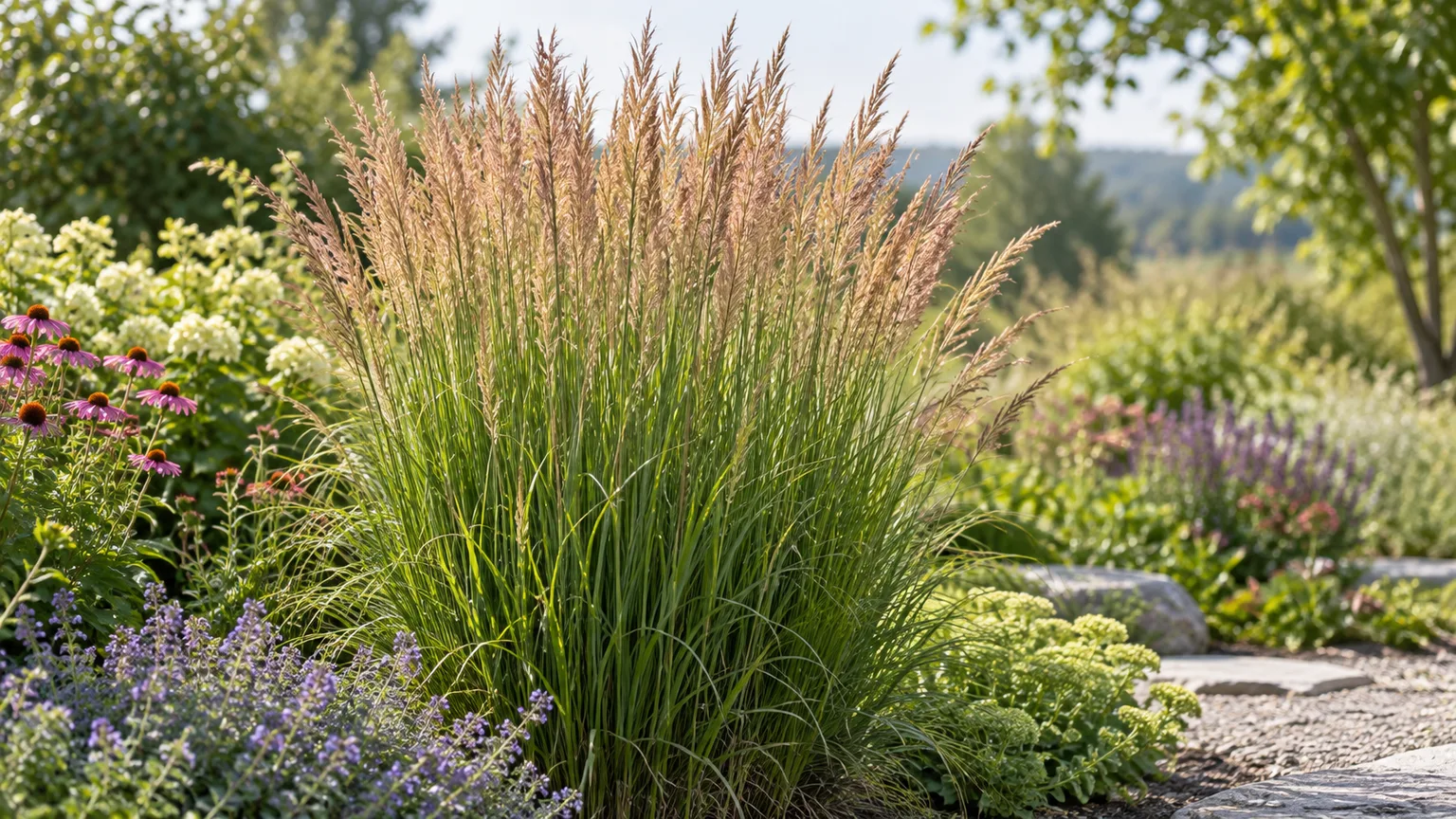
Karl Foerster feather reed grass is useful when you want a narrow, upright clump with height above it rather than a wide fountain of arching blades. The cultivar starts growing early, sends up stiff flower stems in early summer, and holds its tawny winter silhouette after the flowers fade. Give it enough light, room for its crown to widen, and soil that stays moderately moist without keeping the crown under standing water.
The name on the plant label matters. ‘Karl Foerster’ is a sterile selection of Calamagrostis × acutiflora, not a seed-grown ornamental grass that will come true from seed. It grows as a clump, so expect a measured increase in width rather than a fast-running groundcover; buying a correctly labeled nursery plant or dividing a known plant is the reliable way to get this cultivar.
What Karl Foerster looks like through the year
The foliage forms a dense, green mound that is often about 2 to 3 feet tall and under 2 feet wide. Its flower stems rise well above that mound and commonly reach 5 to 6 feet, so a young plant can look modest in spring and then become a strong vertical feature once the plumes open. The University of Wisconsin–Madison Extension describes the narrow clump and early-summer flowering; the Missouri Botanical Garden gives a comparable overall height and spread.
The plumes emerge green, then pass through pink or purplish tones before turning bronze and tan. The upright stems stay decorative well into winter, especially when low sun catches their color. The North Carolina State Extension Plant Toolbox notes that the plumes can be used fresh or dried, while Fine Gardening also recommends keeping the foliage and flowers for winter effect.
‘Karl Foerster’ is often sold as a compact, tidy grass, but its flower stalks can reach above a window sill or spread across a narrow path. Judge the location by the full flowering height, not only the size of the pot at purchase. If you want a variegated or shorter feather reed grass, compare the named cultivar before buying; general care overlaps, but mature size and appearance are not interchangeable. Our broader feather reed grass guide compares the common cultivars.
Karl Foerster care at a glance
| Growing factor | Practical starting point |
|---|---|
| Plant type | Cool-season, clump-forming ornamental grass |
| Foliage height | About 2–3 feet |
| Flowering height | Often 5–6 feet |
| Spread | Commonly less than 2 feet, with references listing up to about 2.5 feet |
| Light | Full sun or light shade; some afternoon shade can help in hot-summer climates |
| Soil | Average to fertile; moist but well drained, with tolerance for clay and occasional wetness |
| Bloom | Early summer; plumes age from green and rosy tones to bronze and tan |
| Hardiness | Published listings differ; check your plant tag and local extension guidance |
| Annual work | Water while establishing, leave winter stems, cut back before spring shoots, divide only when needed |
Hardiness information is not perfectly consistent. Wisconsin Extension lists ‘Karl Foerster’ for Zones 3–9, while the Missouri Botanical Garden lists Zones 5–9; the RHS uses its own hardiness rating system. Treat these as references, not a guarantee for a wind-exposed garden, a wet winter, or a pot whose roots experience colder conditions than roots in the ground.
Choose a site before planting
Look at the bed during the growing season, not only on the day you shop. Note how many hours of direct sun it receives, how long water stands after rain, and what the stems could reach at full height. This quick assessment helps prevent the common mismatch: planting in a shaded, saturated corner and trying to correct weak growth later with fertilizer or staking.
Give it sun for firm stems and plumes
Full sun generally gives the strongest flowering and the stiffest upright habit. In a hot-summer region, light or afternoon shade can reduce heat stress, but deep shade tends to reduce plumes and make the foliage looser. North Carolina State Extension and the Missouri Botanical Garden both describe this trade-off: some shade is tolerated, yet more shade can mean fewer flowers and a less erect clump.
If the grass gets morning sun but sits in shade after a nearby tree leafs out, it may stay green while flowering poorly. Before moving it, observe the bed for a few weeks around late spring and early summer, when it is preparing to flower. If direct light is consistently short, relocating the plant is more likely to help than adding fertilizer.
A once-sunny site can also change as a tree canopy matures. Repeat the light check before deciding that an established plant has simply reached the end of its useful life.
Aim for moist soil that still drains
The plant handles heavier clay and more moisture than many ornamental grasses, and it can grow in soil that is occasionally wet. That tolerance does not make every ponding site suitable. Aim for soil that holds moisture between rain or irrigation but does not leave the crown sitting in stagnant water for days; a persistently flooded low spot is a poor place to test the limit.
Before planting in a clay bed, watch what happens after a soaking rain. If puddles disappear and the soil remains damp, the site may suit the grass; if water stays pooled for several days, plant higher or choose a better-drained spot. The RHS profile recommends moist but well-drained or well-drained soil, while the Missouri Botanical Garden notes tolerance of wet soil. Those descriptions are compatible when “wet” means moisture-retentive rather than permanently submerged.
Plant at crown level and space for mature width
Plant in spring or early fall when the ground is workable and the weather gives roots time to settle before summer heat or a hard freeze. Water the nursery pot beforehand, then dig a hole about as wide as the rootball and no deeper than its height. Set the crown at the surrounding soil line; burying the crown can trap moisture, while lifting the rootball too high exposes roots and dries them faster.
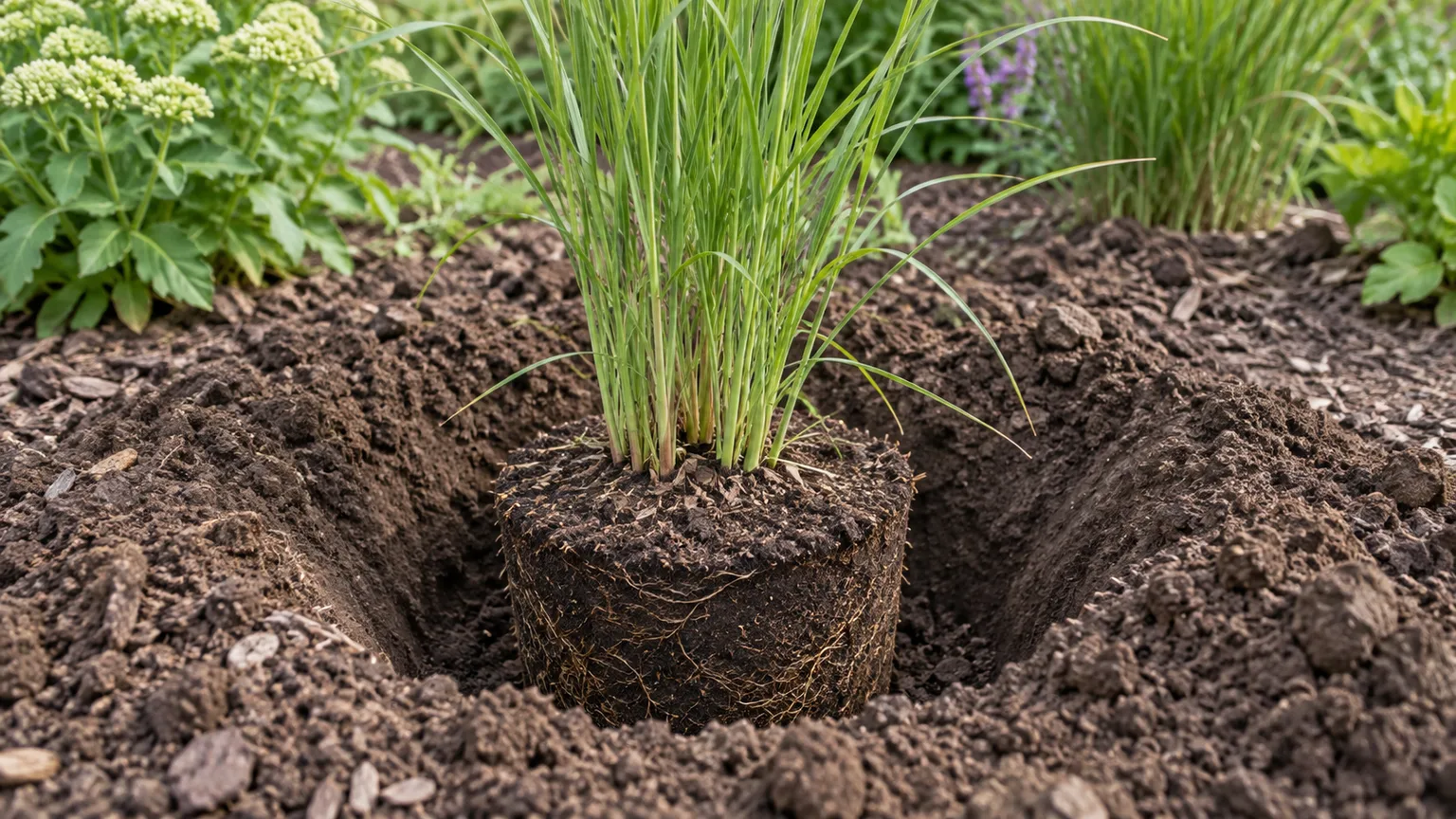
Backfill with the soil removed from the hole and press gently to close large air pockets. Avoid making a small pocket of fluffy amended soil inside heavy clay, which can collect water around the roots. Water thoroughly after planting, then spread a thin layer of mulch over the root zone while keeping it away from the crown.
Use the cultivar’s mature width to set spacing. A single plant can stand alone, but a row planted roughly 30 to 36 inches apart gives each clump room while allowing the foliage to visually join as it matures. Space farther apart if you prefer distinct, separate plants; crowding can make the center difficult to reach when division is eventually needed. The Epic Gardening growing guide also emphasizes giving mass plantings room to develop, while the Missouri Botanical Garden places mature spread around 1.5 to 2.5 feet.
Water for establishment, then for extended dry spells
During the first growing season, keep the rootball from drying out completely. Check the soil near the original rootball rather than watering by a weekly calendar, because a plant set into sandy soil or a windy bed loses moisture faster than one in heavy loam. When the root zone begins to dry, water slowly at the base so moisture reaches the full rootball instead of wetting only the surface.
After the plant is established, regular rainfall may be enough in a climate with even summer moisture. During a long dry spell, water deeply when the soil has dried through the upper root zone, then allow excess water to drain before watering again. Established ‘Karl Foerster’ can tolerate some drought, but prolonged dryness can reduce vigor and make the foliage look tired; newly planted and container-grown plants need closer checks.
Do not confuse water tolerance with a need to keep the soil saturated. If leaves yellow and growth weakens in a bed that stays wet, check the crown depth and drainage before adding more water or fertilizer. Irrigate at soil level when practical, both to direct water to the roots and to keep foliage from remaining wet for long periods.
Feed lightly; more is not better
‘Karl Foerster’ is not a heavy feeder in a reasonably fertile garden bed. Incorporate compost when preparing genuinely poor soil, but skip annual doses of rich fertilizer when the clump already produces healthy foliage. Wisconsin Extension notes that feeding may help achieve maximum height in infertile soil; that is a conditional need, not a schedule every plant requires.
If growth is pale or undersized, first check light, root moisture, crown depth, and how long the plant has been in place. A nutrient problem is only one possibility, and extra nitrogen will not fix shade or drainage. If a soil test identifies a deficiency, follow its recommendation rather than applying a broad fertilizer mix by guesswork.
Diagnose poor flowering and flopping
A healthy grass can look different in its first season from a mature, established clump, and a single poor bloom year does not always call for intervention. Check the site and recent care before dividing, feeding, or staking. The sequence below narrows likely causes while avoiding changes that create a second problem.
Few or no flower plumes
Start with the amount of direct light during late spring and early summer. If nearby trees or buildings shade the crown for much of the day, the grass may keep leaves but produce fewer flowers. Next, consider whether it is newly planted, was divided recently, or suffered a prolonged dry spell while it was setting stems.
Look at the foliage as well: a very lush, soft mound in a sunny bed may have received more fertilizer than it needs. If growth is generally healthy, wait through a full growing season before relocating it; if bloom remains weak, choose a brighter site at the next mild planting window. Avoid applying high-phosphorus fertilizer or bone meal without evidence of a soil deficiency.
Stems leaning or flattening
If a rainstorm or strong wind pushed the stems sideways, give them time to dry and recover before staking or cutting them. Wisconsin Extension reports that stems may flop during heavy rain or wind and return upright once they dry. A short-lived bend after weather is different from a clump that leans in calm conditions all season.
For persistent flopping, inspect for deep shade, excessive feeding, overcrowding, or an old clump with a weak, hollowing center. Correct the likely cause instead of tying every stem into a bundle; tying may disguise the problem and spoil the grass’s natural shape. If the clump leans repeatedly in the same direction, consider nearby shade, runoff, or exposure before deciding whether to move it.
Prune old growth before new shoots rise
Leave the dried stems through fall and winter if you want the tawny plumes and vertical structure in the dormant garden. They can also be cut for arrangements while they still hold their shape. In late winter or very early spring, bundle the previous year’s stems and trim them back to a short stubble, about 4 to 6 inches above the crown.
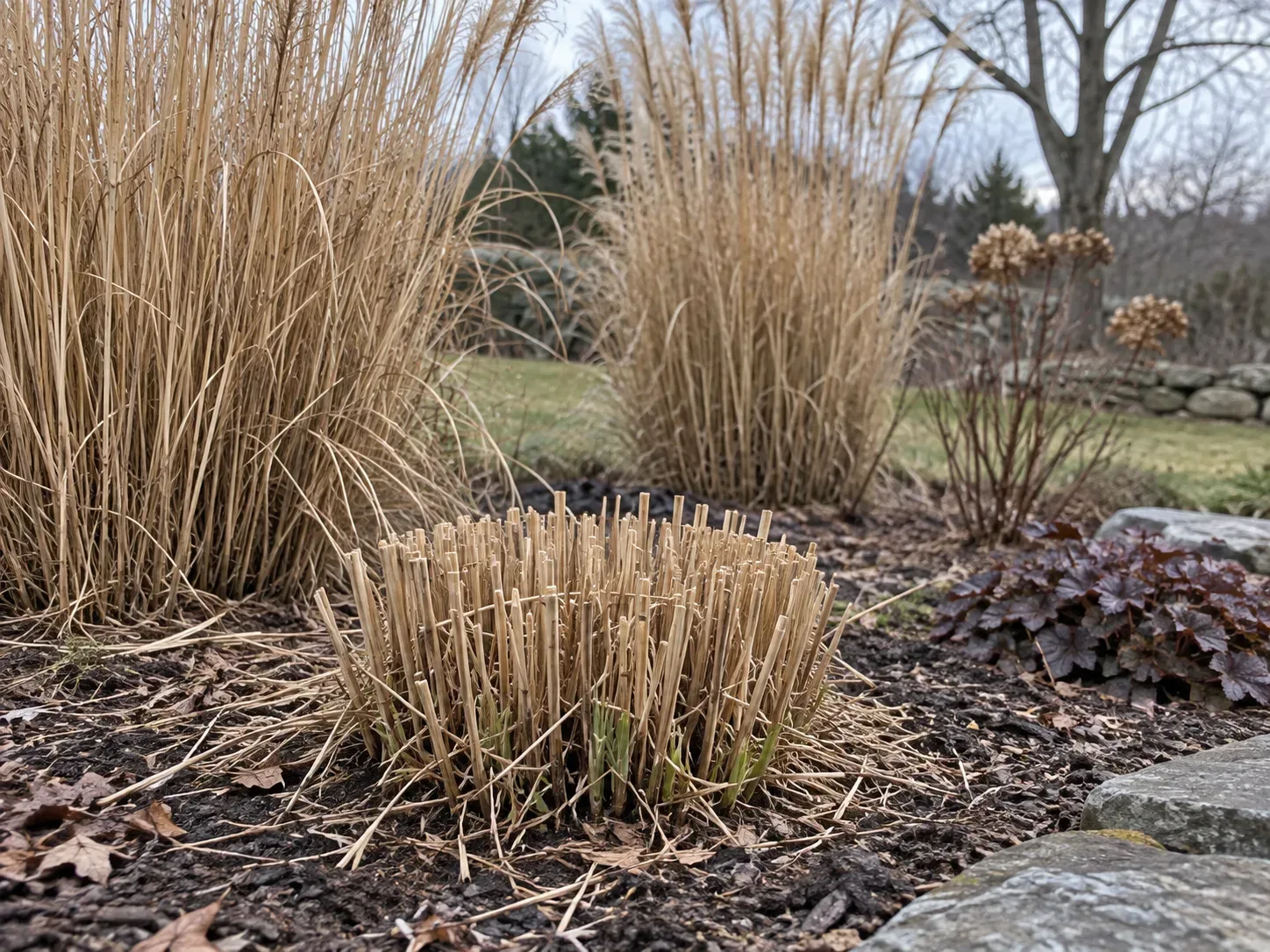
Exact cut height varies among references: Wisconsin Extension recommends about 6 inches, while North Carolina State Extension and the Missouri Botanical Garden advise cutting old clumps close to the ground. The practical cue is more important than a one-inch difference: prune before the new shoots rise, and do not slice into the crown. In a mild winter, check earlier than you would in a colder region because this cool-season grass starts growing early.
Use sharp shears or hedge shears and wear gloves and long sleeves when handling dry blades. Remove the cut stems from the bed so new growth is easy to see, and check that mulch has not accumulated over the crown. If green blades have already emerged, cut carefully around them rather than shearing across the whole clump.
Divide only when the clump declines or needs room
Division is useful when the center is dying out, the clump has become too large for its space, or vigor remains poor after you correct light and moisture. A healthy clump does not need to be split on a fixed three-year timetable. Dividing a vigorous plant too early creates extra work and small divisions that take time to regain the full, tall effect.
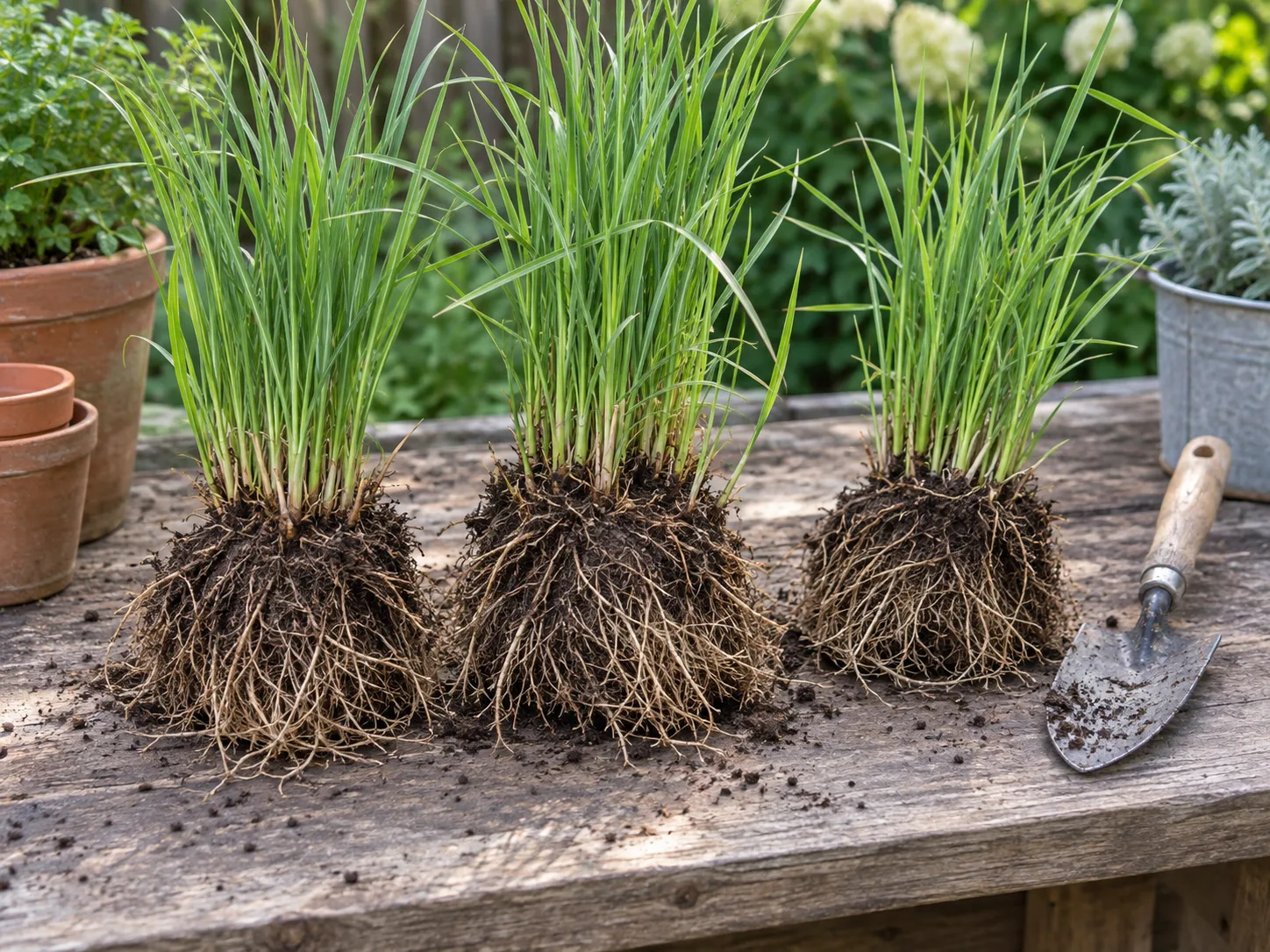
Choose spring as new growth begins or early fall when mild weather remains; avoid splitting during summer heat or drought. Water the clump the day before if the soil is dry, dig around it, and lift as much of the root mass as you can. Use a sharp spade or pruning saw to divide it into sections with healthy roots and several live shoots, and discard a dead or woody center rather than planting it again.
Replant the divisions promptly at the same crown depth, water them in, and keep the soil evenly moist while new roots establish. A small division may survive but can take another growing season to fill out and produce a strong display. The RHS and Fine Gardening both list division as the propagation method, with spring particularly suitable for this cool-season grass.
Grow it in a container with winter protection
A container makes the upright clump useful on a patio or beside an entry, but the pot needs to be wide and heavy enough to steady tall stems. Choose a container with open drainage holes and use outdoor potting mix rather than dense garden soil. Set the crown at the soil surface and leave enough room around the rootball for it to expand.
Check moisture more often than you would for an in-ground plant, especially during sunny, windy weather. Water until excess runs from the pot, then empty any saucer that holds standing water. The root zone dries faster in a container, but frequent shallow watering can leave the center dry; water thoroughly and let the mix begin to dry at the surface before repeating.
Container roots experience sharper temperature swings than roots in the ground. In cold regions, use a large pot, place it in a sheltered spot, and insulate or move it to a protected, unheated location if local winters threaten container-grown perennials. Keep the plant outdoors through winter unless your local guidance recommends otherwise; warm indoor rooms are not a substitute for a dormant outdoor cycle.
Use the grass as a screen, accent, or cut flower
Place ‘Karl Foerster’ where its tall stems can rise without blocking a window, leaning across a walkway, or hiding shorter flowers. One clump can punctuate a mixed border; a repeated row can soften a fence or create a seasonal screen. Because the leafy base is narrower than the flowering top, plan for the full height and width rather than treating it like a compact edging grass.
Pair it with perennials that share its light and moisture preferences. Coneflowers, black-eyed Susans, asters, and other summer or fall bloomers can contrast with the vertical plumes, but avoid surrounding it with plants that need sharply drier soil if the bed stays consistently moist. For a fuller design, layer lower flowers in front and keep open access behind the grass for spring cleanup and occasional division.
The plumes work as fresh or dried cut material. Cut stems before the flower heads become fully mature if you want them to keep a cleaner shape in an arrangement, and leave enough stalks outdoors for winter structure. For a more detailed comparison of feather reed grass forms, see our feather reed grass cultivar guide.
Treat a row as seasonal structure rather than a solid privacy barrier. Its narrow leaves and upright but separated stems soften views without making an opaque hedge, and winter openness varies with climate. If you need year-round screening, combine the grass with a fence or evergreen shrub; the plumes can still add texture above or beside it. Leave enough room beside a path as well, because stems that lean after rain can brush passersby even when the crown is planted at a sensible distance.
Check for rust before treating browning
Rust is an occasional problem, especially after long rainy periods, but many brown blades are simply old foliage or seasonal color change. Rust is more likely when leaves show scattered orange, reddish, or brown pustules rather than turning evenly tan as the season advances. North Carolina State Extension and the RHS both mention rust as a possible disease; serious insect or disease problems are otherwise uncommon.
Inspect several leaves and the crown before responding. If the grass is naturally turning tan in fall and pushing healthy shoots in spring, remove only the spent stems at the usual pruning time. If you see rust-like pustules, improve spacing and airflow, avoid repeatedly wetting the foliage, and remove badly affected leaves; consult a local extension service or plant clinic if the pattern is unclear or continues to spread.
Do not treat every brown tip with fungicide. Drought, winter wear, shade, and waterlogged roots can all affect foliage, and a fungicide cannot correct poor drainage or a buried crown. If a pesticide seems necessary, confirm the diagnosis and use only a product labeled for the plant, pest, and site, following its directions.
Seasonal care calendar
| Season | What to do |
|---|---|
| Late winter to early spring | Cut old stems back before new shoots extend above the crown. Divide or transplant in a mild spell if needed. |
| Spring | Water newly planted or newly divided clumps as roots establish. Add compost only where soil fertility is poor. |
| Early summer | Watch plume development and check direct light if a mature clump flowers poorly. Water during extended dry weather. |
| Late summer | Let the mature plumes change to bronze and tan; check pots more often during hot, windy weather. |
| Fall and winter | Leave stems standing for color and structure. Divide in early fall only if mild weather remains for establishment. |
The dates shift with climate, so use plant growth rather than a calendar date as the final cue. In a warm region, pruning and division windows may arrive earlier; in a cold region, wait for workable soil and avoid late-season disturbance. A seasonal check takes only a few minutes and can prevent cutting off new growth or dividing during stressful weather.
Conclusion
Karl Foerster feather reed grass earns its place in a yard when you need a narrow, upright accent or screen that stays interesting after summer. Give it a bright site, plant the crown level with the surrounding soil, and leave room for a roughly two-foot clump beneath flower stems that can reach 5 to 6 feet.
Water consistently while it establishes, then respond to extended dry weather instead of following a fixed schedule. Keep the winter stems, prune before spring shoots rise, and divide only when the center thins or the plant outgrows its space. These choices preserve the cultivar’s tidy shape with relatively little annual maintenance.



