Kentucky Coffeetree Care: How to Grow This Native Tree
Learn how to grow Kentucky coffeetree in sun and well-drained soil, choose a fruitless male cultivar, water a new tree, prune it, and handle seed pods safely.
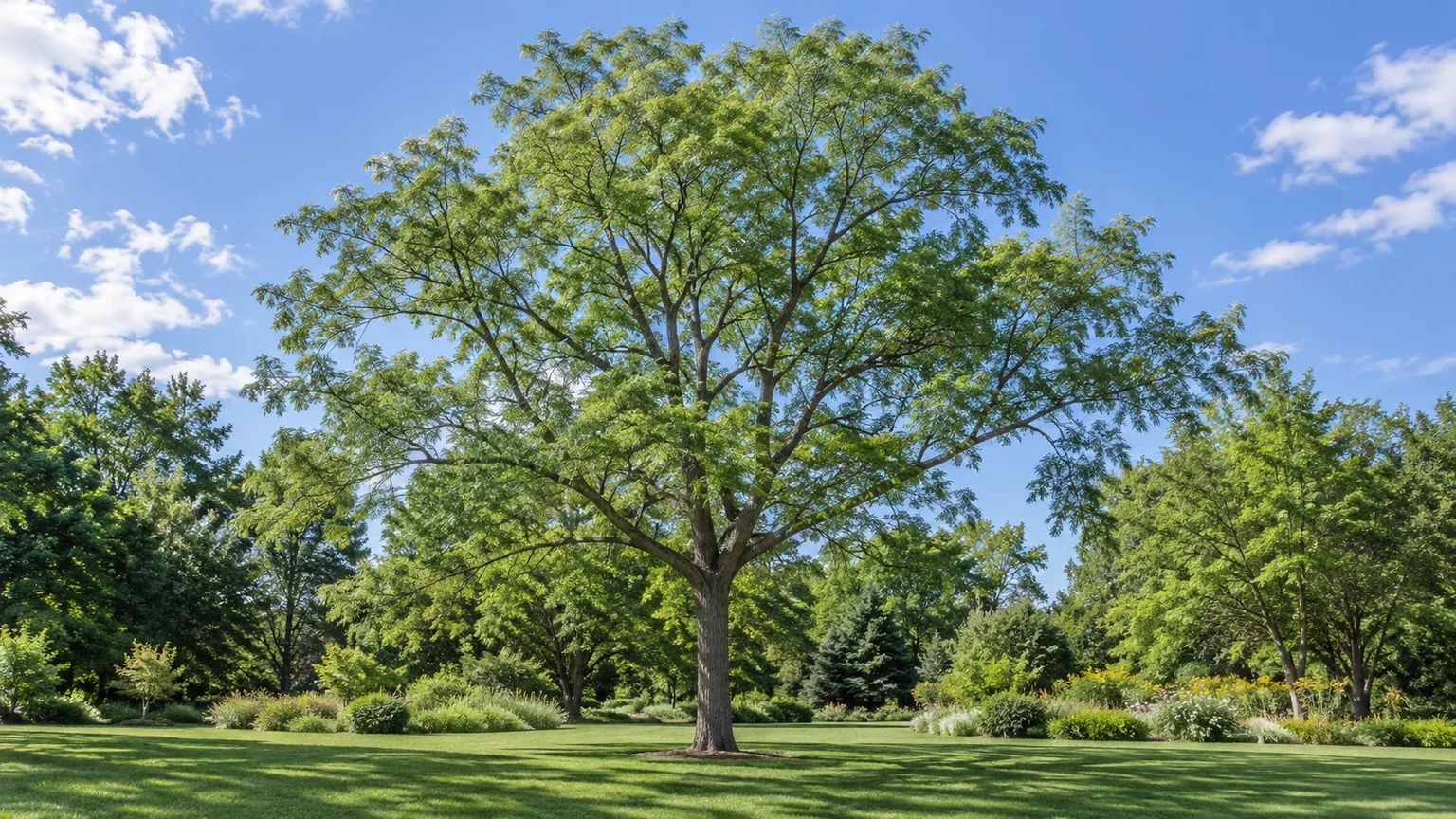
A Kentucky coffeetree is a long-term shade-tree choice for a sunny, open site—not a compact ornamental you can tuck beside a patio. Its loose canopy, huge compound leaves, late spring leaf-out, and sculptural bare branches make it distinctive, while a mature tree can take up roughly 40 to 55 feet of width. Before buying one, decide whether you want a fruitless male cultivar or are willing to manage the pods produced by a female tree.
The botanical name is Gymnocladus dioicus, and the species is native to central and eastern North America. It is hardy in USDA zones 3 through 8, although local conditions still affect when it leafs out and how quickly a new planting establishes. Once established it tolerates a range of soils and dry spells, but a young tree still needs careful watering, and the seeds and pulp are poisonous. The best care plan starts with choosing the right tree and the right space; routine fertilizer and heavy pruning are usually not part of it.
What makes the Kentucky coffeetree distinctive
Kentucky coffeetree belongs to the legume family, Fabaceae, but it does not look like a typical garden shrub or small flowering tree. Its leaf is actually a large, twice-divided compound leaf made up of many leaflets; a mature leaf can reach about 3 feet long and 2 feet wide. The foliage opens late, often after nearby trees have already leafed out, then turns yellow in fall. That delayed spring display can make a healthy specimen look dead for longer than expected.
Its crown is open and irregular rather than dense and symmetrical. In summer that means dappled shade, with enough light often reaching grass and plantings below the outer canopy. The winter silhouette is coarser: stout branches and deeply ridged, scaly bark remain visible after the foliage drops. Female trees may retain broad, dark reddish-brown pods into winter. North Carolina State Extension describes the tree as slow to moderate growing, while the University of Minnesota’s tree catalog emphasizes its large, open form and strong landscape presence.
A commonly listed landscape size is about 60 to 80 feet tall and 40 to 55 feet wide, though references vary and a tree’s eventual size also depends on growing conditions and cultivar. North Carolina State Extension gives the 60- to 80-foot range, while an older University of Kentucky Cooperative Extension profile reports that the species can commonly reach 75 to 100 feet. Neither number is a guaranteed ceiling. For a permanent planting, use the larger potential height as a planning reminder and confirm the expected size of the nursery’s specific stock.
A mature specimen is not just a point of shade: its canopy affects the light and planting options across a large part of a yard. If you have a narrow lawn, a small urban lot, overhead wires, or a tight distance between the house and property line, check the nursery’s mature dimensions before committing.
Choose a male or female tree before you buy
The species is dioecious: male and female flowers grow on separate trees. A female tree has the larger, showier, fragrant flower clusters and, when pollinated, forms thick pods containing dark seeds in sticky pulp. Those pods are ornamental but can become messy when they fall on a lawn, path, driveway, or play area. A male tree does not set those seed pods, which is why many homeowners looking for shade choose a named fruitless male cultivar.
Nurseries may offer cultivars such as ‘Espresso,’ ‘Prairie Titan,’ and ‘Stately Manor.’ Their forms differ, from an arching vase shape to a narrower upright habit; confirm the cultivar and its expected mature spread on the plant tag or with the nursery. Seed-grown trees cannot be guaranteed male, and a young seedling’s sex is not reliably apparent until it flowers. North Carolina State Extension’s profile lists male, fruitless cultivars, and the University of Kentucky Cooperative Extension’s coffeetree guide explains the difference between seed-grown trees and vegetatively propagated male forms.
“Fruitless” does not mean litter-free. Both sexes drop their large leaves, and even a male tree can need fall cleanup. Choose a female tree only if the flowers and pods appeal to you, you have a place where falling pods are easy to manage, and people or animals will not be tempted to handle or eat them. If the nursery cannot verify the plant’s sex or cultivar, treat it as potentially pod-producing when planning.
Choose a sunny site with decades of room
A Kentucky coffeetree is a good fit for a park-like lawn, a broad property edge, or another open area where a large shade canopy has room to develop. It is a poor match for a small courtyard, a narrow planting strip, or a location where regular pod cleanup would be difficult. Consider not only the trunk’s location but also the eventual reach of branches, shade cast over gardens, and access for mowing and fall cleanup.

Give the canopy full sun and clearance
Choose a place with at least six hours of direct sun during the growing season. The tree can tolerate a little shade, but a sunny, open position supports its characteristic upright, broad crown. Avoid planting where the tree will soon be crowded by a building, another large canopy, or overhead utility lines. Before digging, check underground utilities and local planting restrictions; never assume a small nursery specimen will remain small.
Use the mature spread, not the container size, to judge clearance. A canopy that may span 40 to 55 feet needs room beyond its trunk in every direction, even if nearby structures do not shade it today. If you want a shade tree beside a house, place it so the canopy can spread without colliding with the roof or blocking a service route. Do not prune a large tree into a permanently narrow shape to compensate for a poor planting location; choose a better-sized species instead.
Match the tree to the soil and drainage
The tree adapts to sand, loam, and clay and tolerates acidic through alkaline soils. It prefers soil that holds some moisture but drains well. A compacted urban site may still suit it, but “tolerates difficult soil” does not mean roots will thrive in a planting hole that stays saturated. North Carolina State Extension lists a wide range of soil textures and pH, along with good drainage as a cultural condition.
Watch the site after a heavy rain. If water sits around the proposed planting area for a day or longer, or the soil stays slick and saturated, choose a better-drained location or another species. The tree can handle occasional flooding, but prolonged waterlogging deprives roots of oxygen and raises the chance of decline. Do not dig a deep hole through clay and fill it with loose amended soil; the hole can collect water like a basin. If you need to improve a site, work a broad area rather than creating a sharply different pocket around the roots.
Plant a young tree correctly
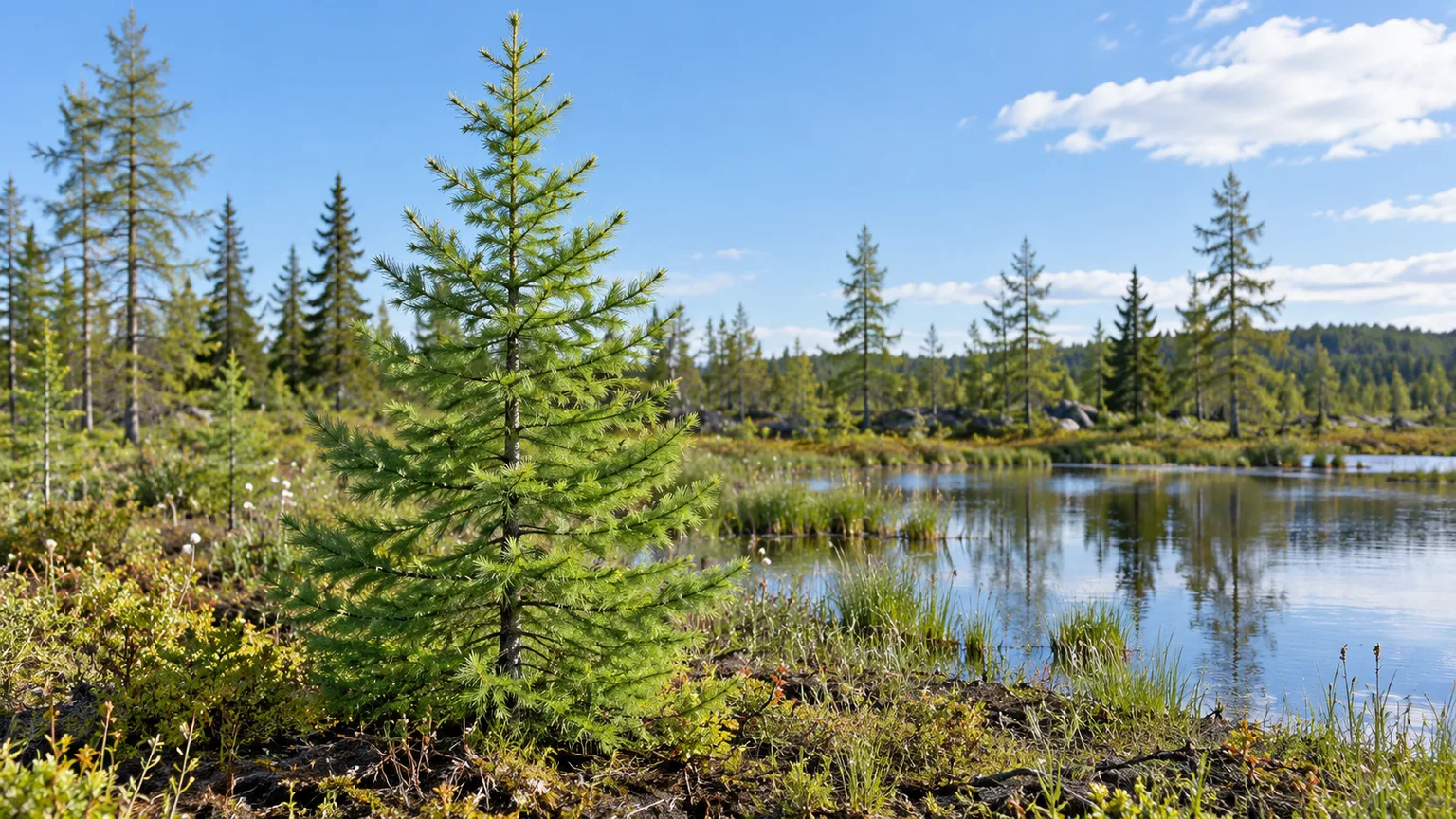
Spring or early fall is generally a practical planting window for a container-grown tree, with the exact choice depending on local heat and winter timing. Aim for a cool period when the soil is workable and the roots can begin establishing before severe heat or frozen ground. In colder regions, spring gives the tree the whole growing season to settle in. In places with hot summers and mild autumns, early fall can reduce heat stress, but plant early enough for roots to grow before the soil cools.
Pick a planting season that suits your climate
Select a healthy nursery tree with a sturdy trunk, a balanced crown, and no circling roots visible at the edge of a container. Avoid choosing only by height; a smaller, well-rooted plant is often easier to establish than a taller tree that has spent too long in a pot. If possible, ask whether the tree is a seedling or a named cultivar, how it was propagated, and whether the seller can confirm that a fruitless cultivar is truly male.
Dig a hole two to three times as wide as the root ball, but no deeper than the distance from the root flare to the bottom of the ball. The root flare is where the trunk widens into the first major roots. Tease loose roots outward and cut only clearly broken or circling roots with clean pruners. Do not loosen a balled-and-burlapped root system aggressively; follow the nursery’s guidance for removing ties and the top portion of burlap after positioning.
Keep the root flare at soil level
Set the tree so its root flare ends up level with, or slightly above, the surrounding finished grade. Trees planted too deep can struggle because buried bark stays wet and roots lack adequate oxygen. Backfill with the original soil, breaking large clods, and firm it gently to remove large air pockets. Avoid packing the soil hard around the trunk, and do not bury the graft union if the plant has one.
Water slowly after planting to settle the soil and wet the root ball, not just the surrounding backfill. Apply a 2- to 3-inch layer of organic mulch over the root zone, extending outward as space allows, but leave a clear gap around the trunk. Mulch should look like a shallow, wide saucer rather than a cone piled against the bark. The Oregon State University Landscape Plants profile and North Carolina State Extension both emphasize choosing a suitable, well-drained planting site.
Water for establishment, then let the roots do more
During the first growing season, check the original root ball every few days in warm, dry weather. Water deeply when the soil within that ball begins to dry; a brief sprinkle may wet the surface without reaching the roots. The exact interval depends on rainfall, soil, temperature, and whether the tree is in a container-grown or balled root system. A new tree may need water about once a week during dry periods, but that is a starting point, not a schedule to follow when the soil is still wet.
Continue checking moisture through the next growing season, especially during heat waves, drought, or when the tree is leafing out. As the root system expands, lengthen the interval between waterings and wet a broader area around the tree. Avoid daily shallow watering, which encourages roots to remain near the surface, and avoid leaving the root ball waterlogged. If leaves wilt during a dry spell, check soil moisture before watering; wilt can also accompany root stress from excess water.
Once established, Kentucky coffeetree tolerates drought better than many landscape trees. That does not mean it never benefits from supplemental water. During prolonged heat and drought, a slow soak at the root zone can reduce stress, particularly for a young or recently transplanted tree. If the tree’s leaves yellow and drop unusually early, check drainage and recent watering rather than automatically adding fertilizer.
Mulch and fertilize only when there is a reason
Renew mulch as it decomposes, keeping it shallow and away from the trunk. A broad mulched area reduces mower and string-trimmer injury while moderating soil temperature and moisture. Extend the mulch ring as the canopy and root system grow rather than maintaining a narrow circle around the trunk. Grass competition is most costly during establishment, when roots are still colonizing the surrounding soil.
Do not add nitrogen simply because the coffeetree belongs to the pea family. Many legumes partner with nitrogen-fixing bacteria, but the University of Kentucky Cooperative Extension explains that Kentucky coffeetree does not form that nitrogen-fixing partnership. That is a useful correction to a common assumption, not a signal to fertilize heavily. A tree planted in ordinary soil generally needs no routine feeding. If growth is weak or foliage color is abnormal, first inspect drainage, planting depth, root damage, and water supply; use a soil test before applying fertilizer.
Avoid putting fresh compost or concentrated fertilizer into the planting hole. An enriched pocket can behave differently from surrounding soil and does not fix a site with poor drainage or compacted roots. If a soil test identifies a deficiency, follow its recommendation and local extension guidance instead of applying a high-nitrogen lawn product near the trunk.
Prune for a durable structure
A newly planted tree needs little pruning beyond removing broken, dead, or damaged wood. Do not shorten the crown to “balance” it after planting; the retained leaves help the tree produce energy and establish roots. As the young tree grows, inspect its branching structure while it is still reachable. Remove competing leaders, rubbing branches, and narrow, weak attachments gradually over several seasons rather than stripping away a large portion of the crown at once.
Late winter, while the tree is dormant, is a convenient time for structural pruning. Make clean cuts just outside the branch collar rather than flush against the trunk, and do not leave long stubs. Avoid topping or cutting back major limbs to control height; that can create weak regrowth and spoil the naturally open form. Large branches near a house or utility line are work for a qualified arborist, not a ladder-and-chainsaw project.
Pruning also cannot solve every placement problem. If a branch will eventually conflict with wires or a roof, identify that risk before planting. A broad shade tree that is allowed to develop a natural structure will be easier to care for than one repeatedly cut back to fit a cramped site.
Understand the tree’s seasonal rhythm
Kentucky coffeetree often leafs out later in spring than nearby maples, oaks, and ornamental trees. Its branches may remain bare well into the season, so a leafless tree in early spring is not by itself evidence that it died over winter. Compare it with previous years, look for buds swelling along healthy twigs, and wait until the usual local leaf-out period has passed before deciding that the tree failed.
The compound leaves emerge bronze or pinkish before turning blue-green, then often shift to yellow in fall. The tree may drop those large leaves earlier than many other deciduous species, so its period of summer shade can be shorter than that of a later-falling tree. Male flowers are generally less conspicuous; female flowers form longer, fragrant clusters. If a female tree is pollinated, its thick seed pods mature and can persist into winter. The Harvard Arnold Arboretum plant biography documents a long-lived specimen and shows how the tree’s architecture, leaves, flowers, and pods can change its appearance across seasons.
This seasonal pattern is a design consideration, not a maintenance defect. The open crown offers dappled shade and distinctive winter form, but it does not provide the dense summer screen of a compact-canopied tree. Avoid trying to accelerate leaf-out with fertilizer; timing follows the species and local temperatures.
Grow Kentucky coffeetree from seed
Seed propagation is possible, but the thick seed coat makes untreated seeds slow and unreliable. The tree is also dioecious, so seedlings will not preserve the sex or cultivar traits of the parent. If you want a male, fruitless shade tree, buy a confirmed male cultivar rather than sowing a seed and hoping for the desired result. Seed is most useful if you enjoy growing native trees and can wait to learn what form and sex a seedling develops.
Collect and handle pods safely
Collect mature pods in fall after they have turned brown, or gather fallen pods when they are easy to reach without breaking branches. Wear gloves, keep pods and seeds away from children and animals, and clean tools and surfaces afterward. The sticky pulp is messy, and both it and the seeds are poisonous if eaten. Do not use seed-cleaning water where livestock or pets can drink it.
Break or cut open a pod carefully and remove the seeds from the pulp. For a small home sowing, work over a tray you can clean and discard the pulp and gloves securely. Do not collect pods from a tree that has been treated with pesticides unless the label permits the intended use. The University of Kentucky’s guide notes that nurseries use specialized equipment for larger lots; a home grower can simply handle small quantities cautiously.
Scarify and sow the hard seeds
The hard coat must be breached so moisture can reach the seed. One controlled method is to rub a small area with a file or emery board until the coat lightens; stop before cutting into the inner seed. Then soak the seed in water until it swells. The University of Kentucky extension protocol and LeafyPlace’s seed-growing overview both describe scarification as the key step for home germination. Some online guidance adds cold stratification; Gardenia’s profile recommends it, while the Kentucky extension protocol focuses on breaking the impermeable coat and does not call for that extra cold period. Do not combine treatments by default: start with one tested method and label the seed batch so you can track the result. The extension protocol also describes a hot-water treatment; if you use that route, follow a reliable horticultural protocol and take care to prevent burns. Do not improvise with concentrated sulfuric acid or other nursery chemicals.
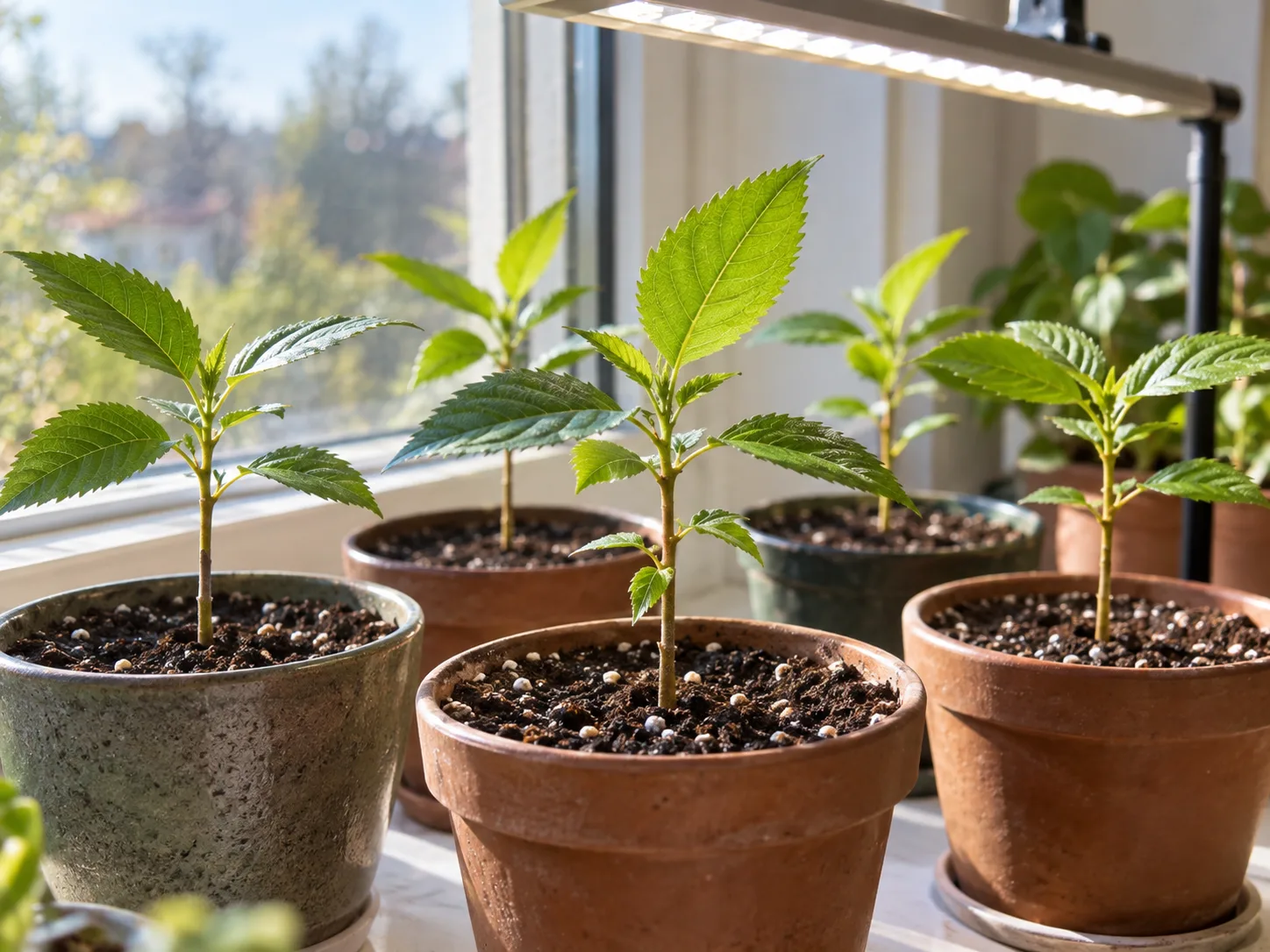
Sow prepared seeds about 1 to 2 inches deep in a clean, well-drained seed-starting mix. Keep the medium evenly moist but not saturated, and place the container in bright light after germination. A properly prepared seed may sprout within weeks, but temperature and seed maturity affect timing, so keep the pot labeled and do not discard it too early. Cold stratification is not the main hurdle for this species; the impermeable seed coat is.
Grow seedlings in containers until they have a sound root system and can be handled without breaking the young stem. Harden them gradually before planting outdoors, then transplant while the tree is still small and dormant or before active growth begins. Avoid keeping a seedling in a small pot for years: the species ultimately needs a permanent outdoor site with room to become a large tree.
Sort normal changes from real problems
The most common concern is a healthy tree that appears dead because it leafs out late. Check flexible twigs and live buds before pruning, and compare timing with the previous spring. A naturally open canopy and early fall leaf drop are also traits of the species. Neither a loose crown nor a brief period without leaves automatically indicates disease.
Yellowing foliage and premature leaf drop deserve a check of recent watering and drainage. Soil that remains saturated can stress roots, while a newly planted tree can wilt when its root ball dries even if the surrounding soil looks damp. Recheck moisture in the root ball itself, inspect the flare for buried bark, and look for damage from mowers or string trimmers. Do not treat a symptom with fertilizer or pesticides until you have a likely cause.
Kentucky coffeetree generally has few serious insect and disease problems, according to North Carolina State Extension. That low-maintenance reputation is useful, but it is not a guarantee that every specimen will be problem-free. Persistent branch dieback, cracked limbs, cankers, or a declining crown warrant assessment by a qualified arborist, especially when the tree is large or near people and structures.
Protect children, pets, and livestock from toxic parts
Do not eat the seeds, pods, pulp, or leaves, and do not brew a drink from them. The historical coffee-like use of roasted seeds is not a safe home-preparation instruction. Sources do not agree on the hazard: North Carolina State Extension identifies the seeds, pulp, and leaves as poisonous, and Farm Progress’ report on Kentucky coffeetree warns about toxic raw parts, while Gardenia’s profile lists no known toxicity. Because the potential harm involves ingestion by people, pets, or livestock, follow the more cautious extension warning and treat those parts as inedible.
A male cultivar reduces pod litter, but it does not remove all risks or seasonal cleanup: leaves fall from both sexes, and a planting can include volunteer seedlings if pods from another female tree arrive nearby. If children play beneath the canopy or animals roam there, choose a confirmed fruitless male cultivar, collect fallen pods promptly, and avoid placing them in accessible compost piles. Do not allow livestock to drink from water contaminated by soaking pods or seeds.
If a person or animal may have swallowed seeds, pulp, or leaves, contact a poison-control professional, veterinarian, or local emergency resource promptly and identify the plant. Do not wait for symptoms or try a home remedy. In a garden with frequent unsupervised access by young children or grazing animals, a different shade tree may be the better choice.
Conclusion
Kentucky coffeetree care is straightforward when the site is right: give it full sun, room for a 40- to 55-foot canopy, and soil that drains well; water a new tree as its root ball dries; mulch without burying the trunk; and prune only to build a sound structure. Expect late spring leaf-out, dappled rather than dense shade, and substantial seasonal leaf litter.
The biggest decision comes before planting. Choose a verified fruitless male cultivar if you want to avoid seed pods, and do not plant the tree where a future canopy would crowd a building or utility line. Treat seeds, pods, pulp, and leaves as poisonous, and grow from seed only if you are prepared for a slow, uncertain result. With those trade-offs clear, this unusual native tree can be a durable specimen for a spacious landscape.



