How to Grow and Care for Kalanchoe Pinnata
Learn Kalanchoe pinnata care, from light and dry-down watering to propagation, pet safety, and keeping its leaf-edge plantlets contained.
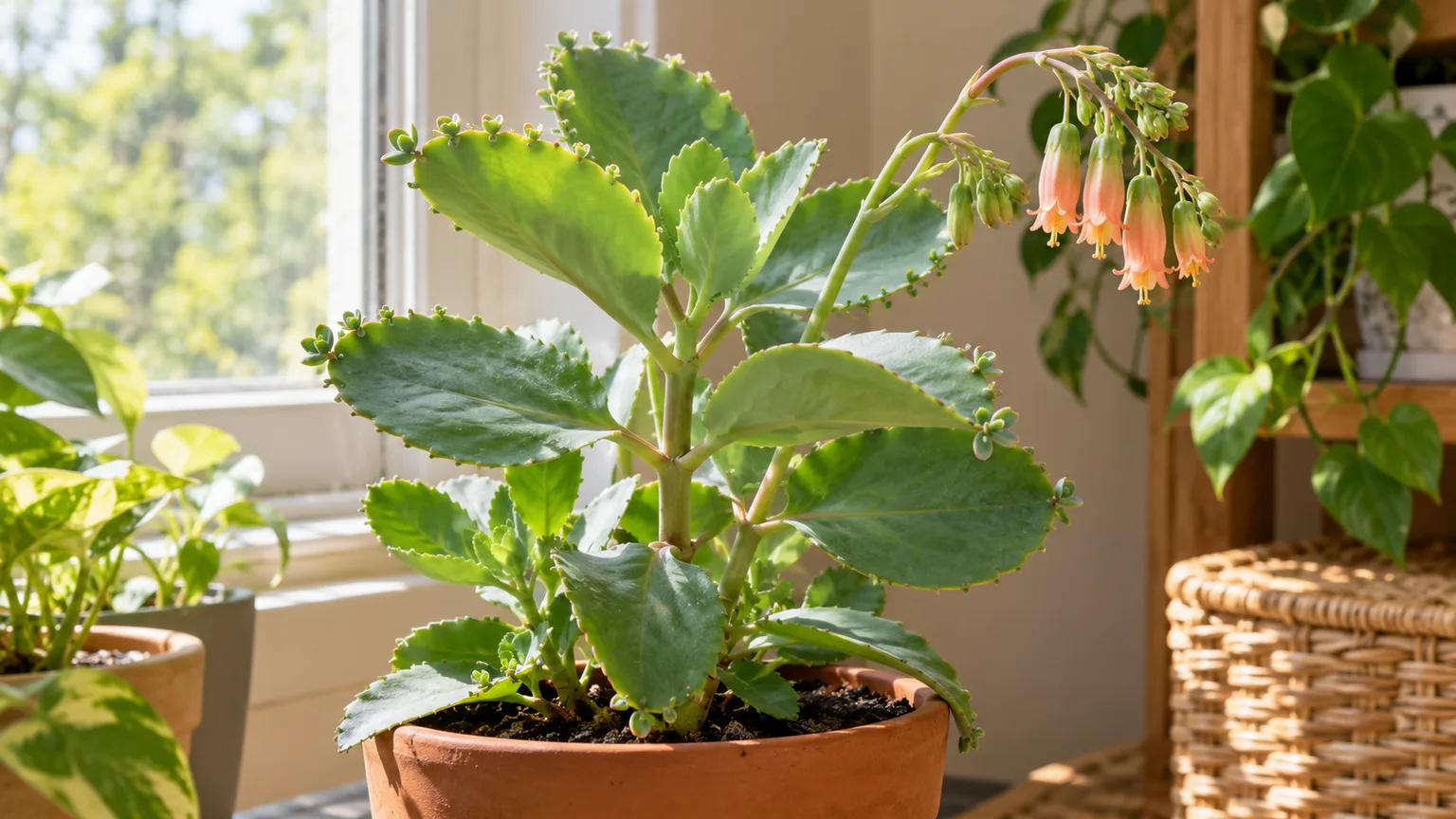
Kalanchoe pinnata is a sun-loving succulent that stores water in its fleshy leaves and can grow new plantlets along their scalloped edges. Give it strong light, a pot with a drainage hole, and a gritty mix that dries between deep waterings. It is easy to grow in a container, but those same plantlets can spread beyond the pot in warm outdoor regions, and Kalanchoe plants should be kept away from pets that might chew them.
Kalanchoe pinnata care at a glance
Grow cathedral bells in a bright window or warm, sheltered outdoor container. Water thoroughly only after most of the mix has dried, let excess drain, and empty the saucer. Use a loose cactus or succulent mix amended with pumice or perlite if it stays damp for more than several days. Average indoor humidity is fine; misting does not solve a care problem and can keep foliage wet unnecessarily.
The key is to treat this as a succulent with a distinctive propagation habit, not as a thirsty tropical foliage plant. If leaves are firm and the soil is still cool or damp below the surface, wait before watering. If the potting mix is bone dry and leaves are beginning to lose firmness, water the whole root ball rather than giving it a token splash. UF/IFAS and the Royal Horticultural Society both emphasize the plant’s fast vegetative reproduction and the general need for succulent growing media that drains freely. UF/IFAS Center for Aquatic and Invasive Plants, RHS succulent growing guide
Identify cathedral bells before changing its care
Kalanchoe pinnata, also known as Bryophyllum pinnatum, is a succulent herb in the Crassulaceae family. Its common names include cathedral bells and life plant. The leaves are opposite and scalloped; lower leaves may be simple and oval, while mature upper leaves can develop three to five rounded leaflets. That change in leaf form is normal and explains why photos of the same species can look different. Its flower stalk carries pendulous, bell-shaped flowers. Kew recognizes K. pinnata as the accepted name and B. pinnatum as a synonym; UF/IFAS notes that daughter plantlets can form along the margins of detached leaves and on inflorescences. Plants of the World Online, Kew, UF/IFAS Assessment, UF/IFAS species profile
Check the whole leaf before relying on a shop label or common name. Mother of thousands usually refers to K. daigremontiana, which has narrow, triangular leaves with plantlets along their margins; K. pinnata has broader, scalloped leaves that may become compound as the plant matures. Kalanchoe × houghtonii is another plantlet-forming relative with long, pointed leaves. Because common names are sometimes used loosely and several species make plantlets, that feature alone does not identify a specimen. Compare a mature leaf and, if possible, the flowers: UF/IFAS contrasts K. pinnata’s rounded, scalloped foliage with the longer pointed leaves of the hybrid, while North Carolina State Extension describes the triangular foliage of K. daigremontiana. UF/IFAS Center for Aquatic and Invasive Plants, NC State Extension Gardener Plant Toolbox
Choose a container-first growing setup
A pot is the simplest way to control size, watering, and spread. Set it where the plant gets bright light, warm conditions, and enough air movement for the mix to dry after watering. A heavy saucer can catch drainage indoors, but empty it after the water has run through; leaving the pot standing in collected water defeats the point of a free-draining mix.
If you live somewhere warm enough to grow it outside, check local invasive-plant guidance before putting it in the ground. Florida is a clear example of why regional advice matters: the UF/IFAS Assessment classifies K. pinnata as invasive in Central and South Florida and recommends caution and management to prevent escape in North Florida. The Florida Natural Areas Inventory lists it as a Category II invasive species, while also noting it is not a state-listed noxious weed. Those are Florida classifications, not a universal legal status; check your county or state’s current list before planting outdoors. UF/IFAS Assessment, Florida Natural Areas Inventory profile
In a region where it is permitted, a container still gives you more control than a landscape bed. Remove loose leaves and plantlets before wind or rain can carry them, keep the pot away from natural areas, and collect trimmings rather than dropping them into yard waste. UF/IFAS recommends preventing plant material from escaping and disposing of it securely. If you are unsure how local green-waste collection handles live succulent cuttings, ask the municipality before adding them to the bin. UF/IFAS species profile
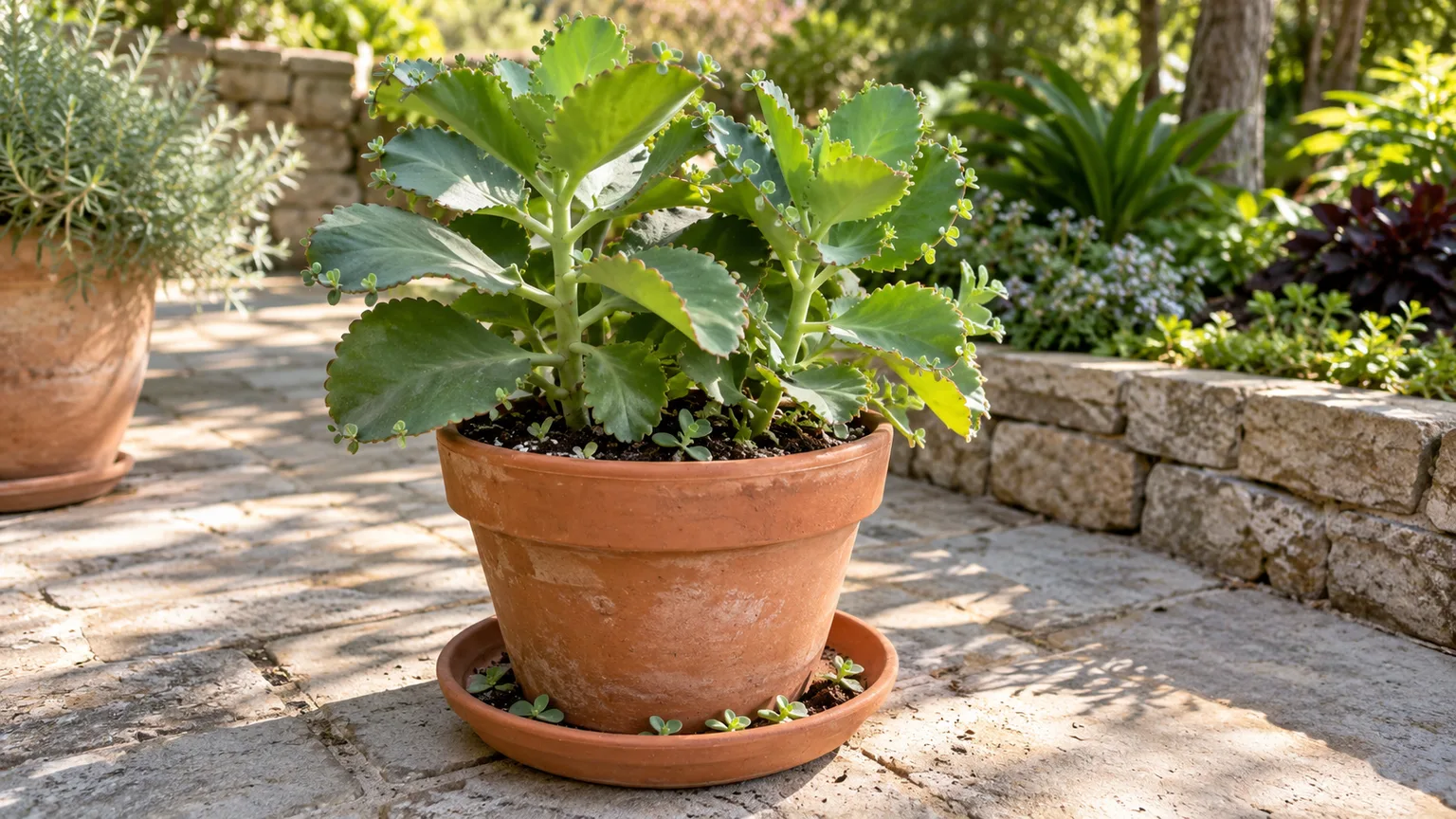
Give it bright light and acclimate it to sun
Indoors, give Kalanchoe pinnata your brightest practical spot: close to a south- or west-facing window in the Northern Hemisphere, or another bright window with several hours of sun. A plant kept far back from the glass may stay alive but stretch toward the window, develop long gaps between leaves, and flower less readily. Rotate the pot a quarter-turn every week or two if it leans strongly in one direction.
Outdoor sun is stronger and less filtered than indoor window light. A plant moved directly from a dim room to midday sun may scorch, especially during hot weather. Start it in bright shade or gentle morning sun, then increase exposure over a week or two while checking the leaves. If the leaf surface develops dry tan patches on the sun-facing side, pull it back to bright shade; if new stems elongate and lean, give it more light gradually. Succulents generally prefer bright conditions, but the RHS notes that plant needs vary and that less-hardy succulents need protection from harsh conditions. A care profile by horticulture writer Daniel Iseli also describes long, widely spaced growth as a sign of low light; use the plant’s shape as feedback instead of treating a six-hour target as universal. RHS succulent growing guide, Plantophiles care guide
Water by root-zone dryness, not by the calendar
Do not water Kalanchoe pinnata every seven or fourteen days just because a generic care chart says so. A small terracotta pot in a sunny room dries much faster than a large plastic pot in a cool, dim room. Instead, wait until the mix is dry through most of the root zone. Test below the surface with a wooden skewer or finger, and lift the pot to learn how light it feels when dry.
When the mix has dried, water slowly until excess flows from the drainage hole. Let the pot drain fully, then empty its saucer. The goal is to wet the whole root ball and give it a dry interval afterward, not to keep the lower roots constantly damp or to moisten only the top inch. In active spring and summer growth, the dry interval may be shorter; in winter, cooler temperatures and slower growth usually mean less frequent watering. Check the soil every time instead of setting a fixed winter schedule. RHS guidance for indoor succulents likewise recommends checking the compost first, watering thoroughly, and allowing the excess to drain. RHS succulent growing guide
A healthy plant’s fleshy leaves act as a small water reserve, so one missed watering is usually easier to correct than repeatedly wet soil. Wrinkles can indicate thirst, but they are not an automatic instruction to water: roots damaged by rot cannot take up moisture even when the pot is soggy. Check the soil and stem first. If the mix is dry and the stem base is firm, water deeply. If the mix is wet and the base is soft, investigate the roots instead of adding more water.
Build a fast-draining mix and use a pot with a hole
Use a commercial cactus or succulent mix as a starting point, then amend it if it stays wet or compacts in your conditions. Add coarse perlite or pumice until the mix falls apart easily when damp and water passes through instead of pooling. The exact ratio is less important than the result: a small amount of organic material holds enough moisture for roots, while mineral grit creates air spaces and speeds drainage. The RHS recommends free-draining, gritty compost for most succulents, and this is a useful baseline for cathedral bells. RHS succulent growing guide
Choose a pot with an open drainage hole and only a little room around the root ball. An oversized pot holds more wet soil than a small plant can use, prolonging the damp period and increasing root-rot risk. Terracotta dries faster than glazed ceramic or plastic and can help if you tend to water too often; plastic is fine if you adjust your watering and use a suitably gritty mix. Do not add a layer of gravel at the bottom to “improve drainage.” A mesh square over the hole keeps soil in while leaving the hole open.
Keep temperatures warm and airflow steady
Kalanchoe pinnata is a warm-climate succulent, not a frost-hardy outdoor perennial. Keep it indoors when nights turn cold, and bring an outdoor pot in before frost is forecast. Avoid placing it directly against cold window glass, in a draft, or beside a heater that bakes one side of the leaves. When moving a plant inside for winter, give it the brightest available window and reduce watering as growth slows.
Average home humidity is usually sufficient. You do not need a humidifier or pebble tray, and misting is not a substitute for correct watering. Good spacing and air circulation matter more than extra humidity, especially if foliage stays damp or crowded. If the leaves touch other plants, move the pot or prune it so air can move around the stems. A plant that is healthy in a dry home is not asking for mist just because its leaves look soft or wrinkled; check the root-zone moisture first.
Feed lightly and prune with a purpose
This succulent can grow without frequent fertilizer, particularly in fresh potting mix. If it has been actively growing through spring and summer and the mix is old or nutrient-poor, apply a balanced houseplant or succulent fertilizer at half strength once in spring. A second light application later in summer is optional if growth remains steady. Do not feed a plant with wet, damaged roots or one that is dormant in winter; fertilizer cannot fix low light, rot, or a pot that stays wet.
Prune when stems become top-heavy, damaged, or too long for the space. Use clean snips just above a leaf pair to encourage branching, and avoid removing more than about a third of the healthy canopy at once. The cut stem can become a propagation cutting, but first collect any detached plantlets and trimmings from the surface below the plant. This species rewards a little cleanup: pruning improves shape, while careful collection prevents pieces from rooting where you did not intend.
What to expect from flowers and flowering
Mature Kalanchoe pinnata can produce a tall flower stalk carrying clusters of dangling tubular bells. The flowers may be greenish to reddish, with color varying among plants and conditions. They are not the tight, flat bouquets associated with florist kalanchoe, which is a different species. The UF/IFAS profile describes the flowers as bell-like and pendulous, a trait behind the common name cathedral bells. UF/IFAS species profile, Florida Natural Areas Inventory profile
An indoor plant may not flower on a predictable calendar. Maturity, strong light, seasonal changes, and overall health all play a part, and no single fertilizer formula can force a young cutting to bloom. Improve light first if growth is stretched; then keep watering and feeding moderate. After flowers fade, cut off the spent stalk with clean pruners. Check the stalk and floor for plantlets before disposing of it, since UF/IFAS notes that plantlets may form on inflorescences as well as leaf margins. UF/IFAS species profile
Repot only when roots or mix call for it
Repot when roots have filled most of the pot, the plant tips over because its base is unstable, or the mix has broken down and stopped drying normally. A root peeking through the drainage hole by itself is not an emergency. Slide the root ball out and look: a dense, circling mat and little remaining mix indicate that a move is useful; a few fine roots at the hole with loose mix may simply need time.
Choose a pot only one size larger and use fresh, fast-draining mix. Spring or early summer is convenient because the plant is actively growing, but a rotting root system needs attention whenever it is found. Let the mix dry somewhat before repotting, remove only dead or mushy roots with clean tools, and wait a few days before the first full watering if roots were cut. The RHS also advises against over-potting succulents because excess compost can remain wet and cause rot. RHS succulent growing guide
Propagate Kalanchoe pinnata without making a mess
Kalanchoe pinnata can be propagated from leaf-edge plantlets, stem cuttings, and leaves. The plantlets are the simplest method because they are already formed, while a stem cutting gives you a larger start. Work over a tray or piece of paper to catch loose pieces, and use a small pot rather than filling a large planter with more wet mix than the cutting needs.
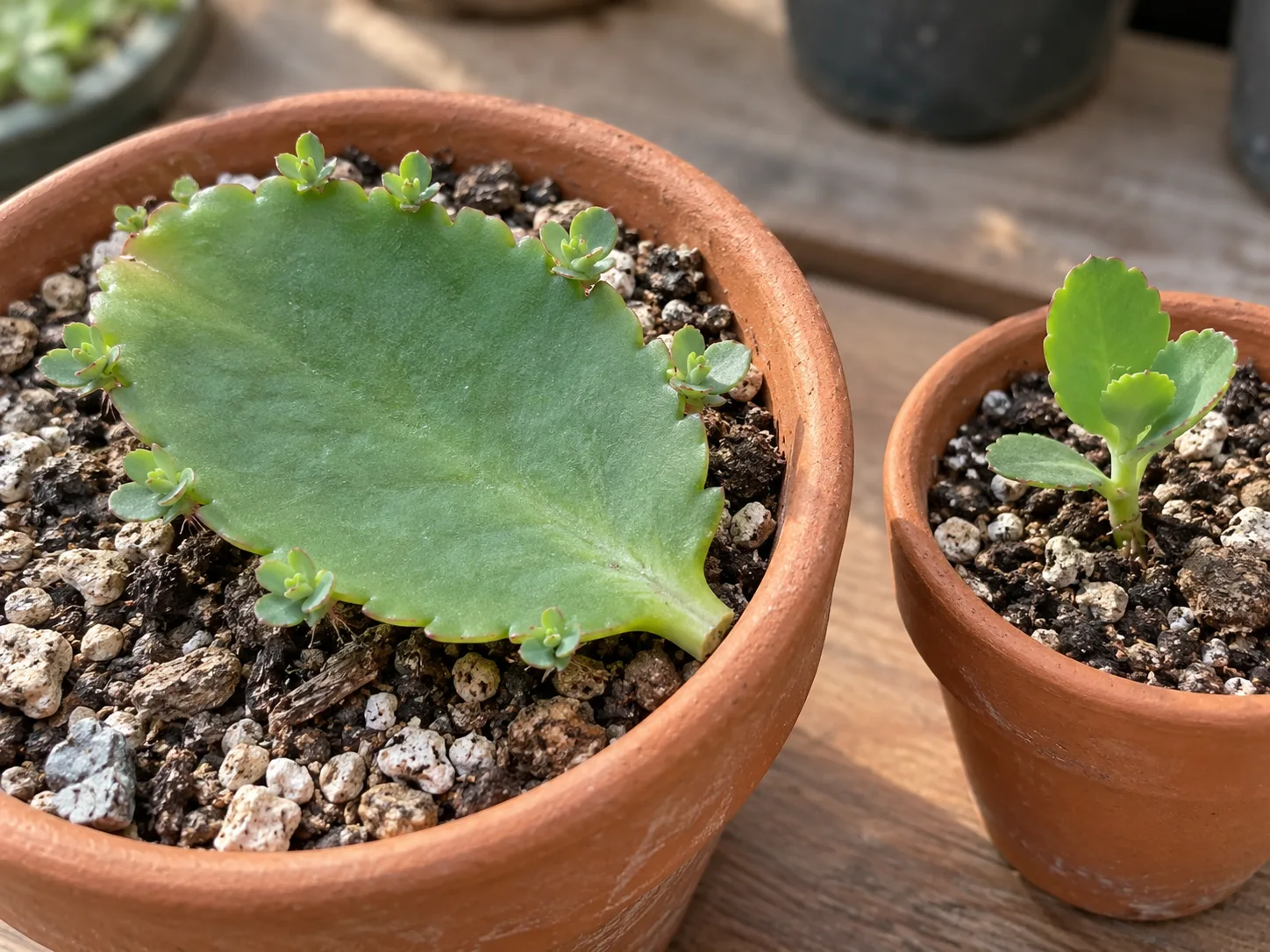
Pot leaf-edge plantlets first
Wait until a plantlet has a few visible leaves and can be lifted without crushing it. If it already has tiny roots, keep them attached; if it does not, it can still root in a suitable mix. Set it on the surface of a small pot of lightly pre-moistened succulent mix and press the base into contact with the mix without burying the leaves.
Keep the pot warm and in bright indirect light while roots establish. The mix should be lightly moist at most, never waterlogged; use a small amount of water when it dries rather than misting the mother leaf every day. After the plantlet resists a gentle tug and produces new growth, let it dry more fully between waterings like a mature succulent. Remove surplus plantlets from the parent plant and nearby pots before they fall and root on their own.
Root stem cuttings after the cut end dries
Use a healthy, firm stem and make a clean cut below a leaf joint. Remove lower leaves that would sit in the soil, then leave the cutting in a dry, shaded spot until the cut surface has dried and sealed, often a day or two depending on stem thickness and room conditions. Do not set a fresh cut straight into damp soil; a wet wound can rot before roots form.
Insert the dry end into a small pot of gritty mix, just deep enough to stand upright. Place it in bright indirect light and wait until the mix dries before watering lightly. Avoid enclosing the pot in a plastic bag: the cutting does not need tropical humidity, and trapped moisture can encourage decay. New growth is a useful sign that roots are developing, but tugging repeatedly can damage young roots; wait until the stem remains upright and begins to grow before returning to normal care.
Use a whole leaf when plantlets are available
A healthy leaf can also produce new plantlets. Lay an intact leaf flat on the surface of gritty mix, with its scalloped edge exposed and in contact with the soil. Do not bury the whole leaf or keep the pot continually wet. If the leaf begins to soften or darken, the medium is too wet or the setup lacks airflow.
Keep the pot warm and bright but out of harsh midday sun. Small plantlets may take several weeks to appear, and not every leaf develops at the same pace. Once each new plant has a few leaves and roots, separate it gently and pot it on its own. This method is best for patient growers who want several small plants; if you want one sturdy new plant, a stem cutting or an established marginal plantlet is usually simpler.
Troubleshoot the plant before adding water or treatments
Look at the soil, stem base, and pattern of damage together. A single old leaf turning yellow near the bottom can be normal as the stem grows, while several leaves yellowing at once deserves a check of drainage and recent watering. A plant that looks stressed despite moist soil may have damaged roots, not a need for more water. Correct the cause before pruning away every discolored leaf.
Separate yellowing, wrinkling, and soft growth
- Yellow leaves with wet mix: Stop watering and inspect the drainage hole. If the soil remains wet for many days or the stem is soft, unpot the plant and remove any mushy roots; repot the firm roots in fresh gritty mix.
- Wrinkled leaves with dry mix: Water thoroughly and let the pot drain. If the leaves do not firm up after a reasonable recovery period, check whether roots are alive and whether the pot has been repeatedly allowed to stay bone dry for long stretches.
- Long gaps between leaves: Increase light gradually. Pruning can improve the shape, but a brighter position is what prevents new stems from stretching again.
- Dry tan patches on the window-facing side: Suspect sudden sun exposure. Move the plant to bright shade and reintroduce direct sun in small increments.
- White, powdery patches: Look closely before treating. Mineral residue from hard water tends to leave a flat crust, while powdery mildew has a dusty, spreading appearance and may recur in stagnant, humid conditions. Improve airflow, keep leaves dry, and remove badly affected material. Do not apply a homemade chemical mix to succulent leaves without a reliable diagnosis.
Check pests and mildew before spraying
Inspect leaf undersides, stem joints, and new growth for aphids, mealybugs, and spider mites. Isolate an affected pot so pests do not move to neighboring plants. For a small infestation, wipe or rinse off visible insects where practical, then use a houseplant product only if its label lists the plant and pest; follow the label exactly and test a small area first. Recheck the plant after treatment because eggs or missed insects may remain.
Crowded foliage and persistent dampness can support fungal problems. Remove dead leaves from the pot, improve airflow, and water the soil rather than wetting the canopy. Avoid routine pesticide or neem applications “for prevention.” The better first step is to identify the pest and choose a treatment that is labeled for that use.
Keep children and pets away from the plant
The ASPCA’s genus-level Kalanchoe listing flags the plants as toxic to dogs and cats. It identifies bufadienolides as the toxic principle and lists vomiting, diarrhea, and, rarely, abnormal heart rhythm among possible clinical signs; it does not provide a K. pinnata-specific dose or risk estimate. The Missouri Poison Center says many Kalanchoe ingestions in people cause nausea or vomiting, while a few varieties can affect the heart. Keep the plant and fallen leaves out of reach of children and pets, and do not use it as food or a home remedy. ASPCA Kalanchoe profile, Missouri Poison Center
If a child eats any part, wipe out the mouth with a soft towel and offer some water, then contact a poison center for case-specific advice; in the United States, Poison Help is 1-800-222-1222. If a pet eats the plant, call a veterinarian or animal poison-control service promptly. Do not induce vomiting or try home treatment unless a medical professional directs you to. If you have curious pets, choose a plant location they cannot reach or grow a different species.
Conclusion
Kalanchoe pinnata is straightforward to grow when you give its roots air, provide bright light, and wait for the potting mix to dry before watering again. A modest pot with an open drainage hole is easier to manage than a large container, and a stem cutting or leaf-edge plantlet is simple to root when you keep it warm and avoid soggy soil.
The unusual plantlets are both the appeal and the management challenge. Grow cathedral bells in a container, collect pieces before they drop, and check local invasive-plant guidance before considering outdoor planting. Keep it away from pets and children who may chew the fleshy leaves. With those few boundaries in place, you can enjoy its sculptural foliage and hanging flowers without turning a single plant into an uncontrolled patch.



