How to Grow and Care for Japanese Pieris in Gardens
Grow Japanese pieris in the right light and acidic, well-drained soil. Get practical watering, pruning, cultivar, propagation, and pest guidance for gardeners.
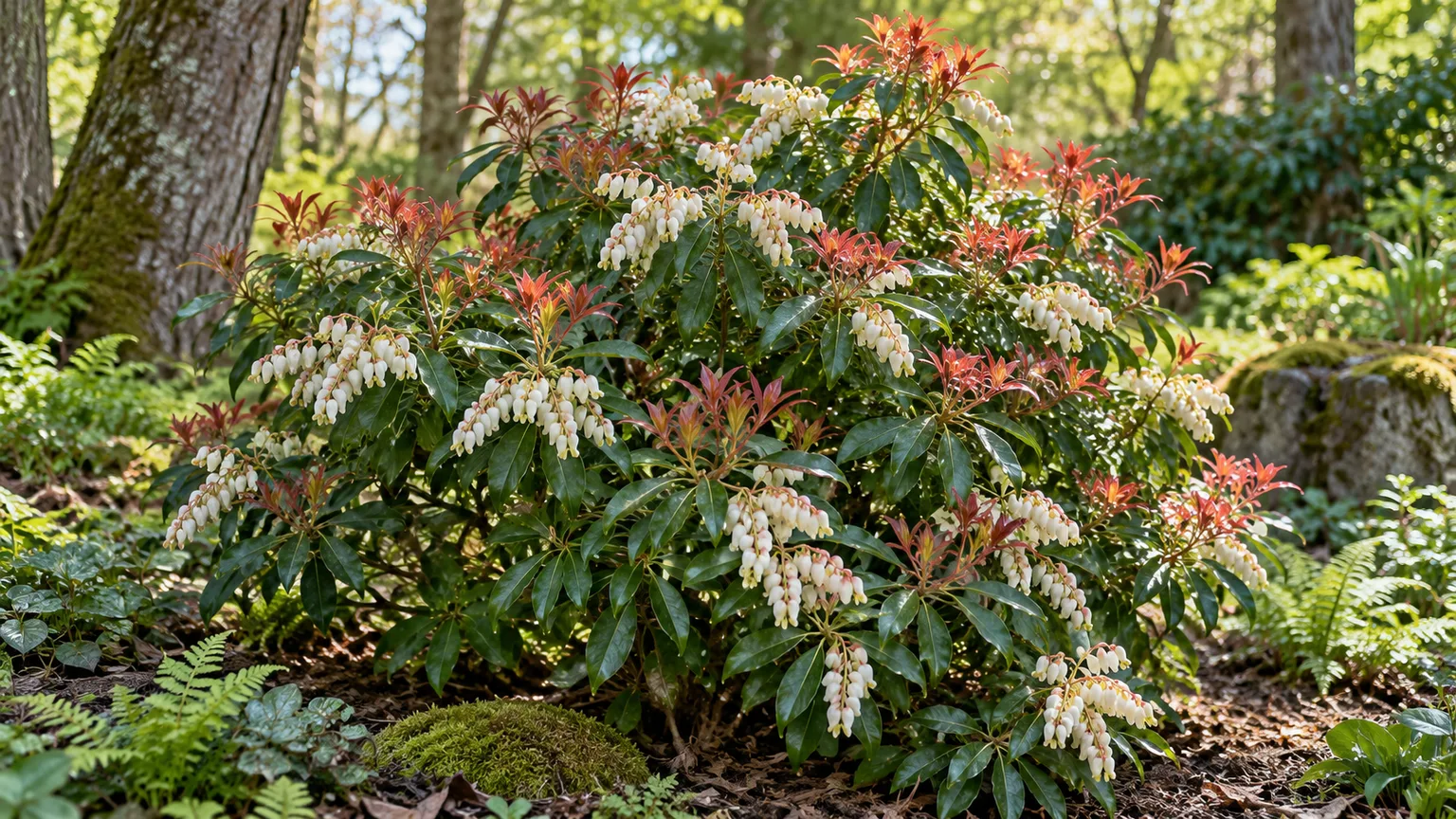
Japanese pieris (Pieris japonica) is a slow-growing broadleaf evergreen prized for two seasonal displays: pendant chains of small, bell-shaped flowers in spring and, on many cultivars, fresh copper-red or pink new leaves. It is sometimes called Japanese andromeda or lily-of-the-valley shrub. The plant is not difficult when its basic needs are met, but it is unforgiving of a poor site: persistent wet soil can damage roots, alkaline soil can limit nutrient uptake, and hot sun or drying wind can stress the foliage.
Start by checking the soil and the place where you intend to plant. Japanese pieris is most dependable in bright filtered light, sheltered from harsh afternoon sun and winter wind, with soil that is acidic, rich in organic matter, consistently moist, and quick to drain. Choose a cultivar whose mature width suits the bed, then water according to conditions rather than following a fixed weekly schedule.
Japanese Pieris at a Glance
| Feature | What to expect |
|---|---|
| Botanical name | Pieris japonica |
| Other common names | Japanese andromeda, lily-of-the-valley shrub |
| Plant type | Slow-growing broadleaf evergreen shrub |
| Typical species size | About 8 to 10 feet tall and 6 to 8 feet wide; cultivars vary |
| Flowers | Hanging clusters of small, urn-shaped flowers, usually white or pink |
| Foliage | Glossy evergreen leaves; new growth may be copper, red, or pink |
| Light | Full sun to partial shade in suitable climates; filtered light is safer in hot regions |
| Soil | Acidic, organic, moist, and well drained |
| Main risks | Lace bugs, root rot in wet soil, leaf damage from sun or wind, ingestion toxicity |
The size and hardiness of a particular plant depend on its cultivar and growing conditions. NC State Extension describes the species as roughly 8 to 10 feet tall and 6 to 8 feet wide, while some named selections stay compact; the same profile lists a broad range of zones, while Virginia Cooperative Extension gives a narrower range for its regional advice. Treat those as starting points, not guarantees: winter wind, drainage, summer heat, and the plant’s genetics can shift how it performs in a specific yard. NC State Extension’s Japanese pieris profile and Virginia Cooperative Extension’s profile are useful for comparing regional guidance.
What Makes Japanese Pieris Special?
Japanese pieris is native to parts of China, Japan, and Taiwan, where it grows in mountainous thickets. Its evergreen leaves keep a garden from looking bare in winter, while flower buds often form well before they open. The spring flowers hang in long clusters, and new foliage can emerge in bright red, bronze, or pink before maturing to green. The combination makes the shrub useful in a woodland border or sheltered foundation bed, especially where you can see its winter buds and spring blooms from a path or window.
This plant’s growth is slow, which is useful when you want a long-lived evergreen accent but less useful if you expect a fast screen. The species can become a substantial shrub over time, while dwarf and compact cultivars work in tighter spaces. Flowers, leaves, and winter buds also vary by cultivar, so choose from a nursery tag that names the selection instead of assuming every Japanese pieris has the same size or color. NC State Extension describes the species’ evergreen habit, fragrant urn-shaped flowers, coppery new leaves, and mature dimensions; the New York Botanical Garden notes the wide range of cultivar sizes and flower colors. The New York Botanical Garden’s Japanese andromeda guide offers a helpful overview of its garden value and site needs.
Choose Light, Shelter, and Space
Bright shade or dappled light is a dependable starting point. In a cool or mild climate, Japanese pieris can tolerate more sun if the soil stays moist and the plant is protected from wind. In regions with hot summers, give it morning sun or filtered light and shelter it from strong afternoon exposure, especially near south- or west-facing walls, paving, or other reflective surfaces. Too much shade can also reduce flowering and leave a shrub sparse, so aim for light shade rather than a dark, enclosed corner.
Wind matters in both summer and winter. Drying wind increases water loss from evergreen leaves, and winter sun can warm foliage while frozen soil limits the roots’ ability to replace that moisture. Avoid exposed roof edges, narrow wind tunnels, and sites where snow slides off a roof onto the branches. Leave enough room for the selected cultivar’s mature width and for air to move around it; crowding makes inspection and maintenance harder. Virginia Cooperative Extension reports that sun, heat, drought, and wind stress make pieris more prone to lace bug problems, while the New York Botanical Garden recommends shelter from harsh afternoon sun and winter wind.
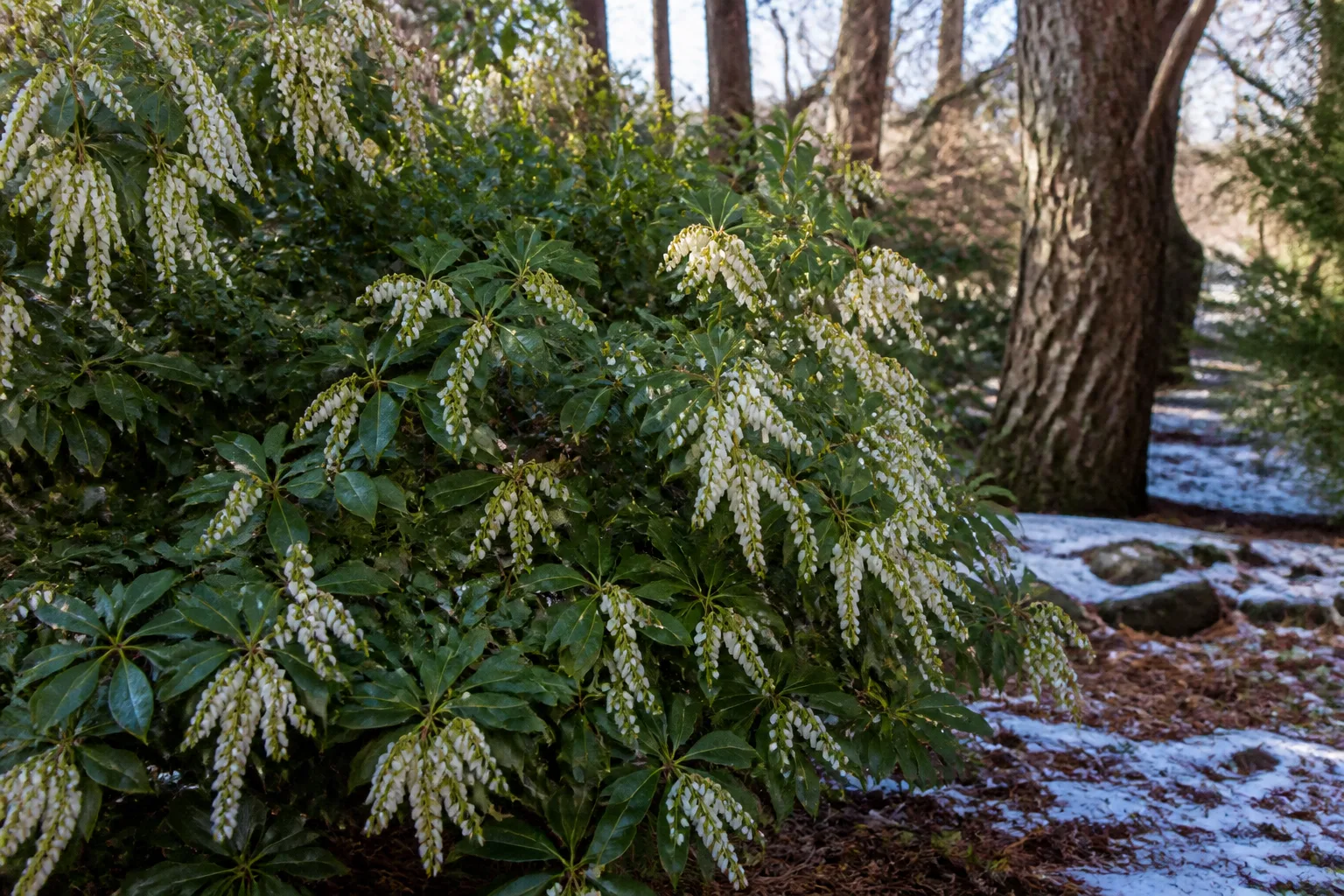
A shaded, protected setting suits Japanese pieris better than a hot, exposed bed.
Prepare Acidic, Well-Drained Soil
Japanese pieris needs soil that is both acidic and well drained. Those conditions are linked but not interchangeable: adding organic matter can improve structure and moisture retention, but it will not correct a persistently high pH or a site that holds standing water. Before planting, test soil pH and watch how the proposed spot drains after a soaking rain. A location that stays saturated for days is a poor fit even if the pH is right.
Sources describe the preferred pH as acidic, with some regional guidance giving a practical range around 5.0 to 6.0. The New York Botanical Garden lists 4.5 to 6, while an Oregon State University Extension Master Gardener response recommends aiming for 5.0 to 6.0. Use a local lab test to decide whether any amendment is needed; changing pH takes time and may need follow-up testing. Do not assume yellow leaves automatically mean the soil needs acidifier, and do not add sulfur, iron, or fertilizer without checking the cause. The New York Botanical Garden’s guide and OSU Extension’s response about yellowing pieris explain the relationship between soil pH, nutrients, and plant health.
In heavy or compacted soil, avoid digging a small planting hole and filling it with a dramatically different mix. That can create a pocket where water collects. Improve a broader planting area with suitable organic matter or choose a raised bed or large container if drainage cannot be corrected. A permeable organic mulch can help keep roots cool and soil evenly moist; keep mulch away from the stems so the crown does not stay damp.
Plant Japanese Pieris at the Right Depth
Plant Japanese pieris in spring or early fall when temperatures are moderate and the soil is workable. Set the root ball at the same level it grew in its container, with the root flare visible at or just above the surrounding soil. A hole two to three times wider than the root ball but no deeper gives roots room to spread while reducing the chance that the shrub settles too low. Loosen circling roots gently if the plant is pot-bound, but do not tear apart a healthy root ball.
Backfill with the soil you removed, firm it lightly, and water slowly so the soil settles around the roots. Add a thin layer of composted bark, leaf mold, or another permeable organic mulch over the root zone, leaving a clear gap around the stems. Avoid burying the crown or piling mulch against the trunk. The New York Botanical Garden recommends matching planting-hole depth to the root ball, giving shrubs room for air circulation, and mulching without covering the base.
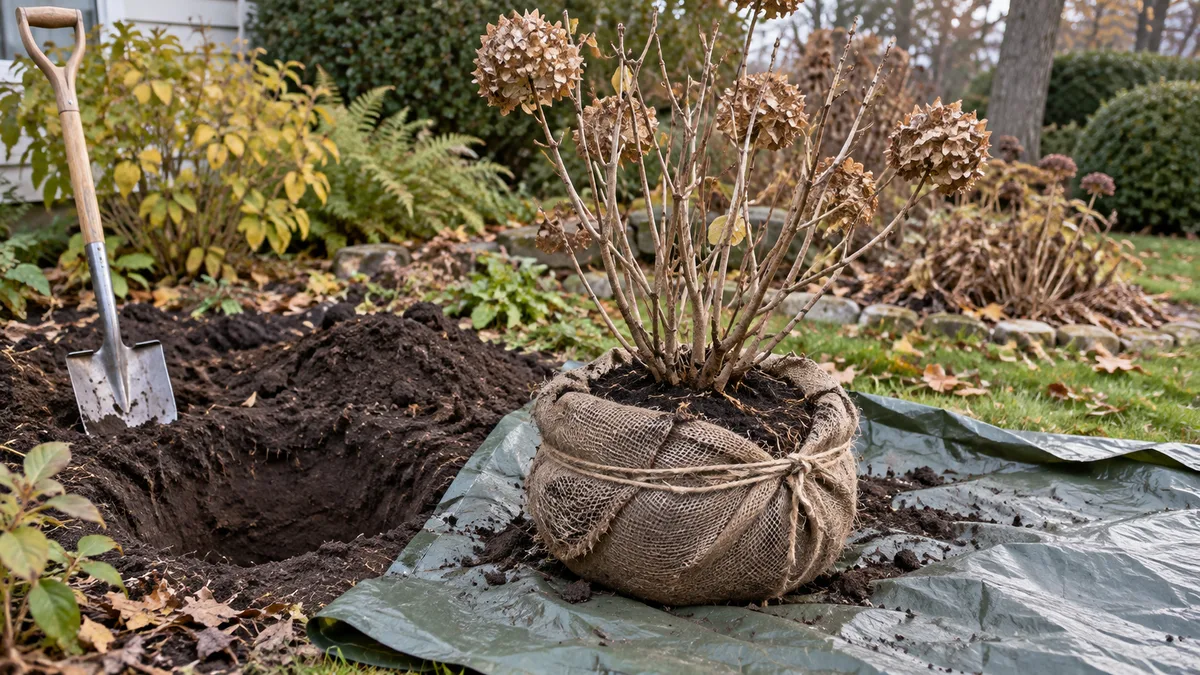
Keep the root ball at its original soil level when planting or moving a shrub.
If you are relocating an established pieris, choose a mild, cool period and preserve as much of the root ball as practical. A large mature specimen can be difficult to move successfully because digging inevitably removes roots; first check whether the shrub is struggling from poor drainage, soil pH, or shade, since correcting the site may be easier than transplanting. Water the shrub before and after the move, then monitor it closely through its first growing season.
Water for Even Moisture
Water newly planted Japanese pieris thoroughly enough to wet the original root ball and the surrounding soil. During establishment, check moisture near the root ball rather than judging by the dry surface of the mulch. Water when that zone is beginning to dry and rainfall has not replenished it. The frequency will change with soil texture, temperature, shade, wind, and the size of the plant, so a fixed weekly rule can leave one shrub thirsty and another sitting in saturated soil.
Once established, the shrub still benefits from watering during extended dry spells, particularly in hot weather or when it grows in a container. Apply water at the soil line so it soaks into the root zone instead of running off or wetting leaves repeatedly. A slow soak is more useful than a brief sprinkle. Check again after watering: if the ground remains soggy or smells sour, pause irrigation and assess drainage rather than adding more water to a wilted shrub.
Mulch helps buffer moisture changes, but it does not replace checking the soil. A layer of organic mulch can reduce evaporation and temperature swings; keep it loose and away from stems. The New York Botanical Garden advises keeping pieris evenly moist while maintaining drainage, and OSU Extension Master Gardeners likewise emphasize consistent moisture and mulching during dry summers.
Fertilize Only When There Is a Reason
Do not treat Japanese pieris as a shrub that automatically needs a yearly dose of fertilizer. Begin with a soil test if growth is weak or leaves are pale, because the problem may be pH, drainage, root damage, or lace bugs rather than a shortage of nutrients. Correcting the wrong issue with fertilizer can add salts around stressed roots without solving the cause.
If a test or local extension recommendation indicates a nutrient need, use a fertilizer labeled for acid-loving shrubs and follow its directions for the plant’s size. Apply it at the time recommended on the label, generally during active growth rather than late in the season when tender growth may be exposed to cold. Do not put concentrated fertilizer in the planting hole or pile it against stems. Overfeeding is not a substitute for acidic soil or good drainage; the New York Botanical Garden specifically cautions against over-fertilizing and recommends testing before nutrient or pH adjustments.
Prune After Flowering
Japanese pieris needs little routine pruning. Remove dead, broken, diseased, or badly crossing branches when you notice them, and make cuts back to a healthy branch or bud. To control shape or size, prune shortly after flowering, while there is still time for the plant to grow and form the buds that will open the following spring.
Avoid shearing the shrub into a tight ball. It naturally develops an upright, rounded form, and repeated clipping can remove flower buds and expose bare interior branches. If the plant has outgrown its space, first check whether a compact cultivar would have been a better fit; severe renovation pruning can leave the plant uneven and reduce the next flower display. The New York Botanical Garden notes that next spring’s buds form in summer and advises pruning soon after bloom; the RHS also describes Japanese pieris as requiring minimal pruning. The RHS profile for Pieris japonica covers pruning, growing conditions, and propagation.
Grow Japanese Pieris in a Container
A container can solve two problems at once: it gives you more control over acidic soil and lets you move the plant out of harsh afternoon sun or wind. Choose a compact cultivar and a sturdy pot with several drainage holes. Use an acidic, free-draining mix intended for ericaceous shrubs, and do not add a saucer that leaves the roots standing in runoff water. Repot only when the root system has filled the pot or the mix has broken down; a pot that is much too large can stay wet for too long.
Container-grown pieris dries faster than an in-ground shrub and needs more frequent checks in warm, windy weather. Feel the mix below the surface and water thoroughly when the root zone starts to dry, letting excess drain away. In winter, the roots in a pot are more exposed to cold and rapid temperature changes than roots in the ground. Move the pot to a sheltered spot, insulate the container if severe freezes are expected, and do not let the root ball dry completely during mild winter weather. The New York Botanical Garden notes that container roots have less insulation and experience larger temperature swings than roots in garden soil.
Choose a Cultivar for Size and Color
Choose by mature size first, then by foliage and flower color. The species can become a large shrub over time, but named selections vary from compact mounds to substantial upright plants. For a narrow border or container, check the actual cultivar label and local mature-size information rather than buying by the species name alone.
‘Cavatine’ is a dwarf selection with long-lasting white flowers, while ‘Dorothy Wyckoff’ is known for dark red buds that open pale pink to white. ‘Mountain Fire’ is selected for vivid red spring foliage. ‘Valley Valentine’ opens deep rose-pink flowers, and ‘Little Heath’ is a compact variegated selection with pink new growth. Cultivar performance and advertised dimensions can vary by region and nursery stock, so allow for the plant to grow beyond its current pot size. Virginia Cooperative Extension lists several common cultivars and their distinctive traits; Fine Gardening describes ‘Little Heath’ as a 3- to 4-foot selection for partial shade and acidic, moist, well-drained soil. Fine Gardening’s regional selection note gives useful detail on that compact cultivar.
Propagate Japanese Pieris
Stem cuttings are the practical way to reproduce a named Japanese pieris cultivar. The RHS recommends softwood cuttings in early summer or semi-hardwood cuttings in late summer; some may need bottom heat to root. This method can take patience, and success depends on healthy material, clean tools, a suitable propagation medium, and consistent moisture without a waterlogged base.
Take several cuttings rather than relying on one. Choose non-flowering shoots with healthy leaves, remove the lowest leaves, and insert the cut ends into a sterile, free-draining medium. Keep them humid and bright but out of direct hot sun while roots form. Do not tug repeatedly to check progress; look for new growth and resistance to a very gentle pull after several weeks. Seed propagation is slower and may not reproduce a named cultivar faithfully, so use cuttings when you want to preserve a particular plant’s foliage or flower characteristics. For a small home garden, buying the cultivar you want is usually more predictable than starting from seed.
Protect Japanese Pieris Through Winter
Winter protection starts with the planting site. A sheltered position reduces leaf dehydration from cold wind, and mulch over the root zone helps limit rapid changes in soil moisture and temperature. Water during dry periods before the ground freezes, but do not saturate the soil; roots in cold, wet ground are vulnerable too. Young plants and shrubs in exposed locations may need a temporary windbreak during severe weather.
Avoid tightly wrapping foliage for the entire season. A screen placed on the windward side can reduce exposure while still allowing air and light to move around the shrub. Brush off heavy snow that threatens to bend branches, but do not strike frozen limbs. Container plants need more protection because their roots cool and warm more quickly than those planted in the ground; move pots to a sheltered location and insulate them during prolonged hard freezes. The New York Botanical Garden notes that broadleaf evergreens can lose moisture from leaves when frozen soil prevents roots from replacing it, and advises protection from strong winter wind.
Hardiness information differs among references and cultivars. NC State Extension lists the species across a broad zone range, while Virginia Cooperative Extension offers narrower regional guidance and the RHS uses a separate UK rating system. Use a locally tested cultivar and your regional extension advice, especially near the warm or cold edge of the plant’s range.
Diagnose Common Japanese Pieris Problems
A damaged leaf does not automatically call for fertilizer or pesticide. Look at the pattern, the newest versus oldest leaves, the undersides, recent weather, and the soil around the root ball before changing care. Several common problems overlap in appearance, so a short inspection can prevent the wrong treatment.
Stippled Leaves: Check for Lace Bugs
Pieris lace bugs feed on leaf tissue and can leave pale stippling or a mottled, faded look across the upper surface. Turn a few affected leaves over and look for the insects, dark specks, or cast skins beneath them. Virginia Cooperative Extension identifies small white dots followed by yellow, white, or brown foliage as a common lace bug pattern, and notes that stressed plants are especially susceptible. The extension’s Japanese pieris profile explains that link between site stress and damage.
Confirm the pest before choosing a control. Restore suitable light, moisture, and shelter first, because a stressed plant is more vulnerable to repeat problems. Avoid spraying on the basis of leaf color alone; pesticide choices and timing depend on the confirmed pest, local rules, and product label. Damaged leaves will not turn green again, so judge improvement by the condition of newer growth.
Yellow Leaves, Browning, and Wilt
Yellow leaves have several possible causes. If new leaves are yellow while veins remain greener, test the pH and compare it with the shrub’s acidic-soil requirement; high pH can make nutrients less available. If the entire shrub is yellowing or growth has stalled, check for standing water, compacted soil, root injury, or poor drainage before adding fertilizer. The New York Botanical Garden lists a preferred pH of 4.5 to 6, and an Oregon State University Extension Master Gardener recommends 5.0 to 6.0 for a yellowing pieris in Oregon.
Brown edges or broad dry patches can follow harsh sun, drying wind, drought, or winter exposure. Note which side of the shrub is damaged and whether the pattern appeared after a heat wave, freeze, or windy period. Wilting while the soil is dry calls for a thorough root-zone soak; wilting while the soil is wet suggests root stress, so adding more water can make matters worse. The RHS lists Phytophthora root rot and leaf spot among possible problems. If decline continues after the site and moisture have been corrected, take a fresh leaf or branch to a local extension office for diagnosis instead of guessing at a fungicide.
Poor Flowering
If a healthy shrub produces few flowers, check light, pruning, and winter conditions before feeding it. Deep shade can reduce flowering, while pruning after the next season’s buds have formed can remove the display. A late freeze may also damage buds even when the evergreen leaves survive. Japanese pieris flowers on older growth, so avoid routine fall shaping and prune only after the current flowers fade. If the shrub is young, newly transplanted, or recovering from drought, give it time to re-establish before expecting a full bloom.
Handle Japanese Pieris Safely
Treat Japanese pieris as an ornamental plant, not an edible or medicinal one. NC State Extension flags high-severity poison characteristics and identifies grayanotoxins; the RHS also warns that the plant is harmful if eaten. Keep children and pets from chewing leaves, flowers, or fallen plant material, and wash hands after pruning. Wear gloves when handling cuttings, then collect and discard trimmings where animals cannot reach them.
The ASPCA lists Japanese andromeda as toxic to dogs, cats, and horses and reports vomiting, diarrhea, weakness, and cardiac effects among possible signs. If a person or animal may have eaten any part of the plant, do not wait for symptoms or try a home remedy: contact a veterinarian, local poison center, or an appropriate medical professional and provide the plant’s name. The ASPCA’s plant entry and Pet Poison Helpline’s Japanese andromeda guidance identify the pet-ingestion risk and where to seek help.
Conclusion
Japanese pieris performs best when you match the shrub to the site before planting: choose filtered light and shelter, confirm acidic soil, and rule out poor drainage. Plant at the original root-ball depth, keep moisture even without leaving roots wet, and prune just after flowering so you preserve the next display. If foliage fades or flowers disappoint, inspect the leaves and root zone before applying fertilizer or pest treatments; the cause is often a correctable mismatch in light, moisture, pH, or exposure.



