Japanese Barberry Care: How to Grow and Prune the Shrub
Learn Japanese barberry care, from sun and soil to watering and pruning, plus the local rules, spread risks, and alternatives to consider before planting.
Should You Grow Japanese Barberry? Check Local Risk First
Before choosing a spot or buying a plant, check whether Japanese barberry is restricted, discouraged, or listed as invasive where you live. Rules can differ by state, county, and municipality, and the status of a named cultivar may not match the rules for the species. Start with your state’s invasive-plant council or agriculture department, then confirm with a local extension office; if sale or planting is prohibited, do not try to work around the rule with a different cultivar.
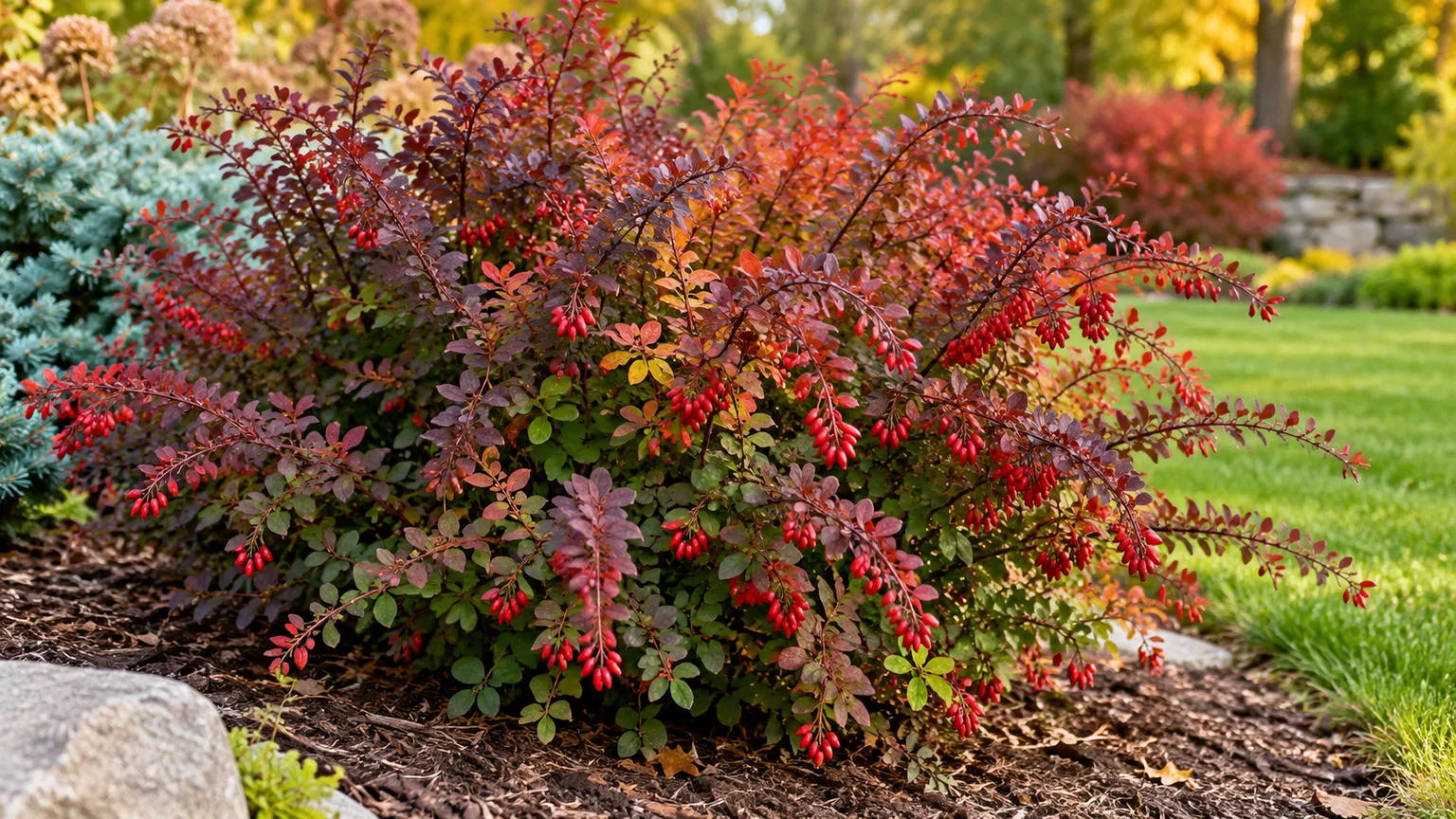
This check matters because Japanese barberry, Berberis thunbergii, can escape a garden. Birds eat the red berries and move seeds beyond the planting bed, while established plants can send up root suckers. In forests and other natural areas, dense stands can displace native vegetation. The National Park Service’s profile of Japanese barberry describes how plants spread and why land managers remove them near natural habitats. If your garden sits beside woodland, a stream corridor, conservation land, or a park, a regionally native shrub is usually the more responsible choice even where barberry is technically allowed.
The care instructions below are for locations where growing the plant is legal and the gardener can monitor it. A low-maintenance shrub is not automatically a low-impact shrub: ease of survival can be exactly what lets a non-native plant establish outside the garden. If local guidance says to avoid it, skip the purchase and ask a native-plant nursery or extension educator for a substitute with a similar mature height, light preference, and screening function.
Identify Japanese Barberry Before You Plant
Japanese barberry is a dense, rounded, deciduous shrub. A typical plant grows about 3 to 6 feet tall and 4 to 7 feet wide, though cultivar size varies. Small oval leaves appear on short shoots along arching branches; foliage may be green, gold, burgundy, or variegated, depending on the selection. In spring, small pale-yellow flowers can sit partly hidden beneath the leaves. Glossy red, oblong berries often remain after the leaves drop.
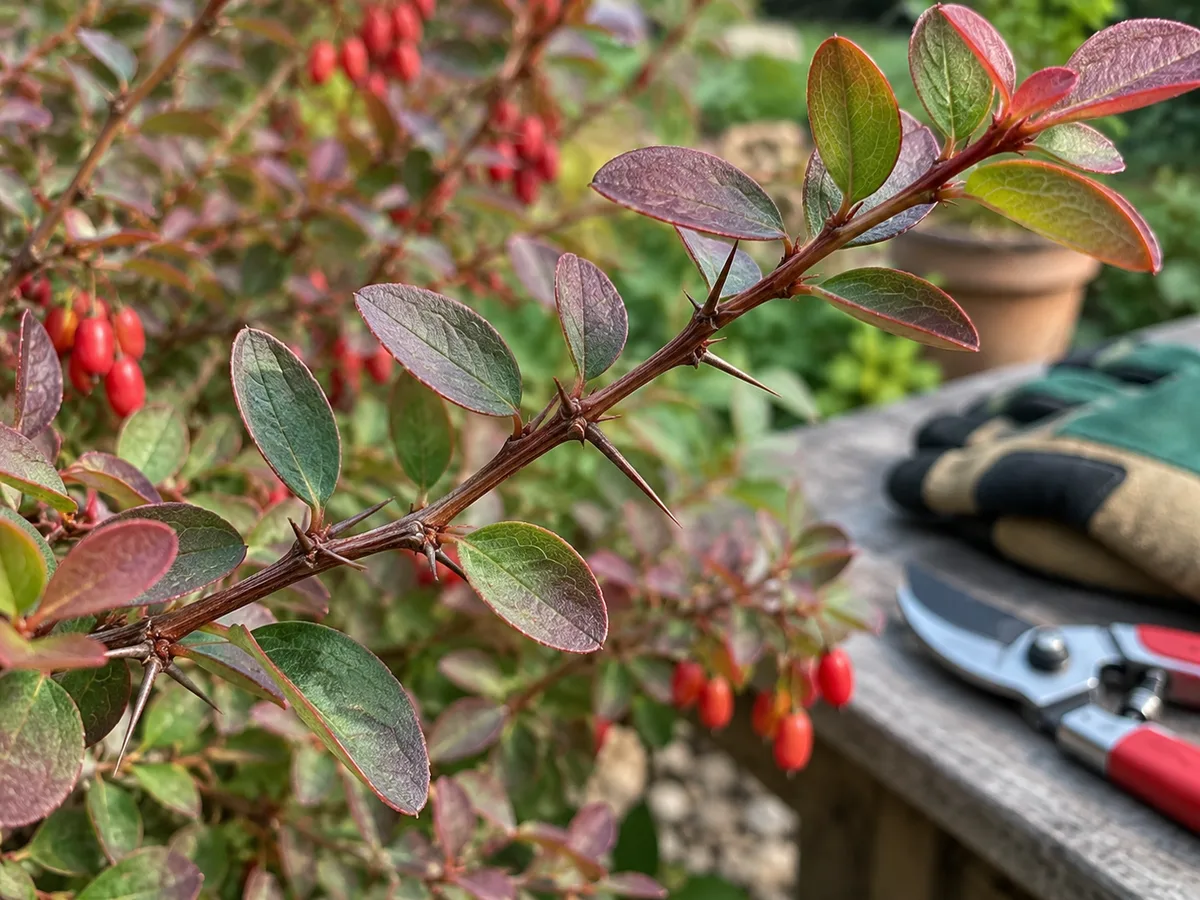
The most useful field clue is a single sharp spine at each node along the stem. That feature, combined with small simple leaves and persistent red berries, helps distinguish it from some other shrubs called barberry. Do not rely on leaf color alone: purple-leaved and golden cultivars are still Japanese barberry, and young plants may look greener than the mature specimen pictured on a nursery label. For a detailed botanical description, see NC State Extension’s plant profile.
A mature shrub can look compact while spreading beyond its visible canopy. Check the ground around the crown for new shoots and seedlings, especially beneath bird perches, fences, and nearby trees. Identification and monitoring are part of care for this species, not optional extras after planting.
Choose a Site That Fits the Shrub
Japanese barberry tolerates a wider range of conditions than many ornamental shrubs, but tolerance does not mean every location will produce attractive growth. Think first about the plant’s full mature width, sharp stems, seasonal leaf color, and potential spread. Place it only where local guidance permits and where you can inspect the base and surrounding bed without walking through the thorny canopy.
Avoid narrow paths, play areas, gates, and spots where branches will brush against people, pets, or maintenance workers. Do not use a thorny hedge as a shortcut for security if it will encroach on a sidewalk or neighbor’s property. Allow room for mature spread rather than planting multiple shrubs close together to create a quick wall; tight spacing hides seedlings and makes pruning more hazardous. Keep the planting away from natural edges where berries or root fragments can establish in places that are harder to monitor.
Sun Exposure and Foliage Color
For the fullest, most colorful growth, choose a position with full sun, roughly six or more hours of direct light. Japanese barberry can tolerate partial shade, but the foliage may be less vivid and the shrub can become more open or uneven as it reaches for light. Purple and red selections generally develop stronger color when they receive ample sun; in very hot climates, some afternoon shade may reduce leaf scorch.
A shaded site does not make barberry safe from spreading. Plants can persist under lower light and respond with stronger growth when they reach a brighter opening, so do not assume a woodland edge is a good containment zone. If your yard is mostly shaded, match the replacement to local conditions instead of planting barberry simply because it survives there.
Soil and Drainage
Well-drained soil is the key requirement. The shrub can grow in clay, loam, or sandy ground and handles a range of pH levels, but persistently saturated soil deprives roots of oxygen and raises the risk of root problems. If water remains in a planting hole long after rain, choose a different site or a species adapted to wet conditions; adding a little compost will not fix chronic poor drainage.
Do not dig a much deeper hole and bury the root crown to compensate for heavy soil. Set the shrub at the same depth it grew in its nursery container, loosen compacted soil around the planting area, and direct excess water away from the crown. Japanese barberry is drought tolerant after establishment, but that does not mean a newly transplanted root ball should be allowed to dry repeatedly.
Plant Japanese Barberry Correctly
If the plant is legal and appropriate for your site, plant in early fall or spring when weather is mild and the ground is workable. Fall planting gives roots time to settle before summer heat, while spring planting is useful in colder areas or where winter exposure is severe. Avoid planting into frozen soil, during a heat wave, or immediately before a long dry spell.
Water the container before planting so the root ball is evenly moist. Dig a hole about twice as wide as the root ball and no deeper than its height. Remove circling roots gently, position the root crown level with the surrounding soil, then backfill with the soil you removed. Water slowly to settle the soil and close large air pockets; do not stomp it hard enough to compact the root zone.
Do not amend only the hole with rich potting mix or fertilizer. A sharply different pocket can hold water around the roots or discourage them from growing outward into the surrounding soil. A 2- to 3-inch mulch layer can help moderate moisture and temperature, but keep mulch a few inches away from the stems so bark stays dry and visible. Label the shrub with its cultivar name and keep the plant receipt; a reliable identity matters when local rules distinguish among cultivars.
Water and Mulch During Establishment
During the first growing season, check the root ball and surrounding soil regularly. Water deeply when the upper few inches begin to dry, then allow excess water to drain rather than giving frequent shallow sprinkles. Hot, windy weather and sandy soil shorten the interval between checks; cool weather and heavy clay lengthen it. A finger test beside the root ball is more useful than following a fixed weekly schedule.
In the second season, reduce supplemental water as roots spread, but keep an eye on long dry periods. Established Japanese barberry usually needs little irrigation, yet drought tolerance does not prevent stress when heat, dry wind, and reflected pavement heat coincide. Wilting or premature leaf drop can indicate drought, but waterlogged roots can produce similar symptoms. Check soil moisture before watering more.
Refresh mulch only when it has thinned; a consistent layer is more helpful than repeatedly piling material against the stems. Remove fallen fruit and branches from the bed if you can do so safely, and inspect for seedlings before they become thorny. Do not blow berries or cuttings into a wooded edge or storm drain. The goal is to keep the plant’s immediate surroundings visible and manageable.
Fertilize Only When Growth Needs It
Japanese barberry usually does not need regular fertilizer in average garden soil. Heavy feeding can create soft, fast growth that requires more pruning and may increase the amount of material a gardener has to manage. If leaves are pale or growth is unusually weak, first check drainage, light, root disturbance, and soil moisture; those problems are more common explanations than a simple fertilizer shortage.
Use a soil test if you suspect a nutrient deficiency, then follow the test’s recommendation and product label. If a nutrient amendment is warranted, apply it in the growing season at the directed rate rather than scattering a high-nitrogen lawn product around the shrub. Do not fertilize a drought-stressed or waterlogged plant in an attempt to force recovery. Correct the root-zone problem first and reassess new growth.
Prune for Health and Safe Access
Pruning is optional for a naturally rounded shrub, but it can remove dead wood, open a crowded center, and keep branches away from a walkway. Wear puncture-resistant gloves, long sleeves, eye protection, and sturdy footwear. Use clean, sharp bypass pruners for small stems and loppers for thicker branches; do not reach blindly into the canopy because thorns can catch skin even when the branches look bare.
For light shaping, prune after spring flowers fade if you want the shrub to retain more berries. Make cuts just above a healthy outward-facing branch or remove an entire old stem at the base; avoid shearing the plant into a tight box, which leaves a dense outer shell and shaded, bare interior. For a neglected shrub, remove no more than about one-third of the oldest stems in a year and repeat over several seasons. Severe cutting can sacrifice flowers and fruit, trigger vigorous shoots, and expose the gardener to a large mass of thorny debris.
Step back between cuts and check that the finished plant still fits its site. If branches have reached a path or neighboring property, do not prune them in a way that creates an unsafe pile for someone else to handle. Collect cuttings on a tarp, keep them away from compost that may be shared or spread, and dispose of them according to local yard-waste guidance. If the shrub is invasive locally, contact the relevant extension or land-management office before choosing a removal method.
Propagate Responsibly—or Skip It
Japanese barberry can be propagated from seed or stem cuttings, but making more plants is rarely a responsible choice in regions where it is invasive or restricted. Birds can spread seed beyond the garden, and a cutting that appears contained may later become a source of berries, root suckers, or unwanted volunteers. Do not collect berries to sow, share seedlings, or pass along rooted cuttings unless local guidance clearly permits that cultivar and you have a specific reason to maintain it.
Gardener’s Path describes semi-hardwood cuttings as a way to preserve a named cultivar’s traits, while Better Homes & Gardens notes that seedlings may not come true to the parent plant. That horticultural fact does not override ecological or legal concerns. If you are restoring a permitted landscape, ask a local extension educator whether a verified sterile cultivar is acceptable; otherwise, buy the correctly labeled plant from a responsible nursery rather than propagating it yourself. For most home gardens, directing propagation effort toward a native shrub is the better long-term investment.
Cultivars, Sterility, and Native Substitutes
Cultivars differ in height, width, growth habit, and leaf color. ‘Crimson Pygmy’ is a compact, purple-leaved type; ‘Aurea’ has yellow-green foliage; and ‘Rose Glow’ has mottled pink and purple new growth. Read the nursery tag for the mature dimensions instead of assuming that a small pot means a dwarf shrub. A compact selection can still outgrow a narrow path or need monitoring.
Some newer cultivar groups are described as sterile, including Sunjoy and WorryFree selections listed by NC State. Sterility can reduce seed production, but it does not make a plant native, eliminate every possible route of spread, or automatically exempt it from local restrictions. Confirm the exact cultivar name on the label, verify the claim with a reliable nursery or extension source, and check local rules before buying. Avoid vague tags that say only “thornless,” “dwarf,” or “non-invasive” without a named cultivar and evidence.
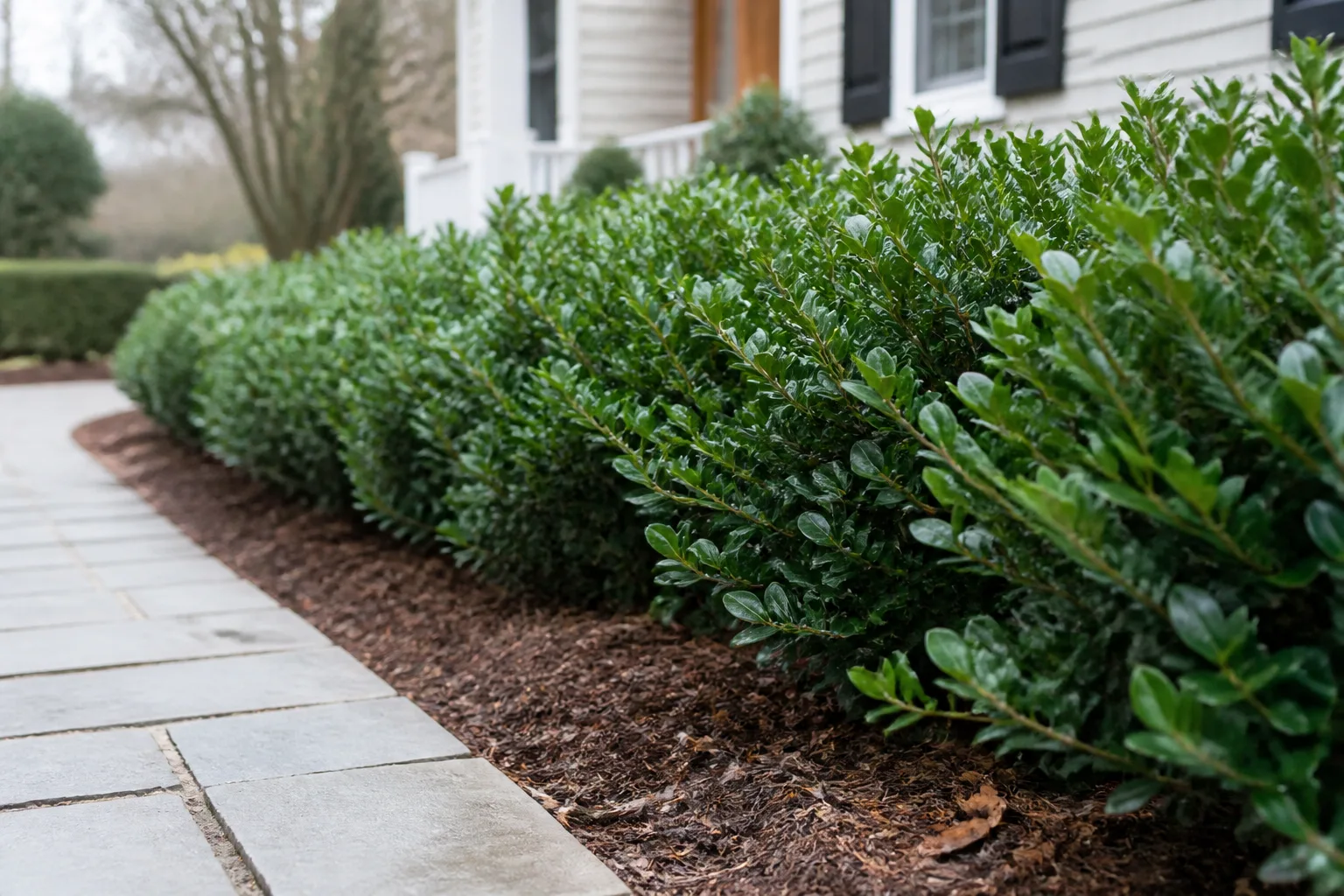
If your goal is a thorny-looking barrier, colorful fall foliage, or a dense hedge, choose a native species that suits your region and site. NC State Extension’s profile of inkberry holly describes an evergreen shrub that can be used in suitable eastern landscapes; a pictured cultivar demonstrates how it can form a neat border. In other regions, local extension offices may recommend native viburnums, serviceberries, ninebark, or other shrubs with the right mature size. Native does not mean “right for every yard,” so compare mature width, soil, light, wildlife value, and local provenance before planting.
Seasonal Care and Winter Protection
In spring, watch for new growth, flowers, and early pest activity. This is a useful time to remove winter-damaged branches and check the bed for seedlings, but avoid broad shearing if you want flowers and berries. Apply mulch after the soil has warmed if the existing layer has thinned, keeping the stem bases clear.
In summer, use soil moisture—not a calendar alone—to decide whether a young shrub needs water. Long hot periods are when newly planted barberry most needs attention; established plants generally tolerate short dry spells. After heavy rain, check that water drains away from the crown and that mulch has not washed into a mound against the stems.
In fall, observe leaf color and remove any seedlings before they develop a larger root system. Do not heavily prune late in the season in cold climates, when tender regrowth may not harden before frost. Established plants generally need no elaborate winter covering within their adapted range; shelter from severe wind may help a newly planted shrub in an exposed site. In spring, inspect for broken branches rather than wrapping the plant tightly with plastic, which traps moisture and can damage stems.
Diagnose Common Barberry Problems
Japanese barberry is hardy, but “hardy” does not mean immune to problems. Diagnosis is easier when you compare the whole plant’s pattern: Are symptoms limited to one branch, clustered near the ground, or affecting every leaf? Did they follow drought, standing water, pruning, or a sudden temperature change? Look at soil and roots before treating foliage.
Yellowing, Wilt, and Root Stress
Yellow leaves on one lower branch may reflect physical injury, shaded interior growth, or damage near the stem. Widespread yellowing, wilting, and leaf drop can follow drought, but they can also accompany roots stressed by poor drainage. Check moisture 2 to 3 inches below the surface near the root ball. If it is dry, water slowly and monitor recovery; if it is saturated, pause irrigation and improve drainage rather than adding more water.
Sudden branch dieback deserves a closer inspection. Scrape a small patch of bark on an affected twig: green tissue just beneath it suggests that the twig is alive, while dry brown tissue may indicate dieback. Prune only confirmed dead wood back to healthy tissue with clean tools. If multiple stems collapse or the crown stays wet, ask a local extension diagnostic service to assess root rot or wilt instead of applying a broad fungicide without a diagnosis.
Aphids, Scale, and Leaf Disease
Aphids gather on tender tips and may leave sticky residue or distorted growth. A focused spray of water can dislodge a small population; repeat as needed while checking the undersides of leaves. Scale insects look like small bumps attached to stems or foliage, and a heavy infestation may require identification before treatment. Avoid spraying an insecticide simply because leaves look spotted.
Leaf spots, powdery growth, or sudden browning can have different causes, including fungal disease, bacterial leaf spot, drought, and wet foliage. Remove heavily affected debris, avoid overhead watering late in the day, and improve air movement by thinning selected stems if the center is congested. A diagnosis from an extension service is especially useful when symptoms return or spread, because fungicides do not cure every cause of decline and cannot repair damaged roots.
Manage Seeds and Unwanted Spread
If you already own a permitted shrub, inspect the ground around it at least once each growing season and again after fruiting. Pull small seedlings while the soil is moist so the root comes out more easily, then check the same patch later; new seedlings can emerge after the first cleanup. Remove fallen berries and cut stems with care, and bag them if local yard-waste rules allow. Do not assume that cutting the top of a mature shrub removes the roots.
Japanese barberry can spread both by seed and vegetatively, which is why a single tidy plant may become a larger maintenance job. Birds are one route by which seeds travel; root suckers can emerge beside the original crown. A multi-year follow-up is more realistic than expecting one cleanup to solve the problem. If the plant is prohibited or established in a natural area, contact local invasive-plant professionals for a control plan. Herbicide use, if considered, must follow the product label and local law; mechanical removal may also require protective equipment and repeated checks.
The tick connection deserves precise wording. Japanese barberry is associated with humid, dense cover that can support blacklegged ticks, but the shrub does not create Lyme disease and removing one bush cannot guarantee a tick-free yard. A long-term Connecticut study indexed by PubMed found lower abundance of infected adult ticks in managed barberry plots than in intact stands, while showing that outcomes changed as vegetation grew back. Treat that as evidence that sustained management can alter habitat at studied sites, not as a promise about every property.
Safety Around Thorns, People, Pets, and Ticks
The thorns are the immediate hands-on hazard. Keep the shrub away from narrow walkways and places where children or pets run, use protective clothing for pruning, and never handle a branch by pulling it through your hand. Work from the outside in with clean cuts, place debris directly onto a tarp or into a bin, and check that no sharp pieces remain in the lawn or compost path.
Treat the berries as ornamental rather than food, and do not eat plant material unless an expert has confirmed its identity and edibility. Keep pets from chewing branches or fruit; if someone ingests an unknown plant and develops symptoms, contact a poison-control professional or veterinarian for advice. That precaution is separate from the well-documented concerns about spread and tick habitat.
If ticks are a concern in your region, use a broader yard plan: keep paths clear, reduce unmanaged brush near frequently used areas, follow public-health advice for repellents and tick checks, and seek local guidance on habitat management. The research on barberry and tick abundance is important, but it does not replace standard tick precautions or make a particular shrub a diagnosis of disease risk.
Conclusion
Japanese barberry is adaptable and visually distinctive, but its care begins with a decision about whether it belongs in your landscape. Check local restrictions and invasive-plant guidance first; if the plant is discouraged, near natural habitat, or difficult to monitor, choose a regionally native shrub instead.
Where growing it is allowed, give the shrub sun for strong foliage color, well-drained soil, room for its mature spread, and consistent water during its first season. Skip routine fertilizer, prune selectively with thorn protection, and monitor for berries, suckers, and seedlings. A verified sterile cultivar may reduce seed production, but it does not remove the need to check the label, local rules, and root growth. The most responsible maintenance routine is the one that keeps the shrub healthy while preventing it from becoming someone else’s invasive-plant problem.



