Jade Plant Dropping Leaves: Causes and Fixes
Jade plant dropping leaves? Compare leaf texture, soil moisture, and root health to tell normal aging from watering, light, temperature, or pest stress.
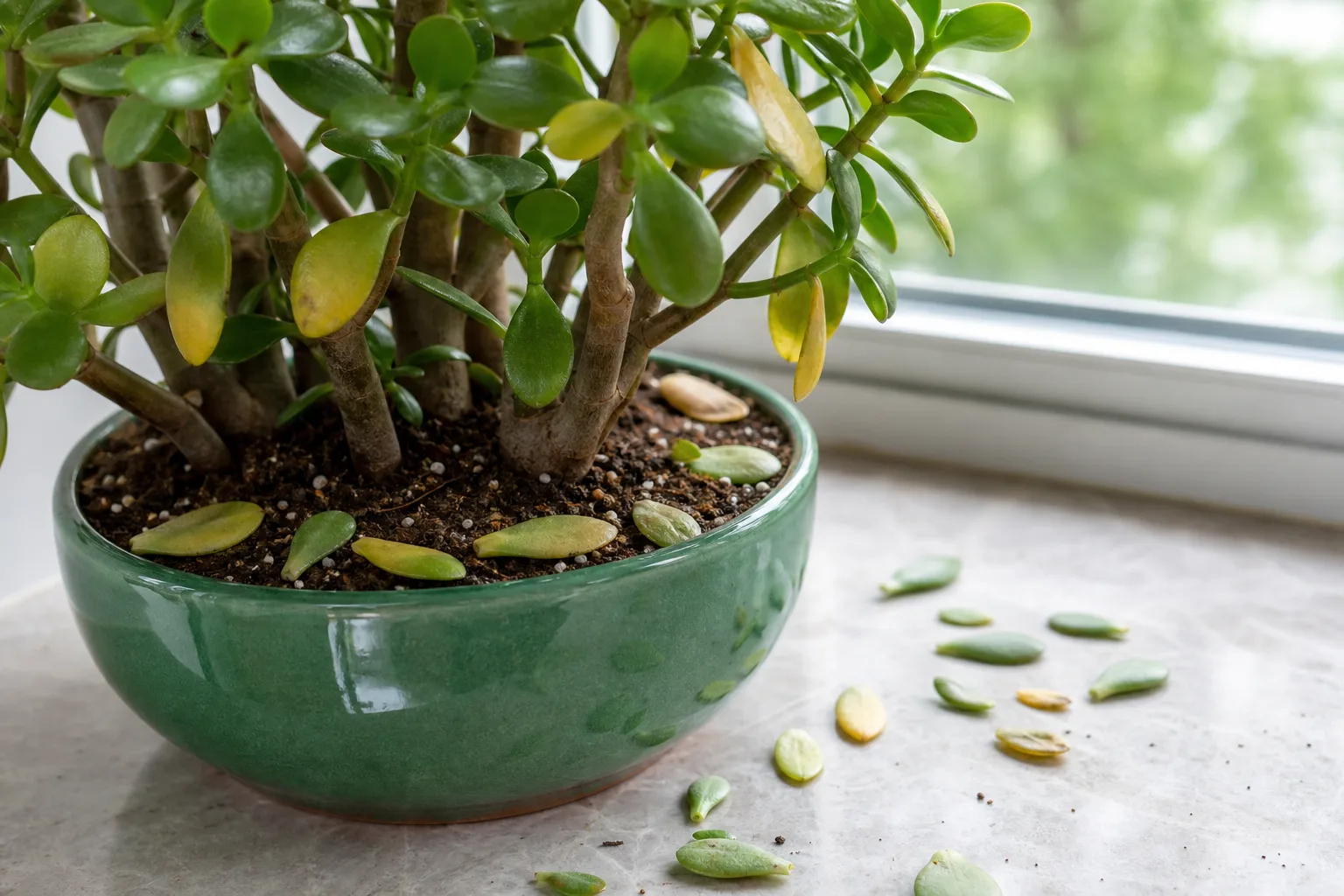
A jade plant (Crassula ovata) may shed an occasional old leaf as its trunk thickens, but a shower of leaves, bare branch tips, or leaves falling while still green deserves a closer look. The most common triggers are a root zone that stays wet too long, prolonged drought, insufficient light, or a sudden change in temperature or location. Because those stresses can produce overlapping symptoms, check the leaf, the soil, and the plant’s recent history together before changing its care.
If the leaves are turning yellow and soft while the potting mix remains damp, hold off on watering and check drainage. If leaves are thin and wrinkled and the mix is dry through the root ball, a thorough drink may be due. A plant with firm green leaves that began dropping after a move may need a stable spot and time, not an emergency repot.
Is a Jade Plant’s Leaf Drop Normal?
Some leaf loss is part of a jade plant’s slow change from a leafy young succulent into a small, woody shrub. On an otherwise firm, actively growing plant, an older leaf or two low on a branch may yellow, dry, and fall while the newest leaves at the tips remain plump. Wisconsin Horticulture Extension describes this gradual loss of lower leaves as natural, and the New York Botanical Garden’s jade plant guide notes that mature plants take on a more tree-like form as lower foliage drops.
Normal aging is usually gradual and localized. It is less reassuring when leaves fall from several parts of the plant at once, the newest leaves are affected, the stem softens, or the soil stays wet for days. The rate matters less than the pattern: one old bottom leaf and healthy tip growth tell a different story from widespread yellowing and a bare upper branch.
Before intervening, note which leaves are falling, whether they are firm or limp, and what the potting mix feels like several centimeters below the surface. Also ask what changed in the past few weeks: watering frequency, window exposure, a cold snap, a heater turning on, repotting, or a newly purchased plant settling into a different home. That short history often narrows the cause more accurately than a calendar-based watering rule.
The surface alone can mislead. A crusty, dry top layer can sit above damp mix around the roots, especially in a deep pot; a wooden skewer inserted near the pot’s center can reveal whether the lower mix is still wet. Pot weight is another useful reference: lift it after watering and again as it dries so you learn what “dry enough” feels like in your particular container. Cheap moisture meters can be inconsistent in coarse succulent mixes, so use them as one clue rather than a verdict.
Diagnose the Pattern Before Changing Care
Do not diagnose a jade plant by leaf color alone. Yellowing can accompany excess moisture, drought, low light, cold exposure, or natural aging; even wrinkling can mean either dry roots or roots damaged by soggy soil. The useful combination is leaf feel + soil moisture + location of leaf loss + recent changes.
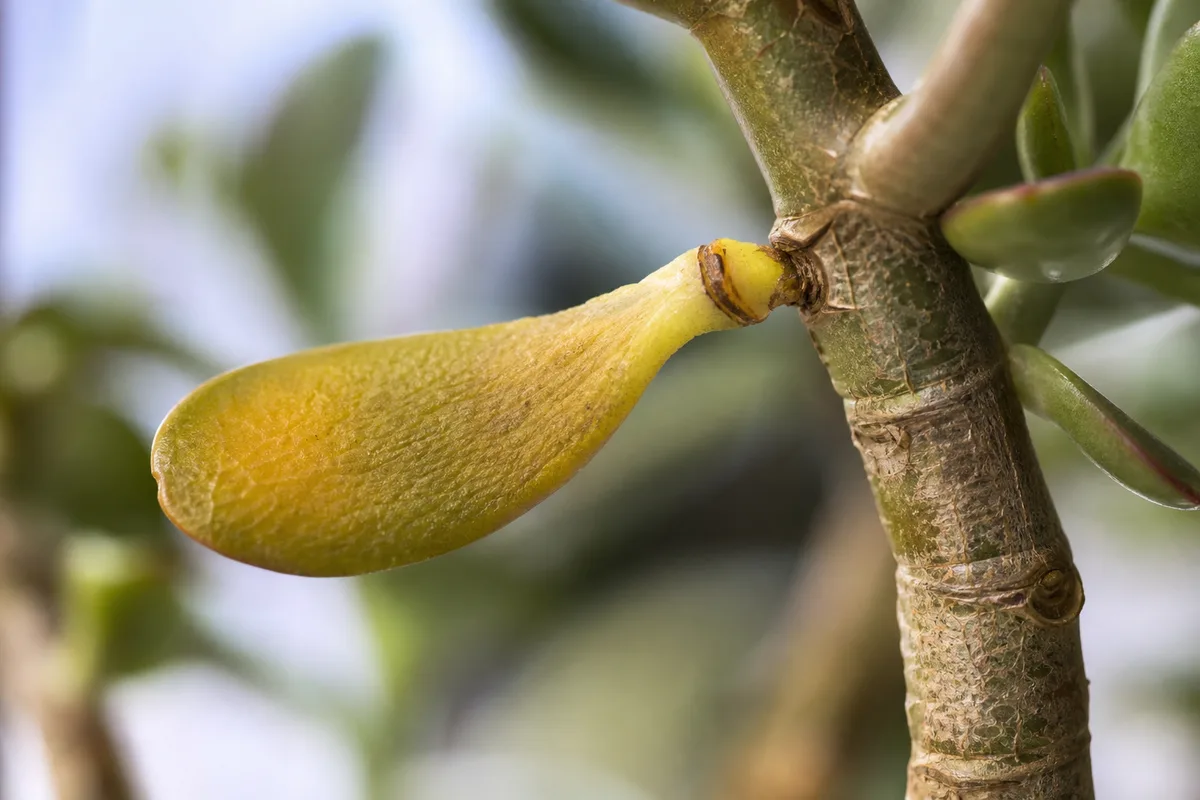
A few older lower leaves may fall naturally; look for changes in the newer growth, stems, and potting mix before deciding the plant is in trouble.
Soft or yellow leaves with wet soil
Leaves that feel unusually soft, translucent, swollen, or mushy alongside wet mix point toward excess water or failing roots. Check whether the inner pot has a drainage hole, whether water is trapped in a decorative cachepot, and whether the mix is still damp well below the surface. A sour smell, blackened stem base, or roots that are dark and soft makes root damage more likely than simple overwatering.
Do not add water because the leaves look limp. When roots have lost their ability to absorb water, the canopy may look thirsty even while the soil is saturated. More water extends the problem; inspect the roots only if the mix remains wet, drainage is absent, or stems are softening.
Wrinkled leaves with dry soil
If the leaves have become thinner, puckered, or leathery and the root ball is dry, underwatering is plausible. A potting mix that has pulled away from the sides may have become difficult to wet evenly; a quick splash can run down the gap and out of the drain hole while the center stays dry. Use a finger or wooden skewer to check below the top layer, not just the surface.
When the mix is dry through most of the pot and the roots and stem remain firm, water slowly over the whole surface until excess runs from the drainage hole. Empty the saucer afterward. The leaves may take days to plump back up, and leaves already dried or shed will not reattach.
Firm green leaves and sudden changes
A firm, green leaf that detaches with a light touch can follow a sudden environmental shift, especially after moving the plant from a stable bright room to a colder, darker, or much sunnier place. Recently purchased or repotted jade plants can also shed some leaves while adjusting. If the stems remain firm and the soil is not persistently wet, stabilize its conditions and avoid stacking more changes on top of the first one.
Green leaf drop is a clue to review recent changes in light, temperature, and watering rather than proof of either thirst or root rot.
Overwatering, Poor Drainage, and Root Rot
Overwatering is not simply giving a jade plant a large drink once. It is keeping roots in wet, oxygen-poor mix for too long, often because frequent watering, a blocked drain hole, a water-holding potting mix, a pot that is much larger than the root ball, or water left in a cachepot prevents the root zone from drying. Jade stores water in its leaves, stems, and roots, and Wisconsin Horticulture Extension recommends well-drained conditions and a high-porosity succulent or cactus mix.
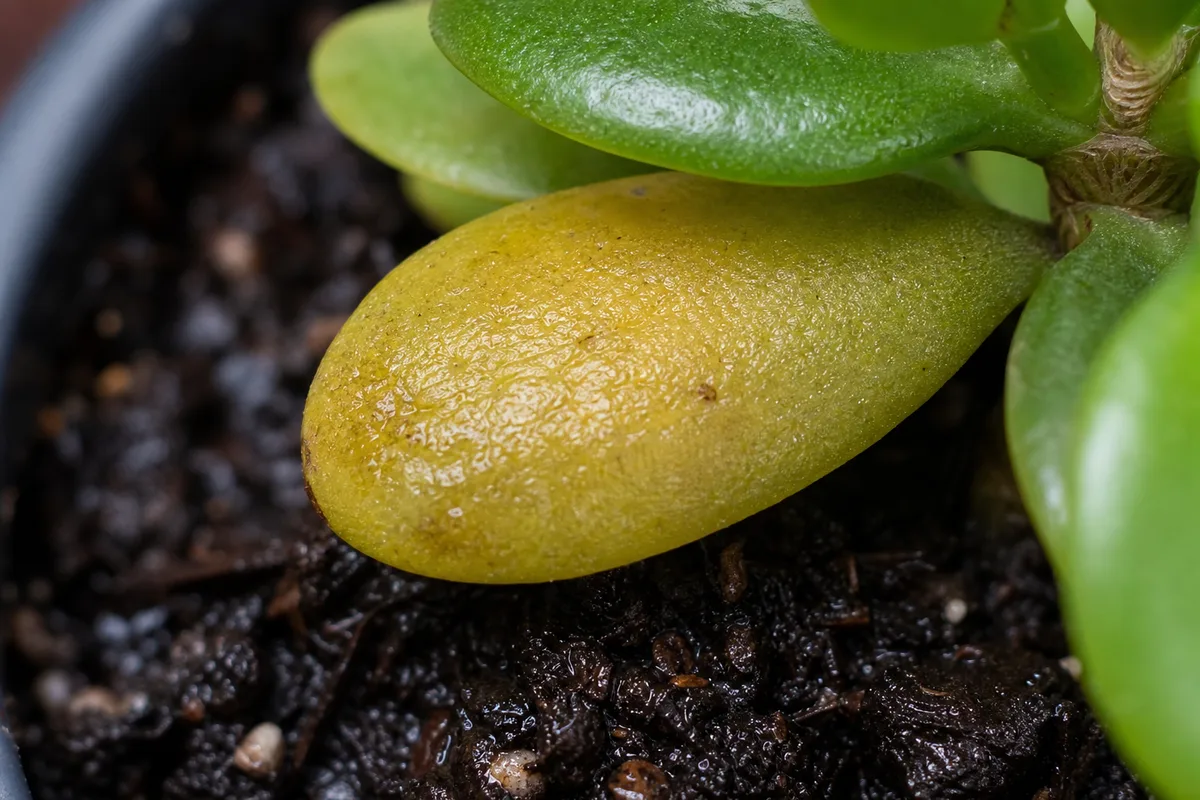
Wet mix plus swollen, soft tissue points toward excess moisture; confirm with drainage and root checks before watering again.
Check the whole drainage path first. Lift the nursery pot out of its decorative cover, make sure the hole is open, and empty any saucer. If the mix is merely damp but the plant is firm, let it dry; do not unpot it just because a leaf dropped. Repotting healthy roots adds disturbance without correcting anything.
Container material changes how quickly that mix dries. Unglazed clay loses moisture through its sides; glazed ceramic and plastic do not, so a jade in either may need longer between waterings. This does not make one material universally right—the important part is adjusting your checks to the pot you own and ensuring the plant is not sitting in runoff.
Unpot the plant if the mix remains wet for an unusually long time, the base is soft, or several leaves are yellowing and dropping while soil stays damp. Healthy roots are generally firm; roots that are brown or black, mushy, hollow, or foul-smelling are damaged. Penn State Extension’s indoor plant disease guidance describes root rot as associated with overwatering and blackened, mushy roots.
If rot is present, remove loose wet mix and use clean scissors to cut away only roots that are clearly soft and dead. Move the plant to a clean pot with an open drainage hole, sized close to the remaining root system, and fresh porous succulent mix. A heavily damaged stem may not recover, so keep any firm upper cutting as insurance rather than repeatedly watering a collapsing base. Do not layer gravel in the bottom of a pot as a substitute for a drain hole or airy mix.
Underwatering and a Dry Root Ball
Jade plants tolerate dry spells, but they are not meant to be ignored until every leaf is depleted. During active growth, the New York Botanical Garden advises letting the mix dry between thorough waterings; in lower winter light, a jade generally uses water more slowly. Actual timing depends on pot size, root mass, mix, airflow, temperature, and light, so “once a week” is not a dependable rule.
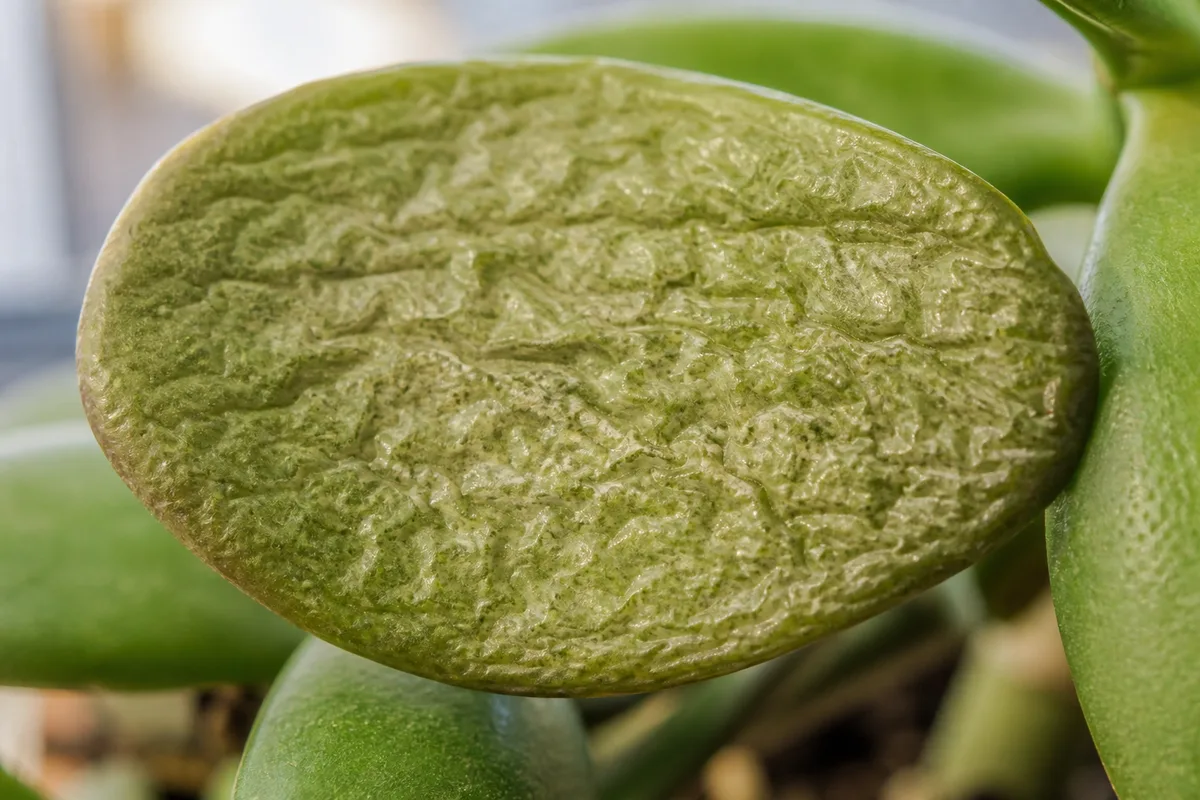
Thin, wrinkled tissue with a dry root ball is more consistent with drought than with a saturated root zone.
When the potting mix has dried through and roots are still firm, water the root ball evenly rather than wetting just one edge. Let water drain freely, then do not water again until the mix has dried through much of the pot. If water races down the sides without wetting the center, re-wet slowly in two passes or briefly stand the pot in shallow water, then let it drain completely; do not leave the plant sitting in water.
The tricky exception is a jade with dry-looking, wrinkled leaves but wet soil. That combination can indicate damaged roots, not a need for more water. Check for mushy roots or a soft stem base before watering, especially if the plant has been in heavy soil or a pot without drainage.
Too Little Light or an Abrupt Sun Change
Insufficient light usually develops as a pattern, not an overnight event: new stems stretch, spaces between leaf pairs lengthen, growth leans toward a window, and the plant may lose leaves from shaded or inner branches. The North Carolina Extension Gardener Plant Toolbox lists leaf fall and root rot among problems associated with overwatering, while Wisconsin Extension notes that low light can produce drooping stems and deep-green leaves. A jade may remain alive in a dim room but become thin and unstable there.
Move it nearer a bright window or provide a grow light, but do not take a plant from a dim corner and place it in intense midday sun all at once. The New York Botanical Garden recommends plentiful sunlight with protection from the harshest midday sun, and Wisconsin Extension advises gradually acclimating indoor jades before moving them outdoors. Increase exposure over several days to a couple of weeks, watching for bleached, pale tan, or crisp patches that indicate scorch. Red margins can be a normal response to strong light; pale, dry patches after a sudden move are different.
Light and water needs change together. In a bright, warm room in spring and summer, a jade may use water faster than it does in a shaded room during short winter days. When daylight declines, keep the plant as bright as your home allows but check the soil more carefully before watering; do not continue the same summer interval simply because it used to work. A weak winter plant may shed a few leaves, but increasing watering in a dim room can compound the stress by keeping the soil wet longer.
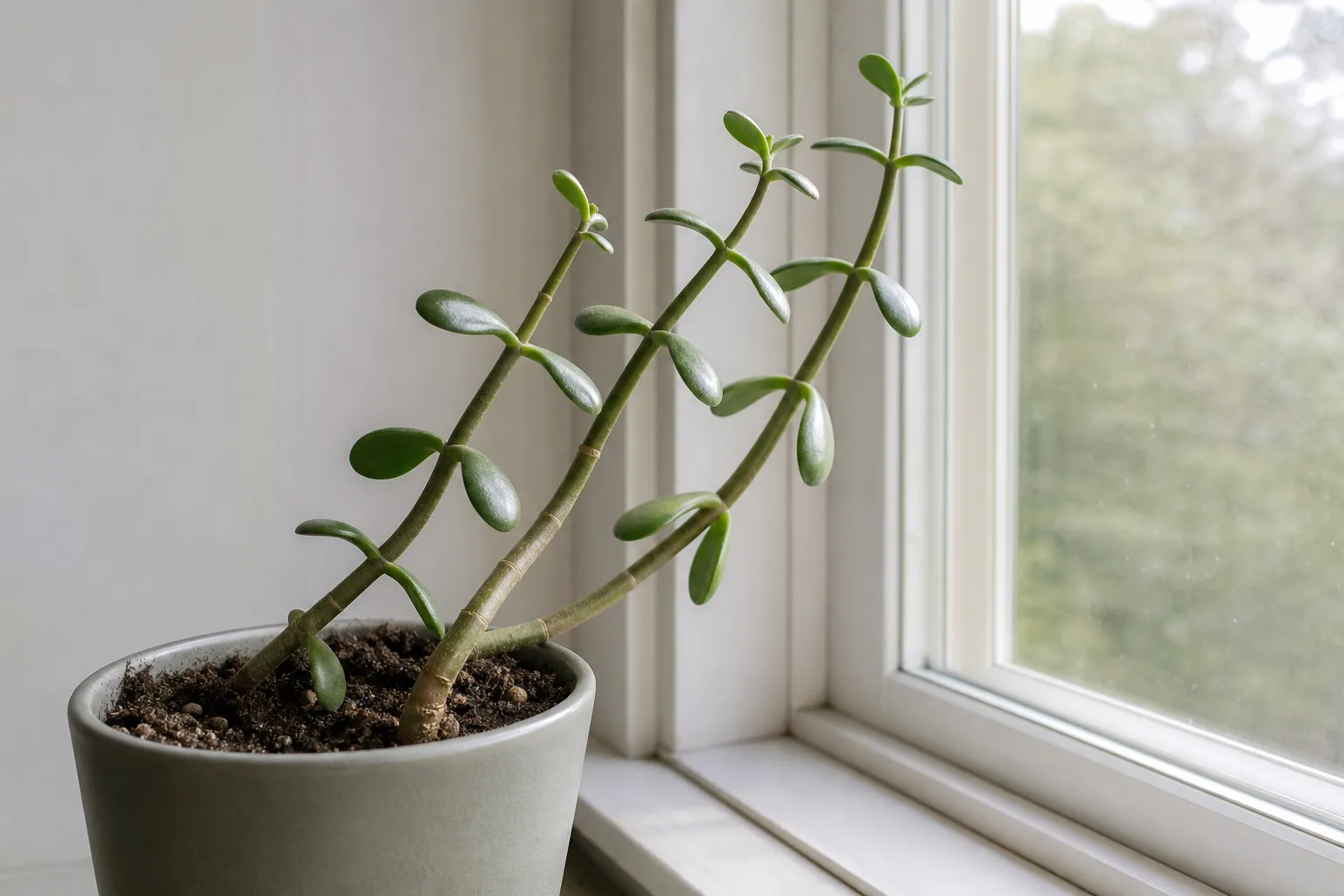
Long gaps between leaves and a leaning stem suggest a gradual light shortage; scorched patches after a move suggest too much direct sun too quickly.
Cold, Heat, and Recent Relocation
Jade plants can shed leaves after a cold window, an open exterior door, a heating vent, or a fast move between very different rooms. A plant near glass may experience a colder root zone than the room thermostat suggests, while a heater or air conditioner can create a sharp local temperature swing. The New York Botanical Garden specifically warns that water that is too cold can shock a jade and cause leaf drop.
Choose a bright, stable position away from cold drafts, hot blasts, and glass that becomes very cold overnight. If you move a jade outdoors for warm weather, acclimate it gradually to stronger light; bring it back in before frost. A sudden drop after a move is not a reason to keep shuttling the plant between rooms—consistent conditions make the next diagnosis easier.
Pests, Fertilizer, and Other Less Common Causes
Look closely along leaf joints, stem crevices, and leaf undersides for white cottony mealybugs, small fixed scale bumps, fine webbing, or stippled damage. Pests are less common than watering or light trouble, but sap feeders can add stress and make a weak plant decline faster. Wisconsin Horticulture Extension identifies mealybugs as the most common jade pest and notes that rubbing-alcohol swabs can work, while warning that insecticides may damage succulent leaves.
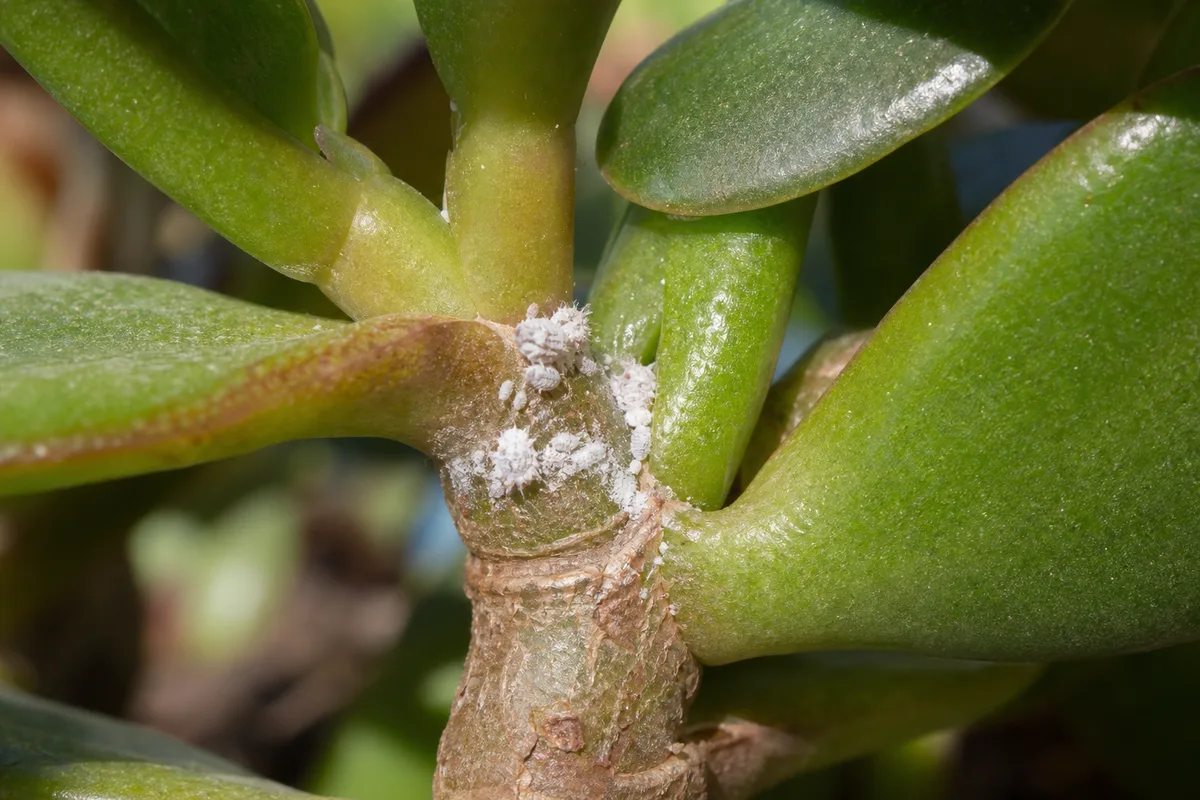
Check crevices and leaf joints, where small cottony mealybug clusters can hide from a quick glance.
Isolate an infested plant, remove visible insects with a cotton swab, and repeat inspections over the next few weeks because hidden insects or new hatchlings can remain. Test any alcohol treatment on one inconspicuous leaf first and follow the label if using a product; succulent leaves can be sensitive. Skip vinegar, leaf-shine oils, and improvised spray mixtures, which can injure foliage without solving a root problem.
Jade does not need a humidifier or routine misting to prevent leaf loss. Average household humidity is adequate according to the New York Botanical Garden; wetting leaves does not fix saturated soil or dehydrated roots. Fertilizer is also not a rescue treatment. If you see a crust of salts or recently applied concentrated feed, pause feeding and review the product rate; do not add fertilizer to a plant whose roots are stressed.
A Careful Recovery Plan for the Next Two Weeks
Start with a brief triage rather than changing water, light, soil, and fertilizer at once. Remove water from the saucer, check whether the drainage hole works, feel leaves at both the top and bottom of the plant, and inspect the soil several centimeters down. Photograph the plant and note where leaves are falling; comparing it again in a week helps distinguish a continuing decline from a few leaves already committed to dropping.
For the first few days, correct the clearest problem and keep the plant’s position stable. If the mix is wet, the first job is drainage and drying; if it is dry and roots are sound, water once thoroughly. During the following week, check whether new leaves are dropping and whether the soil is drying at a reasonable pace. Don’t chase each fallen leaf with a new intervention: old damage can continue to show up after the trigger has been removed, while the important sign is whether fresh damage slows. The practical troubleshooting notes at Petal Republic likewise caution that leaf loss may continue for a week or two after a watering change, so immediate cessation is not a realistic test of success.
If roots are firm and soil drains
If the mix is dry and the leaves are puckered, water thoroughly and drain. If the mix is wet, stop watering until it dries; if the plant is firm and only a couple of old bottom leaves fell, leave it alone. Move a stretched plant to brighter conditions gradually, and give a recently moved plant a steady location before making another adjustment.
Avoid pruning healthy branches or repotting simply to refresh the look of the soil. Jade is slow-growing indoors, and a short interval without visible new leaves does not prove that the treatment failed. Judge progress by whether new leaf loss slows, stems remain firm, and new growth eventually appears.
If roots are dark, soft, or foul-smelling
Take the plant out of the pot, remove only loose saturated mix, trim clearly rotted roots with clean tools, and repot into fresh fast-draining mix in a clean, appropriately sized pot with drainage. Give any cuts a short chance to dry before watering, especially if you removed several roots. Keep the plant in bright indirect light while it settles, then return it to stronger light gradually once it is stable.
Do not expect damaged leaves to recover their old firmness or color. The goal is to stop new damage and preserve firm stems and roots; improvement is measured in weeks, and a plant that has lost much of its root system can take longer. If the main stem is black, soft, or collapsing above the soil line, save a healthy firm cutting if possible rather than trying to nurse rotted tissue.
Once new growth resumes, return to ordinary care gradually rather than immediately feeding heavily or moving the plant into stronger sun. New leaves emerging at branch tips or nodes are more useful evidence of recovery than the old leaves’ appearance. If leaf drop continues despite dry-through watering, bright stable light, and firm roots, inspect again for pests, hidden water trapped inside a cachepot, or a damaged stem that is progressing upward.
Can Bare Jade Stems Grow Leaves Again?
An old lower section of trunk may stay bare permanently; jade plants do not refill every old leaf scar. But a living branch with firm tissue can produce new leaves or side shoots from nodes after the stress is corrected. The New York Botanical Garden notes that jade can initiate new leaf and limb growth from nodes once adverse conditions are corrected.
If a branch is healthy but awkwardly bare, wait until the plant has stabilized before pruning. A clean cut just above a node can encourage branching, but pruning does not fix a wet root ball, low light, or cold exposure. A firm fallen leaf can sometimes be propagated, but a yellow, mushy, or shriveled leaf is a poor candidate; let a healthy leaf callus briefly, then set it on a suitable succulent mix and wait for roots rather than burying or soaking it.
Conclusion
Jade plant leaf drop is easiest to solve when you resist the urge to water or repot on sight. A few old lower leaves may be normal; widespread loss, soft stems, or repeated upper-leaf drop calls for a closer look at soil moisture, drainage, light, and recent temperature changes.
Match the fix to the evidence: let a wet mix dry, water a genuinely dry root ball thoroughly, inspect roots when the soil remains wet or stems soften, and keep the plant in steady bright conditions. Once the cause is corrected, give the jade time to stabilize; healthy stems and nodes can grow new foliage, even though the leaves already lost will not return.



