Jane Magnolia Care: Planting, Pruning & Bloom Time
Grow Jane magnolia in the right light and soil, protect its shallow roots, and learn how to water, prune, and troubleshoot sparse spring flowers each year.
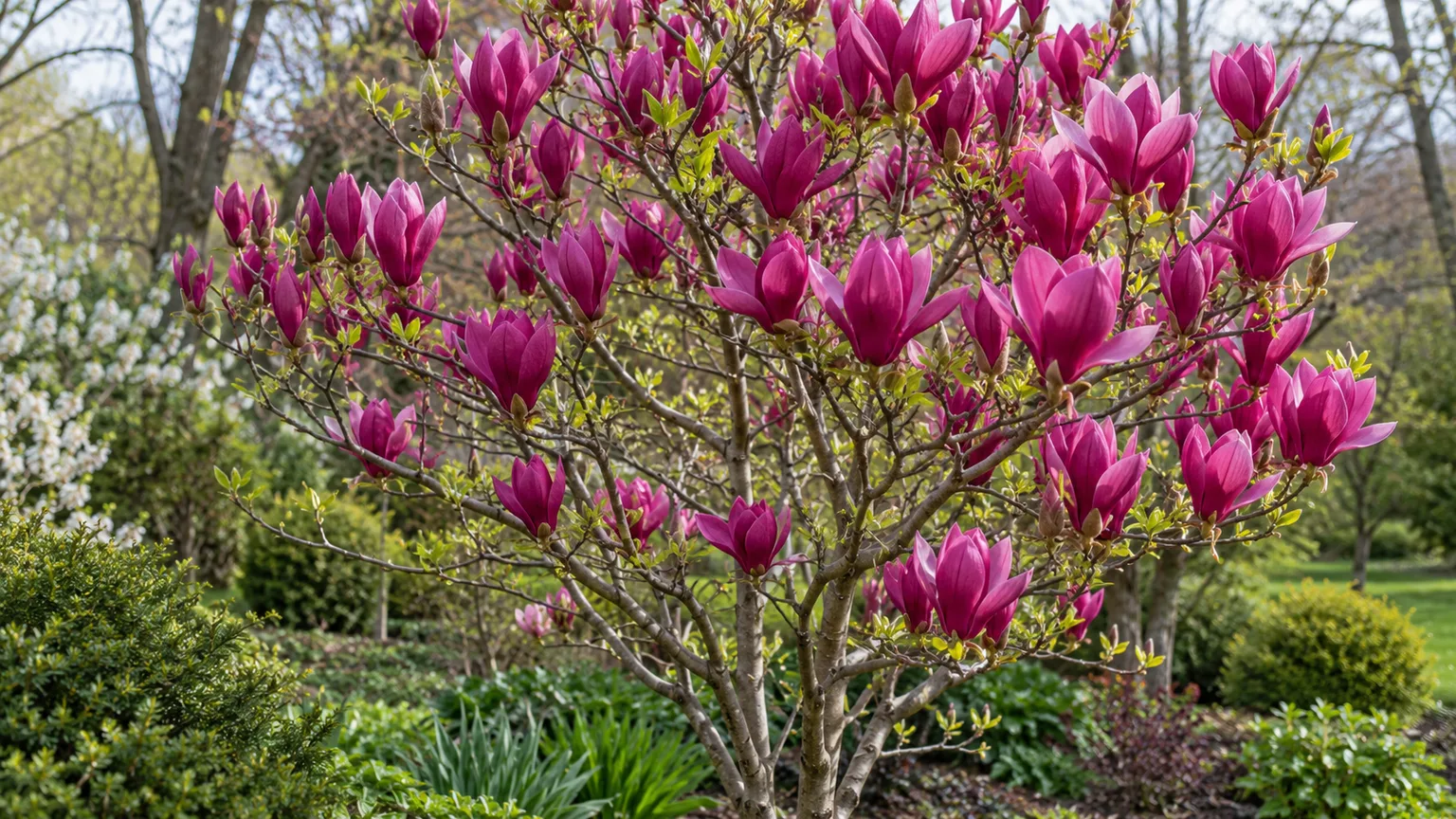
Jane magnolia is a deciduous, spring-flowering shrub or small tree valued for deep pink-purple blooms that open later than many familiar magnolias. It is a good fit when you want a flowering specimen with a manageable footprint, but it still needs a permanent site with room for its roots and canopy. The most useful care rules are simple: give it bright light, soil that drains while holding some moisture, steady water while it establishes, and very little pruning.
The details matter most during the first few years. A recently planted Jane magnolia can wilt in a dry root ball even when the surrounding bed looks wet, while saturated clay can deprive its roots of oxygen.
Later, a heavy winter prune may remove the flower buds you were waiting for. Plant it once in a considered location, check moisture rather than following a fixed watering calendar, and make cuts only when there is a clear reason.
Jane Magnolia at a Glance
| Feature | What to expect |
|---|---|
| Botanical name | Magnolia ‘Jane’ |
| Form | Deciduous, usually multi-stemmed shrub or small tree |
| Typical mature size | About 10–15 feet tall and 8–12 feet wide, with local variation |
| Light | Full sun to partial shade |
| Soil | Moist, humus-rich, well-drained; neutral to acidic is suitable |
| Bloom | Mid- to late spring in many regions; timing shifts with climate |
| Flowers | Upright, tulip-shaped, reddish-purple outside and pale inside |
| Hardiness | Commonly listed for USDA Zones 4–8; check local performance |
A mature plant is often around 15 feet tall and 12 feet wide, but the published figures are guides, not a promise about every garden. Climate, soil, growing time, nursery stock, and whether the plant has been shaped can all change the outline.
Leave room for a broad shrub instead of planning to keep it narrow with repeated cuts. North Carolina State Extension describes Jane as a compact deciduous shrub or small tree and lists a similar mature size and site range in its Jane magnolia profile.
What Makes Jane Magnolia Different
Magnolia ‘Jane’ belongs to the Little Girl series, a group of deciduous hybrids developed at the U.S. National Arboretum in the 1950s. Its parentage is Magnolia liliiflora ‘Reflorescens’ crossed with Magnolia stellata ‘Waterlily’. The breeding goal for the series was a later flowering time than many earlier spring magnolias, which can reduce exposure to the season’s most common late frosts.
The University of Arkansas Division of Agriculture’s account of the Little Girl magnolias explains this history and notes that Jane is one of the cultivars whose flowers do not open as widely as some sisters. The series is not a single interchangeable plant. Jane has reddish-purple outer tepals with a light interior; ‘Ann’ tends toward deep purple-pink, ‘Betty’ pink-purple, and ‘Susan’ red-purple, so compare labeled plants in person if flower shade is the deciding feature.
The flowers are upright cups rather than the many-pointed stars of a star magnolia. Buds are deep red-purple; opening flowers show a darker exterior and a paler interior. The number of visible tepals and the exact shade vary, and plants may flower before their leaves emerge, so the blooms stand out against mostly bare branches.
A light fragrance is often described, but it is not a perfume-heavy plant. In summer, Jane becomes a green-leaved, rounded shrub; it is not an evergreen screen or a tree that stays in flower. “Tree” and “shrub” are both reasonable descriptions.
Jane often develops several low branches rather than one dominant trunk, and it can be kept as a large shrub or gradually trained toward a small-tree look while young. If you need a clear trunk under the canopy, buy a specimen already trained that way; trying to convert a mature multi-stem plant later requires larger cuts and can leave an awkward shape.
Choose a Site That Fits the Mature Shrub
Treat placement as the most consequential care decision. Jane can serve as a lawn specimen, anchor the back of a mixed border, or soften a patio edge, but allow its canopy to reach its natural width. Use the mature spread on the plant label as a starting point, then add clearance for a walkway, wall, roof, or neighboring shrub.
A tight foundation strip may look fine for a two-gallon plant and become a repeated-pruning problem once its branches mature. Jane can grow in a large outdoor container for a time, but its eventual size and sensitivity to root disturbance make an in-ground site easier to manage. If a pot is essential, choose one with ample room and drainage, monitor moisture and root crowding, and expect that long-term container culture may eventually require a difficult repot.
Magnolia roots are fleshy and can be damaged by digging, trenching, repeated cultivation, or a later transplant. Keep the root zone out of areas that will be excavated for utilities or regularly churned by a vegetable bed. Plan for the tree to remain where it is.
North Carolina State Extension specifically warns that Jane’s roots are easily damaged and recommends choosing the landscape location carefully. A generous mulched area under the canopy is easier on the plant than turf that must be mowed right against its stems.
Balance sunlight, heat, and frost exposure
Full sun usually gives the best flowering, while light or partial shade is acceptable. In a cool summer climate, choose a spot that gets most of the day’s sun. In a region with intense afternoon heat, some late-day shade can limit stress, especially if soil dries quickly.
Too much shade often means fewer flowers and a looser, slower-growing plant. Frost protection is a separate question from winter hardiness. A sheltered site can reduce exposure to cold wind, but a south- or west-facing wall may warm buds early and encourage them to open before a freeze.
In frost-prone areas, avoid the warmest pocket in the yard if premature bloom is a recurring issue. Arkansas Extension reports that north- or east-side placement delayed bloom by several days in its local observations; this is a microclimate effect, not a guaranteed frost shield.
Do not move the plant into deep shade just to postpone flowers. A Southeast-focused Fine Gardening overview likewise describes Jane as a later-blooming selection that often avoids brownouts, while treating frost as a continuing risk.
Prepare the Soil Before Planting
Aim for soil that stays evenly moist but does not remain waterlogged. Jane prefers fertile, humus-rich soil with good drainage; neutral to acidic soil is a suitable range. It can tolerate some heavier clay, but “clay tolerant” does not mean it will thrive in a spot where water stands after rain.
If a planting area stays soggy for days, improve the site broadly or choose a plant better suited to wet soil rather than filling one hole with loose potting mix. A simple drainage check is more useful than assuming every magnolia needs an acidifier. After rain or irrigation, look for standing water and check soil below the surface.
If drainage is slow, consider a raised planting area or a different location; do not bury gravel in the bottom of the planting hole, because that does not fix the surrounding soil. If you are unsure about pH or nutrient levels, use a soil test before applying lime, sulfur, or fertilizer. A soil amendment should solve an identified problem, not follow a generic recipe.
Preserve the transition between the original root ball and the garden soil. University of Minnesota Extension advises making a broad planting hole, keeping the planting depth correct, and avoiding a backfill pocket made entirely of amended material. That guidance matters for Jane because roots need to grow outward into the surrounding soil.
A very rich, loose pocket surrounded by compacted ground can hold water differently from the rest of the bed and discourage outward establishment. The University’s tree and shrub planting guidance offers practical detail on hole preparation and aftercare.
Plant Jane Magnolia Step by Step
Plant in spring or fall when temperatures are moderate and you can keep the root ball from drying out. In colder areas, spring planting gives roots a full growing season before winter; in mild climates, fall can also work. Avoid planting during a heat wave or when the soil is saturated.
Handle the plant by its container or root ball, not by pulling on its stems. Dig a hole wider than the root ball but no deeper than its existing soil level. Roughen glazed sides in compacted soil.
Slide the plant from its container and inspect the outer roots; tease apart only circling roots that can be loosened without shredding the root mass. Because magnolia roots are sensitive, avoid aggressive cutting or washing away the soil. Set the top of the root ball level with, or slightly above, surrounding grade in poorly drained soil, and make sure the root flare is not buried.
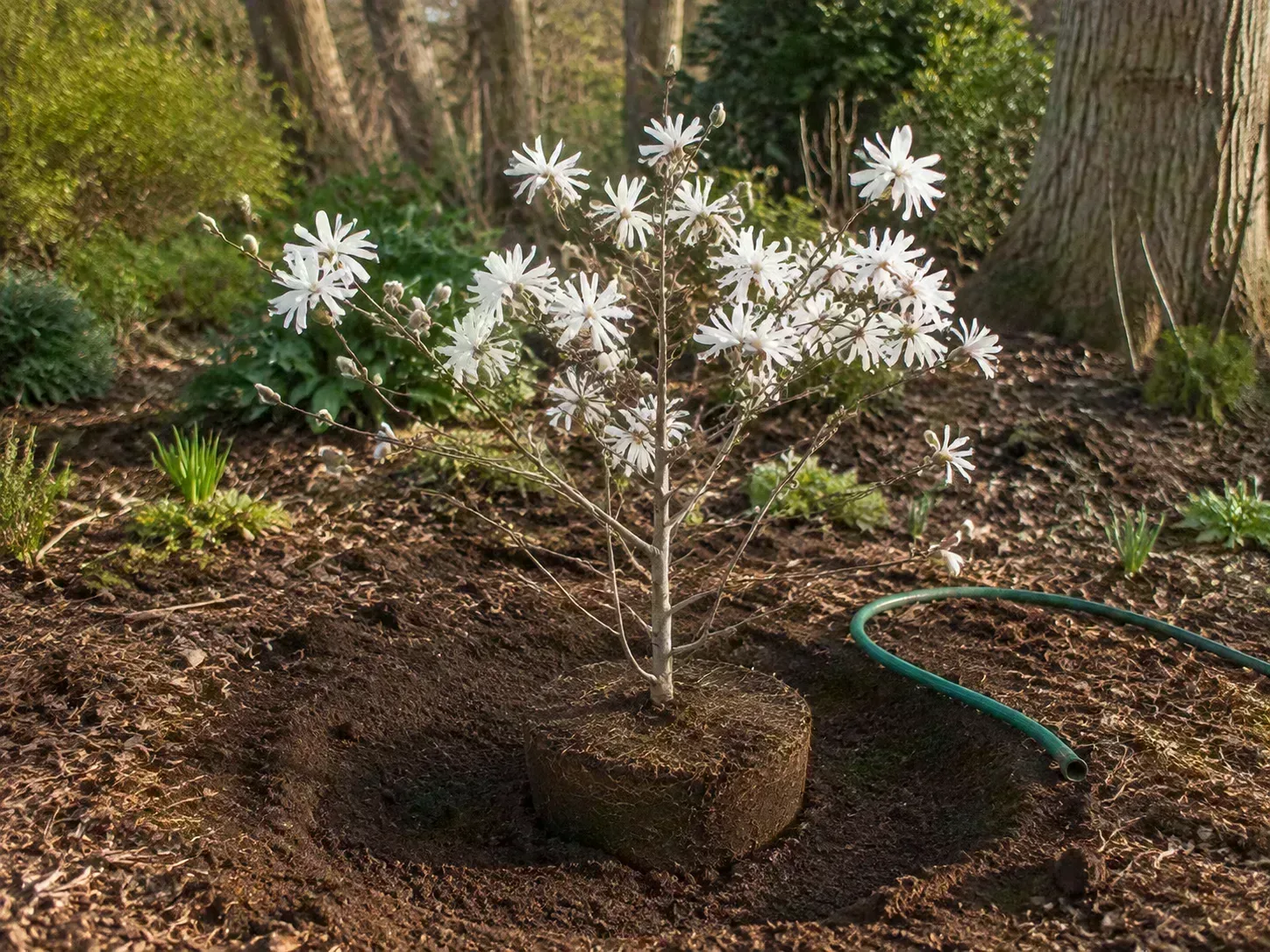
Backfill with the soil you removed, firming gently and watering as you go to settle air gaps. Do not add concentrated fertilizer to the hole. Finish with a broad layer of mulch, leaving a visible gap around the stems.
Water the full root ball slowly after planting, then note how quickly the planting area dries. That first moisture check gives you a better watering rhythm than a universal “once a week” rule.
Water Through Establishment and Dry Spells
During the first growing season, check the root ball and the soil just outside it every few days in warm or windy weather. Push a finger or narrow trowel a few inches into the ground; if the root-zone soil is dry, water slowly enough to soak the root ball and the nearby soil. If it is still damp, wait and check again.
A small plant in sandy soil may need water more often than a larger plant in loam, while compact clay may remain wet long after the surface looks dry. Deep, less-frequent watering is generally more useful than brief daily sprinkling. Keep water directed over the root zone rather than against the stems.
After the first season, extend the interval between watering as roots establish, but do not assume an older Jane magnolia is invulnerable to drought. A hot dry stretch, recently disturbed roots, or competition from turf can still cause stress. Use leaf posture as a prompt to inspect the soil, not as the only signal; midday drooping can be temporary in heat, but dry soil and persistent wilt call for a thorough soak.
Overwatering deserves equal attention. If leaves yellow or wilt while soil stays wet, adding more water can worsen the problem.
Poorly drained roots may lack oxygen and become vulnerable to root injury. Allow the surface to dry slightly between soakings, and correct drainage or irrigation frequency rather than trying to “water through” persistent wilt.
Use Mulch and Fertilizer With Restraint
Apply about 2 to 3 inches of organic mulch over as much of the root zone as practical. Shredded leaves or bark help moderate soil temperature and slow moisture loss. Keep mulch several inches away from trunks and stems so the bark can dry and you can see the plant’s base.
A mulch ring that is too narrow will not protect the wider roots, while a tall mound against the stems can keep the bark wet and invite damage. Jane magnolia does not need an automatic fertilizer routine every spring or fall. Start with healthy soil, mulch, and proper watering.
If an established plant has weak growth, pale leaves, or poor flowering, first check light, root competition, soil moisture, planting depth, and pH. Nutrient problems are only one possible cause. A soil test can show whether a nutrient is actually low and whether a pH adjustment is justified.
Excess nitrogen can produce leafy growth without solving an underlying site problem, and late-season growth may be more vulnerable to winter injury. For a young tree, avoid putting fertilizer in the planting hole.
For an established one, follow local test recommendations and the product label; do not apply more because the plant flowered lightly once. Compost used as a thin surface dressing can support soil structure, but it cannot compensate for standing water, deep shade, or pruning that removed flower buds.
Prune Without Losing Next Year’s Flowers
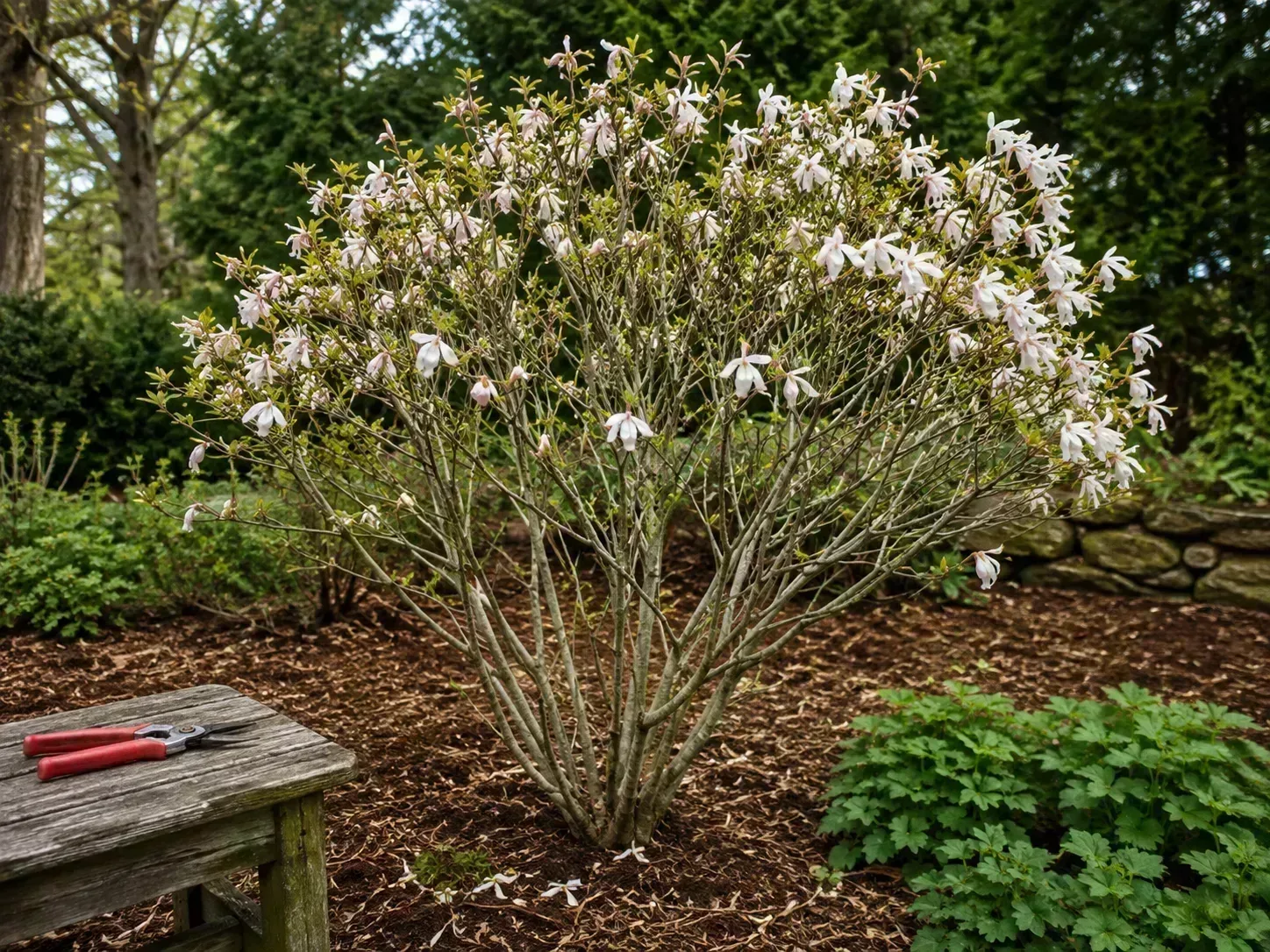
Prune Jane magnolia as little as possible. Remove dead, broken, crossing, or clearly hazardous branches, and make any needed shaping cuts soon after flowering. The reason for that timing is practical: spring-flowering magnolias form the next season’s buds before winter, so cutting in late fall or winter can remove flowers that are already developing.
The RHS Jane magnolia profile recommends minimal pruning and gives a midsummer-to-early-autumn window for deciduous magnolias; locally, use the period after flowering and before late-season growth slows as the narrow target. Begin by standing back and identifying the specific branch that needs attention. Use clean, sharp pruners on small stems and a proper saw for larger branches.
Cut just outside the branch collar instead of leaving a long stub or cutting flush against the trunk. Remove no more than needed to restore clearance or improve structure. A light annual correction is less risky than a drastic reshaping after several years of neglect.
Avoid topping, shearing, or repeatedly shortening every branch to hold the plant below its mature size. Jane’s natural form is part of its appeal, and large pruning wounds on magnolias can be slow to close.
If a branch is too large to remove safely from the ground, or if the plant needs major structural work, ask a qualified arborist to assess it. Deadheading is unnecessary: spent flowers will fall on their own, and removing them does not make the tree produce more buds.
Understand Bloom Time and Frost Risk
Jane generally blooms in mid- to late spring, often around mid-April to early May in the regions described by North Carolina State Extension. Your local date can shift weeks with latitude, elevation, winter temperatures, and the warmth of the planting site. The Little Girl series blooms later than many star and saucer magnolias, but “later” is not the same as “frost-proof.” The University of Wisconsin–Madison Arboretum explains that magnolia plants can be cold hardy while their open, precocious flowers remain vulnerable to freezing temperatures.
A late freeze may turn open petals brown or limp, ending that year’s display on affected flowers. That damage usually does not mean the whole shrub is dying; buds and branches that remain firm may still grow normally. Do not prune browned flowers or healthy-looking branches in response to one cold night.
Wait until the freeze has passed and new growth clarifies which tissue is actually dead. There is no dependable home treatment that can reverse frost-damaged petals once they have thawed. The timing advantage of the Little Girl hybrids comes from parentage and flower phenology, not from flowers that tolerate any temperature.
The Wisconsin Arboretum’s magnolia frost account describes how quickly warm spells can open flowers and how a later-blooming cultivar can reduce, but not eliminate, frost risk. A sheltered position and a cultivar suited to the region improve the odds; weather still decides how long an individual spring display lasts.
Prepare Jane Magnolia for Winter
In a suitable hardiness zone, Jane usually needs little special winter work once established. Keep the root zone mulched, water during an unusually dry autumn before the ground freezes, and avoid late nitrogen that could push tender growth close to winter. Do not mound mulch over the trunk.
A young plant in an exposed, windy site may benefit from temporary burlap screening on the windward side, but a wrap is not a substitute for a suitable planting location and should not rub or constrict branches. Winter cold and spring frost act on different parts of the plant. Dormant wood may tolerate temperatures that would damage open petals, so a plant can survive a cold winter and still lose its first flowers to a late freeze.
When snow or ice loads the branches, avoid knocking frozen limbs; brittle wood can snap. Check after thawing and wait to distinguish broken branches from temporary droop.
Diagnose Common Problems
Start with the pattern and timing of symptoms. Is the problem limited to flowers after a freeze, confined to newly planted foliage, or spreading through branches and leaves?
Is the soil dry several inches down or persistently soggy? Those observations narrow the cause and help you avoid treating a water or root problem as a disease.
Few or no flowers
A young magnolia may need time to establish and mature before flowering heavily. If an established tree has leafed out normally but produces few buds, check whether it receives enough sun and whether nearby trees or lawn roots are competing for water. A warm exposure can shift the flowering date earlier, making buds more likely to encounter frost.
Compare several years rather than judging the plant after one unusually cold or warm spring. Pruning history is another clue. If the shrub was cut in winter or late summer, the next bloom may be reduced because flower buds were removed.
A high-nitrogen lawn fertilizer spread into the root zone can also encourage foliage over flowers, but do not assume fertilizer is the main cause without checking light, root competition, and soil first. The corrective plan is usually to stop unnecessary pruning and feeding, protect the root zone, and give the plant another season.
Wilted, brown, spotted, or dusty leaves
Wilt and crisp brown margins commonly point to moisture stress, heat, transplant shock, or root damage. Check the root ball and surrounding ground, not just the soil surface. Water a dry root zone deeply; if it is already wet, pause irrigation and investigate drainage.
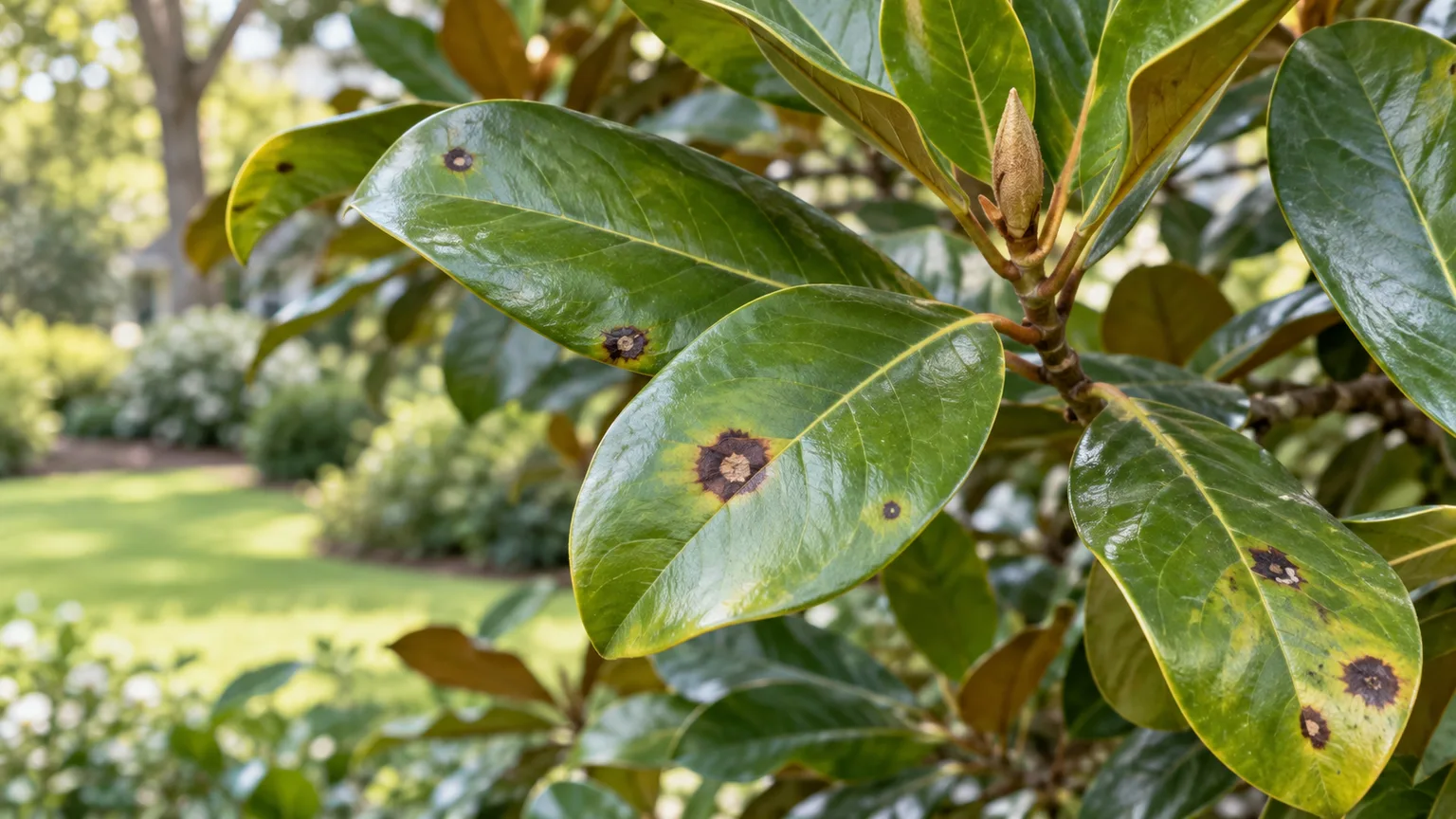
A recently planted shrub can dry out inside its original root ball even when nearby soil is damp, so test both zones. Leaf spots are not one diagnosis. Fungi, bacteria, weather, and noninfectious injury can all create marks, and a photo alone may not identify the cause.
Remove fallen, badly affected leaves when practical, keep irrigation off the foliage, and avoid spraying a fungicide without a reliable diagnosis and a product labeled for the problem. Powdery-looking material may be powdery mildew, dust, or residue; check whether it wipes away and whether the leaf tissue underneath is damaged. North Carolina State lists leaf spot and powdery mildew as occasional Jane magnolia issues, not problems that require routine preventive treatment.
Twig dieback and scale
A few dead tips can follow winter injury, drought, breakage, or a localized canker. Scratch a very small area of suspect bark with a clean fingernail: green tissue just beneath the bark suggests that the twig may still be alive, while dry brown tissue indicates dead wood at that point. Trace the branch toward the trunk and prune only where you reach healthy growth, without cutting into the branch collar.
If dieback is spreading through several limbs, the trunk has cankers, or the whole canopy is declining, ask a local extension diagnostic service or arborist to inspect it. Scale insects may appear as fixed bumps on twigs or leaves; sticky honeydew, ants, or sooty residue can strengthen the suspicion. Confirm the insect before treating, because not every bump is scale.
A heavy infestation on a small shrub or repeated decline warrants local diagnosis. If a horticultural oil is recommended, use a product labeled for magnolia and the pest, and follow its temperature and application directions; spraying during heat or outside the label can injure foliage and non-target organisms.
Propagate or Move Jane Magnolia Carefully
The reliable way to preserve a named cultivar is vegetative propagation, not saving seed. A seed-grown plant can differ from Jane because seedlings are genetically variable. The RHS lists softwood cuttings in late spring to early summer and semi-ripe cuttings from late summer into autumn as propagation options for this cultivar.
For a home gardener, rooting woody cuttings can be inconsistent and usually requires close control of moisture and humidity; buying a correctly labeled young plant is often simpler than trying to reproduce an exact clone. If you want to experiment, take several healthy nonflowering shoots rather than relying on one cutting, use a sterile growing medium, and keep the medium evenly moist but aerated. Do not collect cuttings from a plant you do not own or have permission to propagate.
Expect losses and allow a rooted cutting time to establish before planting outdoors. Moving an established Jane magnolia is a last resort. Its root system is easily damaged, and cutting a large portion of it can set the plant back or cause failure.
Before relocating it, consider whether selective branch removal or removing a nearby obstacle solves the conflict. If a move is unavoidable, consult a local arborist or nursery about timing and root-ball size for your climate; preserve as much of the root system as practical and keep it moist during the operation. Small plants are much easier to move successfully than mature specimens.
Conclusion
Jane magnolia is a relatively compact spring bloomer, but its long-term success depends more on siting and root-zone care than on frequent feeding or pruning. Give it room to reach roughly 10 to 15 feet tall and about 8 to 12 feet wide, choose sun to light shade and soil that drains, and protect the new root ball from both drought and saturation. Mulch broadly without piling it against the stems, then let the plant settle in before making cosmetic changes.
Expect flowers in mid- to late spring, with exact timing set by your climate and the year’s weather. Its later bloom can improve the chance of avoiding frost compared with earlier magnolias, but open flowers can still brown after a freeze. Keep pruning light and soon after bloom, diagnose leaf or twig symptoms before treating, and give the magnolia a permanent place where its natural shape can mature.



