Grow Sweet Watermelon From Seed to Harvest
Learn how to grow watermelon with warm soil, enough room, steady moisture, good pollination, and several signs that show when a melon is ripe.
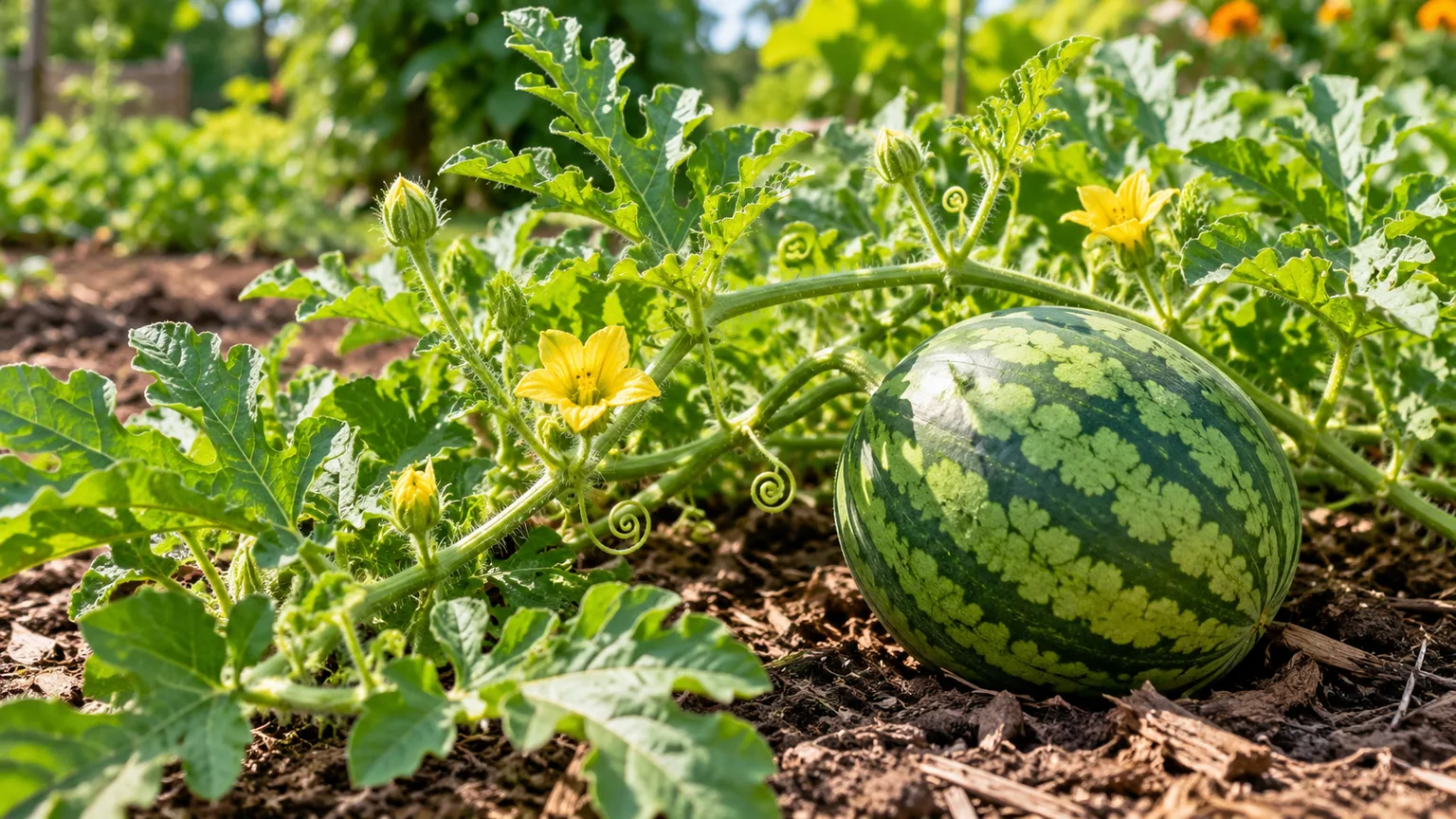
To grow watermelon successfully, give it a long, warm, frost-free stretch, a sunny site, and enough room for its vines. Plant only after the soil has warmed, keep moisture steady around the roots, and protect bee access to the flowers. Then judge each fruit by several maturity cues instead of trusting a calendar or a single tap test. Watermelon (Citrullus lanatus) is a heat-loving annual in the cucurbit family; a missed planting window or a cold, wet bed can cost more than any later fertilizer can fix.
Start with the season: can watermelon ripen where you live?
The first question is not which fertilizer to buy. It is whether your local season gives the cultivar enough warm days to mature before nights cool and frost arrives. Many varieties take roughly 70 to 100 days from planting to harvest, but seed packets do not all count “days to maturity” from the same point. Check the packet’s definition, use your likely transplant or sowing date as the starting point, and leave a buffer for cool spells, cloudy weather, or a slow start.
Watermelons perform best in warm conditions; Clemson Cooperative Extension describes average air temperatures of about 70 to 85°F as favorable and warns that cold soil hampers germination. In a reliably hot summer, direct sowing can work well. In a short-season region, pick an early or smaller-fruited cultivar, raise a young transplant indoors for a modest head start, and use a sheltered sunny bed or a temporary soil-warming mulch. If your season is too short for the variety you want, choosing a smaller, earlier melon is more dependable than sowing it weeks before the garden is ready. Clemson Cooperative Extension gives planting advice tailored to South Carolina; use your own local extension’s calendar for regional dates.
Choose a variety around space and days to maturity
Choose by the fruit you can ripen and the space you can actually provide, not by the biggest picture on the seed packet. Large picnic types can take longer and make heavy fruit; icebox or personal-size types generally suit a smaller household and can be easier to manage in a short season. ‘Sugar Baby’ is a familiar compact, seeded option, while ‘Crimson Sweet’ and ‘Jubilee’ are examples of larger seeded types. Cultivar names and availability vary by region, and the same variety can mature at different speeds under different weather, so compare the maturity note on the packet rather than assuming every melon labeled “early” will finish before your frost date.
Seedless watermelon is a special case. Most seedless cultivars are triploid hybrids that produce little or no fertile pollen, so the vines need a compatible seeded, diploid watermelon flowering nearby. Clemson Extension recommends placing a seeded variety within about 10 feet; check the seed supplier’s pollinizer directions because compatibility and planting ratios can vary. The flesh may still contain small, soft, white seed traces. If you have room for only one plant, or if you do not want to coordinate bloom times between two varieties, start with a seeded cultivar.

Give vines full sun and warm, well-drained soil
Set the bed where vines receive a full day of direct sun—ideally at least eight hours—and where cold air and water do not collect. A warm, sheltered spot can speed growth; a shaded edge may let leaves grow while delaying flowers and fruit. Watermelon tolerates a range of garden soils if drainage is good, but it struggles in compacted ground that stays saturated after rain. A raised bed can help in slow-draining soil and warms earlier in spring, though it also dries faster and needs closer moisture checks in hot weather.
Before planting, loosen the bed and mix in mature compost if the soil needs organic matter. A soil test is more useful than guessing at pH or adding a large dose of fertilizer. The target is fertile, crumbly soil that drains after irrigation but does not dry to dust between waterings. Avoid fresh manure, which can supply too much nitrogen and create a lush vine with disappointing fruit. If you use black plastic mulch to warm soil and suppress weeds, plan irrigation underneath it and watch soil temperature; dark mulch can overheat the root zone in very hot weather. Clemson Extension describes black plastic as an early-season warming and moisture-conservation tool, not a reason to plant into cold air or ignore local heat.
Plant when weather and soil are ready
Plant outdoors after the last frost risk has passed and the soil is warm at root depth. Clemson Extension recommends waiting until soil at four inches is about 60 to 65°F; warmer soil, around 70°F or above, usually gives seeds a faster, more even start. Measure with a soil thermometer in the morning for several days rather than relying on one sunny afternoon reading. If nights remain chilly or the bed is wet and cold, waiting is often faster in the end than re-sowing seed that rots or sits dormant.
Direct-sow or start transplants
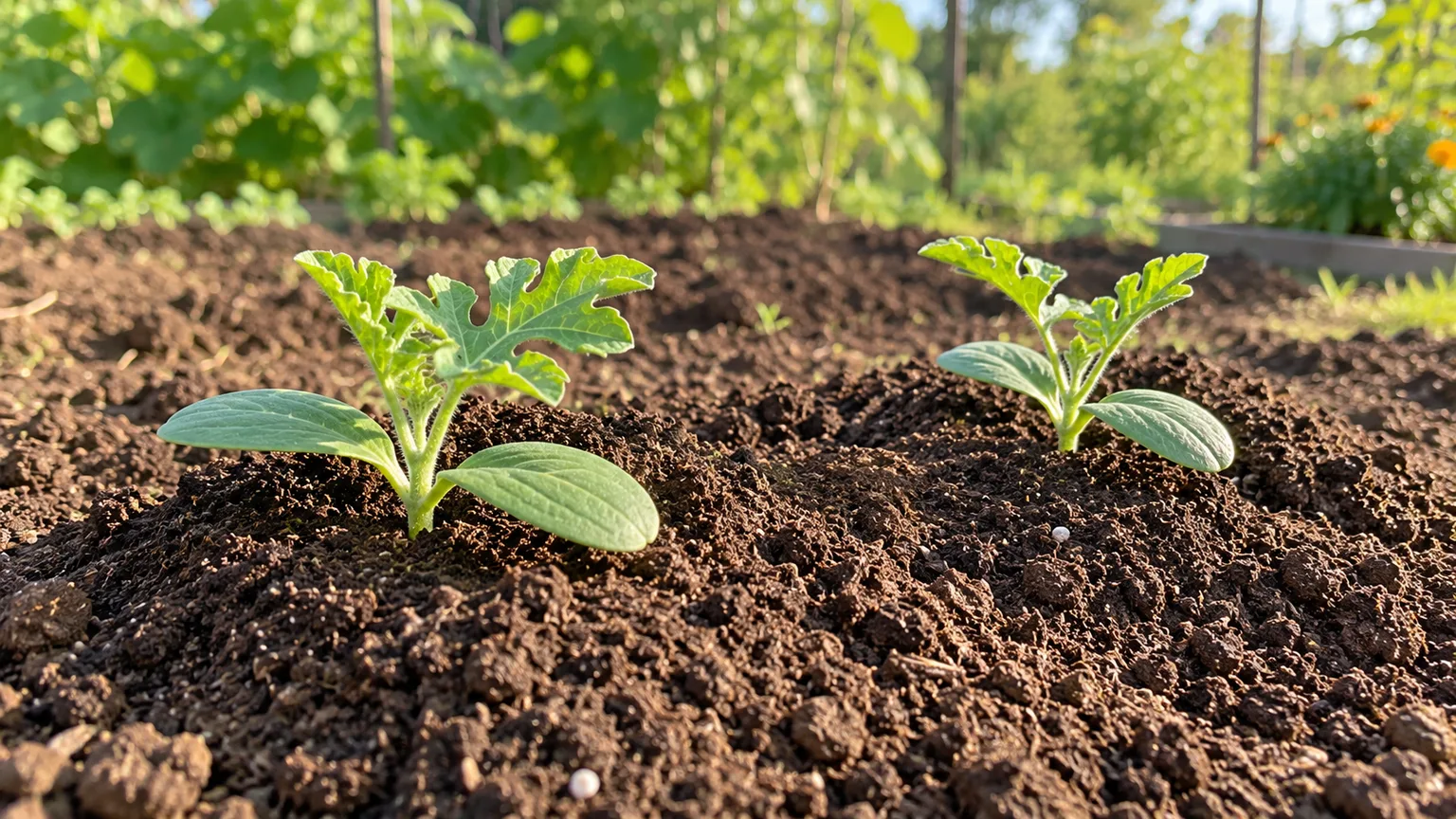
Direct sowing is the least fussy option when your growing season is long enough. Sow seeds about one inch deep in small groups or hills, then keep the seed zone evenly moist until emergence. In a short season, sow indoors only two to four weeks before the expected planting date in individual pots; watermelon seedlings dislike root disturbance, so biodegradable pots or careful transplanting help limit the setback. Do not start them too early: an overgrown, root-bound transplant can lose the small time advantage it was meant to provide. Harden seedlings off gradually and move them outside when both frost risk and soil temperature are suitable.
Space hills for airflow and fruit expansion
Watermelon vines can travel several feet in every direction, and a crowded patch is harder to water, inspect, and harvest. A useful starting point for full-size cultivars is about 24 square feet per plant; Clemson’s example spacing is roughly three to four feet between plants in rows six to eight feet apart. Compact varieties may fit more closely, but follow the seed packet and leave room to see the stem bases and reach the fruit. In a small garden, train vines toward an empty path or lawn edge instead of threading them through other crops.
If sowing in a hill, make a low mound only where it helps drainage or warms the soil; it is not a magic yield trick. Sow two or three seeds in a small group, then thin to the strongest one or two seedlings once they are established, depending on the variety and packet directions. Do not pull out seedlings so close to the remaining one that you loosen its roots—snip the extras at soil level. Space transplants the same way and water them in gently. Giving each vine breathing room also makes it easier to spot cucumber beetles, wilt, or a fruit hidden under leaves before the issue spreads.
Water deeply and steadily
Aim for consistent moisture in the root zone, not a fixed number of watering-can visits. Watermelons develop most of their roots in the upper soil layers, so a long dry spell can stress them even if a few roots reach deeper. Check soil several inches down: if it is dry there, water slowly enough to soak the bed without runoff. Drip irrigation or a soaker hose delivers water near the roots and keeps foliage drier than repeated overhead watering. If you must use a sprinkler, water in the morning so leaves have time to dry.
Steady watering matters most as vines establish, flowers set fruit, and young melons begin to expand. Adjust for rainfall, soil texture, heat, and container size rather than following an automatic daily schedule. Do not deliberately swing from very dry soil to heavy watering to “sweeten” a fruit; uneven supply can stress growth and contribute to fruit quality problems. Clemson Extension emphasizes regular irrigation during fruit set and development and cautions against letting plants suffer water stress. Mulch after the soil has warmed to slow evaporation, but keep mulch and wet organic matter from pressing directly against stems or resting fruit.
Feed for fruit, not just foliage
Start with the soil test and compost you actually need. A young watermelon plant uses nutrients to build leaves and vines, but excessive nitrogen can keep that leafy growth going at the expense of flowers and fruit. If the bed is reasonably fertile, extra feeding may not be necessary. When a soil test or local extension recommendation calls for fertilizer, follow its product and rate directions rather than copying a commercial field rate into a backyard bed.
A practical sign of overfeeding is a very vigorous, dark-green vine with few female flowers or little fruit set, especially when spacing and sunlight are otherwise adequate. Stop adding high-nitrogen products and correct the underlying conditions before applying another formula. If growth is weak, first check soil warmth, drainage, root damage, and watering consistency. Fertilizer cannot compensate for cold soil, crowded vines, poor pollination, or a season too short for the chosen variety. Clemson Extension advises basing fertilizer on a soil test and specifically notes that too much nitrogen can favor vines over fruit.
Make sure flowers are pollinated
Watermelon vines produce separate male and female flowers on the same plant. Male flowers usually appear first and grow on a plain stalk; a female flower has a small, round, immature fruit behind its petals. A tiny fruit that yellows and falls soon after flowering often did not receive enough compatible pollen. Bees move the large, sticky pollen between flowers, so avoid insecticide applications to open blooms and do not keep insect-excluding row covers in place once the plants are flowering. If you used a cover to protect seedlings, remove it in time for pollinators to reach the flowers.
If bees are scarce or the plants are under cover, hand pollinate a newly opened female flower in the morning. Pick a fully open male bloom, remove its petals to expose the pollen-bearing center, and gently touch that center to the female flower’s stigma; a small clean brush can also transfer pollen. The RHS melon-growing guide describes the same approach for melons grown under cover, where natural pollination can be less reliable. Do not expect every blossom to become a melon. In a peer-reviewed field study in Jalisco, Mexico, watermelon flowers excluded from pollinators produced no fruit, but that result is evidence of the crop’s reliance on pollinators in that study setting—not a backyard yield prediction. Clemson Extension also explains why seedless plants require more pollen visits and a fertile seeded pollinizer nearby. The pollination study and Clemson Extension support treating bee access as part of fruit care, not an optional extra.
Let vines sprawl—or support small fruits
Letting vines run across the ground is simplest when you have space. Watermelon tendrils help the vine anchor itself, but they do not turn a large fruit into a lightweight climbing crop. You can guide young vines toward open space before fruit forms, but avoid moving long, brittle stems once they have rooted along the way or a melon is swelling. Routine hard pruning is rarely necessary in a home garden; removing healthy leaves reduces the plant’s capacity to shade fruit and make sugars.
Vertical growing is possible with compact varieties and a sturdy trellis, but it changes the workload. The support must bear the weight of wet vines, wind, and fruit, and each melon needs a breathable sling secured to the frame rather than to a delicate stem. BBC Gardeners’ World describes tying vines to their support and supporting developing fruit individually; that guidance is especially relevant to protected or small-space growing. If your only structure is a light tomato cage, let the vines trail instead. A small, well-supported fruit is preferable to a heavy melon that tears the vine down.
Protect developing fruit and keep the patch manageable
Once fruit is set, keep it in contact with dry ground rather than a puddle or soggy mulch. A flat, dry board, tile, or other stable support can reduce direct soil contact and make the ground spot easier to inspect; check beneath it after rain so moisture does not become trapped. Do not lift or turn a large melon repeatedly to check its color, because the stem can crack and the fruit may not recover. Keep weeds under control while plants are small, then mulch to reduce competition without burying vine joints.
Thinning fruit is a choice, not a universal rule. If your season is ending and several late flowers have set, removing very small late fruit can let you concentrate attention on the melons with enough time to mature. In a long, hot season, a healthy plant may support multiple fruit, depending on cultivar and care. Use the seed packet’s maturity estimate and your first-frost date to decide; do not remove sound fruit simply because a generic guide promises a fixed number of melons per vine. The goal is ripe fruit before the weather turns, not an arbitrary count.
Prevent pests and disease without harming pollinators
Inspect the undersides of leaves and the base of each vine every few days, especially while plants are young. Cucumber beetles, squash bugs, and aphids can damage seedlings or transmit disease; remove a few visible insects by hand and use row covers before flowering if pest pressure is significant. Once blooms open, pollinator access becomes essential, so remove covers and avoid treating flowers when bees are visiting. If a pesticide is truly needed, identify the pest first, then use only a product labeled for that crop and pest in your location, following its label and pollinator precautions. Clemson Extension’s regional fact sheet lists cucumber beetles, squash bugs, and aphids among the key insect concerns.
Leaf spots, powdery growth, sudden wilt, or rotting stems deserve diagnosis before treatment. Keep irrigation at soil level, avoid working among wet vines, and rotate watermelon away from other cucurbits—cucumber, squash, pumpkin, and melon—for several seasons if disease has been a recurring problem. The same family shares some pests and pathogens, so moving the crop to a new bed can help break the cycle. Remove badly diseased plant debris at the end of the season and check with a local extension office if symptoms spread quickly; several unrelated problems can look similar at first.
Troubleshoot stalled vines, small fruit, or rot in order
| What you see | Check first | Useful next step |
|---|---|---|
| Many leaves, few flowers | Shade, excess nitrogen, or a late-maturing variety | Improve sun next season; stop unnecessary high-nitrogen feeding; check the maturity window |
| Flowers, but no growing melons | Male versus female blooms, bee access, and whether the plant is seedless | Wait for female flowers; remove covers; hand-pollinate or add the required seeded pollinizer |
| Tiny fruit turns yellow and drops | Pollination, interrupted moisture, or a cold spell | Stabilize root-zone moisture and observe the next female blooms before changing fertilizer |
| Misshapen melon | Incomplete pollination or uneven early fruit development | Preserve bee access and avoid spraying blooms; check for other symptoms before treating |
| Soft or rotten underside | Wet ground contact or overly wet soil | Move irrigation away from the fruit; lift it onto a dry, stable surface; improve drainage |
Change one variable at a time when you troubleshoot. If you add fertilizer, hand-pollinate, prune, and flood the bed in the same week, you will not know which change helped—and some can make the original problem worse. Take a photo and note planting date, variety, rainfall, and when flowers opened; those details help a local extension diagnostician distinguish pollination trouble from disease or a too-short season. Clemson Extension identifies poor pollination as a common cause of misshapen fruit and notes that steady soil moisture helps prevent blossom-end rot.
Harvest by combining several ripeness signs
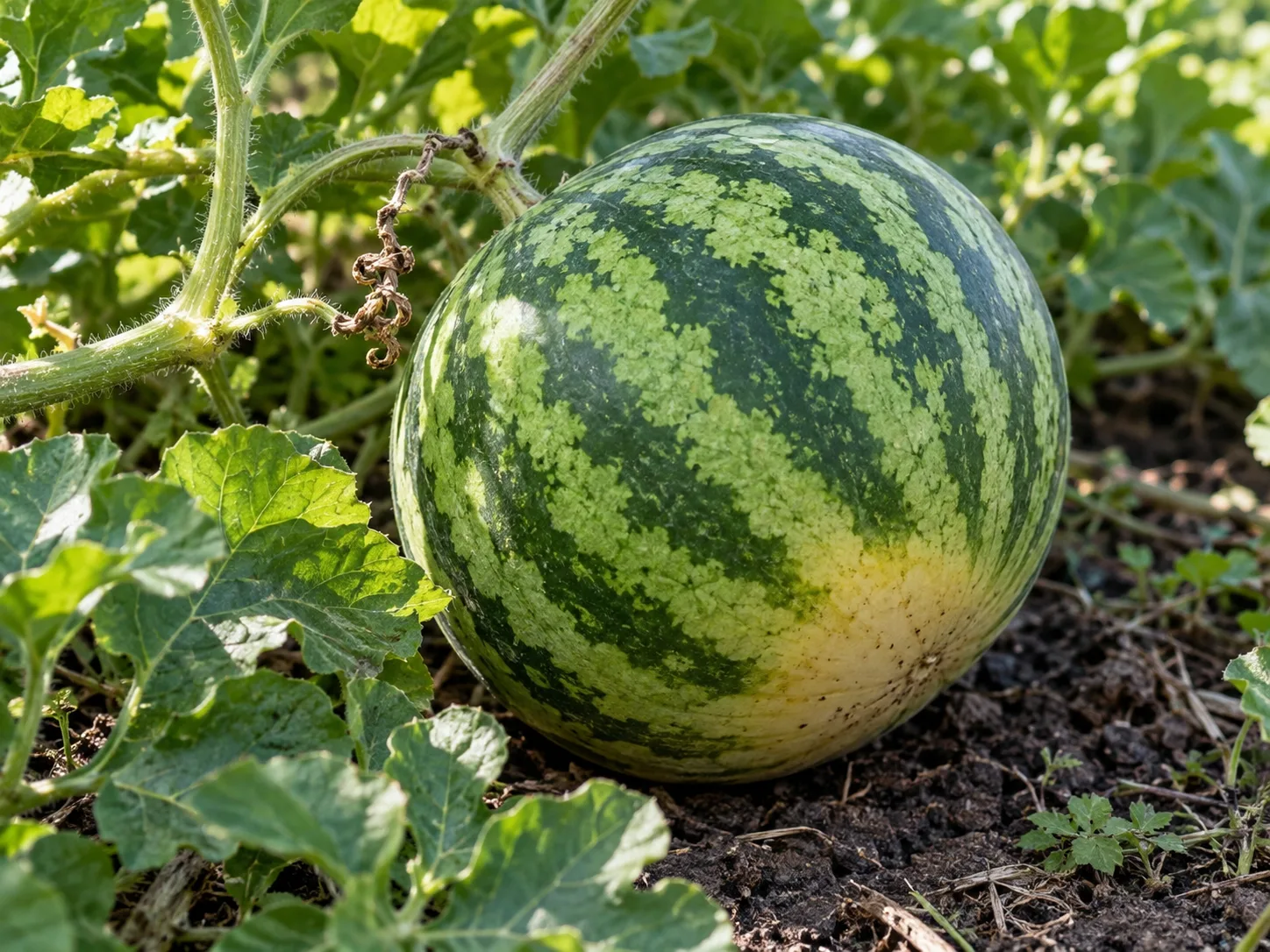
Watermelon does not reliably ripen further after it is cut, so harvest timing matters. Start with the seed packet’s days to maturity and, if you know it, count from fruit set; Clemson Extension estimates about 35 days from set to ripe fruit for many varieties, but temperature and cultivar change that interval. Then check the fruit itself: the rind often loses some gloss, the tendril nearest the fruit may turn brown and dry, and the ground spot usually changes from pale green or white to cream or yellow. A fruit that is the expected size for its cultivar adds confidence, but size alone is not proof.
Tap tone is a familiar cue, but gardeners can interpret it differently and rind thickness varies by variety. Treat it as one clue, not a verdict. If the ground spot is still white, the nearby tendril is green, and the rind remains shiny, wait and check again in a few days. When several signs agree, cut the stem with clean pruners or a sharp knife instead of pulling the melon from the vine. Clemson Extension lists a duller rind, a brown nearby tendril, expected fruit size, and a pale-to-cream ground spot; GrowVeg also recommends combining the tendril cue with the fruit’s sound rather than relying on a single visual feature.
Store mature fruit and plan the next planting
Keep an intact harvested melon in a cool, shaded place until you cut it; once cut, refrigerate it in a covered container and use clean utensils. Because watermelons vary in size and harvest maturity, there is no single storage interval that fits every fruit. If the first melon is bland, keep the planting notes rather than changing every part of the garden: record the cultivar, sowing date, approximate fruit-set date, watering interruptions, and the ripeness cues you observed. That record makes it easier to select a better-matched variety and harvest window next year.
A final useful distinction: saving seed is dependable only from an open-pollinated, seeded variety whose flowers were not cross-pollinated with a different cultivar. Seeds from hybrids may not reproduce the parent’s traits, and seedless triploid fruit is not a practical source of planting seed. If you plan to save seed, separate compatible varieties or accept that the offspring may differ, and label the seed with the cultivar and year. For most gardeners, buying fresh seed each season is the simpler way to get the fruit type and maturity window they planned for.
Conclusion
The path to a ripe watermelon is a chain: choose a cultivar your summer can finish, wait for warm soil, give vines sun and space, maintain even moisture, and keep flowers accessible to bees. When a plant stalls, check warmth, pollination, water, and nitrogen before adding more fertilizer or cutting healthy foliage. At harvest, use the calendar as a guide and let several fruit cues agree. Those habits do not guarantee a record-sized melon, but they make a homegrown one far more likely to mature sweetly on the vine.



