How Often to Water Succulents: 4 Signs to Watch For
Learn how often to water succulents by checking soil, leaves, light, and season. Use a soak-and-dry routine and spot four common signs of water stress.
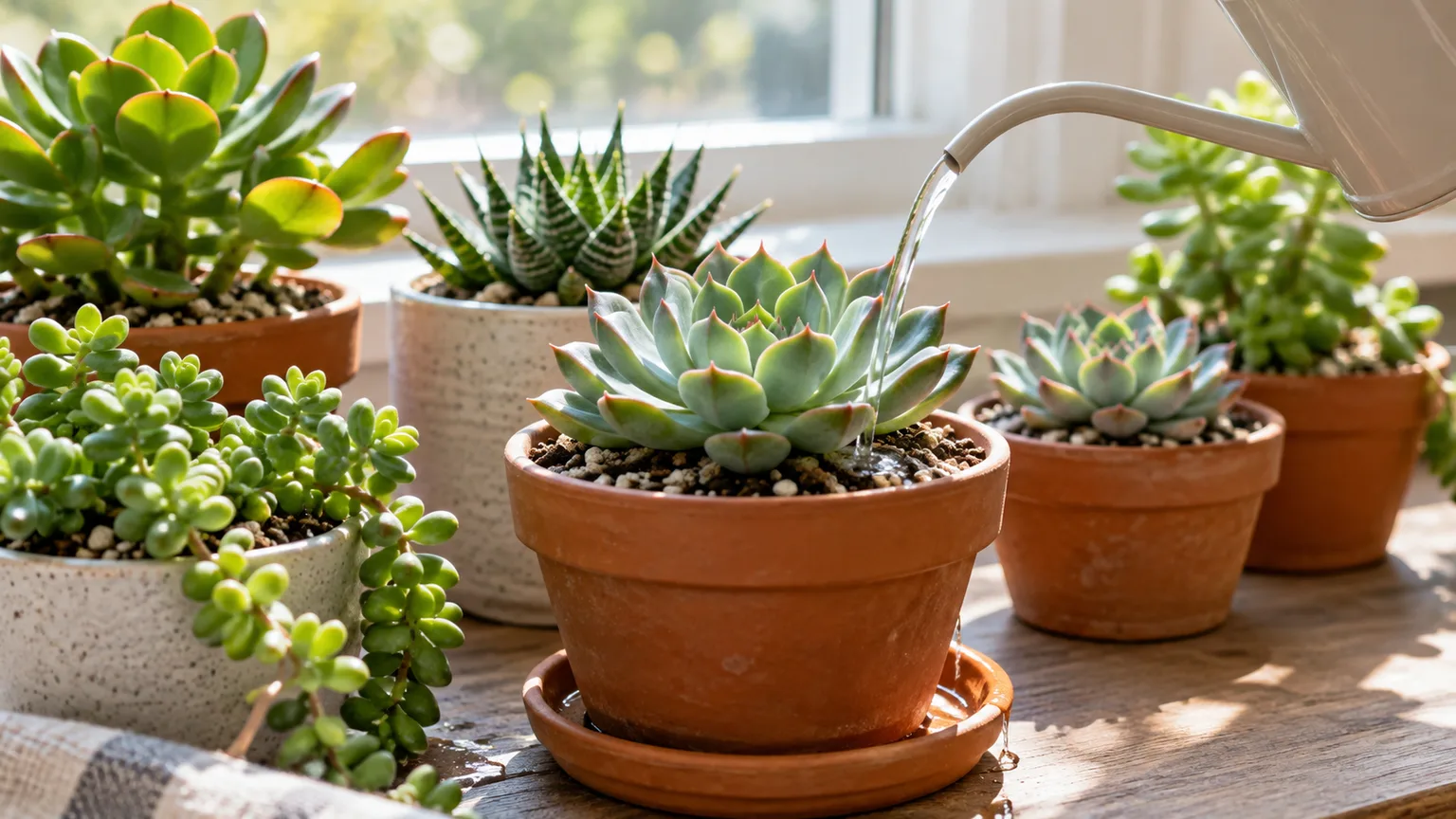
A succulent does not need water because it is Tuesday, because a care tag says “weekly,” or because the soil surface looks pale. Water when the growing mix has dried through the root zone and the plant is beginning to use its stored moisture. Then soak the mix thoroughly, let every drop drain, and wait for the next dry-down.
That sounds simple, but one detail changes the diagnosis: wrinkled leaves can mean thirst, while soft, translucent leaves in damp soil can point to roots that are failing from too much moisture. Adding water to the second plant makes the problem worse. The reliable check is the combination of soil condition, leaf texture, and recent watering history, not any one symptom by itself.
The short answer: water by dryness, not the calendar
For most arid-climate succulents in containers, let the potting mix dry completely before watering again. When it is dry down to the bottom of the root ball—and the leaves are starting to feel less firm or show gentle wrinkles—water thoroughly. Do not give a small sip every few days. A full watering followed by a complete dry period lets roots access water without staying in airless, saturated mix.
How long that takes varies. A small terracotta pot in a bright, warm room may dry much faster than a large plastic pot in a cool, dim corner. Soil composition, airflow, humidity, root mass, plant size, and whether the plant is actively growing all change the interval. A weekly or monthly calendar can be a useful reminder to check, but it is not a dependable instruction to water. Illinois Extension makes the same point: succulent watering depends on the season, plant and pot size, and mix, so a fixed weekly alarm can lead to overwatering.
There is some variation in published advice about how dry the mix should be. The Old Farmer’s Almanac uses a dry top two inches as a practical check for succulents, while University of Minnesota Extension recommends letting the soil dry completely between waterings. For a typical small succulent pot, the top two inches may reach dryness while the lower root zone is still damp. Use the shallower check as a prompt to investigate; for a desert succulent, wait until the whole root zone is dry before soaking.
“Overwatering” does not simply mean that one watering used a lot of water. In a pot with an open drain and airy medium, one full soak is part of a healthy cycle; trouble is more likely when the mix stays wet for too long, the plant is watered again before it dries, or water has nowhere to escape. A thoroughly watered plant can be fine the next day if the mix drains and begins drying, while a much smaller pour can still keep a dense, oversized pot wet for weeks.
This distinction changes what you do next. Do not respond to a soggy pot by withholding water forever if its mix is finally dry and the plant is truly dehydrated; first make the container and medium capable of draining. If the plant is firm and the soil is merely dry, there is no need to add an emergency splash. Let the evidence from the root zone and the whole plant guide the next step.
One major exception is a tropical, tree-dwelling cactus such as Christmas cactus, orchid cactus, or Rhipsalis. These plants are succulent in appearance and store water, but they naturally grow in more humid, shaded habitats than desert cacti. The Royal Horticultural Society notes that these epiphytic types need more frequent watering and partial shade than desert forms. Identify the plant before applying a strict desert-succulent routine.
How to tell whether the root ball is ready
A dry crust at the top does not tell you whether the lower mix is dry. The surface loses moisture first, while water can linger around the roots in a dense mix or an oversized pot. Check the pot itself rather than judging by color alone.
Check below the surface
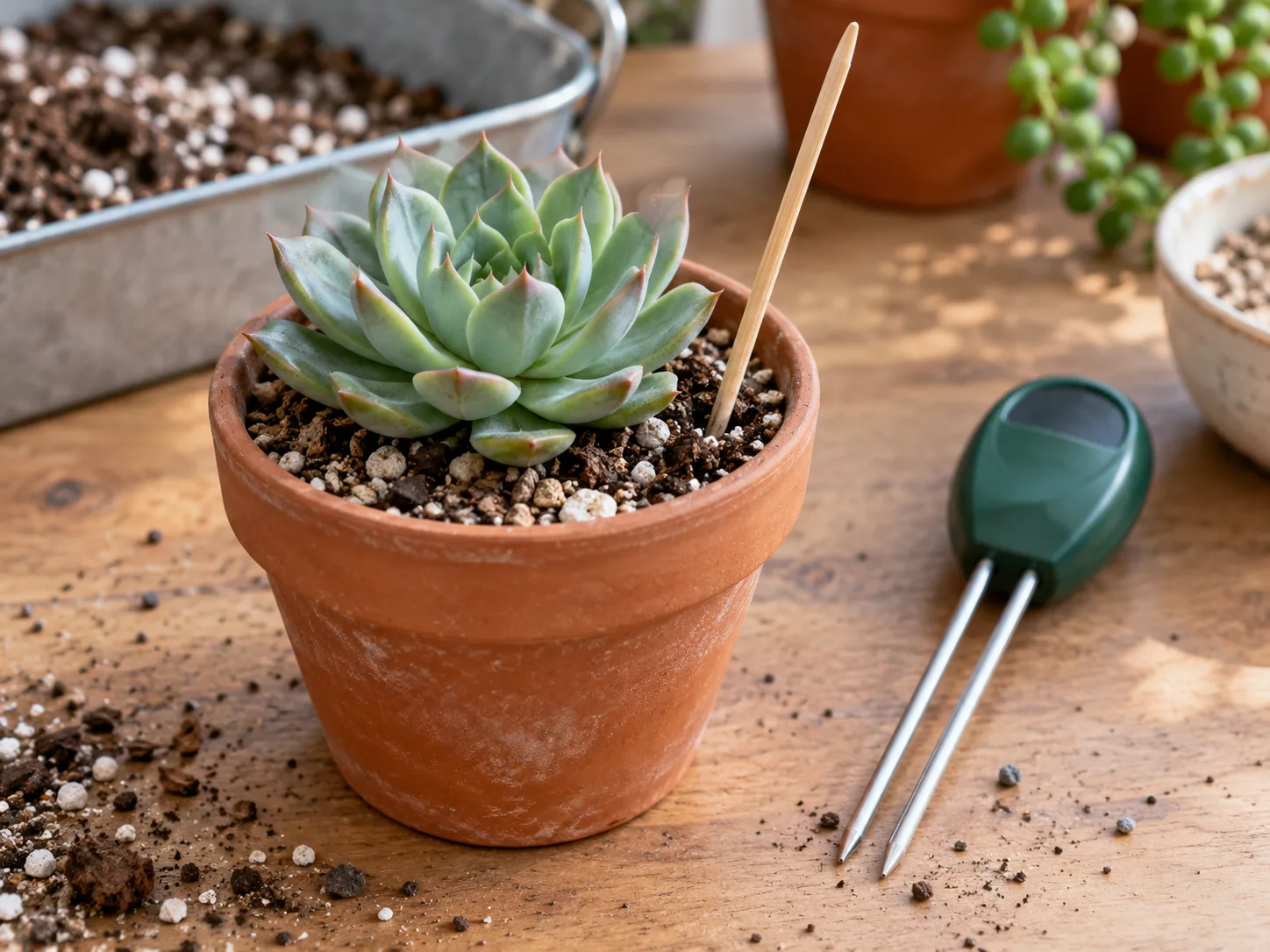
If the pot is small enough, press a clean finger into the mix. For larger pots, insert an untreated wooden chopstick or skewer toward the bottom and leave it briefly. A darkened probe with damp mix clinging to it means moisture remains; a clean, dry probe suggests the root zone has dried. Iowa State Extension recommends this chopstick check and says to wait if the stick comes out with moisture on it. A wooden probe is not a precision instrument, but it is useful when paired with the plant’s condition and the pot’s weight.
Check more than one spot if the pot is wide or the mix is uneven. Water can channel down one side and leave a dry pocket elsewhere, while peat-heavy soil can stay wet in the center after the surface appears dry. If the mix has shrunk from the pot wall or water races straight through without wetting it, the soil may have become hydrophobic. In that case, a brief bottom soak can re-wet the root ball; do not mistake rapid drainage from bone-dry soil for a healthy wet-dry cycle.
Use pot weight as a second clue
Lift the pot after watering and again once it has dried. The difference can become a quick, practical gauge: a fully watered pot feels noticeably heavier, while a dry pot feels light. This works best when you compare the same container over time, not by comparing one plant with another.
Pot weight cannot tell you whether a plant is thirsty by itself. A recently repotted succulent may have few roots and use water slowly; a mature plant in bright light may dry much faster. Combine the lift test with a probe and leaf feel. Once you learn how a particular pot behaves, you can use weight to decide when to check more closely rather than to trigger watering automatically.
Water deeply, then let excess drain
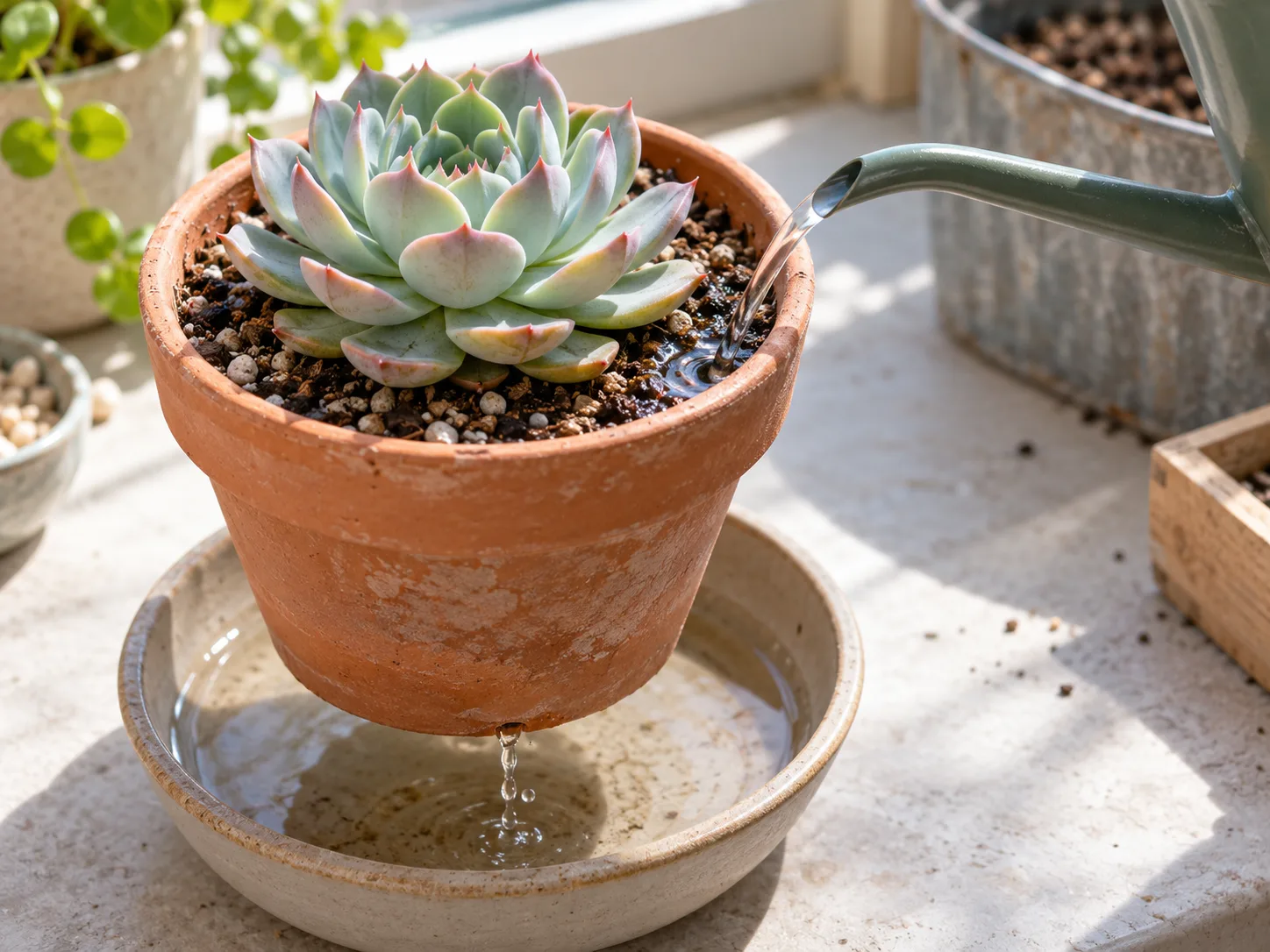
When a desert succulent is ready, aim water at the growing medium until the full root ball is wet and water runs from the drainage hole. This is different from keeping the mix damp: a thorough soak is followed by a dry interval. Missouri Extension calls this a wet-dry cycle and explains that the medium should be fully wetted, then allowed to dry throughout before the next watering.
Use room-temperature water and pour slowly enough for the mix to absorb it. If the first pour runs out immediately, pause, let the mix absorb, then water again. A very dry or compacted mix can repel water, letting it slip down the pot’s edge instead of reaching the roots. If the pot has a saucer or decorative cachepot, empty it after drainage; a plant should not sit in water.
Top watering is the simplest default
A narrow-spout watering can makes it easier to wet the soil without filling the plant’s crown or washing gritty mix out of the pot. Move around the surface and stop when water drains freely below. For rosette succulents such as Echeveria, keep water from pooling in the center, especially in cool conditions or low airflow. Blot trapped droplets if they remain in the crown.
Avoid routine misting. A spray only wets the top layer and foliage, so it does not reliably hydrate the root ball. Repeated shallow sprinklings can encourage uneven or weak growth; Minnesota Extension specifically cautions against repeated shallow watering. Mist is appropriate for some unrooted leaf propagations or germination setups, which are different from watering an established succulent.
When bottom watering helps
Bottom watering can help when a pot has a drainage hole but the mix has become so dry that top-poured water runs around the edges. Set the nursery pot in a shallow tray of water and let the mix draw moisture upward. Check the surface or lift the pot; once the mix is moist and the container feels heavier, remove it and let it drain completely.
It is a technique, not a requirement or a way to avoid checking moisture. Do not leave the pot soaking for hours, and do not leave it sitting in a water-filled cachepot afterward. In mixed succulent arrangements, bottom watering is especially hard to dose because plants may have different water needs and the roots compete in a shallow, shared volume. Separate plants with different needs when possible. Minnesota Extension warns that mixed planters need compatible water requirements and that shallow dishes without drainage can keep roots wet.
Four serious signs to watch
No leaf symptom proves that a plant needs water. The four signs below become useful when you cross-check the moisture in the root zone. Iowa State Extension cautions that root rot can cause leaf drop and shriveling that look like thirst; adding water then deepens the damage. First determine whether the mix is dry or damp.
1. Wrinkling or thinning leaves with dry mix
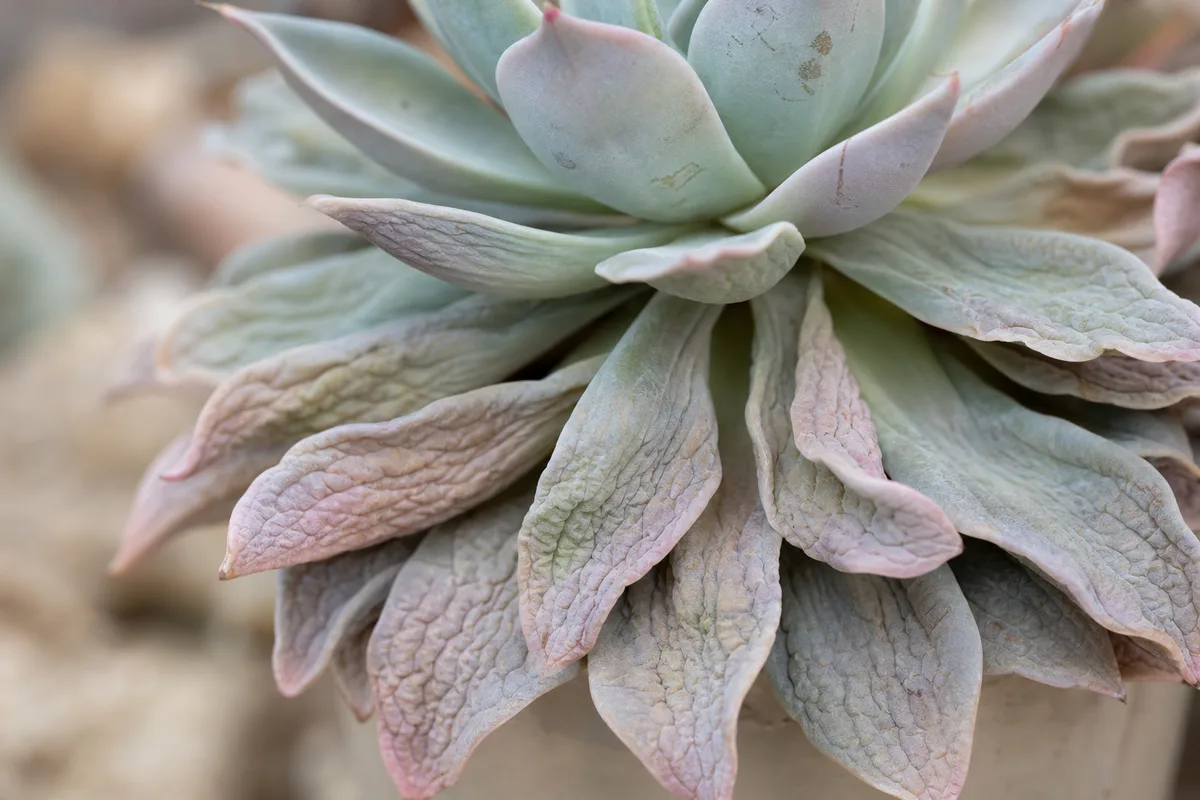
A thirsty succulent often loses firmness as it spends water stored in its leaves or stems. Leaves may look thinner, bend more easily, wrinkle along their length, or fold slightly inward. If the mix is also dry through the root zone, the plant is likely ready for a thorough watering. Mountain Crest Gardens describes early thirst as less-firm leaves and slight wrinkling after the soil is dry.
Do not wait for the whole plant to collapse. On some thick-leaved types, visible wrinkles appear only after substantial drying; cacti and agaves may give few obvious leaf cues. Conversely, one wrinkled lower leaf on an otherwise firm plant does not automatically mean drought. Older leaves can be naturally resorbed as new growth forms. Look for a pattern across several leaves, confirm the mix is dry, and check whether the plant perks up after a full soak.
2. Soft, translucent, or yellow leaves with wet mix
Leaves that become unusually soft, watery, translucent, or yellow—especially lower leaves while the soil remains damp—are a warning to stop watering and check drainage. Overhydrated cells can swell and become damaged, but the deeper concern is often that roots lack oxygen in persistently wet mix. The RHS guide notes that cacti and succulents can rot in damp conditions, particularly during winter.
A few dry, papery leaves at the base are different from swollen, mushy ones. The first may be normal aging; the second, especially when several leaves soften at once, points to a watering or root-zone problem. Check how long the soil has stayed wet, whether the pot drains, and whether light is adequate to support drying. Do not try to “balance” yellowing by giving the plant a small drink.
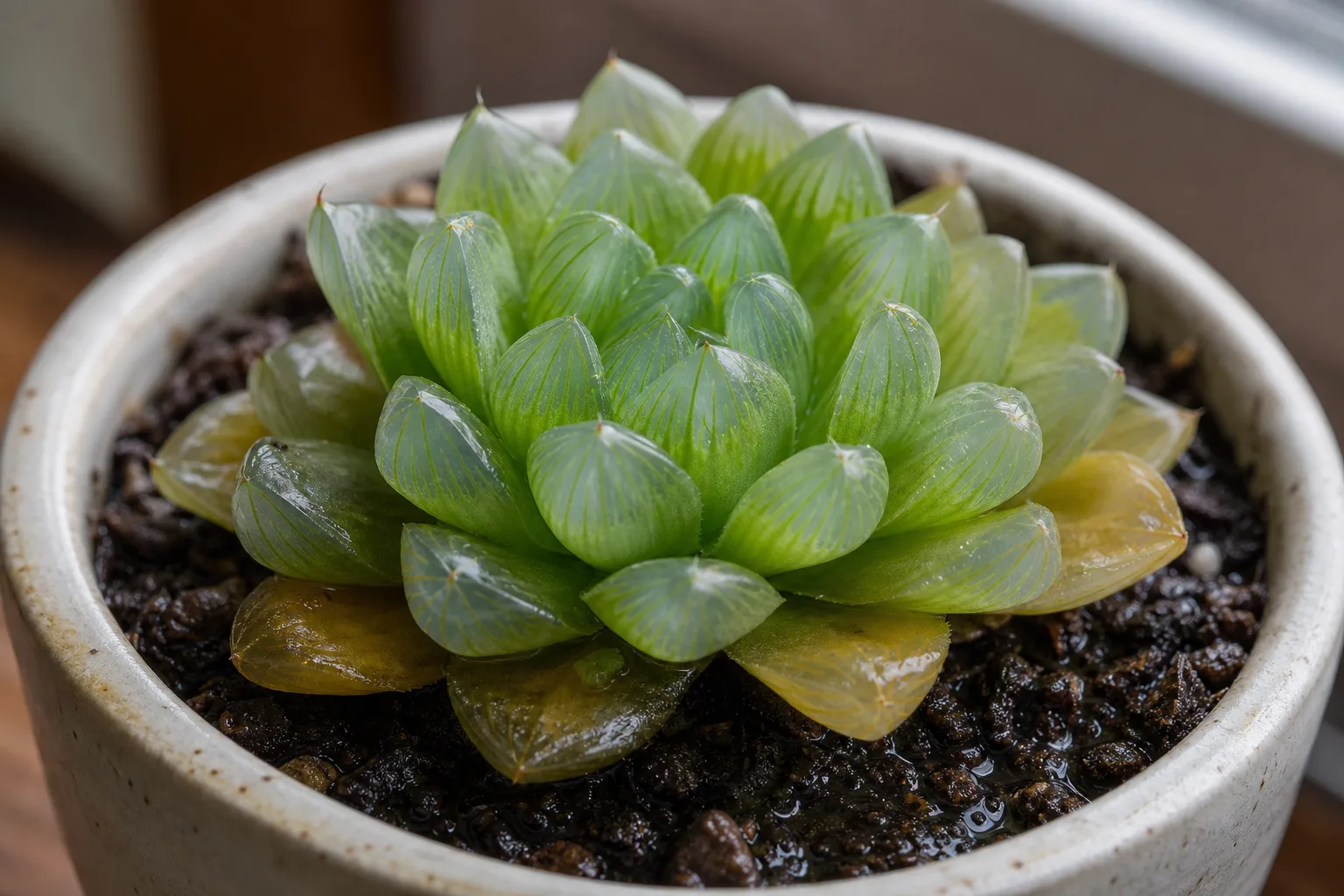
3. Wilting or leaf drop while the soil stays damp
A drooping succulent can be confusing because both drought and root damage can reduce the plant’s ability to hold itself upright. If the pot is light and the mix is dry, it may be thirsty. If the pot is heavy, the mix is wet, and leaves are dropping or collapsing, the roots may be stressed by excess water rather than asking for more.
This is the moment when a second watering is most likely to backfire. Iowa State Extension explains that waterlogged soil has less oxygen; roots die, then the plant can show water-stress symptoms because fewer roots remain to absorb moisture. Let the mix dry, improve airflow and light gradually, and inspect the roots if the decline continues. Avoid moving a suddenly wet plant into harsh direct sun as a quick fix; abrupt light changes can burn leaves, and heat does not repair damaged roots.
4. A dark, soft stem base or rotten roots
A stem base that turns dark and soft, a crown that pulls loose, or roots that are black, mushy, or foul-smelling are signs of advanced rot, not ordinary thirst. Healthy roots are generally firm; dead, decaying roots lose structure. Gently slide the plant from its pot only if the wetness or collapse makes root inspection necessary. Do not keep pulling a stable plant apart simply to confirm a suspicion.
If rot is limited, trim damaged roots with a clean tool, discard soggy old mix, and let the plant and any fresh cuts dry before repotting in a clean container with a drainage hole and fast-draining medium. Hold off watering until the plant has settled and the soil is dry; if a healthy stem or rosette remains above the rot, it may be possible to propagate that section. Severe crown rot may not be salvageable. Iowa State Extension notes that some plants recover when allowed to dry, while advanced rot may require discarding the plant or propagating healthy segments.
What changes the interval
Season and growth cycle
Many desert succulents grow more actively when days are bright and warm, then slow down during shorter, cooler, lower-light periods. A dormant plant uses less water, so the mix dries more slowly and the time between waterings lengthens. Minnesota Extension advises watering only enough to prevent shrinking and withering during low-light winter months, then increasing water as spring light increases.
Do not translate that into a universal “half as often” rule. A warm home with grow lights may keep a succulent active through winter, while a cool windowsill can slow it sharply. Some succulents grow in a different season: the Mountain Crest Gardens winter-care guide identifies Aeonium, Aloe, and Haworthia among winter growers. Observe the plant and conditions instead of assuming every succulent is dormant on the same dates.
Gardeners’ World gives broad calendar guidance—about every four weeks in warmer months and less often in winter—but also says to wait until the compost is fully dry; treat those dates as inspection reminders, not a command to water a still-moist pot (Gardeners’ World).
Light, heat, airflow, and humidity
Bright light and warmth usually increase water use and speed evaporation; cool air, a cloudy room, stagnant airflow, and high humidity slow drying. A succulent moved outdoors for summer may need more frequent checks because it gets brighter light and wind, but a plant exposed to intense afternoon sun without acclimation can scorch. University of Minnesota Extension recommends transitioning plants gradually outdoors and checking them regularly because outdoor plants need more water.
Indoor windowsills also vary. A south- or west-facing window in a dry heated room can produce a different drying pattern from a north-facing window in a humid bathroom. But do not use humidity alone as the signal: many arid succulents tolerate ordinary indoor dry air, and a humid room does not mean the roots need less water if the potting mix is already dry.
Pot size, material, and growing mix
Unglazed terracotta loses moisture through its walls and often dries faster than plastic or glazed ceramic. Large pots hold more wet mix around a small root system and take longer to dry; that is one reason a giant decorative container can be risky for a tiny succulent. Choose a pot only modestly larger than the root ball and make sure it has an open drainage hole.
A porous, gritty mix creates air spaces and releases excess water more quickly than dense, peat-rich houseplant soil. The RHS growing guide recommends very free-draining gritty compost and warns that an oversized pot can remain wet too long. If your plant repeatedly stays damp for many days, fix the container or medium instead of simply waiting longer between drenchings. A moisture meter may help locate dampness, but readings can be unreliable in coarse mixes with large particles and small pots; verify with a probe, weight, and the plant.
Species and indoor versus outdoor growing
“Succulent” describes a water-storing adaptation, not a single care schedule. Echeveria, jade, Aloe, and many cacti tolerate drying much more than tropical epiphytic cacti such as Schlumbergera, Epiphyllum, and Rhipsalis. The latter typically want a more even moisture supply while growing, though they still need free drainage and should not sit in saturated soil. Find the botanical or common name on the plant tag and look up its native growth habit before deciding how long to leave it dry.
Outdoor succulents add rainfall, ground drainage, temperature swings, and frost to the calculation. Hardy Sempervivum and some Sedum can grow outside in suitable climates and sharply drained soil; tender Echeveria and Aeonium may need shelter from cold and winter wet. In a rainy spell, a covered location may matter more than supplemental watering. In an arid summer, the same plant may need more frequent attention, especially while establishing roots.
A simple routine that prevents guesswork
Choose one day each week as a check day, not an automatic watering day. Inspect each pot individually: note the last watering, press or probe below the surface, lift the pot, and look for early changes in leaf firmness. If the root zone is damp and the leaves remain firm, leave it alone. If a desert succulent’s mix is dry throughout and it is beginning to wrinkle or soften, water it thoroughly and empty the saucer.
If a pot is repeatedly slow to dry, treat that as information. Check that the drainage hole is open, remove the nursery pot from any cachepot, and compare the container size with the roots. If the mix is dense or compacted, repot into a fast-draining succulent medium during an appropriate growing period. A plant in low light may also use very little water; improve light gradually rather than trying to force growth with more frequent watering.
After a watering, make a brief note of the date and how long the pot takes to become dry. The record helps you anticipate when to inspect again, but the actual decision still comes from current conditions. Once you understand how a particular plant responds, the routine becomes simple: check, decide, drench if warranted, drain, and wait.
Conclusion
For most arid succulents, water only after the root zone has dried, and then soak the mix thoroughly rather than misting or sprinkling. Let the plant’s texture help confirm the decision: dry soil with less-firm or gently wrinkled leaves suggests thirst; soft, yellow, translucent leaves or a drooping plant in wet soil means pause and investigate the roots.
There is no dependable weekly schedule for every succulent. Species, growth cycle, light, temperature, pot, and mix all change drying time. A small check with a finger or wooden probe, a lift of the pot, and attention to the whole plant will tell you more than the calendar—and help you avoid turning a thirsty plant into a waterlogged one.



