How to Grow and Care for Red Maple Trees
Learn how to grow and care for red maple trees, from choosing a roomy site to planting at the right depth, watering, pruning, and solving common problems.
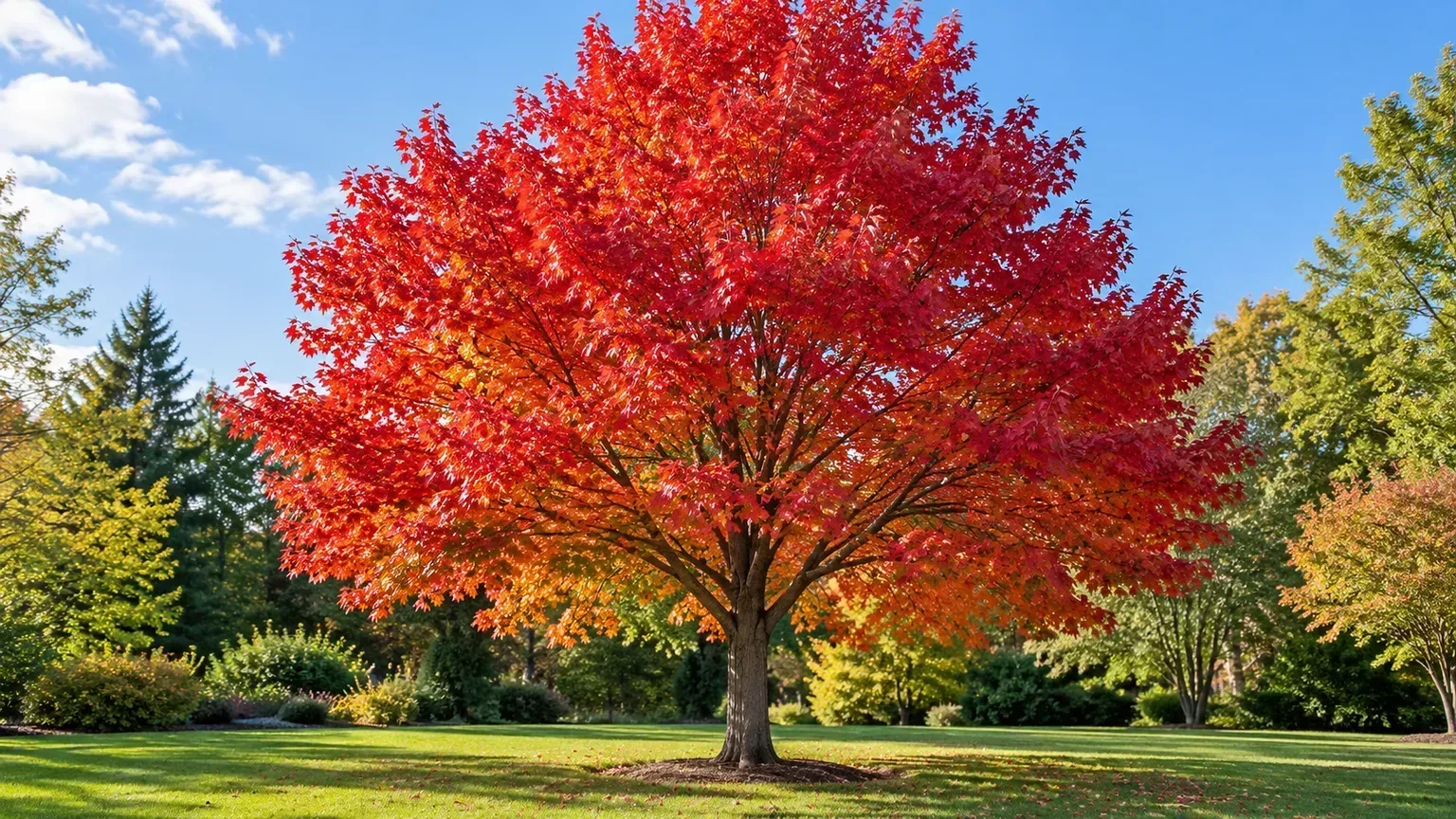
A red maple is a fast-growing North American shade tree with spring flowers, winged seeds, and fall leaves that may turn red, orange, or yellow. It can adapt to many soils, but “adaptable” does not mean “small” or “carefree”: a mature Acer rubrum commonly reaches 40 to 70 feet tall with a 30- to 50-foot spread, and its shallow roots can lift pavement or make lawn care beneath the canopy difficult.
Plan for the mature tree before you buy one. The best results come from giving it room, planting with the root flare visible, and watering the root zone consistently while it establishes. If a reliably red autumn display matters, select a named cultivar rather than assuming a seed-grown tree will match the color of the parent.
Red maple at a glance: size, range, and trade-offs
| Feature | What to plan for |
|---|---|
| Botanical name | Acer rubrum; a deciduous maple native to eastern North America |
| Typical landscape size | About 40–70 feet tall and 30–50 feet wide; check the mature dimensions of the named cultivar |
| Light | Full sun to partial shade; more sun generally supports denser growth and better fall color |
| Soil | Adaptable texture, including clay, but moist, well-drained, slightly acidic to neutral soil is a safer target |
| Roots | Shallow and spreading; surface roots and competition with lawn or understory plants are common |
| Seasonal interest | Small red flowers in late winter or early spring, red twigs and leaf stalks, spring samaras, and variable fall color |
| Main caution | Wilted or dried leaves and bark can be dangerous to horses; the ASPCA lists red maple as non-toxic to dogs and cats |
Extension references give somewhat different maximum heights and hardiness ranges because the species occupies a broad region and named cultivars vary. For a yard, a useful working expectation is a large, fast-growing shade tree, not a compact ornamental. North Carolina State Extension describes a typical 40- to 70-foot height and 30- to 50-foot spread, while Virginia Tech lists a 60-foot height and spread for its species profile; use the nursery tag and local extension guidance for the specific selection you are buying (NC State Extension; Virginia Cooperative Extension).
Red maple is not the same tree as Japanese red maple. Acer palmatum usually has smaller, more finely divided leaves and a much smaller range of landscape forms. Nor is every red-leaved maple an Acer rubrum: ‘Autumn Blaze’ is commonly sold as a Freeman maple, Acer × freemanii, a hybrid of red and silver maple. Read the botanical name on the tag so the tree’s eventual size and traits are not a surprise.
Choose a site before you choose a cultivar
A red maple’s strongest selling point—quick shade—also makes a cramped site a poor fit. Before shopping, mark the area the crown could occupy at maturity and look overhead for rooflines and utility wires. Think below ground too: mature roots extend out from the trunk, compete with turf for moisture, and may approach sidewalks, driveways, or shallow utilities.
Sun, soil, and mature space
Choose a spot with full sun if you want vigorous growth and the best chance of a strong fall display; partial shade is acceptable, especially where summer heat is intense. Full sun means roughly six hours of direct light, but the tree can grow with less. Shade can reduce growth and shift the color display, so do not select a cultivar for fall color and then place it in deep shade.
Red maple tolerates sand, loam, and clay, and it can cope with a wider moisture range than many landscape trees. For dependable growth, aim for soil that stays evenly moist but drains enough that roots are not trapped in stagnant water. Slightly acidic to neutral soil is a sensible target: Virginia Tech lists a pH range of 3.7 to 7.0 and warns against very high pH, while North Carolina State notes that alkaline soil can trigger manganese chlorosis. A soil test is more useful than adding sulfur, lime, or fertilizer by guesswork.
Size the site around the cultivar’s listed mature spread, then add practical clearance for branches, trunks, and future maintenance. A cultivar expected to spread 40 feet needs about 20 feet from trunk to an open boundary if you want the canopy to develop without constant conflict; it does not mean every trunk must sit 20 feet from every house wall. Foundation conditions, roof overhangs, pavement, septic systems, and local utility requirements differ, so follow the appropriate local setback rules and plan for a broad root zone. Where branches could grow into overhead wires, choose a smaller tree suited to that corridor instead of relying on repeated topping.
One trade-off often missed in nursery descriptions is what grows beneath the tree. Red maples cast dense shade and develop a thick mat of surface roots; a pristine lawn or thirsty flower bed may be hard to maintain under the mature canopy. A wide mulch bed or shade-tolerant, low-water planting is usually easier than cutting roots or piling soil over them later.
When is a wet site suitable?
Red maple’s common name “swamp maple” reflects its ability to occur in wet places, but it does not mean every red maple should be planted in a permanently flooded hole. It handles moist ground and periodic wetness, yet a compacted or poorly drained site can still suffocate roots or favor root disease. Check how long water stands after ordinary rain and whether the water table remains high through the growing season.
For a low area that drains slowly but does not remain submerged, a red maple may be a reasonable choice. If water pools for days, the soil smells anaerobic, or the planting site is repeatedly inundated, select a species suited to those exact conditions or consult a local arborist before planting. “Wet-tolerant” is a range, not a guarantee of success in every saturated soil.
Planting red maple correctly
Planting depth is one of the decisions that most affects a tree’s long-term health, and it is easier to get right before backfilling than to correct after several years. Spring and fall are usually the easiest seasons to establish a landscape tree because temperatures are milder and the soil is workable; avoid planting into frozen soil, a heat wave, or a period when you cannot keep the root ball moist.
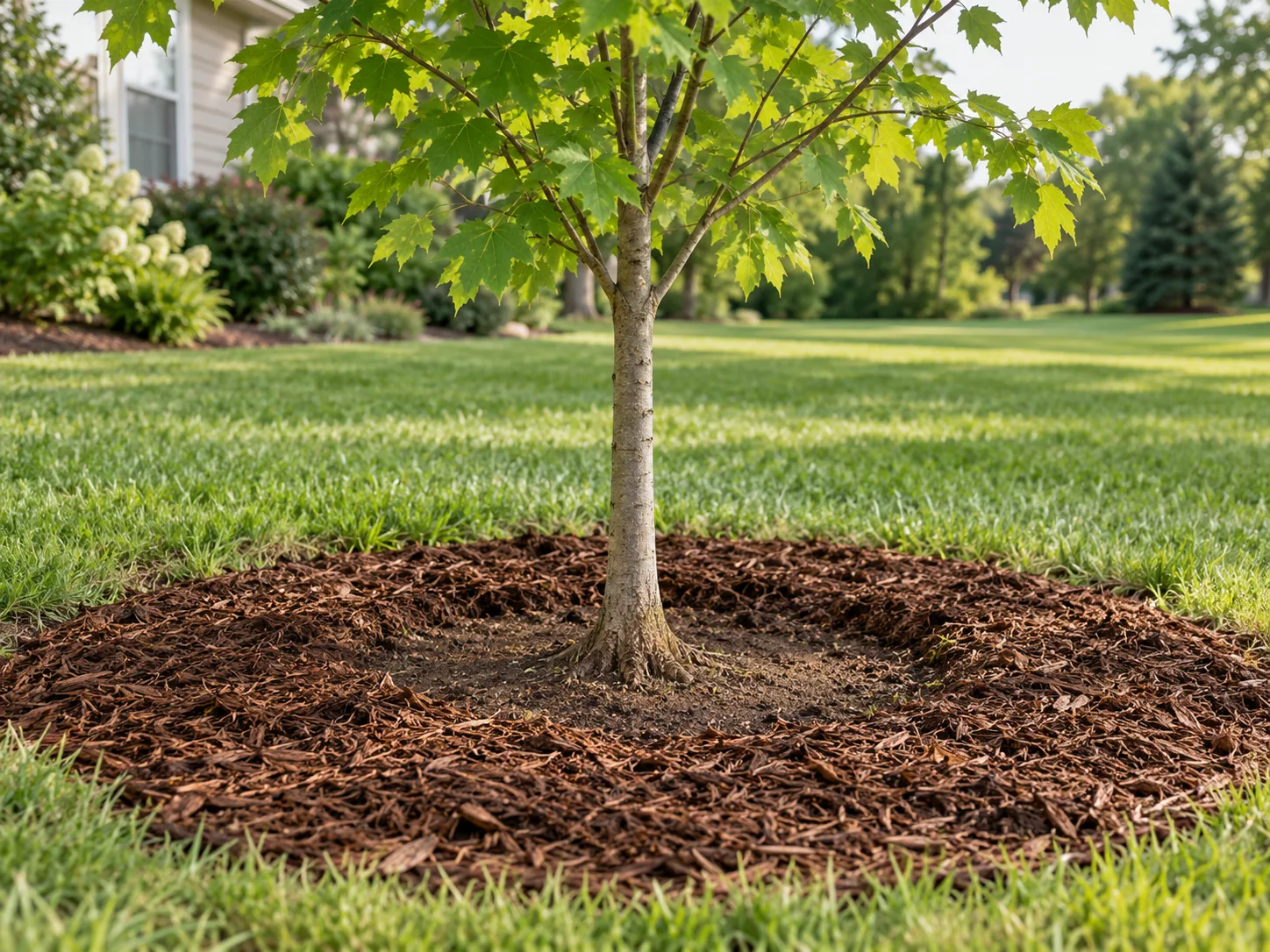
Inspect the nursery tree before planting
Choose a tree with an intact, firm root ball and a central trunk that is not badly damaged or leaning. Look for a visible trunk flare—the point where the trunk widens and the first major roots branch outward. A container-grown tree may have circling roots hidden against the pot; a balled-and-burlapped tree may have extra soil piled above the flare. Those defects can be corrected while the root system is exposed, but they are harder to address once the tree is in the ground.
If the flare is buried deep in the container or root ball, remove the excess growing medium until the first structural roots are visible. If the tree has a severe, woody root that wraps tightly around the trunk or many large circling roots, ask the nursery to exchange it or have an experienced arborist assess it. A poor root structure is not a problem that fertilizer can repair.
Set the root flare at grade
Dig a wide, shallow hole: at least twice the root ball’s width and no deeper than the distance from the bottom of the root ball to the exposed flare. The tree should stand on firm soil so it cannot settle below grade. Penn State Extension gives the same practical priorities—loosen soil laterally, expose the root flare, and correct circling roots before planting (Penn State Extension’s tree-planting guide).
Set the tree upright with the flare at or just above the finished soil line. For a container tree, tease or cut circling outer roots so new roots can grow outward; do not simply slide an intact, pot-shaped root mass into the hole. For balled-and-burlapped stock, remove twine from the trunk and peel back burlap from the top of the root ball; remove at least the top third of a wire basket when it can be done without destabilizing the root ball. Backfill with the soil you removed, water to settle it, and avoid burying the trunk in an effort to make the tree look “secure.”
Keep the trunk vertical and the flare visible after watering. A tree that leans slightly can be repositioned before the hole is filled; a tree planted too low may collect water against the trunk and encourage girdling roots. Stake only if the root ball rocks in wind or the site needs temporary protection, and remove the supports once the tree is stable rather than leaving tight straps to rub the bark.
Watering, mulch, and feeding after planting
Newly planted red maples need regular moisture while the roots move out of the original root ball. Water slowly over the root ball and adjacent backfill so the whole rooting area gets wet, then check the soil before watering again. The surface can look dry while the root ball remains damp, or look moist while the container-grown root ball has dried out; check a few inches down in both the nursery soil and surrounding ground.
Use a repeatable schedule as a starting point, not a substitute for checking weather and soil. Minnesota Extension recommends daily watering for the first one to two weeks, every two to three days through week twelve, then weekly until roots establish, skipping a session after substantial rain; its table also scales water volume to trunk caliper. Those intervals come from Minnesota conditions and should be adjusted for local heat, rainfall, soil, and tree size, but they show why a quick splash at the trunk is not adequate (University of Minnesota Extension).
After the first growing season, water during extended dry spells, especially for a young tree, a tree in compacted soil, or one surrounded by pavement. A mature red maple can tolerate some dry periods, but tolerance is not the same as preferred conditions; prolonged drought can cause marginal leaf scorch and premature leaf drop. Slow, deep irrigation is more useful than frequent, shallow sprinkling because it moistens the root zone rather than only the top crust.
Apply a 2- to 3-inch layer of wood-chip or other organic mulch in a broad ring, expanding it beyond the original root ball as the tree grows. Keep the mulch several inches away from the trunk and leave the root flare exposed. Mulch helps conserve water and protects shallow roots from mowers, but a tall “mulch volcano” traps moisture against bark, hides the flare, and can encourage root problems. Minnesota Extension’s tree-care guidance specifically recommends a wide, shallow mulch ring rather than piling material against the trunk.
Skip routine fertilizer at planting. If growth is weak, first check water, planting depth, drainage, soil pH, and root competition; a fertilizer may not solve any of those problems and can stimulate leafy growth at the expense of establishment. Use a soil test or local extension recommendation before applying nutrients. Healthy leaves and steady shoot growth are better evidence that a young tree is establishing than a fertilizer label promising a faster result.
Pruning for a durable structure
The goal is a sturdy, balanced crown, not a tightly sculpted silhouette. In the first few years, inspect the trunk and scaffold branches once or twice a season. Remove a competing leader if it is likely to create a weak fork, and watch for branches with narrow, crowded attachments, rubbing limbs, deadwood, or a broken tip. Small corrections while branches are young require smaller cuts and preserve more of the canopy.
Prune just outside the branch collar, the slightly raised tissue where a branch joins the trunk or parent limb. Do not make a flush cut against the trunk and do not leave a long stub; both interfere with the tree’s wound response. Avoid removing a large share of the live crown in one session. For established shade trees, large limbs, overhead work, or a split trunk, hire an ISA-certified arborist rather than climbing with a chainsaw.
Maples can bleed sap when pruned as sap begins to rise in late winter or early spring. That bleeding looks alarming but is generally a cosmetic issue; it does not mean a tree is dying. If you are shaping a red maple, late summer or early fall is a practical window, while dead or storm-damaged wood can be removed when safety requires it. Gardener’s Path also recommends avoiding major shaping immediately before the spring growth flush and prioritizing good branch structure while young (Gardener’s Path). Local arboriculture guidance should take precedence where disease or storm hazards change the timing.
Do not top the tree to keep it short. Topping removes the crown’s natural structure, leaves large wounds, and often triggers weakly attached shoots that need repeated removal. If the available space cannot accommodate the cultivar’s mature size, replacing the plan with a smaller tree is safer and less costly than trying to contain a large red maple indefinitely.
Cultivar selection: form, fall color, and seeds
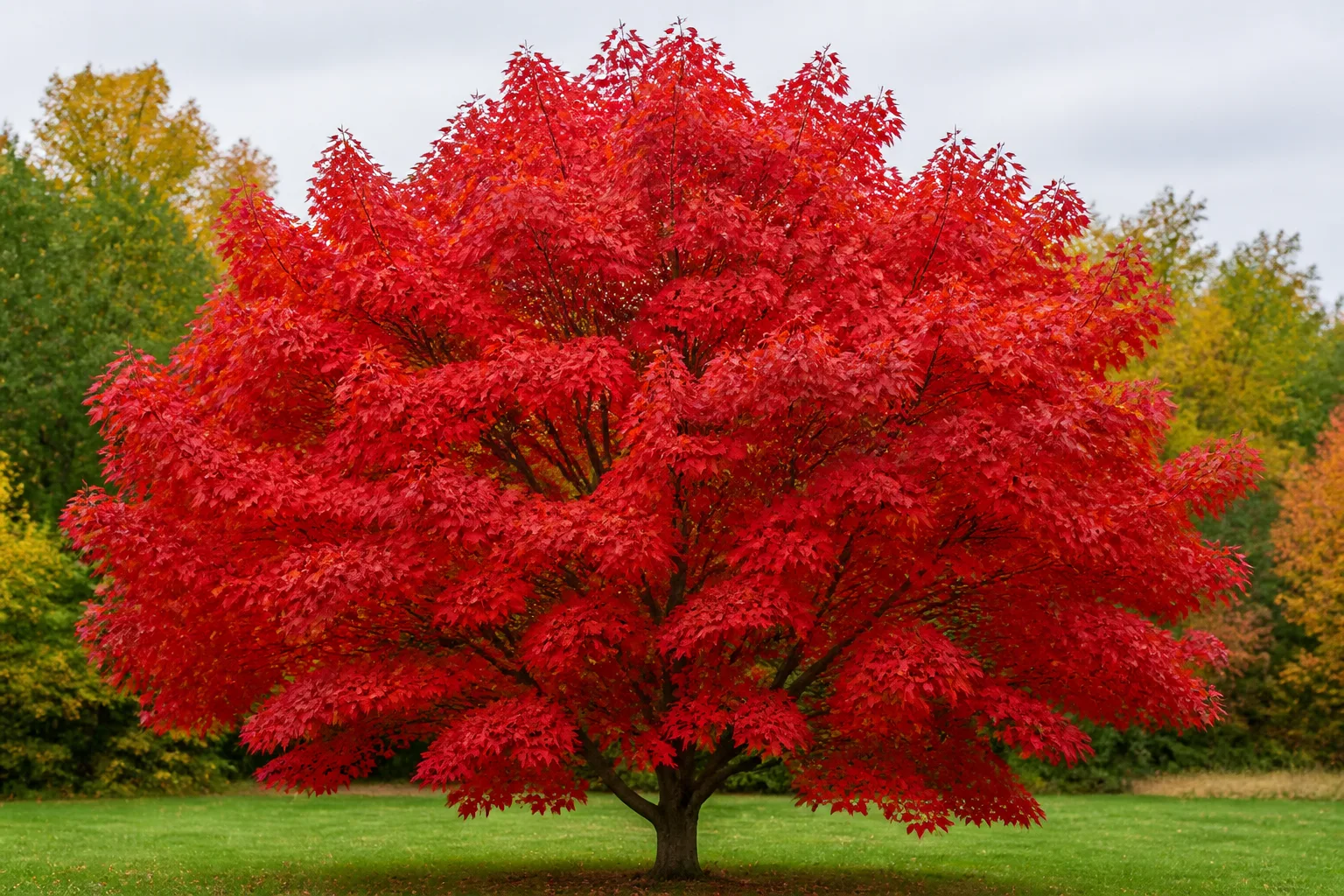
Straight-species seedlings vary. Red maples may turn red, orange, or yellow, and the intensity and timing can differ even among nearby trees. If repeatable color or a narrow shape is central to the design, buy a labeled cultivar from a reputable nursery and confirm its mature width, hardiness, seed production, and tolerance for the soil at your site.
| Selection | Useful trait | What to check before buying |
|---|---|---|
| ‘Red Sunset’ (‘Franksred’) | Early orange-scarlet to red fall color and a rounded shade-tree form | Confirm the space for a broad crown and whether local soil pH suits it |
| ‘October Glory’ | Rounded crown, strong red fall color, and later leaf retention | It is a female selection; ask whether its spring samaras and seedlings are a concern |
| ‘Brandywine’ | Male selection with intense, consistent fall color | A correctly labeled male plant avoids fruit, but verify the cultivar identity |
| ‘Bowhall’ | Narrow, upright form compared with the usual rounded crown | It is still a tall tree; “narrow” does not mean suitable beneath wires or beside a small building |
| ‘Autumn Blaze’ | Fast-growing tree with fall color | It is a Freeman maple hybrid, Acer × freemanii, not a straight red maple |
Cultivar descriptions are a starting point rather than a guarantee. Virginia Tech and North Carolina State Extension list different useful selections and note differences in form and fall color, which is why it pays to check regional performance and the specific nursery label (Virginia Tech; NC State Extension). Even a named selection needs adequate sun and appropriate soil. If a seed-grown red maple turns gold instead of scarlet, that can be normal variation, not evidence that the tree is unhealthy.
Seasonal care through the year
Late winter to spring: Check the tree before leaf-out for broken limbs, trunk damage, and rubbing branches. Red maple flowers can appear before leaves; the small paired, winged fruits follow and mature in spring or early summer, depending on region. If you plan to collect seed, wait until the samaras begin to dry or detach rather than taking immature green fruit.
Spring and early summer: Watch soil moisture as new leaves expand, especially during a dry spell. Pull seedlings promptly if you do not want volunteer trees, and refresh mulch only where the layer has thinned; do not cover the root flare. Aphids and leafhoppers may appear, but the presence of insects alone does not justify a spray. Look for sustained damage and identify the pest before choosing a response.
Summer: Water a young tree through extended heat and drought. Inspect the canopy for dead tips, early leaf drop, or leaves that turn brown at the margins; check soil moisture and drainage before blaming disease. If a tree is established and healthy, avoid unnecessary pruning in severe heat or drought because the foliage is supporting the tree through stress.
Autumn and winter: Rake or mulch fallen leaves if disease has been confirmed or if horses can reach them. Otherwise, healthy leaves can be shredded and returned as a thin mulch layer away from the trunk. After storms, look for hanging branches and broken limbs from the ground; do not work under suspended wood. Winter is also a good time to inspect the crown structure while leaves are absent, but defer large corrective cuts to a qualified arborist.
Red maple pests and diseases: what deserves action?
Red maples host aphids, scale, leafhoppers, caterpillars, and gall-forming mites, and can develop leaf spots, cankers, root rots, or verticillium wilt. A leaf blemish is not automatically a tree emergency. Start by asking whether symptoms are limited to a few leaves or affect much of the crown, whether they recur, and whether they coincide with drought, waterlogging, or recent construction.
Yellow leaves and scorch
Yellow tissue between green veins on otherwise mature leaves can signal chlorosis, particularly in high-pH soil where red maple may struggle to access manganese or iron. Do not add iron, manganese, or acidifying products simply because the leaves are yellow: several problems look similar, and the wrong amendment can create another imbalance. Check the pattern, test soil pH, and consult a local extension office or arborist if symptoms persist across the canopy or return each season.
Brown, dry margins or tips often point first to water stress, hot wind, compacted soil, root injury, or excess salts rather than an infectious disease. Compare affected leaves across sun-exposed and shaded parts of the crown and inspect soil several inches down. If the root ball is dry, water slowly; if it remains saturated, stop adding water and address drainage. A tree that is wilting despite moist soil may need a professional diagnosis rather than more irrigation.
Spots, galls, wilt, and branch decline
Leaf spots and tar-like patches are often most visible in late summer or after wet spring weather. When a tree otherwise has normal growth, these foliar symptoms are frequently cosmetic and do not call for a broad-spectrum fungicide. Remove and dispose of heavily infected fallen foliage if a local extension diagnosis recommends sanitation; avoid stripping healthy leaves from a tree that needs them to make energy.
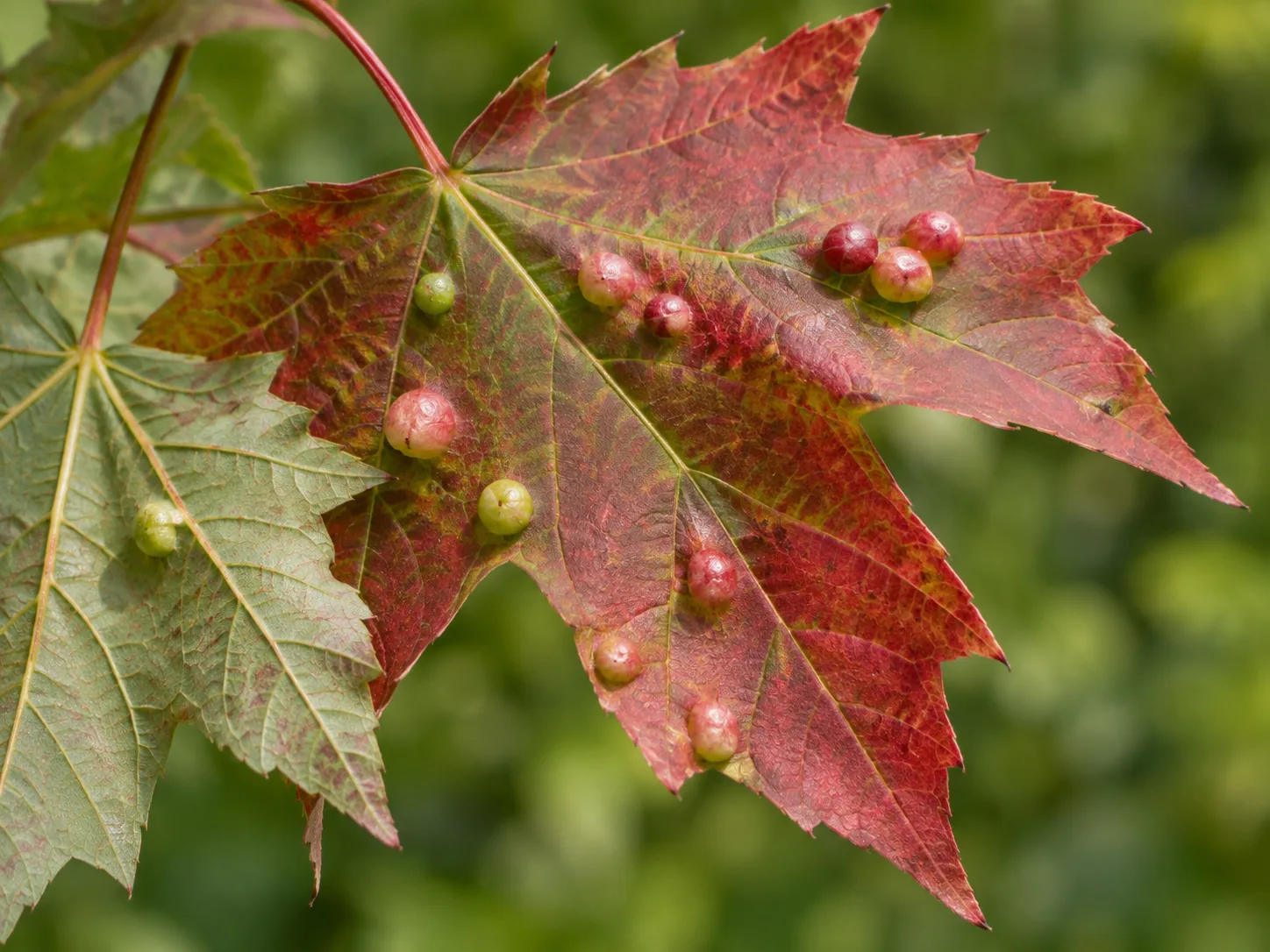
Small bumps or fuzzy growths on leaves are commonly galls formed in response to mites or insects. They can look dramatic but often cause little lasting harm to a healthy tree. Identify the problem before treating it, and do not spray when the pest has already left the leaf or when beneficial insects are active. The gall photo above shows one maple symptom; it is a visual example, not a diagnosis of every red maple with spotted or distorted foliage.
Verticillium wilt is more concerning because it affects water-conducting tissue and can cause one-sided or progressive branch wilt and dieback. Those symptoms overlap with drought, root damage, and other vascular problems, so a photo alone cannot confirm the cause. If a major limb declines rapidly, the problem spreads, or several branches fail in one season, contact an arborist or plant diagnostic clinic; pruning out a few brown leaves will not cure a systemic disease.
Red maple wood can be vulnerable to storm breakage, particularly where poor branch unions or prior wounds have weakened the crown. Remove small dead twigs with proper cuts, but leave large limbs, cracked unions, and branches over a target to a qualified tree professional. A tree that develops a new lean, a fresh soil mound on one side of the trunk, or a split main stem needs prompt assessment.
Grow red maple from seed
Red maple produces paired winged seeds called samaras, often in spring or early summer rather than autumn. Collect mature samaras when they turn tan or brown and begin to release from the tree. Each seedling is genetically different from its parent, so seed is a good route to a native tree or an experiment—not a reliable way to reproduce a named cultivar’s exact size or color.
Sow fresh seed promptly in a pot or protected nursery bed with a well-draining medium, cover it lightly, and keep it evenly moist. Some red maple seeds germinate without a cold treatment, while others benefit from cold stratification; this variation is one reason dried seed from an unknown tree can be unpredictable. Gardener’s Path describes the same cultivar-dependent variation and gives a cold, moist treatment as an option when seed does not germinate readily. If you need a specific cultivar, buy a vegetatively propagated tree rather than relying on seed.
Keep seedlings protected from drying, rodents, and competing weeds while they develop roots. Pot them on before roots circle densely around the container, and harden them off gradually before moving them into full outdoor conditions. A small seedling is not ready for a permanent lawn planting just because it has its first true leaves; wait until it is sturdy enough to handle transplanting and still protect it from mower, deer, and drought damage.
Softwood or semi-hardwood cuttings can be attempted by experienced propagators, but rooting success varies and is less dependable for a home grower than starting with a nursery tree. The simple cutting recipe sometimes repeated online leaves out the need for humidity control, appropriate propagation media, and careful hardening off. For most yards, choosing a well-formed nursery specimen is the more predictable path.
Is a red maple right for this yard?
Choose a red maple when you have room for a large deciduous canopy, want a fast-growing shade tree native to eastern North America, and can water a young tree through establishment. It can be a strong fit for a lawn, park-like space, or naturalized planting where surface roots and spring samaras are acceptable. The early flowers and seeds also provide seasonal resources for pollinators, birds, and small mammals in its native range.
Choose another tree if the planting strip is narrow, the canopy would conflict with wires, pavement or septic infrastructure cannot be kept clear, or the site is so alkaline that chlorosis is likely and you are unwilling to manage the underlying soil conditions. It may also be a poor choice where you need dependable lawn directly beneath the mature canopy. If you keep horses, treat the decision as a safety question rather than a cosmetic preference.
Wilted or dried red maple leaves and bark can cause severe red blood cell damage in horses. After wind or pruning, remove fallen branches and leaves from pasture promptly and do not feed suspect tree debris; if a horse may have eaten it, contact a veterinarian immediately. The ASPCA lists Acer rubrum as toxic to horses but non-toxic to dogs and cats, and UConn Extension emphasizes inspecting pastures after storms (ASPCA; UConn Extension). This is an important exception to general yard-plant advice: a tree that is suitable for a suburban lawn may need different placement or management around grazing animals.
Conclusion
The most reliable red maple care begins before planting: confirm the species and cultivar, check the mature size against the site, and favor soil that is moist but not chronically stagnant. At planting, expose the root flare, correct circling roots, set the tree no deeper than it grew in the nursery, and water the full root zone as it establishes.
After that, keep mulch broad and shallow, feed only when a soil test or local recommendation calls for it, and prune selectively to build a sound crown. Expect variation in fall color from seed-grown trees, investigate persistent yellowing rather than treating it blindly, and keep wilted red maple debris away from horses. With those decisions handled early, a red maple can become a long-lived shade tree without turning routine care into repeated repairs.



