How to Grow and Care for Sea Lavender in Your Garden
Grow sea lavender (*Limonium latifolium*) with practical advice on drainage, watering, spacing, pruning, containers, propagation, and common problems.
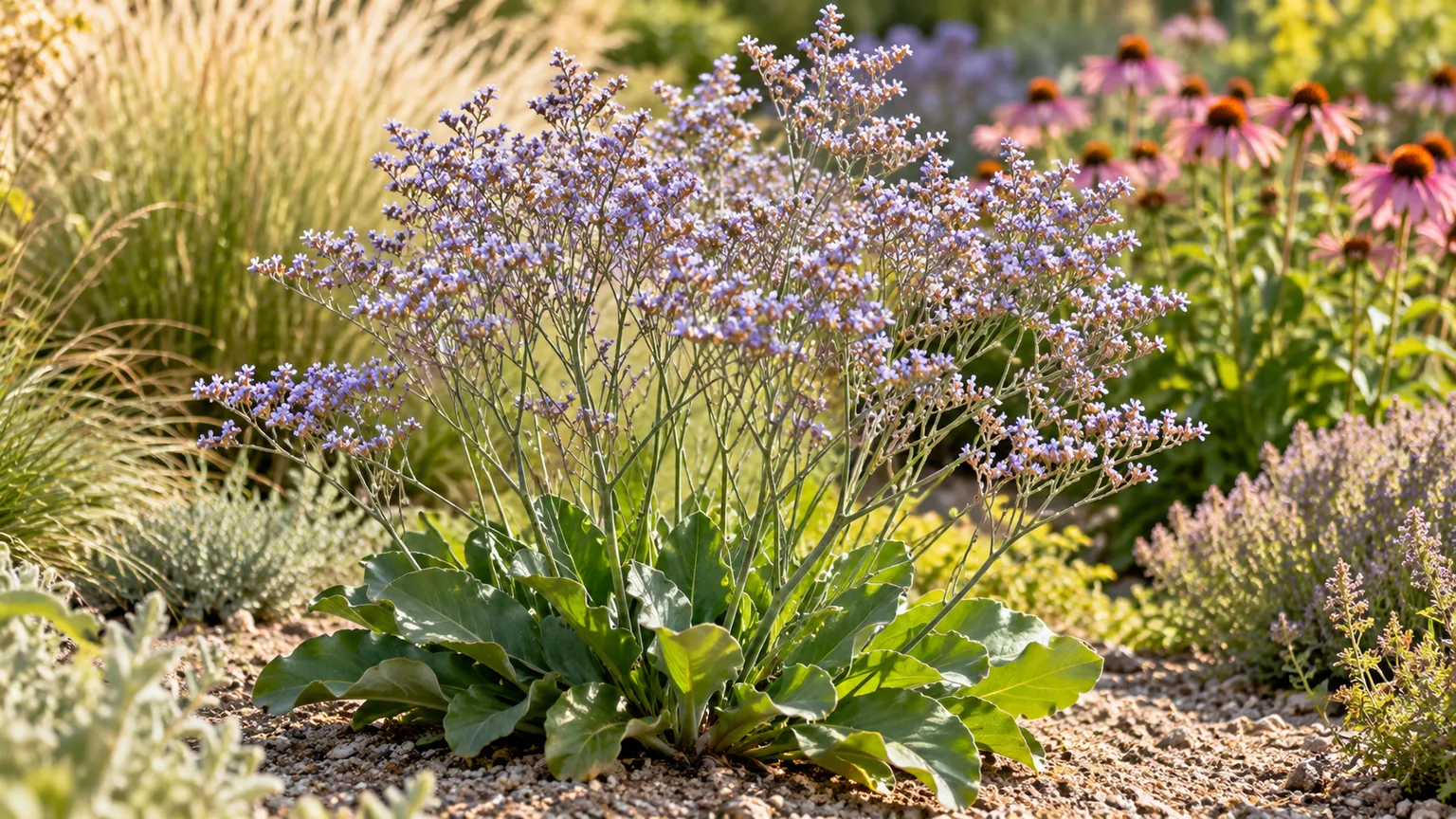
Sea lavender (Limonium latifolium) makes a garden look lighter than it is: a low rosette of broad green leaves sends up fine, branching stems that carry a haze of tiny lavender-blue flowers. It is useful in a sunny border, a cutting garden, or a dry-style planting, but the plant’s success depends less on a complicated feeding routine than on one decision made before planting: water must drain away from its crown and roots.
The common name can mislead. Sea lavender is not true lavender, and not every plant sold under the name has the same coastal tolerance or growth habit. Identify the species on the label, give it the sun and soil conditions it prefers, and treat a new planting differently from an established one. Those few distinctions prevent most disappointments.
Identify the sea lavender you are growing
In this guide, sea lavender means broad-leaved sea lavender, Limonium latifolium, a perennial in the Plumbaginaceae family. It forms a basal rosette of leathery leaves and sends up wiry, branched flower stalks, usually reaching roughly 2 to 2½ feet in a garden. The small flowers create a delicate, cloudlike mass rather than a single large bloom; botanical-garden descriptions place its main show in summer, often peaking in late summer.
“Sea lavender” is also a common name used for other plants in the genus Limonium and, in some references, for unrelated plants such as Goniolimon tataricum. North Carolina State Extension lists several plants called sea lavender and notes that salt tolerance varies among species. This matters if you are buying for a salt-exposed shoreline: a shared common name does not prove that every species handles the same exposure. Check the botanical name on the tag rather than relying on “sea lavender,” “statice,” or “marsh rosemary” alone. North Carolina State Extension’s plant profile is useful for seeing how broad the name is.
It is also unrelated to culinary or fragrant lavender in the genus Lavandula. The plants have different foliage, flowers, fragrance, and care expectations. Sea lavender’s strength is its airy floral texture and usefulness as a cut or dried filler, not the aromatic foliage associated with true lavender.
Decide whether sea lavender fits your site
Choose sea lavender if you have a sunny spot with soil that drains promptly and want a long-lived perennial with an open, fine-textured summer display. It works along a border edge, in a gravel or rock garden, or among taller plants whose leaves and stems provide a contrasting backdrop. The Lurie Garden in Chicago grows L. latifolium in full sun and slightly sandy, well-drained soil, where it supplies a soft layer in a perennial planting rather than acting as a dense groundcover. Lurie Garden’s species profile gives a useful species-specific picture of mature scale and bloom season.
Skip it, or first redesign the bed, if the only available site is shaded, stays waterlogged after rain, or receives frequent irrigation intended for moisture-loving plants. “Coastal” in the common name describes the wider group’s associations; it is not a reason to place this particular perennial in a wet bog garden. Likewise, drought tolerance describes a plant after it has established roots, not a plug that has just come out of a nursery pot.
Think of the plant as a structural accent rather than a fast filler. Its leaves sit close to the ground, while the flower sprays rise above them and mingle visually with neighboring plants. If you want a compact mound of foliage, a dense edging, or a plant that blooms heavily in shade, sea lavender is the wrong tool for that job.
Choose a sunny location
Give sea lavender a position with at least six hours of direct sun, with more sun generally improving the amount and sturdiness of flowering stems. A little light shade can be tolerated in some gardens, but shade combined with rich or damp soil is a poor trade: stems may stretch, the flower display can thin, and the crown stays wet longer. In humid climates, open air around the plant is particularly helpful after rain.
Before planting, watch the proposed spot through the day rather than judging it from a single morning visit. Note nearby walls, shrubs, or trees that cast afternoon shade, and avoid a low pocket where runoff collects. A sunny raised bed or sloped border can be a better location than a level bed with heavy soil, even if both receive the same light.
Sea lavender can tolerate wind better than many tall-flowered perennials because its stems are wiry, but repeated strong gusts can still bend a plant in soft, fertile ground. Site it where companion foliage can soften the wind without shading the rosette. If wind exposure is unavoidable, prioritize firm drainage and avoid late-season feeding that encourages weak, lush growth.
Get the soil and drainage right
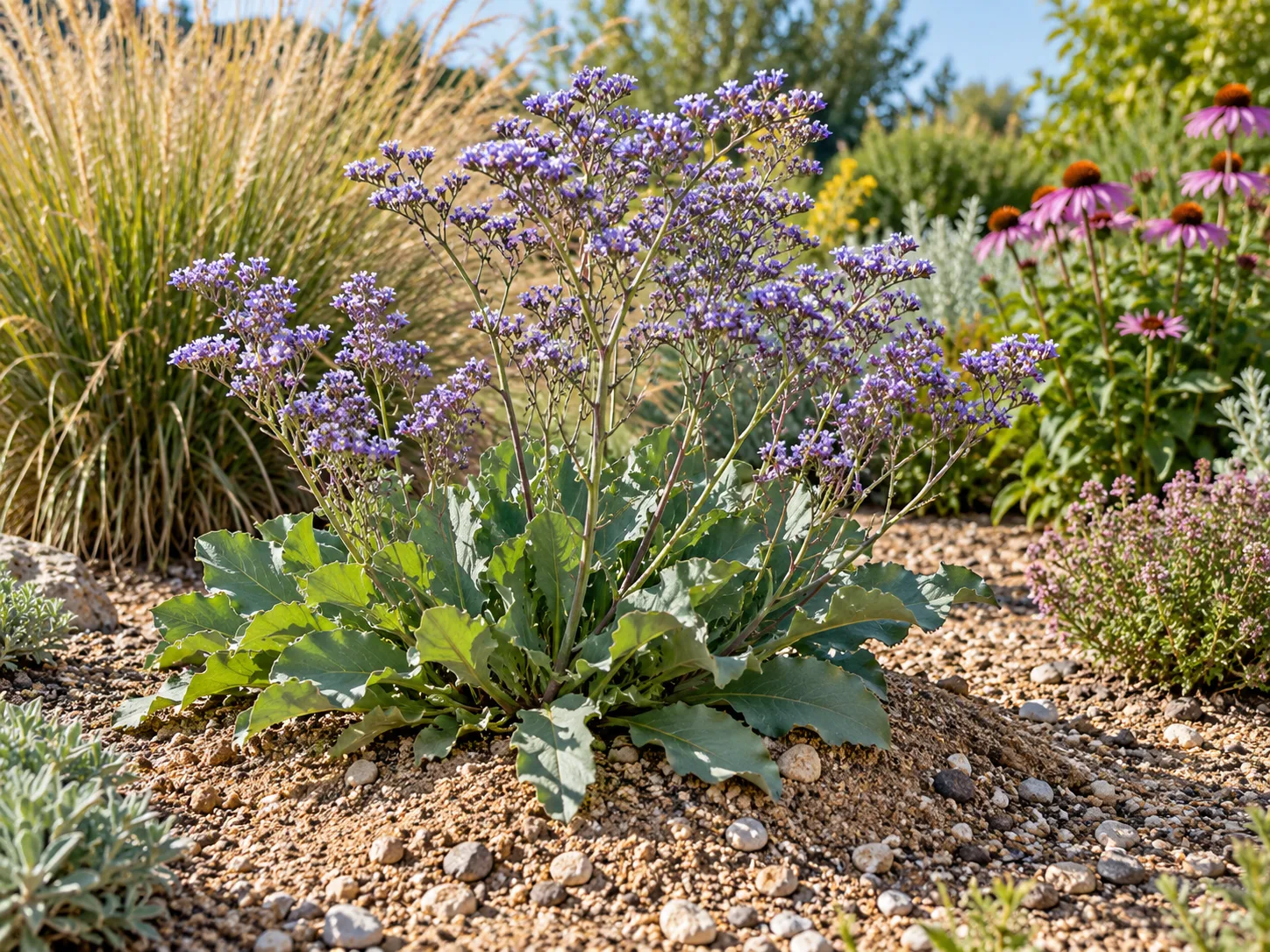
The best soil is light, sharply drained, and not excessively fertile. Sandy or gritty loam is a natural fit; ordinary garden soil can also work if water does not linger around the roots. Slightly sandy conditions are specified for L. latifolium by Lurie Garden, and the Okanagan Xeriscape Association likewise recommends full sun and sharp drainage for this dry-garden perennial. Okanagan Xeriscape Association’s 2026 plant profile describes the practical difference between a hot, dry site and heavy ground that can make the plant flop.
A simple drainage check is more useful than guessing from the soil’s color. After a soaking rain, look for puddles or a glossy, saturated layer that remains around the crown into the next day. You can also dig a small test hole, fill it with water, and see whether the water disappears rather than sitting for hours; the exact rate varies with soil and weather, so use the test to identify obvious stagnation, not as a laboratory measurement.
What to change in heavy soil
If clay holds water, do not solve the problem by mixing a small scoop of sand into the whole bed; that can leave you with a denser, poorly structured mix rather than reliable drainage. A raised planting area, a broad mound, or a different site is usually more dependable. If you improve a bed, work organic matter through a broad area and preserve a path for excess water to leave instead of creating a small amended “bathtub” surrounded by impermeable clay.
Set the plant so the crown—the point where leaves meet the roots—sits at soil level or very slightly above it. Do not bury the center under mulch, compost, or a deep planting mix. A thin mineral mulch or a bare ring around the crown keeps the area tidy without holding a wet blanket against the plant.
Plant sea lavender without burying the crown
Plant nursery-grown sea lavender in spring or early fall, when soil is workable and temperatures are moderate. In cold-winter areas, spring gives roots more time to settle before freezing weather; in hot-summer regions, early fall planting can reduce heat stress if the plant still has time to establish. Avoid putting a new transplant into baking, bone-dry ground without a plan to water it through its first season.
Water the nursery pot first, then slide the root ball out gently. Loosen only roots that are circling tightly around the outside; do not tear the center apart to “free” a plant that has a substantial taproot or thick root crown. Dig a hole only as deep as the root ball and wider than it, set the crown level with the surrounding soil, backfill with the native soil or a drainage-improved bed mix, and firm gently to remove large air pockets.
Space plants according to the mature spread on the nursery label. For a small group, leave roughly 18 to 24 inches between centers as a starting point, then adjust for the cultivar, desired density, and room needed for air to move through the flowering stems. Mountain Valley Growers notes that the flower bouquet can spread much wider than the low leaf rosette, so crowding too tightly can hide the airy outline that makes the plant valuable. Mountain Valley Growers’ growing notes also explain why the flowers work well as fresh or dried filler.
After planting, water slowly until the root ball and nearby soil are evenly moist. Keep the root zone from drying completely while new roots are forming, but do not water on a calendar if the soil is still wet. A plant that wilts in wet soil needs a drainage diagnosis, not another drink.
Water during establishment, then taper off
For the first several weeks, check the soil near the root ball every few days, adjusting for heat, rainfall, wind, and whether the plant is in a pot or the ground. Water deeply when the upper few inches have dried and rain has not replenished the root zone. The goal is to encourage roots to move into surrounding soil, not to keep the crown continuously damp with frequent shallow sprinkles.
During the first growing season, continue checking moisture during prolonged dry spells. A newly planted perennial may not yet have the root reach that gives a mature plant its drought resilience. Water at the base in the morning when possible, especially in humid regions, so foliage and flower stems dry quickly.
Once established, sea lavender generally needs only occasional deep watering during extended drought. Let the soil dry between waterings, while avoiding severe repeated stress in an unusually hot, dry spell. If leaves droop but the soil is wet, stop watering and inspect drainage and the crown; if the soil is dry several inches down, a thorough soak is more useful than a quick surface splash.
Container plants dry much faster than in-ground plants. Check the pot more often in summer, but still allow excess water to drain freely from the base and empty any saucer. Do not use the drought tolerance of an established garden plant as a reason to let a small container dry into a hard, shrunken root ball for weeks.
Fertilize sparingly
Do not fertilize sea lavender by habit. In fertile soil, it can grow adequate leaves without extra feed, and excessive nitrogen can favor leafy growth over flowers or produce softer stems that flop. The Okanagan Xeriscape Association’s dry-garden guidance emphasizes the plant’s fit for leaner, sharply drained ground; that is a useful starting point for garden care.
If the plant is pale or weak, first check sun, drainage, planting depth, and root health. Those conditions are more likely to explain poor performance than a missing fertilizer dose. If a soil test or clear nutrient deficiency points to a need, use a light application of a balanced or bloom-oriented fertilizer at the label rate in spring, keeping it away from the crown; do not keep adding feed when flowering does not improve.
A compost-rich, moisture-retentive layer piled over the crown is not a substitute for fertilizer. Use compost as a soil amendment before planting when needed, or as a light surface dressing around—not on—the crown. For this plant, the right soil structure is more important than a high nutrient level.
Space plants and manage tall stems
Allow room for the basal leaves and the flower sprays to spread. Sea lavender can look small early in spring, then occupy a surprisingly broad volume once the branching stems rise. A tight planting may seem efficient in the first year but can reduce airflow, make the flowers read as a tangled mass, and prolong dampness after rain.
The stems are naturally airy and often support themselves in a well-drained sunny bed. Stake only if a particular plant leans persistently, the site is exposed, or soil is heavy enough to encourage soft growth. Put a discreet hoop or a few supports in place while stems are still short; trying to push a stake into a fully grown clump risks damaging the crown and looks more conspicuous.
If the plant leans toward light, improve the light rather than forcing it upright with a dense cage. If it flops after rain, check whether it is overcrowded or planted in soil that stays wet. A healthy sea lavender has a loose, spreading silhouette; the goal is to preserve that form, not to make each stem perfectly vertical.
Understand the flowering and foliage seasons
In spring, the broad leaves form a low rosette close to the ground. As days lengthen and the plant grows, wiry stalks rise above the foliage and branch into a fine spray of tiny flowers. In many temperate gardens, flowering begins in summer and continues toward late summer; Lurie Garden reports a peak around August and September in its Chicago planting. Local bloom timing shifts with climate, cultivar, and how established the plant is.
The flower heads are visually effective because they add a misty texture, not because each floret is large. From a distance, the stems can soften the more solid shapes of coneflowers or grasses; up close, they function as delicate filler in an arrangement. The basal leaves may yellow or recede after flowering or with seasonal stress, while the dry stalks can remain as winter structure.
Do not judge a young plant by the show it produces in its first season. A transplant may spend its early energy on roots and foliage before building a larger flowering clump. If it is healthy and correctly sited, steady establishment is a better sign than an unusually heavy first flush encouraged by nursery conditions.
Prune, deadhead, and prepare for winter
Pruning is light. Remove broken, spotted, or fully spent stems with clean pruners, cutting them back to where they meet the foliage without nicking the crown. You can deadhead after the main display if you want a tidier bed, but leaving some seedheads and stems through winter adds structure and avoids unnecessary cutting during the plant’s dormant period.
In early spring, remove collapsed or brown stems before new growth pushes through. Clear out matted leaves and debris that trap moisture at the crown, but do not dig into the center of the rosette. If you cut the plant back in fall, wait until the flowers have finished and avoid a severe late-season trim that could expose the crown in a cold, wet winter.
Cold tolerance depends on species, cultivar, drainage, and local conditions. Lurie Garden lists L. latifolium for USDA zones 4 through 9, but a zone rating is a broad guide rather than a promise for every microclimate. In colder regions, good drainage and a sheltered, sunny position matter; a plant sitting in waterlogged soil can fail in winter even where the minimum temperature is nominally within range.
Cut and dry sea lavender flowers
For a fresh arrangement, cut stems when most of the tiny flowers have opened and the spray holds its shape. Strip leaves from the lower stems, recut the ends, and place them in clean water. Pair sea lavender with flowers that have larger forms—such as coneflowers, dahlias, or roses—so the fine branching spray acts as a veil rather than disappearing into an arrangement of only small blooms.
For drying, harvest when the flower color is beginning to fade but before the sprays become brittle and shed. Mountain Valley Growers advises arranging the stems while fresh because the dried branches are difficult to separate or reshape once they have set. Gather a small, loose bundle, tie the stems, and hang it upside down in a dry, shaded place with moving air; direct sun can dull color and a humid, closed room can encourage mold.
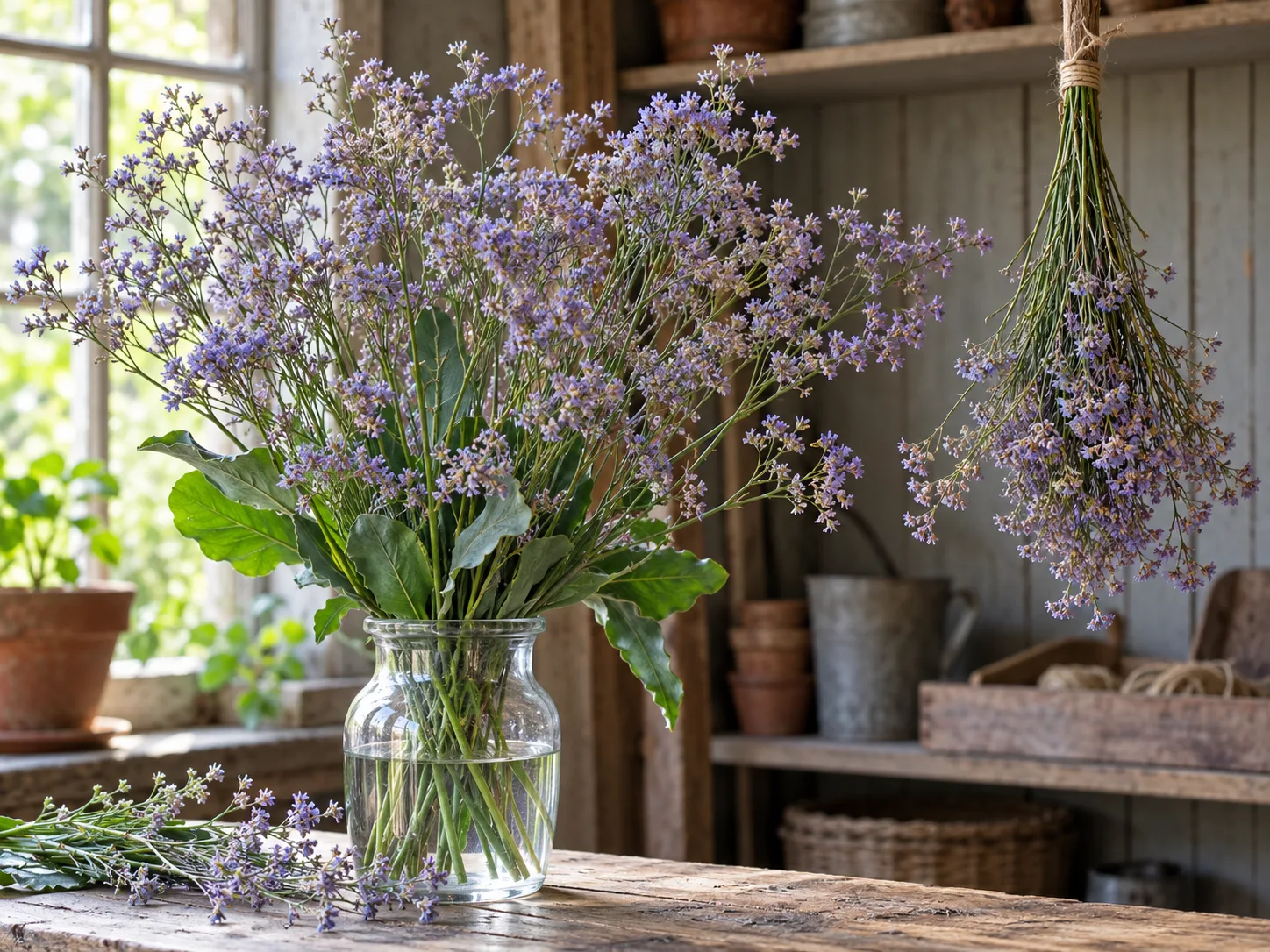
Check the bundle after several days. Stems are ready when they feel dry and papery rather than cool or limp; drying time varies with humidity and how tightly they were bundled. If the flower heads start to shed, use them as they are rather than trying to comb or re-separate the branches.
Grow sea lavender in a container
A container is useful when garden soil drains poorly or you want to keep the plant near a patio, but the pot must have generous drainage holes and enough depth for a substantial root system. Choose a stable, frost-resistant container wider than a small nursery pot, and use a gritty, free-draining mix rather than a dense, water-retentive houseplant blend. Do not put a layer of gravel at the bottom and assume it fixes drainage; the mix itself and open drainage holes do the work.
Set the crown at the same level it occupied in the nursery pot. Water thoroughly after planting, let water run out, and empty the saucer. In summer, containers may need more frequent checks than the ground, while winter rain can keep a pot too wet even when the plant is dormant. Raise the pot slightly on feet if it sits on a surface where water pools.
The trade-off is extra monitoring and reduced winter insulation. Roots in a container experience colder and hotter swings than roots in the ground, so choose a cold-hardy plant for your climate and protect the pot in severe winter weather without wrapping the crown in damp material. If the container repeatedly stays wet or the plant becomes root-bound, repot in spring into fresh, open mix and a slightly larger vessel.
Propagate by seed or cautious division
Seed is a practical way to start sea lavender, although it takes longer to produce a full flowering clump than buying an established plant. Sow fresh or properly stored seed in a clean seed-starting mix according to the packet’s instructions, cover only as directed, and keep the mix evenly moist—not saturated—until germination. Provide bright light after seedlings emerge, then harden them off gradually before planting outdoors after frost risk has passed.
Seedlings may vary from a named cultivar, so use division or a nursery-grown plant when you need to preserve a particular selection. The species develops a deep, substantial root system, which makes division more disruptive than dividing a shallow, fibrous perennial. North Carolina State Extension lists seed and division among propagation strategies for the genus, but that genus-level advice is not a guarantee that every mature plant will divide easily.
If you do divide, work in early spring as new growth begins. Water the plant the day before, dig widely and deeply around the root mass, and lift as much root as possible; separate only pieces that have a healthy crown and roots, using a clean sharp tool. Replant immediately at the original depth and keep evenly moist while it reestablishes. Skip division if the plant is thriving and there is no practical reason to move it—disturbing a large, healthy clump can set it back.
Diagnose weak growth and common problems
Sea lavender is not usually a high-maintenance pest plant, but it can decline when the site is wrong. Start with the root zone and the crown before reaching for a spray or feed. A perennial that has yellow leaves, few blooms, or a sudden collapse is giving you a clue about conditions; treating a symptom without checking soil moisture often makes the underlying problem worse.
Crown or root rot is the main risk in persistently wet ground. The plant may look wilted even though soil is damp, and the crown can become soft or dark. Stop routine irrigation, check that water can escape, remove mulch touching the crown, and improve the site if possible. A badly rotted plant may not recover; moving it while severely compromised can spread contaminated soil to a new hole, so dispose of affected material and correct the drainage before replanting.
Leaf or flower spotting and gray mold are more likely when foliage stays wet and air cannot move through crowded stems. Remove badly affected material, water at soil level, and thin nearby plants or relocate the perennial if airflow is persistently poor. Avoid blanket pesticide advice: diagnose the problem first, follow local extension guidance, and use any product only if its label permits the specific site and target.
Flopping, few flowers, and crown rot
If flower stems flop, consider three causes: too much shade, soil that is too fertile or wet, or a plant crowded by neighbors. Add a light support only after checking the site; staking treats the lean but not the conditions creating it. If the rosette is robust but flowers are sparse, confirm that the plant receives direct sun and avoid high-nitrogen feeding.
If a plant has not bloomed, also check its age and transplant history. Newly installed perennials may take time to settle, and a plant divided or moved recently can focus on roots before flowering. Keep basic notes on planting date, sun, and watering; that simple record helps distinguish normal establishment from a persistent site problem.
Choose companions and use sea lavender in design
Pair sea lavender with plants that share its preference for sun and good drainage. Its soft flower haze contrasts with the solid flower heads of coneflower, the upright wands of salvia, or the blades and seedheads of ornamental grasses. At Lurie Garden, designers use it behind taller, coarser-textured perennials such as coneflower, switchgrass, and Russian sage; a similar contrast can make a small border feel layered without filling every gap with dense foliage.
Place taller companions behind or beside it rather than directly over the leaf rosette. In a mixed border, repeat sea lavender in small groups for rhythm, but leave enough space around each crown for airflow and maintenance. In a cutting bed, plant it where you can reach the stems from both sides; frequent harvest is easier when the airy flower sprays are not tangled through a dense hedge.
The dried stems extend the plant’s value beyond bloom season, while the low foliage provides a green base in spring. Use it where that transition is welcome, and avoid treating it as an evergreen groundcover or a salt-proof substitute for a locally adapted coastal native. If a site is exposed to road salt or storm surge, choose plants with species-specific local evidence and check regional coastal recommendations rather than relying on a shared common name.
Conclusion
Sea lavender is at its best in a sunny, open bed where excess water drains quickly. For Limonium latifolium, provide room for the broad rosette and tall, fine flower sprays, water consistently while roots establish, then ease off and avoid heavy feeding. If your soil is dense or stays wet, change the planting position before trying to compensate with more care.
Identify the species before assuming it will tolerate a salty shoreline, and use a container only if you can provide a deep, freely draining mix and monitor moisture. With those conditions in place, sea lavender offers a long summer display, useful cut stems, and a delicate dried-flower texture with relatively little pruning or fertilizer.