Pepper Plant Spacing by Type, Bed, and Container
Find pepper plant spacing for bells, jalapeños, and hot chiles, with row, raised-bed, and container guidance plus a realistic 4-by-4-foot bed example.
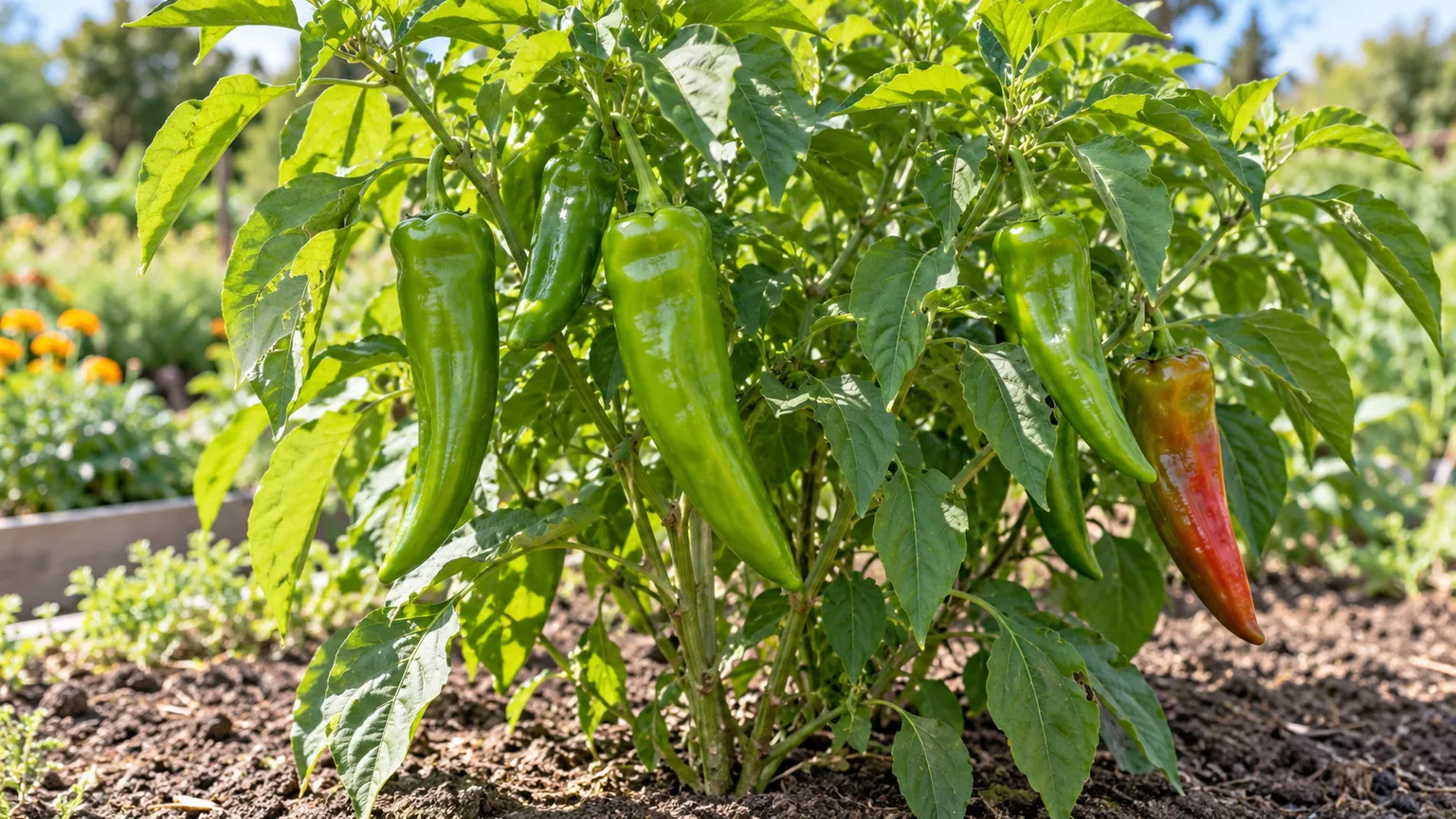
Most home-garden peppers do well with 18 to 24 inches between plant centers. Use the wider end for broad bell peppers, vigorous plants, humid gardens, and any row you need to reach into; compact varieties can sometimes grow closer, around 12 to 18 inches, when you are planting an intensive bed and can accept overlapping foliage. Leave about 24 to 36 inches between rows when you need a path or room to harvest, recognizing that some extension recommendations use narrower rows where the garden is managed as a compact block.
Those numbers are starting points, not species laws. A seed packet’s mature width, your local growing season, whether plants are caged, and whether you need to walk between rows all change the useful distance. The key is to measure from the center of one stem to the next; the visible space between leaves will shrink as the plants grow.
At-a-glance pepper spacing
| Planting situation | Practical starting distance |
|---|---|
| Most peppers, plant to plant | 18–24 inches on center |
| Compact chiles or deliberately intensive beds | 12–18 inches on center, with good light and access from the edge |
| Large bells or vigorous plants | 18–24 inches; use the wider end if the mature canopy is broad |
| Rows with a walking or harvest lane | 30–36 inches between row centers |
| Tight raised-bed grid without a path | 18–24 inches in both directions |
| Container | One plant in a five-gallon pot is the reliable default |
Utah State University Extension gives a compact garden recommendation of 18 inches between transplants in a row and 18 to 24 inches between rows. Savvy Gardening recommends 18 inches between bell peppers and 30 to 36 inches between their rows, while allowing 12 to 18 inches for several smaller hot-pepper types. These are not necessarily contradictions: the row number depends on whether a grower is fitting plants into a bed or leaving a lane for movement and maintenance. Treat the chart as a workable range, then adjust it to the plant’s expected width and your access needs.
Measure from plant center to plant center
Spacing on a seed packet or planting chart nearly always refers to the distance from the center of one plant to the center of its neighbor. It does not mean leave that full distance between the outside edges of their leaves. If two plants are 18 inches apart, their leaves can meet when the bushes become full without the stems being planted too close together.
Mark the centers before setting out transplants. A tape measure and a few sticks or labels help prevent the common mistake of eyeballing the first two plants and then compressing the rest of the row. In a bed, measure both directions from the same fixed edge so a grid stays consistent rather than gradually narrowing.
Use the plant tag’s mature width when it is available. If a label says the plant will spread 18 inches, 18-inch center spacing means the mature canopies may just meet; it does not promise a clear gap. If you want room to reach between branches, or if air stays humid after rain, give the canopy a little more room or leave a service lane.
Let mature width set the final distance
Peppers do not all make the same shape. A short, compact ornamental or patio cultivar may remain narrow, while a well-grown bell plant can form a broad, heavy canopy. Plants also grow larger in long, warm seasons than they do in a cool region where they have less time to branch and set fruit.
Think of plant spacing and access as two separate measurements. Plant spacing gives each root system and canopy room to develop; row spacing gives you space to walk, weed, tie branches, inspect leaves, and pick fruit without stepping on neighboring plants. A narrow aisle can save bed area on paper and cost more time every time you harvest.
When the packet lists only height, look for a cultivar-specific description from the seed company or grower before planting. Height alone is a poor spacing guide: a plant that is two feet tall can still spread two feet across, and fruit weight can pull branches outward. If you cannot find the width, use 18 inches for a compact-to-medium pepper and move toward 24 inches for a large bell or a long-season plant. UF/IFAS Gardening Solutions likewise says spacing depends on variety and advises checking cultivar requirements; it also notes that staking can help as fruit weighs plants down. When spacing charts disagree, check the label attached to the number: “within row,” “between rows,” and “plants per square foot” describe different things. A recommendation of 18 inches between plants does not mean the next row should also be only 18 inches away if you need a path. Set plant centers first, then add whatever row interval your garden needs for access.
Spacing by pepper type
Variety names are useful clues, but the label’s growth habit is more important than the pepper’s heat level. A jalapeño is not automatically small, and a sweet pepper is not automatically large. Look at the mature width when the seed supplier provides it, then use the ranges below to pick a conservative starting layout.
Bell peppers and large sweet varieties
Give most bell peppers 18 to 24 inches between plants. Choose 24 inches for broad, vigorous cultivars, long warm seasons, humid conditions, or plants that will carry a heavy crop. For a compact bell variety in a short-season garden, 18 inches can be a reasonable balance between airflow and productive use of limited ground.
Leave roughly 30 to 36 inches between rows if you want to move along the row, inspect the lower leaves, and harvest without leaning over a neighboring plant. Savvy Gardening uses this wider row spacing for bells. A bed managed from the outside can be tighter because the gardener does not need a full walking lane between every row.
Jalapeños, serranos, cayennes, and compact chiles
For a typical jalapeño, cayenne, or serrano, start at 18 inches between centers. A truly compact cultivar can be planted at 12 to 15 inches in a bed where you can reach every plant from an edge, but 12 inches should be a purposeful space-saving choice rather than the default for every pepper. Check the variety description: some jalapeños branch broadly, and a mature plant can obscure the smaller plant beside it.
Savvy Gardening lists 12 to 18 inches for jalapeños and cayennes and 18 to 24 inches for larger habaneros. The Yard and Garden gives 14 to 18 inches for jalapeños and habaneros, showing why a single species-wide number can be misleading. In practice, use the upper end when the cultivar is unfamiliar, the season is long, or you want to walk between rows; save the tighter end for compact plants and a bed you can work from outside.
Habaneros and broad, vigorous peppers
Use 18 to 24 inches for a habanero or another pepper described as broad and vigorous. Many are grown as smaller plants in cool or short-season gardens, but they can become much larger where warmth lasts well into fall. Give a large plant more space because its branches and fruit need room, not because its fruit is hotter.
If you grow superhot varieties in a warm climate, allow 24 inches when possible and leave 30 to 36 inches between rows if you need access. When space is limited, place a vigorous plant at the end or corner of the bed so its canopy can spread over an open edge instead of pushing through neighboring foliage.
Plan in-ground rows for both plants and access
Set plant centers 18 to 24 inches apart, then decide how much space belongs between the rows. Utah State University Extension’s home-garden guide lists 18 inches in the row and 18 to 24 inches between rows. That is a compact arrangement for a small garden. For a row you intend to walk beside or work from both sides, a 30-inch lane is easier; 36 inches is more forgiving when plants are broad, stakes are in place, or the ground stays humid.
The distance is measured row center to row center, not as a clear path between leaf edges. A 24-inch row interval can leave very little open ground once the plants fill out. Use 30 to 36 inches for a normal access path, and remember that a path that is too narrow can disappear entirely under mature foliage.
Before planting a long row, place one pot or nursery container at each planned location and walk the route. Check that you can reach the center of the bed and the underside of the canopy without bending branches. A simple dry run catches spacing problems before roots are disturbed.
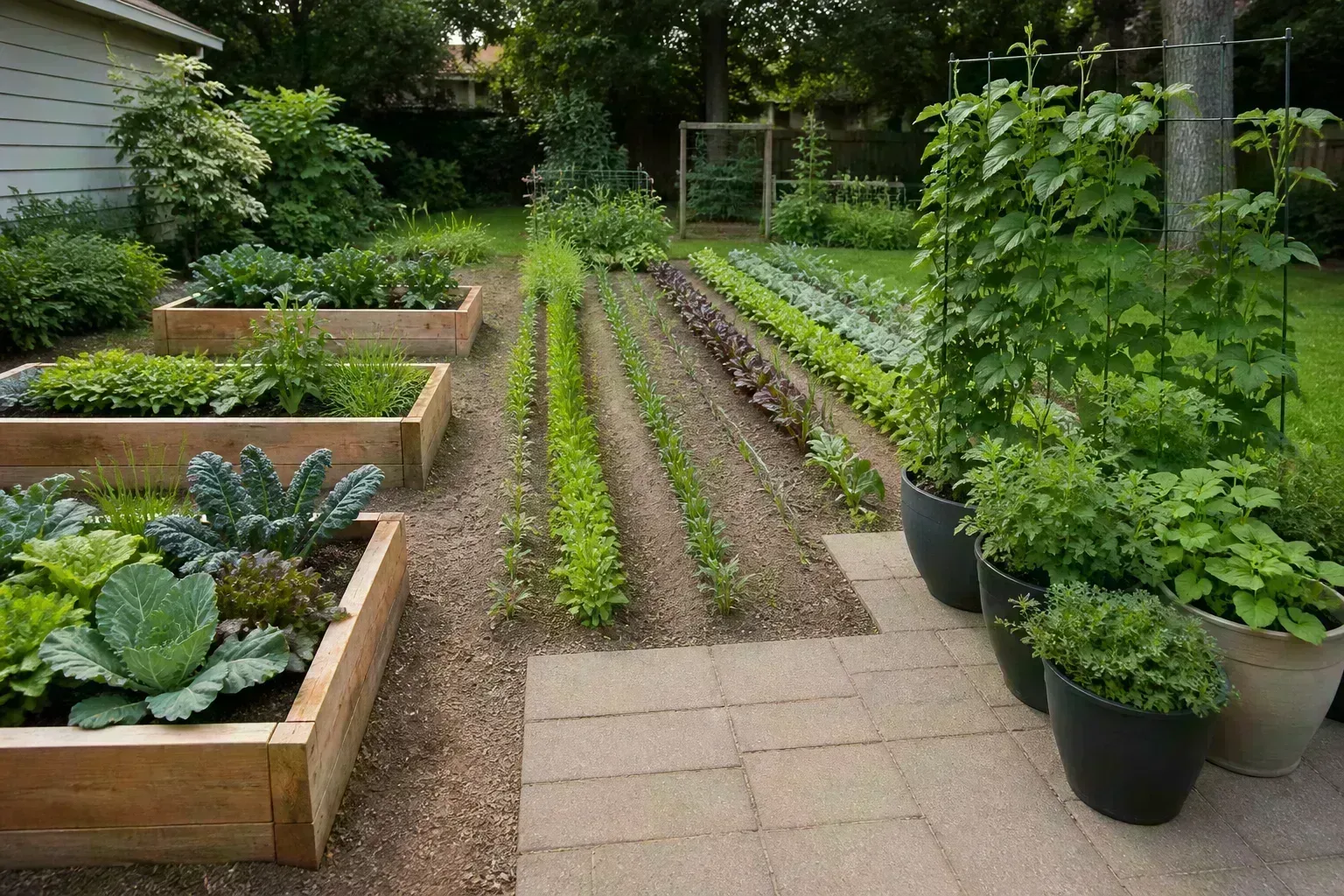
Use a grid in a raised bed you can reach from outside
In a raised bed that you never walk on, spacing plants in a square grid can use the surface more efficiently than rows with empty aisles. Set the centers 18 to 24 inches apart in both directions. The distance between plants remains the same diagonally or side by side only when the pattern is square; staggering alternate rows can improve reach and airflow, but it does not make the plants smaller or erase the need for mature-canopy space.
A bed should be narrow enough to reach its center from the sides. If the bed is too wide to reach across, include a stepping path or split the planting block rather than placing pepper stems at an inaccessible center. Compact planting is useful only if you can still water at the base, inspect the plants, support branches, and pick fruit without crushing the foliage.

A realistic count for a 4-by-4-foot bed
A four-by-four-foot bed does not automatically hold 16 peppers. At 24-inch centers, a simple two-by-two layout gives you four large or vigorous plants with room around each one. At 18-inch centers, a three-by-three grid can fit up to nine compact or medium plants if you can tolerate canopy overlap and the plants along the edges have room to lean beyond the bed. In a 48-inch bed, a two-by-two pattern at 24 inches can place the centers about 12 inches from each edge. A three-by-three pattern at 18 inches places the outer centers about 6 inches from the bed edges, so the foliage will extend beyond the frame as it matures. That is often workable when the outside of the bed is clear, but it is a poor plan beside a fence, wall, or narrow path.
That upper count is not a promise of nine full-size bell plants with separate, easy-to-reach branches. If you grow large bells, use cages, garden in a humid area, or want each plant to be simple to inspect, choose four to six plants instead. In a 4-by-4 bed, the apparent number of planting spots is only one part of the decision; canopy width and how you will harvest matter just as much.
Give container peppers their own root space
For a standard pepper, one plant per five-gallon pot is the most dependable container setup. A roomy pot supports a larger root zone and dries more slowly than a small one, which matters in hot weather when a container can lose water quickly. Savvy Gardening also recommends a five-gallon container for bell peppers and jalapeños, while noting that some smaller types can grow in less.
A second plant in one pot is possible, but it is a compromise rather than a free way to double the harvest. Two root systems share the same limited water and nutrients, and the canopies can block light and air from one another. Only try it in a genuinely large, wide container with drainage and a compact cultivar; keep the plants far enough apart for their leaves to expand instead of placing two stems a few inches apart.
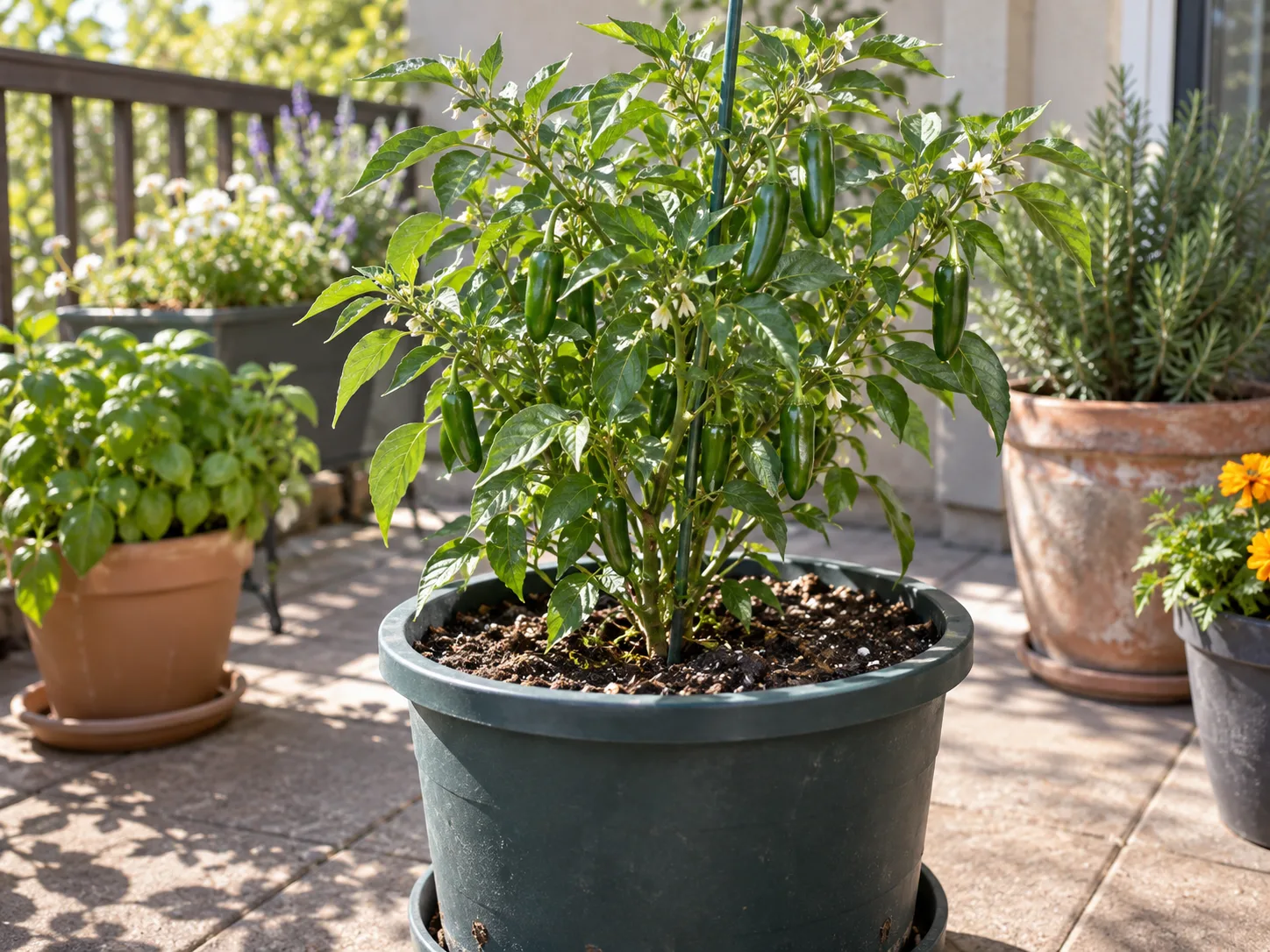
Check pot dimensions as well as volume. A tall, narrow container and a broad, shallow container can both hold five gallons but give plants a different footprint and stability. Secure a stake in the pot while the transplant is young, and avoid letting a mature plant tip when branches are loaded with fruit.
Account for stakes, cages, and mature branches
A stake takes less lateral space than a tomato cage, but it does not change the pepper’s root needs or mature width. A cage can extend beyond the plant’s stem by several inches on every side, so measure the cage’s outside diameter before setting a row. If two cages touch, harvesting and inspecting the plants becomes awkward even if the stems meet the packet spacing.
Install support when you plant or while the pepper is still small. Pushing a stake through a mature root zone can injure roots, and trying to thread a cage around a full plant can break brittle branches. Tie the main stem loosely and leave space for side branches; support should hold fruit-laden growth, not force the canopy into a narrower shape than the variety naturally takes.
The Utah State University Extension guide notes that excessive nitrogen can encourage foliage and delay fruiting. That is a reminder that a crowded plant is not always fixed by adding fertilizer: feed according to soil-test or label guidance, and do not use fertilizer to compensate for spacing that blocks light and access.
Know when compact spacing works—and when it fails
Close planting can make sense in a raised bed with compact varieties, consistent irrigation, good light, and no need to walk among the plants. The roots still need moisture and nutrients, but a gardener who can reach the whole block from the sides may not need a wide row aisle. A dry, breezy site also dries leaves faster than a sheltered, humid corner. Planting closer is also easier when the bed receives strong, even light; shade from a nearby wall or taller crop can make the inner plants stretch toward the sun and crowd their neighbors faster. If only one side of a bed is accessible, do not count on a dense grid merely because the plants can physically fit. A layout that you can weed and harvest without leaning across the canopy is more useful than a higher plant count.
Tight spacing is a poor choice when the pepper variety is unknown, the site stays damp, plants are likely to become large, or you must reach between rows. Leaves that touch are not automatically diseased, and wider spacing is not a substitute for sound watering and sanitation. The practical consequence of too little room is often that inspection and harvest get harder first; prolonged wet foliage and competition can add plant-health problems as the season progresses.
Spacing too far apart also has a cost: it leaves productive ground open and can invite weeds. If plants are far apart because you need a walkway, treat that as an access decision, not wasted space. Mulch exposed soil and use the open strip for a low-growing crop only if it will not shade pepper seedlings, compete heavily for water, or make it harder to inspect the pepper stems.
What to do if peppers are already crowded
If the plants are still small, move them before their roots spread into neighboring root zones. Water the bed first, lift each transplant with a generous soil ball, and reset it at the same depth at the planned center point. Give it a thorough watering after replanting, then monitor for wilt while it settles. Avoid transplanting during hot midday conditions, when a disturbed root ball loses water quickly.
For established peppers loaded with flowers or fruit, digging and relocating them can cause more setback than leaving them in place. If one plant is weak or badly shaded, cut it at soil level rather than pulling it through the roots of the plants you are keeping. Remove only damaged or crossing branches that block access; hard pruning will not recreate the light and space of a better planting layout.
Use a simple inspection routine while the canopy is dense. Look under leaves, check for insect activity, and water at the soil line so the foliage is not needlessly kept wet. Pick ripe fruit regularly to reduce the weight on crowded branches, but do not strip healthy leaves to force a narrow shape; leaves shade fruit and support the plant’s growth. If the crowding is in pots, move the containers apart before roots reach the drainage holes or the canopy becomes entangled. That small change preserves the root balls and is usually simpler than repotting plants already carrying fruit.
Keep seed-saving distance separate from garden spacing
Plant spacing for an edible crop is not the same thing as isolation for seed purity. Pepper flowers can self-pollinate, but insects can also transfer pollen between compatible varieties. Cross-pollination does not change the flesh of a pepper already forming; it can affect the traits of plants grown from the saved seed.
If you want to save seed that reliably matches a named variety, do not assume that planting two kinds of pepper on opposite sides of a small garden is enough. Use a seed-saving method that controls pollination, such as bagging selected flower buds and hand-pollinating them, or follow an isolation plan suited to the varieties and pollinator activity. Attainable Sustainable explains the distinction between eating this season’s fruit and preserving seed traits; use dedicated seed-saving guidance when varietal purity matters.
Conclusion
For most home gardens, begin with 18 to 24 inches between pepper plant centers. Choose 18 inches for compact plants and intensive beds you can reach from outside; use 24 inches for broad bells, vigorous cultivars, humid sites, and plants that need cages. Leave 30 to 36 inches between row centers when you need a real harvest path, even though compact extension layouts may use less.
Measure before you plant, use mature width rather than heat level to choose the final distance, and give each container pepper a generous root zone. In a 4-by-4-foot bed, four large plants are an easy-care plan, while up to nine compact plants is a tight-grid option with expected canopy overlap. The best spacing is the one that lets your actual plants grow, dry, and remain reachable through harvest.



