How to Grow and Care for Cotton Rose (Hibiscus mutabilis)
Learn how to grow cotton rose, from choosing a warm, sunny site to pruning after frost, propagating cuttings, and understanding its white-to-pink flowers.
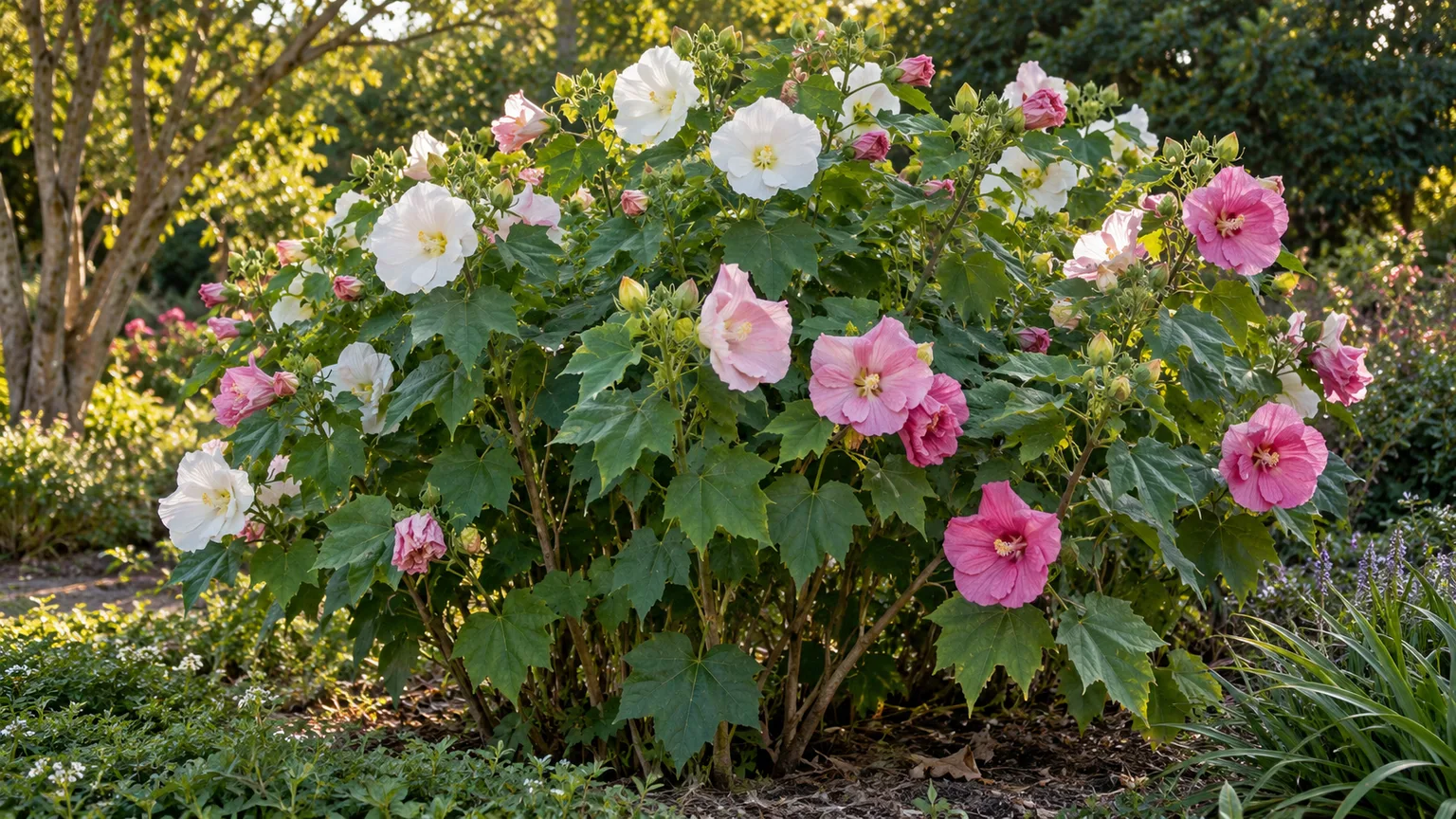
Cotton rose is a large, fast-growing hibiscus shrub whose flowers can open pale and deepen to pink as they age. Give it warm weather, room for a broad canopy, and soil that holds some moisture without staying waterlogged. Those three conditions do more for a healthy plant than a complicated fertilizer routine.
The common names can mislead. Cotton rose is also called Confederate rose or cotton rose mallow, but it is neither a true rose nor native to the American South: Hibiscus mutabilis belongs to the mallow family and comes from China and Taiwan. Its winter behavior also changes by region. In cold parts of its range the top may die to the ground and return from the roots; in milder gardens, stems can persist and the shrub may become woody.
That distinction drives the care calendar. A gardener whose plant resprouts from the base should wait until new growth shows before removing old stems, while a gardener with living branches can shape the framework after flowering. Before planting, decide whether your yard can accommodate a shrub that may reach roughly 10 to 12 feet tall and 8 to 10 feet wide in favorable conditions, and whether your winter lows suit it.
Know the shrub before choosing its place
Cotton rose has a coarse, upright, multi-stemmed habit, large palmately lobed leaves, and showy saucer-shaped flowers. It is often used as a specimen shrub or placed at the back of a mixed border, where its size and late-season bloom can be appreciated without crowding paths or smaller plants. North Carolina State Extension describes a mature plant around 10 to 12 feet high and 8 to 10 feet wide, while Clemson Cooperative Extension notes that height varies by region and may reach about 15 feet in warm coastal areas.
The species name mutabilis refers to change. Individual flowers often open white or pale pink and darken to deeper pink as they age, so one shrub may show several shades at once. That color shift is a normal feature of the species, not evidence that soil pH is changing the flower color. The NC State Extension Plant Toolbox identifies its origin as south-central and southeastern China and Taiwan and notes its value to butterflies, hummingbirds, and specialized bees.
Do not confuse cotton rose with tropical Chinese hibiscus (H. rosa-sinensis), rose of Sharon (H. syriacus), or swamp rose mallow (H. grandiflorus). They belong to the same broad genus but differ in cold tolerance, shape, water preferences, and pruning. The broad Epic Gardening hibiscus overview emphasizes that tropical and hardy hibiscus have different seasonal needs; for cotton rose, follow species-specific advice rather than applying a generic hibiscus routine.
Match cotton rose to your winter climate
Extension references generally place cotton rose in USDA Zones 7 through 9, although sources and local experience sometimes list a wider range. A hardiness zone describes average annual extreme winter minimum temperature; it does not promise that every stem survives every winter. Clemson reports that cotton rose may die back in most of South Carolina, returning from the base, but can retain woody stems in warmer coastal areas. NC State lists zones 7a through 9b for the species in its regional plant toolbox.
Use the zone as a first filter, then think about exposure. A sheltered position near a warm wall, protection from drying winter winds, and well-drained soil can improve survival near the colder edge, while a low frost pocket or exposed site can make a borderline plant behave as if it were in a colder zone. These are microclimate effects, not a guarantee of extra hardiness. If your winters regularly fall below the range reported by regional extension sources, treat cotton rose as an experiment or choose a locally proven alternative.
In a Zone 7 or 8 garden, expect the shrub to behave more like a root-hardy perennial: stems may freeze back, and new canes emerge late in spring. In warmer Zone 9 settings, it is more likely to retain branches and develop into a woody shrub. Do not assume that a leafless plant is dead in winter; scratch a small spot on a stem in spring to check for green tissue, then wait for buds or basal shoots before cutting healthy-looking wood.
Choose room, sun, and soil for a large shrub
Think about the plant at mature size, not the one-gallon nursery pot. A cotton rose can spread across nearby perennials, shade a narrow walkway, or lean into a fence if planted too close. Leave open space around the canopy for airflow and access, and set it where late-summer and fall flowers will remain visible from a path or window. If you want to maintain it as a smaller shrub, plan for periodic pruning rather than assuming it will stay compact on its own.
Give stems light and wind protection
Full sun—about six hours or more of direct light—is the best starting point for sturdy growth and abundant flowering. The plant tolerates partial shade, especially in hot climates where some afternoon protection can reduce leaf stress, but deep shade often means a more open, stretched plant and fewer blooms. Favor morning sun and open afternoon light over dense shade under a tree.
Tall, fast-growing stems can be vulnerable to strong wind, especially when the ground is saturated or the shrub is carrying a broad canopy. Choose a spot with some shelter from prevailing gusts without trapping humid air around the foliage. A fence or building can help, but avoid placing the root zone where roof runoff or a downspout keeps it soggy.
Prioritize drainage and steady moisture
Cotton rose grows in a range of soils, but a loam rich in organic matter that drains after rain is a dependable target. NC State notes that the species tolerates several textures, from clay to sand, and can handle occasionally wet conditions; that does not mean it thrives with roots continuously submerged. Heavy clay can be workable when the site drains, while a compacted basin that holds standing water increases stress and root problems.
Before planting, observe the spot after a hard rain. If water remains for many hours, move the shrub to a better-drained area or raise the planting bed rather than filling one small hole with loose potting mix. The surrounding soil controls drainage, so a rich pocket inside dense clay can act like a basin. A two- to three-inch mulch layer helps conserve moisture; keep it several inches away from stems so the crown stays airy.
Plant cotton rose while roots can settle
Plant in spring after the soil has warmed and severe frost risk has passed. That gives roots a long growing season to establish before winter, which matters most in zones where stems die back. Fall planting can work in mild climates, but a newly planted shrub has less time to anchor and recover before cold weather.
Water the nursery pot before planting so the root ball is evenly moist. Dig a hole two to three times as wide as the root ball and no deeper than its height. Set the plant so the top of the root ball sits level with or just above the surrounding grade; do not bury the stem base. Loosen circling roots gently, backfill with the native soil you removed, and water slowly to settle air pockets. Avoid putting concentrated fertilizer or fresh manure directly against roots.
For a shrub intended to become multi-stemmed, leave enough clearance from walls, utilities, and other woody plants. Water again when the root ball begins to dry rather than on a fixed daily schedule. The surface may look damp while the center remains dry, so check several inches down near the original root ball during the first weeks. Once the plant is established and putting on new growth, gradually stretch the time between deep waterings.
Water by establishment stage, not by the calendar
A newly planted cotton rose needs regular moisture while new roots extend into surrounding soil. Check the root zone every few days in hot or windy weather; water deeply when the top few inches are drying, then allow excess water to drain. The interval might be short in sandy soil and longer in cool weather or moisture-retentive soil. A shallow sprinkle wets the surface but does little for the deeper roots that will support a tall shrub.
After establishment, the plant can tolerate short dry spells better than a fresh transplant, but drought tolerance is not the same as thriving without water. If leaves wilt in the morning, the soil is dry several inches down, or flower buds shrivel before opening, water the root zone thoroughly. If leaves yellow while the soil stays wet and heavy, more water is the wrong response: pause irrigation and investigate drainage. Avoid repeatedly wetting foliage late in the day, when leaves may stay damp overnight.
Container plants dry faster because the root zone is limited and exposed on all sides. Check the pot more often during summer and water until excess drains from the bottom. Empty standing water from a saucer. In winter dormancy, reduce watering, but do not let a container root ball become bone-dry for months; moisture needs are lower, not zero.
Feed lightly and only when growth needs it
Cotton rose can grow vigorously in suitable soil without frequent feeding. Start by improving the planting bed with compost, then assess the plant through the growing season. If it produces strong stems and healthy leaves, extra fertilizer is unlikely to solve anything. Excess nitrogen can push leafy growth at the expense of flowers and create soft shoots that are more vulnerable to wind or cold.
If growth is weak and the site, moisture, and drainage are appropriate, use a balanced slow-release fertilizer in spring according to its label and the product’s guidance for shrubs. Do not apply fertilizer to dry soil or pile it against stems. Stop feeding late in the season so tender new growth is not encouraged just before cold weather. A soil test is more useful than guessing if symptoms persist; yellow leaves can result from water stress, root trouble, pests, or nutrient conditions, and fertilizer will not correct all of them.
Read the flower color change and bloom season
Cotton rose typically blooms from late summer into fall, when many spring-flowering shrubs are finished. Flowers are commonly several inches wide and may be single or double depending on the cultivar. A bloom may open white or light pink and shift toward deeper pink as it ages; warm conditions, cultivar, and the flower’s age can affect the exact pace and shade. The Gardenia species profile describes a same-day color progression and notes that multiple colors can appear on a plant together.
A single flower is short-lived, but the shrub can continue producing buds across the flowering period. Spent blooms usually fall on their own. You can remove them to keep the area tidy, but deadheading is not a substitute for enough light, healthy roots, or a long warm growing season. If a plant is leafy but produces few flowers, check whether it receives direct sun, whether it was pruned after new growth began, and whether excessive fertilizer is pushing foliage.
Do not judge the entire flowering season by an early-summer check. Cotton rose is a late bloomer, and a young plant may spend its first season building roots and stems before it displays heavily. Note when buds appear in your climate over a few years; that observation is a better local calendar than expecting the same dates from coastal and inland gardens.
Prune according to whether stems survive winter
Pruning advice depends on the plant’s winter habit. In a colder garden where the top freezes to the ground, wait until late winter or early spring and until you can distinguish dead canes from live basal growth. In a mild garden where stems persist, prune after the fall display or during dormancy to shape the framework and remove damaged wood. NC State recommends winter pruning after fall bloom because flowers develop on new growth; Clemson similarly notes that rejuvenation cuts can work in many, but not all, South Carolina settings.
Shape living stems after flowering
For routine maintenance, remove dead, crossing, weak, or storm-damaged stems first. Then shorten long shoots to a healthy outward-facing bud or side branch, keeping the natural multi-stem shape instead of shearing the plant into a dense ball. A few well-placed cuts preserve airflow and keep the shrub from becoming top-heavy. Use sharp, clean pruners for small stems and loppers for thicker branches; do not remove more than needed just because the shrub grows quickly.
If stems freeze back annually, avoid cutting them down in autumn unless they are diseased or broken. The standing canes can mark the plant’s location and protect the crown somewhat through winter. Once spring growth begins, cut dead canes near the base without damaging emerging shoots. If a stem looks dry above but green lower down, cut back in stages until you reach living tissue.
Rejuvenate a leggy plant without guesswork
A mature cotton rose can be cut back hard when it becomes overgrown, but a severe reduction sacrifices the current framework and may delay the next display. Use rejuvenation pruning only when the plant is vigorous and the local growing season is long enough for replacement shoots to mature. Clemson cautions that regional conditions affect whether this approach suits a site; if you are unsure, remove one-third of the oldest stems over two or three seasons instead of cutting the entire shrub to the ground.
Never make a hard cut while the plant is actively forming buds or flowering unless there is a safety reason. Large cuts also create a temporarily bare space, so consider whether neighboring plants will look exposed. After pruning, water during dry spells and skip a compensating dose of high-nitrogen fertilizer; the plant needs time and healthy roots to respond.
Protect roots and wait out winter dormancy
In a climate where cotton rose dies to the ground, leave the crown undisturbed and apply a modest layer of mulch after the soil cools. Keep the mulch loose and away from the stems; a thick wet pile against the crown can encourage decay. Mark the plant with a label or stake if nearby beds are worked in winter, because a dormant root system can be easy to mistake for empty ground.
Container roots are more exposed to freezing than roots in the ground. In a borderline climate, move the pot to an unheated but sheltered garage or shed after dormancy, or insulate the container outdoors where winters are mild enough. Keep it out of a warm living room: a dormant plant does not need to be pushed into soft growth. Check occasionally for moisture and move it back outside gradually as spring temperatures stabilize.
Do not prune or dig up a leafless cotton rose simply because it has not leafed out early. This species may emerge later than nearby perennials, especially after a cold spring. If no basal shoots appear after consistent warmth, scratch a small section of lower stem; green tissue indicates life. Confirm dead tissue progressively rather than removing every cane at once.
Propagate with cuttings or seed
Stem cuttings are usually the most predictable way to make a plant like the parent. Seedlings may vary, especially if the parent was a named cultivar or pollen came from a nearby hibiscus. Clemson describes cotton rose as a common pass-along plant because cuttings root readily; NC State also lists stem cutting as its recommended propagation strategy. Take more than one cutting if you want a backup, because not every cutting roots.
Root a semi-ripe cutting
Choose healthy, nonflowering growth in spring or summer that is firm enough to hold its shape but not old, woody material. With clean pruners, take a 5- to 6-inch tip cutting, remove the lower leaves, and keep one or two leaves near the top. If those leaves are large, trim them in half to reduce water loss while leaving enough leaf surface to support growth.
Insert the lower node into a small pot of clean, free-draining propagation mix, then water it so the mix is evenly moist but not soggy. Cover loosely with a clear bag or place the pot in a humid propagation box, keeping the cover from touching the leaves. Set it in bright indirect light, not hot direct sun, and open the cover periodically to refresh air. Check moisture by touch and vent if condensation is excessive.
After several weeks, gently tug once; resistance and new growth can indicate rooting, but neither is proof by itself. Let the cutting form a usable root system before potting it on or planting it outside. Harden it off over several days before moving it from sheltered conditions into sun and wind. Spring often gives young roots the longest runway before winter; avoid planting a fragile new cutting outdoors just before cold weather.
Starting from seed. Collect seed only from mature capsules that have dried and begun to split. Sow seed in a clean seed-starting mix, cover lightly, and keep the mix warm and evenly moist. Germination conditions vary with freshness and temperature, so do not discard a pot after only a few days. Once seedlings have true leaves, give them bright light and room to grow before transplanting after frost risk has passed.
A seed-grown plant may not match the flower form or color of the parent, and seedlings can take longer to reach flowering size. If you want to preserve a particular double-flowered cultivar or a dependable white form, use a cutting from that plant instead. Keep labels with seeds and cuttings; common names such as Confederate rose can refer to the species generally and do not identify a specific cultivar.
Decide whether container growing is realistic
Cotton rose can live in a large container, but its eventual size makes this a compromise rather than the easiest way to grow it. A pot restricts roots, dries faster than garden soil, and may limit flowering or require repeated pruning. Choose container culture when mobility is essential for winter protection or when you need a temporary way to grow a young plant, not because you expect a mature shrub to remain compact indefinitely.
Use a heavy container with generous drainage holes and a quality potting mix that drains freely while retaining some moisture. Move up only one or two pot sizes at a time; an oversized volume of wet mix can stay saturated around a small root system. Place the pot where the plant gets strong light and where a mature canopy has room. Repot when roots circle densely, emerge through drainage holes, or the plant dries out unusually fast despite sound watering.
Pruning a container-grown shrub can keep it manageable, but repeated severe cuts can remove flowering wood and stress roots. Check it more often in heat, and feed conservatively because nutrients wash out of containers more quickly. If you cannot provide winter shelter for a large pot in your region, planting in the ground may be more reliable.
Prevent pests and troubleshoot weak growth
Cotton rose is not usually a high-maintenance plant, but soft new shoots can attract aphids, and hibiscus may also host whiteflies, scale, or mealybugs. Inspect the undersides of leaves and the tips of new growth every week or two during active growth. A small cluster can often be dislodged with a firm stream of water; repeat checks because eggs or hidden insects may remain. Avoid spraying a flowering shrub when pollinators are visiting, and use any pesticide only if needed and exactly as its label directs.
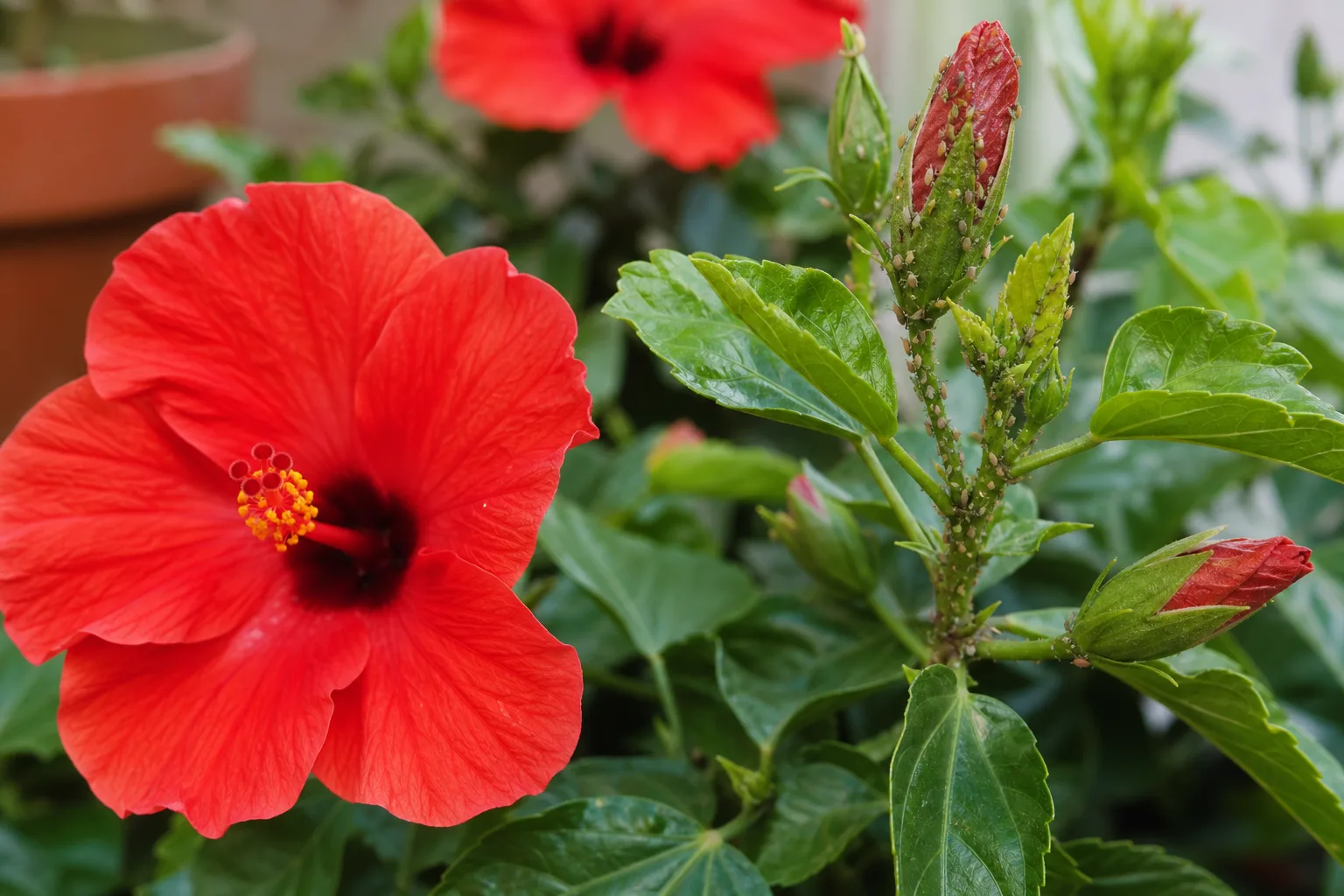
Powdery mildew and leaf spots are more likely when foliage stays crowded and damp or infected debris remains around the base. Improve air movement, water at soil level when practical, and remove badly affected leaves rather than treating every spot as a systemic disease. Clean up fallen leaves at the end of the season. If symptoms spread rapidly or stems develop dark, sunken lesions, prune affected material with clean tools and ask a local extension service to identify the problem before applying a fungicide.
Yellow leaves have several possible causes, so inspect the soil before changing care. If the root zone is dry, water deeply and monitor whether new leaves recover; older damaged leaves may not turn green again. If the soil is wet for days, improve drainage and reduce irrigation. A few yellow leaves during seasonal cooling or natural leaf drop are less concerning than widespread yellowing during warm active growth.
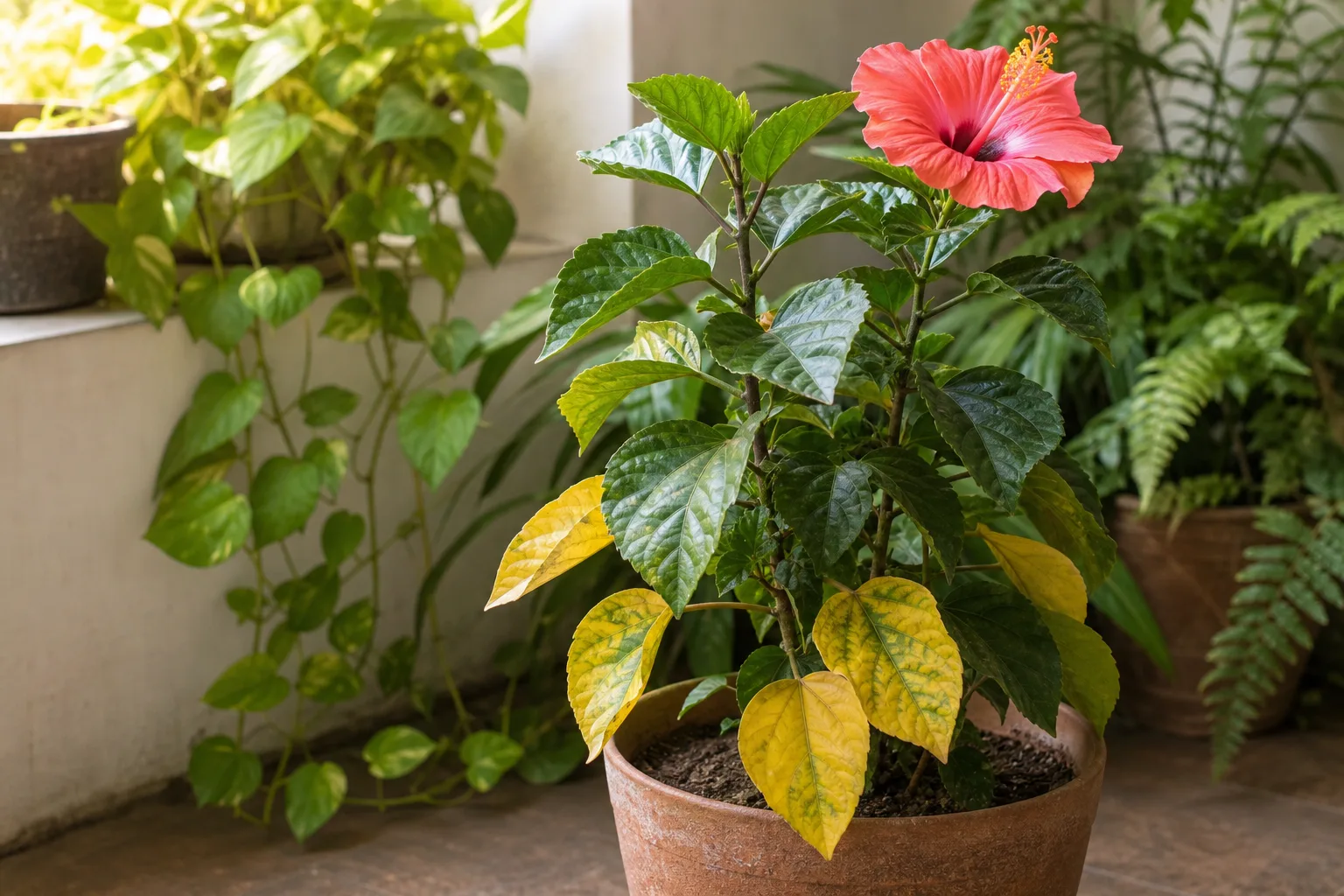
Wilting in hot afternoon sun can be temporary, but persistent morning wilt deserves attention. Dry soil points to water stress; wet soil with wilt suggests the roots may not be functioning normally. Sparse flowering often follows too much shade, excessive nitrogen, late pruning, drought during bud development, or a short cool season. Change one factor at a time and observe new growth rather than applying fertilizer, water, and pesticide simultaneously.
Use cotton rose where its scale and season help
The shrub works best where a large summer canopy and late flowers fill a real gap: at the back of a border, as a specimen, or near a seating area where the color progression can be seen. Allow enough distance from smaller plants so they are not smothered as branches expand. The flowers draw pollinators, but the plant is not a substitute for a diverse garden; pair it with other plants that provide resources at different times of the year.
Cotton rose is also a practical pass-along plant. A cutting can share a cultivar with a neighbor, while seedlings offer variation and a chance to observe differences. If you need a small shrub, an indoor plant, or a plant with reliably evergreen winter foliage, choose another species rather than forcing cotton rose into a job it does not naturally fill.
Conclusion
Cotton rose is easiest to grow when you plan around its mature size and winter behavior. Give it a sunny, well-drained place with room to spread, water young roots consistently, and wait until you know whether your stems survive winter before deciding how to prune. In colder gardens, protect the crown and be patient in spring; in milder ones, shape living branches after the late-season display.
For more plants like the parent, start semi-ripe cuttings during active growth and keep them warm, humid, and lightly moist as they root. Do not mistake cotton rose for tropical hibiscus or assume every plant sold under a hibiscus label has the same care needs. Once the species is correctly identified and the site suits its scale, the shrub’s late flowers and changing shades can carry a garden into fall with very little complicated maintenance.



