How to Grow and Care for a Gold Dust Plant
Gold dust plant care made practical: find the right light, avoid blackened leaves and root rot, grow Aucuba in a pot, and understand berry pollination.
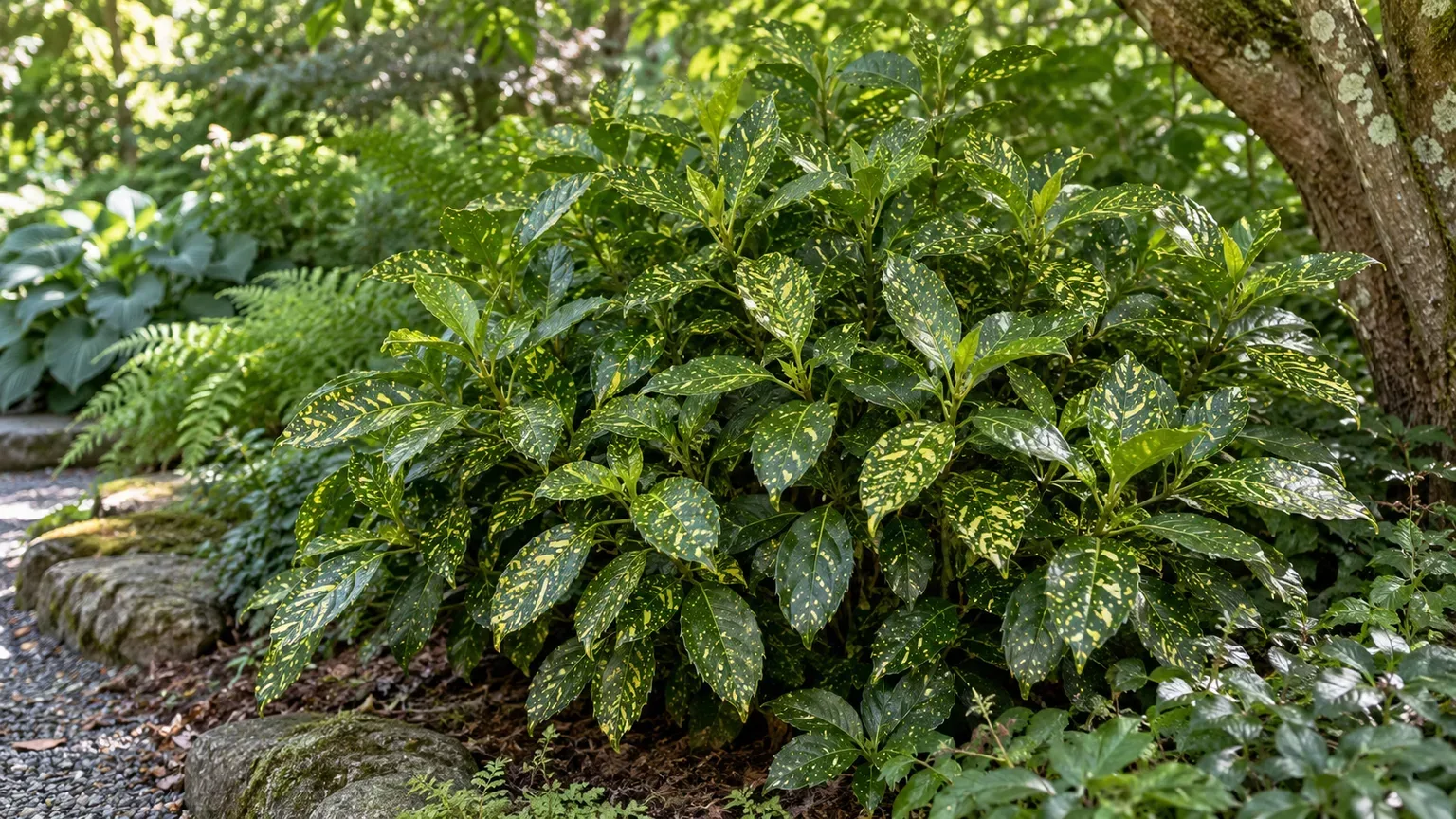
The gold dust plant (Aucuba japonica ‘Variegata’) earns its name from yellow flecks scattered across glossy green leaves. It is an evergreen shrub built for places where many colorful plants struggle: north-facing beds, dry shade beneath trees, and sheltered corners that receive little direct sun. Its best care is simple, but the details matter: variegated leaves scorch in hot sun, roots decline in standing water, and bright red berries appear only when the plant’s sex and pollination line up.
Gold dust plant care is easiest when you treat Aucuba as an outdoor shrub first and a houseplant second. Aucuba can live in a large container, including indoors in suitable conditions, but it grows slowly and eventually becomes a substantial woody plant. Choose the site, drainage, and cultivar with its mature size in mind; those decisions prevent more problems than frequent feeding or pruning can fix.
Gold Dust Plant at a Glance
Gold dust is a variegated form of Japanese aucuba, also called spotted laurel or Japanese laurel. Extension references commonly describe the species as reaching about 6 to 10 feet tall, with some plants larger when left unpruned; cultivar, climate, and growing conditions affect the final size. The plant is evergreen, slow to moderate growing, and valued mainly for its foliage rather than its small spring flowers. North Carolina State Extension and Clemson Cooperative Extension both describe Aucuba as a shade shrub with substantial landscape potential.
| Care factor | What works |
|---|---|
| Light | Partial to deep shade; shelter variegated leaves from hot afternoon sun |
| Soil | Moisture-retentive but well-drained; tolerate a range of soil textures |
| Water | Keep newly planted roots evenly supplied; water established shrubs during prolonged drought |
| Mature size | Often about 6–10 feet tall; check the specific cultivar label |
| Pruning | Usually limited to shaping or removing damaged stems, ideally in spring |
| Berries | Female plants generally need a nearby male cultivar for fruit set |
The table is a starting point, not a fixed schedule. A shrub under a large tree, an aucuba in a black patio pot, and an indoor plant in a cool room dry at different rates. Let the actual site and root zone guide adjustments.
What Makes a Gold Dust Plant Distinctive?
The foliage is the reason to grow this plant. Its leathery, elliptic leaves are dark green with irregular yellow spots or larger gold markings, depending on the cultivar. ‘Variegata’ is the classic gold-flecked form; ‘Picturata’ typically has a broader yellow center, while other selections may be plain green, narrower-leaved, or more compact. Buy by the cultivar name and expected dimensions when appearance and size matter, because “gold dust” is used loosely in commerce.
Aucuba is dioecious: male and female flowers are generally carried on separate plants. The flowers are small and easy to miss, but female shrubs can hold red, berry-like fruits from fall into winter when pollen reaches them from a compatible male. A few named selections can set some fruit without a separate male, so check the label rather than assuming every aucuba needs the same pollination arrangement. The JC Raulston Arboretum and the Royal Horticultural Society explain this sex distinction and its effect on fruiting.
Choose Light and a Sheltered Site
Start with shade. Aucuba can tolerate partial or deep shade, and it is especially useful where a wall or tree canopy blocks strong sun. Variegated forms need more protection than plain green selections: direct hot afternoon sun can bleach, brown, or blacken exposed leaves, while bright filtered light can preserve the contrast between gold markings and green tissue. NC State Extension notes that young leaves exposed to sun may blacken, and RHS likewise warns that heavily yellow-spotted cultivars can scorch in hot, dry sun.

Before planting, watch the proposed bed through the day instead of judging it from one glance. Morning sun followed by shade is often workable; a west-facing wall that radiates heat into the plant late in the day is riskier. Aucuba tolerates dry shade once established, but “shade tolerant” does not mean that a newly planted shrub can be left dry while it builds roots.
Protect the plant from drying wind as well as excess sun. Wind can desiccate evergreen leaves during cold weather, especially when roots are frozen or the soil is dry. If the site is exposed, tuck the shrub near a building, fence, or larger evergreen that softens wind without crowding the aucuba’s canopy.
Give Aucuba Soil That Holds Moisture but Drains
Gold dust plant is adaptable to clay, loam, and sandy soils, but the roots need oxygen. Aim for soil that retains some moisture without staying saturated after rain or irrigation. The Clemson Extension profile calls for moist, organic-rich, well-drained soil and cautions that poorly drained sites increase root-rot risk; NC State also lists good drainage as a cultural condition.
Check drainage before you plant. If water routinely ponds in the bed, choose a raised or sloped location, improve the broader planting area with organic matter, or select a different shrub suited to wet soil. A small pocket of amended soil surrounded by heavy, waterlogged ground will not solve a drainage problem: roots eventually grow beyond that pocket. Avoid burying the root flare or setting the root ball lower than the surrounding grade.
For a normal garden bed, do not make the planting hole dramatically deeper than the root ball. Loosen compacted sides, tease apart circling roots if the plant is pot-bound, set the top of the root ball level with the finished soil, and backfill with the excavated soil. A 2- to 3-inch organic mulch layer can reduce moisture swings, but keep it a few inches away from stems so the crown stays airy.
Plant for a Strong First Growing Season
Spring and fall are usually the easiest planting windows because temperatures are moderate and the soil is not frozen or baked dry. In mild climates, container-grown shrubs can be planted at other times when the soil is workable, but avoid transplanting into a heat wave or a waterlogged winter bed. The RHS recommends avoiding frozen or saturated ground and dry summer spells when planting container-grown aucuba.
Water the nursery pot before planting if the root ball is dry, then remove it carefully and loosen any roots circling the outside. Set the plant at the same depth it grew in the container; planting too deeply keeps the crown damp and can worsen decline. Backfill, firm gently to remove large air gaps, and water slowly until the root ball and surrounding soil are both wet.
During the first growing season, inspect soil moisture every few days in hot or windy weather and less often in cool, rainy weather. The goal is not to keep the surface constantly wet. Water deeply when the root ball begins to dry, then let excess water drain; shallow, frequent sprinkling encourages roots to remain near the surface and can keep foliage and stems unnecessarily damp.
Water by Root-Zone Conditions
An established in-ground aucuba is more drought tolerant than a newly planted one, but it can still look tired during a long dry spell. Check soil several inches below the mulch before watering. If that layer is cool and slightly moist, wait; if it is dry and the leaves are losing firmness, water slowly at the base and check again after the water has had time to soak in.
Do not use a weekly calendar as the only signal. Rainfall, soil texture, root competition, shade, and season all change how quickly the plant uses water. A shrub under dense tree roots may need attention during drought even when the nearby lawn looks green, while a plant in clay soil may need less frequent irrigation because that soil holds water longer.
Water containers when the upper layer begins to dry and the pot feels lighter, then water thoroughly until it exits the drainage holes. Empty any decorative saucer that holds runoff. In winter, growth slows and the root ball dries more slowly, so reduce watering rather than keeping the mix perpetually damp. A dry indoor room can still pull moisture from evergreen leaves, so check the pot rather than assuming winter means no water.
Grow Gold Dust Aucuba in a Container
Aucuba can be grown in a pot, but plan for a woody shrub rather than a compact tabletop plant. Select a cultivar whose mature size fits the patio or entry, and use a sturdy container with several open drainage holes. A pot that is only slightly wider than the root ball is easier to manage than an oversized tub full of wet mix; move up a size when roots begin circling or the plant dries unusually fast.
Use a free-draining, moisture-retentive potting mix intended for shrubs or outdoor containers. A soil-based compost can work, but whatever the formula, it should not collapse into dense mud after repeated watering. Do not add a layer of gravel at the bottom as a substitute for drainage; keep the holes clear and use a mesh screen if mix escapes.
Place the pot in bright shade and protect it from afternoon heat. Container roots are more exposed to temperature swings than roots in the ground, so a sheltered position also helps during winter. In colder regions, a pot may need more protection than the plant itself: move it against a sheltered wall or into an unheated protected space before a severe freeze, while ensuring the root ball does not stay wet.
Repot in spring when roots fill the container, emerge from drainage holes, or form a dense coil at the pot edge. Tease apart loose outer roots and move up only one container size, or refresh the top layer of mix if the plant is already in a large tub. The RHS suggests gradually increasing pot size over several years and notes a final container at least about 18 inches deep and wide for larger aucuba cultivars; a compact selection can need less space.
Keep an Indoor Gold Dust Plant Cool and Bright
Aucuba is sometimes sold as an indoor foliage plant, but it is a hardy outdoor shrub, not a tropical houseplant that thrives beside a heater. Indoors, give it a bright position with filtered light, a cool room, and air circulation. A north or east window may work; near a brighter exposure, sheer curtains can reduce direct rays. Keep leaves from touching cold glass in winter, and move the pot away from radiators, heating vents, and hot windows.
Indoor growth is usually slower, and a room that is consistently warm and dim can leave the plant stretched, dull, or stressed. Rotate the pot occasionally if growth leans toward the window, but do not keep moving it between radically different light conditions. A sheltered porch or cool sunroom can be better than a dark living room, provided the temperature stays within the plant’s tolerance and drafts are not extreme.
Check indoor plants for scale insects and mealybugs at leaf joints and along stems. Dusty foliage also makes yellow flecks harder to distinguish from pests, so wipe leaves gently with a damp cloth and inspect both sides. If possible, keep a newly purchased shrub separate from other plants for a short observation period before placing it among houseplants.
Feed Sparingly and Mulch Outdoors
Gold dust aucuba does not need a strong fertilizer routine to keep its foliage attractive. In a healthy garden bed, mulch with compost or leaf mold and observe new growth before adding fertilizer. If the shrub is pale, growing weakly, or recovering from a difficult season, first check light, root moisture, drainage, and pests; poor growth is often a site problem, not a nutrient deficiency.
When feeding is justified, use a balanced, general-purpose fertilizer at the label rate in spring as growth resumes. Do not use extra fertilizer to force a fast-growing hedge. The University of Arkansas Cooperative Extension cautions that excessive feeding can push soft growth that is more vulnerable to winter injury. Container plants lose nutrients with repeated watering, so a modest feed during active growth may help; stop in late summer or fall rather than encouraging tender growth before cold weather.
Prune for Shape Without Shearing Blindly
Most aucuba needs little pruning beyond removing damaged branches and correcting an awkward stem. If you want to keep a shrub narrower or encourage denser growth, prune in spring before or as new growth begins. Use clean, sharp bypass pruners and cut individual stems back to a healthy side branch or just above a leaf node instead of shearing every surface into a flat shell.
For a neglected plant that is bare at the base, renovate gradually. Remove up to one-third of the oldest stems close to the ground in a year, then repeat over the next seasons if necessary. This preserves some foliage while new shoots develop; a single severe haircut can leave a slow-growing shrub looking empty for a long time. The RHS also recommends staged renewal for overgrown or bare-based shrubs.
If a branch is blackened or dying, prune below the damaged section into visibly healthy wood and disinfect tools between cuts when disease is suspected. Avoid pruning late in the season in cold areas, because fresh growth may not harden before frost. For a hedge, light trimming is possible, but the plant’s large leaves generally look cleaner when you remove selected shoots rather than cut across every leaf.
Understand Red Berries and Pollination
No berries does not necessarily mean the plant is unhealthy. Aucuba plants are usually male or female, and the female plant needs pollen from a male flowering at the right time for fruit to form. A female can flower and remain berry-free if no compatible male is nearby, if the plant is still too young, or if frost or pruning removed the relevant flowering growth.
When berries matter, choose a known female cultivar and ask the nursery for a compatible male selection that flowers in the same season. Planting one male within the landscape group is often sufficient for several females, but the exact pollination distance depends on layout and pollinator movement; do not assume an isolated female shrub will fruit just because a male aucuba exists several properties away. Some named selections are partly self-fertile, which is a useful exception to the general male-plus-female rule.
The berries are ornamental, not edible. If the plant is unsexed or unlabeled, wait until flowers appear or ask the seller before buying another shrub solely to produce fruit. NC State Extension describes the fall-to-spring fruit on female plants, while Gardeners’ World notes that some cultivars carry both flower sexes on one plant.
Propagate Aucuba from Cuttings
Semi-ripe stem cuttings are the most practical way to copy a named cultivar. Take several healthy, nonflowering shoots in summer after the current season’s growth has begun to firm but is not fully woody. Cuttings preserve the parent plant’s traits; seed-grown plants can vary, and seedlings may take longer to reach a useful landscape size.
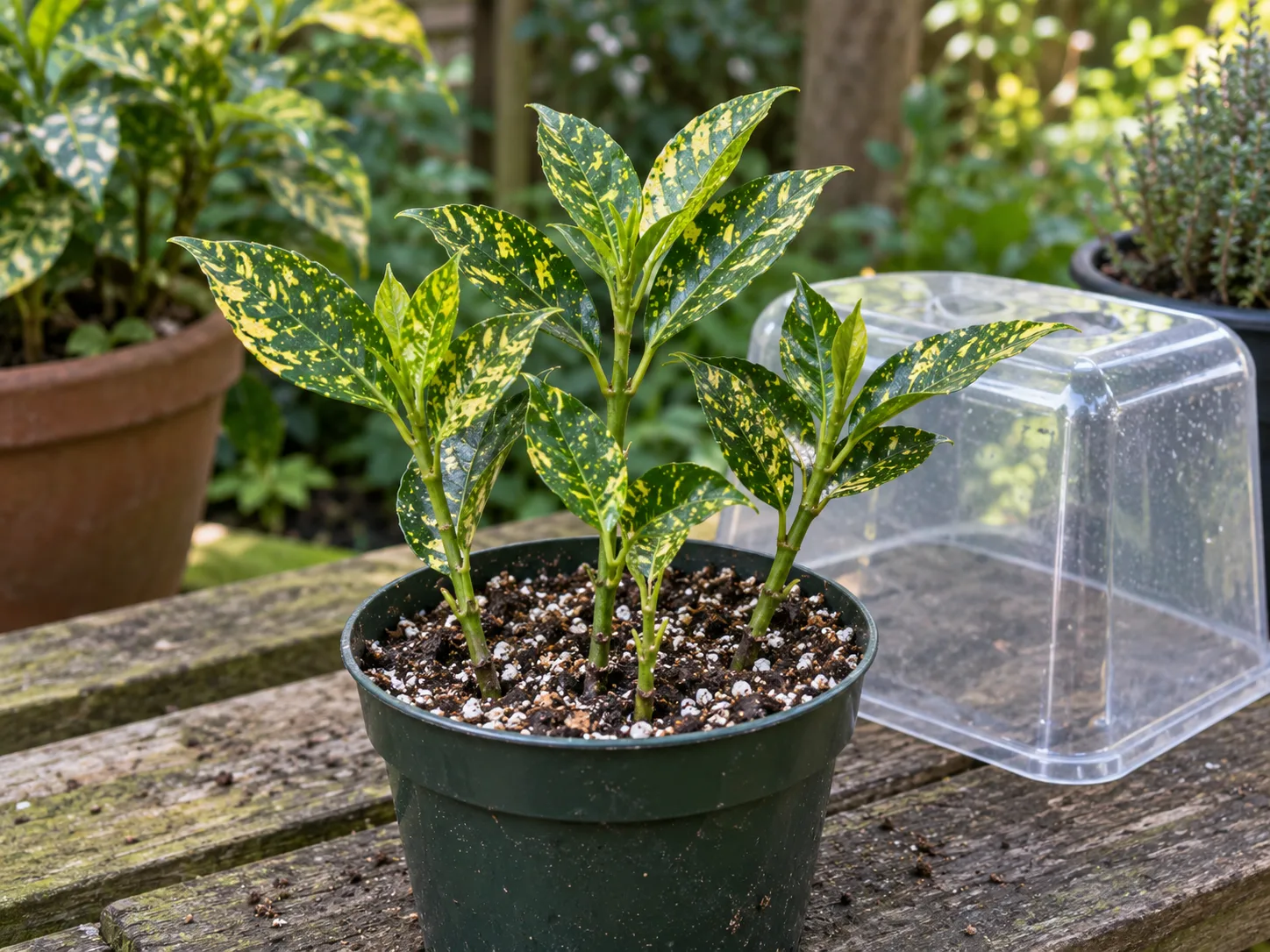
- Fill a small pot with a clean, moist propagation mix that drains freely, and make a planting hole before inserting the cutting.
- Cut a 4- to 6-inch shoot just below a leaf joint, remove the lower leaves, and leave a few leaves at the tip. If the remaining leaves are large, trim them in half to reduce water loss.
- Dip the cut end in rooting hormone if desired, insert it into the mix, and firm the medium around the stem. Cover the pot with a clear bag or propagator that holds humidity, but keep the plastic from touching leaves.
- Set the pot in bright shade, not direct sun, and keep the mix lightly moist rather than saturated. Vent the cover if condensation stays heavy or mold appears.
- Check gently for resistance after several weeks; do not tug daily. Once roots have formed and new growth is steady, pot the cutting on and acclimate it gradually before planting outdoors.
The RHS recommends semi-ripe cuttings in late summer, and Fine Gardening also lists cuttings as a propagation method. The exact rooting time varies with cutting maturity, temperature, humidity, and cultivar, so success is better judged by rooted growth than by a fixed number of days.
Troubleshoot Common Gold Dust Plant Problems
When an aucuba declines, start with the location and the root zone before treating it. Note which leaves are affected, whether damage is on the sun-facing side, whether stems are firm, and whether the soil is wet several days after rain. These clues help separate scorch, root stress, and insects, which need different responses.
Scorched Leaves After Sun or Wind Exposure
Brown or black patches concentrated on the exposed side often point to sun or wind injury, particularly on new leaves or cultivars with heavy yellow variegation. Move a container into bright shade; for an in-ground plant, consider whether nearby pruning removed its canopy cover or a reflective wall now sends hot afternoon light onto the foliage. Damaged leaf areas will not turn green again, so judge recovery by whether the next flush emerges clean.
Cold wind can also brown evergreen leaves without killing the roots. Wait until spring growth shows which stems are alive before removing large sections. If new growth remains healthy, remove only unattractive leaves or dead tips rather than cutting the whole shrub back.
Black Leaves, Black Stems, or Sudden Dieback
Black leaf patches after strong sun differ from a plant that is wilting in wet soil or has darkened stems with branch dieback. Saturated soil, blocked container holes, or a pot sitting in a saucer can deprive roots of air and contribute to root rot. Stop routine watering, clear drainage, and let the root zone begin to dry; if a container mix stays soggy and smells sour, inspect the roots and repot into fresh, freely draining mix after trimming only clearly dead roots.
If blackening runs along the stem or entire branches collapse, suspect a more serious dieback problem rather than simple leaf scorch. Prune affected stems into healthy wood, clean tools between cuts, and improve drainage and airflow. Clemson Extension lists root rot and occasional fungal diseases among aucuba problems, while NC State also notes scale, mealybugs, nematodes, and leaf spot; widespread or recurring symptoms merit help from a local extension service because diagnosis depends on the plant and site.
Yellowing, Drooping, and Insect Damage
Yellow leaves may be normal aging if only a few of the oldest interior leaves drop while the rest of the plant stays firm. Widespread yellowing with a wet root ball suggests poor drainage or overwatering; yellowing with crisp edges and dry soil points toward drought stress or excessive exposure. Correct the condition gradually and avoid stacking fertilizer, pruning, and repotting onto a plant that is already stressed.
Inspect stems and leaf undersides for scale or mealybugs. Scale can look like small fixed bumps; mealybugs often appear as white cottony clusters in joints. Isolate indoor plants, wipe off a small infestation, and use a product only if the pest is confirmed and the label permits use on that plant and setting. Aucuba is not usually plagued by severe pest issues, but sheltered indoor conditions can allow a small population to build unnoticed.
Handle the Plant and Berries Carefully
Do not eat the leaves or berries. NC State Extension classifies Aucuba’s fruit and foliage as low-severity poisonous to humans and lists nausea, vomiting, and possible fever among symptoms after ingestion; Gardeners’ World likewise advises preventing children from eating the red berries. The small risk label does not make the fruit safe food, so place the shrub where young children are supervised and remove fallen fruit if that is practical.
If someone has eaten part of the plant, contact a poison-control service for case-specific advice rather than trying a home remedy. Keep the plant label or a clear photo available for identification. For pets, do not infer safety from a human plant profile: contact a veterinarian or animal poison service if a pet chews leaves or fruit, particularly if symptoms appear.
Conclusion
Give a gold dust plant a sheltered, shaded site, soil that stays moderately moist but drains promptly, and room for its mature size. Water it more attentively while it establishes and in containers, but resist keeping the roots constantly wet; prune only when shape, damage, or renewal calls for it, and feed lightly when growth gives you a reason.
The most common disappointments are preventable. Protect the gold-speckled leaves from hot afternoon sun, identify both sexes before expecting berries, and treat blackened stems or persistently wet soil as a root-health signal. With those basics in place, Aucuba offers year-round foliage in exactly the dark garden corners where many shrubs fail.



