How to Grow Grape Vines: Avoid Losing the First Years
How to grow grape vines (Vitis vinifera): choose a local variety, build a trellis, train young vines, prune correctly, prevent rot, and harvest fruit by taste.
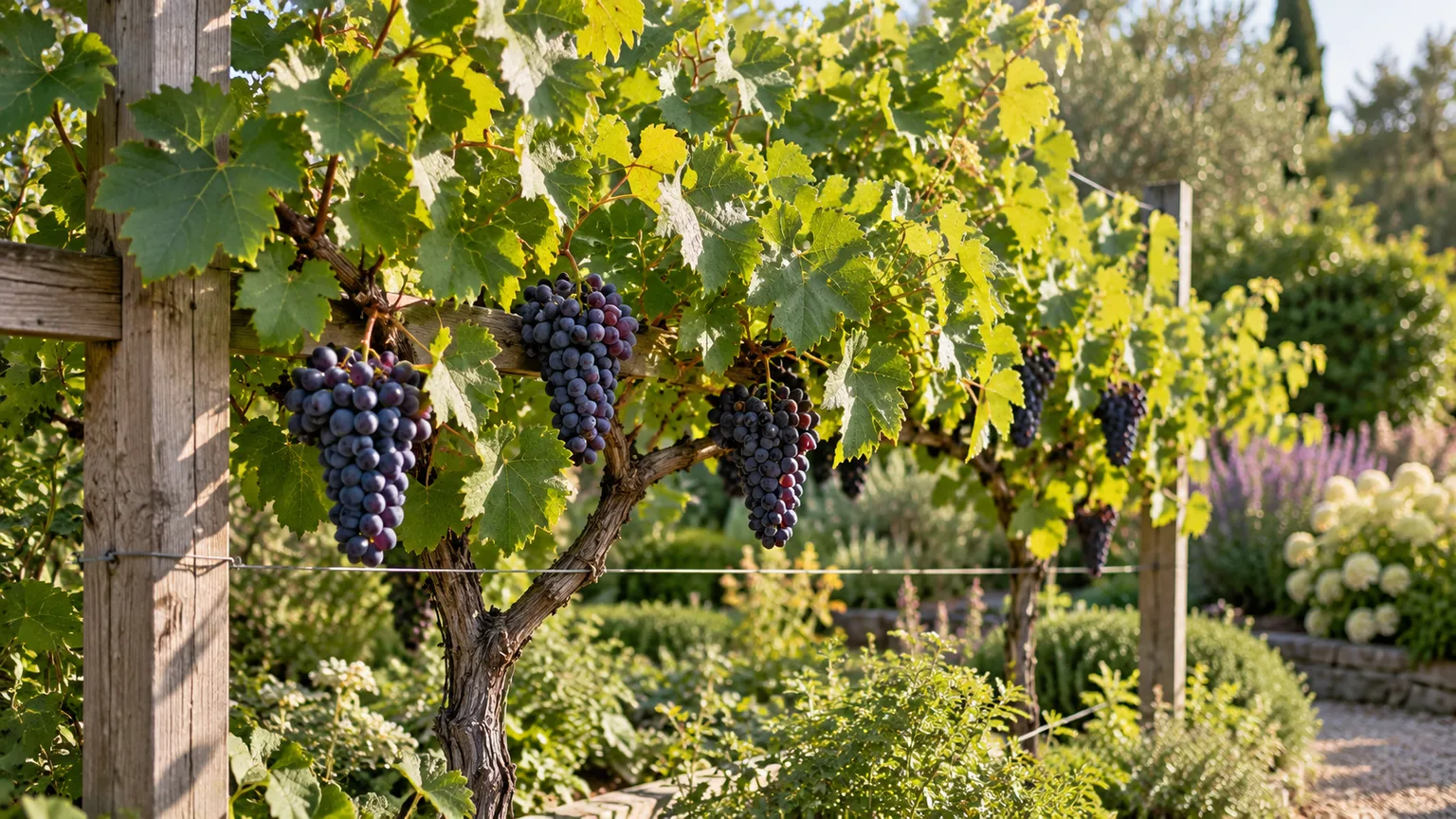
A grape vine can cover a fence or arbor, but a dependable harvest comes from matching the cultivar to your climate and pruning it for fruit, not just letting it climb. Vitis vinifera, the European or common grape, includes wine, table, and raisin cultivars; it is not one uniform plant with one universal hardiness rating. Choose a named variety for your region and purpose, give it sun and permanent support, then spend the first seasons building a framework that will carry fruiting shoots.
That sequence matters because grapes are pruned differently from many garden shrubs. They produce fruit on shoots that grow from buds on one-year-old wood, so a vine allowed to become a tangle may look vigorous but crop poorly. The Penn State Extension backyard grape guide and the RHS grape pruning guide both emphasize choosing a training system and maintaining an open, manageable structure.
Is Vitis vinifera the right grape for your garden?
Vitis vinifera is the species behind many familiar European wine grapes, but the species also includes cultivars grown for fresh eating and drying. The fruit, ripening time, cold tolerance, and disease susceptibility vary substantially among cultivars. A warm, relatively dry site may suit one European wine grape, while a short-season or humid garden may do better with a locally recommended hybrid or a grape from another species.
That distinction is useful before you buy. If the goal is a shaded pergola, a long, vigorous vine may fit; if you want clusters to eat, choose a cultivar bred for table quality; if you want wine grapes, prioritize ripening window and the style you can realistically make. Penn State Extension notes that European grapes can be more cold-tender and disease-prone than many native grapes, and Gardener’s Path describes the different uses and growing habits across grape species.
Most grape cultivars are self-fruitful, so a single vine usually sets fruit without a second variety nearby. Check the nursery label for the cultivar’s pollination needs, winter hardiness, days to ripen, disease resistance, and intended use rather than assuming every grape has the same care requirements.
Choose a cultivar—and rootstock—for your climate
Start with a local list from a university extension, regional grape grower, or reputable nursery that can name the exact cultivar and rootstock. Ask which varieties reliably ripen in your number of frost-free days, how they handle your area’s main fungal diseases, and whether they are commonly grown on their own roots or grafted. A seller’s broad USDA zone range can be a starting point, but it does not tell you whether fruit will ripen before fall frost or whether a vine tolerates your local humidity.
Match the cultivar to its job and your season
For a table grape, look for texture, flavor, seedlessness if that matters, and the length of the local harvest season. For wine grapes, choose by ripening time and the wine style you want, then be realistic about the care that a disease-susceptible cultivar may require. For raisins, ask whether the cultivar dries well in your climate; a rainy harvest window can make drying difficult even when the vine is healthy.
The varieties commonly named in general guides—such as Chardonnay, Cabernet Sauvignon, Pinot noir, or Pinot blanc—are examples, not automatic recommendations for every backyard. Their performance depends on site, rootstock, winter lows, disease pressure, and summer warmth. The Old Farmer’s Almanac Garden Planner makes the useful point that grapes are site-specific and that local advice should guide cultivar and trellis choices.
Ask whether the vine is grafted
Many European grape vines are grafted onto rootstocks chosen for soil adaptation or resistance to grape phylloxera, an insect that can damage roots. On a grafted plant, the upper cultivar is the scion and the lower portion is the rootstock. Keep the graft union above the soil when planting so the scion does not root independently and bypass the rootstock.
Do not assume every Vitis vinifera plant must be grafted everywhere or that every rootstock fits every soil. Ask the nursery what the plant is grafted onto, why that rootstock was chosen, and whether it suits your soil and region. This question is more useful than buying the first vine with a familiar wine-grape name.
Pick a sunny, airy, well-drained site
Choose a place with direct sun for most of the day. Sun supports flowering and ripening; it also helps foliage dry after rain, which can lower pressure from some diseases. A fence or wall can work if the vine will not be shaded by buildings or trees once those plants leaf out.
Good drainage is essential. Grapes tolerate a range of soil textures, but standing water or a chronically saturated root zone weakens roots and makes site management harder. Before planting, use a soil test to learn whether pH or nutrients need adjustment; do not correct the soil by guesswork or add a strong fertilizer dose into the planting hole.
Air drainage matters in cold regions. Cold air settles in low pockets, so a gentle slope or open location can reduce frost risk compared with a sheltered dip surrounded by walls or dense hedges. Avoid a spot where a cold-air drain is blocked, and do not plant in the warmest early-budding microclimate if late spring frosts are common.
Give the vine enough room for its chosen trellis and future canopy. A grape that fits the space at planting can become a heavy, woody perennial structure, and crowding it against a tree or another vine makes pruning and airflow difficult. Plan the support, access for harvesting, and route for runoff before digging.
Install a permanent trellis before planting
A grape vine needs support that can carry years of woody growth and heavy fruit. Put posts and wires in place before planting when possible; replacing a weak trellis after the vine has wrapped around it is disruptive. The RHS guide to grape pruning and training describes the Guyot and cordon systems, while Penn State Extension explains that home vines can also be trained on arbors, fences, and other sturdy supports.
A simple two-wire trellis gives the grower a clear trunk and horizontal arms or canes. A single cordon system keeps a permanent horizontal arm along a wire and renews short fruiting spurs; a cane-pruned or Guyot system replaces the fruiting cane each winter. A pergola is attractive and can provide shade, but its dense overhead canopy may be harder to ventilate and prune for fruit quality.
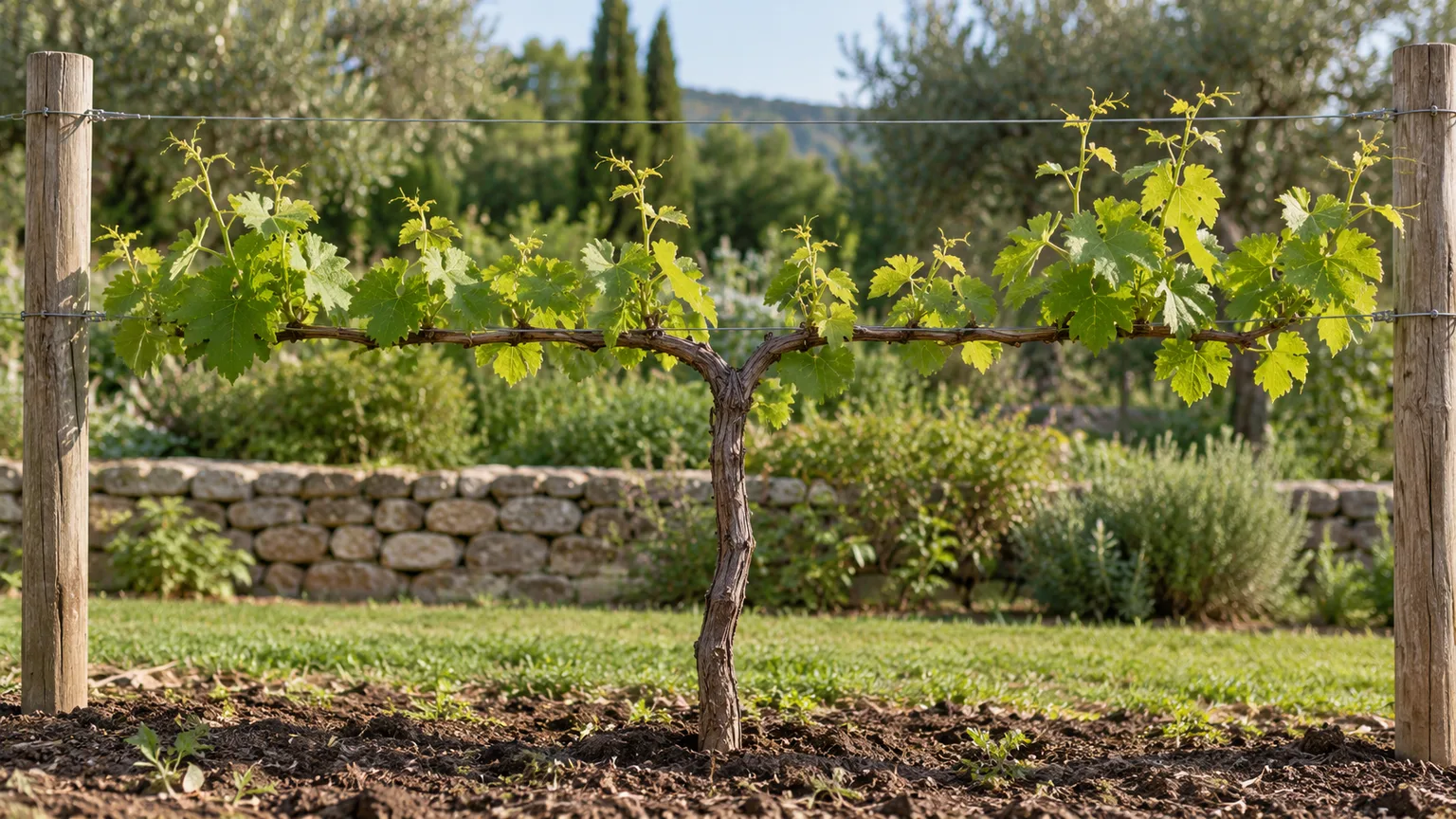
Choose a form you can maintain from the ground. Secure posts, use wire rated for outdoor tension, and leave room to reach both sides of the fruiting zone. If the vine will cover an existing fence or arbor, check that the structure is strong enough before training a woody trunk onto it.
Plant dormant vines and build the trunk first
Bare-root vines are generally planted in early spring while dormant, as soon as the soil can be worked and before active shoot growth makes transplanting stressful. Container-grown vines can be planted later when the weather is mild, provided you water them carefully while roots settle in. If bare roots look dry, soak them briefly before planting and trim only broken or clearly damaged roots.
Dig a hole wide enough to spread the roots without bending them sharply. Set the plant at the nursery’s recommended depth, backfill with native soil, and water thoroughly to settle it around the roots. For a grafted vine, keep the graft union above ground; do not bury it to make the plant look more secure.
At planting, follow the nursery’s pruning directions because the right cut depends on whether the vine is bare-root or container-grown and how it has been prepared. Set a sturdy stake beside the plant and tie the strongest shoot loosely as it grows, using a soft tie that will not cut into the stem. Keep grass and weeds from competing with the young vine, and add a modest mulch layer while leaving a clear gap around the trunk.
Year one: roots and a straight trunk, not a crop
In the first season, train one strong shoot upward to form the trunk and remove competing shoots that would create a weak fork or crowded base. Tie the leader at intervals instead of trying to bend a thick, brittle shoot into place later. If flowers appear, remove them so the young vine can put its energy into roots and framework.
Do not judge success by the amount of leafy growth. A young vine that establishes a straight trunk and survives winter is on track, even if it produces no grapes. If growth is very weak, first check watering, weeds, drainage, planting depth, and animal browsing before reaching for fertilizer.
Years two and three: finish the framework
In the next season, extend the trunk to the height of the fruiting wire, then choose the lateral arms or canes that suit the training system. Tie them into position gradually while the wood is flexible. Remove shoots that cross, crowd the trunk, or emerge from below the graft union unless the nursery or local extension recommends otherwise.
A small early crop may appear before the vine is fully established, but do not keep every cluster on a weak plant. A light crop is easier for a young vine to support and lets you keep building the permanent structure. Many vines need about two to three seasons to produce a substantial harvest; site, cultivar, and training can make that timeline longer or shorter.
Water steadily; fertilize only when needed
Water deeply after planting, then check the soil several inches below the surface before watering again. A new vine needs consistent moisture while it establishes, especially during dry or windy weather, but it should not sit in saturated soil. A rain gauge and a quick soil check are more useful than watering automatically every day.
Once established, grape roots can explore a large soil volume, so a mature vine often needs less supplemental irrigation than a first-year plant. Still, extended drought during shoot growth, flowering, and berry development can reduce growth or crop quality. Aim for even moisture rather than cycles of severe drying followed by a large soak; University of Minnesota Extension notes that excess water can contribute to grape berry splitting.
Use drip or ground-level irrigation if you can. Wetting leaves and clusters repeatedly can lengthen the time foliage stays damp and increase disease pressure. If your climate is humid, this simple change pairs well with a more open canopy.
Fertilize from a soil test and the vine’s growth, not from a fixed annual recipe. A vigorous vine with long shoots and dense shade usually does not need more nitrogen; excess can push leafy growth at the expense of fruiting and make the canopy harder to manage, as Gardener’s Path and Penn State Extension explain. A thin layer of finished compost can improve the soil surface, but heavy feeding is not a substitute for good drainage, sun, or proper pruning.
Prune dormant vines to renew fruiting wood
Annual dormant pruning is the main tool for keeping a grape vine productive and within its support. The key fact is that grape clusters develop on new shoots that emerge from buds on last year’s mature canes. Old trunks and permanent cordons hold the framework, but they do not produce the crop directly from their old wood.
Prune when the vine is fully dormant and the structure is easy to see, with timing adjusted for your region and the training system. Remove dead, damaged, and diseased wood, then keep the selected fruiting wood and renewal points. A mature vine can make far more growth than it can support; leaving too many buds creates a congested canopy and small, uneven fruit, while leaving too few may reduce the crop.
The RHS pruning guide and Penn State Extension’s backyard guide describe different systems because cultivars and growth habits vary. If you are uncertain what to retain, identify the cultivar and training system before cutting; a local pruning demonstration is far more valuable than copying a picture of a different vine.
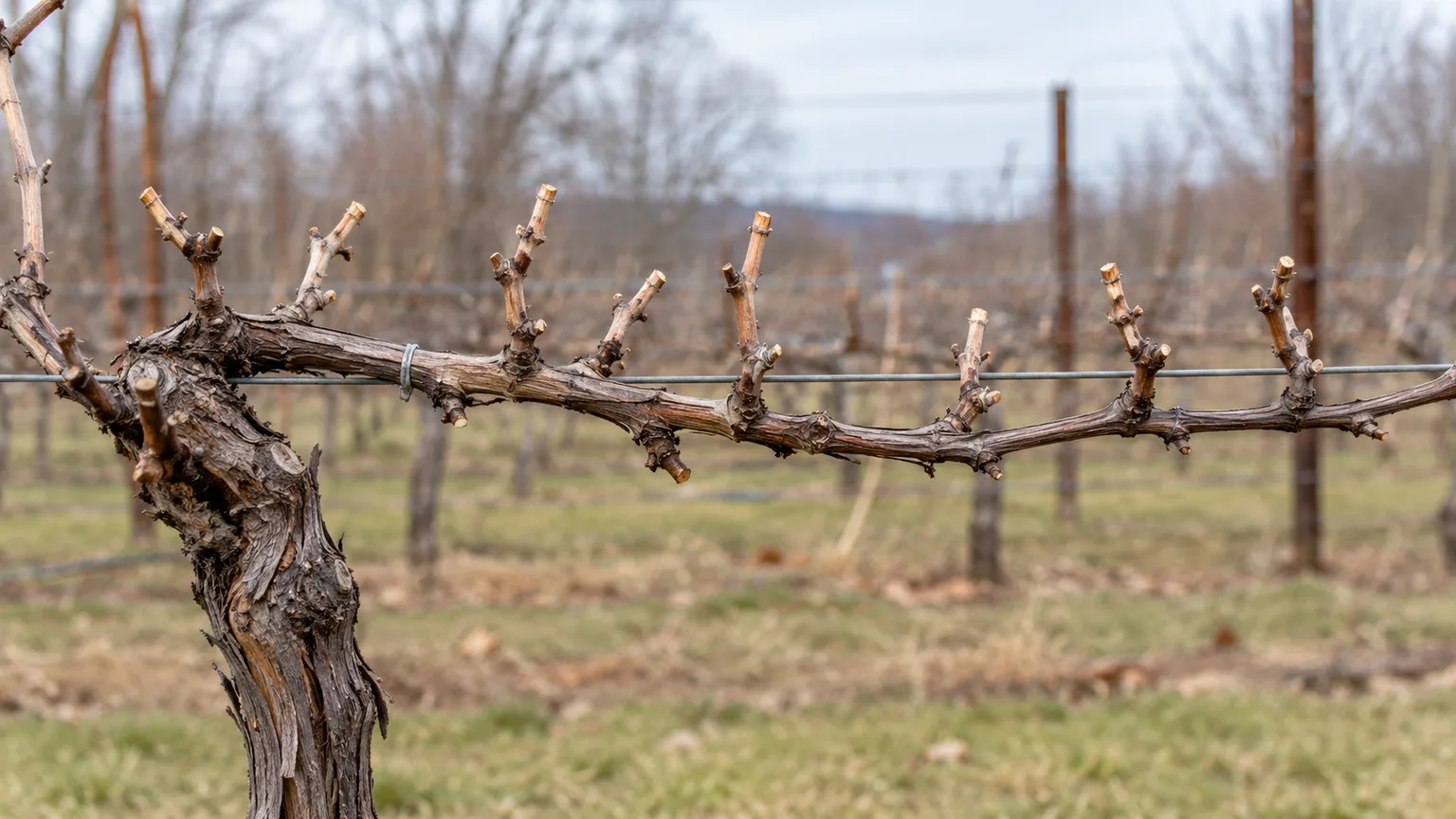
Cane pruning and spur pruning are different systems
With cane pruning, the grower keeps one or two well-positioned canes from the previous season for fruiting and removes most other one-year growth. A short renewal spur is often retained near the head or trunk to supply a replacement cane for the following winter. Guyot is a familiar cane-pruning approach used on a horizontal wire.
With spur pruning, permanent cordons remain on the wire and last year’s canes are cut back to short spurs with a few buds each. The shoots from those spurs carry the season’s clusters. Some cultivars crop reliably from basal buds and suit spur pruning; others need longer canes, so cultivar and system must match.
Avoid a common mistake: cutting all the way back to thick, old wood and assuming it will fruit like a shrub. Instead, renew fruiting wood each winter, leave the correct number of buds for the vine’s vigor and support, and keep a replacement shoot available. When you inherit an overgrown vine, restore it over more than one season if a single severe cut would remove the framework you still need.
Manage the summer canopy and protect the crop
Dormant pruning sets the structure, but summer management keeps light and air moving through it. Tie or position young shoots so they do not form a shaded knot around the wire. Thin shoots that compete from the same point, and remove suckers from the base or trunk when they are not needed to replace a damaged section.
Keep enough leaves to feed the crop. Removing every leaf near the clusters can expose berries to sunburn, especially in hot climates or on the west side of a trellis. If the fruit zone is very dense, remove only selected leaves and do it gradually so clusters adjust to brighter conditions.
Inspect the vine every week or two from budbreak through harvest. Look at the undersides of leaves, young shoots, and the interior of clusters, where the first signs of insects or rot may be hidden. Netting can protect ripening bunches from birds; set it up before berries draw attention and secure it so wildlife cannot become trapped.
A vine that makes lots of shoots but few grapes may be too young, too shaded, excessively fertilized, pruned with the wrong system, or carrying shoots from unproductive wood. Check the planting age and cultivar, trace where fruiting shoots originate, and compare last winter’s pruning to the cultivar’s needs before changing fertilizer. A late frost at budbreak or bloom can also remove a crop even while the vine continues to grow leaves.
Prevent disease by keeping the canopy open
Grapes are vulnerable to several fungal diseases, especially when leaves and clusters stay wet or shaded. Common problems include powdery mildew, downy mildew, black rot, and Botrytis bunch rot. The Cornell Grape Pathology disease guide and University of Minnesota Extension’s grape diagnosis pages show why identification matters: similar-looking leaf spots can come from different causes.
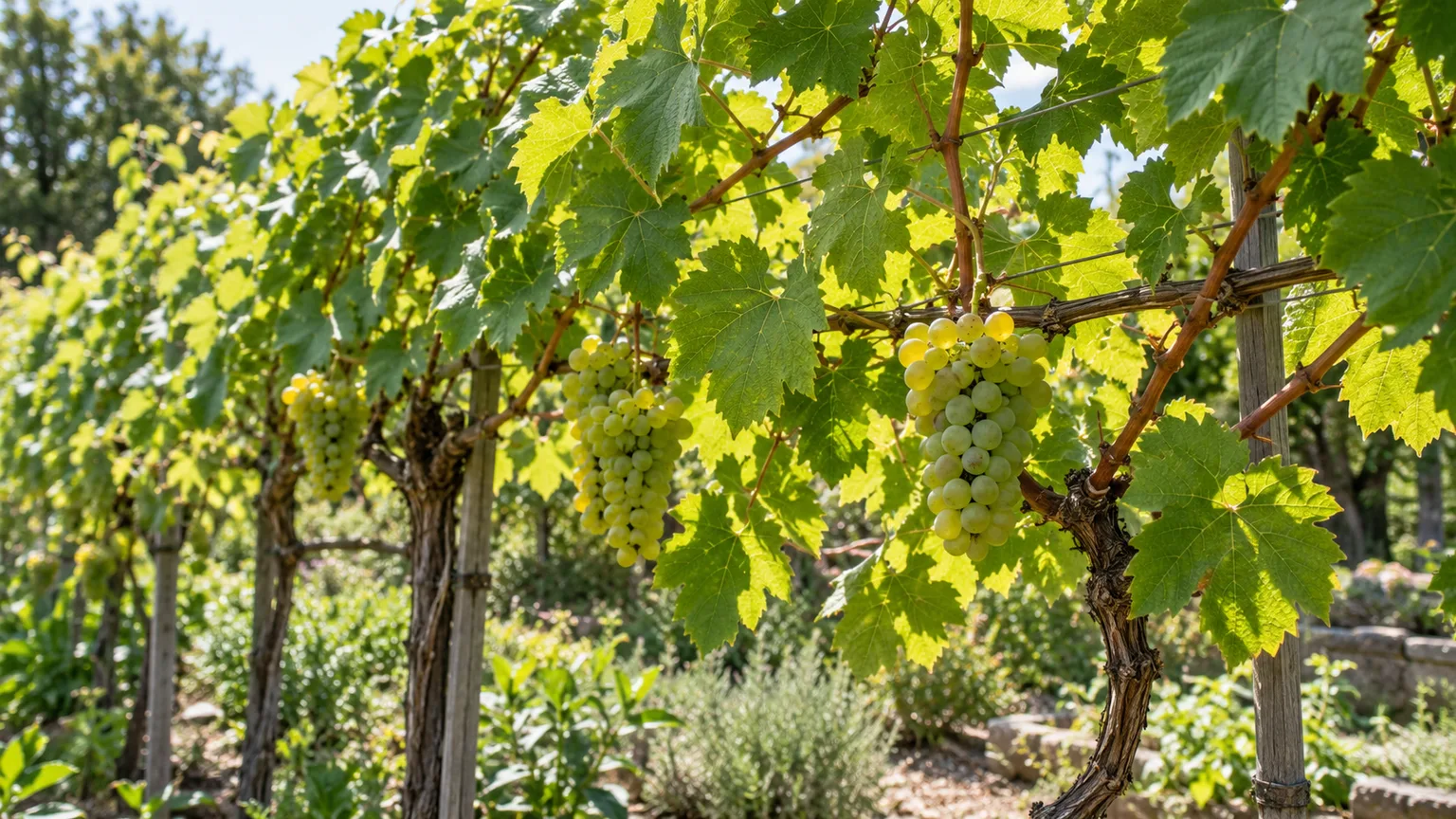
Use symptoms as a reason to inspect, not as a diagnosis by themselves. Powdery mildew can look like pale, dusty growth on green tissue; downy mildew is associated with yellowish or oily leaf spots and pale growth underneath in wet conditions; black rot can leave dark, shriveled berries that remain as mummies. Gray, soft decay within a tight bunch points toward rot problems, but cracked berries, insects, and weather damage can invite more than one issue at once.
Start with cultural controls: prune for airflow, avoid overhead watering, remove diseased berries and prunings, and clear old mummified fruit before spring growth. Select cultivars with resistance suited to your climate when you are planting a new vine. These steps do not guarantee disease-free fruit, but they lower the pressure and make it easier to see a problem early.
Do not copy a commercial spray schedule or apply a product because a page lists it. Labels, permitted crops, timing, and regional recommendations change, and a product may not be suitable for a home planting or the grape cultivar you grow. If disease returns despite sanitation and canopy care, ask your local extension service to confirm the problem and consult current local guidance before treating.
Harvest by taste and intended use
Do not pick grapes by color alone. Berries may look ripe before they develop the balance of sweetness, acidity, aroma, and texture expected from that cultivar. Sample several berries from different parts of a cluster over time; for table grapes, harvest when flavor and texture are enjoyable, and for wine grapes, use a cultivar- and style-specific maturity target rather than a single universal sugar number.
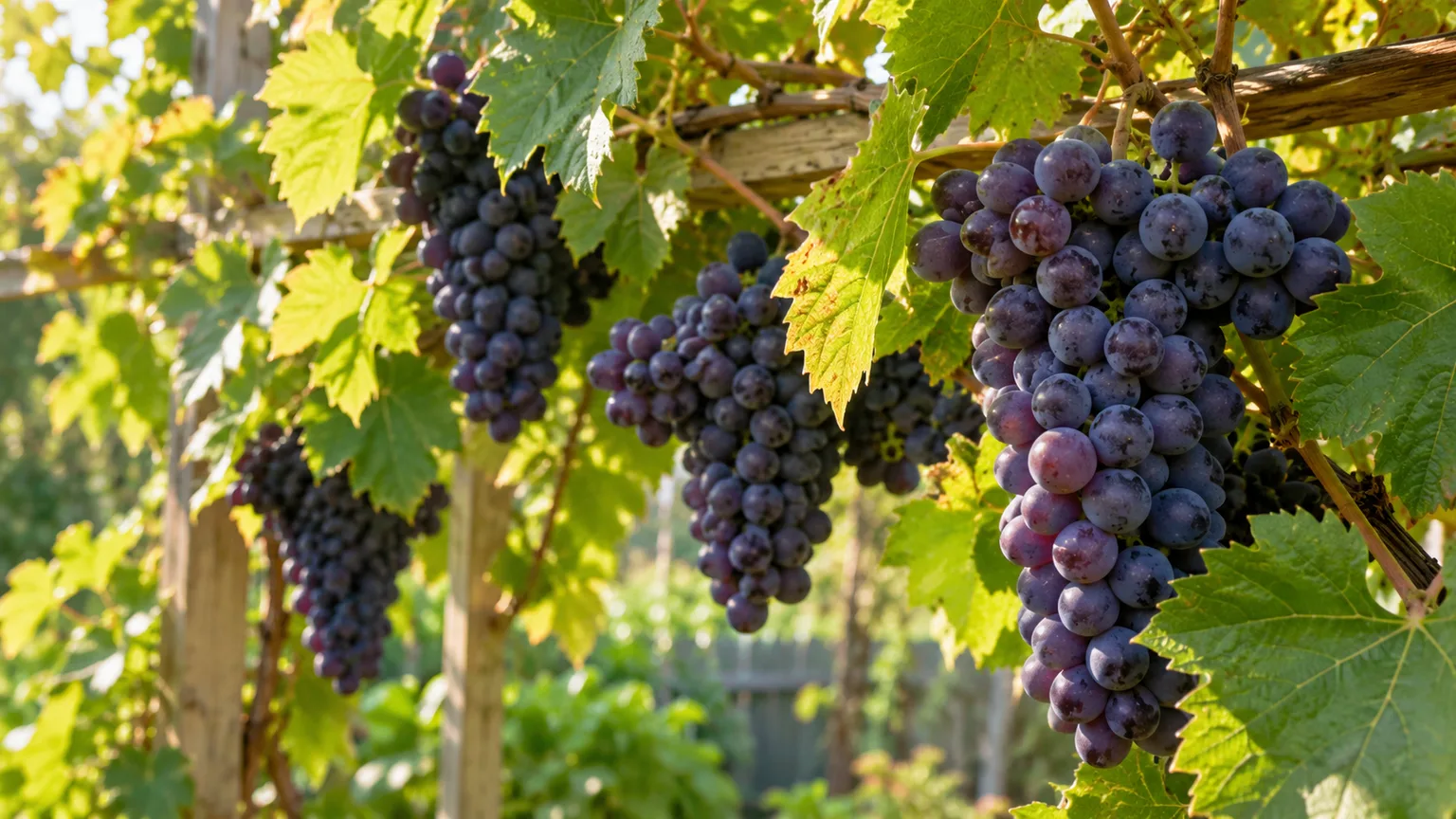
Grapes generally do not continue ripening after harvest, so wait until the fruit is ready on the vine. Use clean pruners to clip bunches rather than tugging them, and handle the waxy bloom gently if you plan to store them. Birds may reach the fruit before you do, so check ripening clusters regularly and have netting ready.
A healthy vine can still give a disappointing crop if it is harvested too early, overloaded, or shaded. Keep a simple note of the cultivar, bloom and harvest dates, weather, and flavor at picking; it will help you learn whether the next season needs a different crop load or more protection from rain and birds.
Prepare vines for winter and spring frost
Winter survival depends on cultivar, rootstock, how well the vine hardened off, and the lowest temperatures at your site. Do not rely on the species name or a general zone range alone. A locally recommended cultivar may survive winter but still fail to ripen fruit in a short season, so assess both winter minimums and growing-season length.
Avoid late-season nitrogen or pruning that pushes soft new growth as the vine should be hardening for winter. Keep the trellis secure, remove diseased or broken material during the appropriate dormant pruning, and ask a local grower whether your cultivar and graft need winter protection. A graft union should remain above the soil for normal planting; any temporary winter hilling practice should follow regional advice and be reversed when risk has passed.
Spring is another vulnerable period. Dormant buds tolerate more cold than emerging shoots, and green tissue can be injured after an early warm spell. The Penn State guide to spring frost and freeze damage, updated in 2026, explains why the vine’s growth stage matters as much as the night’s forecast. In frost-prone gardens, avoid low pockets, watch the forecast around budbreak, and do not treat one damaged shoot as proof that the whole vine is dead; secondary buds may still grow, though the crop may be smaller.
Propagate cuttings for true-to-type vines
Dormant hardwood cuttings can make a new vine that matches an ungrafted parent, which is why grape growers often use them. Take healthy one-year wood while dormant, keep track of which end is upward, and use several cuttings because not all will root. Start them in a clean, well-drained medium and keep it lightly moist while roots form.
A cutting taken from the fruiting portion of a grafted vine makes an own-root plant and does not retain the original rootstock’s phylloxera resistance or other benefits. Before propagating a grafted European cultivar, ask a nursery or local extension whether own-root plants are appropriate where you live. A purchased, correctly identified vine is usually the faster and more predictable route for a first planting.
Growing from seed is mainly a breeding experiment. Seedlings are genetically different from the parent, may take years to fruit, and may not retain its taste, color, or disease resistance. If your goal is a known grape for eating or winemaking, buy a named cultivar or propagate an appropriate cutting instead.
Conclusion
Growing Vitis vinifera successfully is less about pampering it and more about making a few durable decisions before the vine becomes woody: pick a cultivar that can ripen in your climate, place it in sun and well-drained soil, build a strong support, and train a clear framework. During the first seasons, prioritize roots and trunk over a big crop; once established, match dormant pruning to the cultivar’s cane- or spur-fruiting habit.
Keep the canopy open, water at the soil, watch for disease and frost, and harvest by flavor and maturity rather than appearance alone. When a vine struggles, check the cultivar, training, drainage, light, and timing before adding fertilizer or spraying. A well-chosen and properly trained grape vine can repay that planning with years of fruit.



