How to Grow and Care for a Bur Oak Tree
Bur oak tolerates dry and alkaline soils, but needs room and careful early watering. Get practical planting, acorn, pruning, and troubleshooting advice.
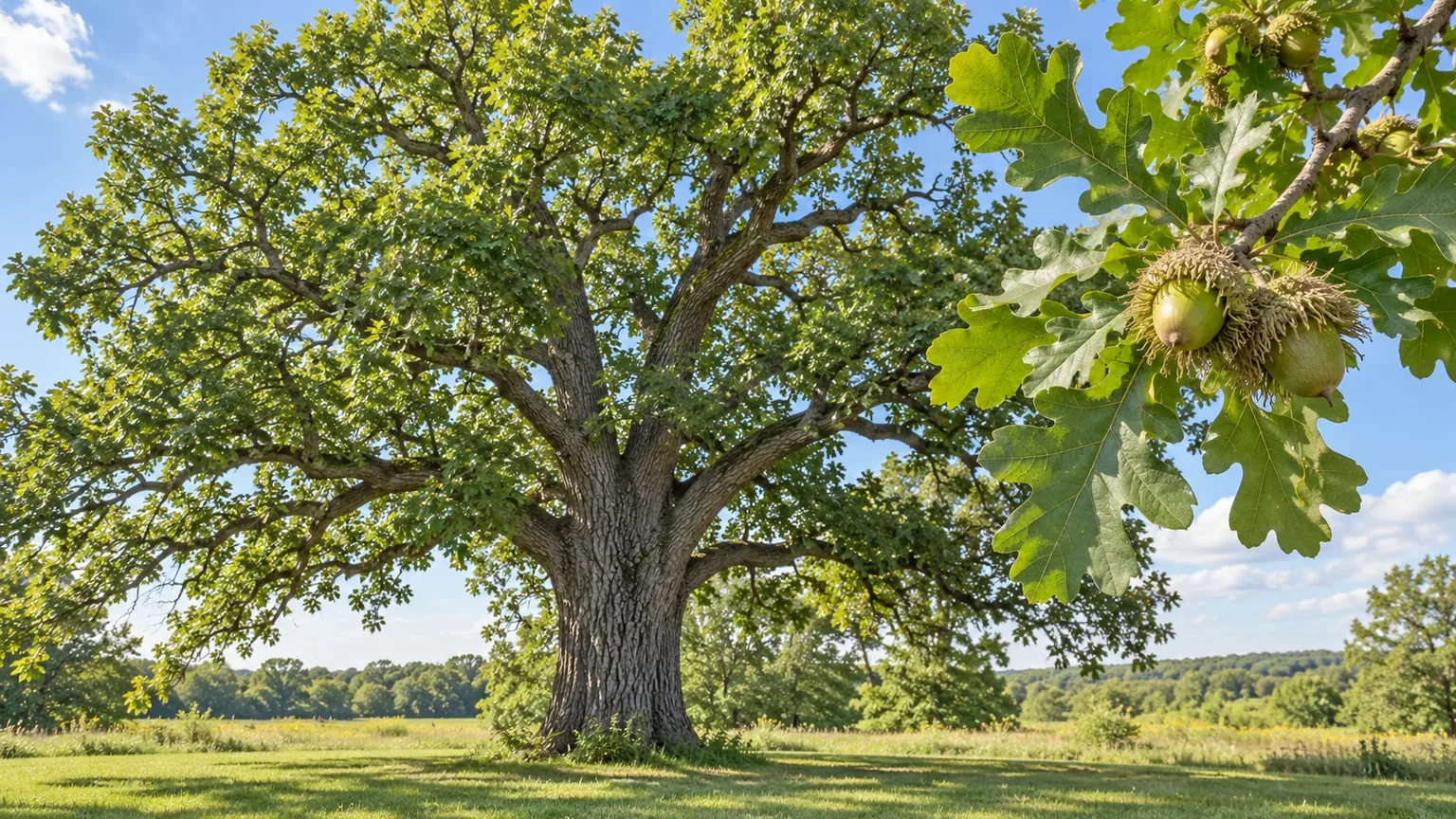
Bur oak (Quercus macrocarpa) is a long-lived North American shade tree for a sunny, roomy site. It stands out for its large, rounded-lobed leaves and unusually shaggy acorn cups, but the mature tree is defined just as much by scale: allow roughly 70 to 80 feet for both height and crown spread. A small sapling may fit beside a house today; its adult canopy and roots may not.
The best care decision happens before planting. Choose a permanent location with full sun, good drainage, and room beyond the trunk for an expansive crown. Bur oak tolerates dry, rocky, clay, and alkaline soils better than many trees, but that adaptability does not make it a good choice for a constantly wet hollow or a cramped strip. Once established it handles dry periods; a new tree still needs close attention while its roots grow beyond the nursery root ball. NC State Extension’s plant profile and the University of Minnesota Trees Program describe the size and site traits that make this a rewarding tree when matched to the right place.
Is Bur Oak Right for Your Yard?
Plant bur oak when you want a substantial canopy for shade, habitat, and a durable landscape feature that can outlast the garden around it. It is a poor fit if you need a small ornamental tree, quick shade, or a specimen that will be easy to move when plans change. Its long taproot is difficult to accommodate in a container for long and makes transplanting an established tree challenging. Treat it as a permanent planting rather than a temporary nursery accent.
Before buying, stand where the trunk would go and imagine the crown at full size. The eventual branches may extend over lawn, a garden, and nearby structures. Consider where leaves, spring catkins, and heavy acorns can fall without creating a recurring cleanup or slipping hazard. The acorns are valuable food for wildlife, but a driveway or patio directly beneath the crown may not be the best place for them.
Bur oak also suits gardeners who can wait. It is described as reasonably fast-growing for a large oak, but a young specimen will not provide mature shade in a few seasons. Seed-grown trees take longer to become landscape-sized, and acorn production can begin only after many years. If the location cannot hold a broad tree for decades, select a smaller species rather than planning to contain bur oak with repeated crown cutting.
How to Recognize Bur Oak
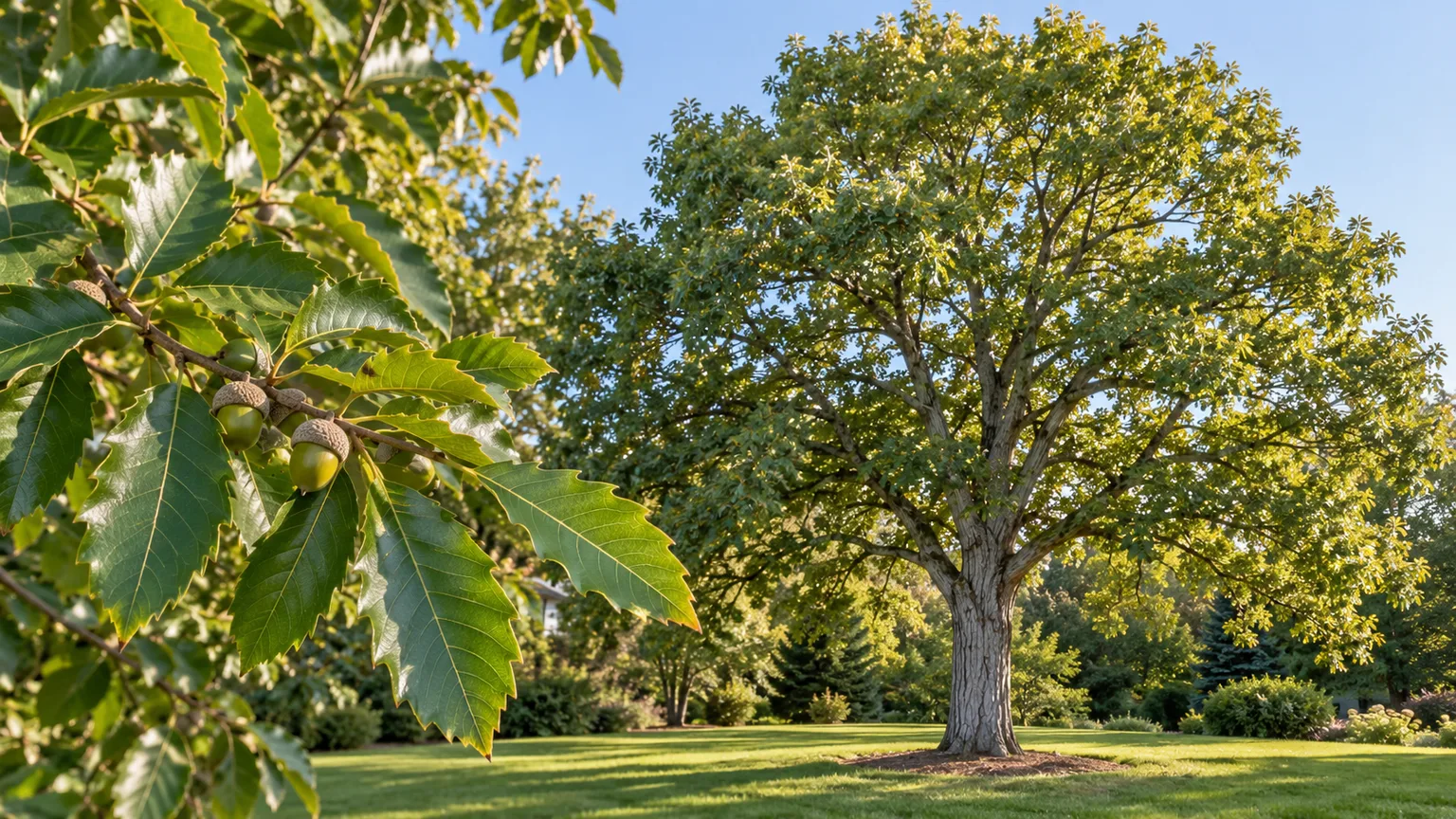
The botanical name on the label is the most reliable confirmation: bur oak is Quercus macrocarpa. Its leaves are large, often 6 to 12 inches long, with rounded lobes and a distinctive narrower waist near the middle. The undersides may look paler than the upper surface. Leaf form varies, so do not identify a young tree from one leaf alone.
The fruit is the clearest seasonal clue. Bur oak makes large acorns, often up to about an inch and a half long, with a deep cap fringed around the nut. That shaggy edge gives the tree its common name. The acorns mature in a single growing season, unlike some other oaks that take two years. The Franklin & Marshall Arboretum’s bur oak profile describes its leaves, bark, acorns, and mature scale; UConn’s Plant Database is another reference for confirming the species.
A young nursery tree may not yet show mature bark or fruit, so check its botanical label and inspect the overall structure. Look for a healthy leader, evenly spaced branches, undamaged bark, and a root ball that has not dried out. A taller tree is not automatically a better purchase: sound roots and a trunk that can develop into a stable crown matter more than a few extra feet of nursery height.
Choose a Site for a Mature Bur Oak
Sun, soil, and climate
Give bur oak full sun, ideally at least six hours of direct light daily. It can tolerate a range of soil textures, including clay and rocky ground, and it is notably tolerant of alkaline conditions. The common thread is drainage: roots need air as well as water, so a site that stays saturated after ordinary rain is a poor match. A little dry soil is generally easier for an established tree than a root zone that remains waterlogged.
NC State Extension lists bur oak for USDA hardiness zones 3a through 8b. Use that range as a broad climate guide, not a guarantee for every microclimate or planting stock. Wind exposure, winter extremes, summer heat, soil drainage, and the amount of establishment care all affect performance. In regions at the edge of the range, consult a local extension or nursery professional about proven regional selections.
Do not amend a broad planting area just to make the soil “more oak-like.” Bur oak’s tolerance for alkaline or clay soil is one of its advantages. Test before changing pH or adding fertilizer; unnecessary amendments can create a root environment unlike the surrounding soil and do little to solve the more important problems of poor drainage, compaction, or inadequate space.
Space, hardscape, and utility conflicts
Allow at least the mature crown width in every direction where possible, and think beyond the visible canopy. A tree’s roots extend well outside its drip line as they forage for water and oxygen. Avoid planting where future root growth will be hemmed in by a small tree pit, repeated excavation, or hardscape you cannot adjust. No distance rule can account for every soil and foundation, so use local arborist guidance when planting near structures, retaining walls, or underground utilities.
Check overhead wires, rooflines, street sight lines, and nearby trees before digging. A bur oak forced into a tight clearance may need aggressive pruning later, which can spoil its structure and create repeated maintenance. If your property has room only for a tree under wires or between pavement and a building, a smaller mature species is a more practical choice.
Plant a Nursery-Grown Bur Oak
Plant a young tree in fall after heat subsides or in early spring before hot, dry weather, choosing a time when the soil is workable and not saturated or frozen. Seasonal timing varies by region; avoid planting during a heat wave or when you cannot keep the root ball moist. Smaller nursery stock is often easier to establish than a large tree, especially because bur oak develops a deep root system and resents unnecessary root disturbance.
Before planting, remove the container or loosen burlap and inspect the roots. If roots circle tightly around the root ball, gently tease apart the outer roots and cut only those that cannot be redirected. Do not pull or break a taproot to force the tree into a shallow hole. If the root system is severely deformed or the trunk is damaged, exchange the tree rather than hoping a poor structure will correct itself.
Set the root flare at the soil surface
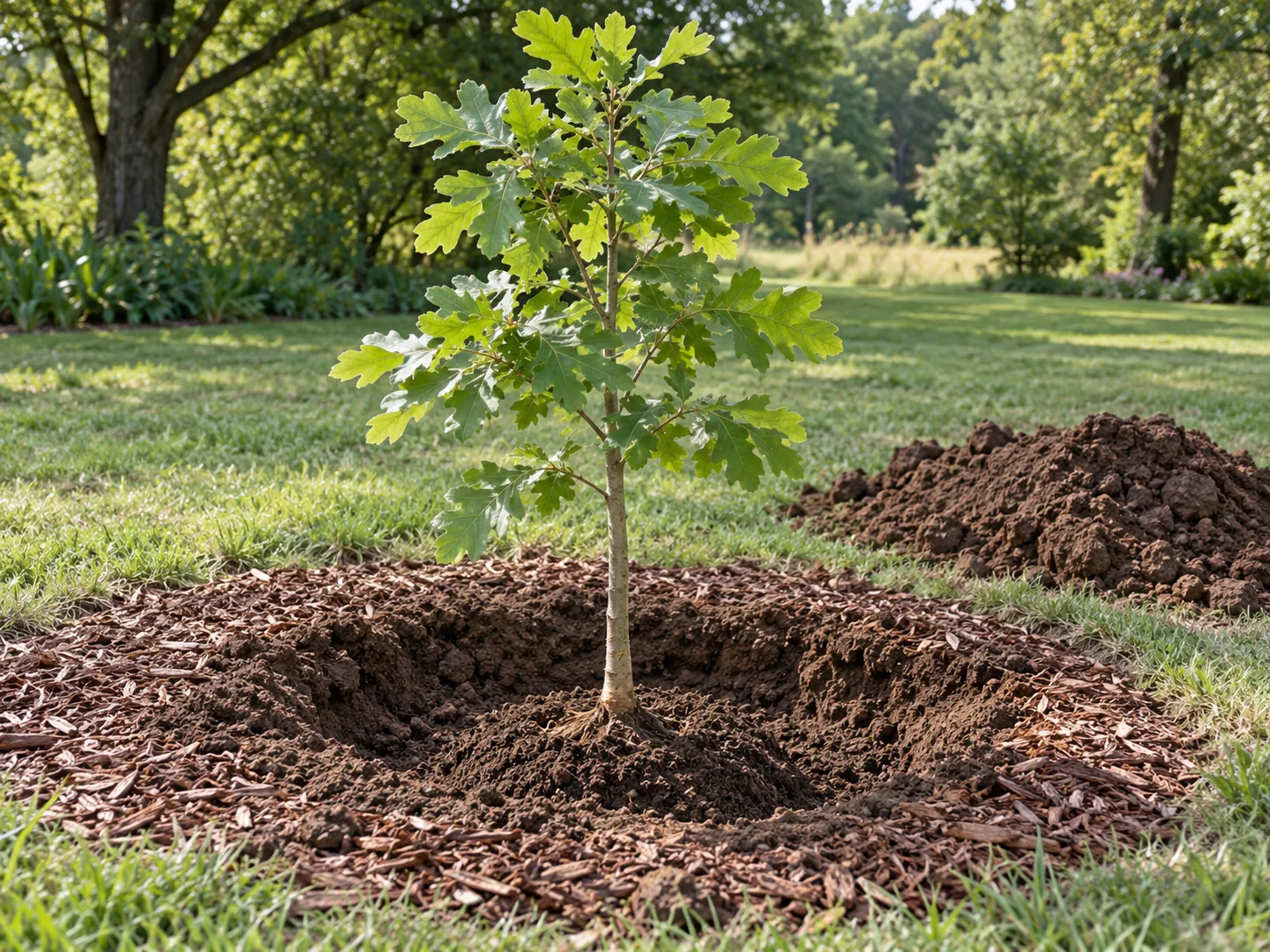
Dig a hole two to three times as wide as the root ball, with sloping sides, but no deeper than the root system needs. Find the root flare—the point where the trunk widens and the first major roots begin. Set that flare at or slightly above the surrounding soil grade so the root ball does not settle too low. The BBC Gardeners’ World guide to planting trees covers the general planting sequence; UConn’s profile emphasizes the large space this species needs.
Backfill with the soil you removed, breaking up large clods but not turning the hole into a pot of rich compost. Firm the soil gently to remove large air pockets without stamping it hard. Water slowly so the soil settles around the roots. If the tree has a stable root ball and stands upright, staking is not automatically necessary; when wind or a loose root ball makes support needed, use flexible ties and remove them once the tree is secure.
Spread a broad, shallow layer of organic mulch over the root zone, but leave a clear gap around the trunk. Keep the root flare visible. A mulch volcano that touches the bark traps moisture and hides the trunk base; it does not improve root growth. Do not place landscape fabric beneath the mulch where it can hinder future root expansion or complicate maintenance.
Water a Young Bur Oak Through Establishment
For the first growing season, check moisture in the original root ball and nearby soil rather than watering by a fixed weekly calendar. The nursery root ball can dry faster than the surrounding ground, even after rain, while heavy soil may remain wet for days. If the root zone is drying several inches down, water slowly and deeply enough to moisten the ball and surrounding soil; if it is still damp, wait and check again.
During hot, windy weather, check more often. After a long rain, check less often and make sure water drains away. The goal is evenly moist soil while new roots develop, not constant saturation. A short surface sprinkle often wets only the mulch and topsoil, encouraging shallow roots while leaving the root ball dry. A slow hose trickle or watering bag can help deliver water gradually, but verify that the water actually reaches the root zone.
Continue checking through the second growing season, adjusting for rainfall, soil, and heat. As the tree establishes, its roots explore more of the site and it becomes more tolerant of dry periods. Do not interpret that mature-tree resilience as a reason to neglect a newly planted specimen. Wilting, leaf scorch, or early leaf drop can follow drought, but those symptoms are not a diagnosis by themselves; first check root-zone moisture, drainage, recent weather, and planting depth.
Mulch and Groundcover; Skip Routine Fertilizer
Keep turf and dense groundcover away from the trunk and, where practical, from the immediate root zone of a young tree. Grass competes for water and makes it harder to notice a dry root ball. A mulch ring reduces mowing and string-trimmer damage while keeping the soil cooler and more evenly moist. Expand the ring as the canopy grows, keeping mulch shallow and off the bark.
Bur oak usually does not need routine fertilizer in a landscape if it is planted in suitable soil and growing normally. Fertilizer will not fix buried roots, compacted ground, chronic wetness, or a site too small for the tree. If growth is unusually weak, inspect the planting depth and moisture pattern and consider a soil test before adding nutrients. Use amendments only to address a measured issue and follow local guidance rather than applying a high-nitrogen lawn product near the trunk.
Grow Bur Oak from Acorns
Acorns are a low-cost way to raise a bur oak, but they are not a shortcut to instant shade. You can sow a sound acorn in its permanent location or start it in a deep container that allows a young root to grow downward. The container route lets you protect the seedling, but it adds a transplant step for a species that prefers to establish its root system early. The BBC Gardeners’ World oak guide offers general oak-seed handling context; use it as a starting point and give the future tree a permanent site as soon as practical.
Choose and handle fresh acorns
Collect acorns when they are mature and have fallen naturally from the tree. Choose plump, firm nuts with intact shells; discard those that are cracked, soft, moldy, or visibly insect-damaged. Keep viable acorns from drying out while you prepare the planting. Gather more than one if you want a better chance of success, since wildlife and variable seed quality can reduce the number that germinates.
Bur oak acorns are especially large, so protect a direct-sown spot from squirrels, birds, and other animals. Mark the site clearly so it is not weeded or dug up. If you are collecting from a public or private tree, get permission first and avoid taking so many that wildlife loses a food source.
Sow acorns where roots can stay
For in-ground sowing, choose the final sunny, well-drained location and plant the acorn on its side beneath a few inches of soil. Keep the soil from drying completely while the seed establishes, but avoid a saturated pocket. Add a wire mesh cage or other breathable protection if animals are likely to dig; remove it or enlarge it as the seedling grows so it does not constrict the stem.
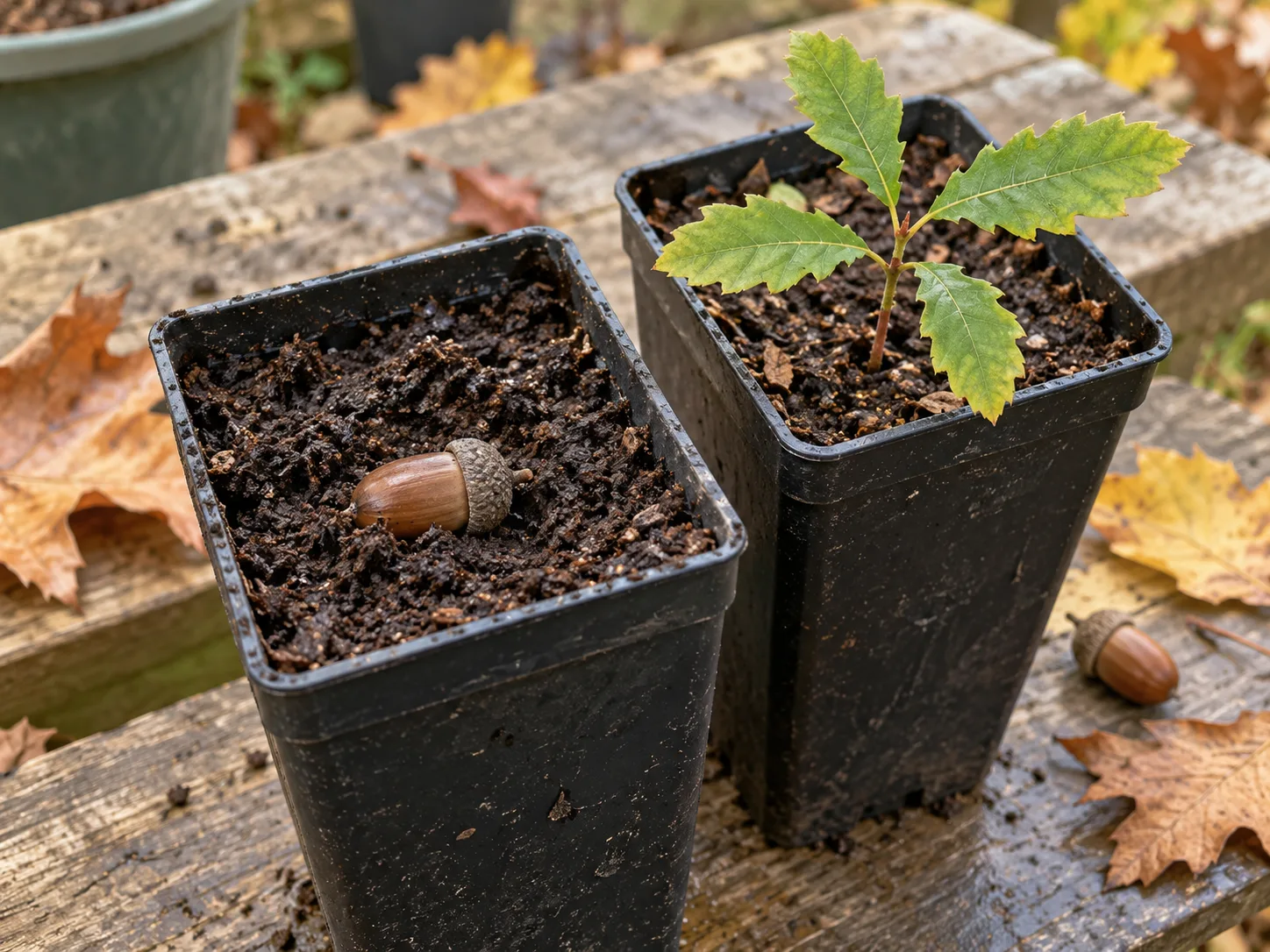
For a container, use a deep pot with drainage holes rather than a shallow seed tray. Fill it with a free-draining potting mix, sow the acorn a couple of inches below the surface, and keep the mix lightly moist. Set the pot outdoors in a protected position suited to the local season, not in a warm indoor spot that disrupts natural growth. Check for roots reaching the bottom and move the seedling to its permanent location before they become tightly coiled. Do not let the plant languish in a small pot for several seasons.
Seedlings vary from their parent and take time to become trees. If you need a named cultivar or a specific characteristic, buy a correctly labeled nursery tree instead of relying on an acorn. If you sow several, thin or transplant while plants are still small, taking care not to damage the main root; otherwise choose the strongest healthy seedling and allow it room to develop.
Prune Bur Oak for a Strong Structure
A young tree generally needs only light structural pruning: remove broken, dead, or rubbing branches and preserve a strong central leader where the species’ form supports one. Avoid removing a large share of the live crown at once. Heavy topping or repeated shearing does not make a large oak fit a small site; it creates a cycle of corrective work and can leave weakly attached regrowth.
For routine shaping, prune during dormancy when branch structure is easy to see and cuts are less likely to coincide with active growth. Timing can vary where local tree diseases or insects are a concern, so follow your state extension’s current oak-pruning guidance. Use clean, sharp tools for small branches and hire a qualified arborist for large limbs, overhead work, or pruning near utilities. Never climb or cut from a ladder with a chainsaw.
Troubleshoot Common Bur Oak Concerns
Leaf browning, spots, or early drop
A few damaged leaves do not necessarily mean the tree is failing. Check whether symptoms are limited to one branch or appear across the crown, whether they began after heat or drought, and whether the root ball is dry or saturated. Also look for construction, trenching, compaction, or recent soil changes around the roots. Correct a clear watering or site issue first and observe whether new growth appears healthy.
Leaf spots, powdery coatings, galls, and discoloration can have different causes, including weather, insects, fungi, or normal leaf aging. A photograph alone may not support a reliable diagnosis. Do not apply a pesticide simply because a leaf looks abnormal; many cosmetic issues do not require treatment, and a product may not address the underlying cause. If damage is severe, spreading, or accompanied by branch dieback, send clear photos and a description of recent care to your local extension office or consult a certified arborist.
Galls, lichens, and missing acorns
Galls are growths formed in response to tiny insects or mites. Their presence can look dramatic, but many galls cause limited harm to an otherwise healthy mature oak. Lichens on bark are also often mistaken for a cause of decline; they typically use the bark as a surface rather than feeding on the tree. Avoid scraping them off. Focus on the tree’s overall vigor, leaf production, and branch condition, not one unusual spot.
A young bur oak may produce no acorns for many years. Franklin & Marshall Arboretum notes that it can take as long as about 35 years for the species to begin bearing, so a lack of fruit on a sapling is not a care failure. Mature-tree crops also vary from year to year with tree maturity and growing conditions. If a mature tree has stopped producing while showing other decline symptoms, assess its health and site rather than applying fertilizer to force fruit.
Conclusion
Bur oak is a strong choice when a sunny, well-drained site can hold a broad canopy for the long term. Confirm the species, plan around mature height and acorn drop, and set the root flare at grade when planting. Water by checking soil around the root ball during establishment, then reduce attention as roots spread. If you raise one from an acorn, protect the seed and move the young tree to its permanent location before its root becomes cramped. The right site and careful first years do more for a bur oak than routine feeding or aggressive pruning.