How to Grow and Care for Schefflera Indoors
Learn schefflera care indoors, including light, watering, soil, pruning, repotting, propagation, leaf drop, pests, and pet safety.
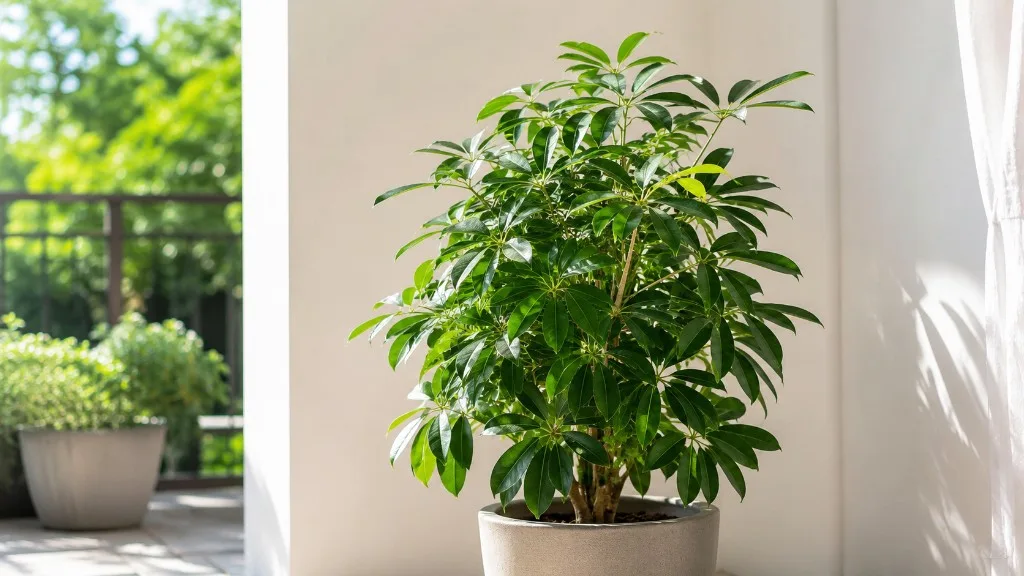
Schefflera, commonly called the umbrella plant or umbrella tree, is one of the most recognizable indoor trees in the houseplant aisle. Glossy palmate leaves radiate from central stalks like the ribs of an open umbrella, and a healthy specimen can anchor a bright living room for decades. The catch is that schefflera looks tough but reacts dramatically to sudden changes. A plant moved from a bright greenhouse to a dim office corner, then watered on a rigid weekly schedule, often sheds half its foliage within a month.
This guide focuses on practical schefflera care indoors for the species most people actually buy: Schefflera arboricola, the dwarf umbrella tree. You may also see it listed as Heptapleurum arboricola in current botanical references. Larger Schefflera actinophylla plants need more space and stronger light, so identifying what you have matters before you choose a permanent spot. For deeper dives on individual topics, the schefflera plant hub covers watering, light, soil, propagation, and problem-specific fixes.
Identify the umbrella plant you have
Before adjusting care, look at leaf size and overall habit. Dwarf schefflera carries clusters of seven to nine leaflets per leaf, each roughly 1 to 2 inches long, on woody stems that branch freely. The larger umbrella tree produces leaflets up to 10 inches long on a single central stalk and can reach 6 to 15 feet indoors if given room and light. Both belong to the ginseng family Araliaceae and share similar cultural needs, but the dwarf form fits most apartments while the larger species demands ceiling height and a bright corner.
Retail tags are not always reliable. A “mini umbrella plant” in a 4-inch pot is almost certainly dwarf schefflera. A floor specimen with hand-sized leaflets is likely S. actinophylla. Variegated plants with creamy yellow or white marbling need more usable light than solid-green siblings to hold their pattern without fading to plain green.
Dwarf schefflera vs larger umbrella tree
| Trait | Schefflera arboricola (dwarf) | Schefflera actinophylla (umbrella tree) |
|---|---|---|
| Typical indoor height | 4–6 feet | 6–15 feet |
| Leaflet size | 1–2 inches | Up to 10 inches |
| Branching | Bushy, multi-stemmed | Often single-trunk tree form |
| Light demand | Bright indirect; tolerates moderate light briefly | Needs stronger bright indirect light |
| Best use | Tabletop when young; floor plant in apartments | Large rooms with ceiling height |
According to NC State Extension, dwarf umbrella tree grows 4 to 6 feet tall and wide in a container indoors, though many stay smaller when root-bound or pruned regularly. The Missouri Botanical Garden notes that indoor specimens rarely flower; the ornamental value is entirely in the foliage. Outdoors in USDA Zones 10 through 12, both species can become landscape trees, but everywhere else they are houseplants or summer patio specimens brought inside before temperatures drop below about 60°F (15°C).
Popular variegated cultivars to know
Several named cultivars appear regularly in garden centers and online shops. Gold Capella features yellow-and-green variegation and is widely sold as a braided or multi-stem specimen. Trinette and Variegata carry cream-to-yellow marbling on green leaflets. Compacta stays shorter with denser leaf clusters, making it a better desk plant when young. Dazzle pushes variegation to near-white on some leaves and needs the brightest spot in your home to avoid reverting.
Variegated schefflera is not harder to grow, but it is less forgiving of low light. A solid-green plant may survive a dim hallway for a while; a Gold Capella in the same spot will stretch, lose color, and drop leaves faster. Place variegated forms within 3 to 5 feet of a bright east- or south-facing window, or directly in an east window with gentle morning sun.
Schefflera care at a glance
| Need | Practical target |
|---|---|
| Light | Bright indirect light; gentle morning sun acceptable |
| Soil | Airy, well-drained indoor potting mix |
| Water | When top 2 inches of mix are dry; less in low light or winter |
| Humidity | Average home humidity (30–40%) is fine; avoid hot dry vents |
| Feeding | Balanced houseplant fertilizer during active spring–summer growth |
| Pruning | Cut above a node during active growth to encourage branching |
| Temperature | Warm and stable; protect from cold below 60°F |
| Toxicity | Toxic to cats and dogs; sap may irritate skin |
Schefflera rewards consistency more than perfection. A plant that receives the same bright indirect light, the same dry-down watering rhythm, and stable room temperatures for months will look full and glossy with minimal intervention. The problems start when owners treat it like a drought-proof succulent or a shade-tolerant fern.
Light and placement indoors
Bright indirect light is the baseline for healthy schefflera indoors. Place the plant near an east-facing window for gentle morning sun, or 3 to 5 feet from a south- or west-facing window where sheer curtains or a neighboring building filters the strongest rays. A few hours of direct morning sun usually helps variegated cultivars hold their color. Harsh afternoon sun through unfiltered glass can scorch leaflets, producing pale bleached patches or crisp brown edges.
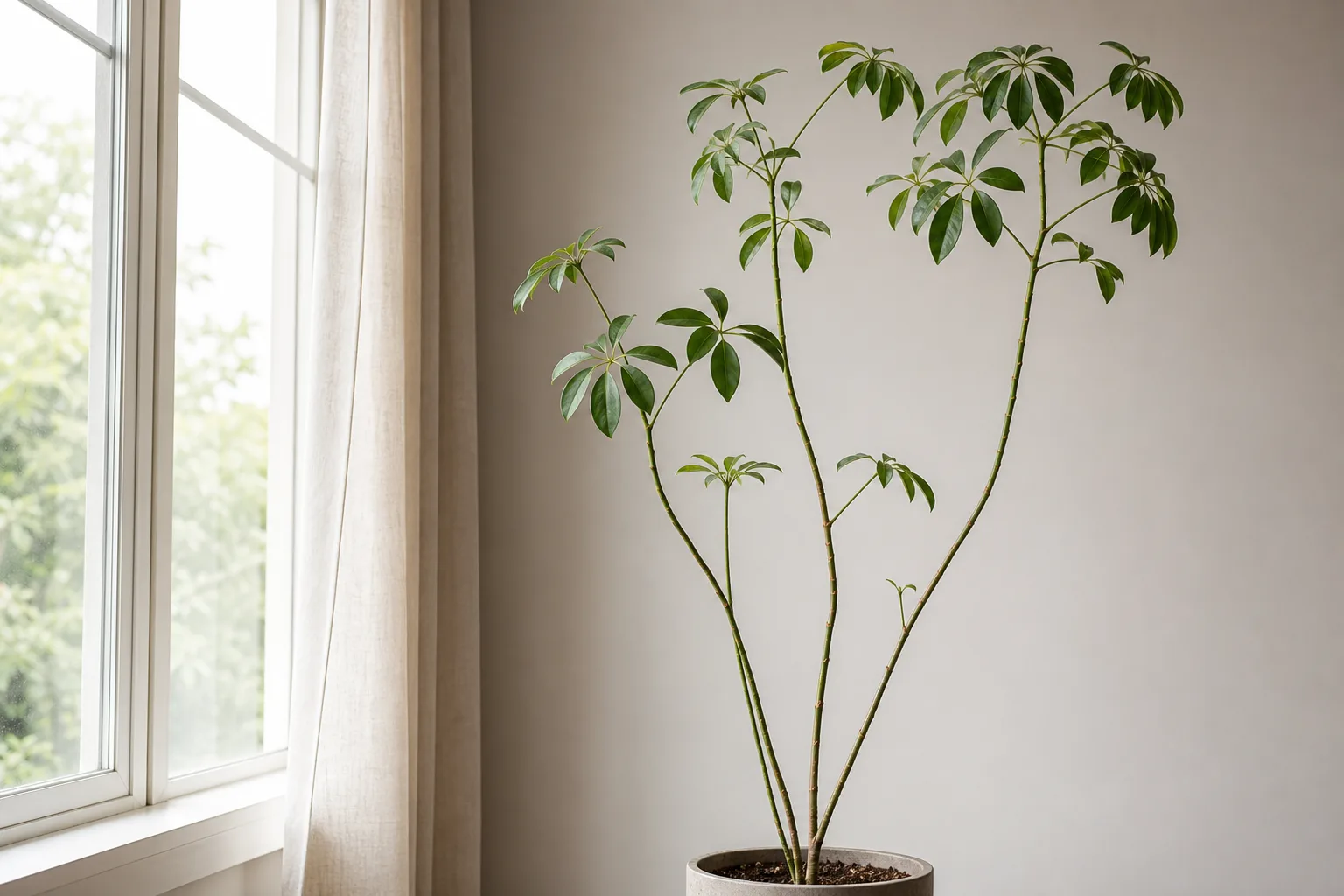
If your schefflera sits more than 6 feet from the nearest window, expect slower growth, longer spaces between leaf clusters, and a pot that stays wet longer between waterings. That combination is a common setup for leaf drop, because owners water on a schedule designed for a brighter location. Leggy stems with small pale leaflets almost always mean not enough light, not a nutrient deficiency.
Rotate the pot a quarter turn every week or two so growth stays even. Keep the plant away from air-conditioning vents, heating registers, and frequently opened exterior doors. Cold drafts against a window pane in winter can trigger sudden leaf loss even when the room thermostat reads a comfortable temperature.
Summer outdoor placement rules
Schefflera can spend warm months outdoors in many climates, and summer humidity and air movement often improve foliage quality. Wait until nighttime temperatures stay reliably above 60°F, then move the pot to a shaded patio, covered porch, or spot under a tree where the plant receives bright indirect light but no direct midday sun. Acclimate gradually over a week, starting with one hour outside and increasing exposure daily.
Outdoor summer placement changes watering frequency. Wind, heat, and brighter light dry the mix faster, so check soil every few days instead of relying on the winter schedule. Before the first frost threat, bring the plant back inside and inspect leaf undersides for hitchhiking pests. Quarantine it from other houseplants for two weeks and treat any insects before they spread.
Soil, pot, and drainage
Use a standard indoor potting mix amended with perlite, pumice, or orchid bark so water drains freely. Schefflera tolerates slightly acidic to neutral soil and prefers a mix rich in organic matter that still dries at a reasonable pace. Avoid garden soil, which compacts in containers and holds too much moisture around woody roots.
The container must have a drainage hole. A decorative cachepot is fine as an outer sleeve, but lift the nursery pot out to water and empty collected runoff from the saucer within 15 minutes. Sitting in standing water is one of the fastest routes to root rot and the leaf drop that follows.
Choose a pot only 1 to 2 inches wider than the root ball when repotting. An oversized container surrounds small roots with a large volume of wet mix that takes days to dry, especially in winter or low light. Many experienced growers keep schefflera slightly root-bound to slow vertical growth and maintain a manageable indoor size. That strategy works only if you still water based on soil dryness rather than calendar dates.
Watering and humidity
Water schefflera when the top 2 inches of potting mix feel dry and the container feels noticeably lighter when lifted. Then water slowly until a little drains from the bottom, and let excess water leave the pot completely before returning it to a saucer or cachepot. In bright active growth, that might mean watering every 7 to 10 days. In a dim winter room with a large pot, the same plant might need water only every 14 to 21 days.
The interval changes with light, temperature, pot size, and airflow. A plant recently moved to a darker corner will use water more slowly even if you keep the same watering day on your calendar. Do not water because leaves droop until you check the soil. Both underwatering and root damage from overwatering produce wilt, and adding water to already-soggy mix makes recovery harder.
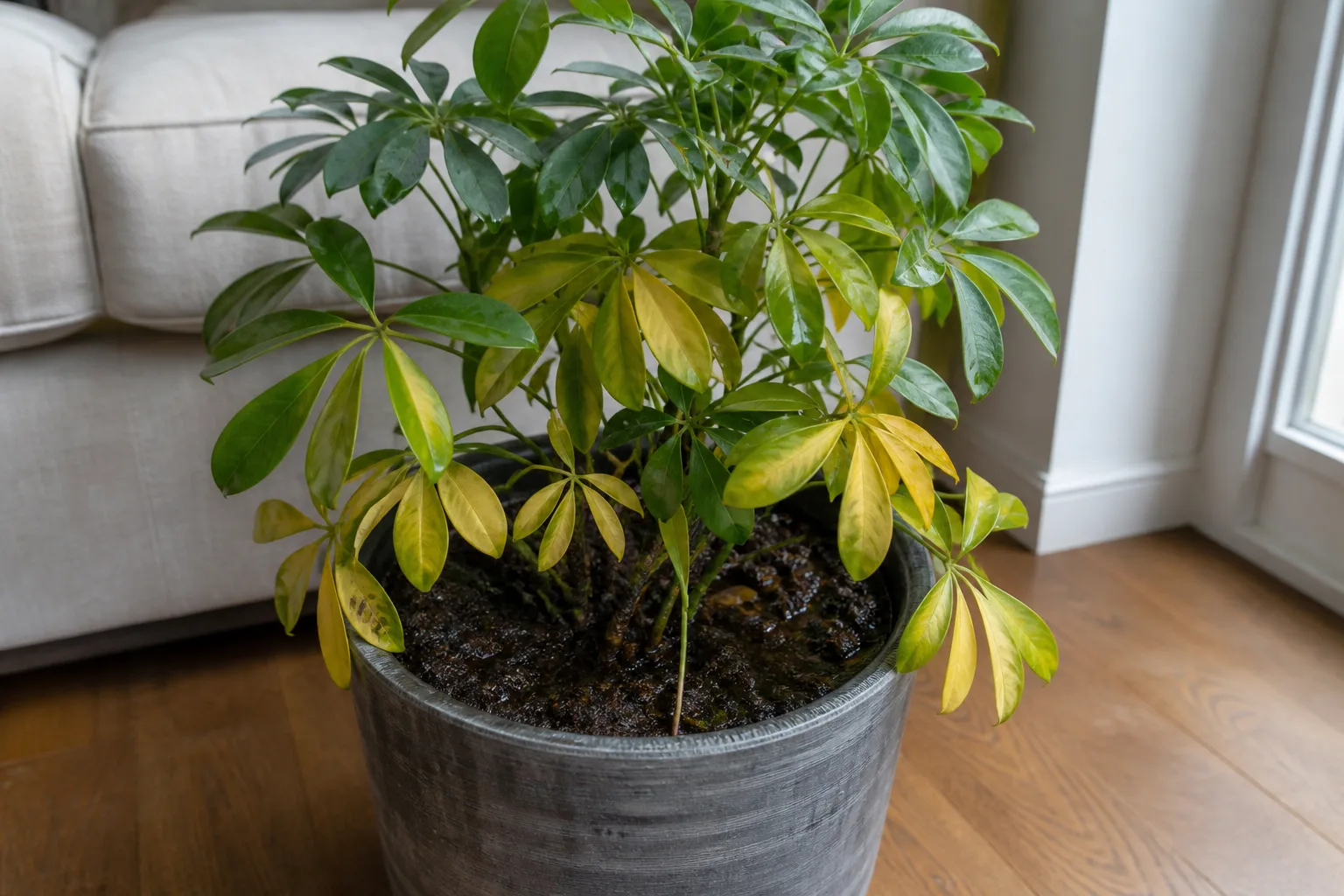
Yellow leaves with wet soil, a musty smell from the pot, or mushy lower stems point toward overwatering or poor drainage. Crisp leaf edges, very light dry pots, and soil pulling away from the pot sides suggest underwatering. The schefflera watering guide walks through dry-down technique in more detail.
Schefflera tolerates average household humidity around 30 to 40 percent. In unusually dry heated rooms, a humidifier or a pebble tray (with the pot sitting above the water line, not in standing water) can help. Misting leaves briefly raises surface moisture but does not meaningfully change room humidity and can leave foliage wet without solving the underlying issue. Focus on root-zone moisture and stable temperatures first.
Temperature and seasonal growth
Schefflera is a tropical plant that prefers warm, stable room temperatures between 65°F and 90°F (18°C and 32°C). Sustained exposure below 60°F (15°C) causes leaf drop, stalled growth, and increased susceptibility to root problems. Do not leave a schefflera on an unheated porch, in a garage, or against a cold windowpane in winter.
Growth slows sharply when daylight shortens and indoor heating dries the air. Reduce watering frequency in fall and winter because the plant uses less water with less light. Hold off on heavy pruning or repotting until spring unless the root zone is clearly failing. A plant that sheds a few lower leaves in winter while the soil stays appropriately dry is often responding to seasonal light decline rather than a crisis.
New growth in spring is your signal to resume regular feeding and more frequent soil checks. Fresh leaf clusters emerging at stem tips mean the root system and light levels are aligned. If spring arrives and no new growth appears for six to eight weeks, reassess light before adding fertilizer.
Fertilizing an umbrella plant
Feed schefflera during active spring and summer growth with a balanced, complete houseplant fertilizer diluted according to the label. Water the plant first if the mix is very dry, then apply fertilizer to moist soil so salts do not concentrate against dry roots. A monthly application at half strength often works well; heavy feeders in bright south windows may tolerate biweekly feeding during peak summer growth.
Pause or reduce feeding when growth slows in late fall and winter. Pale new leaves, small leaflets, and slow growth can reflect insufficient light or root crowding as easily as low nutrition. Check placement and root conditions before doubling fertilizer, because excess salts cause brown leaf tips and can damage roots already stressed by overwatering.
If white crust appears on the soil surface or pot rim, flush the mix with plain water until runoff flows freely, letting it drain completely. That leaches accumulated salts. Resume feeding at a lower rate only after new healthy growth appears.
Pruning for a fuller, bushier plant
Prune schefflera during active growth when the plant is stable, not during a leaf-drop episode. Start by removing dead, damaged, or crossing stems. Then shorten long leggy shoots just above a leaf node where you want new branches to emerge. Schefflera responds to pruning by sending out multiple shoots below the cut, which is how you turn a sparse single stem into a bushier silhouette.
Avoid removing more than about one-third of the living canopy in a single session. A hard haircut on a stressed plant with compromised roots delays recovery by weeks. If the schefflera is dropping leaves after a move, stabilize light and watering for several weeks before shaping.
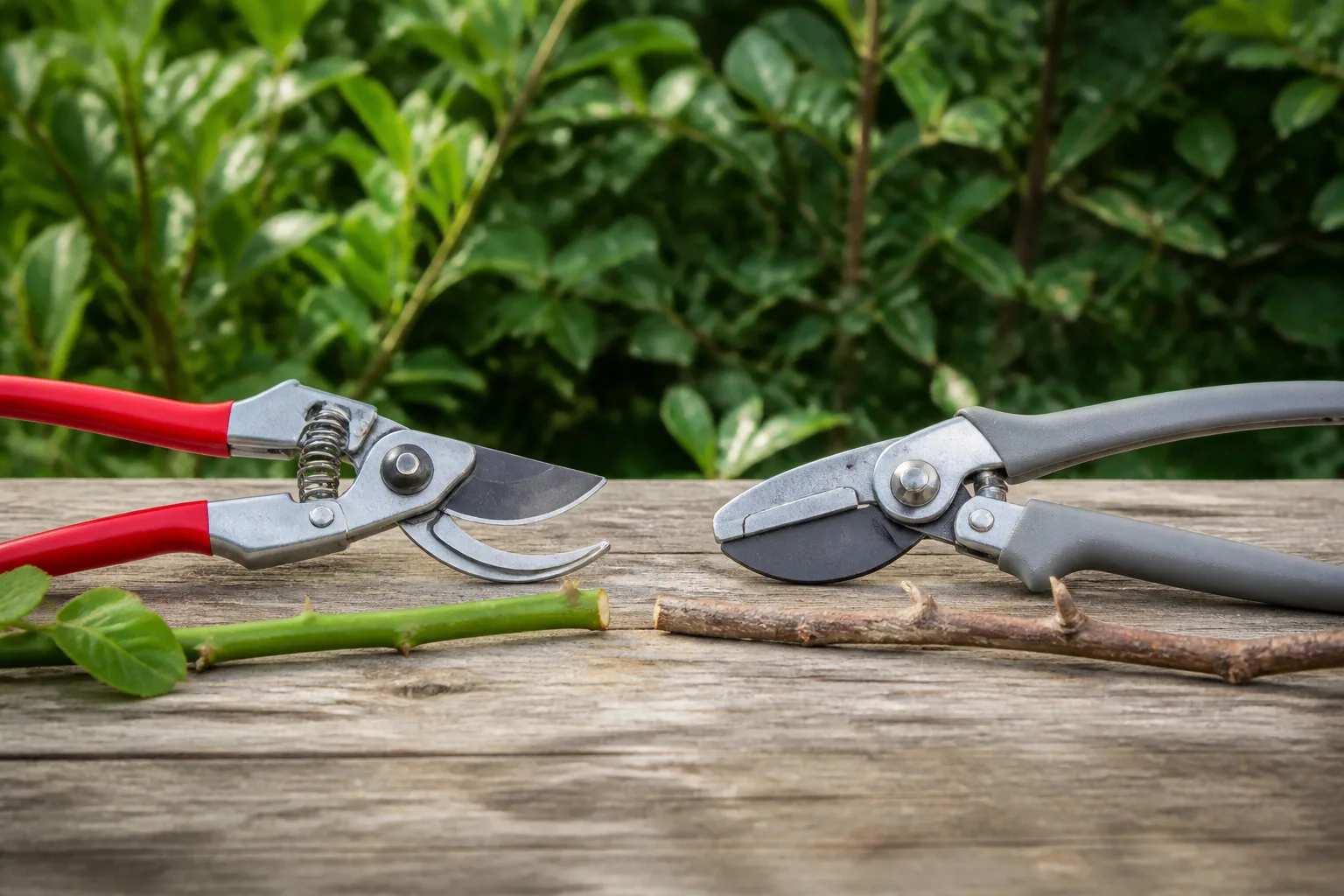
Use clean, sharp pruners and wipe blades with rubbing alcohol between cuts if you suspect disease. Wear gloves if sap irritates your skin. Stake a leaning plant temporarily, but address the underlying low-light cause so new growth emerges stronger rather than stretching toward the window again.
Repotting and propagation
Repot when roots circle the container heavily, water runs straight through dry mix without absorbing, or the plant dries out unusually fast between waterings. Choose a pot one size larger with drainage holes, use fresh airy mix, and loosen only clearly circling roots at the bottom. Water once to settle the soil and return the plant to bright indirect light without direct sun for a week.
Delay repotting if the plant was recently purchased or moved. Acclimation stress plus repotting stress stacked together is a reliable recipe for leaf drop. Wait until you see stable new growth or clear root crowding before disturbing the root ball.
Stem cuttings step by step
Schefflera propagates readily from stem cuttings taken in spring or early summer. Choose a healthy stem with several nodes and cut a 4- to 6-inch section at a 45-degree angle just below a node. Remove lower leaflets, leaving one or two leaf clusters at the top. Dip the cut end in rooting hormone if you have it, though many cuttings root without it.
Place the cutting in a small pot of moist, airy mix or in a jar of water changed weekly. Cover soil-rooted cuttings loosely with a clear bag to hold humidity, venting for an hour every few days. Keep the cutting in bright indirect light at warm temperatures near 70°F (21°C). Roots typically form in three to six weeks; tug gently to check resistance before removing the humidity cover.
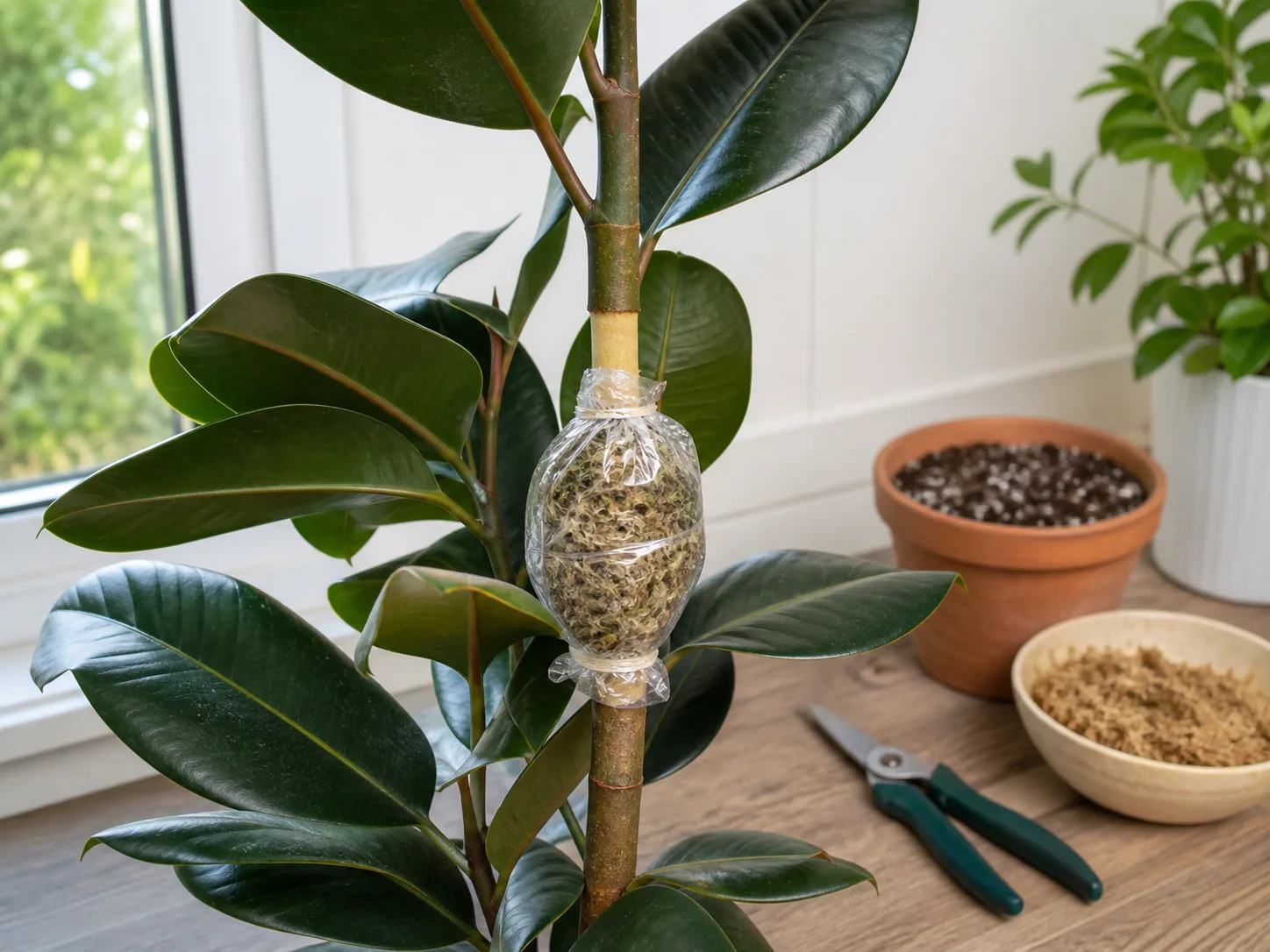
Once rooted, transplant water-grown cuttings into mix and begin light feeding after the first month of new growth. Pinch the growing tip to encourage branching early. The schefflera propagation guide covers air layering for larger specimens if you want to root a thick stem without removing it from the parent plant.
Diagnose leaf drop, yellow leaves, and brown spots
Leaf problems on schefflera follow a predictable diagnostic order. Check soil moisture and root health first, then light, then temperature stability, then pests. Changing multiple variables at once makes it impossible to know what helped.
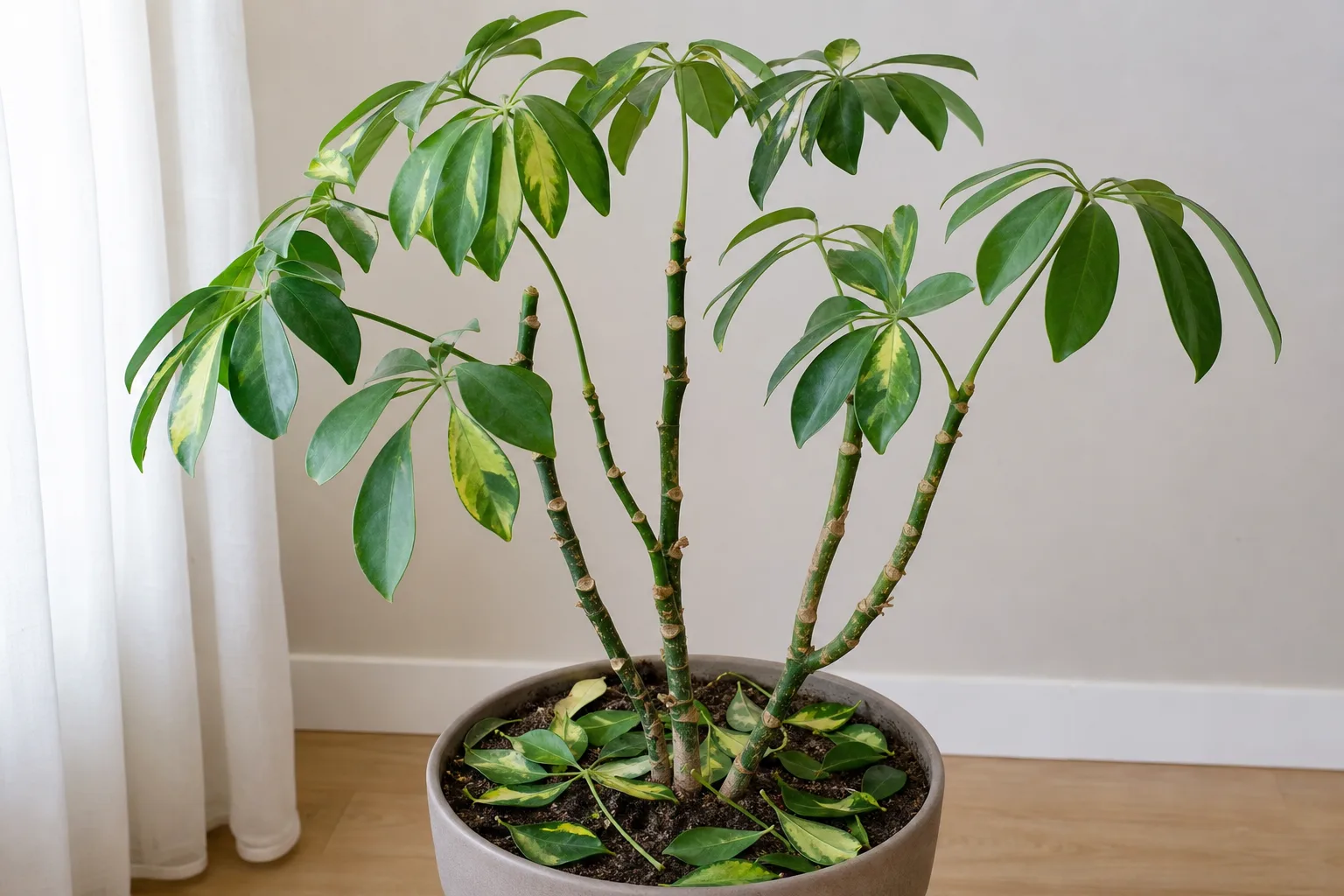
Sudden leaf drop after purchase or moving usually signals acclimation stress. The plant left a bright greenhouse for a dimmer home, or shifted from outdoor humidity to dry indoor air. Keep conditions steady, water only when the top 2 inches dry, and wait several weeks before repotting or heavy pruning. Some leaf loss is normal during adjustment.
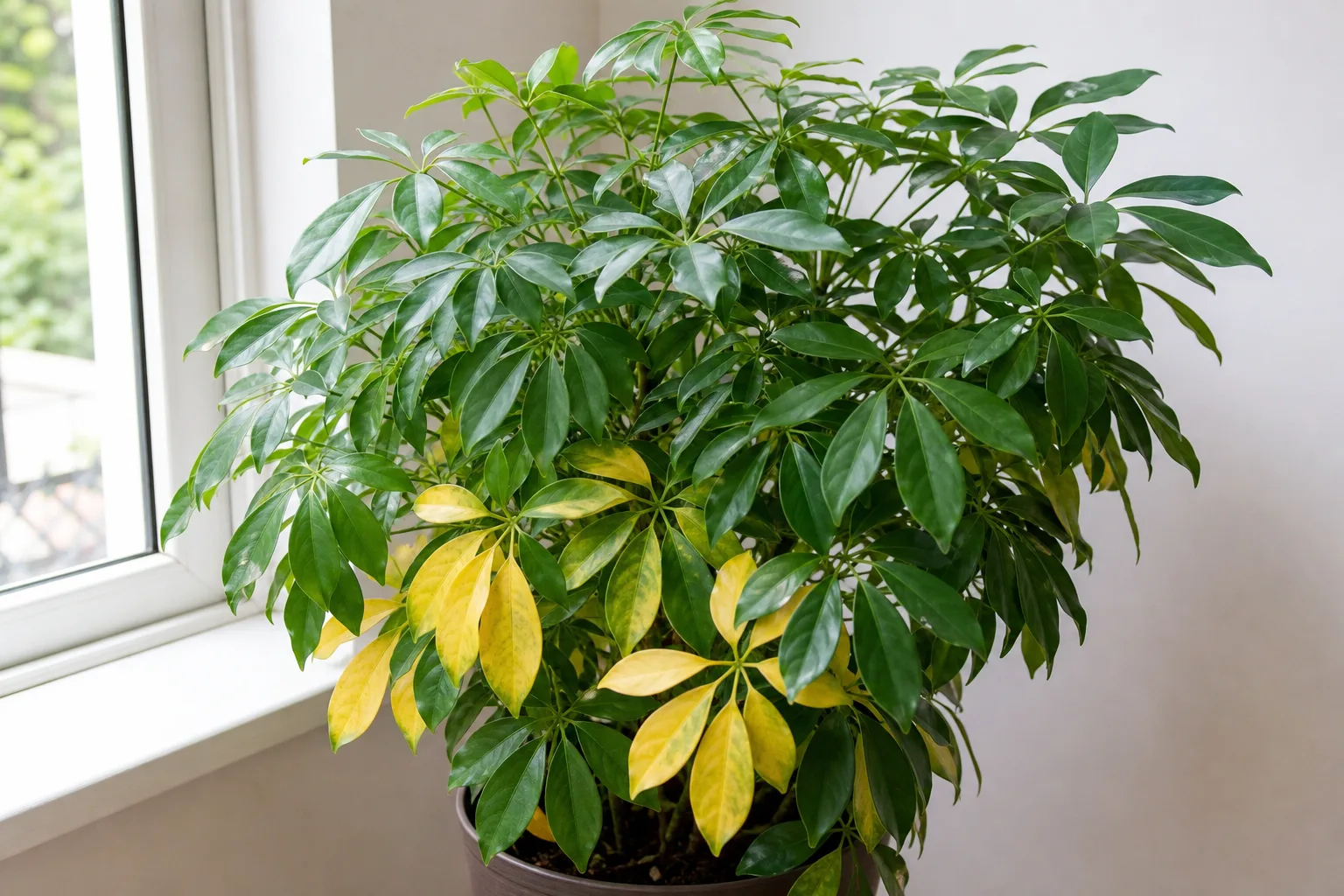
Yellow leaves with wet soil point to overwatering, poor drainage, or beginning root rot. Let the mix dry to the appropriate depth, inspect roots if you suspect rot, and repot into fresh airy mix only if roots are brown and mushy. Do not fertilize a plant in this state.
Yellow lower leaves on an otherwise healthy plant may be natural aging of older foliage. Remove them and watch whether yellowing spreads up the stem. Widespread yellowing with dry soil suggests underwatering or cold stress.
Brown spots, crisp edges, or bleached patches can result from direct sun scorch, mineral salt buildup, low humidity combined with heat vents, or pest damage. Inspect leaf undersides before treating. Brown mushy spots with foul-smelling soil indicate advanced root rot.
Sparse leggy growth means increase usable light and prune long shoots during the next active growth period. Watering more often will not fix a plant starving for photons.
Pests and common diseases
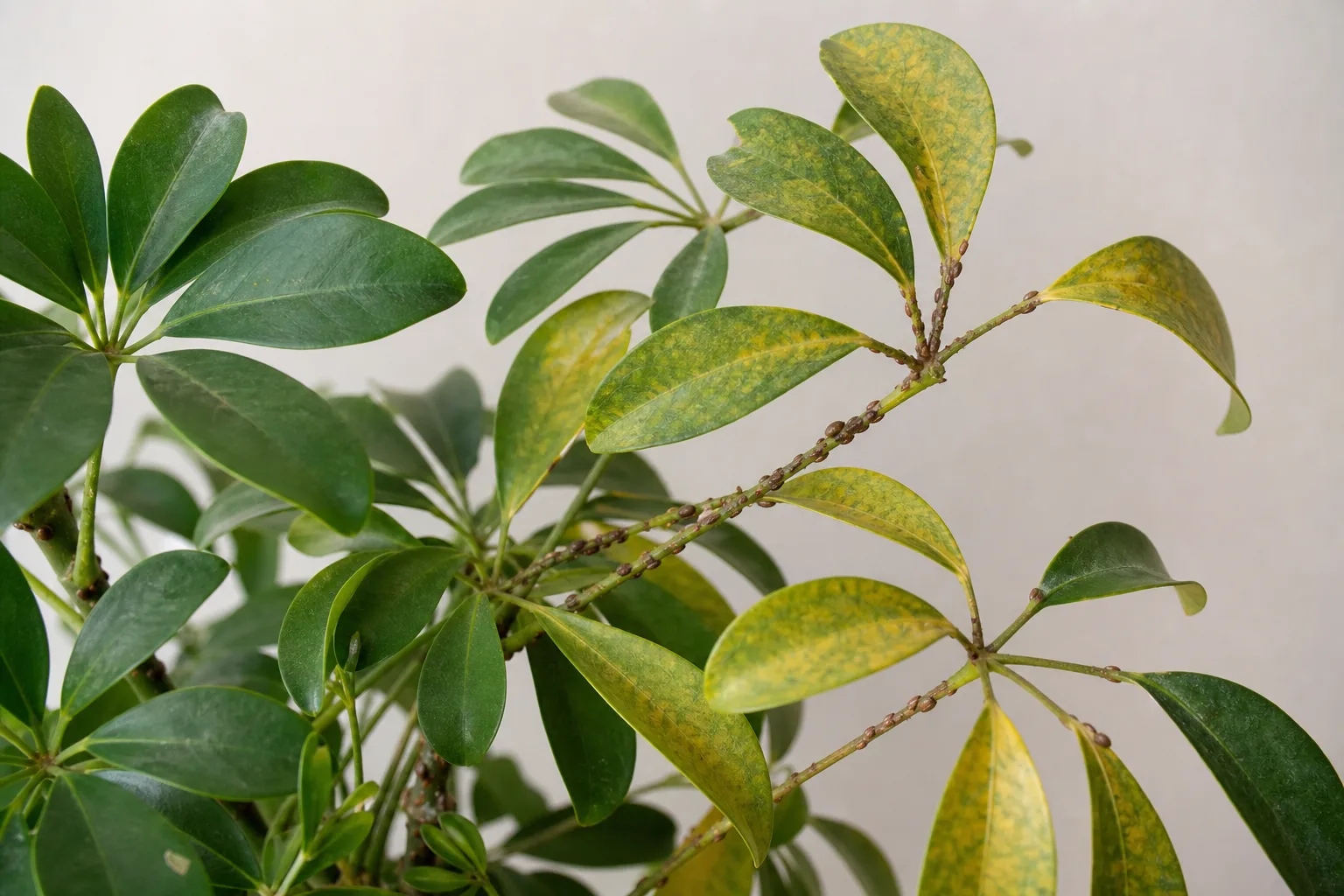
Indoor schefflera most often struggles with scale insects, mealybugs, spider mites, and aphids. Scale looks like small brown or tan bumps glued to stems and leaf undersides. Mealybugs form white cottony clusters in leaf joints. Spider mites cause fine webbing and stippled yellowing, especially in dry heated air. Aphids are soft-bodied insects that leave sticky honeydew and can attract sooty mold.
Inspect new plants and any plant returning from summer outdoors before placing it near other houseplants. Isolate suspicious specimens for two weeks. Remove visible pests with a cotton swab dipped in rubbing alcohol for light infestations. For heavier outbreaks, use an insecticidal soap or horticultural oil labeled for indoor ornamental plants, following the label exactly and keeping treated foliage away from pets.
Bacterial and fungal leaf spots can appear when foliage stays wet overnight or overhead watering splashes infected soil onto leaves. Water at the soil line, avoid evening watering, and remove affected leaves. Improve airflow around the plant. Copper-based fungicides are an option for persistent fungal spotting when cultural changes alone do not help, but always confirm the product is labeled for your situation.
Fungus gnats are a nuisance rather than a direct threat to established schefflera, but they signal consistently moist surface soil. Let the top layer dry more between waterings and consider a sticky trap while adjusting your watering rhythm.
Pet safety and human exposure risks
The ASPCA lists schefflera as toxic to cats and dogs. All parts contain calcium oxalate crystals that cause oral irritation, excessive drooling, vomiting, and difficulty swallowing when chewed. Schefflera is not a safe choice for homes where curious pets can reach floor pots or low shelves.
Keep plants on tall stands, in hanging baskets out of jump range, or in closed rooms pets cannot enter. Pick up fallen leaflets promptly. If you suspect ingestion, contact your veterinarian or an animal poison-control hotline with the botanical name Schefflera arboricola or Schefflera actinophylla.
Sap may irritate sensitive human skin during pruning. Wear gloves, wash hands afterward, and avoid touching your face while handling cut stems. Schefflera is generally low severity for humans compared with pets, but children who chew plants should be kept away as a precaution.
Conclusion: steady conditions beat rescue care
Schefflera is a long-lived indoor tree when you match its rainforest habits: bright indirect light, a draining pot, and watering guided by soil dryness rather than the calendar. Identify whether you have dwarf schefflera or the larger umbrella tree, give variegated cultivars extra brightness, and change one variable at a time when leaves fall.
Prune during active growth to build a fuller shape, repot one size up when roots demand it, and propagate healthy stems as backup plants. Watch for scale and mealybugs, especially after summer outdoors. Keep the plant away from pets, protect it from cold drafts, and resist the urge to rescue a stressed schefflera with more water in a dark room. Consistency is the treatment most umbrella plants actually need.