How to Grow and Care for Ball Cactus
Learn ball cactus care, from bright light and gritty soil to seasonal watering, winter rest, repotting, propagation, and common warning signs.
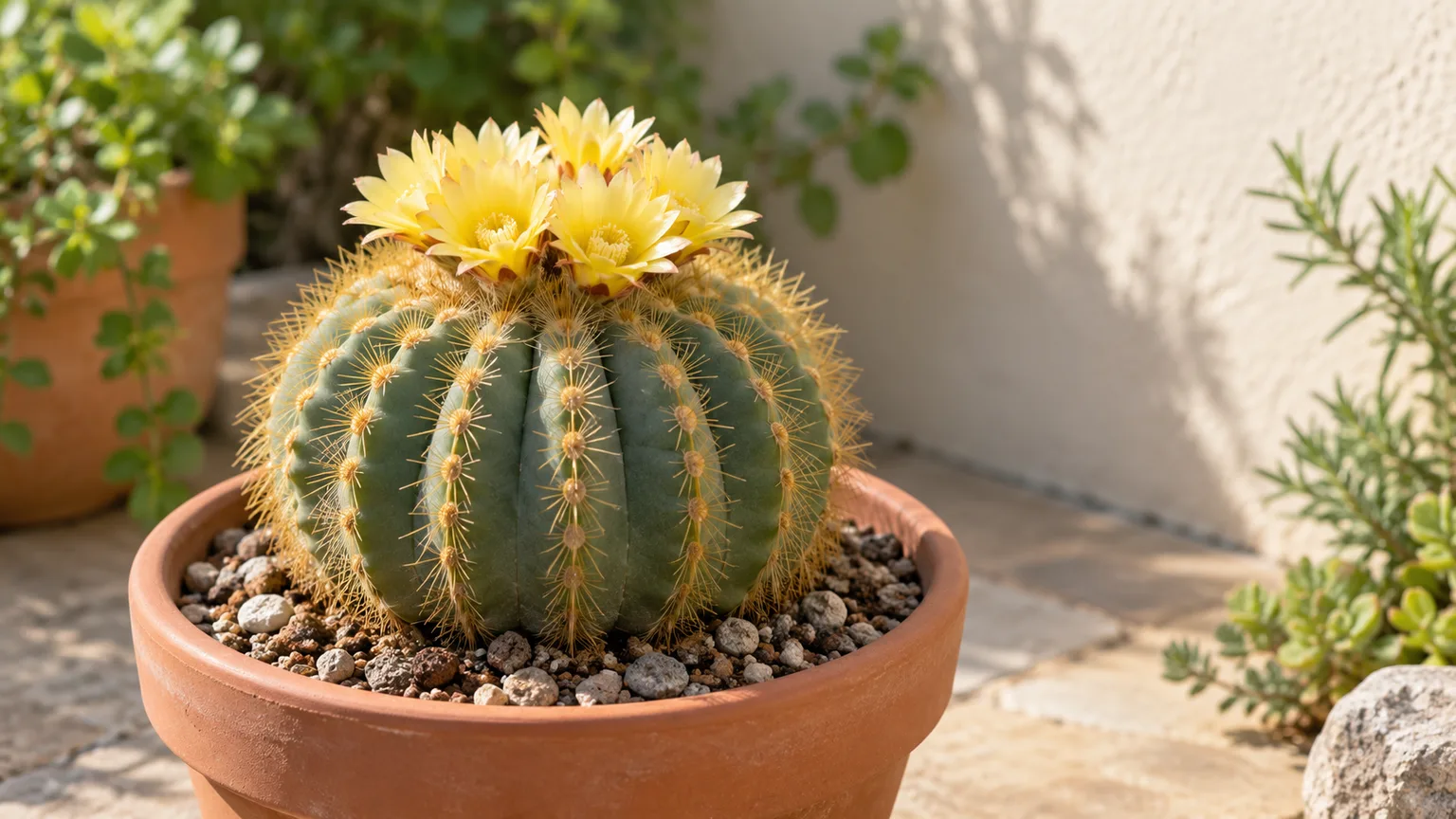
Ball cactus is one of the easier cacti to keep when its roots can dry between waterings and its body gets plenty of light. The plant is often sold as balloon cactus or blue ball cactus; its accepted botanical name is Parodia magnifica. It comes from southern Brazil, where it grows in open, rocky places with seasonal weather—not in permanently hot, bone-dry conditions. That background explains why it appreciates regular moisture while growing but still needs fast drainage and a much drier winter routine. The Royal Horticultural Society describes the species as a globose to short-cylindrical cactus with yellow spines and summer flowers, while NC State Extension advises letting Parodia soil dry between waterings and keeping plants dry in winter.
A practical care summary: give it a very bright position, introduce direct sun gradually, use a pot with a drainage hole and gritty cactus mix, and water thoroughly only after the root zone has dried. Reduce water when days shorten or the plant is kept cool. The pot—not a fixed number of days—determines how soon you can water again.
Identify your ball cactus and set realistic expectations
The plant’s rounded, blue-green body is divided into distinct ribs, with short bristly spines along the ridges and a woolly growing point at the top. A healthy plant may stay solitary for years before producing offsets; with age, it can form a small cluster. Mature plants can produce funnel-shaped yellow flowers near the crown, usually in summer, but flowering is a reward for years of suitable light and seasonal care rather than a quick response to fertilizer. The RHS lists mature specimens reaching about 15 centimeters tall and flowers up to 5 centimeters across; individual plants and growing conditions vary.
You may find the same cactus labeled Notocactus magnificus. That name is a synonym, not a separate care type: Kew’s Plants of the World Online accepts Parodia magnifica and lists Notocactus magnificus among its former classifications. If a label says “ball cactus” without a botanical name, check the ribs, blue-green color, yellow spines, and crown flowers before applying this guide; several unrelated globular cacti share common names.
Choose light that keeps the body compact
Indoors, place the cactus at your brightest available window, generally an unobstructed south- or west-facing exposure in the Northern Hemisphere. A bright east window can work if it receives several hours of direct morning sun, while a dim room or a position several feet back from a window usually will not provide enough light for compact growth. A grow light can help in a dark home; position it according to the fixture’s directions and keep a consistent day length rather than leaving it on around the clock.
Ball cactus tolerates strong light, but a plant raised in a greenhouse, store, or dim room can scorch if moved straight into hot midday sun. Look for pale, bleached, tan, or corky patches on the side facing the window; those marks do not turn green again. Rotate the pot a quarter turn every week or two so growth does not lean toward one direction, but avoid moving it abruptly between radically different exposures. Gardener’s Path recommends several hours of direct indoor sun and lighter afternoon exposure outdoors in very hot climates; the RHS profile also allows full or bright filtered light.
Acclimate a new cactus gradually
When you bring home a plant, keep it in bright indirect light for several days, then introduce morning sun in short increments. Add exposure over roughly one to two weeks, watching the sun-facing side after each change. If the surface begins to bleach or develop a sharply defined brown patch, step back to filtered light and resume more slowly once the plant is stable.
Outdoors, choose a sheltered place with morning sun and protection from the harshest afternoon heat in hot-summer regions. A container is useful because you can move it under cover during prolonged rain or bring it inside before cold nights. Do not put the cactus into a closed terrarium: trapped humidity and slow evaporation make the root zone harder to manage.
Choose a small pot and gritty mix
Drainage matters more than a special brand of “cactus soil.” Use a pot with an open drainage hole and a loose mix that allows water to pass through instead of lingering around fine roots. A commercial cactus-and-succulent mix can work, but if it feels dense or stays damp for days, blend in pumice or perlite and horticultural grit to open the structure. Do not use beach sand or fine builder’s sand; fine particles can compact rather than improve aeration. NC State Extension lists well-drained sandy or loamy soil for Parodia, and the RHS recommends standard cactus compost for P. magnifica.
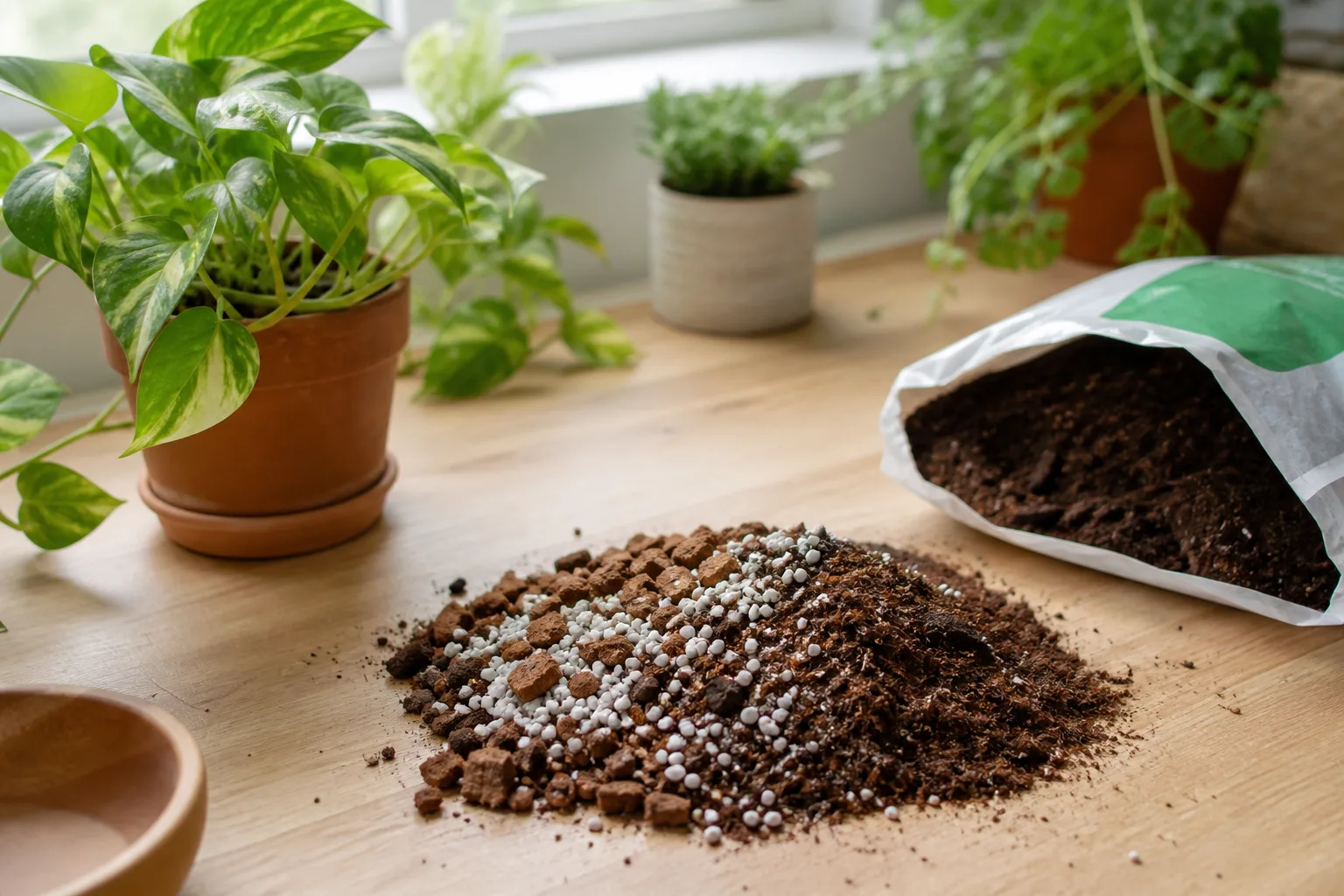
Choose a pot only modestly wider than the root ball. A pot that is much too large contains more wet mix than the roots can use, so it can remain damp long after the surface looks dry. Unglazed terracotta tends to dry faster than plastic or glazed ceramic; that can be helpful in humid homes, but it may require closer checks in a hot, dry room. Whichever material you use, empty the saucer after watering and never let the container sit in runoff.
Water during growth, then let the root zone dry
During spring and summer, water deeply enough to wet the whole root ball, then let all excess drain. Do not give frequent small sips: they can wet only the upper mix and encourage roots to stay near the surface. Before the next watering, check below the top layer. Push a clean wooden skewer into the mix near the pot wall or feel the mix through a drainage hole; if it comes out cool, dark, or damp, wait. A small pot in bright light may dry in days, while a larger plastic pot in a cool, humid room may take much longer.
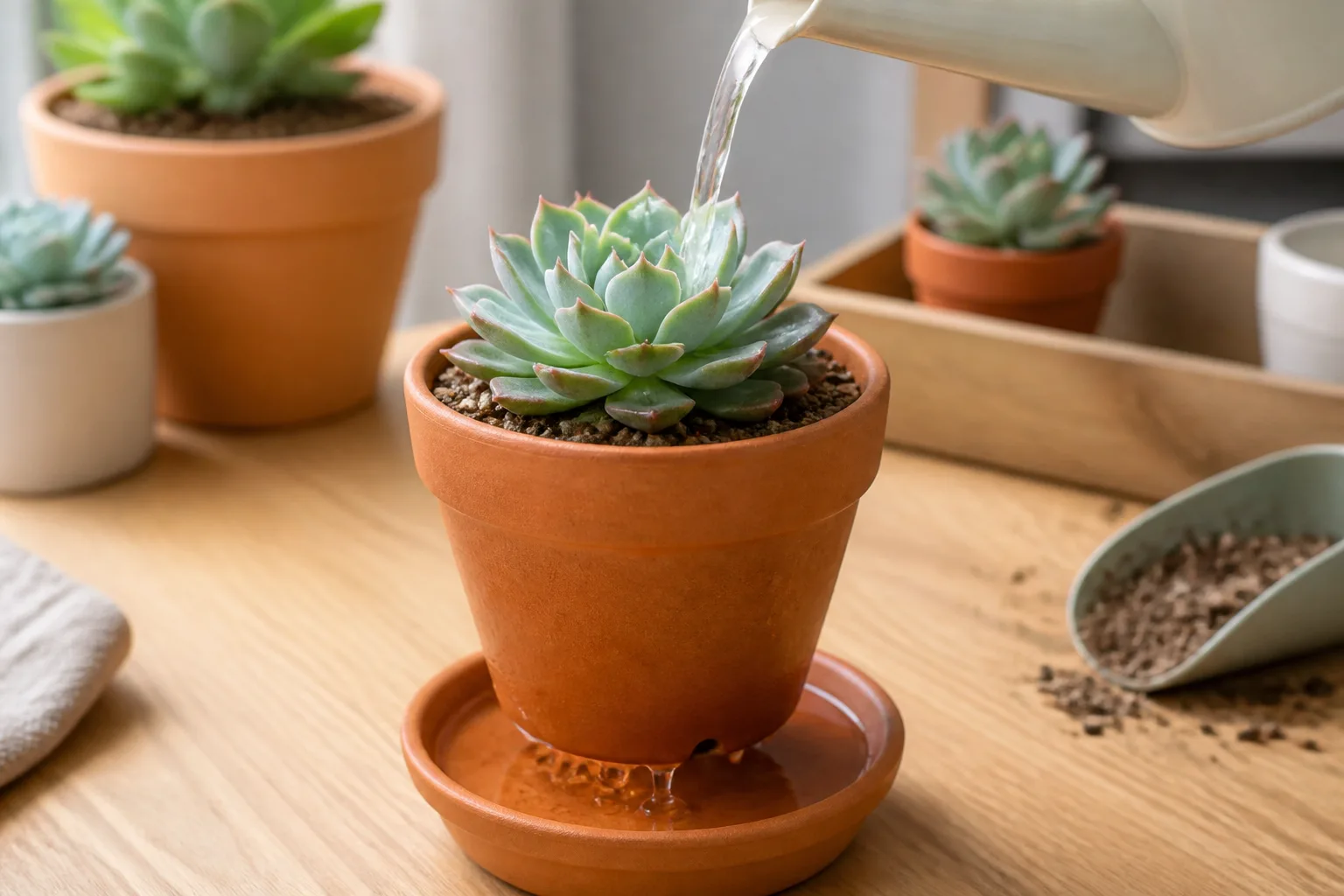
When the mix is dry through the pot, water at the soil surface until it runs from the drainage hole. Avoid pouring water into the woolly crown or leaving droplets on the body in direct sun. If water rushes through immediately while the center of the root ball remains dry, the mix may have become water-repellent; let the pot sit in a shallow amount of water briefly, then lift it out and drain fully. This is a correction for a dry, hydrophobic mix, not a routine way to keep the cactus wet.
There is a reason different care guides give different watering intervals: indoor light, pot material, soil, humidity, and temperature change dry-down speed. Gardening Know How recommends regular moisture during active growth while warning against soggy soil; NC State Extension calls for full drying between waterings. A useful middle course is to water fully during active growth, then wait for the root zone—not just the surface—to dry before repeating.
Adjust the winter routine to the room temperature
As growth slows in autumn, lengthen the interval between waterings and stop feeding. If you can keep the cactus in a bright, cool room, keep the mix nearly dry through winter; do not water merely because a set number of weeks has passed. In a heated home where the plant remains warm and receives some light, it may continue to use moisture slowly. Check the mix and the plant: if the body begins to wrinkle slightly and the root zone is completely dry, give a modest drink, then let it dry again. Do not keep it continuously damp to prevent every wrinkle.
Sources differ on whether a winter-resting Parodia should be kept fully dry or barely moist. The RHS says to keep it barely moist outside its main mid-spring-to-late-summer watering season, while NC State advises keeping Parodia dry during winter. In a cool room, follow the drier approach because cold, wet roots are slow to recover; in a warm indoor space, a rare light watering can prevent prolonged severe shriveling. In either case, a waterlogged pot is the condition to avoid.
Keep it warm in summer and protected from frost
Ball cactus grows best with warmth and airflow during its active season, but it is not a frost-hardy landscape cactus. Treat it as a container plant outdoors unless your climate is reliably mild and the site drains sharply. Bring a potted plant indoors before chilly nights settle in; a conservative cue is to move it when night temperatures approach 50°F (10°C), rather than waiting for a frost warning. The RHS rates it H2 in the UK system, which means it needs protection from freezing conditions, and Gardener’s Path similarly advises moving containers indoors before cool nights and avoiding prolonged exposure below about 45°F (7°C).
Indoors, avoid placing it directly beside a cold window if the glass becomes icy, or over a hot radiator where the pot dries unevenly. Average household humidity is generally adequate; misting is unnecessary. Air circulation helps the mix dry, but avoid a constant cold draft. If you grow it outside in a rainy climate, use an eave or covered patio to limit repeated soaking while still giving it strong light.
Feed lightly while new growth is active
Fertilizer is optional when the cactus is growing in fresh, nutrient-containing mix. If you feed, use a cactus fertilizer or a low-nitrogen liquid feed at half the label strength during spring and summer. The RHS recommends a low-nitrogen liquid fertilizer every six to eight weeks from mid-spring through late summer; that restrained schedule is a sensible starting point for a slow-growing potted specimen. Stop in autumn and winter, and do not fertilize a plant that is newly repotted, root-damaged, or not producing growth.
More fertilizer will not force a mature bloom. Excess nitrogen, particularly when light is weak, can produce soft, stretched growth that is less stable and more vulnerable to rot. If the cactus is healthy but slow, check the light, root zone, and season before adding more nutrients.
Understand flowering and clump formation
A mature ball cactus may produce yellow, funnel-shaped flowers at its crown in warm weather. It may take several years for a small plant to reach flowering size; the RHS lists five to ten years to maturity, which is a broad horticultural estimate rather than a promise that every plant will flower on schedule. A plant can remain healthy without blooming if it is young, has low winter light, stays warm and wet all year, or has not had enough active growth.
The most useful bloom-supporting routine is steady bright light during growth, sensible feeding rather than heavy feeding, and a cooler, drier rest when daylight and growth decline. Do not put a plant through severe drought or cold to “force” flowers. Offsets are also a normal slow development, not a sign that the plant is failing; leave them attached if you like a clustered specimen, or separate them only when they are large enough to handle and root independently.
Repot when roots or soil call for it
Repot in spring or early summer if roots fill the container, the plant becomes unstable, the mix has broken down and drains poorly, or you need to inspect suspected root damage. A cactus does not need a larger pot every year. When it does need one, move up only slightly and replace compacted medium with fresh, fast-draining mix. Gardener’s Path recommends keeping the next pot close to the size of the root mass and waiting about a week before watering after repotting; that dry interval gives disturbed roots time to settle and reduces the chance of rot.
Handle the spines without damaging the plant
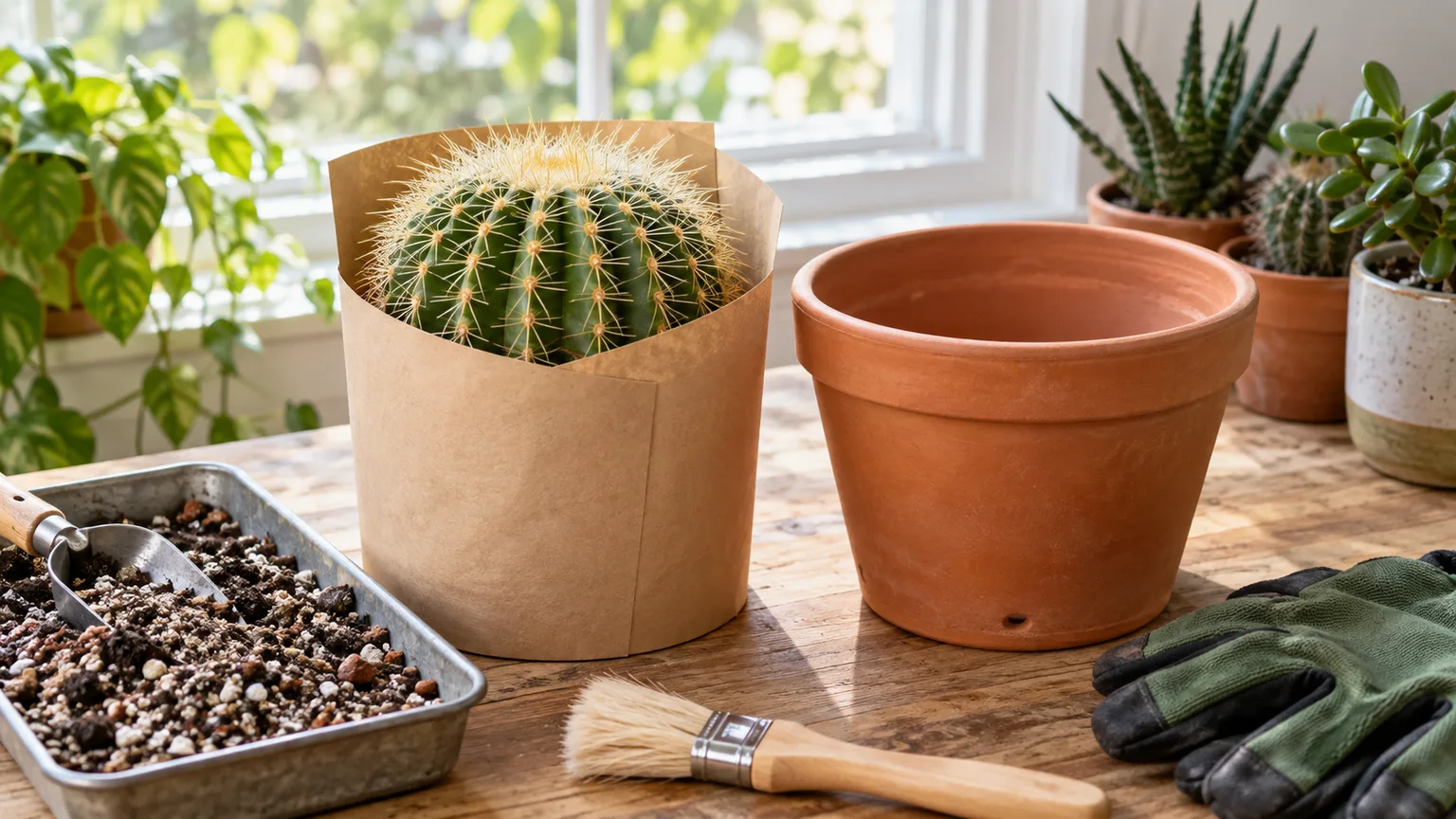
Wear thick gloves and wrap the body in several layers of folded newspaper or a towel so you can lift the root ball without squeezing the crown. Tip the pot on its side and ease the plant out by supporting the soil, not by pulling on the spines. Remove loose, old mix gently and trim only roots that are clearly dead, black, or mushy with a clean tool. Set the cactus at the same soil depth in its new pot; burying the body can keep the base damp.
Keep the plant dry and in bright shade for several days after repotting, then return it to its normal light and resume watering only after the mix is dry. If the roots were healthy and undisturbed, there is no need for a long recovery ritual. If you found rot, prioritize clean tools, fresh mix, and a pot that drains before returning the plant to direct sun.
Propagate from seed or offsets
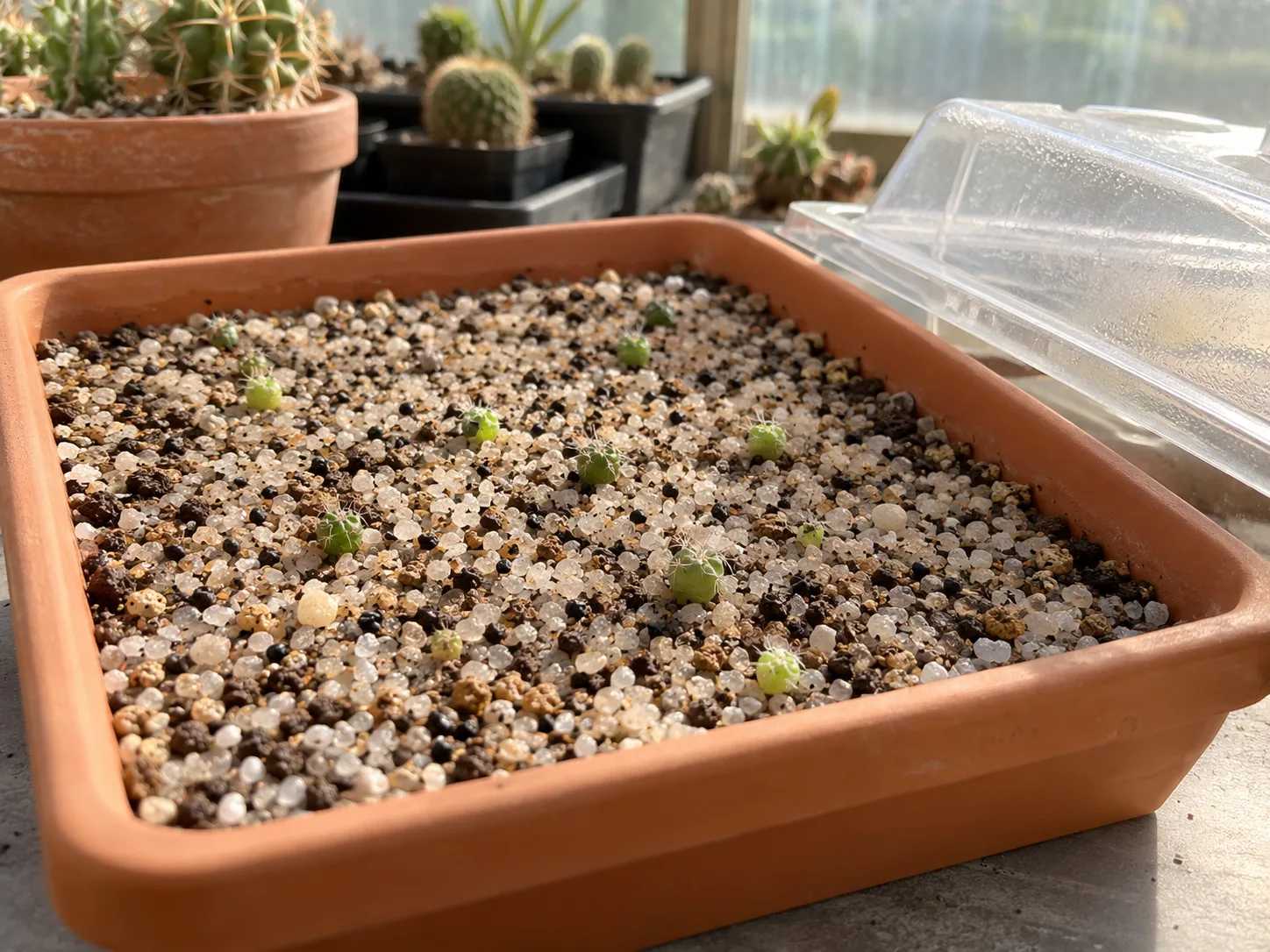
Seed is the most straightforward method when you want new plants, but seedlings grow slowly and need more consistent moisture than an adult cactus. Sow fresh seed on a clean, fine-textured, free-draining medium in spring. Keep the surface lightly moist—not saturated—in a warm place with bright indirect light, and provide airflow to limit mold. The RHS gives 19–24°C (66–75°F) as a suitable propagation temperature. Once seedlings are established, increase light gradually and let the surface dry between waterings; do not expose tiny plants to harsh midday sun.
Offsets can be divided from an established clump when an offset is large enough to handle. Unpot the parent, use tongs or a folded paper barrier, and separate a naturally attached offset with a sterile blade if twisting would tear the parent. Leave the cut surface in a dry, shaded, ventilated place until it forms a firm callus. Set it shallowly in dry cactus mix and wait before watering; once it begins rooting, resume cautious watering as the medium dries. A loose offset without visible roots may take longer to establish, so resist tugging on it to test progress. For a dependable start, buying a nursery-grown plant is usually easier than propagating a single small specimen.
Diagnose soft stems, stretching, and discoloration
A ball cactus should feel firm. A soft, dark, or translucent patch—especially at the base—combined with mix that remains wet suggests root or stem rot. Stop watering, remove the plant from its pot, and inspect the roots. Healthy roots are firm; dead roots are often brown or black and collapse when touched. If rot is limited, cut away affected tissue with a disinfected blade, let the cut area dry fully, and repot into fresh dry mix. If the stem is mushy through its center or rot has reached the growing point, recovery may not be possible. Fix the cause before watering again: compacted soil, no drainage hole, a pot that is too large, or winter watering in a cool room.
A plant that is becoming narrow, elongated, or tilted is more likely short of light than thirsty. Move it closer to a bright window in stages; old stretched growth will not become round again, but new growth can be more compact. Pale tan or sharply defined patches on the sun-facing side point toward sun scorch after a sudden exposure change. A dry, firm tan area at the oldest base can be normal aging, but spreading softness, a foul smell, or rapid discoloration calls for a root check rather than reassurance. Do not keep watering a cactus just because it looks wrinkled until you have checked whether the pot is wet underneath.
Check for mealybugs and spider mites
Inspect the crown, rib grooves, and the soil line every few weeks. Mealybugs look like small white cottony clusters; spider mites may leave fine webbing and a dull, stippled surface. Isolate an affected plant so pests do not spread to nearby plants. Remove visible insects with a cotton swab or a gentle rinse if the plant can dry promptly, then recheck after several days. Avoid applying oil or soap in hot direct sun, and follow any product label exactly if you use a registered treatment. NC State Extension identifies mealybugs, spider mites, whiteflies, and aphids as pests to monitor; the RHS also flags mealybugs and aphids around flowering plants.
Buy nursery-grown plants and handle them responsibly
Ball cactus is native to Brazil’s Rio Grande do Sul, and Kew’s Plants of the World Online lists P. magnifica as Endangered in its IUCN conservation field. That status describes risk to the wild species; it does not mean a cultivated plant on a windowsill is in immediate danger. Still, buy from a nursery that can identify its plants and say they are propagated in cultivation. Avoid plants advertised as field-collected, and never remove wild cacti. CITES identifies cacti among plant groups protected against over-exploitation through international trade, and listed specimens need appropriate documents to cross borders. Check the current listing and your destination’s import rules before ordering internationally.
The spines are not harmless just because they look fine or bristly. Lift the pot from its sides, keep it away from a walkway or a child’s play area, and use folded paper, tongs, or thick gloves for maintenance. A stable, heavy outer cachepot can help prevent tipping, but remove the nursery pot for watering so runoff can drain freely.
Follow a simple seasonal care rhythm
Spring: As days lengthen and new growth resumes, move the cactus into stronger light gradually. Begin watering when the root zone is dry, then resume diluted fertilizer only if the mix is old or growth is active. Repot now if the container or medium needs attention.
Summer: Keep it in bright light with airflow. Water thoroughly after the mix dries through; outdoors, shelter the pot from repeated rain and extreme afternoon heat. Watch for new offsets and crown flowers, but do not increase feeding just to accelerate them.
Autumn: Reduce watering as growth slows, stop fertilizer, and bring the pot under cover before cold nights. Check the mix after rain; if it is still damp, do not add water.
Winter: Keep the plant bright, protected from frost, and much drier than in summer. In a cool room, leave the mix dry for long intervals. In a warm room, inspect the root zone and give only an occasional drink if the body begins to lose firmness; never let water stand in the saucer.
Conclusion
Ball cactus care is less about remembering a watering day than about giving Parodia magnifica the right cycle: bright light and thorough watering during active growth, fast-draining soil, and a cooler, drier rest when growth slows. Start with drainage and light, then use the pot’s dry-down and the plant’s condition to decide when to water. If the body softens, check roots and mix before changing the routine; if it stretches, improve light gradually. With those checks in place, this slow-growing cactus can remain compact for years and may reward patient care with a crown of yellow flowers.



